
Reviewed · WALKING TOURS
Osaka 6hr Private Walking Tour with Government Licensed Guide
A private Osaka 6-hour walking tour with a government licensed English guide is interesting because you can shape the day around what you care about, not a one size route. I love the customizable mix of food streets and sacred sites, and I like that guides like Yama and Miyuki Ogawa explain what you are looking at in everyday English as you walk. The main drawback to plan for is pace, this can be fast, so tell your guide what comfortable walking speed feels like for you.
You will see why Osaka earns its reputation as a city of big visuals, quick decisions, and strong local flavors. If you pick the right mix of neighborhoods, you get history, street life, and markets in one go without getting lost in the maze of trains and arcades.
Key points that make this tour work well
- Private, government licensed guide keeps the experience personal and the explanations clear
- Choose 3 to 4 sites from a ready menu, so you are not stuck doing stuff you do not want
- Pickup on foot and help getting your bearings, some guides even assist with transit connections
- Food streets plus culture means you can balance shopping, shrines, and market snacks
- Free time inside stops is handled by your guide, not by a strict countdown
How the private Osaka format saves you time and stress
This is not a big group “herd and hustle” setup. You get your own licensed guide and a plan that can bend to your interests, which matters a lot in Osaka because the city changes mood block to block. One street feels neon and snack heavy, another feels quiet and ceremonial, and you want someone local to help you switch gears without wasting time.
You also get a practical structure: about 6 hours on foot with 3 to 4 chosen stops. That sounds simple, but the real win is it forces smart prioritizing. If you only have one day in Osaka, you do not need to “see everything.” You need to see the right things with context, and you need to get there without turning your sightseeing into a map exercise.
One more thing I like, the tour uses a mobile ticket and is designed around meeting your guide on foot in the Osaka area. That keeps the day from turning into complicated logistics before you even start walking.
More Walking Tours in Osaka
- Osaka: Hotspots & Hidden Gems Walking Tour Private or Group
★ 4.9 · 1,300 reviews - Osaka Local Foodie Walking Tour in Dotonbori and Shinsekai
★ 5.0 · 985 reviews - Osaka Bar Hopping Night Walking Tour in Namba (3 bars, 6 tastes)
★ 5.0 · 958 reviews
Price and value, what $155.26 really buys
At $155.26 per person, this is priced like a premium private guide experience. The good news is the value comes from the labor you are paying for.
You are paying for:
- A licensed English speaking guide who can interpret shrines, temples, and street food culture in plain language
- The ability to customize your route so your day matches your group, like a food focused day or a heritage day
- Time you do not waste figuring out the order of neighborhoods
The one cost you should expect is the “not included” bucket. Transportation fees, entrance fees, and lunch are on you. Some key stops listed for this tour include paid entry, like Osaka Castle, Shitennoji, Umeda Sky Building, and the National Museum of Art, Osaka. Also, even when you are outdoors, Osaka walking adds up. If you plan a modest lunch budget and keep entrance fees in mind, the overall spend can feel reasonable for a private day.
Picking the right 3 to 4 stops (so your day feels balanced)
The tour offers a menu of sites, and you choose 3 to 4. That selection is the whole game. Here is a simple way to decide.
If you want classic Osaka street energy
Go heavy on the Dotonbori and shopping arcades. Pair:
- Dotombori District
- Shinsaibashi-suji Shopping Street
- Sennichimae Doguyasuji Shopping Street
Then optionally add a market stop for eating.
This combo is best if you want images, people watching, and lots of food choices without needing museum time.
A change of pace from Osaka:
- Osaka Go Karting Tour with Funny Costume
★ 5.0 · 2,658 reviews - Osaka Castle: Museum and Tower Entry Ticket
★ 4.5 · 2,380 reviews - Osaka: Shinsekai Food Tour with 13-15 Dishes at 5 Eateries
★ 4.8 · 2,204 reviews - Osaka Food Tour: 13 Dishes at 5 Local Eateries
★ 5.0 · 2,149 reviews
If you want sacred sites and older Osaka
Choose:
- Sumiyoshi Taisha Shrine
- Shitennoji
Then add either a museum stop or Osaka Castle if you want a bigger landmark payoff.
This is best if you are tired of modern city sights and want the “why” behind Osaka culture.
If you want viewpoints and landmark photography
Pick one of the paid, skyline type stops:
- Umeda Sky Building or
- Osaka Castle
Then use the remaining slot(s) for markets or shrines.
This is best if your goal is memorable photos plus a sense of city scale.
If you are a food person
Use:
- Kuromon Market
and then combine with at least one of the street food zones (Dotombori or Shinsekai).
Osaka rewards eating while you walk, and a good guide helps you order without second guessing.
Dotombori District, street lights, billboards, and snack chemistry

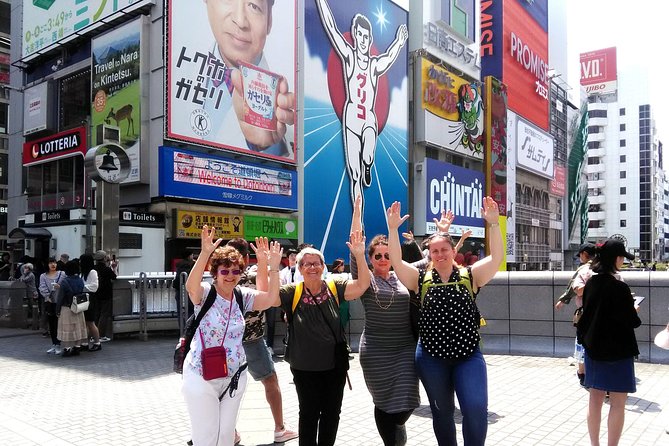
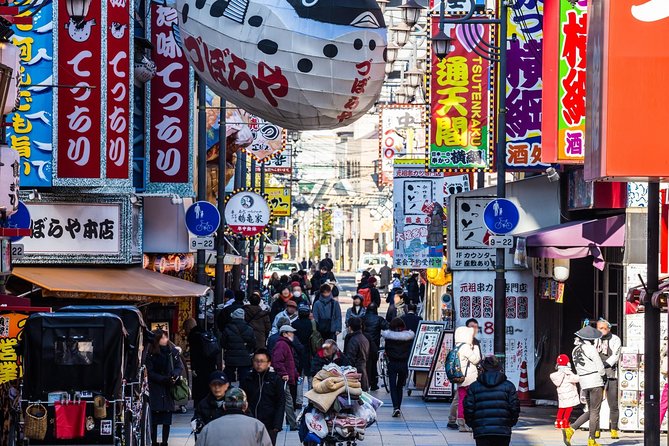
Your day can start in a place that basically runs on appetite. Dotonbori is famous for huge signage, packed sidewalks, and food stalls, with standouts like takoyaki and okonomiyaki. This is where Osaka feels loud in the best way, and it is also where you get a fast crash course in how locals actually snack and mingle.
What I like about this stop in a private tour is the timing. Your guide can guide you toward easy photo angles and then help you pick what to eat based on your group. In at least a few guide stories shared from past tours, the guide pointed out authentic takoyaki stands and even helped guests order with confidence.
A consideration: this area can be crowded. If your group wants quieter corners, tell your guide early so they can steer you between the busiest lanes.
Sennichimae Doguyasuji and Shinsaibashi-suji, shopping arcades with purpose
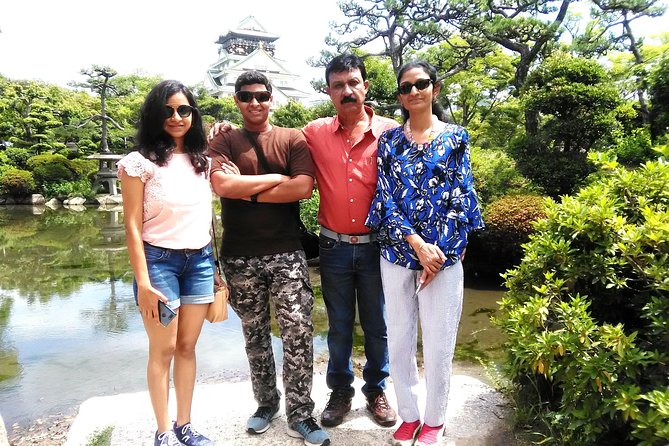
Two different shopping streets give you two different kinds of Osaka retail.
Doguyasuji kitchen street
Sennichimae Doguyasuji is about 150 meters long and focused on kitchenware. Expect specialty shops where you can find cooking utensils and kitchen items you might never spot in a regular mall. It is a fun stop even if you do not plan to buy much, because the storefronts show what Osaka values in home cooking and daily life.
Shinsaibashi-suji arcade
Shinsaibashi-suji stretches roughly 600 meters, with cosmetics, apparel, and restaurants along a covered arcade style route. This is a good place to browse because you can keep walking without constantly checking for weather and street transitions.
In both arcades, the guide value is simple: they can suggest what is worth your time and help you avoid getting stuck in stores that are slow, confusing, or not a fit for your budget.
Kuromon Market, seafood up close and the seasonal reality of fugu
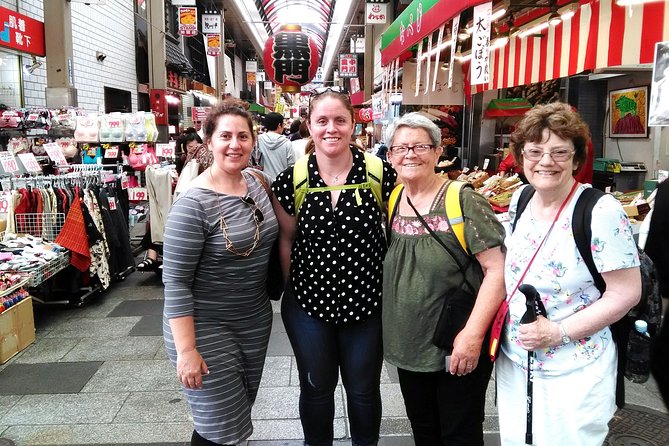
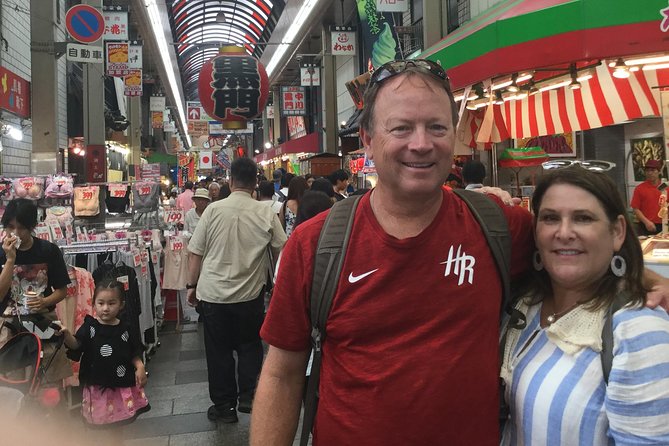
Kuromon Market is a lively covered market focused on seafood. It is one of the most “sensory” stops on the list, because you see the product, you smell the cooked items, and you feel the quick buying energy.
The seasonal detail matters here: conger pike is highlighted in summer, and fugu is a big deal in winter. The market also has a concentration of shops that specialize in fugu and hamo, so your guide can steer you to places that match what seasonally makes sense.
Two practical notes:
- This is not “sit down and relax.” It is more like sampling and observing.
- Lunch is not included, but a market stop can make lunch feel easy because you can eat where the options are.
A consideration if seafood is not your thing: you might still enjoy the market for atmosphere, but you may want to focus on prepared foods or skip it if your group is very restricted.
Sumiyoshi Taisha Shrine, old Shinto architecture and a calm reset
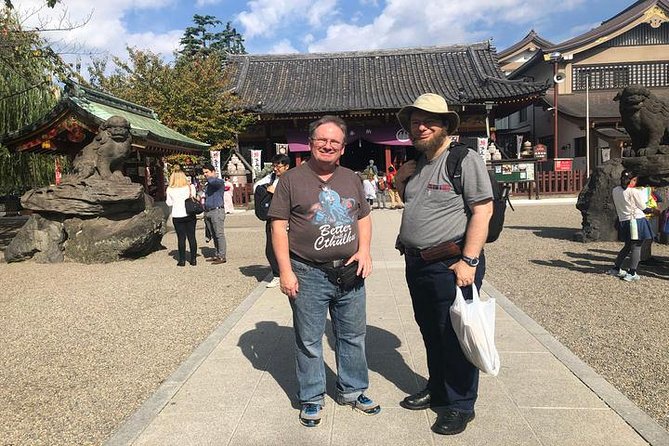
Sumiyoshi Taisha is one of Osaka’s oldest shrines, with roots dating back to before Buddhism entered Japan, and it is tied to a very specific style of shrine architecture. The vibe here is a reset after the shopping and food streets.
This stop works well in a private format because a guide can explain what you are seeing without turning it into a lecture. In guide descriptions, the process of how the shrine space is used and respected is often spelled out carefully, including how to participate respectfully during rituals.
If your group enjoys historical layers, this is a high value stop. You are not just seeing a building, you are seeing a long time link between place and practice.
Shitennoji, one of Japan’s oldest temples and state built origins
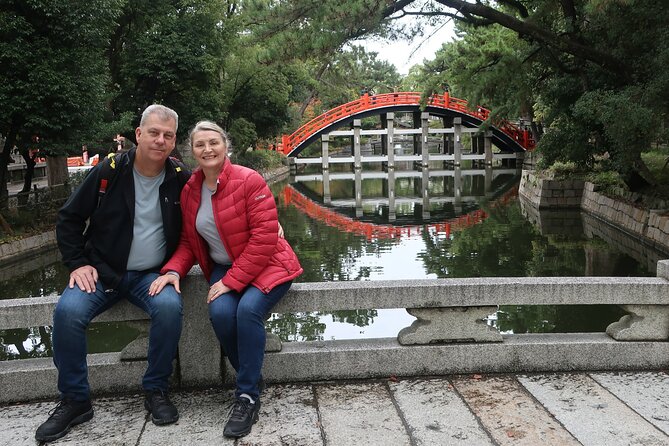
Shitennoji is among the older temples in Japan and is noted as the first built by the state. It was founded in 593 by Prince Shotoku, who supported the introduction of Buddhism.
This is the kind of stop where context makes the difference. A guide can point out what makes the temple historically important and what parts are meant to communicate spiritual ideas, so you are not just walking through stone and timber.
A practical note: admission is listed as not included here, so you should expect to pay entry if you go inside where tickets are required.
Umeda Sky Building, a paid viewpoint choice for city scale
If your group likes skyline views and photo time, Umeda Sky Building is the modern counterweight. It is in the Kita district near Osaka and Umeda stations, and it is about 173 meters tall. The building is also nicknamed the New Umeda City.
Because this is a paid admission stop, it only makes sense if your group wants that overhead perspective. If you are trying to keep costs down, you can swap it with another free option from the list.
Osaka Castle, the big landmark with history weight
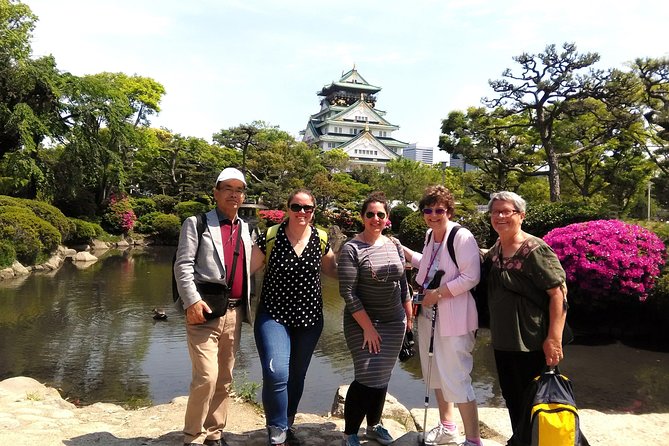
Osaka Castle is an obvious reason to come to Osaka. This five story castle is visually impressive and has history stretching almost 450 years.
In a private tour, this stop tends to work best when your guide gives you the timeline, because the castle is not just a pretty structure. It is tied to how power shifted and how the city reinvented itself over centuries. You also get a chance to enjoy the park area without rushing through it like a drive by.
Admission is not included, so build that into your planning. Also, with limited stop choices, you will want to decide whether Osaka Castle is your landmark anchor or whether you would rather spend your time on markets and shrines.
National Museum of Art, Osaka, a quieter change of pace
The National Museum of Art, Osaka is described as an underground museum on the island of Nakanoshima in central Osaka. If you or your group needs a break from outdoor walking, this is a good option.
Admission is listed as not included. If you love art, or you want a calmer interior hour, it can be a smart use of time. If you are traveling with kids who want action, you might pair it with a food or street stop instead.
Shinsekai and Tsutenkaku, old Osaka energy and quick taste culture
Shinsekai, meaning New World, is one of the most fun “vibe” neighborhoods on the list. The iconic landmark is Tsutenkaku, often called the Osaka Eiffel tower. You also get Billiken, tied to wealth and money symbolism.
This is where you see another side of Osaka street culture, and it connects well with food like kushikatsu. Some past guides have used Shinsekai as a launch point for food recommendations, and a good guide can help you navigate what to order and how to eat it without making it stressful.
This stop is listed as free and short, so it is a quick mood shift rather than a long sit down experience.
Keitakuen Garden, a brief pause in Tennoji Park
If you want a green break without committing to a full half day, Keitakuen Garden is a small but meaningful add on. It is described as a traditional Japanese landscape garden, designed in the early 20th century, with a central pond and carefully arranged rocks.
Admission is not included, and the scheduled time is brief. That means it is best for groups who want to slow down for a short moment between bigger stops.
What guides do that you cannot get from a map
A key reason people rate this so highly is the guide role goes beyond “point and explain.”
From past guide stories you can expect some of these outcomes:
- Clear English explanations with humor, like guides who joke while staying respectful around shrines and temples
- Help using trains and subways, which can be a big deal in Osaka where station layouts can feel like a maze
- Smart route choices to reduce crowd stress when possible
- Extra support when schedules get tight, including help connecting to Shin Osaka Station so you can catch the Shinkansen
You will also notice that guides respond to your group. For example, one guide helped search for hard to find Ohtani jerseys for a family member. That is not guaranteed as a service promise, but it tells you how many guides treat “customization” as problem solving, not just picking a menu.
Pacing and comfort, the one thing to control
The biggest practical consideration is walking pace. One review note called out that a guide walked very fast and then waited, which created stress for a parent and left some conversations inaccessible. That is not a universal issue, but it is enough to take seriously.
If your group needs a slower rhythm, do two things:
1) Tell your guide your comfort level before you start.
2) Ask for brief regroup stops at sensible times, like after each major photo opportunity.
The good news is the tour is private, so you can adjust. And multiple guide stories emphasize they adapt and shift gears when the group needs it.
Also keep in mind: entrance fees and lunch are not included. So if you add a paid site plus market food plus a museum, it can feel like spending time everywhere but still walking constantly. Your guide can help you keep the balance once you tell them what you value.
Who this tour is best for
This tour fits well if you are:
- Doing Osaka as a one day stop and want maximum use of time
- Interested in both food streets and sacred sites, not just one theme
- Comfortable walking for about a full afternoon
- Traveling with family or friends who benefit from clear planning and translation help
It is less ideal if you want minimal walking or you only want one type of stop. Because you are choosing 3 to 4 sites, you may feel limited if your group is very narrow in interests, like strictly vegetarian diets and a fish market is a must for the plan.
Should you book this Osaka private walking tour?
Yes, if you want a smart, guided day that mixes Osaka street life with culture and you care about getting context without drowning in transit and planning.
Book it if:
- You like the idea of choosing 3 to 4 stops from a menu like Dotonbori, Kuromon Market, Shitennoji, Sumiyoshi Taisha, Osaka Castle, or Umeda Sky Building
- You want a guide who can help you navigate trains and explain what you see
- Your group is ready for a full walking day
Pass or adjust expectations if:
- You have mobility limits that make a walking day hard
- Your group gets stressed by fast pacing, in which case you must set expectations early
- You want entrances and lunch handled for you, since those are not included and some key sights are ticketed
If you choose your stops with your energy level and interests in mind, this tour is a strong way to see Osaka in a single day without feeling like you are just collecting checkmarks.
Latest write-ups near Osaka
- PRIVATE 6hr, Food tour from Osaka Castle, Kuromon, Dotonbori.★ 5.0 · 68 reviews
- 90 min Shared Handmade Udon Experience★ 5.0 · 70 reviews
- Ramen and Gyoza Cooking Class in Osaka Dotonbori★ 5.0 · 73 reviews
- Osaka: Sushi Making in Spacious Studio (SAME-DAY OK!)★ 5.0 · 75 reviews
- Osaka E-Bike Tour With A Local Guide★ 4.7 · 75 reviews
- 1.5〜2 Hours Traditional Kintsugi Work Shop in Namba Osaka★ 5.0 · 75 reviews
- Retro Osaka Street Food Tour: Shinsekai★ 4.5 · 77 reviews
- Osaka: Osaka Castle Guided Tour with Local Guide★ 4.7 · 78 reviews
Walking Tours, compared.
Kyoto Geisha Walking Tour: Gion District & Hidden Gems
Read our review →
Tokyo Tsukiji Fish Market Food and Culture Walking Tour
Read our review →
Gion Magical Night Walking Tour with Geisha Trivia
Read our review →
Imperial Palace and Shogun Historical Walking Tour
Read our review →
Gion Geisha District Walking Tour – Stories of Geisha
Read our review →
Shinjuku Local Bar and Izakaya Guided Walking Tour
Read our review →
Browse the lists this tour appears in