
Reviewed · CASTLE TOURS
Osaka: Castle History Walking Tour / Castle Tower Admission
Osaka Castle is one of those places where the big walls make more sense once someone explains the “why.” On this guided walk, you follow the logic of a fortress built to stall, trap, and wear down attackers, not just to look impressive. I like how the tour turns stone, gates, and moats into a real battlefield plan, and you get a guide who can point out the details most people walk past.
My second favorite part is the combo of guided strategy lessons plus the payoff of reaching the tower for city views and command-post features. Just one heads-up: inside the castle, you get admission and guided highlights, but you are not getting a guided tour of every museum floor, so you may still want to read signs and explore at your own pace.
Key things you’ll notice on the tour
- Skip-the-line tower access through a separate entrance when it is busy
- Triple moats and masugata traps, explained in plain language
- Zigzag approaches that show how attackers were funneled under fire
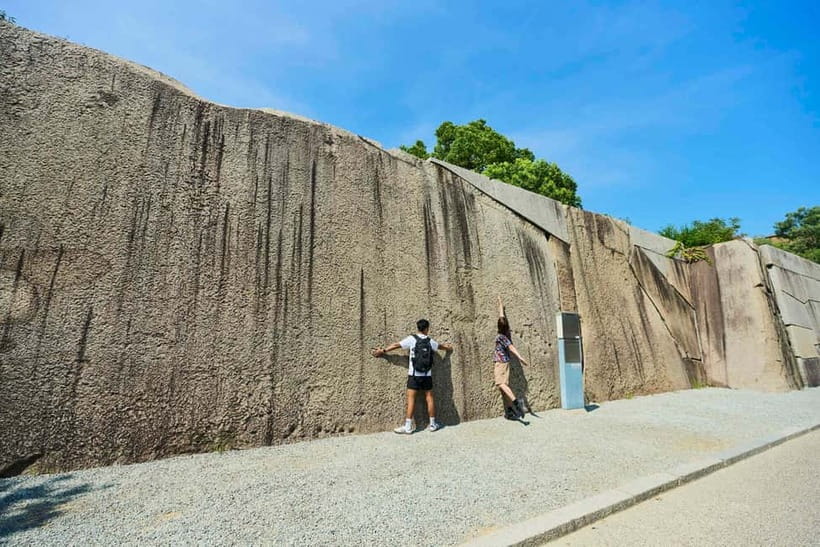
- The largest stone in the castle, including how it was transported
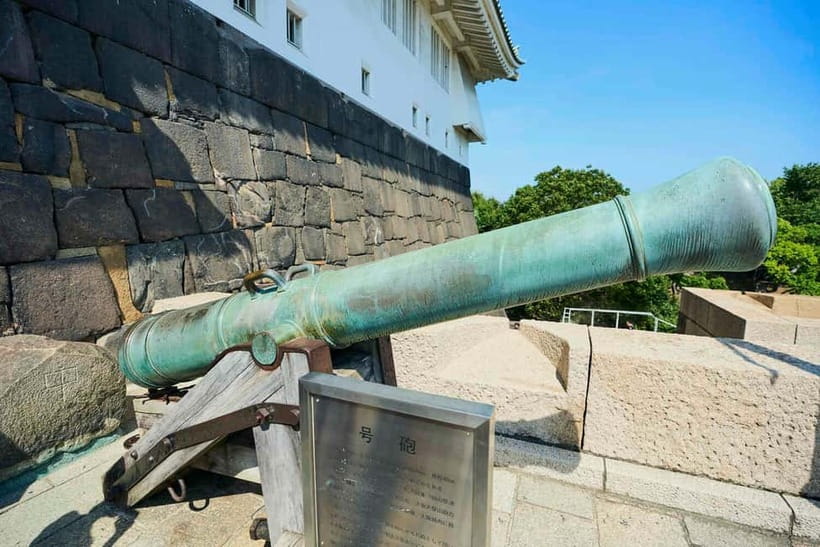
- Arrow slits, gun ports, and psychological warfare using design and gold
- Top-of-castle city views, plus time for photos and self-paced exploring
Meeting at Lawson and Getting Oriented Fast

The tour meets at ローソン S大手前レストハウス店. There are other Lawson stores nearby, so use Google Maps and double-check the exact location before you arrive. When you get there, look for the Local Guide Stars sign so you do not end up wandering the wrong side of the square.
This start matters more than it sounds. Osaka Castle can feel like a maze when you first show up, because the defenses are spread out in layers. A guided start helps you get your bearings fast, especially with the moats, outer gates, and the zigzag routes that attackers faced.
You also benefit from having an English-speaking guide from the beginning. The guides named in recent groups include Saya, Mao, Spike, Yuta, and Kaz, and the common thread is that they do not just recite dates. They point out “look here” details, like stone marks made by craftsmen or angles in the walls that make climbing impractical. If you like history with clear visuals and real explanation, this style works.
If you can choose a time slot, an earlier departure can be smart. One group reported that later in the morning they hit longer lines for entry and elevator access, while the guide’s setup still helped the group move efficiently.
More Castle Tours in Osaka
- Osaka Castle: Museum and Tower Entry Ticket
★ 4.5 · 2,380 reviews - Ultimate Osaka Walking Tour: Castle, Dotonbori & Hidden Gems
★ 5.0 · 862 reviews - Osaka Castle Walking Tour and Castle Tower Admission
★ 5.0 · 561 reviews
Outer Moats, Gates, and the Fortress Logic Behind Triple Defense Lines
The heart of the experience is the walk through the castle grounds, where you learn to read defenses like a map. You start by moving through the outer moats and then into layered protection designed to delay and divide attackers. The tour emphasizes the triple moat concept and how the spacing forces enemies into slower, less coordinated pushes.
You will also focus on multi-layered gates and masugata entrances, which are those awkward, right-angle-style entry points that prevent attackers from charging straight through. Instead of imagining a wall, you start imagining angles, choke points, and confusion. Once you understand that, the castle stops looking like a static monument and starts looking like engineering under pressure.
As you walk, your guide helps you notice the zigzag approach routes enemies once faced. Those winding paths were not artistic flair. They were a way to expose bodies and weapons while limiting how effectively attackers could move as a group. It is the kind of detail that makes you look at the ground differently, even after you leave.
One of the most satisfying parts is how the explanation connects military design to physical clues. You get tips on where to look for stonework that helped make sections difficult to climb, including wall angles and specific construction choices. If you are a fan of strategy and architecture, this is where the tour earns its value.
Hokoku Shrine: A Short Stop That Adds Meaning to the Grounds
After the main fortress-walk portion, the itinerary includes time at Hokoku Shrine. You get about 20 minutes there with guided context, and then you return for more castle exploration and photos.
Shrines on castle grounds can feel like a detour if you are only chasing military details. In this case, it works better because the tour does not treat the shrine as random scenery. It helps you understand that Osaka Castle is not only a defensive structure, it is also tied to later meanings, memory, and civic identity.
There is also a practical benefit: it breaks up the walk without becoming a long museum slog. If you are traveling with mixed interests, this stop can keep everyone engaged, including people who might otherwise find the wall talk too intense for the whole day.
One small but memorable bonus you might catch on the right day: a group reported seeing a traditional Japanese wedding ceremony occurring around the time their tour was visiting the shrine. That is not guaranteed, but it is a reminder that these spaces can be active, not just staged for tourists.
The Largest Stone, Stone-Marks, and How Walls Were Made Unclimbable
Back in the castle area, you spend time learning about the largest stone in the castle and the methods used to transport it in the 16th century. It is one of those facts that sounds cool on paper, then becomes fascinating when you connect it to the scale of construction.
You also get the kind of detail that only appears when someone trained to look shows you. The tour mentions hidden stone marks left by master craftsmen, which are subtle clues about how the work was planned and executed. Instead of just admiring a wall, you start thinking like a builder: precision matters, alignment matters, and quality control mattered too.
The fortress theme continues with wall design. You learn how the walls were made harder to attack and harder to climb, including discussion of wall angles and stonework choices that discouraged scaling. This is where many people change their mental model. Instead of picturing a high wall, you picture a wall shaped to resist movement and to funnel action where defenders wanted it.
Photo-wise, this is a strong segment. Guides typically steer you toward photo angles that show the layers of defense rather than just a single view of a tower or gate. If you like getting shots that also make sense historically, this tour helps you frame your photos.
More Historical Tours in Osaka
- Osaka: Osaka Castle & Historical Museum Guided Tour
★ 4.8 · 28 reviews - Osaka Castle & Samurai History Walking Tour
★ 5.0 · 22 reviews - Osaka: Kyoto & Uji Historical Sites and Scenic Delights Tour
★ 4.7 · 13 reviews
Tower Admission and the Command-Post Feel of Osaka Castle
The included ticket is Osaka Castle tower admission, and the tour setup provides skip-the-line access through a separate entrance. This is not just convenience. It changes your whole pacing, because Osaka Castle can get slow when ticket lines and entry bottlenecks build up.
In the tower, the guide focuses on how the structure functioned as a command post and last defense. You get to connect the exterior design to the interior purpose, including features like arrow slits and gun ports. Those elements matter because they show where defenders could watch and respond, even when attackers were trying to close distance.
The tour also points out the psychological side of design. The description includes how gold was used as a psychological tool, meant to affect morale and perception. It is a reminder that military design is not only about hitting power, it is also about intimidation and control of how the fight feels.
Then you reach the payoff: the city view from the top. This is where the fortress becomes a viewpoint, and you get that sense of being above the city that attackers once tried to breach. Several guides in recent groups were praised for making the move from learning to views feel rewarding, not rushed.
One practical point from the experience pattern: some groups mention that the skip-the-line setup can also mean smoother elevator access during busy periods. Even if you do not care about time savings, it can help you spend more of the visit actually looking, reading, and taking photos.
How an “Invincible” Fortress Fell in 1614 to 1615
After the design and defensive details, the tour closes with a sobering historical arc: how Osaka Castle fell in 1614 to 1615. The story is tied to the fierce rivalry between Toyotomi Hideyoshi’s legacy and Tokugawa Ieyasu’s ambition.
This ending matters for two reasons. First, it keeps the tour from feeling like a pure engineering tour. You remember that walls are never the final word. Second, it gives you context for the castle’s role in Japanese power struggles, especially around the Tokugawa consolidation era.
You do not just learn that it fell. You learn how the fortress was built to resist, then you see how politics and long campaigns can outlast even serious defenses. That is a strong way to connect military architecture to historical reality.
If you are the type who likes to keep learning after a tour, this ending helps. It gives you a clear “next question” to explore on your own, like how alliances shifted or why Tokugawa strategy won out in that specific period.
Price and Timing: Is This Tour Worth $33?
At $33 per person for about 90 minutes, the value is mostly in the pairing: you are paying for a guide plus included tower admission, not just a walk around exterior grounds. That is the key tradeoff. You are not paying extra for separate tickets, and you are not spending time stuck in long lines.
The other value is explanation quality. Recent groups repeatedly mention guides who were friendly, good at pacing, and clear with English. Names that came up in positive comments include Saya, Mao, Spike, Kaz, Ken, Soy, Yuta, and Ami. The praise was not generic, it was specific: guides pointed out details you would likely miss and kept people comfortable, including older guests and groups with kids.
Still, I would be honest about expectations. Because not every museum floor is guided, history fans who want a narrated walkthrough of every exhibit might feel slightly short. The way around that is simple: plan to spend a little extra time in the tower after the tour portion, and use the guide’s pointers like a checklist while you browse.
Should You Book This Osaka Castle Tower Tour?
Book it if you want Osaka Castle to make sense beyond looks. This tour is best for people who like military design, architecture clues, and story-driven history that explains cause and effect. If you care about time, the skip-the-line tower admission is a real perk.
Skip it only if you mainly want a slow, self-guided wander with no structured explanations. You will get admission either way, but without a guide, you might miss the “read the fortress” details that make this experience worth paying for.
If you can handle a comfortable amount of walking and you like seeing how built structures reflect human decisions, you will probably enjoy this one a lot.
FAQ
Where does the tour start?
The tour meets in front of ローソン S大手前レストハウス店. There are multiple Lawson stores nearby, so check Google Maps and look for the Local Guide Stars sign.
What is included in the price?
Your ticket includes Osaka Castle tower admission and a professional English-speaking guide.
Is there skip-the-line access?
Yes. The tour includes skip-the-line entry through a separate entrance.
How long is the tour?
The total duration is 90 minutes.
What should I bring?
Bring comfortable shoes and weather-appropriate clothing, since you will be walking through historical sites.
Do I get a guided tour of every museum floor?
No. The tour includes guided highlights and tower admission, but it does not include a guided tour of each floor in the Osaka Castle museum.
More Walking Tours in Osaka
- Osaka: Hotspots & Hidden Gems Walking Tour Private or Group
★ 4.9 · 1,300 reviews - Osaka Local Foodie Walking Tour in Dotonbori and Shinsekai
★ 5.0 · 985 reviews - Osaka Bar Hopping Night Walking Tour in Namba (3 bars, 6 tastes)
★ 5.0 · 958 reviews - Osaka: Deep Backstreets Walking Tour with Dinner Option
★ 4.9 · 902 reviews
Latest write-ups near Osaka
- PRIVATE 6hr, Food tour from Osaka Castle, Kuromon, Dotonbori.★ 5.0 · 68 reviews
- 90 min Shared Handmade Udon Experience★ 5.0 · 70 reviews
- Ramen and Gyoza Cooking Class in Osaka Dotonbori★ 5.0 · 73 reviews
- Osaka: Sushi Making in Spacious Studio (SAME-DAY OK!)★ 5.0 · 75 reviews
- Osaka E-Bike Tour With A Local Guide★ 4.7 · 75 reviews
- 1.5〜2 Hours Traditional Kintsugi Work Shop in Namba Osaka★ 5.0 · 75 reviews
- Retro Osaka Street Food Tour: Shinsekai★ 4.5 · 77 reviews
- Osaka: Osaka Castle Guided Tour with Local Guide★ 4.7 · 78 reviews
Castle Tours, compared.
Tokyo Castle & Imperial PalaceーShogun Walking Tour
Read our review →
Nijo-jo Castle and Ninomaru Palace Guided Tour
Read our review →
Ultimate Osaka Walking Tour: Castle, Dotonbori & Hidden Gems
Read our review →
Nijo Castle, Kiyomizu & Fushimi Inari Guided Tour
Read our review →
Osaka Castle Walking Tour and Castle Tower Admission
Read our review →
Imperial Palace East Garden and Edo Castle Walking Tour in Tokyo
Read our review →
Imperial Palace & Nijo Castle Guided Walking Tour
Read our review →Browse the lists this tour appears in