
Reviewed · WALKING TOURS
Private Customizable Walking Tour of Tokyo
Tokyo can overwhelm you fast, so I like that this experience gives you a private guide who tailors the day to your interests, not a fixed group plan. Two more things I really like: the hotel pickup and drop-off for convenience, and the ability to pick your start time and tour length (half day or full day). The main consideration is simple, you are still walking, and the subway rides are on your tab, not included.
What you get is a true bespoke walking route with a professional guide who helps you connect the dots between old Tokyo, modern Tokyo, and the neighborhoods in between. If you’re visiting for the first time, you’ll also appreciate the practical help that makes the city feel less intimidating, especially for using the transit system. You can even ask for help getting a travel pass for the day, which helps you keep things smooth.
Key highlights to know before you go
- Hotel meet-up and drop-off, so you’re not starting the day stressed about where to convene
- Private, fully customizable pacing, so you can linger or skip based on your energy
- Guide support for transit passes, which matters when your tour mixes neighborhoods
- Iconic Tokyo stops with smart sequencing, from Shibuya and Harajuku to Asakusa, Tsukiji, and Imperial areas
- Observation decks are optional extras, with tickets not included for Skytree, Tokyo Tower, and Shibuya Sky
- Great for families, with guides able to adjust to kids and food needs
Price and value: what $202.18 per person really buys
At $202.18 per person, the value mostly comes from what is included versus what is not. You’re paying for a professional guide plus hotel pickup and drop-off, and you’re getting a private experience that runs on your chosen route and timing. That’s a big deal in Tokyo, because traveling across multiple neighborhoods efficiently is part art, part logistics, and part stamina.
What’s not included is also important. Public transportation costs (subway) are excluded, and food and drinks are not included. Also, while many key sights are admission ticket free, the major viewpoints with add-on tickets (Tokyo Skytree, Tokyo Tower, Shibuya Sky) are not included. So the final cost can rise if you add multiple observation decks, which you probably don’t need to do.
A practical way to think about the price: you’re buying time and clarity. When you have a guide handling the flow and transit logic, your day becomes less about figuring out where to go next and more about enjoying the places you selected.
More Walking Tours in Tokyo
- Tokyo Tsukiji Fish Market Food and Culture Walking Tour
★ 5.0 · 3,184 reviews - Tokyo: Imperial Palace and Shogun Historical Walking Tour
★ 5.0 · 2,251 reviews - Tokyo: Shinjuku Local Bar and Izakaya Guided Walking Tour
★ 4.9 · 1,794 reviews
Picking your tour length: half day vs full day
This tour runs about 4 to 8 hours, and you choose how long you want to walk. That flexibility is one of the smartest parts of the concept.
For a half-day plan, I’d focus on a tighter cluster: for example, Shibuya plus Harajuku plus Meiji Jingu, or Asakusa plus Senso-ji plus a calmer slice like Yanaka. For a full day, you can realistically stitch together multiple “Tokyo worlds,” like neon entertainment districts, historic temples, fish market energy, and skyline views.
One more reason length matters: observation decks can add time and money, and they can also depend on weather. If it’s clear, viewpoints are a joy. If it’s rainy or low visibility, you may prefer outdoor neighborhoods instead.
Hotel pickup and subway travel: the easy start, the real walking
The tour includes hotel meet-up and drop-off, which is genuinely useful in Tokyo. You don’t waste your first hours trying to read station signs or figure out which exit lines up with your route.
But here’s the trade-off: even though you’re picked up by your guide, this is still a walking tour. Travel is on the subway, and subway costs are excluded. So you should plan for stairs, station corridors, and a lot of walking once you’re on the ground. Most travelers can participate, but this isn’t a “mostly sit down” experience.
Tip I’d follow: wear shoes that can handle lots of uneven pavement and long station walks. Tokyo is fun, but your feet do the heavy lifting.
How the customization actually works with your guide
The selling point is obvious, your itinerary isn’t fixed. The practical part is how your guide uses that flexibility.
You can choose:
- Your start time
- How long you tour
- Where you go among the major stops
- Your pace, including how long you linger at each place
Your guide also helps with logistics. They can assist with purchasing a travel pass for the day, which is a huge comfort if you’re new to the subway system.
If you care about a specific vibe, tell the guide early. For example:
- If you want fashion and youth culture, prioritize Shibuya and Harajuku.
- If you want calm and tradition, lean into Meiji Jingu and Asakusa.
- If you want machines and games, make Akihabara a must.
- If you want “big Tokyo views,” pick one skyline stop and build the rest around it.
In short, the customization isn’t just changing the order. It’s matching your time to what you actually want to see.
A change of pace from Tokyo:
- Mt Fuji and Hakone 1-Day Bus Tour Return by Bullet Train
★ 5.0 · 26,383 reviews - 1-Day Tokyo Bus Tour
★ 5.0 · 14,250 reviews - Tokyo: TOKYO SKYTREE® Admission ticket
★ 4.5 · 11,192 reviews - Tokyo: teamLab Planets TOKYO Digital Art Museum Entry Ticket
★ 4.6 · 9,779 reviews
Shibuya Crossing and Hachiko: modern Tokyo in 30 minutes
Shibuya is fast, loud, and visually stacked, and the tour starts you right in the middle of it. Expect to work your way through Shibuya Crossing, which is famous for how it moves crowds in coordinated waves.
Then there’s the meeting point classic: the bronze statue of Hachiko, the story of loyalty that’s tied to Japan’s everyday culture. Even if you’ve seen the image online, it lands differently in person because you’re surrounded by the real neighborhood energy that created the fame.
A consideration: Shibuya is busy. If you’re sensitive to crowds or prefer a quieter start, you can still go, but ask your guide for the best way to time crossing and photo stops.
Harajuku backstreets near Meiji Jingu: fashion plus a short reality reset
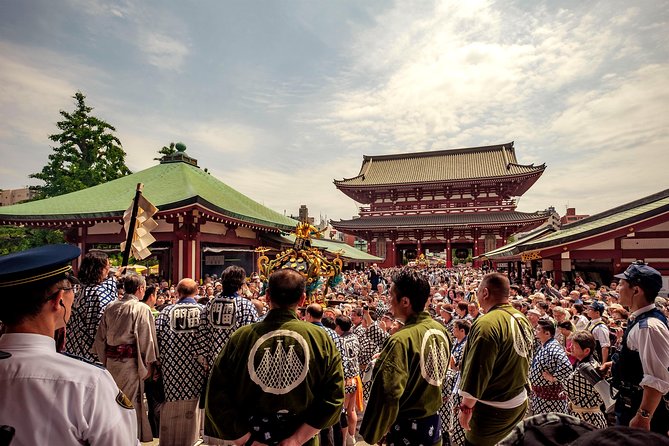
Harajuku is basically Tokyo’s youth fashion engine, and it’s right next to Meiji Jingu, which makes it easy to shift moods within one day.
In the Harajuku area, you’ll find trendy streets and backstreets with plenty of street art and photo-friendly food options. The vibe is playful, and yes, it can get intense with crowds. That said, it’s one of the easiest areas to understand modern Tokyo culture on foot.
Then you transition to Meiji Jingu, which is a completely different world. The shrine sits inside a massive forest, about 700,000 square meters, and it’s a chance to slow your senses. You’ll learn about Shintoism as the guide explains the meaning of the site and its place in Japanese life.
Here’s what I like about pairing these stops: Harajuku gives you the “now.” Meiji Jingu gives you the “why.”
Shinjuku entertainment district and the Tokyo skyline view
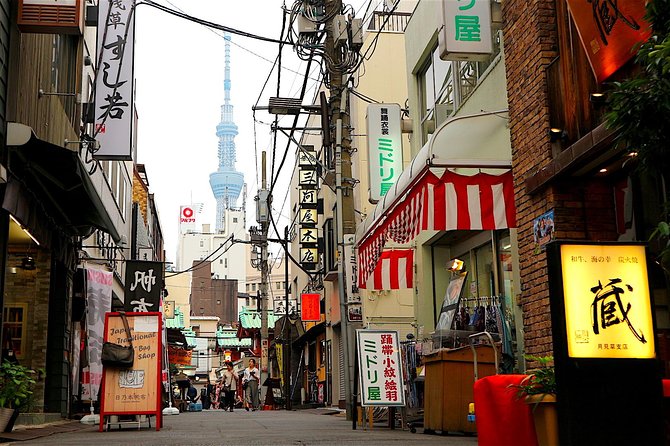
Shinjuku is Tokyo’s entertainment hub, with tall buildings and neon lighting that can feel like a movie set. The tour includes a viewpoint at the observatory on the 45th floor of the Tokyo Metropolitan Government Building area.
The best way to think about this stop: it’s a mental map maker. From above, you can connect what you saw earlier at street level with the actual shape of the city. If you’re navigating Tokyo later in your trip, that viewpoint helps.
Drawback to plan for: if the weather is gray or visibility is poor, a skyline stop becomes less magical. You can still enjoy Shinjuku itself, but you might want to keep the schedule flexible.
Asakusa and Senso-ji: the historic heart you can shop and snack in
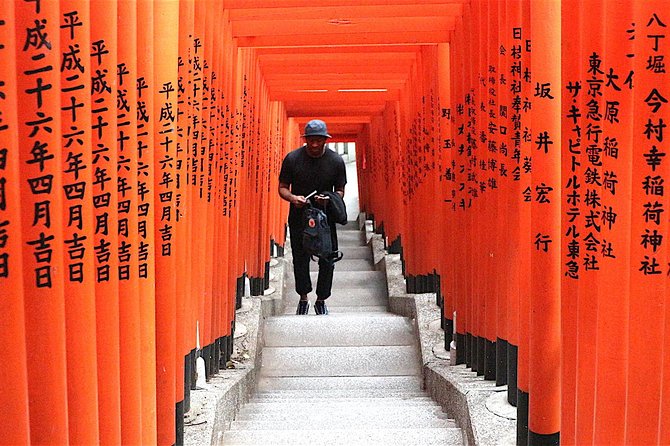
Asakusa is where Tokyo gets older and hands-on. The area is known for traditional craft shops and a classic approach street called Nakamise Shopping Street, about 250 meters of stalls leading toward the temple area.
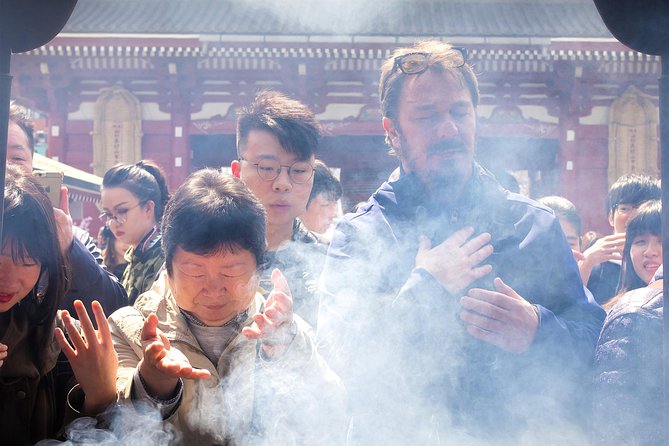
Senso-ji is the main event. It’s Tokyo’s oldest temple, dating back to 628, and it’s tied to Buddhism. Your guide will point out what to look for and how to understand the site beyond just photos.
A practical note: this neighborhood is both cultural and commercial. If you like souvenir browsing, you’ll enjoy it. If you prefer quiet, ask your guide to time the walk so you can step back from the peak crowd moments.
Akihabara: where electronics and fan culture get loud
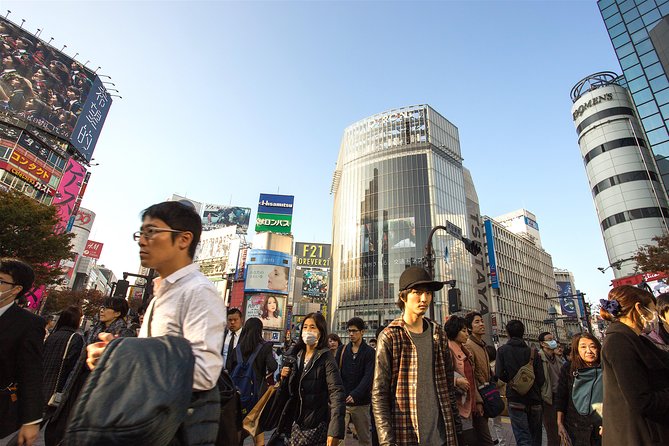
Akihabara is Tokyo for anime, manga, video games, and electronics. The tour includes a shorter stop, which makes sense because the area is so dense with displays and storefront distractions.
You’ll get a stroll through the district, and your guide can help connect what you’re seeing to the bigger fan culture that made Akihabara famous. If you like browsing gadgets, finding a specific anime item, or just soaking up the atmosphere, this is a good place to spend your attention.
Consideration: if you’re not into electronics or pop culture, you might feel it’s more “storefront” than “story.” Still, it’s a very Tokyo experience, and it can be fun even if your shopping goals are modest.
Marunouchi, the Imperial Palace East Gardens, and Nihonbashi
This is where the tour adds structure and meaning. Instead of just hopping between flashy zones, you get the “center of power and trade” feeling.
Marunouchi sits in the sleek business district around the Imperial Palace. You’ll see the kind of architecture that changes how Tokyo looks, especially compared with the neon districts.
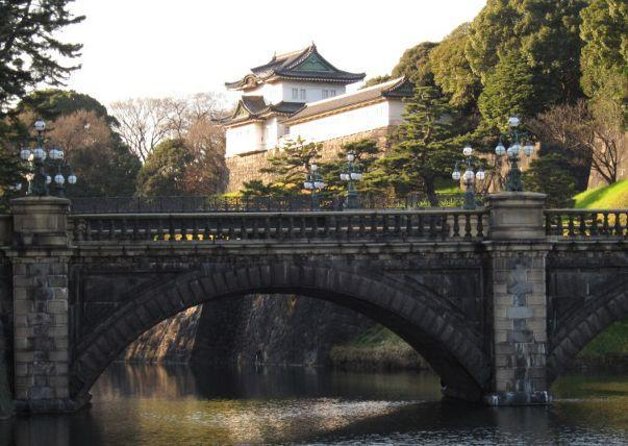
Then comes the Imperial Palace East Gardens and the Edo Castle remnants, including moat walls. This stop helps you picture how older Tokyo was shaped, before the modern skyline took over.
Finally, Nihonbashi connects to trade and food culture. It’s described as the original center of commerce from the Edo period, and the guide also explains how Japanese cooking has roots tied to this area. If you like the idea that food history isn’t random, this stop is worth your attention.
A small heads-up: these areas can feel calmer than Shibuya or Harajuku, but you’ll still be walking and crossing streets. It’s not a slow stroll unless you choose to slow it down.
Tsukiji’s outer market, plus Yanaka’s tea-house pace
If you love food markets, this tour gives you a taste of the energy around fish and snacks.
Tsukiji Fish Market is split in your day’s understanding: the “inner market” and the famous auction moved to Toyosu, but the outer market remains. That means you still get the atmosphere, fresh fish displays, and a strong food browsing vibe without the exact same auction scene.
Then you shift to Yanaka, a more nostalgic side of Tokyo. It’s described as a traditional downtown district with hundreds of temples, sweets, and a tea house where you can experience a traditional tea ceremony. The tour also includes a cemetery walk, which can be surprisingly moving because it shows how traditions sit inside everyday streets.
Why this pairing works: Tsukiji is sensory and fast. Yanaka is slower and more reflective. Together they balance out the day.
Skytree, Tokyo Tower, and Shibuya Sky: choose one skyline moment
The tour includes options for major observation decks, but the ticket cost is not included for these three stops. That’s actually good news because it lets you decide what fits your budget and your day.
- Tokyo Skytree: world’s tallest tower at 634 meters, with observation deck tickets add-on
- Tokyo Tower: a post-war symbol that was Japan’s tallest structure from 1958 to 2012, with tickets add-on
- Shibuya Sky: a 360-degree observatory, tickets add-on
My practical advice: pick one. If you do more than one, you’ll spend extra money and lose the sense of variety. One great skyline view is often enough to give your trip that “wow, I get this city now” feeling.
Also, check the weather the day before (and again in the morning). If it’s rainy or foggy, you may get less from the height aspect. In that case, I’d lean into neighborhoods where you still get great street experiences even in bad weather.
Real-life guide strengths: customization that works for kids and first-timers
The experience stands or falls on the guide, and the guide quality here tends to be one of the biggest wins.
I’ve seen guides name themselves in how they handle the day. For example, Paiva is mentioned as fun, friendly, and especially good at tailoring the tour to keep kids engaged while also meeting food needs. If you’re traveling with children, this matters more than you might think. Kids can lose patience fast when they’re walking and waiting, and a guide who adapts the plan can turn the whole day into something manageable.
I also like that the tour can be handled well even when weather goes sideways. One experience mentioned rainy weather and still delivering a fantastic day, including optional add-ons like a boat ride and tea service. That’s a sign of good problem-solving.
And if you’re anxious about navigating Tokyo for the first time, you’ll likely feel calmer with a guide who stays with you step by step. One example mentioned Miko guiding people through places like the fish market and a tea house, while also helping you use the subway system with confidence. That kind of support is worth its weight in maps.
Who should book this private walking tour of Tokyo?
You’ll enjoy this most if:
- You want a private guide and don’t want to share attention with a big group
- You like choosing your own pace and priorities (half day or full day makes planning easier)
- You’re interested in mixing Tokyo’s modern icons with traditional neighborhoods
- You want practical help using the subway system and getting around efficiently
- You’re traveling with kids who need a plan that stays engaging
You might not love it as much if:
- You dislike lots of walking and long station transfers
- You want every part of the day to be driven by taxi or minimized walking
- You’re hoping everything is fully ticketed and all costs are included, because subway fares and observation deck tickets are extra
Should you book it? My straight call
If you’re the kind of traveler who wants Tokyo to feel personal, this is a strong pick. The hotel pickup, the private pacing, and the guide support for transit passes make the day feel smooth, even when you’re hopping across big districts.
Book it when you want control, not chaos. If you’re open to choosing one skyline stop, and you plan for subway costs plus meals, you’ll get a lot of Tokyo in a day without feeling like you’re just running from landmark to landmark.
If you tell me your travel dates, where you’re staying, and whether you prefer temples, shopping, food, or views, I can suggest a smart half-day or full-day route from the stop list.
FAQ
Is this tour private?
Yes. It’s a private tour/activity, meaning only your group participates.
How long is the tour?
The duration is about 4 to 8 hours, depending on the option you choose.
Do you offer hotel pickup and drop-off?
Yes. Your guide will come to your hotel for convenience and you’ll also get drop-off.
Are subway or public transportation costs included?
No. Public transportation costs are excluded. You will need to purchase a travel pass.
Is food included in the tour price?
No. Food and drinks are not included.
Are attraction tickets included?
Many stops list free admission. However, observation deck tickets for Tokyo Skytree, Tokyo Tower, and Shibuya Sky are not included, and they can be added on.
Can I customize where we go and how long we tour?
Yes. You choose the start time and where you’d like to visit, and you can pick a half day or full day.
Do you include a mobile ticket?
Yes. The tour includes a mobile ticket.
Are children welcome, and is there a child discount?
Children aged 11 and under are free of charge. You just need to tell the operator they are coming.
Latest write-ups near Tokyo
- Harajuku Private Tour: Kawaii Fashion & Animal Cafe Included★ 5.0 · 69 reviews
- Mt Fuji Customizable Private Tour English Speaking Driver Pick-up★ 5.0 · 69 reviews
- Tokyo Night Cooking Class: 5 Home-Cooked Japanese Dishes★ 5.0 · 70 reviews
- Tokyo: Sumida Aquarium Entry Ticket★ 4.6 · 70 reviews
- Wagyu Beef and Sake Pairing Foodie Tour in Tokyo★ 5.0 · 71 reviews
- Official Japan Go-Kart Through Tokyo Bay / Ginza (IDP Required)★ 4.5 · 71 reviews
- Experience Big soba knife Soba Making Class in Tokyo Kappabashi★ 5.0 · 71 reviews
- Japanese Traditional Music Show in Tokyo★ 5.0 · 72 reviews
Walking Tours, compared.
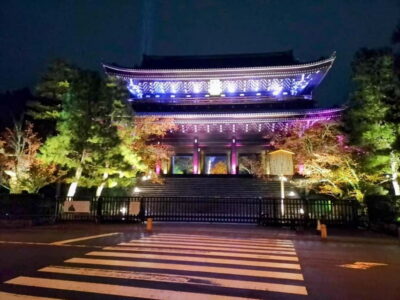
Kyoto Geisha Walking Tour: Gion District & Hidden Gems
Read our review →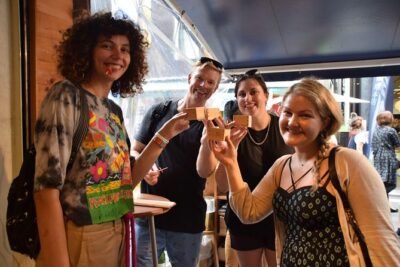
Tokyo Tsukiji Fish Market Food and Culture Walking Tour
Read our review →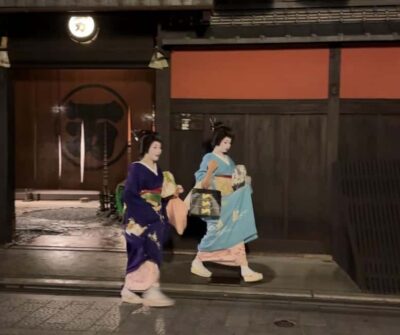
Gion Magical Night Walking Tour with Geisha Trivia
Read our review →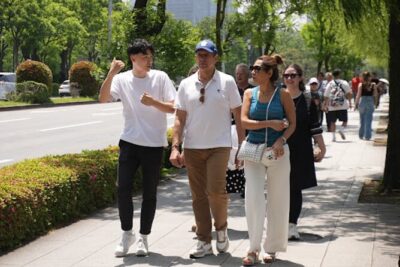
Imperial Palace and Shogun Historical Walking Tour
Read our review →
Gion Geisha District Walking Tour – Stories of Geisha
Read our review →
Shinjuku Local Bar and Izakaya Guided Walking Tour
Read our review →
Browse the lists this tour appears in