Reviewed · KYOTO TOURS
Private Highlights of Kyoto Tour
What makes this Kyoto day tour interesting is that you choose between two route styles and then see the city’s top sights with a single, English-speaking guide using public transport. I love how much time you get for real conversation at each stop, not just a quick walk-by. I also like the built-in one-day city bus pass, which keeps the day useful even after you’re done touring. The one thing to consider is that it’s a packed schedule with plenty of walking and temple steps between iconic viewpoints.
You start at Hotel Granvia Kyoto near Kyoto Station at 9:00am, and the group is small, up to 8 people, so the experience stays personal. Lunch is on your own, but the guide does the hard part, linking stops efficiently across the city. If you want a first-time Kyoto plan that feels structured but still flexible with questions, this is a strong option.
Key highlights worth planning around
- Two route options that fit your Kyoto mood, northbound for Arashiyama, Golden Pavilion, and markets or Nijo Castle, southeast for Fushimi Inari, Kiyomizu-dera, and Gion
- Public transport plus a bus pass that continues after the tour, so you are not stuck figuring out transit later
- Major temple and museum entries are included on most stops, which helps the day feel like true value
- A small-group feel with private-guide attention, and it can even run like a near-private experience
- You end in Gion, which makes it easy to keep the evening going at your own pace
A private Kyoto highlights day with real guide time, not rush time
This tour is built for people who want Kyoto’s most recognizable places, but also want help understanding what they are looking at. You are not just herded from one photo spot to another. With a professional English-speaking guide, you can ask why a temple looks the way it does, what a shrine layout signals, or what the symbolism means.
I also like that the day uses Kyoto like locals do. You take public transport, and the guide helps you move efficiently while keeping you oriented. That matters in Kyoto, where neighborhoods and temple areas can feel like a maze if you are moving on your own.
The pace is still full. You should treat it as a proper day trip, not a slow stroll. In practice, the tour is manageable for most people, but you will be on your feet for much of the day, especially around the major temple complexes.
Also on the shortlist for Kyoto:
- PERFECT KYOTO 1-Day Bus Tour
★ 5.0 · 13,518 reviews - Kyoto: Fushimi Inari, Kinkakuji, Bamboo Grove 1 Day Bus Tour
★ 4.8 · 4,316 reviews - Kyoto: Tea Ceremony in a Traditional Tea House in Kiyomizu
★ 4.9 · 3,519 reviews
Picking the northbound route vs the southeast route
You choose one of two itinerary directions, and they each hit a different slice of Kyoto’s personality.
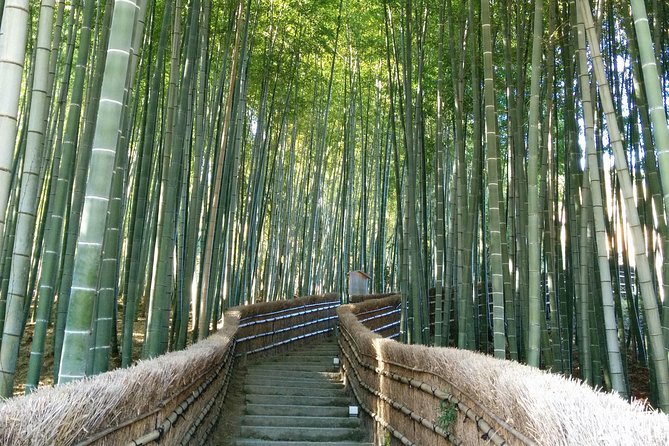
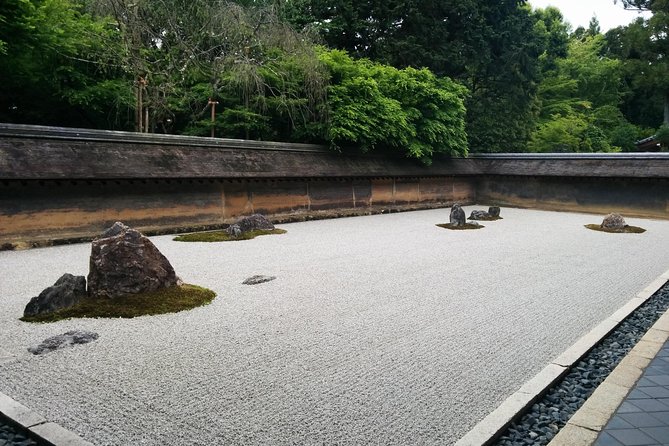
On the northbound route, your day starts with the Arashiyama area, including Arashiyama Park and the bamboo setting that Kyoto is famous for. After that, you continue toward Ryoan-ji and its famed rock garden, then you move on to Kinkakuji, the Golden Pavilion. The plan also includes a key choice point, either the Nishiki Food Market or Nijo Castle, before finishing in Gion.
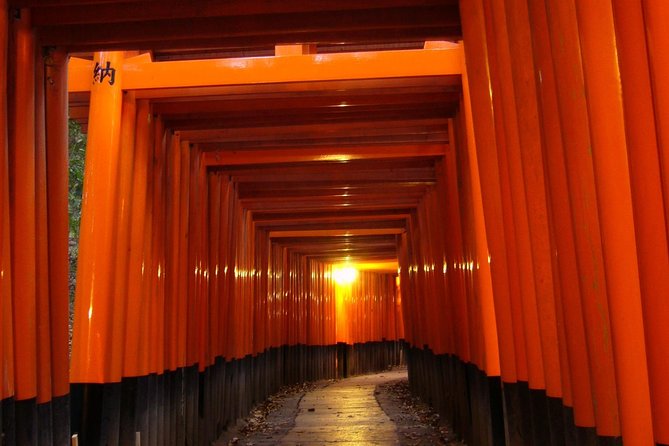
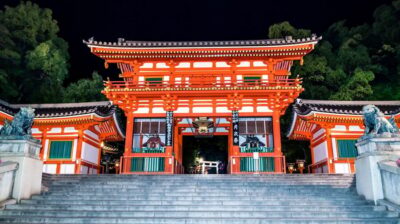
On the southeast route, the day leans into shrines and classic hillside views. You can start with a sake stop at Gekkeikan Okura Sake Museum, then head to Fushimi Inari-taisha with its thousands of red torii gates. After Sanjusangendo, the route continues to Kiyomizu-dera and then up through the historic streets around Ninenzaka and Sannenzaka for big postcard views, ending in Gion.
If you like nature and the bamboo-and-zen contrast, pick northbound. If you want the famous torii gates and the dramatic temple balcony views, southeast is the one.
Northbound highlights: Arashiyama bamboo, Ryoan-ji rocks, and the Golden Pavilion
The northbound day starts in the Arashiyama direction, which is a smart warm-up for first-timers. Arashiyama Park gives you that mix of temples and green space, and you get time to enjoy it without feeling like you are sprinting for one single photo. The tour also includes the bamboo forest setting, including Bamboo Forest Street, plus the area near Togetsukyo Bridge, the big wooden bridge by the bamboo groves.
Then you head to Ryoan-ji, one of Kyoto’s most famous Zen gardens. This is where the tour’s guide part really matters. The rock garden is built around a simple visual arrangement, but it is the explanation that helps you see why people talk about it so much. You have a set visit window, and it is long enough to take it in without feeling rushed.
Next comes Kinkakuji, the Golden Pavilion. It is a three-story pagoda known for its gold leaf look, and it is one of those sights that is even more impressive in person than in photos. The time built into the schedule gives you a chance to appreciate details from different angles instead of only catching one view.
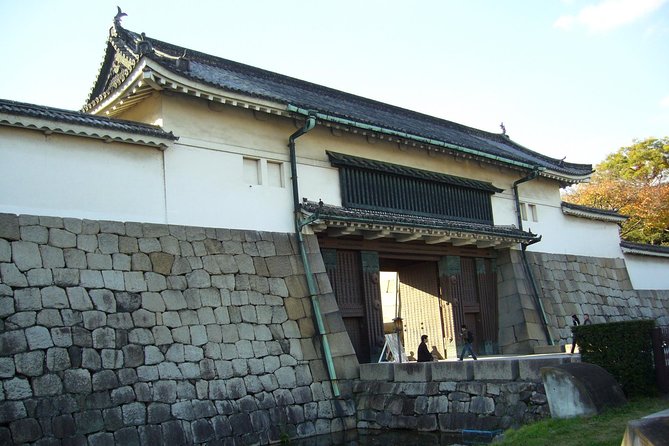
From there, you add either Nishiki Food Market or Nijo Castle, depending on the option selected. Nishiki is the classic Kyoto food-market experience, and it is a good counterpoint if you want a break from temples and gardens. Nijo Castle is the more power-and-history stop, built in the Tokugawa Shogunate period in the early 1600s, with gold-leaf decoration and original living quarters for the Shogun. If you like architecture and court-era design, Nijo will scratch that itch.
The day ends in Gion either way. That is a good move because it turns the grand finale into something you can explore on your own after the guided portion.
Southeast route highlights: torii gates at Fushimi Inari and hillside views at Kiyomizu-dera
The southeast route is Kyoto’s shrine-and-views storyline. It begins with either Sanjusangendo and more temple emphasis, or with the sake stop at Gekkeikan Okura Sake Museum, depending on the exact flow of your selected itinerary. The sake museum option is a nice change of pace if you want a cultural stop that is still very Kyoto.
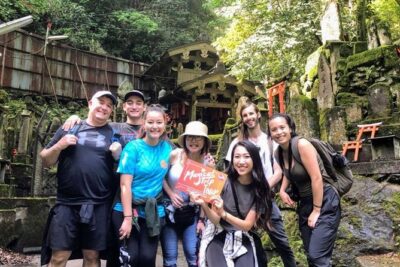
Then you reach Fushimi Inari-taisha Shrine, famous for its thousands of red torii gates running across the mountain. The guide time here helps you navigate the area and understand why the shrine is laid out the way it is, including the presence of stone foxes and smaller shrines.
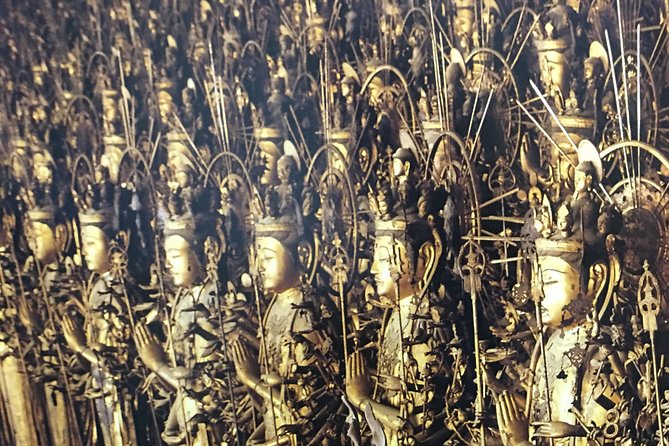
After Fushimi Inari, the route includes Sanjusangendo Temple, which is known for the astonishing 1001 Kannon statues. This is one of those places where you will likely notice the scale first, but the guide helps you notice what makes the arrangement special, and what to look for as your eyes move across the hall.
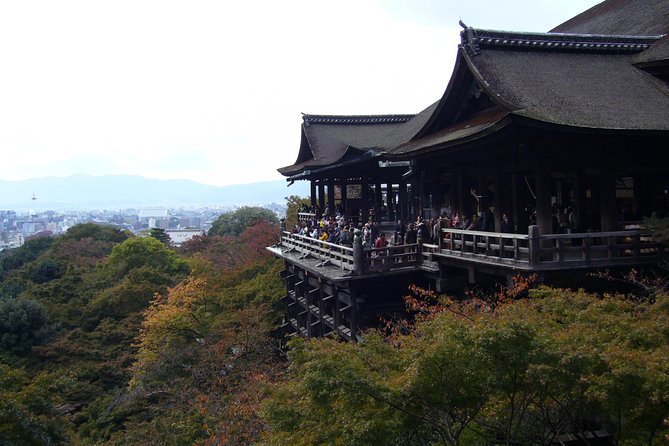
Next comes Kiyomizu-dera, a hilltop landmark dating back to the 8th century. The standout is the view from the balcony, the one that Kyoto postcards are built around. The tour also includes the approach to the temple via the historic pathway, plus time around the slopes in Ninenzaka and Sannenzaka, where you get more dramatic scenery as the streets rise toward the temple area.
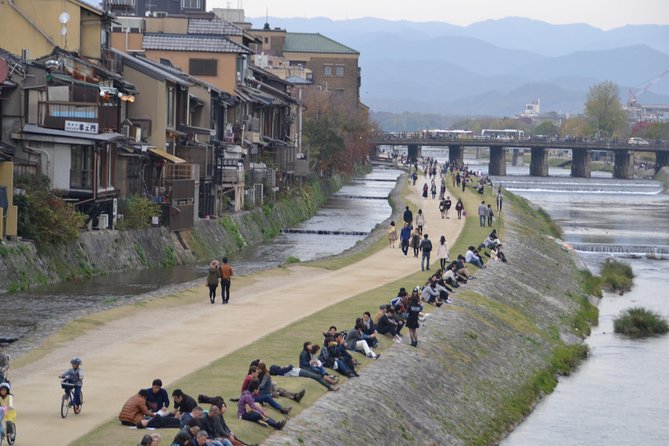
The day closes in Gion, which works well because you end with atmosphere. Even if you do not plan a formal dinner or show, you can use that final window to walk the neighborhood at your own pace.
A change of pace from Kyoto:
- Kyoto Geisha Walking Tour: Gion District & Hidden Gems
★ 4.7 · 3,273 reviews - Kyoto: Tea Ceremony Ju-An at Jotokuji Temple
★ 4.9 · 3,207 reviews - Kyoto: Gion Magical Night Walking Tour with Geisha Trivia
★ 4.9 · 2,393 reviews - Kyoto: 45-Minute Tea Ceremony Lesson Experience
★ 4.3 · 2,378 reviews
How the included tickets and free stops affect the real value
A big reason this tour feels worth it is the blend of paid admissions and free entry. Many of the headline sites include admission tickets, which keeps the day from becoming an add-on bill later.
Based on the stops in the plan, admission is included for places like Kinkakuji, Kiyomizu-dera, Nijo Castle, Sanjusangendo Temple, Ryoan-ji, and the Gekkeikan Okura Sake Museum. Other segments are listed as free, including parts of the Gion area, the bamboo forest street, and Fushimi Inari-taisha.
For your planning, the key point is simple. You can budget one number for the day, and most of the famous entries are already covered. That makes it easier to compare this to piecing together separate tickets and timed entry reservations.
Public transport plus the continuous bus pass, how that helps after the tour
The tour includes public transportation and a one-day city bus pass. That bus pass can be used continuously after the tour, which is a small detail that turns into real convenience.
In Kyoto, transit and walking are always part of the plan, but a bus pass reduces friction. When you finish in Gion, you are already in a neighborhood where you can keep exploring. Instead of figuring out the system from scratch, you can use the pass to get to your next stop with less mental overhead.
The meeting point also sets you up for smooth transit. You start at JR Kyoto Station Central Entrance at Hotel Granvia Kyoto, which is where arriving from Osaka or Tokyo is simple. It is one less thing to worry about on a day that is already packed with sights.
Walking pace, timing, and where the schedule gives you breathing room
This is a 7-hour day with set time windows at each stop, usually around 50 minutes for the big sites and shorter visits for specific areas like the bamboo walk. That structure is helpful because Kyoto’s attractions can spread out, and “finding your own way” can eat up time quickly.
Lunch is not included, and you will have a lunch break with lunch at your own expense. This is a fair setup because it gives you a real choice. You can pick something simple near your route, or ask your guide for a direction based on what you like.
From the experience feedback, the schedule is still described as manageable, even with rain. The tour does not pretend that the day is effortless, but the guide approach helps you keep moving without feeling like you are just being transported.
Your guide matters: what to expect from English-speaking hosts
This is a private highlights tour with a professional English-speaking guide, and the tone is built around explanations and questions. Many guides associated with this tour style are praised for clear communication, humor, and a sense of pacing that keeps the day from feeling like a lecture.
You may meet guides with names like Mia, Mie, Chako, Choc, Mai, or Hiseko. The pattern across these guides is consistent: they answer questions well and help you understand what you are seeing, including architecture, symbolism, and what specific design choices mean.
One practical advantage is flexibility. Even if the itinerary is defined, guides are often able to adapt to your group, including if you want to spend a little longer looking at details or if you need to slow down for your pace. In some cases, the group can feel nearly private, which is a big quality boost if you like asking follow-ups.
Price and value for a 7-hour Kyoto highlights plan
At $151.20 per person for a 7-hour private highlights day, you are paying for four things at once: a guide, transportation help, included admissions for many major sites, and the bus pass value. It is not a budget option, but it is also not just “pay to walk with someone.”
The best way to judge the price is to compare it to building the day yourself. If you tried to cover Kinkakuji, Kiyomizu-dera, Fushimi Inari, and at least one more major site with correct transit, you would spend real time getting oriented and paying entry fees along the way. This tour compresses that work into a guided route.
Also, with a maximum group size of 8 travelers, you are not getting a giant crowd experience. You are paying for control and clarity, especially on your first trip.
If you are cost-sensitive, it is reasonable to pause and ask if you need a guide for all stops. But if your goal is to understand Kyoto, not just see it, this price starts to make sense.
Who should book this private Kyoto highlights tour
This is a smart match for:
- First-time Kyoto visitors who want the “must-see” list covered in one day
- People who like guided context, especially for temples, shrine symbolism, and architecture
- Travelers who prefer public transport with help, rather than building their own route
- Anyone who wants to end in Gion with energy to keep exploring afterward
It may not be ideal if you want a slow, minimal-walking day or if you already know Kyoto deeply and only need a couple of specific stops.
Should you book this private Kyoto highlights tour?
Yes, if you want a clean, guided first pass through Kyoto’s headline sights and you like learning while you walk. The combination of major entries, English guidance, and the continuous bus pass makes it a practical day, not just a checklist.
I would especially book it if you are trying to decide between “north nature Kyoto” and “southeast shrine-and-views Kyoto,” because the route choice actually changes the feel of your day. And with guides like Mia, Chako, and Hiseko showing up in past experiences, the odds are good that your time will feel thoughtful, not generic.
FAQ
Where does the tour start?
The tour starts at Hotel Granvia Kyoto, near JR Kyoto Station Central Entrance.
What time does the tour begin, and how long is it?
The start time is 9:00am, and the tour is about 7 hours.
How do the two itinerary options differ?
You can choose either a northbound route that includes stops like Arashiyama Park (and bamboo area), Ryoan-ji, and Kinkakuji, plus either Nishiki Food Market or Nijo Castle. Or you can choose a southeast route that includes Fushimi Inari-taisha, Sanjusangendo, and Kiyomizu-dera, plus time around Ninenzaka and Sannenzaka, ending in Gion.
Are admission tickets included?
Admission tickets are included for several stops listed in the itinerary, including Kinkakuji, Kiyomizu-dera, Nijo Castle, Sanjusangendo Temple, Ryoan-ji, and Gekkeikan Okura Sake Museum. Other portions are listed as free, such as Fushimi Inari-taisha and Bamboo Forest Street.
What’s included in the price?
The price includes a professional English-speaking guide, public transportation, and a one-day city bus pass that you can keep using after the tour.
Can the tour be canceled, and what if the weather is bad?
You can cancel for a full refund up to 24 hours before the experience starts. If the tour is canceled due to poor weather, you will be offered a different date or a full refund.
If you want, tell me which route you are leaning toward (northbound or southeast), and what month you’re going. I can help you pick based on your priorities like temples versus food stops versus gardens.
Latest write-ups near Kyoto
- Kyoto: Nishiki Market Tour with a Local Foodie & Tastings★ 4.5 · 67 reviews
- Kyoto Kimono Rental mimosa |Kimono/Yukata Rental Couple Plan★ 4.8 · 67 reviews
- Kyoto: Traditional Kimono Fabric Handicrafts Workshop★ 5.0 · 67 reviews
- Kyoto Tea Ceremony and Samurai Photo Session★ 5.0 · 70 reviews
- Kyoto: Replica food making experience★ 4.8 · 70 reviews
- Kyoto: Kinkakuji, Golden Pavilion Guided Tour★ 4.7 · 71 reviews
- Private departure transfer from Kyoto city to Kansai International airport★ 5.0 · 72 reviews
- Uji: Green Tea Tour with Byodoin and Koshoji Temple Visits★ 4.8 · 72 reviews
Kyoto Tours, compared.
Fushimi Inari, Kinkakuji, Bamboo Grove 1 Day Bus Tour
Read our review →
Tea Ceremony in a Traditional Tea House in Kiyomizu
Read our review →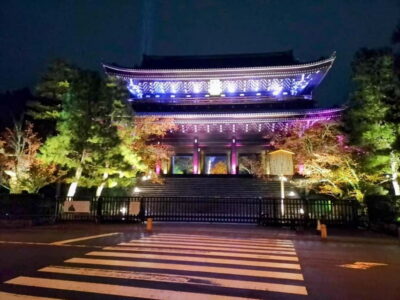
Kyoto Geisha Walking Tour: Gion District & Hidden Gems
Read our review →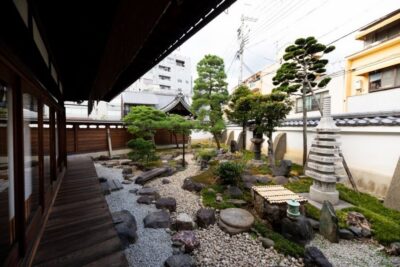
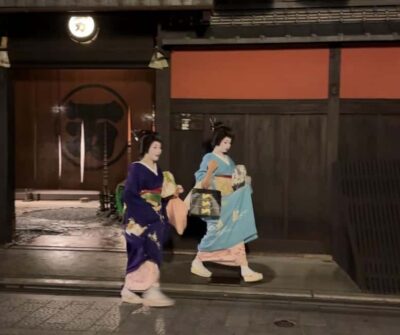
Gion Magical Night Walking Tour with Geisha Trivia
Read our review →