Reviewed · PRIVATE
Private homevisit for whole cultual experience, 20min from Tokyo
This private Tokyo-area home visit turns Japanese culture into something you do, not just watch, in a real Japanese home. I really like the hands-on flow, from matcha to food, with your host Noriko guiding the whole day at your pace.
Two things I’d pick out right away. I love that you get to try the tea ceremony portion both ways, first by watching and then by making matcha yourself. And I also like that the music lesson is practical, you actually learn the koto and get a chance to play, not just listen from the sidelines.
One possible drawback is the menu choice. You choose in advance between Hiroshima-style okonomiyaki or norimaki sushi rolls, and one menu must be chosen for the whole group, so it can feel limiting if everyone has different cravings.
Key highlights to look forward to
- A true in-home experience near Tokyo that feels personal, not staged
- Meet at Shin-Urayasu Station, then a short walk plus a supermarket stop to learn ingredients
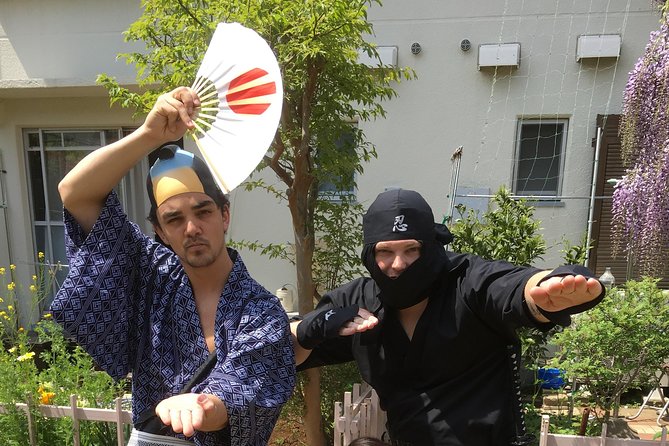
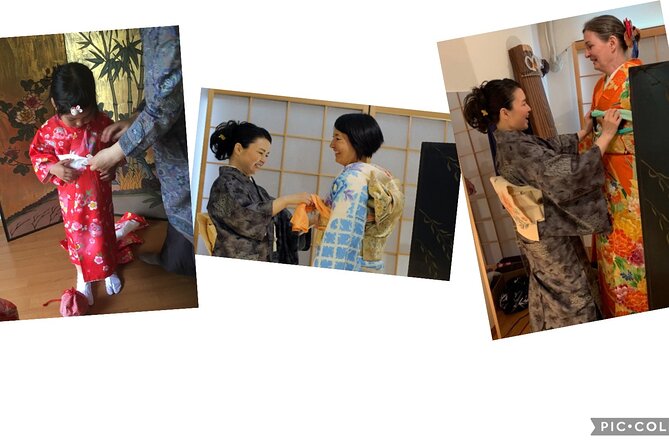
- Yukata dress-up and photo time, with kimono or ninja outfit options for pictures
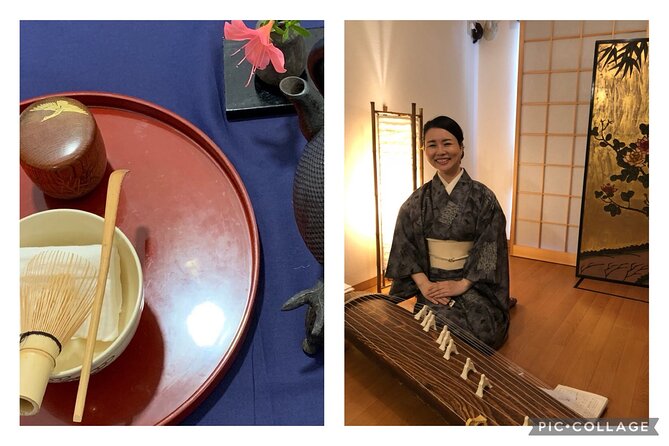
- Matcha tea ceremony twice, first served in a simple ceremony and then you make your own
- Cook and eat lunch together, choosing either okonomiyaki or sushi rolls in advance
- Koto music lesson, host plays first, then you try with guidance
A real-home Japanese cultural day, about 20 minutes from Tokyo Station
If you want Japan that feels lived-in, this is the kind of activity that delivers. You start near Shin-Urayasu, then Noriko takes you to her home. From there, the day moves like a friendly visit that happens to include real skills, real ingredients, and plenty of time to ask questions.
The vibe is intimate. It’s private, so you’re not sharing instructions with strangers or rushing through steps while someone else is still figuring out their chopsticks. That matters, because the best parts of Japanese culture are often the small details, the what-and-why that you miss when you’re just passing through.
The other big win is variety. You’re doing clothing, food, tea, and music in one morning-to-afternoon block. It’s not a museum tour where everything is explained at arm’s length. Here, you get to participate, which is usually how the memories stick.
Also on the shortlist for Tokyo:
- Mt Fuji and Hakone 1-Day Bus Tour Return by Bullet Train
★ 5.0 · 26,383 reviews - 1-Day Tokyo Bus Tour
★ 5.0 · 14,250 reviews - Tokyo: TOKYO SKYTREE® Admission ticket
★ 4.5 · 11,192 reviews
Getting to Shin-Urayasu and the smart supermarket ingredient stop
Your day starts at Shin-Urayasu Station (meeting point at 1 Chome-1 Irifune, Urayasu, Chiba 279-0012). The route is straightforward from Tokyo: it’s about 20 minutes from Tokyo Station to Shin-Urayasu (JE08), then roughly a 3-minute walk to the meeting point.
Once you meet Noriko, you walk together to the home. On the way, you stop at a supermarket. This part is more useful than it sounds, because it gives you language for what you’re about to eat. You’re not just told what ingredients are; you learn what makes them Japanese and how they show up in everyday cooking.
Practical tip: treat this as your warm-up. It’s a low-pressure way to start noticing textures, packaging, and ingredient names you might see again when you travel later. It also helps if you’re the type who likes to understand what’s going on before you start cooking.
Yukata dress-up and photo time in a Japanese home setting
After you arrive, you change into a cotton kimono called yukata. This is a big part of the fun, and also the quickest way to feel like you’re stepping into another side of Japan. Yukata are casual, breathable, and comfortable, which is perfect for a day that also includes cooking and hands-on lessons.
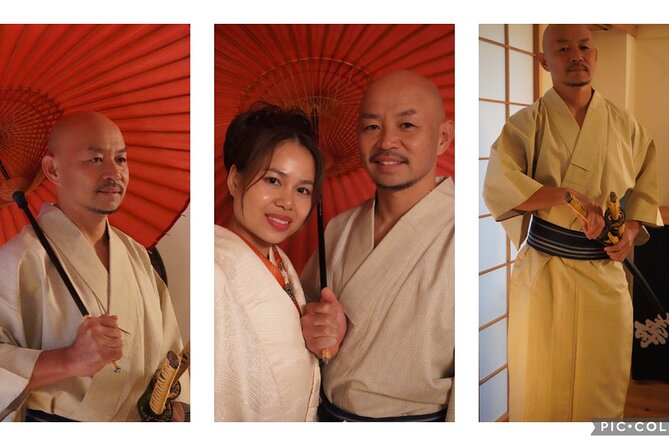
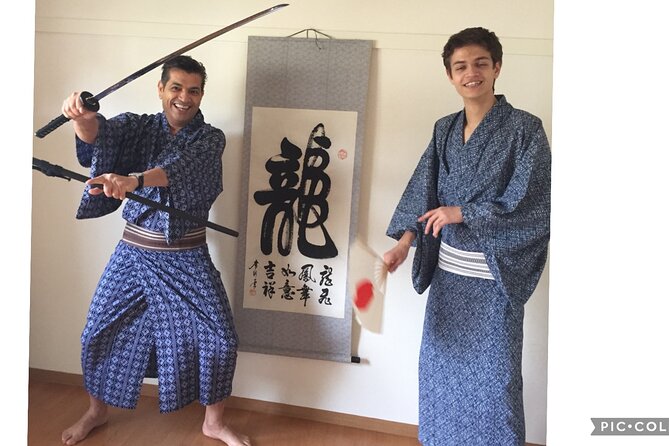
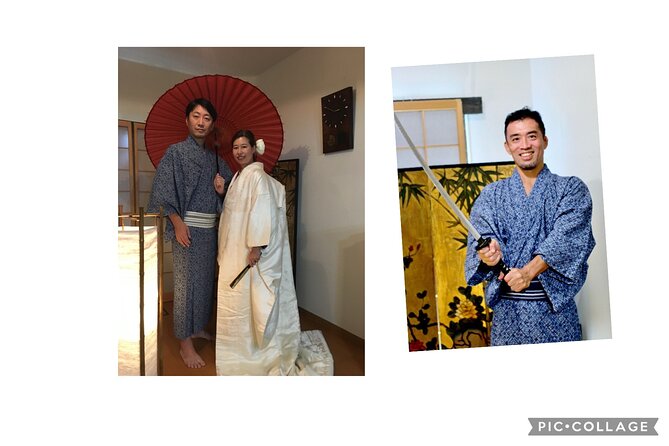
Photo time is built in. You can take pictures in kimono or ninja outfit style, depending on what’s offered during dressing. Either way, it’s a great way to capture the day without needing a separate photo service or a crowded tourist spot.
One small consideration: since your day includes active tasks, wear shoes that are easy to take off and put on, and keep your movement comfortable. Yukata look great, but your feet still need practical comfort when you’re standing, cooking, and learning new steps.
Matcha tea ceremony, including making your own bowl
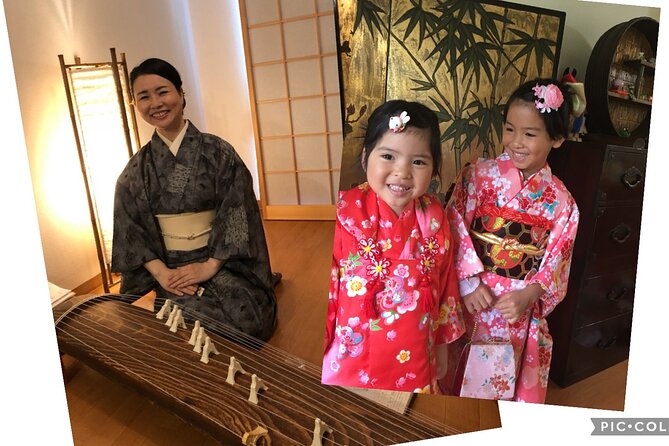
This is one of the most memorable sections because it’s both structured and relaxed. You’ll have two bowls of matcha.
First, you enjoy matcha served with a nice touch of ceremony. It’s not overly formal, but it’s respectful. You’ll see how the serving moment works and what to notice, like the way the drink is prepared and how it’s meant to be enjoyed.
Then you make the second bowl yourself. This is the moment I think you’ll appreciate most, because it turns matcha from a taste you’ve heard about into a process you actually understand. Tea ceremony in theory can feel distant. In practice, it becomes something you can repeat at home, at least in the simplified version.
What makes this valuable is the balance. You’re not stuck watching, and you’re not thrown into doing it with no support. Noriko’s role is to help you hit the key points so you leave with confidence, not confusion.
A change of pace from Tokyo:
- Tokyo: teamLab Planets TOKYO Digital Art Museum Entry Ticket
★ 4.6 · 9,779 reviews - Mt Fuji & Hakone Cruise, Drum Show Bullet Train 1 Day from Tokyo
★ 4.0 · 7,413 reviews - Tokyo: Sumo Show Experience with Chicken Hot Pot and a Photo
★ 4.8 · 6,678 reviews - Tokyo: Shinjuku Food Tour (13 Dishes at 4 Local Eateries)
★ 5.0 · 6,603 reviews
Cooking lunch: Hiroshima-style okonomiyaki or norimaki sushi rolls
Lunch is hands-on, and you get to choose in advance between two options:
- Hiroshima-style okonomiyaki (savory pancake)
- Norimaki sushi rolls (sushi rolls)
Important detail: the group shares one menu. So if you’re booking with friends or family who want different things, you’ll need to pick one option for everyone. This isn’t a dealbreaker, but it is the one planning constraint that can affect your satisfaction.
Here’s what I like about the cooking format. It’s a skill you can talk about in the rest of your trip. You can tell people what you made, what you learned, and why it tastes the way it does. And because you eat what you make, you get instant feedback on your results.
Also, cooking in a home setting is very different from doing it in a classroom. You tend to notice how tools are stored, how the kitchen is laid out, and how people actually move through the space. That’s the kind of real-life contrast you can’t get from a quick tasting stop.
Koto music lesson in a home, not a show
The day wraps up one of the coolest cultural activities for music lovers: koto.
You’ll enjoy live music performed by Noriko first. Then it’s your turn. Guidance is provided, so you’re not expected to arrive with musical training. The point is participation, not perfection.
This section is especially strong if you’ve ever been intimidated by traditional instruments. A lot of cultural experiences leave you as an observer. Here, you’re handed the chance to try. You get to feel what it’s like to produce sound from the instrument and what “learning” actually looks like in the first stages.
And because it happens in a real home environment, the moment feels natural. It doesn’t have the performance feeling of a stage show. It feels more like being invited into a home where music is part of daily life and tradition.
The value question: is $165.53 per person worth it?
At $165.53 per person, this is not a cheap add-on. But it can be good value if you look at what’s included and how much you get to do.
You’re paying for a full private block, around 5 hours, that combines:
- in-home cultural access (not just a meeting point visit)
- kimono/yukata dress-up and photo time
- a supermarket ingredient stop
- a casual tea ceremony with you making matcha
- a cooking lesson with lunch (okonomiyaki or sushi rolls, one choice per group)
- a guided koto lesson with you playing
If you tried to recreate parts of this independently, you’d likely spend money on entry-style experiences, private instruction, and food events, and you still wouldn’t get the same “everything happens together” day structure.
It also helps that the tour is private, so you’re not paying for a standard group lecture format. You’re paying for someone to tailor the pacing to your questions and reactions.
If you’re traveling solo, it can still be worthwhile, especially if you love hands-on activities and you want something more personal than a big day tour. If you’re a family, it’s even easier to see the value because kids and parents both get active roles, not just watching.
Who this experience suits best, and who might want something else
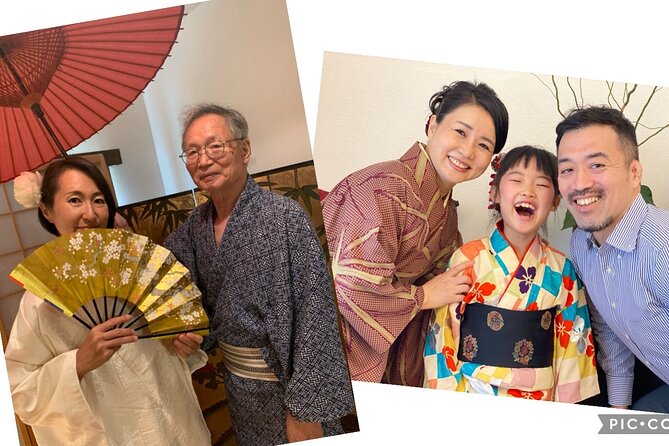
This works best for:
- Families who want culture without long walking days
- Small groups that want privacy and time to ask questions
- Foodies who like learning ingredients, not just eating
- People who enjoy photography and dress-up
- Anyone curious about tea and traditional music, but who wants practical guidance
It might feel less ideal if you:
- Want total flexibility on meal choices for everyone in your group, because the menu choice is shared
- Prefer purely sightseeing days over skills and participation
- Don’t want to handle a short train ride and then a quick walk to the meeting point
But for most people who want an authentic-feeling day and don’t mind trying things with their hands, this checks a lot of boxes.
What your host Noriko adds to the day
A big reason this experience lands so well is Noriko’s style. She’s friendly and attentive, and she’s genuinely passionate about traditional Japanese culture. That matters because in-home experiences live or die on the host relationship.
In your day, that shows up in how you’re allowed to ask things you’re curious about, without feeling rushed. It also shows up in the way the skills are taught. You’re not only told what to do, you’re guided so you can actually do it.
It’s also clear that the home itself is part of the experience. You’ll see old-style home details and how traditional Japanese space feels in real life, not as a backdrop. That adds texture to the cultural story, and it helps the day feel like a visit, not a scripted performance.
Should you book this Japan at Home experience?
I’d recommend booking if you want a compact, high-participation day that mixes Japanese clothing, matcha tea, cooking, and koto music in an actual home setting. The price looks steep at first glance, but when you add up what you’re doing and the fact it’s private, it becomes easier to justify.
Book it especially if you’re the type who likes to learn by doing. This isn’t passive tourism. It’s hands, senses, and questions, with Noriko as your guide.
Only hesitate if your group can’t agree on the lunch option in advance, because the whole group follows the same menu choice. If that’s manageable, you’ll likely leave with more than photos, you’ll leave with skills you can talk about and share.
FAQ
How long is the private Japan at Home experience?
It runs for about 5 hours.
Where does the experience start, and how do I get there from central Tokyo?
You start at Shin-Urayasu Station and then meet at the area listed as 1 Chome-1 Irifune, Urayasu, Chiba 279-0012. The area is about 20 minutes from Tokyo Station to Shin-Urayasu, and the meeting point is about a 3-minute walk away.
What do we make for lunch?
You can choose in advance between Hiroshima-style okonomiyaki or norimaki sushi rolls. One menu must be chosen for the whole group.
Do you learn matcha and music, or is it just watching?
You do both. You’ll have matcha served to you with a casual ceremony, then you’ll prepare a second bowl yourself. For koto, your host plays first, then it’s your turn with guidance.
Is this tour private?
Yes. It is a private experience with only your group participating.
What is the cancellation window?
You can cancel for a full refund up to 24 hours in advance of the experience start time. If you cancel less than 24 hours before, the amount paid is not refunded.
Latest write-ups near Tokyo
- Tokyo Nights: Shibuya Photo Adventure★ 5.0 · 20 reviews
- Wagyu & Sake 8 Course Tasting Dinner in Shinjuku★ 4.9 · 20 reviews
- Making Japanese desserts Nerikiri & drinking matcha in Tokyo★ 5.0 · 20 reviews
- Mt. Fuji 5th Station, Owakudani Ropeway, Pirate Ship plus Outlet shopping!★ 4.5 · 20 reviews
- Japanese Whisky Hunting《HIGH-QUALITY-ONLY》Rare Tasting Class★ 5.0 · 20 reviews
- Kintsugi Experience with Arita Ware in Tokyo (English Guide)★ 4.8 · 20 reviews
- This is Asakusa! A Tour Includes the All Must-Sees!★ 5.0 · 20 reviews
- Ebisu Local Food Tour: Shibuya’s Most Popular Neighborhood★ 5.0 · 20 reviews
Private, compared.

Tokyo 6hr Private Tour with Government-Licensed Guide
Read our review →
Private Tour to Mt. Fuji and Hakone (Fully Licenced Operator)
Read our review →
Fushimi Inari Hidden Hiking Tour (Private Option Available)
Read our review →
Private Kyoto Tour with a Local, Highlights & Hidden Gems, Personalised
Read our review →
Tokyo Customized Private Tour (Must See Places in 1 Day)
Read our review →
Mount Fuji Full-Day Private Tour from Tokyo (Customizable)
Read our review →
Private City Highlights Tour with Local Guide
Read our review →