
Reviewed · RAMEN EXPERIENCES
Ramen-Making Experience in the Osaka Castle Area with Souvenir
Hands-on ramen making near Osaka Castle is a smart way to turn sightseeing into a real skill. I love the step-by-step kitchen time, especially getting to make noodles and chashu from scratch. One possible drawback is that this is a popular, small-group class, so spots can fill, and the 2-hour window won’t leave much time for wandering afterward.
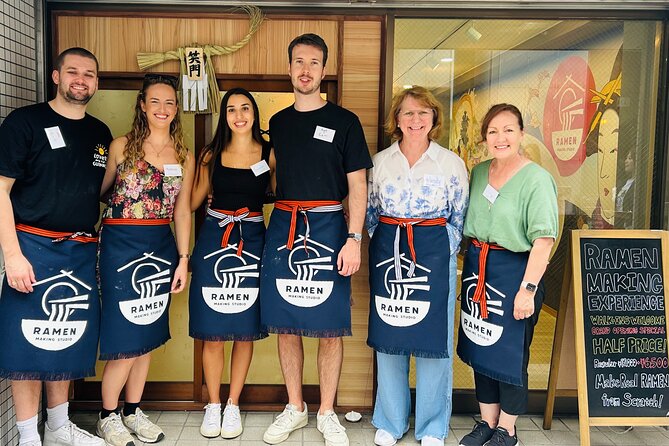
The upside is you get English support and live answers while you work, not just a demo. The setting is also designed for photos, with ramen-themed walls and a very old glass door at the entrance. If you hate close interaction in kitchens, you might find the hands-on format more active than you expect, but that also makes it fun.
Key Highlights You Can Actually Use

- Two hours of real kitchen work in a small group, max 8 people
- Noodle making with Japanese ramen flour so your noodles have that chewy texture
- Chashu you cook yourself, using chicken simmered in the studio’s original broth
- Choose your soup base: tonkotsu, shoyu, or miso
- English-speaking instructors who answer questions in real time
- A take-home souvenir plus ramen-and-Japan themed photo spots inside
Why This Ramen Workshop Fits So Well in the Osaka Castle Area
Osaka Castle gets you the big, classic postcard views, but ramen is the day-to-day Osaka. This class pairs those two ideas nicely. You spend about 2 hours making ramen from scratch, then you can keep exploring near the castle without needing to plan a complicated day around it.
I like that it’s offered in both a morning schedule and a late-afternoon schedule. That gives you a practical option if you’re doing castle sightseeing in the morning, or if you want a more relaxed food-focused block before dinner. Also, because it’s a small-group setup (up to 8 travelers), the teaching doesn’t feel like you’re stuck watching from the sidelines.
The workshop is described as family-friendly and open to all skill levels. That matters if you’re traveling with kids, or if you’re the kind of person who thinks cooking is a “watch and learn” activity. Here, the format is built for participation, so even if you’ve never made noodles before, you’re still in the process from start to finish.
More Castle Tours in Osaka
- Osaka Castle: Museum and Tower Entry Ticket
★ 4.5 · 2,380 reviews - Ultimate Osaka Walking Tour: Castle, Dotonbori & Hidden Gems
★ 5.0 · 862 reviews - Osaka Castle Walking Tour and Castle Tower Admission
★ 5.0 · 561 reviews
Getting There: Walking and Train Options Near Osaka Castle
Location is one of the biggest practical wins here. The studio is within walking distance of Osaka Castle, about 20 minutes on foot, and it’s also reachable from several train stations in under 10 minutes.
Here are the station options listed for you:
- Tenmabashi Station, Exit 13, about 10 minutes
- Minamimorimachi Station, Exit 6, about 10 minutes
- Tenmangu Station, Exit 7, about 5 minutes
If you’re bouncing around Osaka that day, you’ll also find it convenient that Umeda Sky Building and Namba are about 20 to 30 minutes away by train. Translation: you’re not locked into one neighborhood. You can base your day around the castle, then branch out to shopping or nightlife afterward.
Your meeting point is given as:
Japan, 530-0044 Osaka, Kita Ward, Higashitenma, 1-chōme4 (東天満ハイツ)
The activity ends back at the meeting point, so you’re not calculating a second transit plan to get home.
The 2-Hour Flow: Noodles, Chashu, Then Soup Base
This is not a “you sit, we show” class. The whole thing is built around a complete ramen workflow so you understand the logic of the dish, not just the final bowl.
1) Noodle making, the chewy payoff
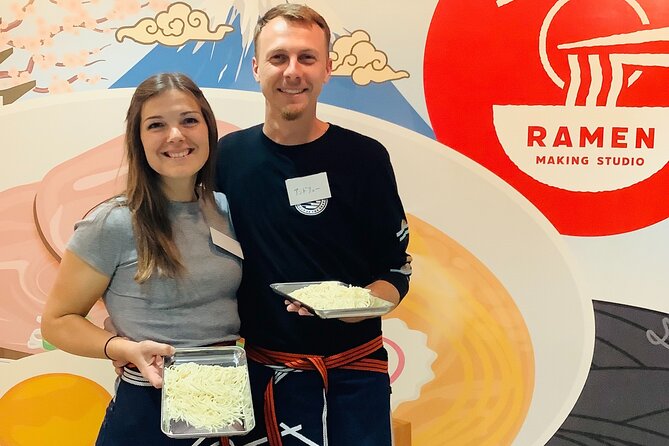
You use Japanese wheat flour specially made for ramen to create your own noodles. The key idea is that you’re shaping and handling dough, not just adding toppings. Fresh noodles are described as chewy and incredibly delicious, and that’s the point. When you make the noodles yourself, you don’t just taste ramen, you recognize why ramen texture matters.
For you, this step is usually the biggest memory-maker. It’s also the most “I can repeat this at home” part, because noodles are the backbone of the bowl.
More Ramen Experiences in Osaka
- Osaka: Five Must-See Highlights Walking Tour & Ramen Lunch
★ 4.7 · 411 reviews - Osaka: Ramen and Gyoza Cooking Class in Dotonbori
★ 5.0 · 378 reviews - Ramen and Gyoza Cooking Class in Osaka
★ 5.0 · 202 reviews - Walking Tour of Osaka’s 5 Must-See Sights, with Ramen for Lunch
★ 5.0 · 158 reviews
2) Chashu making, tender and juicy
Next comes chashu. You prepare tender, juicy chashu using chicken simmered in the studio’s original broth. That “original broth” wording is useful because it signals you’re not just copying generic technique. You’re following the studio’s own approach.
Chashu is also where the class becomes practical. If you’ve ever wondered why restaurant chashu tastes so consistent, this is your chance to see the process behind it.
3) Soup base choice: tonkotsu, shoyu, or miso
Finally, you choose your soup base: tonkotsu, shoyu, or miso. Each soup is based on secret recipes from well-known ramen shops, and you’re encouraged to pick the flavor you’d actually want to eat.
This part is where a lot of people benefit even if they don’t cook much at home. You’re not only making something, you’re making decisions like a cook: which base fits what you want your bowl to taste like.
4) Real-time help from an English-speaking instructor
During the process, you’re guided by an English-speaking instructor who can answer questions on the spot. That changes the experience from “fun activity” to “usable skill,” because you can ask why something is done a certain way while you’re doing it.
Choosing Tonkotsu, Shoyu, or Miso Without Second-Guessing
I like that the class makes your soup decision simple. You don’t need a chemistry degree. You get three options: tonkotsu, shoyu, or miso, and each is tied to secret recipes from well-known ramen shops.
How should you choose?
- If you already know what kind of ramen you like, pick that base. This class lets you translate preference into a cooking outcome.
- If you’re trying to compare flavors, choose the one you’re curious about the most, because you’ll taste and understand your choice in context with noodles and chashu you made.
The bigger point is this: a lot of cooking classes focus on one piece. Here, you’re making the full system and pairing it with a soup base. That makes the whole thing feel like ramen cooking, not just “noodles class” or “topping class.”
A Kitchen Class That Stays Friendly (Even When You’re New)
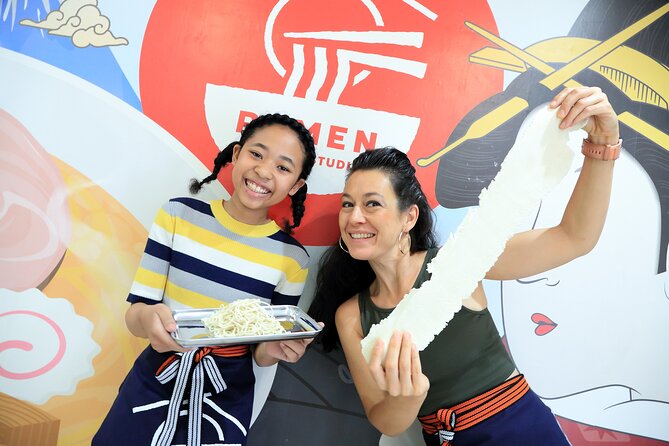
This workshop is small-group, and it’s family-friendly. That usually means two things: you’ll get more attention, and the atmosphere stays welcoming rather than stiff.
In practice, you should expect:
- Hands-on participation from the start
- An instructor who gives instructions and checks in as you work
- Enough guidance that beginners aren’t left guessing
Also, the kitchen is described as spotlessly clean, which sounds basic until you’re actually in a class and trying to keep your hands and clothes comfortable. A clean workspace helps you focus on technique, not on mess management.
The class format works well if you:
- Want a fun, memorable food experience without needing cooking background
- Like asking questions while you cook
- Want something active that still feels safe and structured
What to Expect Inside: Photo Spots and a Thoughtful Studio Touch
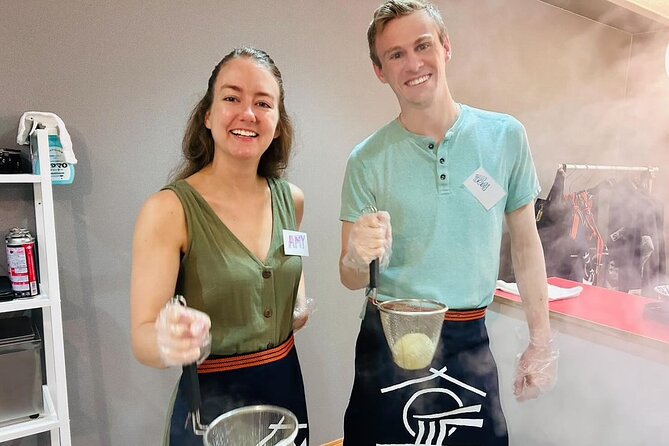
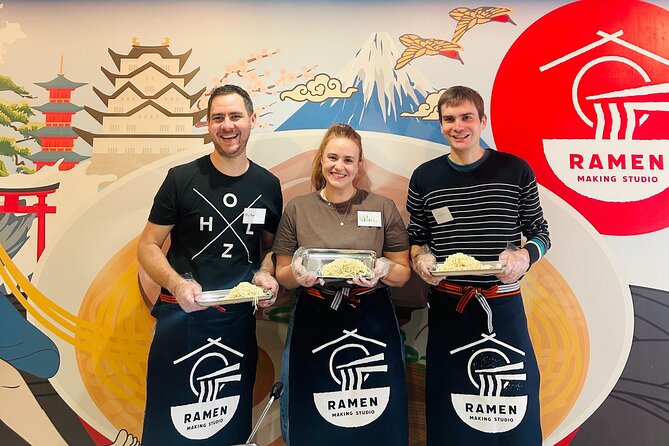
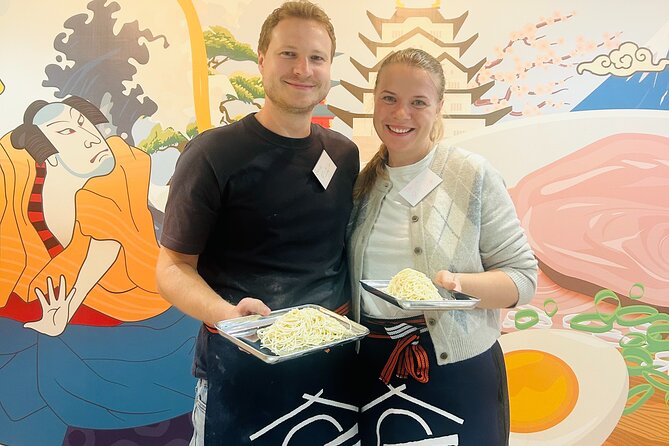
This studio is designed to feel like a ramen set, not a blank classroom. Walls are decorated with ramen and Japanese motifs, so you can grab photos without hunting for a perfect angle.
One detail I’d pay attention to is the entrance. The glass door is described as having been crafted more than 100 years ago, using a technique that no longer exists. Even if you’re not a design nerd, it’s the kind of object that makes the studio feel real and local.
Inside, you’ll also see items reflecting Japanese culture, and those get introduced during your visit. That helps the experience feel tied to place. It’s not only about food technique, it’s also about understanding a little context behind what you’re making.
At the end, you receive a souvenir to take home. That’s the kind of practical bonus that makes the class feel complete.
Timing, Tickets, and Photo Consent You Should Know
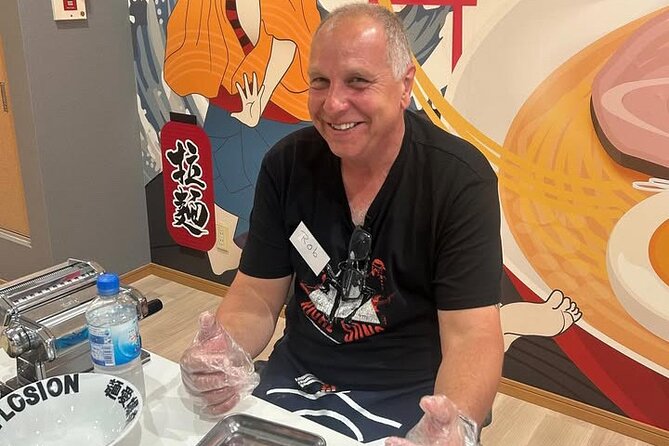
This experience runs for about 2 hours and is offered in the morning or late afternoon. You’ll receive confirmation at booking, and the ticket format is a mobile ticket, which is convenient if you prefer everything on your phone.
One more practical note: staff may take photos and videos during the class for use on social media or for advertising. If you don’t want that, you should tell the staff before the experience begins. It’s not something you want to figure out mid-class.
For a cooking activity, plan your day so you’re not rushing across Osaka right after. You’ll want a little buffer to keep the day feeling relaxed, not like you sprinted into dinner with flour on your hands.
Price and Value: What $85.39 Buys You in Osaka
The price is $85.39 per person for the class. On paper that might sound like a lot compared to a casual meal, but you’re paying for several value drivers at once.
Here’s what you’re getting that justifies the cost:
- Hands-on ramen from scratch, including noodles and chashu
- A choice of soup base (tonkotsu, shoyu, miso)
- Guidance from an English-speaking instructor who answers questions during the process
- Small-group learning (max 8 travelers), which usually means more attention
- A souvenir at the end
- A convenient location near Osaka Castle, which helps reduce transport time and day stress
Also, you’re not just tasting ramen that someone else made. You get a bowl of ramen connected to your own work, and that changes the payoff. Food experiences are often forgettable if it’s only one bite. This one tries to make it a story you remember: the dough, the cooking, the choice, and the final bowl.
If you’re comparing value, ask yourself this: would you spend money to learn a practical skill plus eat what you made? If yes, this class can be a strong buy.
Who This Ramen-Making Class Is Best For
This is a great match if you want something hands-on that still feels structured.
You’ll probably enjoy it most if you are:
- A beginner cook who wants step-by-step guidance
- Traveling with kids or family, since it’s family-friendly and open to all skill levels
- A food lover who wants more than eating, you want technique
- Someone near Osaka Castle who wants a memorable activity without a long commute
It’s less ideal if you hate cooking participation, or if you expect a mostly sightseeing-style tour. This is a kitchen workshop, not a walking tour.
Should You Book This Ramen Workshop?
I’d book it if you want a practical, memorable Osaka experience that connects food, technique, and culture in one 2-hour block. The combination of noodle making, chashu making, and choosing your soup base makes it feel complete, not like you’re doing one small step.
Also, the small group size is a big deal for quality. If you care about asking questions and getting feedback, this format supports that.
One thing to consider: you’ll be in a working kitchen, so set expectations accordingly. Wear comfortable, everyday travel clothing and plan for a bit of activity.
If you’re on the fence, here’s your quick decision rule: book it if ramen is a must-do for you in Osaka, and if you like active experiences. Pass if you’d rather spend those two hours walking around Osaka Castle and treating dinner as strictly tasting, not cooking.
If your plans are flexible, there’s free cancellation up to 24 hours in advance for a full refund, so you can reserve without locking yourself in too tightly.
FAQ
How long is the ramen-making class?
The class is about 2 hours.
What is the group size?
The maximum group size is 8 travelers.
Where does the class take place?
It’s in a studio within walking distance of Osaka Castle. The meeting address is Osaka, Kita Ward, Higashitenma, 1-chōme4, 530-0044.
How do I get there from Osaka Castle?
The studio is about a 20-minute walk from Osaka Castle.
Can I choose different soup bases?
Yes. You can choose tonkotsu, shoyu, or miso.
Is the class beginner-friendly?
Yes. It is family-friendly and open to all skill levels.
Is there an English-speaking instructor?
Yes. The instructors speak English and answer questions in real time.
Does it include making noodles and chashu?
Yes. You make ramen noodles and prepare chashu, then choose your soup base.
What if I do not want photos or videos used?
Photos and videos may be used on social media or for advertising. If you do not wish them to be used, you should inform staff before the experience begins.
Latest write-ups near Osaka
- Osaka Private Tour with Government-Licensed Guide★ 4.8 · 20 reviews
- Guided Photography Tour in Osaka: Capturing Memories★ 4.5 · 20 reviews
- Osaka: Food Tour at Night with Tastings★ 4.9 · 20 reviews
- Kansai/KIX Airport to or from Osaka/Kyoto Private Transfer★ 5.0 · 20 reviews
- Osaka: City Highlights Bike Tour★ 4.7 · 20 reviews
- From Osaka/Kyoto: Amanohashidate Day Tour【Including tickets】★ 3.7 · 20 reviews
- Osaka Okonomiyaki Cooking Class “Learn here and make it at home”★ 5.0 · 20 reviews
- Volleyball in Osaka & Kyoto with Locals!★ 5.0 · 21 reviews
Ramen Experiences, compared.
Ramen Cooking Class at Ramen Factory in Kyoto
Read our review →
Eat and Drink Like a Local: Tokyo Ueno Food Tour-Taverns&Ramen
Read our review →
Ramen & Gyoza Cooking Class in Tokyo with Local Supermarket Visit
Read our review →
Ramen Cooking Class at a Ramen Factory with Souvenir
Read our review →

Five Must-See Highlights Walking Tour & Ramen Lunch
Read our review →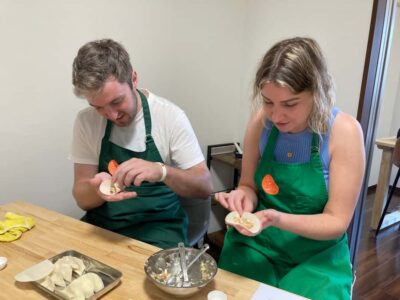
Browse the lists this tour appears in