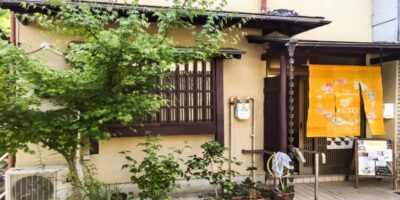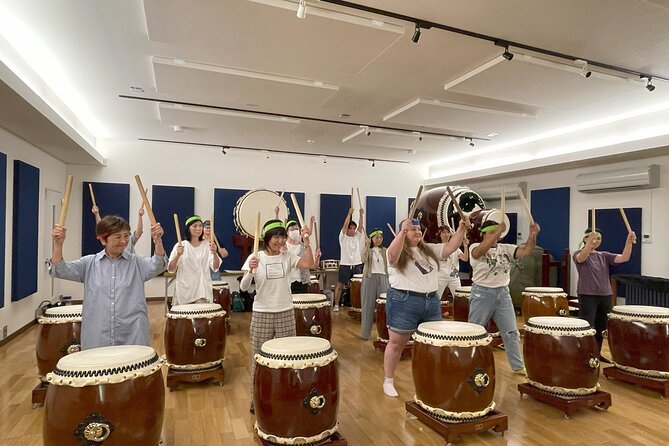
Reviewed · KYOTO TOURS
TAIKO, Japanese Drum Experience from Kyoto
What makes this Kyoto taiko experience interesting is that you do the drumming, not just watch it. I like the small group format, and the English support from guides such as Michiko, so you can follow the lesson even if your Japanese is zero.
I also like the flow of the session, from writing wishes on a hachimaki headband to learning the basic hits, then playing together at the end. One consideration: the pro demo may use video elements alongside the live drummer, so it is still impressive, but it may not be 100 percent live all the way through.
Key Things You Should Know Before You Go
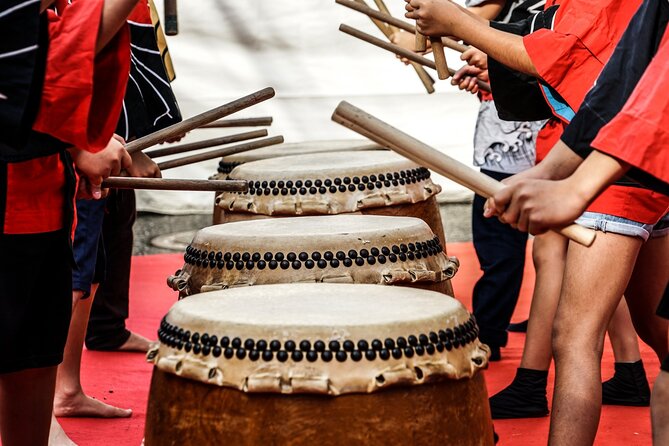
- Small group access means you get real coaching on posture and arm timing, not just a quick explanation.
- English guidance is part of the experience, with guides such as Michiko and Kumi-san helping keep you on track.
- Hachimaki calligraphy comes early, so you start creating something before you make noise.
- A professional demo sets expectations for the power of taiko before you practice the basics.
- You play a short piece together at the end, which is the best kind of souvenir, skill-wise.
- Traditional costume photos wrap it up, with a happi and hachimaki included.
Getting There: Kyoto Station to Takatsuki Studio Without the Headache
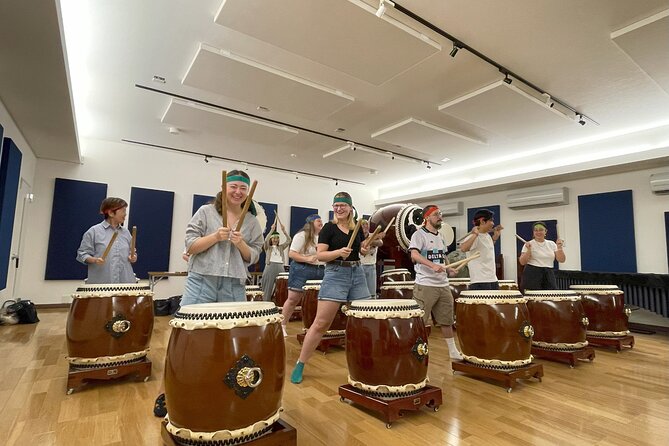
This is one of those Kyoto activities that feels far more local once you leave the main tourist lanes. You start at Kyoto Station, then you head out by train for about 12 minutes to JR Takatsuki Station. After that, you take a cab for about 10 minutes to reach the studio area.
Why this matters for you: the route is designed around being practical. The tour specifically warns against taking a taxi straight from Kyoto, which can take more than an hour and cost a lot, especially with traffic. Using the train gets you there faster and cheaper.
Plan your timing like a grown-up. You should arrive at the meeting point about 15 minutes early. Kyoto Station is huge, and if you are late, they cannot wait and you may miss the participation window with no refund. A helpful tip is knowing where to aim inside Kyoto Station: you want the central exit that is not the Shinkansen central ticket gate.
One more logistics point that can affect your day: the full duration is about 2 hours 30 minutes including transfers. They also note you should expect to get back to Kyoto Station about 2.5 to 3 hours after the start time.
Also on the shortlist for Kyoto:
- PERFECT KYOTO 1-Day Bus Tour
★ 5.0 · 13,518 reviews - Kyoto: Fushimi Inari, Kinkakuji, Bamboo Grove 1 Day Bus Tour
★ 4.8 · 4,316 reviews - Kyoto: Tea Ceremony in a Traditional Tea House in Kiyomizu
★ 4.9 · 3,519 reviews
First Stop: Taiko History, Then Hachimaki Calligraphy
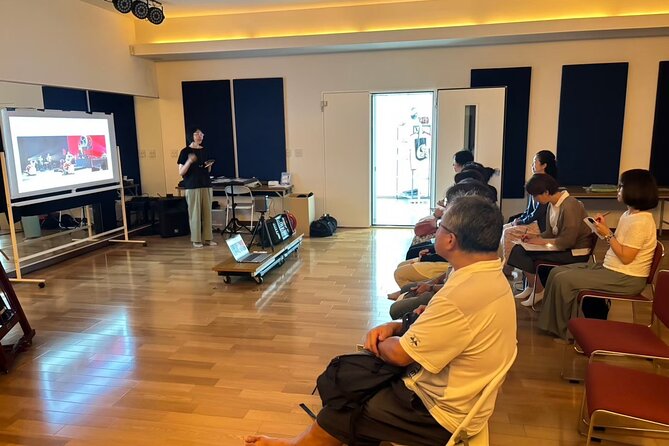
Before you touch a drum, you get a brief explanation of taiko’s history and why drumming matters in Japanese culture. This is not a long lecture. It is quick context that helps your practice make sense, especially when you feel the rhythm in your body and realize you are learning more than just moves.
Then you try simple calligraphy on a hachimaki headband. The idea is to write your wishes on the band, a nice touch because it turns a class into something personal. You will be wearing that hachimaki during the session, so your calligraphy is not just a craft you put away in your bag.
This sequence works well for first-timers. You get a cultural hook, then you move to a physical activity. If you are the type who needs to feel connected before you learn, this part helps you get there fast.
The Moment of Impact: Watching a Pro Taiko Demonstration
After the calligraphy, you watch a powerful taiko demonstration by a professional instructor. Even if you have never played before, it is usually the moment that turns interest into goosebumps.
In the reviews, the instructor Aoi-sensei is named as a key performer for the demo. The teaching style tends to be confident and high-energy, which is exactly what you want right before you start drilling rhythms.
Here is the one detail worth considering: one lower rating mentioned that the demonstration included a live drummer plus video elements. So even though you will likely see a lot of live action, do not assume every single part is performed live at once. It is still an impressive setup, just not guaranteed to be 100 percent live in every layer.
Teaching You Can Use: How the Basics Get Built Step by Step
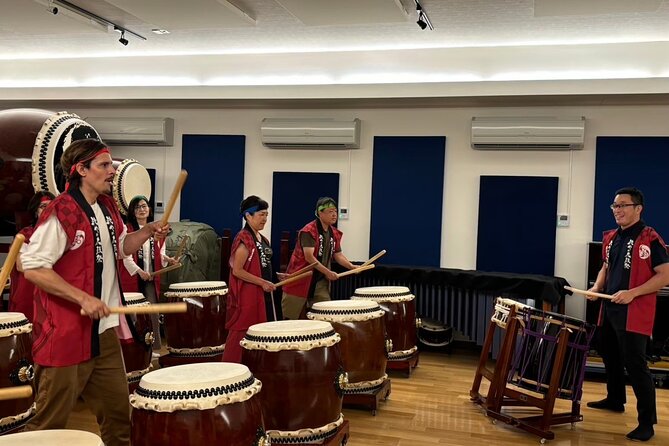
Now comes the part you are really paying for. A friendly taiko instructor teaches you basic movements and techniques, and the session is tailored to your skill and fitness level.
That customization matters more than you might think. Taiko is loud and physical. You do not need to be athletic, but you do need to move with intention. If your arms are tired after travel or you are not used to heavy motion, the class setup is designed to keep you participating without you feeling lost.
During practice, you will focus on how taiko is struck and how your body supports the sound. The goal is not perfection. It is learning enough technique to play safely and confidently as a group.
Also, since the group performance matters, they build your learning toward that final rhythm. This keeps the session from turning into a random set of drills that only makes sense after you leave.
A change of pace from Kyoto:
- Kyoto Geisha Walking Tour: Gion District & Hidden Gems
★ 4.7 · 3,273 reviews - Kyoto: Tea Ceremony Ju-An at Jotokuji Temple
★ 4.9 · 3,207 reviews - Kyoto: Gion Magical Night Walking Tour with Geisha Trivia
★ 4.9 · 2,393 reviews - Kyoto: 45-Minute Tea Ceremony Lesson Experience
★ 4.3 · 2,378 reviews
Your Turn to Play: Short Group Performance That Feels Like an Achievement
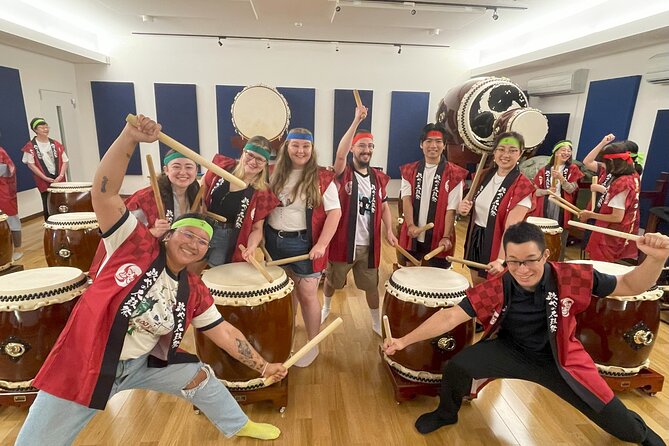
Near the end, you play a simple piece of music with your fellow participants. This is where the whole class clicks, because everyone’s timing lines up into one shared beat.
In the reviews, people repeatedly call out how they were able to follow along even without musical experience. That is a big deal for a hands-on activity in a foreign language. If you can copy motions and count what the instructor cues, you can play.
What you get from this moment is not just a photo. You leave knowing a rhythm pattern with real body memory. That is the kind of skill that lasts longer than one more souvenir shop stop.
And yes, this can be a workout. One review explicitly mentions it can feel cardiovascular if done right and for long enough. So if you are planning another active thing the same day, you might want a lighter schedule afterward.
The Costume Photo and What to Do With the Hachimaki
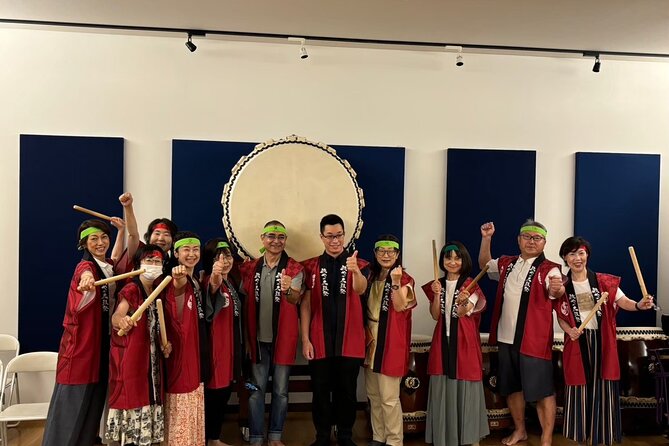
After you finish playing, you wrap up with a commemorative photo in traditional Japanese costume, including a happi and your hachimaki. This is an easy win for your trip photos, because the headband and coat make it instantly look like you did something real.
You also get a clear sense of the cultural framing. Taiko is not just about hitting a drum. It is about presence, timing, and community energy, and the costume part reinforces that.
One practical note: your session includes the hachimaki you write on, so bring an open mind about handling it. If you care about keeping it pristine, you may want to plan for a soft storage pouch after the photo.
Price and Value: What You Really Get for Around $116
At $115.62 per person, you are paying for a full package: instruction, access to a studio setup, and transportation support that gets you out of central Kyoto efficiently.
Here is what is included based on the tour details:
- Taiko drumming with a Japanese drum instructor
- Hachimaki (headband) for the calligraphy
- English guide support
- Car to and from the studio (noted as about 2000 yen for four people sharing one cab)
- One-way JR ticket to Takatsuki Station
That transportation piece is part of the value. Without it, you would still need to figure out how to reach a studio location, and it is not always as simple as taking a single bus line. The tour’s setup is designed around the most sensible route: train first, then short cab.
What is not included is also important to know. If you have someone observing without participating, the cost is 9000 yen per person. The tour also notes that you need to notify them if there are observers, or transportation may not be arranged.
Is the price fair? For a hands-on cultural class with a capped group size (max 15) and an instructor-led performance, it is solid. If you have ever tried to book a generic “cultural workshop” that turns out to be half talk and half waiting, this is built differently. You are going to play.
Who Should Book This Taiko Experience (and Who Might Not)
This is a great fit if:
- you want hands-on Japanese culture instead of another quick photo stop
- you are a beginner, because no previous taiko or music experience is required
- you like activities with structure, where you start with context, practice the basics, then perform
It is especially good for couples and friends, because the group cap means you still feel guided.
It is also a decent family-style activity for older kids, but note the rule: children under 7 are not allowed. For teens and adults, you should be fine if you can follow basic movement cues and stand for the session.
Who might not love it:
- if you are expecting purely live, one hundred percent live demonstration with no video layer, you may notice mixed elements during the demo
- if you hate punctual logistics, the Kyoto Station meeting point and the “no waiting for late arrivals” rule can be stressful. Show up early.
Practical Tips So You Catch the Train and Keep the Beat
I recommend treating this like a mini commitment, not a casual wander.
1) Arrive early at Kyoto Station. They specifically say if you are late due to the train schedule, you will not be able to participate, even if you call.
2) Find the correct meeting gate. Aim for the central exit, not the Shinkansen central ticket gate. If you are turned around, ask staff where the central exit is.
3) Wear comfortable clothes. You will be moving your arms and upper body. Choose something you can stand and play in.
4) Plan your next activity after you return. Leaving early is not recommended, and you are looking at about 2.5 to 3 hours total from start back to Kyoto Station.
5) If you are single booking, check availability. The tour notes that on certain days, single participant reservations are not available. The workaround may be booking for two and covering the fee for two.
6) If you bring an observer, notify them. Observers cost 9000 yen per person, and transportation may not be arranged without notice.
7) Bring Japanese yen for the studio payment. Payment at the drum studio is requested in cash (yen) on the day of the tour.
One more reality check: the activity requires good weather. The details do not explain what parts are weather-sensitive, but if Kyoto weather turns, you might be offered a different date or a refund.
Should You Book This Taiko Lesson?
If your goal is to learn something you can actually do, this is an easy yes. You get English support, a studio setting, real instruction geared to your level, and you end by playing a short piece yourself. The hachimaki calligraphy and happi photo add a cultural layer that feels personal, not gimmicky.
Book it especially if taiko sounds fun but you are worried it will be over your head. This session is built for beginners, and the structure helps you feel successful fast.
If you are extremely time-pressed in Kyoto, you should double-check your schedule. The early meeting point and train-based timing are non-negotiable. For most people planning a full afternoon around Kyoto Station, it is a smart use of time.
FAQ
How long is the taiko experience from start to finish?
The duration is about 2 hours 30 minutes (approx.), including the transfer time. You should expect to return to Kyoto Station about 2.5 to 3 hours after the start time.
Do I need any prior experience playing taiko or music?
No. The lesson is designed for all levels, and no experience is required.
Is the instruction available in English?
Yes. The guide language offered is English, and the experience includes English support.
What is the age limit for participating?
Children under 7 years old are not allowed to participate.
How do you get from Kyoto Station to the studio?
You start at Kyoto Station, then take a JR train for about 12 minutes to Takatsuki Station, followed by an approximately 10-minute cab ride to the studio.
What is included in the price?
The price includes taiko drumming with a taiko instructor, a hachimaki headband, English guide support, car to and from the studio (about 2000 yen noted for four people sharing one cab), and a one-way ticket to JR Takatsuki station.
Is cash payment required at the studio?
Yes. You need to pay in cash (Japanese yen) at the drum studio on the day of the tour.
Can I cancel for a refund?
Yes, free cancellation is offered. You can cancel up to 24 hours in advance for a full refund. The experience is also said to require good weather, and if canceled due to poor weather, you will be offered a different date or a full refund.
Latest write-ups near Kyoto
- Kyoto: Nishiki Market Tour with a Local Foodie & Tastings★ 4.5 · 67 reviews
- Kyoto Kimono Rental mimosa |Kimono/Yukata Rental Couple Plan★ 4.8 · 67 reviews
- Kyoto: Traditional Kimono Fabric Handicrafts Workshop★ 5.0 · 67 reviews
- Kyoto Tea Ceremony and Samurai Photo Session★ 5.0 · 70 reviews
- Kyoto: Replica food making experience★ 4.8 · 70 reviews
- Kyoto: Kinkakuji, Golden Pavilion Guided Tour★ 4.7 · 71 reviews
- Private departure transfer from Kyoto city to Kansai International airport★ 5.0 · 72 reviews
- Uji: Green Tea Tour with Byodoin and Koshoji Temple Visits★ 4.8 · 72 reviews
Kyoto Tours, compared.
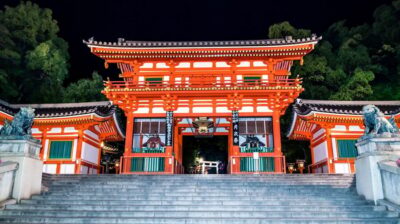
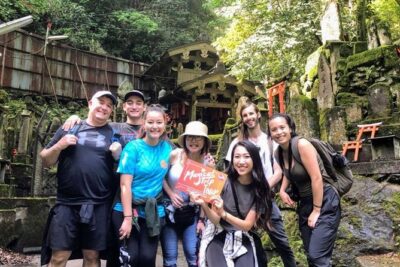
Fushimi Inari, Kinkakuji, Bamboo Grove 1 Day Bus Tour
Read our review →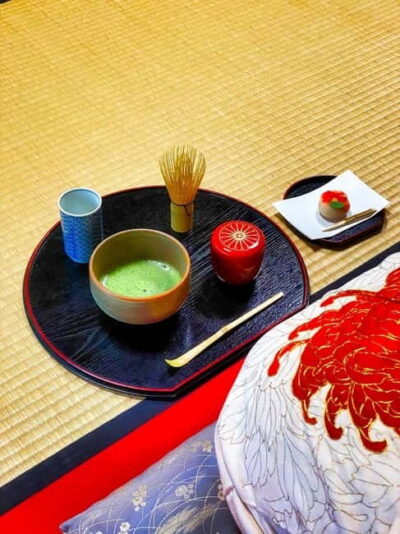
Tea Ceremony in a Traditional Tea House in Kiyomizu
Read our review →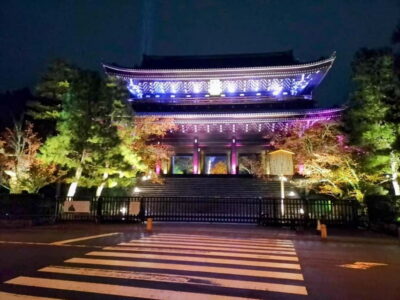
Kyoto Geisha Walking Tour: Gion District & Hidden Gems
Read our review →
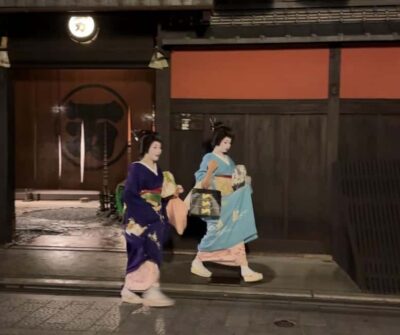
Gion Magical Night Walking Tour with Geisha Trivia
Read our review →