
Reviewed · WALKING TOURS
The Dark Side of Osaka Walking Tour
This tour is interesting because it takes you into Osaka after dark, where the city’s everyday life sits right next to its more shadowy past. You’ll follow a route tied to the getto area and one of Japan’s biggest red-light districts, a story said to stretch back over 400 years.
I especially like Shinsekai for the way it mixes retro streets with real local energy, and I love that the guide brings social-history context instead of just pointing at buildings. In the best reviews, guides like Jay and Matt are praised for thoughtful explanations and for answering questions on the spot, including practical tips along the way.
The main drawback is simple: it’s still a walking tour through grittier, less postcard-style streets, and you have to stay engaged to get the most out of it. If you want big sights and constant wow moments, the first half may feel like slower, street-level wandering, and you should plan for almost 2 hours on foot.
Key Highlights Before You Go
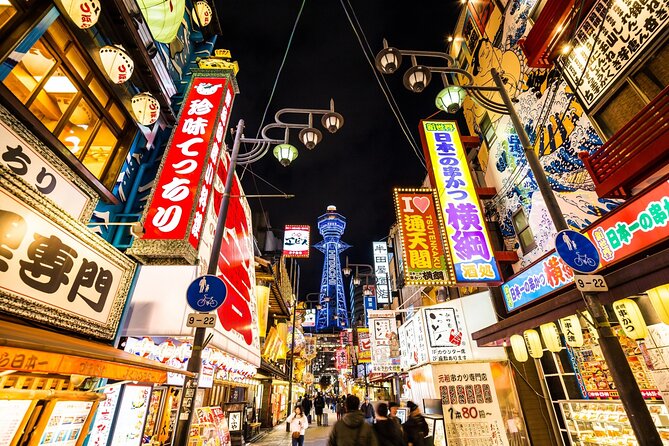
- Shinsekai first, starting at MEGA Don Quijote Shinsekai, then moving through the Tsutenkaku orbit
- Nishinari Dobutsuen-mae Deep Osaka Street, a working-class slice of southern Osaka
- Jan Jan Yokocho, a narrow, nostalgic alley near Tsutenkaku Tower
- Tobita Shinchi, Osaka’s best-known red-light district with over a century of history
- Tsutenkaku Hondori Shopping Street, ending in an arcade at street level, not at a viewpoint
- Small group size (max 15) and a mobile ticket, which makes the whole thing feel efficient
Why This Osaka Night Walk Feels Different
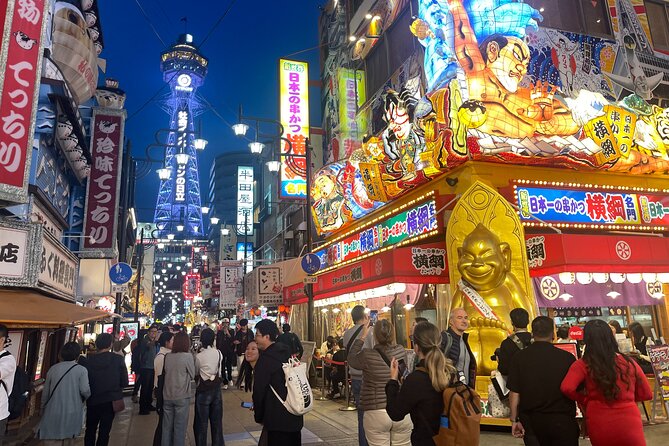
Osaka at night can be noisy and tourist-friendly, or it can show you the parts of the city people don’t screenshot. This tour leans hard into the second option, walking through the historic getto area and the largest red-light district route, with context about how these places fit into Japanese society over time.
I like that the tone is not just shock value. The guide focus is on social history, local stories, and how regulation, architecture, and daily life shaped what you see. That’s a key difference between a basic “look around” walk and a tour you can actually carry with you after it’s over.
More Walking Tours in Osaka
- Osaka: Hotspots & Hidden Gems Walking Tour Private or Group
★ 4.9 · 1,300 reviews - Osaka Local Foodie Walking Tour in Dotonbori and Shinsekai
★ 5.0 · 985 reviews - Osaka Bar Hopping Night Walking Tour in Namba (3 bars, 6 tastes)
★ 5.0 · 958 reviews
Where You Start, Where You Finish, and the Real Timing
You’ll start at MEGA Don Quijote Shinsekai at 5:30 pm. The endpoint is Tsutenkaku (1-chome-18-6 Ebisuhigashi, Naniwa Ward), and the walk runs about 2 hours.
This timing matters because Shinsekai and the surrounding streets are more alive as the evening settles in. You’ll cover five areas in sequence, with short stop windows that keep things moving, which is great if you want a full evening plan without adding other tickets or museum time.
Also note the format: this is a max 15 person tour with a mobile ticket. That size tends to make it easier for the guide to handle questions and keep the group together.
Step One: Shinsekai, New World Nostalgia and Local Life
Shinsekai means new world, and it really does feel like a pocket of Osaka that operates on its own schedule. The area was established in 1912, and the vibe you’ll notice is that retro atmosphere people come to enjoy, paired with the ongoing routines of the neighborhood.
On the walk, Shinsekai works as the foundation. The guide uses it to help you understand what you’re about to see next, and in many accounts the best part is not just the visuals but the explanations about how the area developed and why it matters socially.
One practical thing to expect here is pacing. You get about 30 minutes in the Shinsekai start, which is enough to orient yourself and catch the street texture, but not enough to “hang out” for long. If you’re the type who needs time to wander on your own, plan to do that after the tour finishes near Tsutenkaku.
Step Two: Nishinari Dobutsuen-mae Deep Osaka Street
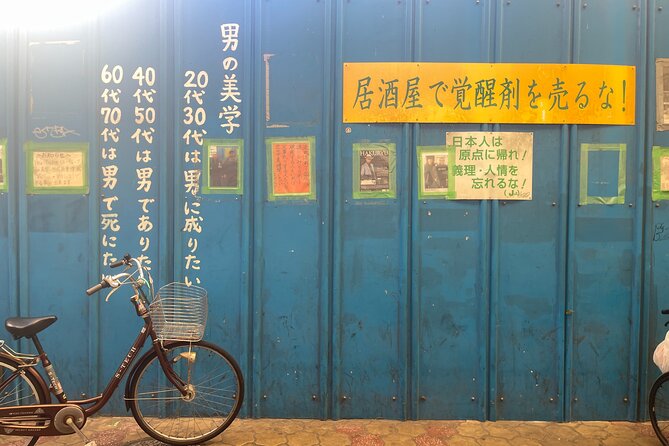
After Shinsekai, you move into Nishinari, in southern Osaka, with a stop at Nishinari Dobutsuen-mae Deep Osaka Street. This is where the tour’s tone shifts from retro streets toward the raw, everyday feel of parts of the city that many visitors skip.
Nishinari is described as having a working-class past, once a hub for day laborers and the community built around that reality. You’re not just walking through “rough streets” for the aesthetic, you’re seeing how the city served people in different roles and how that history leaves marks you can still recognize.
This is also where I suggest you lean into the guide. The points that land hardest are usually the ones tied to social context, not the ones that depend on you already knowing Osaka history.
A heads-up, based on a less enthusiastic review: the first part of the tour can feel like “wandering” if you’re looking for constant activities. If that might be you, set your expectations to “story first, sights second” for this leg, and you’ll likely enjoy the tour more.
A change of pace from Osaka:
- Osaka Go Karting Tour with Funny Costume
★ 5.0 · 2,658 reviews - Osaka Castle: Museum and Tower Entry Ticket
★ 4.5 · 2,380 reviews - Osaka: Shinsekai Food Tour with 13-15 Dishes at 5 Eateries
★ 4.8 · 2,204 reviews - Osaka Food Tour: 13 Dishes at 5 Local Eateries
★ 5.0 · 2,149 reviews
Step Three: Jan Jan Yokocho, The Retro Alley Near Tsutenkaku
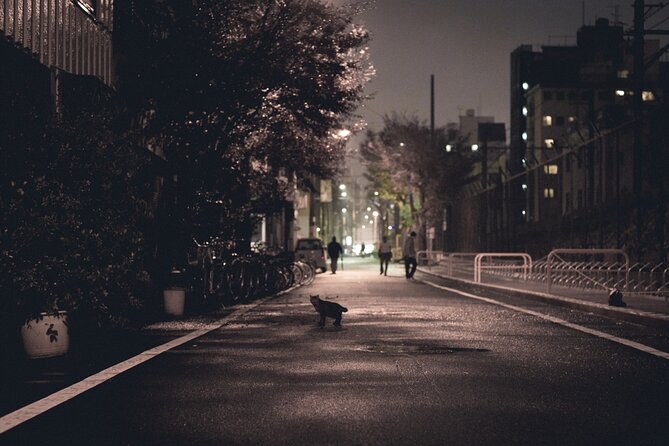
Next comes Jyanjyan Yokocho (also described as the Nanyodori shopping district). This stop is built around a narrow, nostalgic street experience, right in the Shinsekai orbit near Tsutenkaku Tower.
This is a shorter pause of about 20 minutes, so don’t expect a full meal stop. The value here is the feel of an alleyway street, where shopping and dining spill into a tight space and the street design shapes the pace of life. The guide typically helps you see what makes this kind of street important in the bigger story of the area.
If you’re hungry, plan ahead. Snacks are specifically not included, so I’d treat this like a browsing moment. Bring your own water or a small snack for the walk if you know you’ll need it, because the tour itself does not supply food.
Step Four: Tobita Shinchi, Osaka’s Largest Red-Light District
Then the tour moves into its most serious territory: Tobita Shinchi. This area is presented as Osaka’s most famous and largest red-light district, with history going back over a century.
The explanations here are the heart of why this tour exists. You’ll hear about the district’s unique architectural style and a tightly regulated environment. That combination is one of the key themes: not just “what it looks like,” but how the area has been managed and understood over time.
This is also the moment where respect matters. Even if you’re curious, keep the tone observational, and remember you’re in a place that still functions as part of local life. The best tours through hard topics are the ones where the guide helps you understand without sensationalizing.
Expect another short stop of about 20 minutes. You’re not touring like a museum exhibit, you’re walking with context while the street does what streets do.
Step Five: Tsutenkaku Hondori Shopping Street, Ending at Street Level
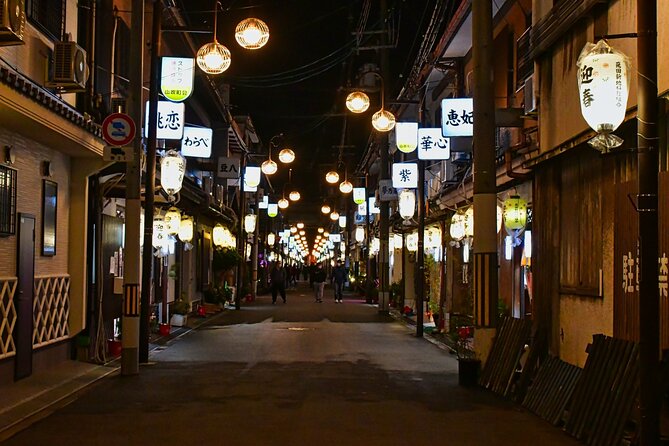
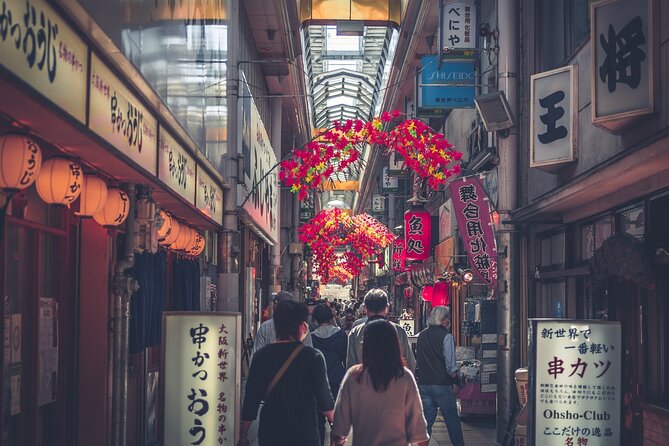
To finish, you’ll head through Tsutenkaku Hondori Shopping Street, an arcade-like street at the foot of Tsutenkaku Tower. This is where you get a lively, retro atmosphere again, but now it feels different because the tour has already put you inside the story.
The point of ending here is smart. Instead of closing at a viewpoint, you close in a place where you can see daily commerce, small shops, and the street energy that makes neighborhoods feel alive.
This stop is about 20 minutes, so it’s a final chance to reset your brain after the red-light district discussion. It’s also where the guide often ties things together, answering the questions people save for the end.
Price and Value: Is $25 a Good Deal for This Route?
At $25 per person, this tour is not a “free tour” in the sense of costing nothing. But it does offer clear value for what you get.
Here’s the practical side:
- It lasts about 2 hours, which is long enough to cover multiple districts and still feel like a real evening plan
- The group cap is 15, so you’re not stuck as one face in a giant crowd
- All fees and taxes are included
- The stops themselves are listed with free admission tickets, meaning you’re not adding surprise costs to your night
What makes it worth it, for me, is the guide quality that shows up again and again in the best comments. People highlighted guides like Jay for being thoughtful and knowledgeable about social history, plus for giving tips along the way and keeping a perfect pace. Even Matt and RICO came up in reviews as accommodating and helpful.
And yes, there’s also a caution from a lower rating: if you expect the tour to constantly “do stuff” or look at high-interest sights, you might find some parts feel more like walking and listening than sightseeing. If you show up for the explanations and the street-level stories, the $25 usually lands as fair.
Pace, Comfort, and What to Wear for a Night Walk
This is a walking-heavy experience, and one review explicitly calls out that you’ll be walking close to two hours. That means comfy shoes matter more than anything trendy.
Since snacks are not included, I’d treat this as an itinerary you do after dinner plans are handled, or as something you pair with light food breaks before and after. And because the tour requires good weather, you should expect it to run on a normal schedule only when conditions cooperate.
The good news is that the meeting point area is near public transportation, so you’re not trapped trying to find a remote spot at night.
Who Should Book This Dark Side of Osaka Tour
Book it if you want:
- An Osaka night walk that explains what you’re seeing, especially the social-history side
- A small-group experience in Shinsekai, Nishinari, Jan Jan Yokocho, and Tobita Shinchi
- A guide-led route that helps you get beyond the usual tourist circuits
It’s especially a good fit if you’re the type who enjoys asking questions and wants the guide to translate the street scene into context. The feedback about guides answering questions, sharing local tips, and keeping the pace right is exactly what you want from this kind of tour.
Who Might Skip It
Skip or consider another style of Osaka tour if:
- You want nonstop visual “wow” moments and lots of built-in entertainment
- You dislike walking through neighborhoods that feel rougher or more real than central tourist streets
- You’re sensitive to topics tied to red-light districts and the social rules around them
There’s no shame in having preferences. This tour is not trying to be a greatest-hits sightseeing loop. It’s trying to show a harder-to-see Osaka at night, and it works best when you meet it halfway.
Should You Book It?
If you’re visiting Osaka and you want more than neon and famous landmarks, I think this walk is a strong choice. The route ties together Shinsekai, the working-class area of Nishinari, the nostalgic alley streets, and Tobita Shinchi, so you get a layered view of how different parts of the city evolved.
Just go in with the right mindset. Expect a guided story walk, short stops, and a street-level pace that requires attention. If you do that, $25 feels like a reasonable price for two hours of guided context, and you’ll come away with a version of Osaka that most first-timers never bother to learn.
FAQ
How long is The Dark Side of Osaka Walking Tour?
It lasts about 2 hours.
What time does the tour start?
The start time is 5:30 pm.
Where do I meet the guide?
You meet at MEGA Don Quijote Shinsekai, 3-chōme-4-36 Ebisuhigashi, Naniwa Ward, Osaka, 556-0002, Japan.
How much does the tour cost?
The price is $25.00 per person.
What is the maximum group size?
The tour has a maximum of 15 travelers.
Do I get a mobile ticket?
Yes, the tour uses a mobile ticket.
What’s included in the price?
All fees and taxes are included.
Are snacks included?
No, snacks are not included.
Are service animals allowed?
Yes, service animals are allowed.
What happens if the weather is bad or I need to cancel?
This tour requires good weather. If it is canceled due to poor weather, you will be offered a different date or a full refund. You can cancel for a full refund up to 24 hours in advance of the experience’s start time.
Latest write-ups near Osaka
- Osaka Private Tour with Government-Licensed Guide★ 4.8 · 20 reviews
- Guided Photography Tour in Osaka: Capturing Memories★ 4.5 · 20 reviews
- Osaka: Food Tour at Night with Tastings★ 4.9 · 20 reviews
- Kansai/KIX Airport to or from Osaka/Kyoto Private Transfer★ 5.0 · 20 reviews
- Osaka: City Highlights Bike Tour★ 4.7 · 20 reviews
- From Osaka/Kyoto: Amanohashidate Day Tour【Including tickets】★ 3.7 · 20 reviews
- Osaka Okonomiyaki Cooking Class “Learn here and make it at home”★ 5.0 · 20 reviews
- Volleyball in Osaka & Kyoto with Locals!★ 5.0 · 21 reviews
Walking Tours, compared.
Kyoto Geisha Walking Tour: Gion District & Hidden Gems
Read our review →
Tokyo Tsukiji Fish Market Food and Culture Walking Tour
Read our review →
Gion Magical Night Walking Tour with Geisha Trivia
Read our review →
Imperial Palace and Shogun Historical Walking Tour
Read our review →
Gion Geisha District Walking Tour – Stories of Geisha
Read our review →
Shinjuku Local Bar and Izakaya Guided Walking Tour
Read our review →
Browse the lists this tour appears in