
Reviewed · WALKING TOURS
The Old Quarter of Tokyo – Yanaka Walking Tour
Yanaka is one of those rare places in Tokyo where you can slow down and see daily life, not just monuments. I love that this small-group walking tour keeps things personal, so you can ask questions and actually hear the stories. I also like the temples and shrines approach, where each stop explains what Japanese religion looks like in real neighborhoods.
The main thing to plan for is the comfort factor. You are on your feet for about 3 hours, so bring comfortable shoes, and if the day is hot, expect humid weather that makes walking feel longer.
Key things that make this tour worth your time
- Small group, max 10 people: easier conversation and more attention from the guide.
- English-speaking local experts: from guides like Polina, Aya, Junko, Mami, Rei, Mei, and Kiyo, the focus is on clear explanations and answering questions.
- A route designed for texture: temples, a cemetery, a café-and-shop stop, and residential back streets, not just famous gates for photos.
- Temple and shrine etiquette included: so you know what to do at Nezu Shrine and why it matters.
- Good photo stops built in: picture-friendly torii gates, wooden structures, and quiet alleys along the way.
- You finish at Yanaka Ginza: a natural place to keep the evening going with snacks and sweets (at your own cost).
Why Yanaka feels different from most of Tokyo
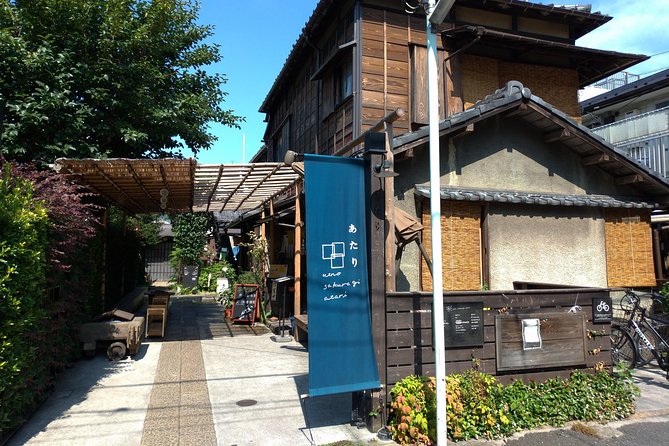
If Tokyo is all glass towers and fast trains, Yanaka is the counterweight. This area is known for wooden houses, older temples, and the kind of street scale that makes you look up. You get the sense that the neighborhood survived major 20th-century chaos better than many parts of the city, and you can feel that in the layout of the streets and the way people move through them.
What I like most is how the tour frames Yanaka as lived-in culture. It is not just about seeing places. It is about understanding why shrines and temples show up in ordinary life, and how people treat them as part of community rhythm.
More Walking Tours in Tokyo
- Tokyo Tsukiji Fish Market Food and Culture Walking Tour
★ 5.0 · 3,184 reviews - Tokyo: Imperial Palace and Shogun Historical Walking Tour
★ 5.0 · 2,251 reviews - Tokyo: Shinjuku Local Bar and Izakaya Guided Walking Tour
★ 4.9 · 1,794 reviews
Meeting at Nippori Station, then walking the old-quarter thread
You start near Nippori Station, specifically at 2 Chome-19 Nishinippori in Arakawa City. The guide meets the group there and leads you on foot from stop to stop, with photo opportunities along the way.
Plan on about 3 hours of walking. That time moves quickly if you like stories, because the guide connects each site to a bigger picture. Guides on this route are also known for strong communication and patience, including guides who bring laminated photos to help you visualize what they are describing.
The tour ends at Yanaka Ginza, so you are not stuck returning to the subway with a bag of temple dust and no plans. You can keep going right where the neighborhood shops and snack spots begin.
Tennoji Temple and the Yanaka Buddha made in 1690
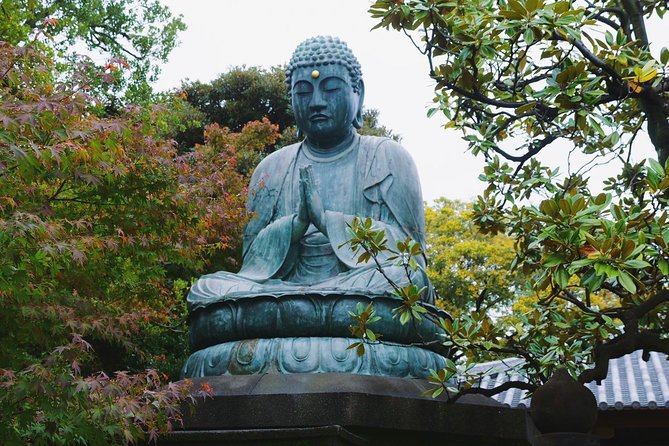
Your first major stop is Tennoji Temple, where you see the Yanaka Buddha, created in 1690. This is one of those entrances that feels like a time marker. The guide does not just list dates, they explain how the temple’s story ties into broader aspects of Japanese religious life.
This stop also works well for orientation. You arrive, you get the key religious context early, then the rest of the walk makes more sense. When you later visit a shrine, a cemetery, and other temple sites, you are not thinking, Okay, another religious building. You are thinking, This is a shared cultural system that people navigate every day.
Admission here is free, and the visit is around 15 minutes, which keeps the pace friendly.
Yanaka Cemetery, learning customs in a place of quiet
Next comes Yanaka Cemetery, another 15-minute stop. Even if you’ve seen cemeteries before, this one is worth approaching differently. The tour guides you through the space and explains what a Japanese cemetery looks like, plus customs locals follow.
The value here is respect and clarity. Instead of treating the cemetery like a sightseeing prop, you learn how people think about remembrance and how the setting works. That changes your whole experience, because you stop expecting something touristy and start noticing what is meaningful in the details.
This stop is also free, so you can focus on the walk and the explanations without worrying about extra costs.
A change of pace from Tokyo:
- Mt Fuji and Hakone 1-Day Bus Tour Return by Bullet Train
★ 5.0 · 26,383 reviews - 1-Day Tokyo Bus Tour
★ 5.0 · 14,250 reviews - Tokyo: TOKYO SKYTREE® Admission ticket
★ 4.5 · 11,192 reviews - Tokyo: teamLab Planets TOKYO Digital Art Museum Entry Ticket
★ 4.6 · 9,779 reviews
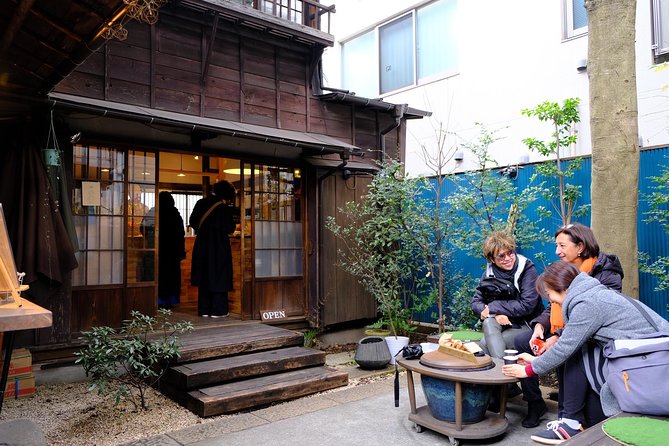
Ueno-Sakuragi Atari: an 80-year-old house turned into community space
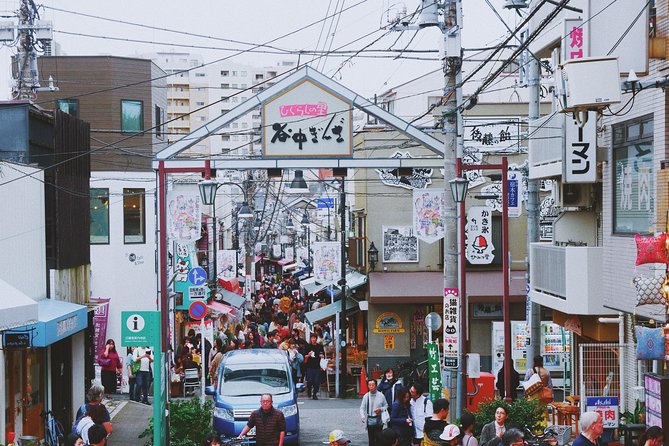
For a break, the route heads to Ueno-Sakuragi Atari. Here you get a very practical Tokyo contrast: older wooden houses, refreshed and reused.
The tour’s description focuses on about 80-year-old structures that have been renovated into a mix of spaces, including a café, a bakery, and even a beer hall. The guide frames it as a community space, not a museum exhibit.
This stop is about 15 minutes, and admission is not included. The key word for your planning is optional spending. If you want a snack, that is on you. I recommend using this as a short reset. Sit for a few minutes if it is hot, then roll into the next temple stops with less leg fatigue.
The 100-year-old cyder tree, Yanaka’s living symbol
Between temples and shrines, you also make a stop for a 100-year-old cyder tree, described as a symbol of Yanaka. Even though this is a shorter moment, it adds something important to the walk: a sense of place you can picture later.
Trees like this become reference points for neighborhoods. They give you something beyond street corners and building facades, and they help you remember the character of Yanaka even after you’ve left the area.
Enju-ji Temple: the god of strong legs and foot-problem wishes
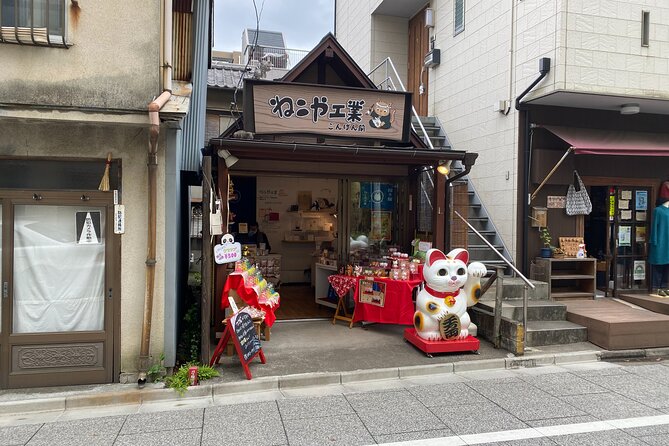
At Enju-ji Temple, you hit a wonderfully specific idea. This temple is not presented as a typical everyday Buddhist god. Instead, it is associated with a god of strong legs.
You’ll see wooden boards where people write wishes related to foot problems. The tour takes time to explain what that practice means, so you understand that these boards are not random decorations. They are part of how people express hopes and concerns through the space.
This is a short visit, about 5 minutes, and admission is not included. If you’re the type who enjoys small, meaningful details, you’ll like this stop. It is quick, but it gives you a strong takeaway about how religion shows up in very human issues.
Nezu Shrine: red torii gates and shrine etiquette that saves you awkward moments
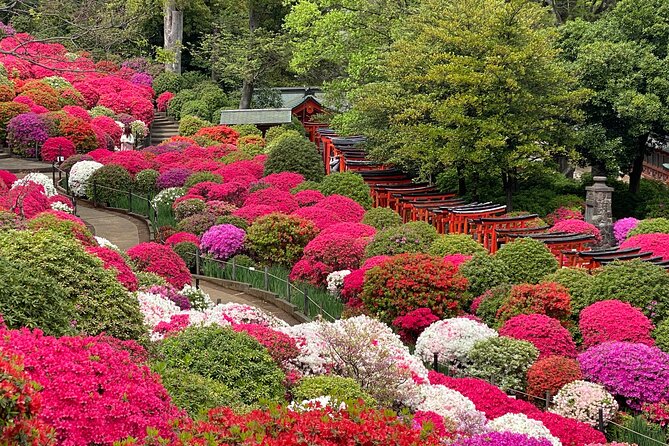
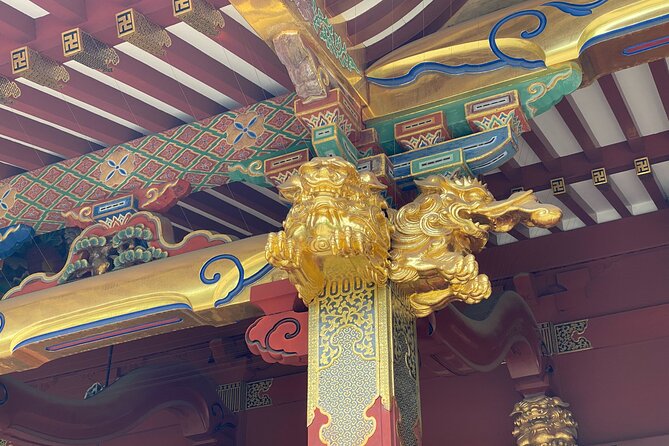
Then you arrive at Nezu Shrine, one of the most photogenic stops on the walk. The shrine features lots of red torii gates, and the guide compares their visual feel to the torii experience at Kyoto’s Fushimi Inari.
More important than photos, though, is the etiquette lesson. The tour explains how to behave in a shrine setting and what the usual customs are. That matters because shrine rules can be easy to get wrong without realizing it.
The Nezu Shrine stop is about 20 minutes, and admission is free. Give yourself time here to slow down. Let the torii corridor shapes guide your camera, then take a moment to actually watch how people move through the space.
Hebimichi back street: seeing Japanese daily life up close
After the shrine, the walk shifts into residential Tokyo with Hebimichi, a back street in the residential area. This is where Yanaka starts to feel most real.
Instead of another temple entrance, you see smaller scale living: the rhythms of doorways, sidewalks, and the way shops or small services fit into neighborhoods. This is also where guides often shine, because they connect the physical space to everyday habits.
The tour uses this section to show you Japanese daily life in a close way, without turning it into a performance. It is a quiet, human-paced contrast to the temple intensity.
Finishing at Yanaka Ginza: shopping street energy, minus the crowds
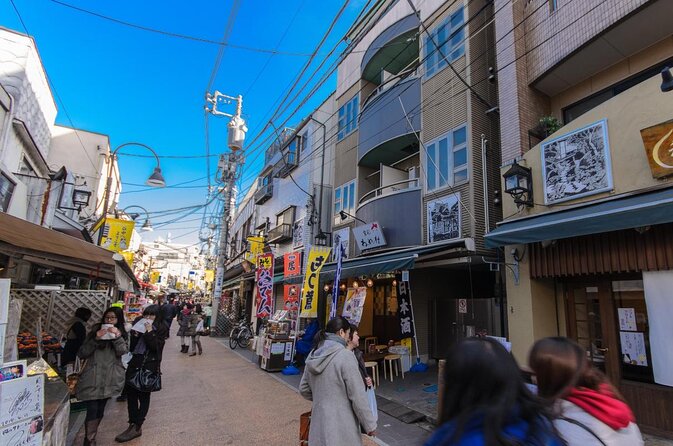
You end at Yanaka Ginza (3-chōme-13-1 Yanaka, Taito City, Tokyo). This is the practical payoff: the walk culminates right in a shopping street where you can keep eating, browsing, and wandering.
The tour description highlights that you can try local foods and sweets, but food fees are not included. That is the smart setup for you as a traveler. You can decide what you want in the moment, based on your own appetite and budget, instead of being forced into a fixed tasting plan.
This ending is also a good mental trick. After 3 hours of learning, you get to relax and translate the day into something you can taste and remember.
Price and value: what your $40 is really buying
The tour costs $40 per person. At that price, you are paying mainly for:
1) a guided walk that connects sites into a story,
2) an English-speaking local expert who can answer questions, and
3) the time-efficient route that gets you to multiple meaningful stops without having to map everything yourself.
The small-group size, capped at 10 travelers, is where you feel the value. You are not fighting for attention in a crowd. Guides also tend to share extra context, including humorous folk stories and practical explanations about religion and local customs.
If you like DIY travel, this area is walkable. But Yanaka’s details are exactly what can get missed without guidance: why certain boards exist at temples, what etiquette to follow at shrines, and how to read the cemetery respectfully. For many people, that is what makes the tour worth the money.
Who should book, and who might skip
This tour is a strong fit if you want Tokyo that feels human and older than the headline attractions. You’ll probably enjoy it most if you like:
- walking and asking questions
- temples and shrines with cultural context
- smaller neighborhoods over major sights
- a calmer pace than the busiest central areas
It may be less perfect if you hate walking or only want quick hits. You do spend a lot of time on foot, and there is no promise that every moment will be a big landmark moment. Still, the route works best when you treat it like a guided stroll with a cultural brain behind it.
Should you book the Old Quarter of Tokyo, Yanaka Walking Tour?
Yes, if you want an off-center Tokyo experience that stays respectful and specific. The structure is designed to teach you the language of the neighborhood, from Tennoji Temple and the Yanaka Buddha story, to cemetery customs, to Nezu Shrine torii gates and etiquette, and finally to everyday life on Hebimichi and Yanaka Ginza.
Also, the consistency matters. With a 4.7 out of 5 rating and roughly 590 ratings, the main thing seems stable: the guides bring clear explanations, and the pace works for a 3-hour walk.
If you do book, pack for the weather and movement. Wear shoes you can walk in for hours, and bring sun protection if the day is hot.
FAQ
How long is the Yanaka walking tour?
It is about 3 hours.
How much does the tour cost?
The price is $40.00 per person.
Where do I meet the guide, and where does the tour end?
You meet near Nippori Station at 2 Chome-19 Nishinippori, Arakawa City, Tokyo 116-0013, Japan. The tour ends at Yanaka Ginza, 3-chōme-13-1 Yanaka, Taito City, Tokyo 110-0001, Japan.
What is included in the tour price?
A guided walking tour with an English-speaking local expert, plus photo opportunities throughout.
Are admission tickets included for each stop?
Some stops are free, including Tennoji Temple, Yanaka Cemetery, and Nezu Shrine. Other stops are listed as admission not included, including Ueno-Sakuragi Atari and Enju-ji Temple.
Is food included?
Food, drinks, and personal expenses are not included. The Yanaka Ginza stop notes that trying local foods and sweets is available, but food fees are not included.
What is the cancellation policy?
You can cancel for a full refund up to 24 hours in advance. If you cancel less than 24 hours before the start time, the amount paid will not be refunded. The experience also requires good weather, and if it is canceled due to poor weather, you will be offered a different date or a full refund.
Latest write-ups near Tokyo
- Tokyo Customized Private Tour: See Top Attractions in 1 Day★ 4.8 · 67 reviews
- From Tokyo: Top 5 Scenic Spots of Mount Fuji Full-Day Tour★ 4.5 · 67 reviews
- Tokyo: Shinjuku Izakaya and Golden Gai Bar Hopping Tour (2h)★ 4.9 · 67 reviews
- Traditional Japanese Music ZAKURO SHOW in Tokyo★ 5.0 · 67 reviews
- Tsukiji: Unlimited Sake Tasting Experience★ 4.9 · 67 reviews
- Tokyo: Not a show- a professional sumo practice with experts★ 4.9 · 67 reviews
- Samurai Ninja Museum Asakusa: Kid-Friendly Ninja Training★ 4.7 · 67 reviews
- Private Harajuku Omotesando Architecture Walking Tour★ 5.0 · 67 reviews
Walking Tours, compared.
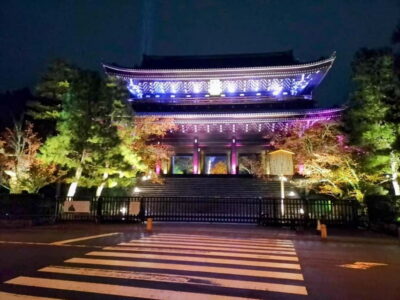
Kyoto Geisha Walking Tour: Gion District & Hidden Gems
Read our review →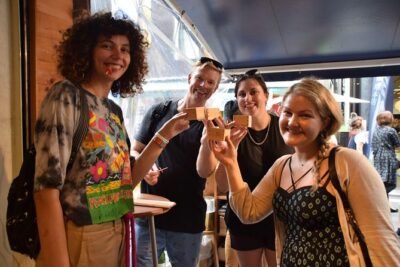
Tokyo Tsukiji Fish Market Food and Culture Walking Tour
Read our review →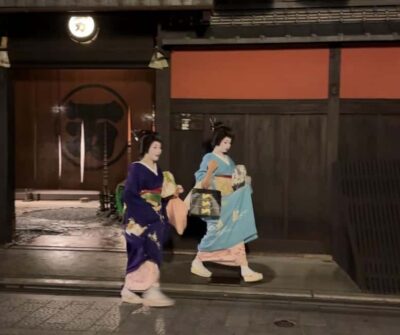
Gion Magical Night Walking Tour with Geisha Trivia
Read our review →
Imperial Palace and Shogun Historical Walking Tour
Read our review →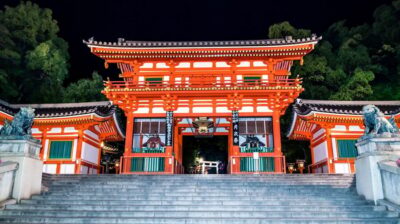
Gion Geisha District Walking Tour – Stories of Geisha
Read our review →
Shinjuku Local Bar and Izakaya Guided Walking Tour
Read our review →
Browse the lists this tour appears in