
Reviewed · WALKING TOURS
Tokyo: Asakusa Walking Tour with Japanese Comedian
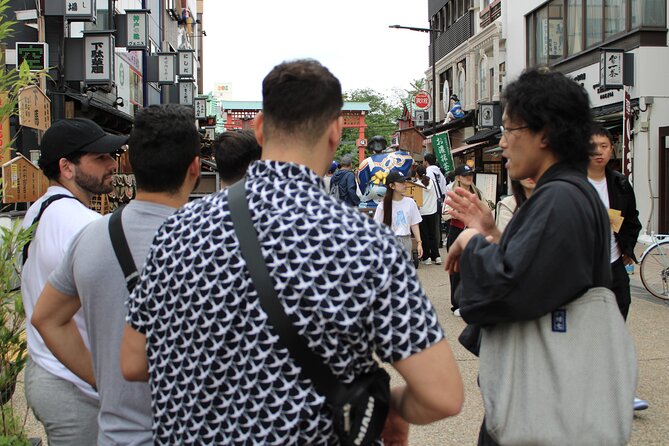
Asakusa can be a little chaotic, especially around Senso-ji. What makes this tour interesting is the way you follow a clear walking route with Karate Comic Ryo, a comedian guide who turns temple history into an easy, fun story.
I like two things a lot. First, the small group size keeps it personal, with time for questions and slow moments for photos. Second, the route is designed to prevent that classic Asakusa problem, getting turned around and missing the details that explain what you’re seeing. One thing to consider: you’re walking for about 1 hour 30 minutes, so bring comfy shoes and expect some crowding near the main temple approach.
Key Highlights at a Glance
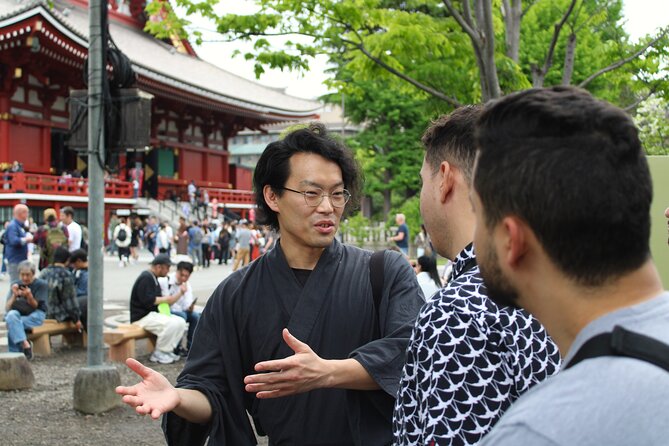
- Comedian guide, Karate Comic Ryo: jokes plus clear explanations that make the sites make sense
- Small group experience: capped at six in the concept, with a maximum of eight people
- No ticket headaches for major stops: admission is free at every listed highlight
- Asakusa orientation from the 8th floor: an early viewpoint helps you understand where you are
- Senso-ji plus side corners: gates, statues, and quieter temple spots, not just the main hall
- Nishi-sando snack stop: a practical break for Japanese sweets like melon-bread
Why This Asakusa Walk Feels Easier Than Going Solo
I like tours that solve a real problem, not just check boxes. Asakusa’s main cluster around Sensō-ji is famous, but it can also be confusing: gates look similar, back alleys lead to interesting things you’d never find by accident, and the “best view” depends on when you arrive.
This walk is built to help you get oriented early and then move at a comfortable pace. You’re not racing from one landmark to the next. You’re learning what each building and object is for, including the Buddhist and Shinto side of the neighborhood. And since your guide is a stand-up comedian, the atmosphere stays light, so the history lands without feeling like a lecture.
The other practical win is the group size. With a cap around six (and a maximum of eight), you get more of that back-and-forth feel. In the reviews, I saw lots of praise for Ryo’s conversation style and his patience with questions, including for families and groups with teens.
More Walking Tours in Tokyo
- Tokyo Tsukiji Fish Market Food and Culture Walking Tour
★ 5.0 · 3,184 reviews - Tokyo: Imperial Palace and Shogun Historical Walking Tour
★ 5.0 · 2,251 reviews - Tokyo: Shinjuku Local Bar and Izakaya Guided Walking Tour
★ 4.9 · 1,794 reviews
Meeting at Asakusa Pier, Then Taking the 8th-Floor View
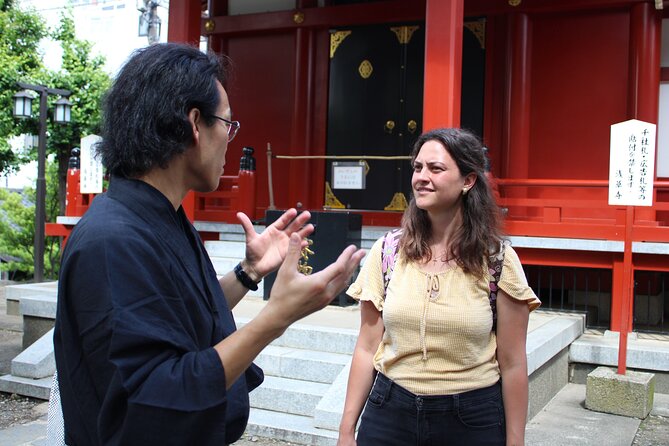
Your tour starts at Tokyo Cruise Asakusa Pier in Hanakawado, Taito City. The meeting point matters here because you begin near where you can quickly connect to the Asakusa area, so you are not wasting time crossing the city just to begin your walk.
Stop 1 is the Asakusa Culture Tourist Information Center. You’ll head up to the 8th floor for a view that helps you understand the neighborhood layout. That matters more than most people think. When you later see Kaminarimon Gate and the temple grounds, your brain has a map in place. You can look at the skyline and the street direction and think, I know where I am and where I’m going.
This stop is also stress-free. It’s about 10 minutes, and the admission ticket is free.
Nakamise, Kaminarimon, and the Art of Not Getting Lost
Stop 2 takes you right into the iconic heart of Asakusa: the Nakamise Shopping Street area near Kaminarimon Gate, the main gateway to Sensō-ji. This is where the neighborhood’s energy starts to show up, and it’s a great place for your guide to set the tone.
Here’s what I like about this approach. Instead of starting with the busiest temple gates first, you ease in through Nakamise. Your guide can explain what you’re looking at while you’re walking, so the street doesn’t feel like one long commercial strip.
This leg is brief, about 10 minutes, and admission is free. It’s also a smart time window if you aim for early mornings, because the crowds are lighter before the big waves.
Bentendo and the Bell of Time: Two Quick Stops with Real Meaning
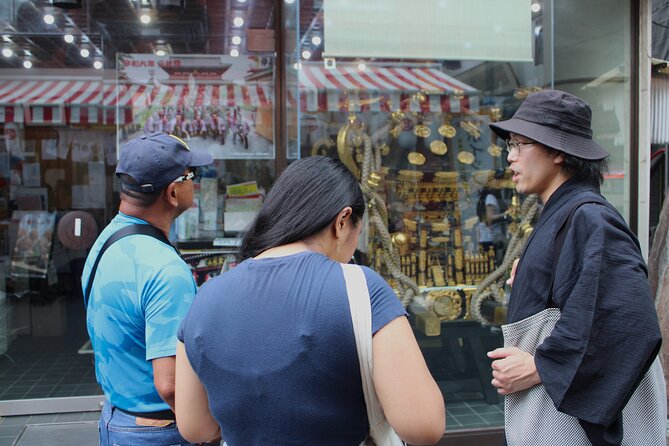
Stop 3 is Bentendo, one of the smaller temple highlights within the Sensō-ji area. You’ll spend only about 5 minutes, but it’s not a random photo stop. Bentendo is associated with art and prosperity, and your guide helps translate why that matters in a place like this, where people come for spiritual meaning and also for hope in everyday life.
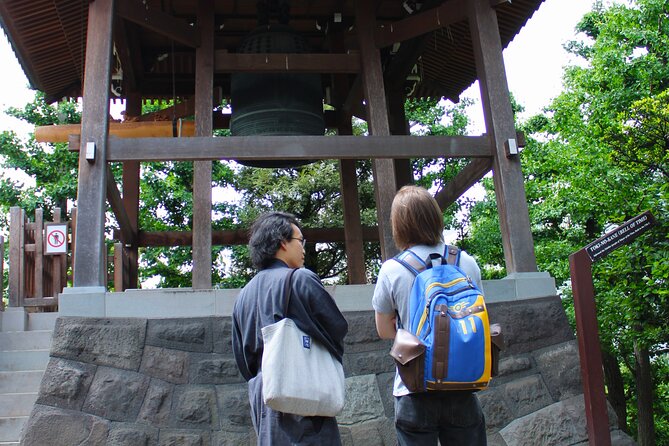
Stop 4 is the Bell of Time right next to Bentendo. This is where the Edo period story becomes more tangible. You learn that monks historically rang the bell to let people know the time between the 16th and 18th centuries. It’s a small object, but the point is bigger: you’re seeing how daily life used to be organized around temple rhythms.
Both of these stops are listed as free admission, and the pacing is tight enough to keep energy high, without turning the tour into a nonstop sprint.
A change of pace from Tokyo:
- Mt Fuji and Hakone 1-Day Bus Tour Return by Bullet Train
★ 5.0 · 26,383 reviews - 1-Day Tokyo Bus Tour
★ 5.0 · 14,250 reviews - Tokyo: TOKYO SKYTREE® Admission ticket
★ 4.5 · 11,192 reviews - Tokyo: teamLab Planets TOKYO Digital Art Museum Entry Ticket
★ 4.6 · 9,779 reviews
Nisombutsu and Nitenmon Gate: Details You Might Miss Without Guidance
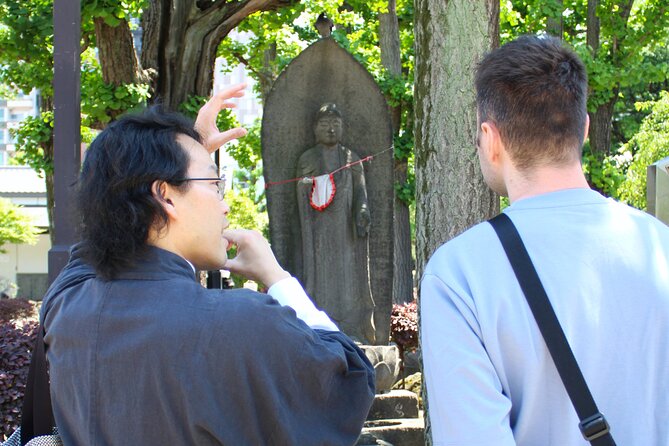
At Stop 5, you’ll visit the Sensō-ji Temple Nisombutsu area, a calmer spot with bronze and stone statues of Buddhist deities. It’s described as a mix of two bronze statues and four stone statues built in the 17th century. What you take from this stop is the idea that temples are layered with layers, both visually and spiritually. You’re not just looking at one “main altar,” you’re noticing a whole system of symbolism.
Then Stop 6 brings you to the Nitenmon Gate. It’s a nationally recognized cultural property in Japan, and your guide explains its historical function as a shogun’s gate, where only generals were allowed to pass. That detail changes how you look at the gate. It stops being just a pretty entrance and becomes a reminder of how power and access were structured centuries ago.
This section is about 10 minutes at the Nitenmon Gate, with free admission listed for the stop. Expect a bit more attention to details here, because gates, statues, and placement are where the “why” lives.
Asakusa Shrine, Yogodo, and Awashimado: The Quieter Corners
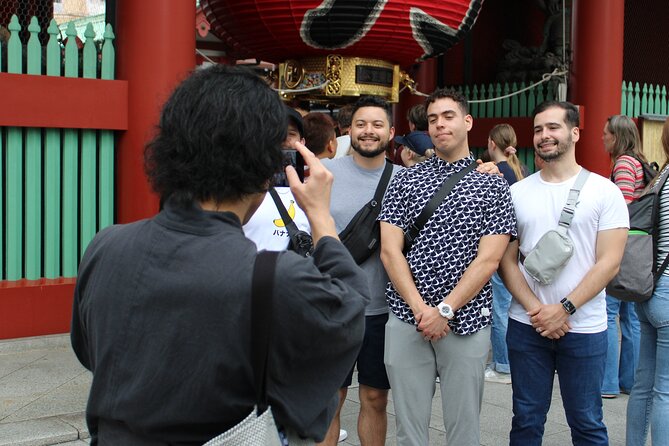
Stop 7 is Asakusa Shrine. Your route includes the shrine’s connection to the origins of Sensō-ji. It has three deities associated with the early history of the temple, plus a space for big portable shrines that are carried during local events.
Stop 8 and Stop 9 keep you inside the Sensō-ji compound but in quieter pockets: Yogodo and then Awashimado. These are shorter stops, around 5 to 10 minutes, but they matter because they round out what you see. If you only focus on the biggest hall and the shopping street, Asakusa feels flat. These side areas add texture.
In the reviews, I saw repeated praise for how Ryo points out small things people would likely overlook on their own. That’s exactly what these stops support. You’ll be standing in the right place to notice the arrangement, and your guide helps you read the scene without rushing you.
Everything here is listed with free admission at each stop.
Nishi-sando Snack Time: Melon-bread and a Small Break That Helps
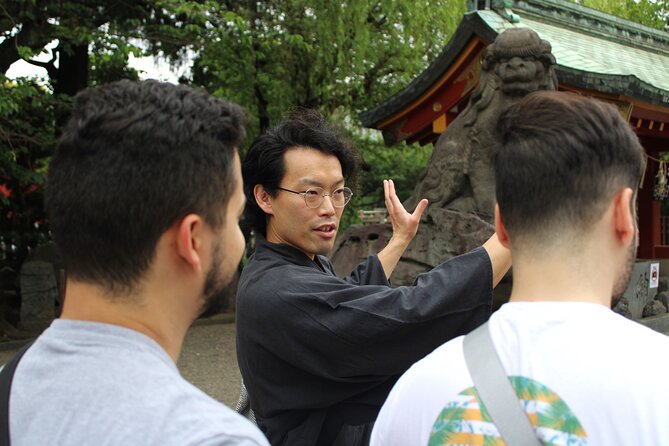
Stop 10 moves you to Asakusa Nishisando, a shopping street area that’s a nice change from the main temple crush. Your guide can drop by 花月堂 (Kagetsu-do) for Japanese sweets, specifically melon-bread.
I like this break because it does two useful things. First, it gives you a mental reset in the middle of temple sightseeing. Second, it grounds the tour in everyday Asakusa culture, not just historic landmarks.
This stop is about 5 minutes. It’s short on purpose so you can keep the flow, and if you’re already thinking about souvenirs or snacks, you’ll have a moment to make it real.
Hozomon and the Final Walk to Sensō-ji Main Hall
Stop 11 is Hozomon, another major gate near the temple area. Expect guardian statues and a strong “turn and look” feeling. A gate like this is often where photos look dramatic, but your guide helps you understand what you’re seeing and why it matters.
Stop 12 is the destination: Sensō-ji, the oldest temple in Tokyo with around 1,400 years of history. Your guide shares the role of Kannon Bodhisattva, and the focus here is to leave you with a real sense of what Kannon represents and why Sensō-ji has stayed popular for generations.
This final portion is about 10 minutes in the tour flow. It’s also where you can slow down for photos because you’re arriving at the heart of the experience.
Price, Pacing, and Value at $37.99 for 1.5 Hours
The price is $37.99 per person for about 1 hour 30 minutes. For central Tokyo walking tours, that’s a budget-friendly bracket, and the value is boosted by what you’re getting for it.
A few value points that matter in the real world:
- Every listed major stop is free admission. You’re not paying to get into museums or “add-ons” to make the tour worthwhile.
- Small group size means fewer wasted minutes. You’re walking with a cap around six to eight, which helps the guide manage pacing and questions.
- You get context, not just captions. Your guide doesn’t just point at objects, he ties them to history and everyday meaning.
- You can ask questions. Reviews mention Ryo’s patience and conversation style, including for kids and teenagers.
Pacing is a common theme in the feedback. People described it as perfect for seeing a lot while still having time to pause. And that matches the itinerary design, lots of short, manageable stops rather than one long slog in heavy crowds.
The Best Time to Go: Beat Crowds and Heat
One tip that comes up strongly is the start time. If you can, aim for an earlier slot. People reported starting around 8am to beat crowds, with a clear crowd build after 9am. Another timing detail: many of the market-style stalls are said to open around 10am.
So you have a choice. Early means calmer walking and better photo chances. Later means more street buzz, but more pushing through crowds. For most first-timers, I think early is the smarter pick because the tour is about learning, and learning works better when you’re not stressed.
Who This Tour Fits Best
This is a great match if you want your first Asakusa experience to feel guided but not controlling. You’ll like it if:
- You want an easy route that covers Senso-ji landmarks plus surrounding shrine and temple corners
- You prefer walking over hopping on and off a bus
- You like history told in a story-and-question style
- You’re traveling with teens or mixed ages who still want something entertaining
It’s also a solid option if you plan to return later on your own. You’ll leave with a mental map and the ability to point out what you care about, instead of wandering blindly.
Should You Book This Asakusa Comedian Walk?
If you’re going to Asakusa anyway, I’d book this tour when you want two things at once: a clear path through the Senso-ji area and a guide who keeps the mood light while explaining what you’re seeing.
Book it especially if you dislike the idea of “just looking at temples” without knowing why they’re shaped the way they are. The free-admission stops, the short duration, and the small-group setup make it an efficient value.
Skip it if you want total freedom to wander without any set stops. This is a structured walk, with specific sights covered in a planned order. But if you want structure that helps you see more and understand more, Karate Comic Ryo’s Asakusa tour is an easy yes.
FAQ
How much does the Asakusa walking tour cost?
The price is $37.99 per person.
How long is the tour?
The tour lasts about 1 hour 30 minutes.
How big is the group?
The experience is small-group style, capped at six people in the overview, with a maximum of eight travelers.
What are the main sights included?
The tour focuses on Asakusa and the Sensō-ji area, including Kaminarimon and Nakamise Shopping Street, Bentendo, the Bell of Time, Nisombutsu, Nitenmon Gate, Asakusa Shrine, Yogodo, Awashimado, Asakusa Nishisando, Hozomon Gate, and Sensō-ji Temple.
Are there admission fees for the stops?
Admission is listed as free for all the listed stops.
Where does the tour start and end?
It starts at Tokyo Cruise Asakusa Pier (1-chōme-1-1 Hanakawado, Taito City, Tokyo) and ends in front of the main hall of Sensō-ji Temple in Asakusa.
Is the tour near public transportation?
Yes, the meeting point is near public transportation.
Are service animals allowed?
Yes, service animals are allowed.
What is the cancellation policy?
Free cancellation is available up to 24 hours in advance for a full refund. If you cancel less than 24 hours before the start time, the amount paid is not refunded.
Latest write-ups near Tokyo
- Tokyo Nights: Shibuya Photo Adventure★ 5.0 · 20 reviews
- Wagyu & Sake 8 Course Tasting Dinner in Shinjuku★ 4.9 · 20 reviews
- Making Japanese desserts Nerikiri & drinking matcha in Tokyo★ 5.0 · 20 reviews
- Japanese Whisky Hunting《HIGH-QUALITY-ONLY》Rare Tasting Class★ 5.0 · 20 reviews
- Mt. Fuji 5th Station, Owakudani Ropeway, Pirate Ship plus Outlet shopping!★ 4.5 · 20 reviews
- Kintsugi Experience with Arita Ware in Tokyo (English Guide)★ 4.8 · 20 reviews
- This is Asakusa! A Tour Includes the All Must-Sees!★ 5.0 · 20 reviews
- Ebisu Local Food Tour: Shibuya’s Most Popular Neighborhood★ 5.0 · 20 reviews
Walking Tours, compared.
Kyoto Geisha Walking Tour: Gion District & Hidden Gems
Read our review →
Tokyo Tsukiji Fish Market Food and Culture Walking Tour
Read our review →
Gion Magical Night Walking Tour with Geisha Trivia
Read our review →
Imperial Palace and Shogun Historical Walking Tour
Read our review →
Gion Geisha District Walking Tour – Stories of Geisha
Read our review →
Shinjuku Local Bar and Izakaya Guided Walking Tour
Read our review →
Browse the lists this tour appears in