
Reviewed · TEMPLE & SHRINE TOURS
Tokyo: Meiji Shrine Walking Tour – Shinto & Imperial System
Meiji Shrine is interesting because Tokyo’s noise fades fast once you step into the 100,000-tree forest, and then the sacred sights connect to Japan’s political and spiritual history in a way that actually makes sense. I like the way this tour keeps things practical, like teaching you what to do after you pass under the torii, and I especially like the imperial layer, including Emperor Meiji poetry via Omigokoro (with English translations). Guides such as Keiko and Ayaka are also praised for clear explanations and for making shrine customs feel manageable.
One possible drawback to plan for: this is English only, so if you prefer Japanese-language support, you’ll want to choose another option or go with a basic self-guided plan.
Key highlights I’d put on your radar
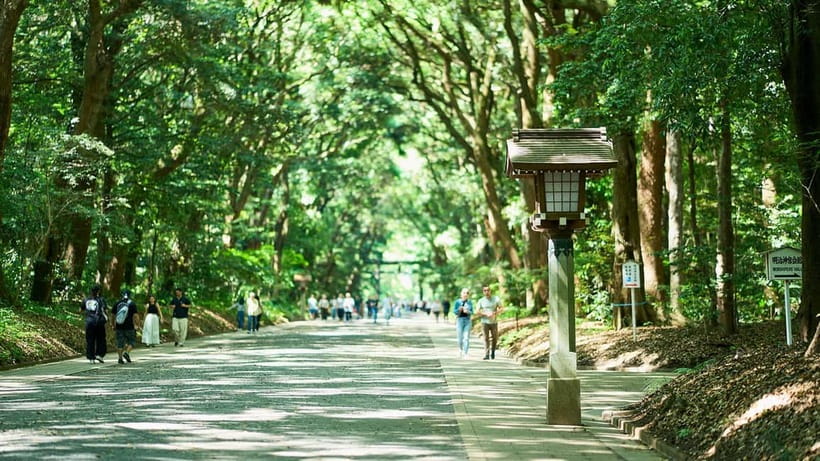
- Forest quiet that feels unreal in central Tokyo, with birdsong and a “noise disappears” vibe once you’re inside
- Largest wooden torii gate, made from 1,500-year-old Taiwanese cypress, and a serious 12 meter scale in person
- Seichu etiquette for the main path, where you’re guided to walk along the edges after entering
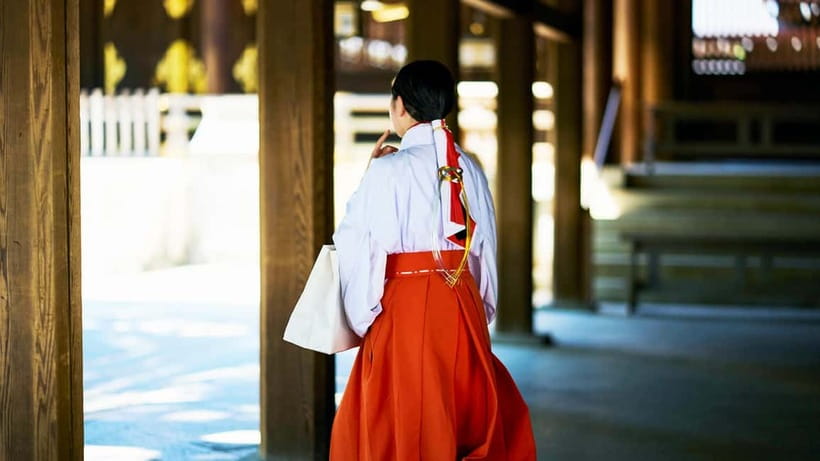
- Shinto practice explained in plain steps, plus chances to get omamori and draw Omigokoro
- Imperial system context, including how the Meiji era connects tradition, governance, and Japan’s modern shift
- Café Mori no Terrace stop, for Japanese tea and light snacks plus a relaxed break at Forest Terrace Meiji Jingu
Why Meiji Shrine feels like a Tokyo reset
Meiji Shrine can be a shock in the best way. You start in busy Harajuku energy, then walk into a dense forest where the city basically drops away. This tour leans into that contrast on purpose. As you move under the trees, you’re not just “seeing a shrine,” you’re getting a felt sense of why this place matters to people in Tokyo.
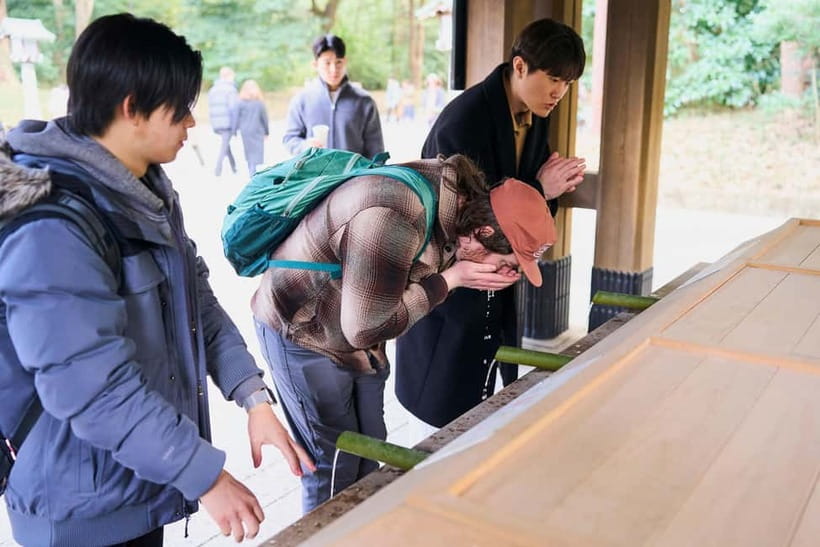
The biggest reason I think this works is that you get guided attention at the exact moments that usually confuse first-timers. The torii gates, the sacred barrels, and the prayer spots can feel like random photo targets if you don’t know what they’re for. Here, the story is tied to what you’re standing in front of.
Also, it’s not a rushed “line-up shuffle.” With a small group limited to 10, you can ask follow-up questions without losing the whole day to crowd management. That makes the spiritual and historical content much easier to process.
More Temple & Shrine Tours in Tokyo
- Tokyo: Meiji Shrine, Asakusa, Skytree Bus Tour and Cruise
★ 4.7 · 1,986 reviews - Tokyo: Asakusa Walking Tour with Sensoji Temple Visit
★ 4.8 · 1,583 reviews - Nikko: Kegon Falls, Lake Chuzenji & Toshogu Temple
★ 4.6 · 1,577 reviews
The small-group format and route timing that actually matter
The tour runs about 90 to 135 minutes, depending on the starting time and how the flow lands. For planning, that’s long enough to cover the key shrine landmarks and still include a break, but short enough that it won’t wreck your schedule if this is your first day in Tokyo.
You’ll meet at Harajuku Station. The meeting point can vary by the option you select, but you’re dropped back at Harajuku Station at the end. That’s convenient if you’re also planning Takeshita Street, Omotesando, or another neighborhood activity afterward.
Small group size is more than a comfort perk. It changes the experience because your guide can:
- explain customs as you need them
- adjust the pace if someone is asking a lot of questions
- help with small practical issues that come up during shrine visits
In the reviews, guides like Yuki and Yuuki are praised for keeping things interactive, and that matches the tour’s design. You’re not just following a lecture. You’re walking through the grounds with a human guide who can answer the “what am I supposed to do here?” moments.
Stop-by-stop: Ichino Torii, wine barrels, and the seichu edge rule
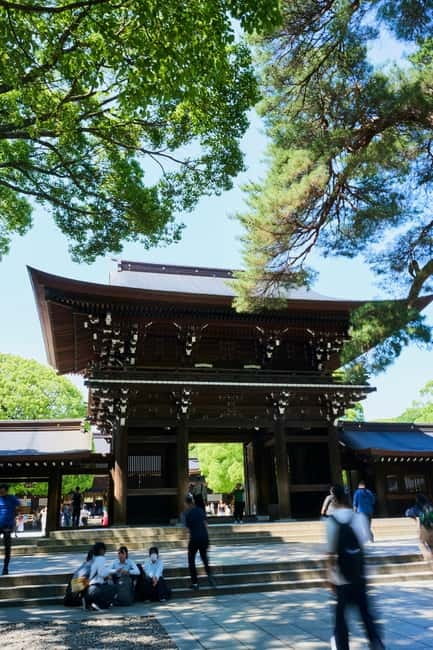
The route starts with Meiji Jingu Ichino Torii. You get a photo stop, then time to visit and hear the guided story while you walk through the early section. The point of starting here is simple: torii gates are not decoration in Japan. Passing under them is a shift from ordinary space into sacred space, and your guide helps you understand how to behave once you’re inside.
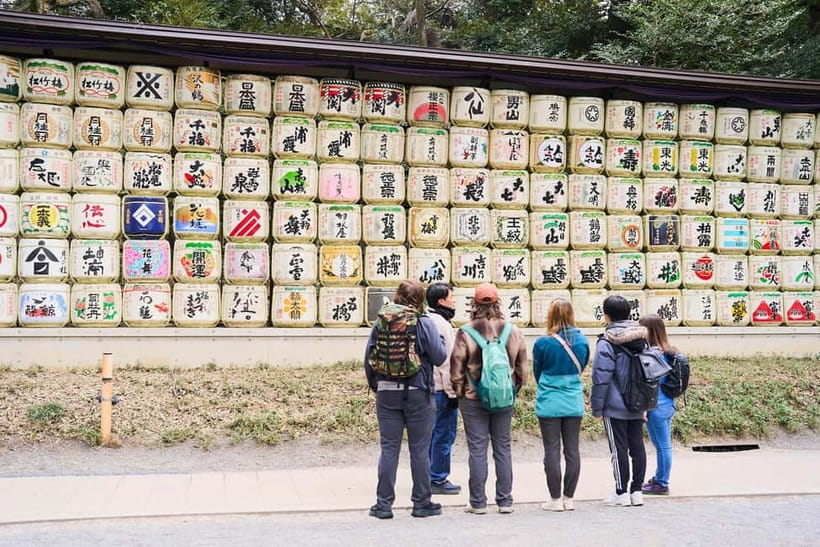
Next come the consecrated wine barrels, another short guided stop. These barrel areas can look like set dressing if you’re not told what they represent. Here, you’re guided on what you’re looking at and why it’s part of Meiji Shrine’s ritual life.
Then you move to consecrated sake barrels. The pace tightens a bit at this stage, but the tour keeps you focused on a clear chain of sights so you know what came before and what it’s leading to.
Here’s one detail I’m glad the tour includes: the custom of walking along the edges after you pass through the torii. The sacred central route is known as seichu, and it’s reserved for deities. Your guide cues this so you don’t accidentally wander into the wrong space.
A practical drawback to consider: if you personally prefer long silent time, 10-minute segments can feel quick. That said, you do get a longer chunk later at the main shrine where free time is built in.
The big torii made from Taiwanese cypress, and why scale changes everything

The big torii is the emotional centerpiece of the walk. This is Japan’s largest wooden torii gate, crafted from a 1,500-year-old Taiwanese cypress, and it rises to 12 meters. In photos it’s impressive. In person, it’s a different experience because your body has to deal with the scale.
This matters because the torii is a symbol you’re supposed to feel. It frames your movement, your photos, and your first real moment of arriving at Meiji Jingu’s sacred core.
Your guide also keeps the meaning grounded. Instead of making it abstract, they point you to what the gate signals in terms of entry and respect. That makes your photo stop feel like part of the pilgrimage, not just a break in the schedule.
If you’re worried about crowds, the small group helps. You’re still in a major sightseeing area, but having a guide who knows the flow of where to stand and when to move can keep your time from turning into stop-start frustration.
More Walking Tours in Tokyo
- Tokyo Tsukiji Fish Market Food and Culture Walking Tour
★ 5.0 · 3,184 reviews - Tokyo: Imperial Palace and Shogun Historical Walking Tour
★ 5.0 · 2,251 reviews - Tokyo: Shinjuku Local Bar and Izakaya Guided Walking Tour
★ 4.9 · 1,794 reviews - Tokyo: Tsukiji Fish Market Food and Walking tour
★ 5.0 · 1,724 reviews
Emperor Meiji poetry and the imperial system connection you can feel
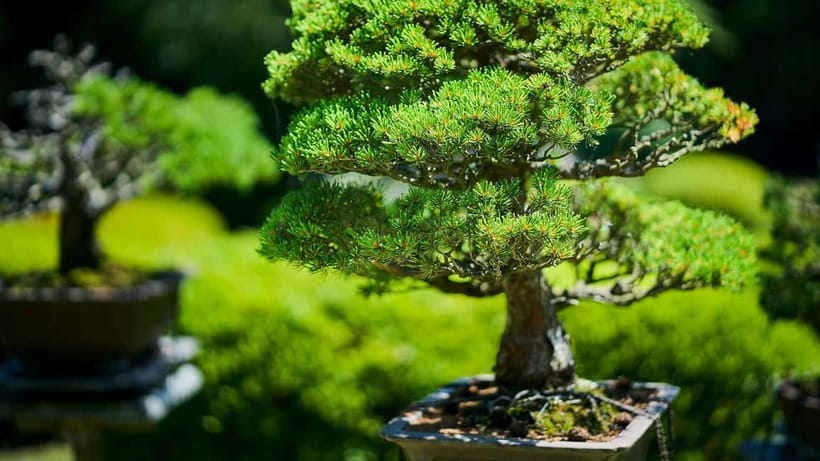
One of the tour’s best ideas is that it doesn’t treat the Meiji story like a textbook chapter. It shows you how the imperial system fits into the shrine’s meaning.
At a dedicated stop focused on the imperial poetry of Emperor Meiji, you’ll learn how poetry and commemoration are used here. You’re not just hearing that Meiji is important. You’re seeing how cultural expression supports spiritual and historical memory.
This theme matters if you’re trying to understand how Japan shifted from older eras into modern life. The tour is designed to help you make that transition feel logical, not random. You’ll connect the imperial system’s role with what Meiji Shrine represents today, including the way tradition continues in everyday religious practice.
This is where guides such as Tomo and Yuuka are often singled out in feedback, with praise for turning history and ritual into something you can actually hold in your head. For your trip, that means you leave with a story, not just a checklist of objects.
Shinto at the main shrine: omamori, Omigokoro, and respectful participation
At Meiji Jingu itself, you get the longest time block on the walk, including guided time plus 45 minutes of free time, shopping, and sightseeing. This is where the tour pays off for first-timers, because you’ll see Shinto in action without guessing what you’re supposed to do.
Shinto here is rooted in respect for nature and harmony with the divine. It’s not a “spectacle only” religion. It’s a practice people return to, so it’s worth slowing down enough to notice how quiet moments work.
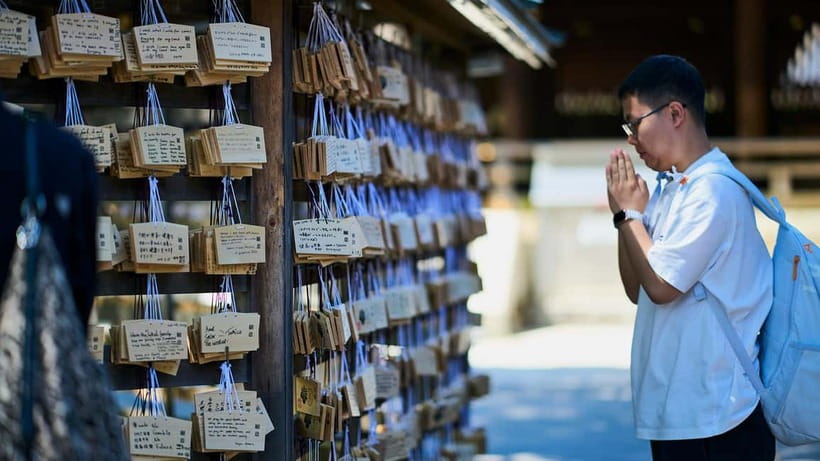
You’ll likely be guided through paying your respects at the shrine. After that, there’s time to purchase omamori, protective charms, and to experience a special omikuji called Omigokoro.
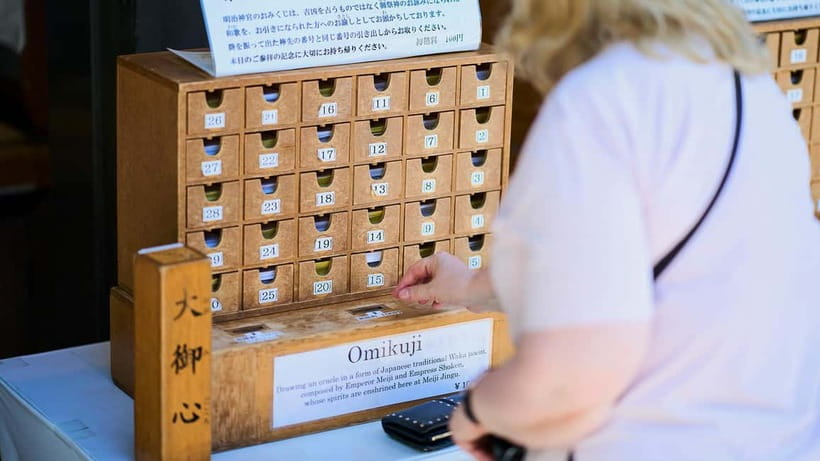
Omigokoro is a unique option because it features poems written by Emperor Meiji and Empress Shoken, with English translations included. That detail is huge for visitors who don’t read Japanese. Instead of feeling like you bought something you can’t interpret, you can actually understand the message.
In the reviews, people also mention guides helping with practical offerings, including providing coins when needed, and helping participants with wishes or prayers. While that’s not guaranteed for every group, it signals the tour’s overall approach: your guide is there to reduce friction so you can focus on respectful participation.
What to do with your free time
Use the free time to do two things:
- take a few slower photos where the angle feels right
- pick one spiritual activity that you’ll actually understand when you finish
If you try to do everything in a rush, you’ll miss the best part, which is the calm, intentional feel of the grounds.
Forest Terrace Meiji Jingu, tea at Café Mori no Terrace, and souvenir shopping that isn’t generic
After the main shrine, you unwind at Forest Terrace Meiji Jingu. The tour includes a stop at Café Mori no Terrace for a break, photo time, and guided context. You can enjoy Japanese tea and light snacks, then take a little time to browse nearby shops.
This is a smart placement in the schedule. You’ve already walked the sacred core, and now you get a lighter moment before you head back toward Harajuku.
If you like thoughtful souvenirs, this is also where you’ll see gift-shop items tied to the shrine and its environment. Examples include eco-blocks made from fragrant Japanese camphor and miniature barrels of sacred sake. These feel more connected to place than generic keychains, so they make good take-home reminders.
Even if you don’t buy anything, the stop is still useful. It gives you a chance to sit, reset your feet, and review what you learned while the meaning is still fresh.
Price and logistics: the real value of a $23 guide
At $23 per person, this tour is one of the more budget-friendly ways to get context for Meiji Shrine. The math is simple: you’re paying for an English live guide, plus structured time that helps you hit key sights without wasting energy figuring things out on your own.
What makes the price feel fair is the content mix:
- nature and setting (that forest quiet)
- major landmarks (torii gates, consecrated barrels)
- cultural etiquette (including seichu path behavior)
- Shinto practice basics (omamori and Omigokoro)
- imperial system context (Emperor Meiji poetry and the wider historical story)
If you tried to self-guide, you could do it. But you’d likely lose the “why” behind several stops. That’s where this tour offers the best value, because it helps you see meaning while you’re standing in the exact spot the meaning is tied to.
The main thing you’re trading for that value is flexibility. The tour has a set flow and timing. If you want to spend extra time at every ritual station, you may feel slightly constrained. Still, the free time at the main shrine gives you some room to breathe.
Who this tour is best for, and who might want a different plan
This tour is a strong fit if you:
- are visiting Tokyo for the first time and want a clear, gentle introduction
- care about Shinto etiquette and want guidance on what not to do
- enjoy history, especially how the Meiji era connects tradition to modern Japan
- want an English-only experience that doesn’t leave you guessing
It might be less ideal if you:
- want a Japanese-language, in-depth interpretive experience
- prefer long, solo pauses over structured stops
- already know Shinto well and just want time for photography and wandering
Your best strategy is to match your learning style. If you want help making sense of what you see, this tour gives you that structure without being heavy.
Should you book this Meiji Shrine walking tour?
Yes, if you want Meiji Shrine with context, not just pictures. Book it when you like the idea of combining sacred grounds with imperial-era storytelling, plus a guided explanation of practical etiquette like staying to the edges instead of the seichu center route.
Skip it if you’re purely in sightseeing mode and plan to self-guide without caring about meaning. Also, if English-only is a deal-breaker for you, you’ll want to choose a different style of tour.
FAQ
How long is the Meiji Shrine walking tour?
The duration is listed as 90 to 135 minutes. The exact time can vary by the starting time you choose.
How big is the group?
It’s a small group with a maximum of 10 participants.
Is the tour offered in languages other than English?
No. The tour is conducted in English only, and there is no Japanese language support.
Where does the tour start and end?
You meet at one of two starting options at Harajuku Station, and you are dropped off at Harajuku Station at the end. The exact meeting point may vary depending on the option booked.
What main sights does the tour include?
You’ll visit Meiji Jingu Ichino Torii, the consecrated wine barrels, the consecrated sake barrels, the big torii, the stop focused on Emperor Meiji’s imperial poetry, Meiji Shrine, and a break stop at Café Mori no Terrace.
What is Omigokoro?
Omigokoro is a unique omikuji with poems written by Emperor Meiji and Empress Shoken, and it includes English translations.
Will there be time to shop or take breaks?
Yes. At the main shrine, there is free time and shopping. There is also a break stop at Café Mori no Terrace, where tea and light snacks are available.
Is it flexible to cancel or change plans?
The activity offers free cancellation up to 24 hours in advance for a full refund. It also offers a reserve now and pay later option.
Latest write-ups near Tokyo
- Tokyo Customized Private Tour: See Top Attractions in 1 Day★ 4.8 · 67 reviews
- From Tokyo: Top 5 Scenic Spots of Mount Fuji Full-Day Tour★ 4.5 · 67 reviews
- Traditional Japanese Music ZAKURO SHOW in Tokyo★ 5.0 · 67 reviews
- Tokyo: Shinjuku Izakaya and Golden Gai Bar Hopping Tour (2h)★ 4.9 · 67 reviews
- Tsukiji: Unlimited Sake Tasting Experience★ 4.9 · 67 reviews
- Tokyo: Not a show- a professional sumo practice with experts★ 4.9 · 67 reviews
- Samurai Ninja Museum Asakusa: Kid-Friendly Ninja Training★ 4.7 · 67 reviews
- Private Harajuku Omotesando Architecture Walking Tour★ 5.0 · 67 reviews
Temple & Shrine Tours, compared.
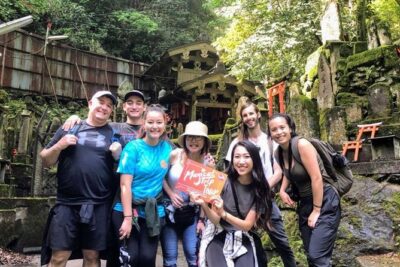
Fushimi Inari, Kinkakuji, Bamboo Grove 1 Day Bus Tour
Read our review →

Meiji Shrine, Asakusa, Skytree Bus Tour and Cruise
Read our review →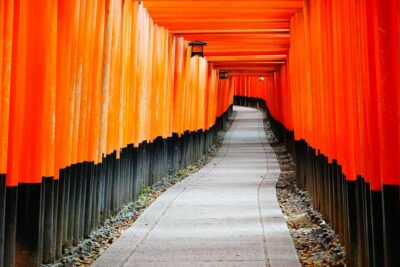
Osaka/Kyoto:Kinkakuji,Arashiyama,FushimiInariShrine,NaraPark
Read our review →
Asakusa Walking Tour with Sensoji Temple Visit
Read our review →
Nikko: Kegon Falls, Lake Chuzenji & Toshogu Temple
Read our review →
Kamakura & Enoshima Day Trip including Temple Tickets
Read our review →
Nikko Toshogu Shrine and Kegon Waterfall Tour
Read our review →Browse the lists this tour appears in