
Reviewed · KIMONO EXPERIENCES
Tokyo: Winter Kimono Experience in Asakusa
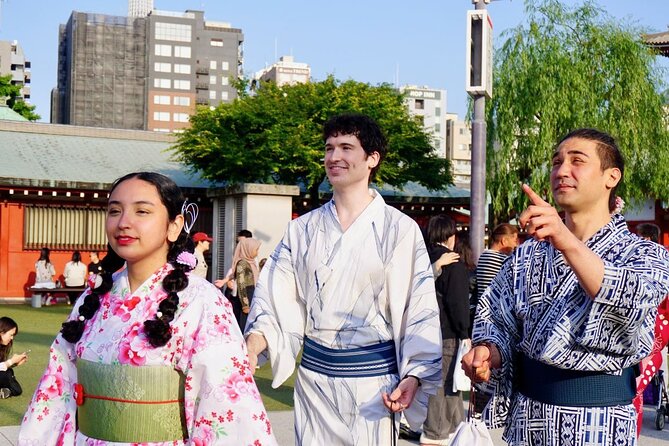
Tokyo’s winter kimono experience in Asakusa is interesting because it turns one of the city’s most photo-friendly temple neighborhoods into your own dress-up set. The shop is close to Senso-ji, you get help getting dressed correctly, and then you’re free to roam in a traditional look that locals actually see every day in that area.
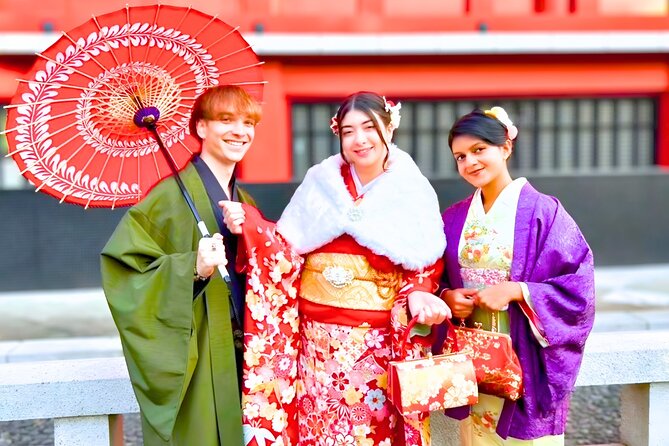
I like that you can choose from different kimono styles, so you’re not stuck with one generic look. I also really love the hands-on support from named staff like Kazune, plus additional support from a Japanese National Certified Kimono Dresser, so you waste less time fiddling with fit and more time walking and photographing.
One possible drawback is simple logistics: you need to return the kimono by 17:30, and you must be comfortable walking around in kimono while you explore. If you want a super casual, no-timetable day, that return deadline matters.
Key things to know before you book
- Expert kimono dressing with named help from Kazune, plus a certified kimono dresser on staff
- Pick your own style from a real collection of kimonos before you head out
- Photo-first route in the Senso-ji area, starting at Kaminarimon and working through major gates and nearby landmarks
- On-site photo spot recommendations so you are not guessing where to stand
- Souvenir photo included, so you leave with more than phone selfies
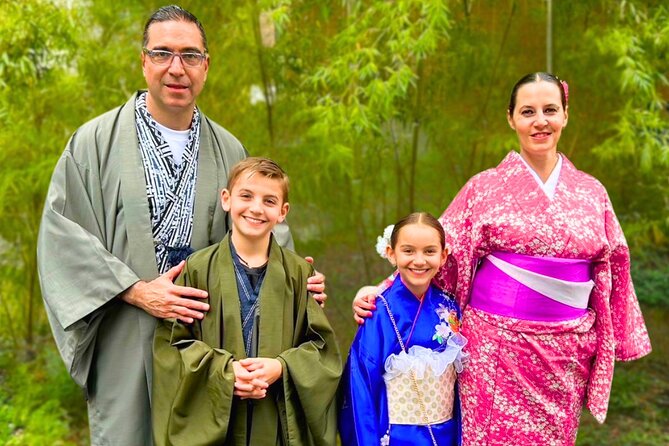
- Small group size, max 5 travelers, which usually means less waiting and smoother fitting
Asakusa kimono start point: close to the Senso-ji photo corridor
This is set up as a tight, practical kimono day in Asakusa. You meet at f.2-chōme-8-10 Kaminarimon, Taito City. The kimono shop is described as about a 3 minute walk from Senso-ji Temple, which matters because you are spending less time commuting while dressed up.
The plan is designed so you get ready, then you can step into one of Tokyo’s best-known temple streetscapes right away. The route includes recognizable stops like Kaminarimon Gate, Nakamise Shopping Street, and multiple Senso-ji gates and areas (Hozomon, Yogodo, Shinokuyama, Nitemmon Gate). In plain terms, you are not wandering randomly. You are guided through the “where cameras naturally point” zone.
If you’re the type who likes your day organized but still gives you freedom, this hits the sweet spot. You get the styling and photo guidance up front, then you have time to explore at your own pace.
More Kimono Experiences in Tokyo
- Let’s make kimono !(Kimono is a gift for you
★ 5.0 · 252 reviews - Tokyo: Matcha and Kimono Experience
★ 4.7 · 219 reviews - Tokyo: Asakusa Kimono Dressing and Matcha Experience
★ 4.9 · 173 reviews
Choosing a winter kimono: real options and real fit help
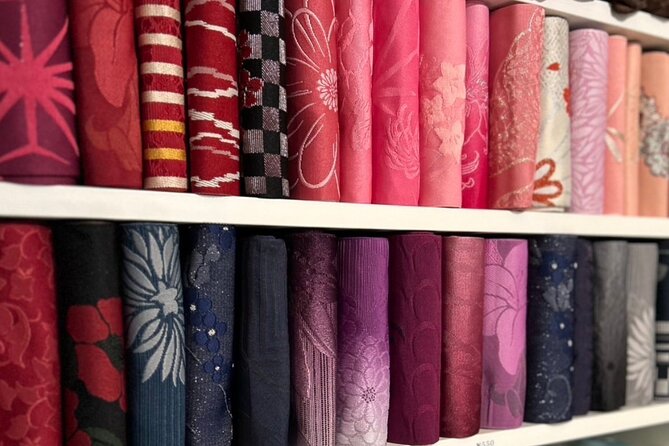
The heart of the experience is the dressing. You show up to the kimono shop in Asakusa, choose from different kimono styles, and then get professional assistance to put it on correctly.
Kazune is specifically named as the person who will help you dress and make sure things fit comfortably and look right. Reviews you’ll see connected to this experience also mention another staff member by name, Wako, and that matches the idea that the shop is staffed to handle different groups smoothly. There is also mention of a Japanese National Certified Kimono Dresser, so you’re not relying on guesswork.
This matters because the biggest “kimono stress” is usually fit and fastening. When the dressing is handled well, you spend your time walking, not adjusting. And because kimono photography is so pose and angle dependent, good placement makes a difference in how your photos turn out.
Practical tip from the structure here: plan on giving yourself time to get ready. The instructions say to arrive at least 10 minutes before your booking time so the shop can prepare you properly.
Your kimono time: professional dressing plus photo spot suggestions
Once you’re dressed, the experience shifts into roaming mode. You are encouraged to take photos around Asakusa, and the on-site team can recommend photo spots.
What I like about this approach is that it reduces the classic problem of temple-area photos: you stand somewhere pretty, but not quite where the best angle is. With recommendations, you can go directly to good viewpoints and then spend the time taking photos instead of scouting for the perfect spot.
Also, you are not just sent out with your phone and a hope for the best. The team helps you get styled, and then they help you navigate where to aim your camera in kimono. That gives you a smoother experience if you’re new to Japan or new to Asakusa.
There’s also an included souvenir photo, which I think is a smart add. It means you can have at least one memory that isn’t only dependent on someone else in your group pressing the shutter at an awkward angle.
The Asakusa route, stop by stop: gates, streets, and temple viewpoints
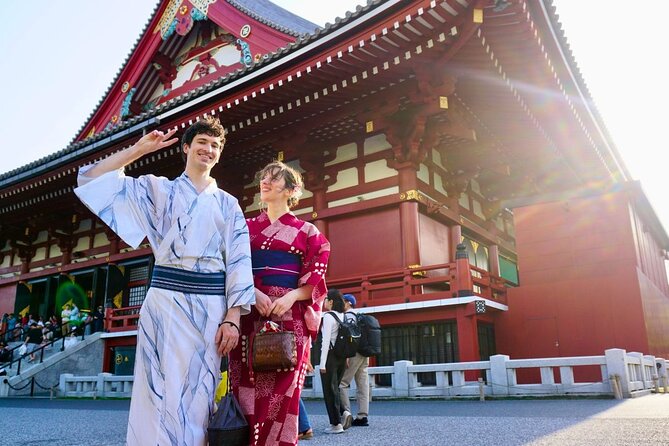
This is a photo-friendly loop through the Senso-ji neighborhood. Below is what each stop signals in the plan, and what to watch for while you’re in kimono.
A change of pace from Tokyo:
- Mt Fuji and Hakone 1-Day Bus Tour Return by Bullet Train
★ 5.0 · 26,383 reviews - 1-Day Tokyo Bus Tour
★ 5.0 · 14,250 reviews - Tokyo: TOKYO SKYTREE® Admission ticket
★ 4.5 · 11,192 reviews - Tokyo: teamLab Planets TOKYO Digital Art Museum Entry Ticket
★ 4.6 · 9,779 reviews
Stop 1: Kaminarimon Gate
You start at Kaminarimon Gate, one of the most recognizable entrance points in the area. Since you’re already dressed, this is where your kimono photos naturally click. The draw here is classic composition, big textures, and a “I’m here” landmark moment.
Stop 2: Nakamise Shopping Street
From the gate, you move through Nakamise Shopping Street. This is a good stretch for photos because it’s visually busy in a way that still feels contained. If you want pictures that show the “Asakusa scene” rather than just temple walls, this is a key section.
Practical note: shopping street walking in kimono can feel slower than you expect. Give yourself room to move without rushing.
Stop 3: Senso-ji Temple
Then you reach Senso-ji Temple, which is the centerpiece of the route. This is where you get the full temple-area look that makes kimono feel especially fitting. Your goal here is to find a couple of calm photo spots, then keep going so you get variety.
Stop 4: Asakusa Shrine
The plan also includes Asakusa Shrine. I like adding a shrine stop because it breaks up the temple-only rhythm. It also gives you more style variety in photos, especially if you’re trying for different backgrounds rather than repeating the same gate angle.
Stop 5: Azumabashi Bridge
You then cross into Azumabashi Bridge area. Even without turning this into a long detour, a bridge stop gives your photos a different visual feel. Think wider spacing and a calmer background compared to the tighter street sections.
Stop 6: Asakusa Culture Tourist Information Center
Next is the Asakusa Culture Tourist Information Center. It’s a natural pause point during a kimono walk because it’s something you can use as a reference while you keep exploring.
This stop can be useful if you need to check your bearings or just take a quick break before continuing.
Stop 7: Hozomon
Then you head to Hozomon, one of the major temple structures on the route. In a kimono, you’ll look especially “in character” here. This is where photography usually shifts from street scenery to more classic temple framing.
Stop 8: Senso-ji Temple Yogodo
The itinerary includes Senso-ji Temple Yogodo. This continues the sequence of temple areas and helps your photos show depth in the complex rather than just one gate.
Stop 9: Senso-ji Temple Shinokuyama
You also pass Senso-ji Temple Shinokuyama. This stop keeps the walk evolving. If you’re someone who likes to photograph details and different angles, the multiple named points are a good sign you’ll get that variety.
Stop 10: Senso-ji Temple Nitemmon Gate
Finally, you reach Nitemmon Gate, and that gives you a strong closing photo moment. Ending at a major gate is smart because it gives your set a clear “before and after” structure: you started at Kaminarimon, and you finish at a significant gate too.
Stop 11 and 12: Tokyo, Taito
The last items listed are Tokyo and Taito, which read like the broader city/ward context for where the walking experience takes place. Practically, what matters is that the route stays focused on the Asakusa/Senso-ji corridor, so your kimono day feels concentrated rather than scattered.
What the included souvenir photo does for your memory
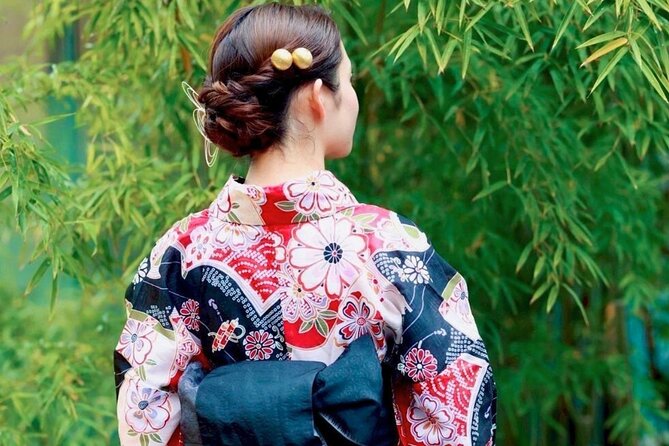
A small detail, but a meaningful one: your experience includes a souvenir photo.
Here’s why I think that’s good value. When you’re dressed in kimono, your photos matter more than usual. You’ll likely want at least one photo that does not depend on your group sharing a camera or timing shots in crowded lanes. The souvenir photo helps you leave with a more “complete” set of memories.
And because the team can recommend photo spots, the souvenir photo likely aligns with good angles in the same area, not just a random spot you could’ve chosen yourself.
Price and value: $31.63 for one day of kimono + guidance
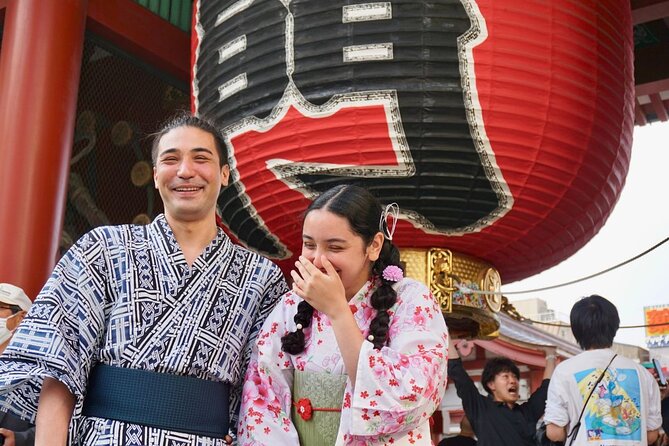
At $31.63 per person, this sits in the budget-friendly range for a structured kimono experience. The value comes from what’s included, not just the costume.
You’re getting:
- Professional help dressing so you don’t fight the fit
- A selection of kimono styles from a shop collection
- A photo route through the Senso-ji neighborhood
- On-site photo spot recommendations
- A souvenir photo
When you price it like that, it starts to make sense as a deal, especially in a place like Asakusa where the photo payoff is high. Also, the group size is capped at 5 travelers, which often improves the experience because you’re not stuck waiting behind a large crowd while you get dressed.
If you’re traveling with a tight itinerary and want one memorable cultural styling moment without paying for extra add-ons, this looks like one of the cleaner ways to do it.
Timing and the 17:30 return deadline, planned for a full day
This is roughly a 1 day experience. The key time detail is that you must return the kimono to the shop by 17:30 the same day.
That changes how you should plan your day. Treat the kimono as your main “anchor activity” and build around it:
- Arrive early for your fitting (at least 10 minutes before booking time)
- Use the roaming time for photos and the route stops
- Avoid planning other long, far-away activities that could put you at risk of running late
The experience also states that you can return the next day for a small extra fee, which is useful if you want a longer kimono window. But by default, plan around that 17:30 cutoff.
Also, you’ll use a mobile ticket. And the meeting point is near public transportation, which is helpful for keeping your day stress-free.
Cultural note: wearing kimono respectfully in Asakusa
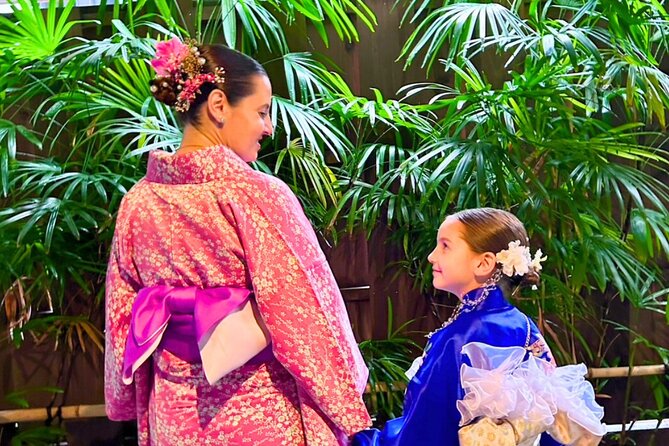
One worry people sometimes have is cultural appropriateness. The experience directly addresses this by saying they love seeing tourists taking part in the culture and that visitors always look beautiful wearing kimono.
I’d put it like this: respectful participation is about the details you already control. Follow the dress and return rules, ask for help when needed, and treat the temple area with care while you’re photographing.
If you go in with that attitude, you’ll get more enjoyment out of the whole day.
Who should book this winter kimono experience?
This setup is a strong fit if you:
- Want a guided kimono dressing experience with real help
- Prefer a photo-focused route in Asakusa rather than a long, complicated tour
- Like the idea of small group time and quick access to Senso-ji landmarks
- Want a souvenir photo, not just phone shots
It’s probably not a fit if you:
- Need to avoid timed returns, since you must return by 17:30
- Have size or health limitations listed in the experience info, including not being for people over 210 cm, over 160 kg, or pregnant women
If you’re traveling as a couple, with friends, or with a daughter or small group, the max 5 travelers limit can make the day feel more personal without turning it into a private, high-cost experience.
Should you book this? My quick take
Book it if you want the best parts of Asakusa in one day, with your kimono dressing handled for you, and a route that naturally feeds great photos. The combination of Kazune’s help, additional certified dressing support, the choice of kimono styles, and the included souvenir photo makes the price feel reasonable.
Skip or think twice if you know you will struggle with the 17:30 return or you want a totally self-guided day with no schedule at all. For most people, though, this hits the sweet spot between structure and freedom.
FAQ
Where do I meet for the Asakusa kimono experience?
You meet at f.2-chōme-8-10 Kaminarimon, Taito City, Tokyo 111-0034, Japan.
How long is the experience?
It’s listed as approximately 1 day.
Is this experience ticketed on a phone?
Yes. It uses a mobile ticket.
How close is the kimono shop to Senso-ji?
The shop is described as just a 3 minute walk from Senso-ji Temple.
What help do I get with putting on the kimono?
You choose a kimono, then the on-site staff helps you put it on so it fits comfortably and looks perfect. Kazune is specifically mentioned as helping guests dress.
Do I get to choose my kimono style?
Yes. You can choose from different style kimonos from the shop’s collection.
Is there a photo included?
Yes. The experience includes a souvenir photo, and the on-site team can recommend photo spots as you explore.
When do I have to return the kimono?
You need to return the kimono by 17:30 on the same day.
Can I keep the kimono longer than one day?
Yes. Returning it the next day is possible for a small extra fee, arranged directly at the shop.
Who might not be able to participate?
The experience info says it is not for people over 210 cm, not for people over 160 kg (264 lbs), and not for pregnant women. It also notes that most travelers can participate.
Is there a cancellation option if my plans change?
Free cancellation is available. You can cancel up to 24 hours in advance for a full refund. If you cancel less than 24 hours before the start time, the amount paid is not refunded.
Latest write-ups near Tokyo
- Tokyo Nights: Shibuya Photo Adventure★ 5.0 · 20 reviews
- Wagyu & Sake 8 Course Tasting Dinner in Shinjuku★ 4.9 · 20 reviews
- Making Japanese desserts Nerikiri & drinking matcha in Tokyo★ 5.0 · 20 reviews
- Mt. Fuji 5th Station, Owakudani Ropeway, Pirate Ship plus Outlet shopping!★ 4.5 · 20 reviews
- Japanese Whisky Hunting《HIGH-QUALITY-ONLY》Rare Tasting Class★ 5.0 · 20 reviews
- Kintsugi Experience with Arita Ware in Tokyo (English Guide)★ 4.8 · 20 reviews
- This is Asakusa! A Tour Includes the All Must-Sees!★ 5.0 · 20 reviews
- Tokyo: Karate Experience with Former All-Japan Champion★ 5.0 · 20 reviews
Kimono Experiences, compared.
Sumo Show & Experience w/ Optional Kimono & Hot Pot
Read our review →
KYOTO Tea Ceremony with kimono near by Imamiya Jinjya Shrine
Read our review →
Kimono and Tea Ceremony Experience at Cultural Asset
Read our review →

Browse the lists this tour appears in