Reviewed · SHOW
Traditional Japanese Comedy, Juggling & Magic Live Show in Tokyo
Tokyo has plenty of shows. This one is special because it mixes three traditional styles in one tight 90-minute program: Rakugo, Daikagura, and Wazuma magic. I really like that you do not need Japanese to enjoy it, and you actually get a chance to try bits of what you are seeing. One thing to consider, tickets are limited and tend to book up, so you will want to lock in your date early.
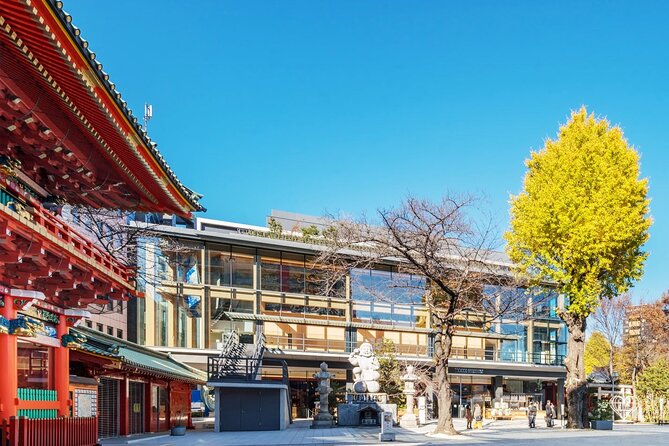
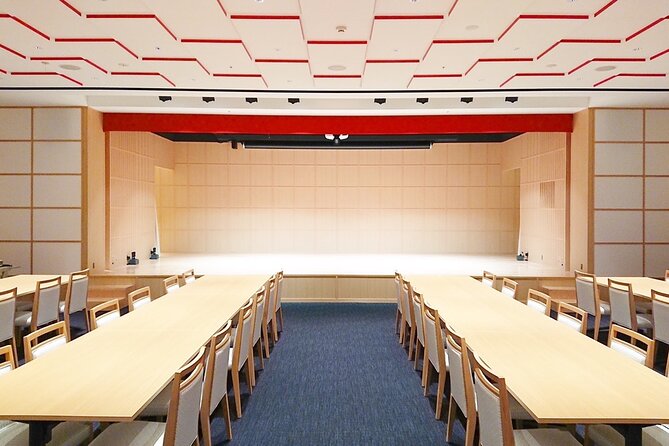
The setting helps too. The performance happens at EDOCCO STUDIO inside the area of the historic Kanda Myoujin Shrine, a short jump from Akihabara. It is small, calm, and weather-proof in practice, since it is held indoors in an intimate theater.
Key highlights
- Three traditional arts in one ticket: Rakugo, Daikagura acrobatics, and Wazuma magic
- English support so you can follow the story and the instructions without Japanese
- Hands-on moments where you try simple magic elements and Daikagura style moves
- A small indoor theater experience capped at a maximum group size of 100
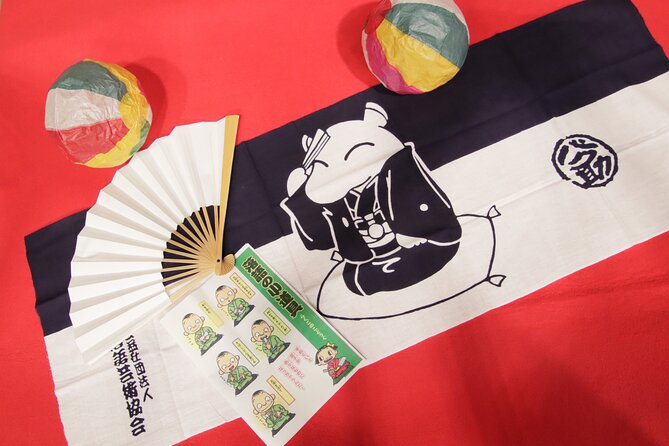
- Take-home cultural props like tenugui hand towels, folding fans, and paper balloons
EDOCCO Studio at Kanda Myojin Shrine, close to Akihabara but calm inside
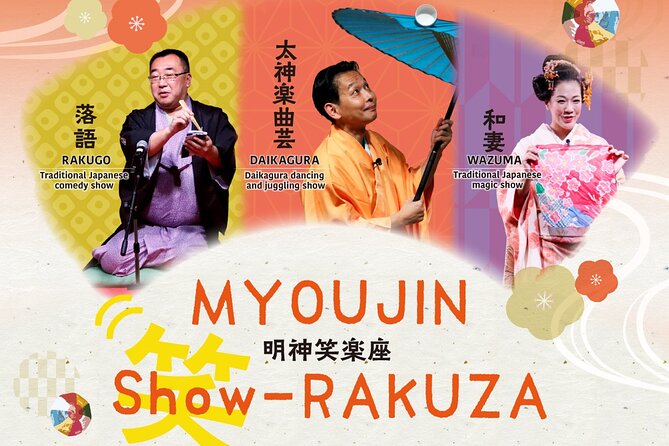
If you are trying to build a Tokyo trip that includes more than shopping, this show is an easy win. You get a clear taste of Japanese performing arts in a compact time window, and you do not need to hunt around the city to make it happen. The venue is EDOCCO STUDIO, located within the Kanda Myoujin Shrine area in central Tokyo. It is also described as being just a few minutes from Akihabara, which matters when you are juggling a full itinerary.
The vibe inside is what I would call comfortable and focused. Instead of a huge hall where you feel like a spectator only, this is an intimate indoor theater. You are close enough to see what the performers are doing, and the format makes it natural for staff to help explain what is going on. That is a big deal if you are not fluent in Japanese.
Practical note for your planning: the meeting point for check-in is at EDOCCO 2-chōme-16-2 Sotokanda, Chiyoda City, Tokyo 101-0021. The activity ends back at the meeting point. So you can treat this as a single stop, not a complicated route.
Also on the shortlist for Tokyo:
- Mt Fuji and Hakone 1-Day Bus Tour Return by Bullet Train
★ 5.0 · 26,383 reviews - 1-Day Tokyo Bus Tour
★ 5.0 · 14,250 reviews - Tokyo: TOKYO SKYTREE® Admission ticket
★ 4.5 · 11,192 reviews
One ticket, three styles: Rakugo comedy, Daikagura acrobatics, Wazuma magic
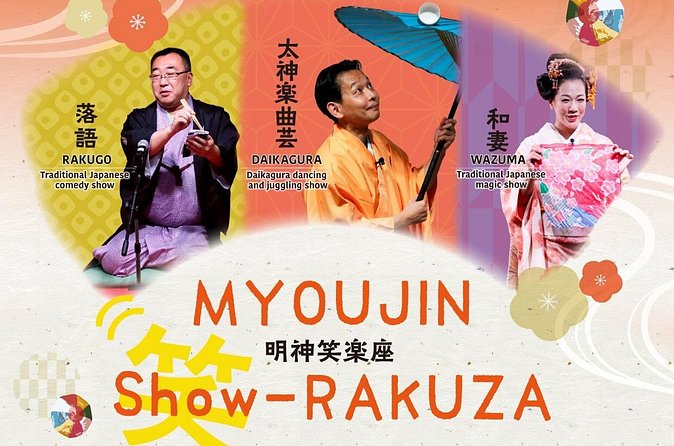
The show’s core idea is simple: you get three forms of traditional Japanese entertainment back-to-back, without the usual gap of traveling between experiences. Rakugo comedy comes first, then Daikagura, then Wazuma-style magic. You might think that would feel too packed, but the structure helps you stay oriented. Each act has a distinct feel, so your brain is not stuck waiting through one long genre.
Rakugo is all about voice, timing, and character work. In this show, the comedy is built to be understandable even if you do not speak Japanese, with translation support. Some of the most memorable moments are the ones where hosts guide you into the meaning, so you can follow the jokes rather than just admire the performance.
Daikagura is where the pacing gets physical. Think acrobatics and performance that relies on bold movement and stage control. The nice twist here is not only watching, but getting involved. The show is designed so you can try simplified Daikagura elements firsthand. That makes it less like sitting through a demonstration and more like learning the basic rhythm of how these acts work.
Then you shift to Wazuma magic. The magic is not treated like a mysterious black box. The format is educational in a friendly way, with performers teaching basic magic techniques and encouraging you to try them. People often talk most about the magic segment because it gives you something you can use later, not just something you saw once.
Audience participation that feels fun, not pushy
A lot of interactive shows have the same risk: you end up volunteering against your comfort level. This one is different because the participation is structured and explained. From what you can expect, it is interactive in a way that feels controlled and upbeat, with staff supporting you so you know what is happening and when.
You are told to try Daikagura and Wazuma elements firsthand. In the magic portion, performers teach basic tricks, and you leave with a mini lesson feeling. In Rakugo, you can even get the chance to perform on the stage, which is a big confidence boost if you like trying something once and realizing you can follow along.
The show also uses translation and a friendly crew to keep the experience accessible. Multiple written comments highlight that the interpretation made everything easy to understand. That means you are not stuck playing catch-up. You can enjoy the timing, the punchlines, and the buildup to the magic effect.
If you are traveling alone, this format is also a plus. You are not dependent on a friend to translate or to interpret what is happening. The show is built to work for different comfort levels, including people who just want to watch closely.
The Kanda Myoujin setting, and why it makes the show feel grounded
This is not just a random theater rental. The performance is connected to the historic Kanda Myoujin Shrine setting, with the modern EDOCCO STUDIO as the performance home. That mix matters. You still get the energy of a live show, but the environment feels culturally placed instead of generic.
Also, it is a practical way to spend an afternoon in central Tokyo. Instead of adding one more long transit day, you can pair it with nearby sightseeing, especially if you are already in the Akihabara area. You do not need to build a special day around it. It can fit naturally as an early afternoon cultural stop.
One small consideration: because it is a shrine area, you will want to arrive on time and follow staff instructions. It is not the kind of venue where you can casually stroll in at the last minute and expect everything to work smoothly.
A change of pace from Tokyo:
- Tokyo: teamLab Planets TOKYO Digital Art Museum Entry Ticket
★ 4.6 · 9,779 reviews - Mt Fuji & Hakone Cruise, Drum Show Bullet Train 1 Day from Tokyo
★ 4.0 · 7,413 reviews - Tokyo: Sumo Show Experience with Chicken Hot Pot and a Photo
★ 4.8 · 6,678 reviews - Tokyo: Shinjuku Food Tour (13 Dishes at 4 Local Eateries)
★ 5.0 · 6,603 reviews
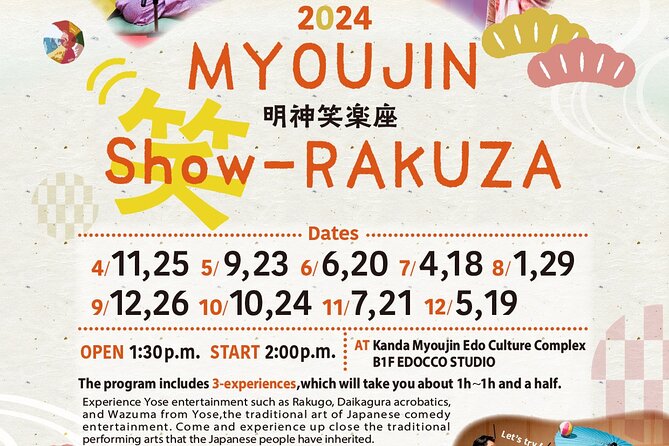
Timing at a glance: doors open 13:30, show starts 14:00
The schedule given for the show is straightforward:
- Door open at 13:30
- Show start at 14:00
- Total duration is about 1 hour 30 minutes
Starting at 14:00 is helpful because it gives you a relaxed morning and early afternoon. It also means you can plan around late starts without burning daylight.
How you should handle arrival: aim to be there a bit before 13:30. That buffer helps you check in calmly and settle in before the host begins. In a small indoor theater, even a few minutes can feel like a lot, mainly because everyone wants a good view when you know participation could happen.
The experience ends back at the meeting point, so you are not dealing with a long walk after the curtain call. That is useful when you have another reservation later in the day.
What you learn and try, from rakugo expressions to magic tricks
What makes this show worth more than a standard performance is the built-in teaching element. You are not just watching a sequence of acts. The program includes instruction and practice in bite-sized pieces.
For Rakugo, the show can include learning basic expressions. The comedic style depends on tone and posture, so even small instruction helps you appreciate what you are seeing. That is part of why audience participation can be so fun. You get a feel for how an act is structured.
For Daikagura, the instruction is geared toward trying simplified versions of the performance. That keeps it beginner-friendly and avoids making the show a test. You still get to understand the physical language of the act.
For Wazuma magic, you get basic tricks and a mini lesson. People tend to love this segment because it creates a carryover effect. You leave with tricks you can try later, which beats the usual souvenir trap of buying something you cannot use.
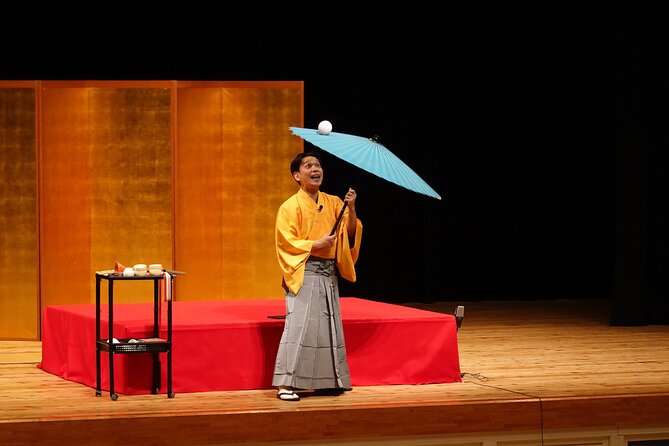
One standout visual element mentioned in the experience is an umbrella spinning act. Even if you have seen similar circus visuals elsewhere, this one is presented as part of a traditional variety-style program, with the comedy and instruction layers around it.
The take-home mini gift: props from the show you can use later
The included gift is a real part of the value. You do not just get a ticket and a handshake. You receive traditional props featured in the show, such as:
- Tenugui hand towels
- Folding fans
- Paper balloons
Why that matters: props help you remember the show in a practical way. A souvenir fan is not just pretty, it is connected to the stage imagery and gestures you saw. A tenugui towel is something you can actually use at home, and paper balloons give you a fun way to share the experience with friends.
The best gifts from travel are the ones that stay relevant after the trip, and these are the kind that do. You are taking home small pieces of the same visual language the performers used onstage.
Price and value: what $36.24 buys you in Tokyo
At $36.24 per person, this is not the cheapest activity in Tokyo, but it is also not overpriced for what you get. The value equation is pretty clear when you look at the components:
- One admission ticket for three different traditional performance styles
- Translation support so you can follow the material
- Hands-on moments where you try parts of Daikagura and Wazuma
- A mini take-home gift with practical cultural items
Also, the duration is about 1.5 hours. That is long enough to feel substantial, but short enough that you do not feel like you lost half a day. In a city where time adds up fast, that length is a smart match for first-time visitors.
One more value factor: the group size cap is 100 travelers. That helps keep the show feeling manageable and interactive, rather than turning into a crowded, impersonal event.
If you are choosing between this and a purely observational show, the deciding point is participation and learning. This one gives you more to do than just watch.
Who this show suits best, and who might want to choose differently
This experience is a great fit if you want something cultural that still feels welcoming and easy to understand. It is especially good for:
- First-time visitors to Japan who want an introduction to traditional stage arts in a single stop
- Families looking for a show that includes participation and clear guidance
- Solo travelers who want an experience where staff and hosts help bridge language barriers
- People who like variety shows, but want the acts to be distinctly Japanese
If you are the kind of traveler who only wants quiet, sit-still performances, the participation may be less your thing. Even then, participation is optional in many audience settings, and the show is designed to be fun even when you are watching closely. But if you hate being called on, you might want to consider that before you book.
Should you book this Rakugo, Daikagura, and magic show near Akihabara?
I think you should book it if you want a compact, high-reward cultural experience. The biggest reason is the mix. You are not choosing between comedy, acrobatics, and magic. You get all three in a format that is approachable thanks to translation and includes real learning moments.
You should also book early. Shows are limited and can fill quickly. Since the venue is in central Tokyo and the timing is fixed, planning ahead helps you avoid the annoying problem of arriving in the area and finding everything sold out.
Last practical note: even though the show is described as happening in an indoor theater, the operator lists that it requires good weather. If that happens to affect your date, you should expect an alternate date or a refund option. It is worth checking your schedule and keeping a bit of flexibility if you can.
If you want a Tokyo activity that leaves you with memories you can repeat, this one does that. You watch, you learn, and you get props to take home.
FAQ
Where is the show located, and where do I meet?
You meet at EDOCCO2-chōme-16-2 Sotokanda, Chiyoda City, Tokyo 101-0021, Japan. The activity ends back at the meeting point.
What time does the show start?
Doors open at 13:30 and the show starts at 14:00. The performance is approximate 1 hour 30 minutes long.
How long is the experience?
It lasts about 1.5 hours (approximately).
Do I need to speak Japanese to enjoy the show?
No. The experience is designed so you do not need Japanese language skills.
Will I be asked to participate?
Yes, the show includes hands-on parts where you can try elements related to Daikagura and Wazuma.
Is it held indoors?
Yes. The performance takes place in an intimate indoor theater.
What is included with the admission ticket?
Admission is included, plus a special mini gift. The gift is described as traditional props featured in the show, such as tenugui hand towels, folding fans, and paper balloons.
Is the ticket mobile or paper?
The tour uses a mobile ticket.
What is the cancellation and poor-weather policy?
You can cancel for free up to 24 hours in advance for a full refund. If it is canceled due to poor weather, you’ll be offered a different date or a full refund.
Latest write-ups near Tokyo
- From Tokyo: Top 5 Scenic Spots of Mount Fuji Full-Day Tour★ 4.5 · 67 reviews
- Tokyo Customized Private Tour: See Top Attractions in 1 Day★ 4.8 · 67 reviews
- Traditional Japanese Music ZAKURO SHOW in Tokyo★ 5.0 · 67 reviews
- Tokyo: Shinjuku Izakaya and Golden Gai Bar Hopping Tour (2h)★ 4.9 · 67 reviews
- Tsukiji: Unlimited Sake Tasting Experience★ 4.9 · 67 reviews
- Samurai Ninja Museum Asakusa: Kid-Friendly Ninja Training★ 4.7 · 67 reviews
- Tokyo: Not a show- a professional sumo practice with experts★ 4.9 · 67 reviews
- Private Harajuku Omotesando Architecture Walking Tour★ 5.0 · 67 reviews
Show, compared.

Mt Fuji & Hakone Cruise, Drum Show Bullet Train 1 Day from Tokyo
Read our review →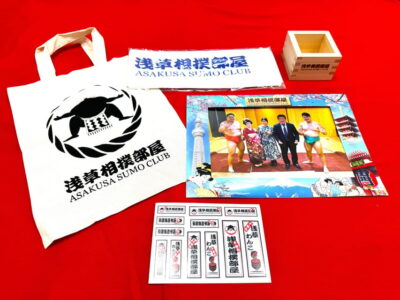
Sumo Show Experience with Chicken Hot Pot and a Photo
Read our review →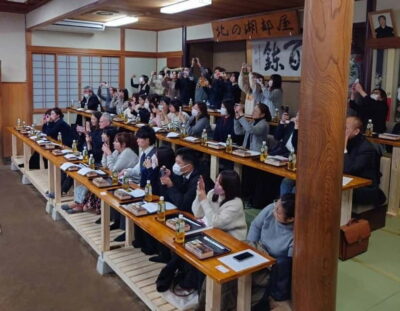
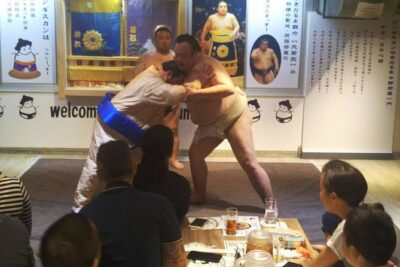
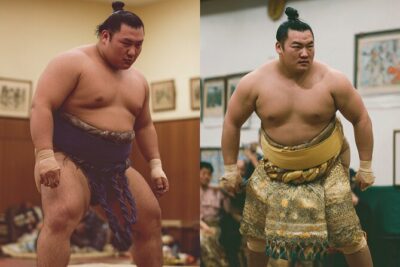
Tokyo Shinjuku Sumo Show & Experience with Photo
Read our review →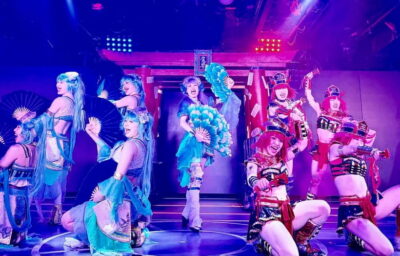
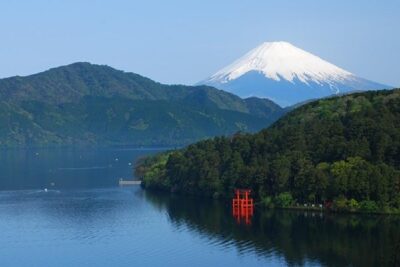
Mt Fuji & Hakone Cruise, Drum Show Bus 1 Day from Tokyo
Read our review →