
Reviewed · WAGASHI & MOCHI MAKING
【Family Friendly】Traditional Mochi Pounding Experience
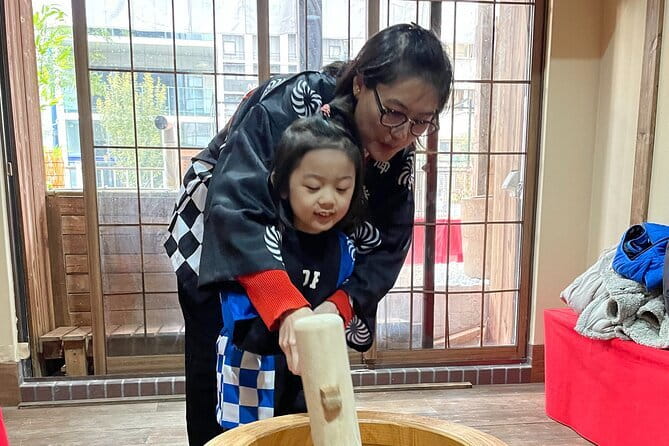
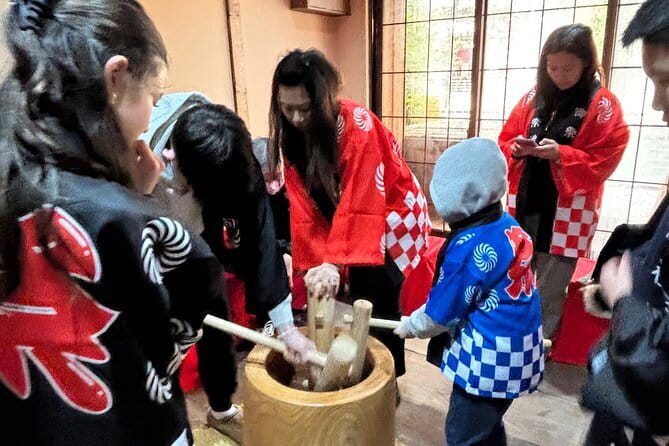
Mochi pounding is one of those Japan experiences that feels both old-school and oddly satisfying. In Dotonbori, you get a hands-on turn at a mortar and pestle, plus you finish by eating the mochi you just made. It is not just watching, you really do the work.
I especially like that the session is family friendly, and kids can join (with adults also welcome). I also like the food part is built in: you taste your freshly pounded mochi with several classic Japanese toppings, served with tea.
One thing to consider is the texture. Mochi is chewy and sticky, so the experience notes that elderly people should eat small portions to reduce choking risk.
Key things to know before you go
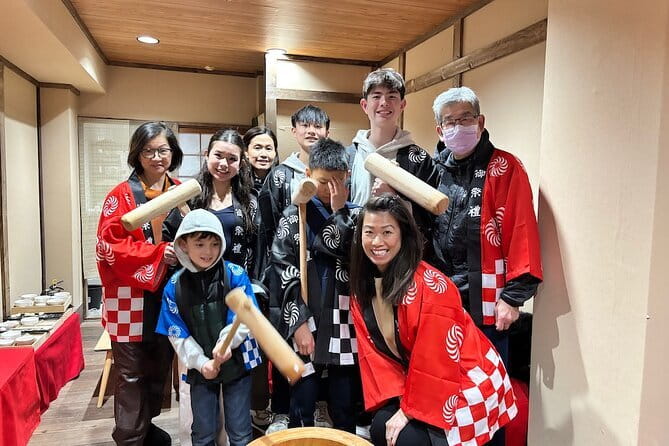
- Hands-on mochi pounding using traditional tools, not just a demo
- Short, focused session with a history talk before you start pounding
- Small group size (max 10) so you get time at the mortar
- English and Chinese support through slides or interpretation
- Choose from multiple mochi toppings like kinako, sweet red bean paste, nori, and sweet soy sauce
- Tea included with your tasting
Why mochi pounding in Dotonbori is such a good Osaka stop
Osaka does street food well, but this activity is a different kind of bite-sized joy. You trade queues for a seat at the table, grab the tools, and help turn steamed glutinous rice into mochi. The whole thing runs about an hour, and that matters because it is easy to fit into a busy day.
The location is also practical. The meeting spot is in central Dotonbori, so after you finish, you are already positioned to walk, shop, and snack around one of Osaka’s most famous areas. It is one of those setups where the activity does not feel like a detour, it feels like part of your day.
Best of all, this is a tradition you can actually take part in. There is a short history talk up front, then the rest is muscle memory, teamwork, and a lot of enthusiastic pounding. You even get the classic mochi-pounding shout, yo shoi, which is a fun way to get everyone synced up.
More Wagashi & Mochi Making in Osaka:
- Osaka: Traditional Mochi Pounding Experience with Tasting
★ 4.9 · 306 reviews - 【For adult】Traditional Mochi Pounding Experience with Tasting
★ 5.0 · 67 reviews - Tokyo Sumo Experience: Chanko & Mochi with a Former Pro
★ 4.8 · 567 reviews
The full flow: from steaming rice to your first tea break
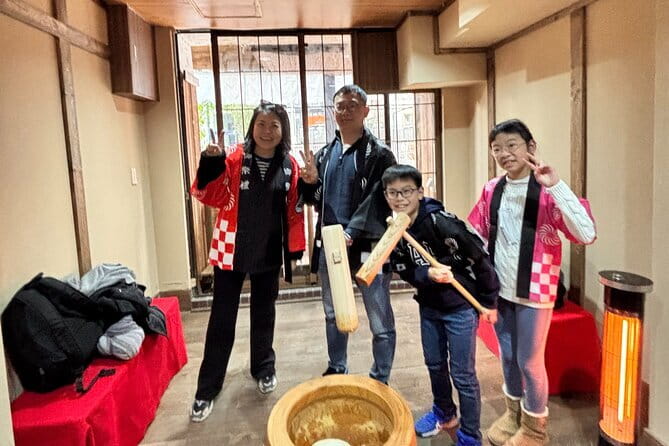
This experience is built like a workshop. You get a bit of context, then you jump into making the mochi, then you eat what you make. Here is how the hour typically breaks down.
1) A short history and cultural talk (about 10 minutes)
You start with a 10-minute talk about why mochi pounding matters in Japan. This is not a long lecture, it is a quick primer so you understand what you are doing and why people still do it.
What I like about keeping this portion short is that you do not lose momentum. You get enough background to make the activity feel meaningful, then you get right back to hands-on work.
2) Steaming the glutinous rice
Next comes the steaming stage. You learn how the mochi dough starts from glutinous rice that is cooked until it has the right texture for pounding.
You do not need to understand rice science to enjoy this part. It is more about seeing how heat and timing change the texture. Watching the dough transition from cooked rice to something workable is part of the magic.
A change of pace from Osaka:
- Osaka Go Karting Tour with Funny Costume
★ 5.0 · 2,658 reviews - Osaka Castle: Museum and Tower Entry Ticket
★ 4.5 · 2,380 reviews - Osaka: Shinsekai Food Tour with 13-15 Dishes at 5 Eateries
★ 4.8 · 2,204 reviews - Osaka Food Tour: 13 Dishes at 5 Local Eateries
★ 5.0 · 2,149 reviews
3) Mortar and pestle: your turn to shape mochi
Then it is pounding time. You will use traditional mortar and pestle tools to pound the steamed rice into mochi.
This is where the experience earns its keep. Mochi is sticky and elastic, and pounding it takes coordination. In a small group (they cap it at 10 travelers), you are more likely to get the rhythm instead of standing on the sidelines.
Also, there is a social element. You will often end up timing your pounding with whoever is next to you. It feels like a team sport, just with dough instead of a ball.
4) Tasting: freshly pounded mochi with tea and toppings
After you finish shaping, the session ends with a tasting. Your mochi is served plain and also with classic Japanese seasonings and ingredients.
The experience lists five beloved toppings, including:
- kinako (roasted soybean powder)
- sweet red bean paste
- nori (seaweed)
- sweet soy sauce
In practice, you may find you are offered several topping options beyond those headline five, because some people mention tasting a larger set of choices at the end. Either way, the structure is the same: you get to sample, not just eat one flavor.
Tea is included with your tasting, and that is a smart pairing. The sweetness and savoriness in mochi toppings can be rich. Tea helps you reset your palate between bites.
What you actually learn, and why it helps your Japan trip
A lot of food experiences stop at the how-to. This one does a little more. The up-front talk is focused on the history and cultural significance of mochi pounding, and that changes how you remember the meal.
Instead of thinking of mochi as only a dessert, you start thinking about it as a seasonal and ceremonial food that people have made for generations. That context makes it easier to spot mochi on menus and in shops later. You are not just tasting, you are recognizing.
It also helps if you are traveling with kids. A short story plus an activity lands better than a long talk. Kids get something to do with their hands, and they can connect the activity to the meaning.
Family-friendly reality: kids, teenagers, and mixed ages

This is explicitly family friendly, including children under 13. Adults can join too, so the group can be mixed, and that is where the small group size matters.
From what you can infer from the experience format, kids get a structured job at the mortar and then a reward that feels immediate: they get to eat what they help make. That is the kind of payoff that makes a short activity feel like a big deal.
One practical tip you should keep in mind: mochi is chewy. If you are bringing elderly relatives, the experience specifically warns that they should eat rice cakes in small portions because of choking risk. If your group includes both kids and older adults, plan for slower pacing during the tasting part.
Vegan and vegetarian options: how you fit this into your food rules
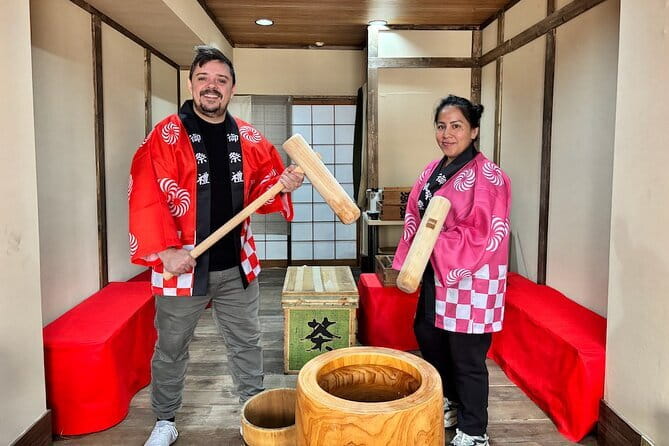
The experience states they accommodate vegan and vegetarian preferences. That means you should be able to participate even if your diet is plant-based or vegetarian.
One caution: toppings often vary. The tour lists classic options like nori and kinako, which are sometimes easy to align with many diets, but sweet bean paste and soy sauce can have different ingredients depending on preparation. Since the tour says they accommodate preferences, your best move is to share dietary needs clearly at booking or right at the start, so the team can guide you to the right topping set.
English and Chinese support, and what that means for comprehension
Communication is handled in English and Chinese. Chinese support is provided through slides or interpretation.
That matters for two reasons. First, you understand the steps. Second, you can actually follow the short history talk without guessing. Even if your Japanese is basic, you can still participate confidently.
If you are traveling with someone who reads Chinese better than Japanese, this format should feel smoother than a purely spoken class.
Price and value: is $32.29 worth it?
At $32.29 per person, this is not a bargain-basement snack. It is closer to a ticketed workshop where you pay for instruction, tools, and the food included.
Here is what makes it feel like fair value for the cost:
- You get a full hands-on activity using traditional tools
- You learn background in a short, structured way
- You get a tasting with multiple mochi toppings plus tea
- The group is capped at 10 people, which makes the experience more personal than big group demos
You also get a timing advantage. A roughly 45 to 60 minute session is easy to slot into a day without eating up half your schedule. In Osaka, where travel and food runs can chew up time fast, that matters.
Logistics that make or break the experience
The session uses a mobile ticket, and you meet at Mochi Pounding Experience Osaka, Oh Mochi, at 2-chōme-4-11 Dōtonbori, Chuo Ward, Osaka 542-0071. It ends back at the meeting point.
A couple practical notes:
- It is near public transportation, so you should not need a long taxi ride.
- There is a weather dependency, since it requires good weather. If conditions are poor, you are offered another date or a full refund.
Also, keep in mind that the experience is capped at 10 travelers. That usually helps with quality, but it also means popular times can sell out.
How to plan your Dotonbori day around this
Because you start and finish in the same spot in Dotonbori, you can build a clean day plan.
A simple approach:
- Do this earlier in the day, or right before your dinner plans.
- Use the mochi pounding as a break from pure street-food hopping. You get something hands-on and sit-down-ish with tea.
- Afterward, walk Dotonbori while everything is still fresh in your mind, and look for other mochi and Japanese sweets if you want a follow-up bite.
If you are pairing with other activities, try not to schedule something that assumes you will be on the move immediately at the end. You might want a few minutes to cool down, hydrate, and regroup.
Should you book mochi pounding at Oh Mochi in Osaka?
You should book if you want a short, hands-on Japanese food experience that works for families and gives you something you can eat immediately. It is especially good if:
- you are traveling with kids under 13 and want a meaningful activity that still feels fun
- you like learning with your hands, not just reading or watching
- you want a classic food moment in a central Osaka neighborhood
- you need English and Chinese support
You might skip it if your group hates chewy textures, or if you are traveling with older adults who might not handle mochi well. The experience itself notes small portions for elderly people, but if your main priority is comfort and convenience over participation, choose something else.
If you do book, go in expecting a lively workshop, not a long culinary tour. You will leave with warm mochi memories and a new appreciation for why people still pound it the old-fashioned way.
FAQ
How long does the mochi pounding experience take?
The experience lasts about 1 hour (approx.).
Is this activity suitable for children?
Yes. This plan is available for children under 13, and it is described as family friendly. Adults can also join.
What language is available during the experience?
The experience offers English and Chinese. Chinese support is provided through slides or interpretation.
What happens during the mochi making session?
You get a short talk about the history and cultural significance of mochi pounding, then you steam glutinous rice, pound it with traditional tools to make mochi, and finish by tasting the freshly made mochi.
What toppings and drinks are included?
Your freshly pounded mochi is served with tea and with multiple Japanese toppings and ingredients, including options such as kinako, sweet red bean paste, nori, and sweet soy sauce.
Is it okay if we have vegan or vegetarian dietary preferences?
The experience says it accommodates vegan and vegetarian preferences.
Where is the meeting point?
You meet at Mochi Pounding Experience Osaka, Oh Mochi, 2-chōme-4-11 Dōtonbori, Chuo Ward, Osaka 542-0071, Japan. The activity ends back at the same meeting point.
How many people are in the group?
The activity has a maximum of 10 travelers.
What if the weather is bad?
The experience requires good weather. If it is canceled due to poor weather, you will be offered a different date or a full refund.
Latest write-ups near Osaka
- Osaka Private Tour with Government-Licensed Guide★ 4.8 · 20 reviews
- Guided Photography Tour in Osaka: Capturing Memories★ 4.5 · 20 reviews
- Osaka: Food Tour at Night with Tastings★ 4.9 · 20 reviews
- Kansai/KIX Airport to or from Osaka/Kyoto Private Transfer★ 5.0 · 20 reviews
- Osaka: City Highlights Bike Tour★ 4.7 · 20 reviews
- From Osaka/Kyoto: Amanohashidate Day Tour【Including tickets】★ 3.7 · 20 reviews
- Osaka Okonomiyaki Cooking Class “Learn here and make it at home”★ 5.0 · 20 reviews
- Volleyball in Osaka & Kyoto with Locals!★ 5.0 · 21 reviews
Wagashi & Mochi Making, compared.
Tokyo Sumo Experience: Chanko & Mochi with a Former Pro
Read our review →
Matcha Making Experience with Mochi Sweets in Asakusa
Read our review →
Traditional Mochi Pounding Experience with Tasting
Read our review →
TokyoSumoShow, ChickenHotPot, and Mochi-Pounding by Pro Wrestlers
Read our review →
Private Mochi Sweets Making class near Shibuya area
Read our review →
Kyoto Food Tour of 10 Tastings with Wagyu, Mochi & More Surprises
Read our review →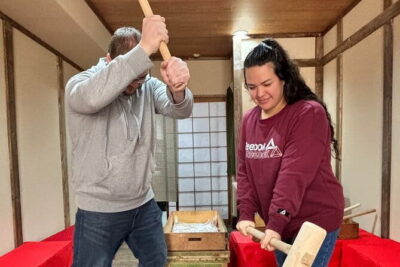
【For adult】Traditional Mochi Pounding Experience with Tasting
Read our review →
Kyoto Wagashi(Japanese sweets) Cooking Class near Fushimiinari
Read our review →Browse the lists this tour appears in