
Reviewed · WAGASHI & MOCHI MAKING
Tokyo Sumo Experience: Chanko & Mochi with a Former Pro
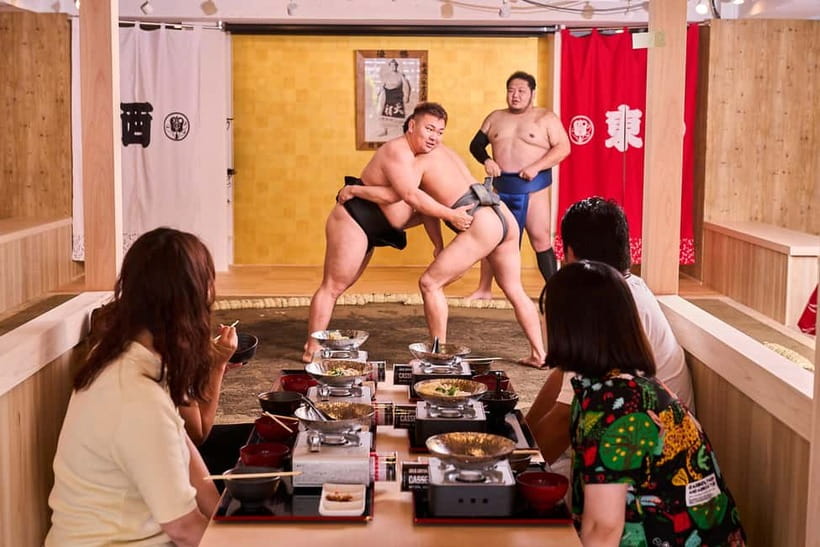
If you want Tokyo fun with actual muscle and real tradition, this Ryogoku sumo experience is hard to beat. I especially like that you eat chanko nabe right up close to the dohyo, then you get hands-on with sumo and mochi. The main drawback to watch for is that this is designed as an entertaining experience, so it is not the same thing as the serious morning training tours.
Here is the vibe: you sit around the ring, see sumo movements in front of you, and join in when the wrestlers invite it. It is a strong pick for families and first-timers because it is interactive, but you do need to accept that seating is assigned by the venue.
Key highlights you should care about
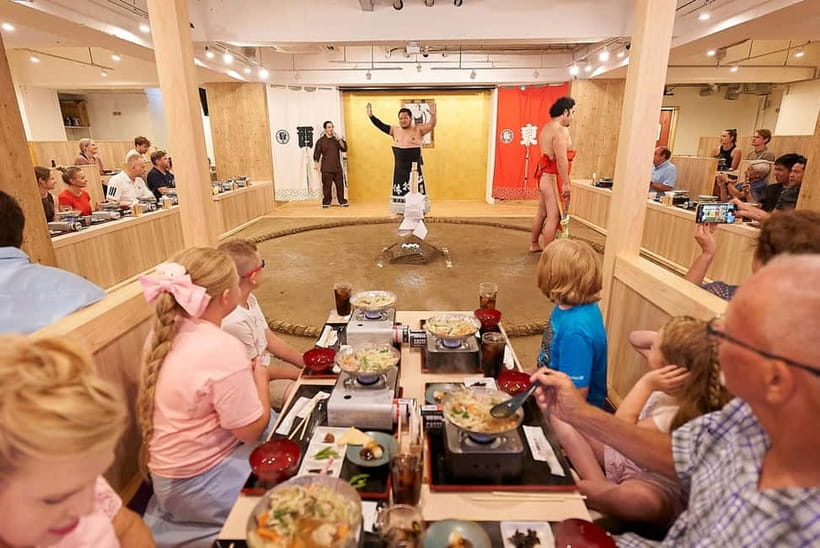
- Ring-side dohyo viewing where the wrestlers feel close enough to learn from
- Chanko nabe supervised by sumo wrestlers, the hot pot meal they’re known for
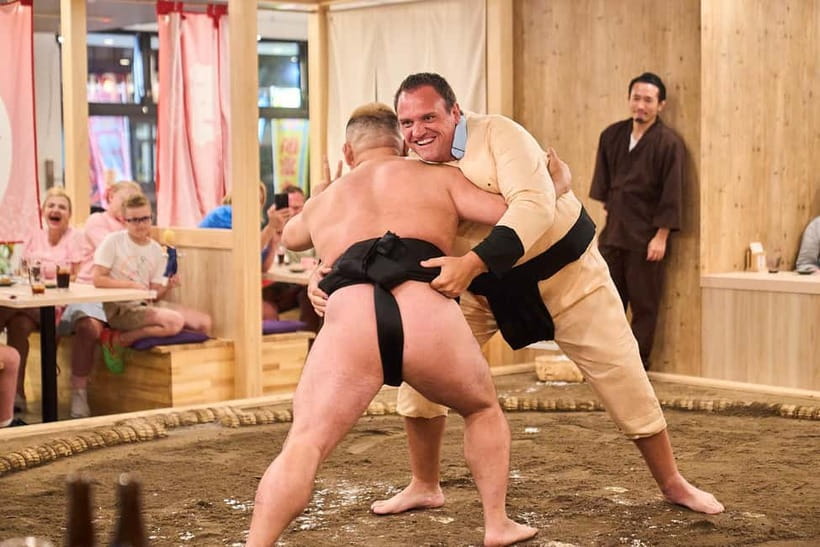
- Hands-on sumo, including techniques and a chance to try wrestling on the ring
- Mochi pounding and making, plus a chance to eat what you help make
- Former-pro instruction with good English support, so you can follow along and participate
- Lots of audience interaction, not just a sit-and-watch show
Ryogoku Sumo Plus Chanko and Mochi, in One Packed 2-Hour Session
This is the kind of Tokyo activity that breaks up sightseeing in a good way. Ryogoku is the heartland of sumo, and the experience is built to feel like you are stepping into that world for a short, friendly session.
You get three things that almost never come together elsewhere: sumo wrestling up close, chanko nabe (a comfortingly hearty hot pot), and mochi pounding plus dessert. It is entertaining, but it also teaches you enough to make sumo feel less like random TV spectacle and more like a real sport and lifestyle.
One more note that matters: this is not the strict, early-morning training tour style. It is meant to be fun for adults and children, with participation designed to keep things moving.
More Wagashi & Mochi Making in Tokyo
- Tokyo: Matcha Making Experience with Mochi Sweets in Asakusa
★ 4.9 · 388 reviews - TokyoSumoShow, ChickenHotPot, and Mochi-Pounding by Pro Wrestlers
★ 5.0 · 226 reviews - Private Mochi Sweets Making class near Shibuya area
★ 5.0 · 93 reviews
What Happens From Arrival to Dessert (The Actual Flow)
The whole experience runs about 2 hours, so plan it like a show plus dinner plus practice. You will start by checking in at the shop near Ryogoku Station, then settle in where your seats are assigned.
Once you are seated, you will be oriented to the ring area and what is happening next. From there, the format stays active: watch a section, then join in for the hands-on parts, then sit back again for more demonstrations and wrestling.
Expect the timing to feel like a rhythm. They cycle between viewing and participation so you never feel stuck waiting. Reviews consistently praise how interactive the session is, which is a good sign if you get bored by long demonstrations.
Getting to the Meeting Point Near Ryogoku Station
The meeting point is on the first floor of the shop, just a short walk from Ryogoku Station. Look for the big sumo wrestler sign and flags outside.
Because it is a shop front near a busy station area, I recommend showing up a bit early so you do not have to rush. One practical tip: take a quick look at the station exits you plan to use before you head out. Ryogoku is straightforward, but Tokyo station signage can still slow you down if you are not ready.
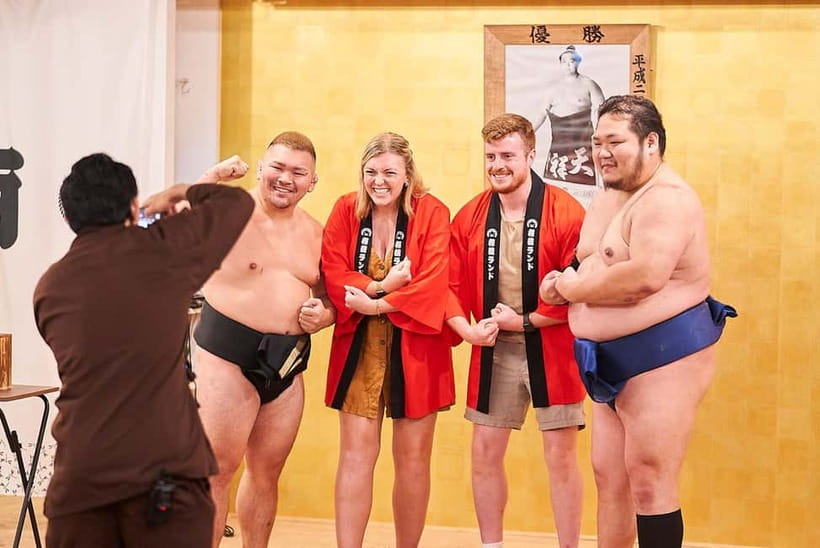
Also, bring a camera. The activity is set up for photos because you are physically near the dohyo and the wrestlers during the interaction moments.
The Star Meal: Chanko Nabe You Eat While Watching Sumo
Chanko nabe is not a tourist gimmick here. It is presented as the real staple associated with sumo life, and the session is built around eating it during the viewing portion.
What you will get is a chanko nabe hot pot meal, served as part of the experience. The best part is the pacing: you are not eating later, after the show ends. You are eating while the action is happening close to you, which makes it feel like a complete cultural moment rather than a separate meal stop.
Many people are surprised by how satisfying chanko nabe can be. It is warm, filling, and built for athletes, so it works well even if you are not normally a hot-pot person.
A change of pace from Tokyo:
- Mt Fuji and Hakone 1-Day Bus Tour Return by Bullet Train
★ 5.0 · 26,383 reviews - 1-Day Tokyo Bus Tour
★ 5.0 · 14,250 reviews - Tokyo: TOKYO SKYTREE® Admission ticket
★ 4.5 · 11,192 reviews - Tokyo: teamLab Planets TOKYO Digital Art Museum Entry Ticket
★ 4.6 · 9,779 reviews
Dietary needs that are supported
If you have dietary restrictions, you can ask for vegetarian, vegan, or gluten-free options, as long as you notify the provider at least two days before your reservation. If you need halal food, that is not available, but you are allowed to bring your own food.
That last part is important for planning. If you are halal, do not assume the meal will match your needs. Bring your food so you can enjoy the experience without worrying.
Try Sumo on the Dohyo, Not Just From Your Seat
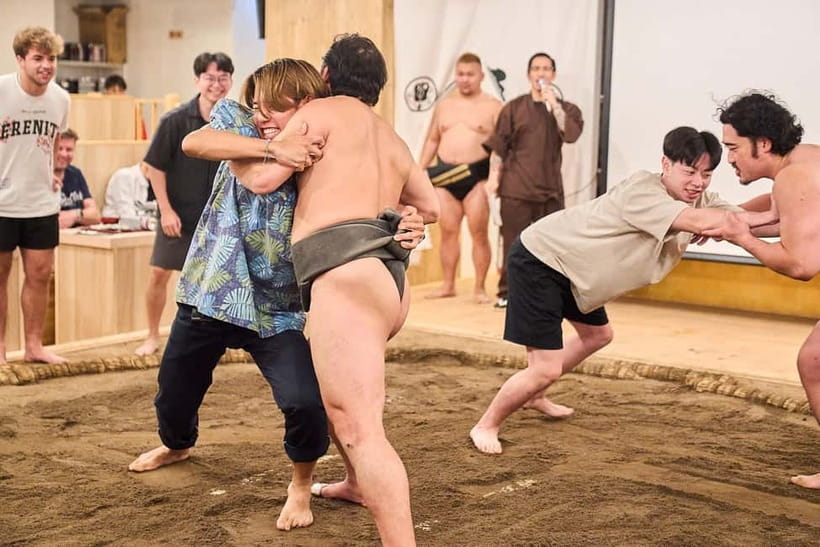
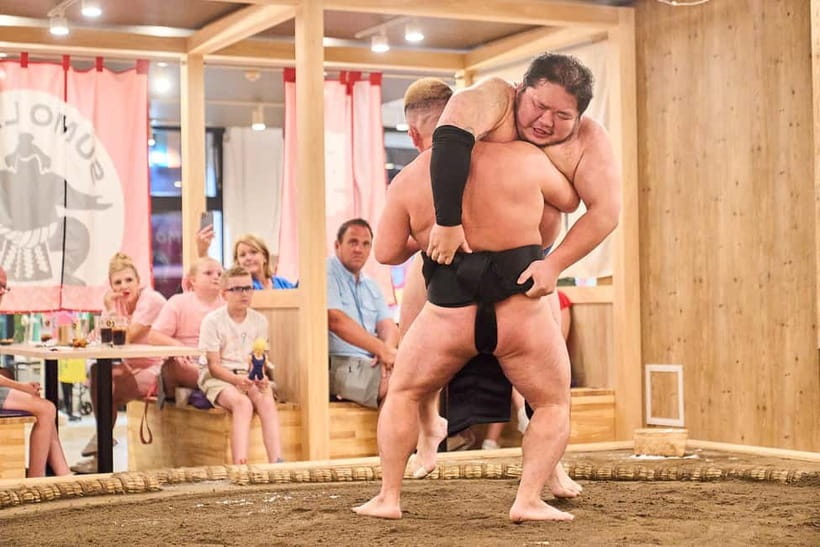
This is where the experience becomes memorable. You do not just watch wrestlers move. You get your turn with sumo wrestling participation, including trying techniques and then wrestling on the ring.
The dohyo time is the big “I can’t believe I’m doing this” moment. You will be on or right at the ring area while the wrestlers guide the basics. The goal is not to teach you the full sport like a season-long program. The goal is to give you the feel of how sumo works: posture, power, balance, and controlled pushing and gripping.
Two things make this section a good value for the money:
1) You are learning while the ring context is right in front of you.
2) You are doing it with actual wrestlers who know what works, not just a script.
Also, the session is designed to be friendly for different ages. If you are traveling as a family, this is one of the rare activities where kids can participate without it turning into a long, boring lecture.
A safety and comfort note about seating and kids
There is specific guidance about holding children. In standard seats, it is considered dangerous to sit while holding a child on your lap. So if you are traveling with children and want everyone comfortable, reserve for the exact number of people.
Box seats are described as safer for this purpose, with capacity up to six people. If you plan to bring a child who needs to sit on your lap, make sure you understand how the venue handles seating.
Mochi Pounding and Making: The Dessert Part That Feels Like a Ritual
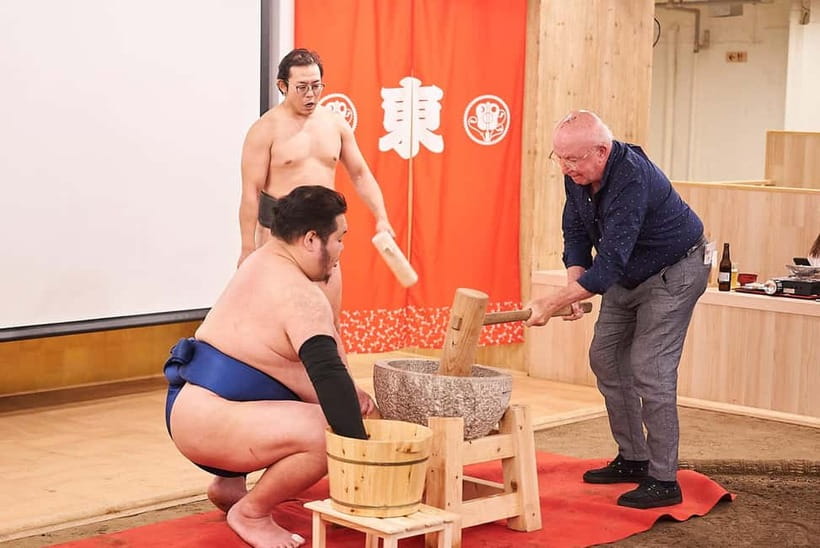
Mochi is another place where you get more than a quick bite. You get to take part in mochi pounding with the wrestlers, then you enjoy the sweet mochi as dessert.
They also include a demonstration of the traditional mochi pounding process. That matters because it gives you context for what you are actually doing, instead of just following along like a craft project.
The physical side is the fun surprise. Mochi pounding looks simple until you try it, and that is why it sticks with you. Reviews frequently call mochi pounding a favorite moment, which makes sense: it is active, noisy, and shared with the wrestlers up close.
What to do with your camera during mochi
If you like photos, this is the section to focus on. You are interacting with the wrestlers while you are forming the mochi and then eating it. I would keep your camera ready when they shift from demonstration into participation so you do not miss the key moments.
Former Pros and a Good MC: Why the Session Feels Smooth
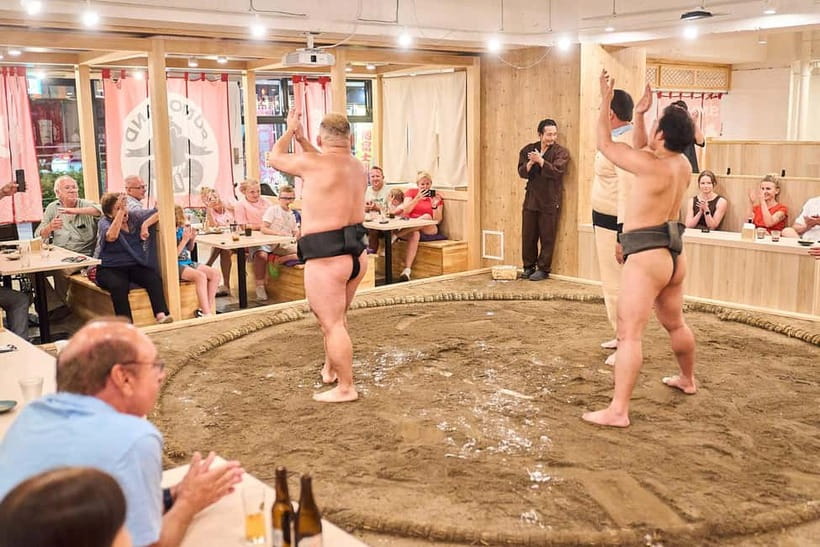
A big reason people rate this highly is the hosting style. The session is described as entertaining and well organized, and the wrestlers come across as friendly and engaged.
You also get instruction in English and Japanese. If you are not fluent in Japanese, you can still follow the rhythm of the activities because the explanations are built to keep participation moving.
The MC role is also worth mentioning. The narration helps you understand what is happening during demonstrations and how to join in. That reduces the “stand around and hope you’re doing it right” feeling that some hands-on experiences have.
Price and Value: Does It Add Up at $103 Per Person?
At $103 per person for about 2 hours, the value comes from the combination, not from any single component.
If you only wanted food, Tokyo has plenty of hot pots. If you only wanted a show, there are sumo performances. If you only wanted hands-on practice, there are sports classes. This price is paying for the cross-over: chanko nabe plus ring-side sumo viewing plus hands-on participation plus mochi making.
The other value factor is access. You are close to the dohyo and the wrestlers, which is rare compared to watching from far away. If you are a first-timer to sumo, that “close enough to learn” factor makes the experience feel worth it.
It also helps that the session supports practical participation for different ages. A family activity that keeps everyone involved tends to feel like better value than a long adult-only show.
Seating Assigned by the Venue, and Why That Changes Your Expectations
One detail that can affect your comfort level: seat locations are assigned by the venue. You cannot request a specific seat.
That is not unusual for this type of venue setup, but it changes how you should think about planning. Do not buy this hoping for a guaranteed front-row spot that you control. Instead, buy it because the whole layout is designed so the ring area is visible and participation happens close to where you are seated.
Also, remember the lap-child note. If you are bringing kids, read the seating guidance carefully so you do not end up in a situation that feels uncomfortable or unsafe.
Who Should Book This Sumo, Chanko, and Mochi Experience?
This is a strong fit if:
- You are in Tokyo and want a Ryogoku sumo experience that is not too technical
- You want to participate, not only watch
- You enjoy food-based activities and want a real meal, not snacks
- You are traveling with kids or teens who need a hands-on angle
It may not be the best fit if:
- You want the serious, intense training vibe of morning practice
- You need wheelchair accessibility, because wheelchair users are not suitable for this activity
- You have halal dietary needs and prefer fully prepared meal options, because halal meals cannot be provided
Quick Tips Before You Go (Small Things That Save Time)
- Wear comfortable clothes. You will be participating, and you want easy movement.
- Bring a camera for mochi and ring moments.
- Plan to show up a little early so you can find the first-floor shop entrance near Ryogoku Station without stress.
- If you need vegetarian, vegan, or gluten-free, plan ahead and request it at least two days in advance.
- If you are halal, plan to bring your own food so you can enjoy the meal part comfortably.
Should You Book This Tokyo Sumo Experience?
Yes, you should book it if you want a fun, high-energy introduction to sumo that includes more than just watching. The best reason is that it combines ring-side viewing, sumo practice, and chanko nabe plus mochi making in one smooth 2-hour session.
Skip it if you are chasing the strict morning-training experience, or if wheelchair access is a must. Also, if your main priority is a halal meal, you will need to bring your own food since halal meals cannot be provided.
FAQ
How long is the Tokyo Sumo experience?
The experience lasts about 2 hours.
Where do I meet near Ryogoku Station?
You meet at a store located on the first floor, a short walk from Ryogoku Station. It is marked by a large sumo wrestler sign and flags.
What activities are included in this experience?
You can watch sumo from ring-side seating, eat chanko nabe, try sumo wrestling techniques and wrestling on the dohyo, and take part in mochi pounding and mochi making, then eat the mochi for dessert.
Are there vegetarian, vegan, or gluten-free meal options?
Yes. Vegetarian and vegan meals and gluten-free options can be provided if you notify the provider at least two days before your reservation date.
Can they provide halal meals?
Halal meals cannot be provided. You are allowed to bring your own food instead.
What should I bring, and what is not allowed?
Bring a camera and wear comfortable clothes. Smoking is not allowed.
Can I choose my seats?
No. Seat locations are assigned by the venue, and you cannot request specific seats.
Is this experience wheelchair accessible?
No. It is not suitable for wheelchair users.
More Sumo Experiences in Tokyo
- Tokyo: Sumo Show Experience with Chicken Hot Pot and a Photo
★ 4.8 · 6,678 reviews - Tokyo: Sumo Show and Dining Experience
★ 4.8 · 2,742 reviews - the SUMO show
★ 5.0 · 1,960 reviews - Tokyo Shinjuku Sumo Show & Experience with Photo
★ 5.0 · 1,750 reviews
Latest write-ups near Tokyo
- Harajuku Private Tour: Kawaii Fashion & Animal Cafe Included★ 5.0 · 69 reviews
- Mt Fuji Customizable Private Tour English Speaking Driver Pick-up★ 5.0 · 69 reviews
- Tokyo Night Cooking Class: 5 Home-Cooked Japanese Dishes★ 5.0 · 70 reviews
- Tokyo: Sumida Aquarium Entry Ticket★ 4.6 · 70 reviews
- Private Customizable Walking Tour of Tokyo★ 5.0 · 70 reviews
- Wagyu Beef and Sake Pairing Foodie Tour in Tokyo★ 5.0 · 71 reviews
- Official Japan Go-Kart Through Tokyo Bay / Ginza (IDP Required)★ 4.5 · 71 reviews
- Experience Big soba knife Soba Making Class in Tokyo Kappabashi★ 5.0 · 71 reviews
Wagashi & Mochi Making, compared.
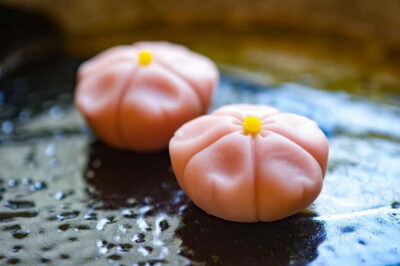
Matcha Making Experience with Mochi Sweets in Asakusa
Read our review →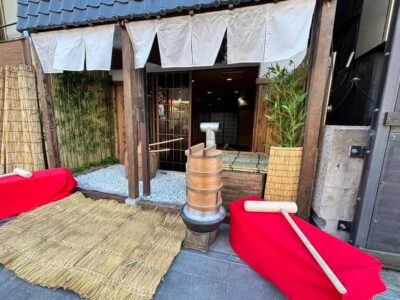
Traditional Mochi Pounding Experience with Tasting
Read our review →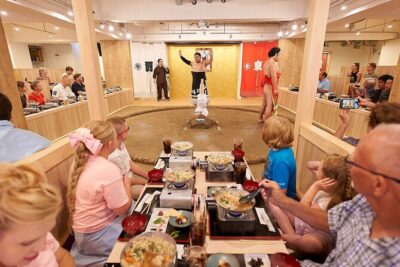
TokyoSumoShow, ChickenHotPot, and Mochi-Pounding by Pro Wrestlers
Read our review →
Private Mochi Sweets Making class near Shibuya area
Read our review →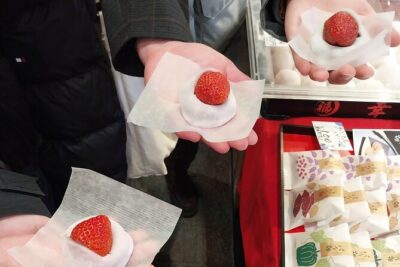
Kyoto Food Tour of 10 Tastings with Wagyu, Mochi & More Surprises
Read our review →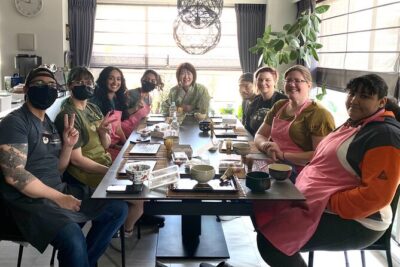
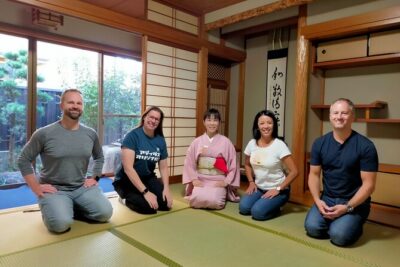
Kyoto near Fushimiinari Wagashi making&Small Group Tea Ceremony
Read our review →Browse the lists this tour appears in