
Reviewed · SAMURAI & NINJA EXPERIENCES
Tokyo: Best Samurai Experience
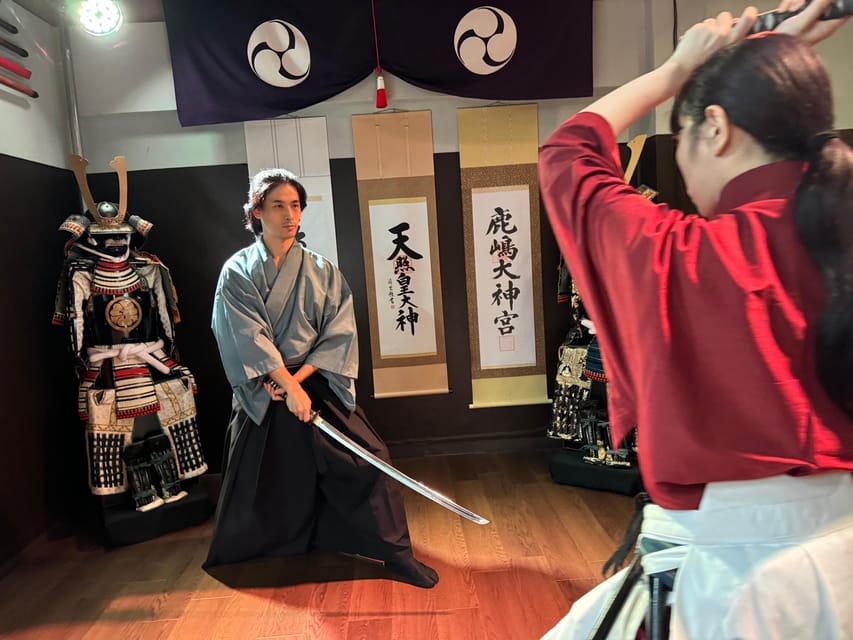
This Tokyo samurai experience works because you get hands-on action, not just a show. You dress in a kimono and hakama, learn how to move with a sword, then take part in a fun chanbara style fight. I love how interactive it is, and I love that you leave with real photos and video from your own phone. The one possible drawback is time, it’s only about an hour, so you stay in beginner territory.
A big plus for me is the pace. The group is small, and the instructors guide you through the steps so you can actually follow along. One of the coolest parts is that the staff captures the session, so your memories look like something you would pay to keep.
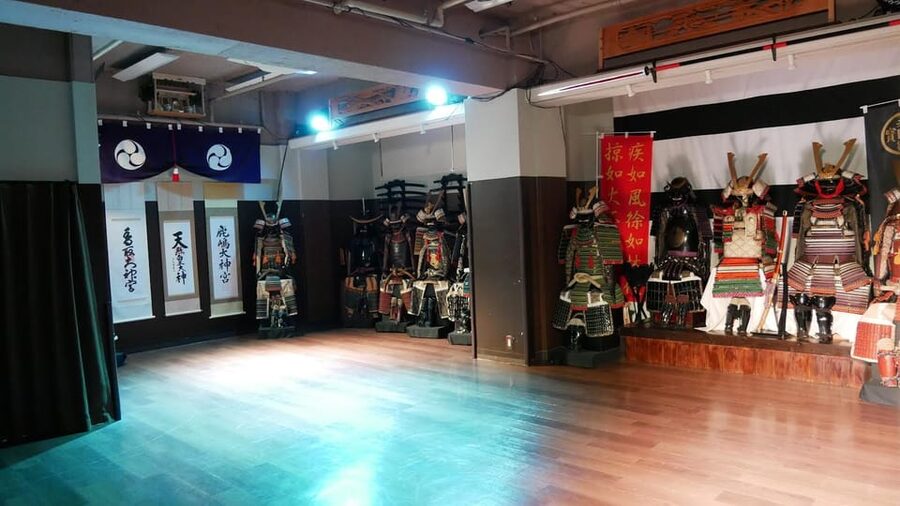
You’ll also be in a dojo-like space that does not feel modern, with weapons and armor on display. Since you use a fake sword designed for practice (it cannot cut), the training is more about control and form than real combat. If you want a deep lecture on samurai history, you might find yourself wishing it went longer, because this is built for movement.
Key highlights worth getting excited about
- Pick your own kimono and hakama before you touch a sword
- Learn the sword parts and the basic mechanics of handling it
- Practice draw, swing, and retract motions step by step
- Fight in a simple chanbara duel after the basics
- Get photos and videos during the session for instant keepsakes
- See a dojo display of swords, spears, and armor (armor is optional)
Entering a Samurai Theater Session Built for Action
This is a one-hour Tokyo experience that turns cosplay and training into something you can actually do with your body. Instead of sitting through a performance, you get pulled into the lesson right away, wearing traditional costume and practicing movements in a controlled way.
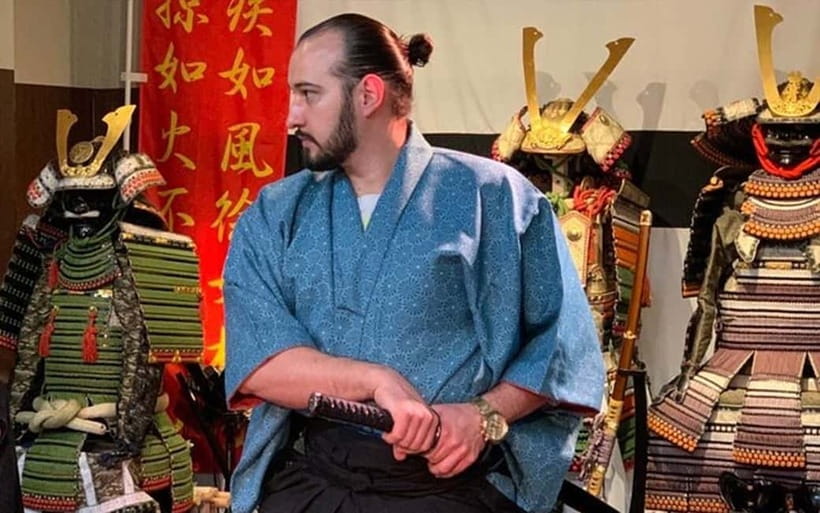
The setting matters. You step into a space that feels like a traditional dojo, with weapons and armor displayed around you. That visual backdrop helps your brain switch from Tokyo street mode to samurai mode fast, and it makes the photos look more convincing than a generic costume shop.
I also like that the instructors are not just actors. They’re described as authentic teachers who have appeared in major Japanese dramas and movies. In practice, that shows up as clear instruction, energy, and a focus on doing the movements right, not just posing.
More Samurai & Ninja Experiences in Tokyo
- Tokyo: Samurai Restaurant Show Ticket with 2 Drinks
★ 4.5 · 1,307 reviews - Tokyo: Samurai Ninja Museum Guided tour and Experience
★ 4.6 · 1,010 reviews - Tokyo: Samurai Sword & Archery Class from Samurai Descendant
★ 5.0 · 603 reviews
Costume first: Choosing Kimono and Hakama Then Getting Ready
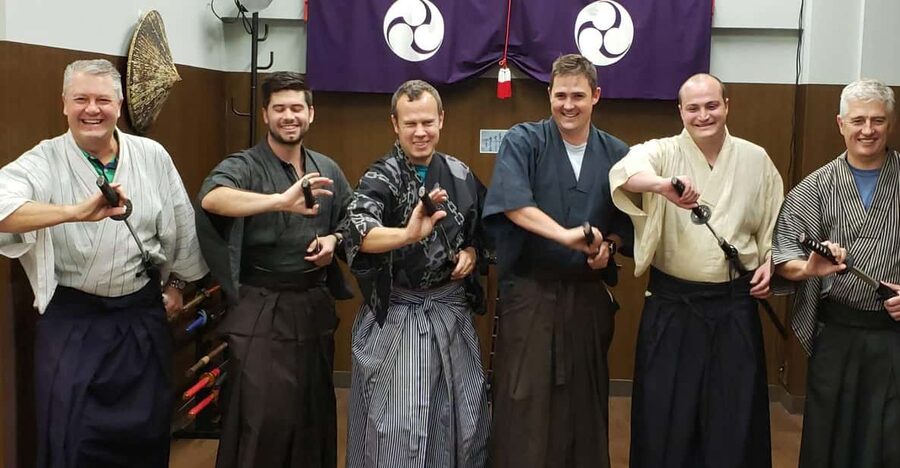
Your session starts with dressing, and it is not a quick skim step. You choose your favorite kimono and hakama and then get help changing into your full samurai outfit. This is a surprisingly big part of the value, because you are not paying only for sword practice, you’re paying for the transformation.
What to expect during costume time:
- Staff helps you get into the kimono and hakama correctly
- You settle into the outfit so you can move safely during training
- You then transition into sword lessons while you are still in costume
If you have ever worn a kimono before, you know it can affect your comfort and range of motion. This experience accounts for that by teaching sword handling in a way that works with what you’re wearing. For most people, that makes the learning feel easier and more grounded.
One practical consideration: the experience is not listed as suitable for wheelchair users, and it has height and age limits for kids. Also, if you find tight clothing uncomfortable, you may want to think ahead. You will be dressed for the whole session.
Sword basics that go beyond posing
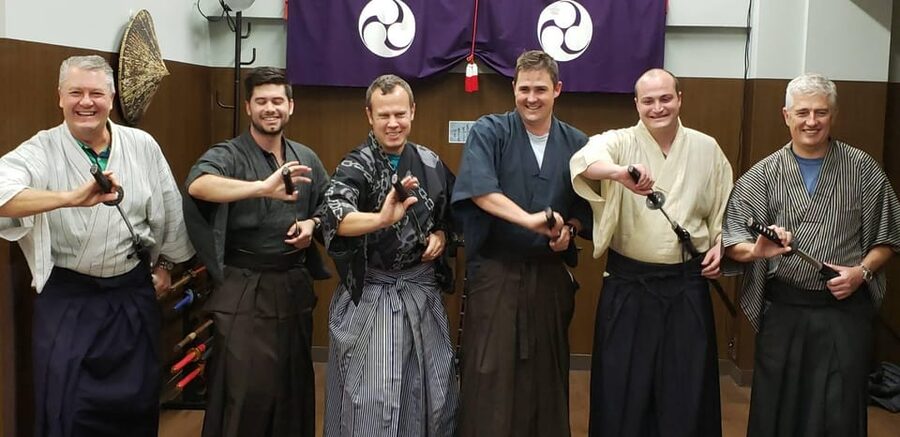
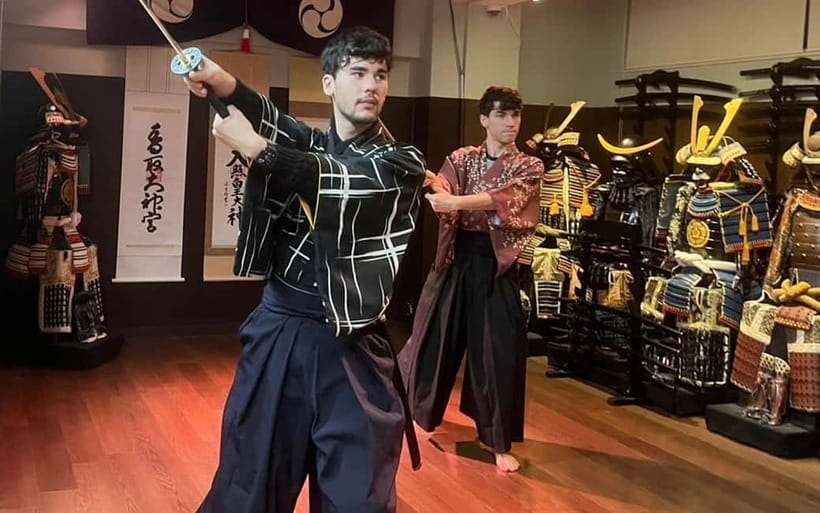
Once you’re dressed, the lesson shifts from costume to fundamentals. You get an explanation of sword parts, which is helpful even if you have never held a sword-shaped object before. Knowing what you’re looking at makes the movements feel less random.
Then you practice with a fake sword designed so it cannot cut. That safety detail is essential, and it changes the whole tone of the class. You can focus on learning how to handle the weapon, not on worrying about safety in the physical sense.
Key motions you’ll work on:
- How to draw a sword
- How to hold the sword
- How to swing it
- How to retract it
That sequence is smart. Drawing and retracting are where people usually feel awkward, and they’re also the parts that create that classic samurai look in photos. If your goal is memorable video, these are the motions you want down.
In one of the write-ups from recent participants, someone specifically mentioned learning stance names and executing them properly. That tells me the instruction is not just random swinging. Even if you do not catch every term, you can still come away with a sense of structure and basic technique.
Practicing a chanbara-style fight without chaos
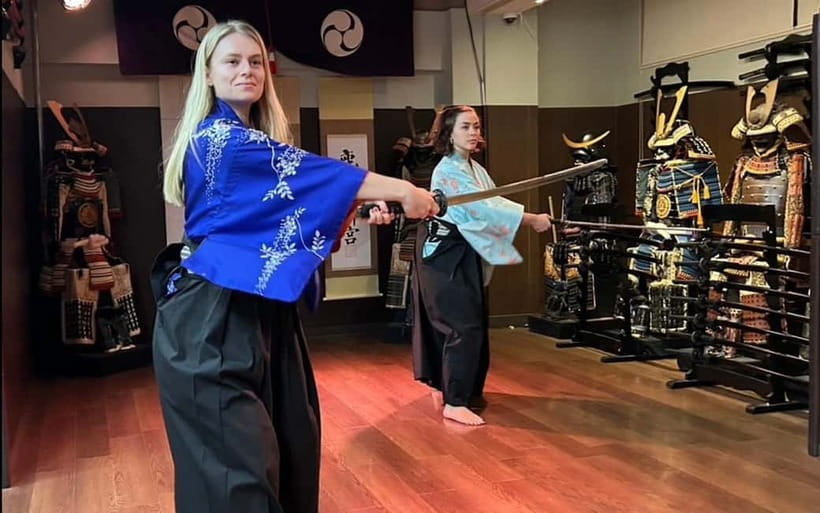
After you learn the basic handling, the session moves into a simple chanbara (sword fight). This is where the class becomes fun in a big way, because you stop thinking only about technique and start interacting with other people in the group.
The goal here is not sparring like a competitive martial arts gym. It’s a controlled, choreographed-style fight where you practice offensive and defensive actions in a way that feels real on camera. The instructors put energy into the session, which helps if you are a bit shy about fighting in front of others.
What makes this stage valuable:
- You apply the draw, hold, swing, and retract steps under pressure
- You learn spacing and timing, even with a safe training sword
- You get that satisfying moment when your movements look like a routine
The group size helps a lot. With small groups limited to 10 participants, you are not lost in a crowd. You get enough attention to correct your form, and you also get enough turns to feel included.
A change of pace from Tokyo:
- Mt Fuji and Hakone 1-Day Bus Tour Return by Bullet Train
★ 5.0 · 26,383 reviews - 1-Day Tokyo Bus Tour
★ 5.0 · 14,250 reviews - Tokyo: TOKYO SKYTREE® Admission ticket
★ 4.5 · 11,192 reviews - Tokyo: teamLab Planets TOKYO Digital Art Museum Entry Ticket
★ 4.6 · 9,779 reviews
The finale: a performance moment with music and lights
The training does not end with just your practice round. The session includes a performance style finale where you take part in an action sequence set to music. The description frames it like you’re “exterminating bad guys” to the soundtrack, and that gives you the vibe: it’s playful, dramatic, and made for camera-friendly action.
This is a good moment to stop and think about what you’re really buying. You’re not buying a sword certificate. You’re buying a short, energetic experience that turns learning into something you can rewatch later and show friends.
Also, the staff supports your documentation. Many participants noted that an assistant records on smartphones and captures moments throughout. Translation: you do not have to choose between training and filming yourself. You can lift your phone less and focus on the choreography.
Weapons and armor displays, plus the optional armor fee
One of the quieter attractions is what surrounds you. The dojo area includes many weapons on display, including swords and spears, and you’ll also see armor.
There’s an optional upgrade here. If you want to wear the armor on display, there is an additional fee. You can treat this like a photo enhancer. If you love cosplay visuals and you’re comfortable with the time and cost, it can make your photos look even more authentic.
Keep it realistic though. Armor can affect movement, so it’s not an automatic must-do. The main activity is designed around the kimono and hakama plus the sword training, so even without the armor you’ll still get the full experience.
Price and value: Is $63 fair for 1 hour?
At $63 per person for a 1-hour session, the value depends on what you want out of Tokyo.
If your goal is to dress up, move in traditional costume, learn basic sword technique, and leave with photos and video, the price feels fair. You’re paying for:
- Costume changing into kimono and hakama
- An explanation of sword parts
- A training sword that cannot cut
- Instruction and guided practice
- A photo moment with a samurai
- Support filming on your phone
If you want long-form instruction, advanced techniques, or a multi-hour martial arts class, this will feel short. The length is also a reason to be focused. Show up ready to participate, because you only get one guided session.
A smart way to decide is to compare the experience to purely observational activities. Here you get both learning and performance, plus documentation help. That combo is what makes the $63 feel reasonable instead of like you’re paying only for a costume.
You can also book with flexible policies offered for the activity, including reserve now and pay later and free cancellation up to 24 hours in advance. That makes it easier to fit into a packed Tokyo itinerary without risking your money.
Timing, group size, and where you meet
This is scheduled as a 1-hour class, so check availability for starting times. The group is intentionally small, limited to 10 participants, which is a big deal for hands-on learning. In a larger group, sword handling instruction becomes more like watching and copying. Here, you’re more likely to get personal corrections.
Meeting point is simple: search Samurai Theater Tokyo on Google Maps. That’s useful if you are navigating Tokyo by phone without wrestling with obscure station exits.
One more practical note: the experience supports English and Japanese instruction. If your Japanese is basic, you should still be able to follow along because the teaching is offered in English.
Who should book (and who should skip)
This kind of activity is best for people who want interactive fun and beginner-friendly sword technique. It’s great if you like martial arts movies, want something hands-on for your Japan trip, or want a unique photo and video story to bring home.
It may also suit families, since there are entries noting family enjoyment, but the age limits are strict. It is not suitable for children under specific ages, and there are height limits listed as well. Pregnant women and wheelchair users are also not included under the suitability notes.
If you’re older, there is at least one example of a participant age 61 having a great time. Still, make the decision based on your comfort with the costume and the basic physical movement required.
If you are visually impaired, or if you have significant mobility limitations, the activity may not be a good fit because no special accessibility accommodations are listed.
Make your phone video look like a movie
You can take photos and videos with your smartphone, and the staff also takes video and photos to capture the session. To get the best results, do a little prep.
My practical tips:
- Take a few quick test clips when you first enter costume mode
- Keep your phone stable for the draw and retract parts, they look best
- Record short bursts during the chanbara portion, then watch for corrections
- Don’t block your view of the instructor when you’re facing the group
Also, plan on wearing your best “move-ready” posture. Your costume will be part of every frame, so you want comfortable footing and calm movement.
The assistants capturing moments means you can relax. You can spend less time running for the perfect angle and more time actually doing the routine.
Should you book this Tokyo samurai experience?
Book it if you want a hands-on, beginner-friendly sword session in a full kimono and hakama look, plus a fun chanbara fight and a performance finale to music. The strongest reason to go is the combination of instruction, active participation, and photo and video support.
Skip it if you want advanced sword training, lots of historical lecture, or a long class with time to master techniques. Also think twice if the age, height, pregnancy, mobility, or accessibility limits apply to you.
If you’re on a first-time Tokyo trip and you want one activity that is clearly different from temples and shopping, this is the kind of experience that creates memories you can actually rewatch. And for the price and 1-hour format, that matters.
FAQ
How long is the Tokyo Samurai experience?
The experience lasts 1 hour.
What’s included in the $63 per person package?
It includes changing into kimono and hakama, explanation of sword parts, using a fake sword that cannot be cut, a sword fight with samurai, and a photo with a samurai.
Do you use a real sword?
No. You wield a fake sword designed so it cannot be cut.
Is there an extra cost to wear the armor on display?
Yes. There is an optional fee required to wear the armor on display.
Where do I meet for the experience?
Meet at Samurai Theater Tokyo. You can find it by searching Samurai Theater Tokyo on Google Maps.
Is the instruction available in English?
Yes. The instructor speaks English and Japanese. The group is small, limited to 10 participants.
Latest write-ups near Tokyo
- Harajuku Private Tour: Kawaii Fashion & Animal Cafe Included★ 5.0 · 69 reviews
- Mt Fuji Customizable Private Tour English Speaking Driver Pick-up★ 5.0 · 69 reviews
- Tokyo Night Cooking Class: 5 Home-Cooked Japanese Dishes★ 5.0 · 70 reviews
- Tokyo: Sumida Aquarium Entry Ticket★ 4.6 · 70 reviews
- Private Customizable Walking Tour of Tokyo★ 5.0 · 70 reviews
- Official Japan Go-Kart Through Tokyo Bay / Ginza (IDP Required)★ 4.5 · 71 reviews
- Wagyu Beef and Sake Pairing Foodie Tour in Tokyo★ 5.0 · 71 reviews
- Japanese Traditional Music Show in Tokyo★ 5.0 · 72 reviews
Samurai & Ninja Experiences, compared.
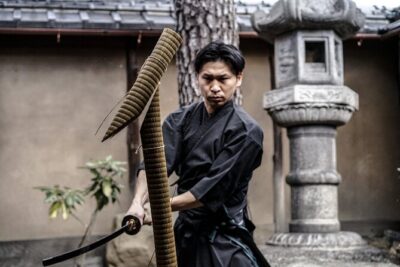
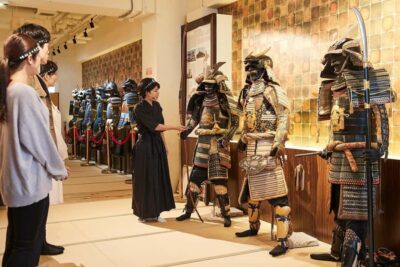
Samurai Ninja Museum Guided tour and Experience
Read our review →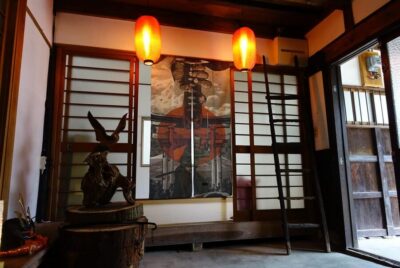
Kendo and Samurai Experience with Uniform and Gear
Read our review →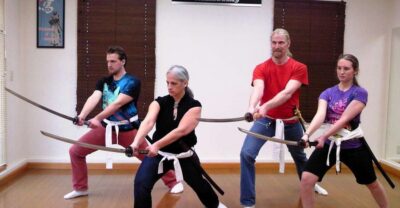
Samurai Sword Class by Experts in Traditional Arts
Read our review →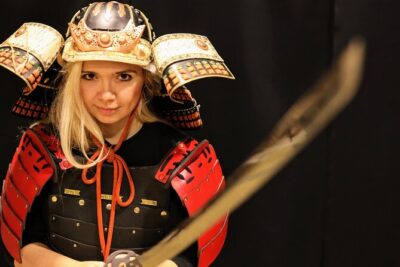
Skip the lines Basic Ticket at SAMURAI NINJA MUSEUM KYOTO
Read our review →
Samurai Sword & Archery Class from Samurai Descendant
Read our review →
Browse the lists this tour appears in