
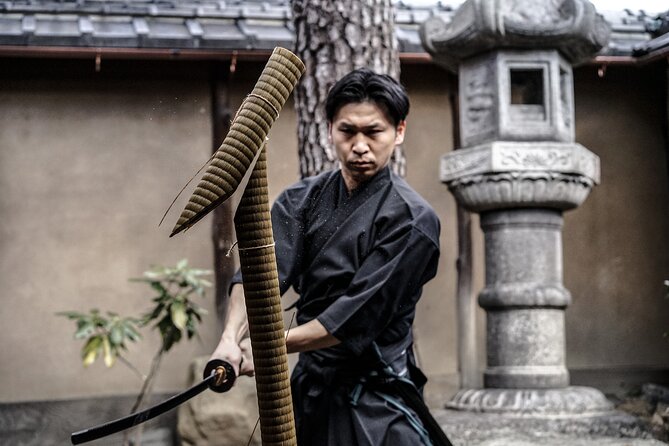
Reviewed · SAMURAI & NINJA EXPERIENCES
Kyoto Samurai Experience
Kyoto Samurai Experience is interesting because it mixes three things people actually want, sword basics you can do your hands-on style, a traditional kimono moment, and a Zen meditation segment, all inside a preserved samurai house. I love the hands-on katana practice focus and the small-group feel that keeps the lesson from turning into a costume line. One drawback to plan for is that the location can feel a bit out of the way, so you will want to give yourself extra time and check transit options first.
This is about 1 hour 45 minutes with a mobile ticket, and you can usually pick a morning or afternoon time slot to match your Kyoto rhythm. Expect moderate physical effort, plus the practical reality of wearing a kimono and doing training movements in comfortable athletic footwear.
Key Things to Know Before You Go
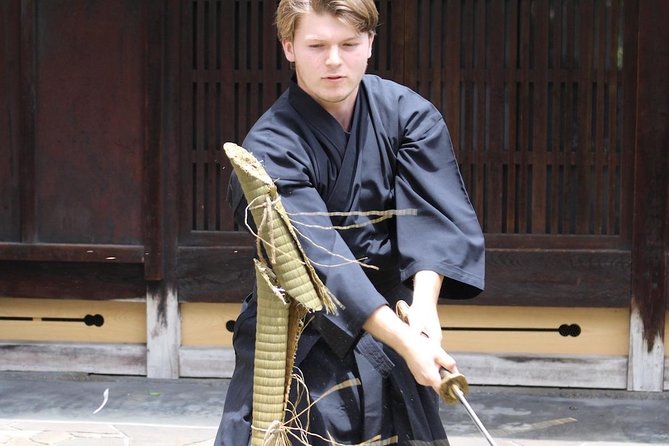
- A preserved samurai house setting in central Kyoto that adds atmosphere to the lesson
- Kimono try-on before you start sword practice
- Katana training basics under a sword instructor’s guidance, not just a demo
- Bushido philosophy explained in plain terms with a Zen meditation finish
- Small groups, up to 14 people, for more individual attention
- Seasonal comfort care, like hot tea and warmers on cold days or water and wet cloths on hot days
Why a Kyoto Samurai House Beats a Costume Show
If you have been around Kyoto long enough to notice the pattern, you know some “samurai experiences” are mostly photos. This one goes further because it anchors everything in an actual samurai house environment. The setting matters. It helps you feel the shift from city noise into a calmer, more disciplined world for a couple of hours.
I also like the way the program handles the big expectations. You are not just learning a few dramatic moves. You get a guided run-through of the basics, then you practice with an instructional training approach. And since the lesson includes Bushido philosophy plus a Zen meditation session, it feels like more than a physical activity.
The third part is the one that surprises people. Sword training can hype you up fast. Then you get a Zen moment to settle your body and your focus. That contrast is part of the value here.
More Samurai & Ninja Experiences in Kyoto
- Kyoto: Kendo and Samurai Experience with Uniform and Gear
★ 4.9 · 815 reviews - Kyoto: Samurai Sword Class by Experts in Traditional Arts
★ 4.9 · 657 reviews - Skip the lines Basic Ticket at SAMURAI NINJA MUSEUM KYOTO
★ 4.5 · 632 reviews
Your 1 Hour 45 Plan: Kimono, Sword Basics, and Zen
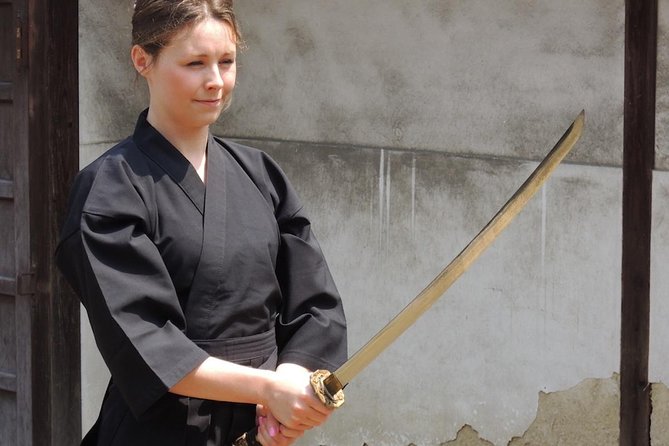
The session is built to move at a steady pace, with time to listen, practice, and reset. Here is how it typically flows, and what to pay attention to so you get the most out of it.
Meeting your group and getting oriented
You meet at Kyoto Samurai Experience, Waraku at 111 Inabachō, Nakagyo Ward, Kyoto (604-8803). It is described as near public transportation, so you should be able to stitch it into a Kyoto day without a car or taxi hunt. You will meet your guide and group at the departure point, then start the changing and training sequence.
Practical tip: if you are mapping your route, use the exact address rather than just “samurai house.” Kyoto streets can be tricky, and you are going to want to arrive calm, not sprinting.
Dressing for training: the kimono try-on
Next you change into a traditional kimono. This is more than a photo moment. Wearing the clothing helps you slow down physically. It also frames the whole idea of samurai discipline and daily culture.
Be ready for a real clothing change experience. Kimono fit takes a little time. Wear shoes that make it easy to get on and off quickly, because you will likely want to keep your footwear routine simple.
A change of pace from Kyoto:
- PERFECT KYOTO 1-Day Bus Tour
★ 5.0 · 13,518 reviews - Kyoto: Fushimi Inari, Kinkakuji, Bamboo Grove 1 Day Bus Tour
★ 4.8 · 4,316 reviews - Kyoto: Tea Ceremony in a Traditional Tea House in Kiyomizu
★ 4.9 · 3,519 reviews - Kyoto Geisha Walking Tour: Gion District & Hidden Gems
★ 4.7 · 3,273 reviews
Swordsmanship basics: handling a real martial arts sword
Then comes the main event: swordsmanship basics with an instructor’s guidance. You will handle a martial arts training sword. That means you are not just watching. You are doing the motions, learning the logic behind them, and practicing the techniques in a controlled way.
What makes this valuable is the instruction style. The program is designed around explaining the “why,” not just the “do this.” They guide you on how to use the training sword, and the lesson is paced so you can actually understand what you are attempting.
If you are nervous about safety or looking clumsy, you should know this is aimed at beginners. You are learning fundamentals. You do not need prior sword experience to follow along.
Bushido talk: the ideas behind the movements
Between sword practice and the calm-down phase, you get a discussion of samurai life, including Bushido, the way of the warrior. The program frames Bushido through dress, Zen meditation, and practical philosophy.
A helpful way to think about this: Bushido is not a slogan you memorize. It is supposed to shape how you act, how you train, and how you carry yourself in stressful moments. Hearing it while you are doing physical drills makes it click faster than reading about it later.
Zen meditation session: focus reset
Finally, you get a Zen meditation session. This is a smart choice for a class that includes sword practice. You are asking your body to concentrate, control movement, and keep your breathing steady. Meditation helps you carry that calm into the end of your experience.
If you like “active plus quiet” days, this part is a win.
What Makes the Sword Instruction Feel Legit (and Not Like a Script)
Plenty of experiences have props and a performer. This one is structured around teaching. The instructor guidance is a major reason this tour earns such strong ratings.
Here are the qualities you should expect to benefit from:
- Clear, supportive coaching so you can follow the fundamentals
- Patient pacing, so you are not rushed through the steps
- A sense that the instructor actually knows how to teach technique, not just show it
Another small detail that matters: translation and communication support. The experience includes staff who help make the session smooth and easy to understand. When you are dealing with movements and philosophy at the same time, understanding the instructions is half the battle.
Also, because the group is capped at 14 travelers, the instructor can pay attention to more than just the people who are already confident. That matters if you are the type who needs a second explanation to lock in the form.
Bushido and Zen, in Real Life Terms
Bushido can sound abstract before you connect it to training. Here, you hear how it relates to daily discipline, posture, and mindset. You also connect it to Zen meditation, so the philosophy is not floating in the air.
What I like about this approach is that it gives you a way to interpret samurai culture beyond movies. You leave with a handful of ideas you can actually use, like the value of control, patience, and clarity. You also get a sense of how martial culture can be tied to calm practices, not just aggression.
If you are visiting Kyoto and want one experience that does not treat samurai as a cartoon, this is a strong pick. It frames samurai life through concepts you can understand, even if you do not read Japanese history.
Small-Group Value: When Up To 14 People Matters
The tour caps at 14 travelers. That is not just a number. It affects your experience in the places you care about.
In a large group, sword training usually becomes watching plus waiting. Here, the group size helps keep the instruction practical. You get more chances to practice, ask questions, and correct what you are doing.
One more thing you will appreciate, especially if you are traveling with kids or a mixed-age group: the session is interactive in a controlled way. The program is designed to work for adults and also for families, as long as the child is accompanied by an adult.
If you want a class that feels like a lesson rather than a conveyor belt, this small-group cap is part of the reason it is worth your time.
Weather Reality in Kyoto: What to Wear and How They Handle Temperature
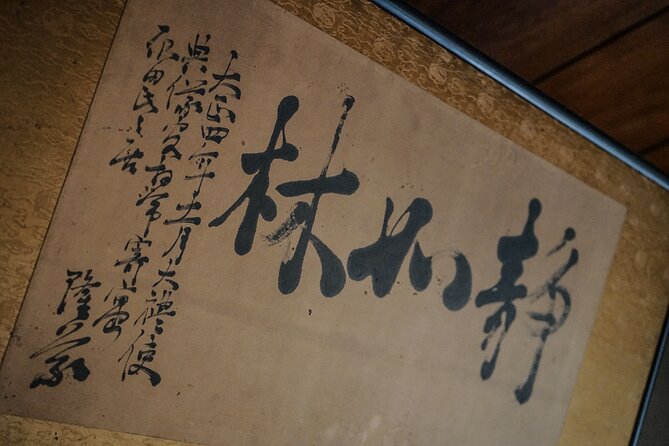
Kyoto weather can change how any active tour feels. This experience includes a plan for comfort during outdoor or cold conditions, and you can expect similar care in hot weather.
On cold days, there is mention of things like hot tea and warmers during colder outdoor parts. On hot days, there is mention of water, wet cloths, and electrolyte candies. So you are not just left to suffer through the weather while you wait for your turn.
For you, the practical takeaways are simple:
- Wear comfortable clothes that allow movement
- Use appropriate footwear for an athletic activity
- Expect moderate physical effort from training movements
Kimono is the highlight outfit, but your shoes and base layers are what will keep you comfortable. If you tend to get cold easily, bring layers you can handle easily during clothing changes.
Location, Timing, and How to Fit This Into a Kyoto Day
The meeting point is Kyoto Samurai Experience, Waraku at 111 Inabachō, Nakagyo Ward. The description says it is near public transportation, which is great. Kyoto has enough transit and walking options that you should be able to plan without stress.
Pick your time slot based on your energy. Morning can be good if you want calmer streets and you are still fresh. Afternoon can work if you want your sword and philosophy lesson to act like a break in the middle of sightseeing.
The total time is about 1 hour 45 minutes. That makes it easy to place between major Kyoto stops. Just avoid stacking it right after a long walking day, because you are going to be doing training movements and changing into kimono.
Also, note that the session is scheduled and rescheduling is not allowed within 24 hours of your planned start time. So pick a time you can realistically keep.
Photos and Memories That Actually Feel Like Part of the Experience
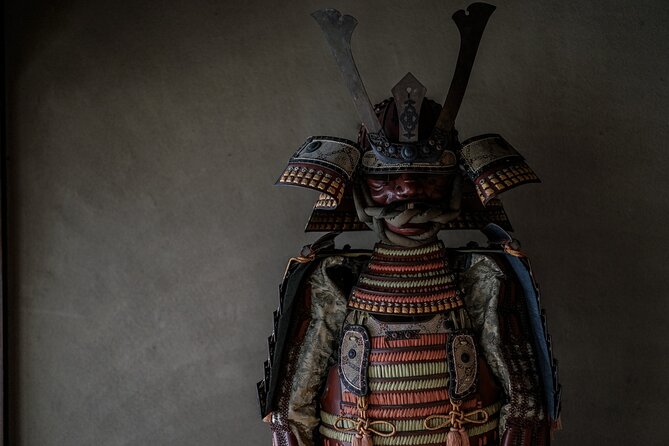
In experiences like this, photos can go two ways. Either it is a frantic, forced flash session, or it is part of the experience. This one is described in a way that suggests photos are taken during the program and shared quickly afterward.
Even if you do not care about professional photos, you should care about the memory of the moment. Handling a katana training sword, wearing the kimono, and stepping into the samurai house all give you a lived experience, not just a backdrop.
Tip: if you care about photos, slow down and pay attention during instruction. The best photos happen when you are focused enough to do the movements correctly, not when you are constantly posing and adjusting.
Is $119.38 Worth It? A Value Check in Kyoto
At $119.38 per person for about 1 hour 45 minutes, you are paying for a bundle: kimono try-on, sword basics with a real instructor, Bushido context, and Zen meditation in a preserved samurai house setting.
So the value question is simple. Would you pay for all four together: hands-on sword training, cultural framing, a calm philosophy ending, and a historic house atmosphere? If that sounds like what you want, the price starts to make sense.
What pushes this into the “good value” category for me is the combination of:
- Hands-on instruction rather than a demo
- Small-group size (max 14)
- The full arc: clothing, training, philosophy, and meditation
Where you might hesitate is if you mainly want a quick photo and a short show. This is structured and participatory. It is not a 20-minute novelty stop.
Who Should Book Kyoto Samurai Experience, and Who Should Skip It
This experience is best for you if:
- You want an active cultural class in Kyoto, not another walking tour
- You like structured instruction and learning how to do basics correctly
- You are interested in Bushido and Zen as more than movie props
- You value a small group and a calm pace
You might want to skip or choose a different style if:
- You really do not enjoy athletic movements, even light training motions
- You are sensitive to the idea of wearing a kimono and doing a clothing change
- You want a purely observational experience with no practice
Families can work well here. The session is described as suitable for adults and children, as long as minors are accompanied by an adult. If you are bringing a child, plan for comfort and extra patience during changing and practice time.
Should You Book Kyoto Samurai Experience?
If you want a Kyoto activity that feels like a lesson, not a costume show, book it. The mix of kimono try-on, katana training basics, and the Zen meditation finish makes this more complete than most samurai-themed stops.
Choose this especially if:
- You have at least half a day to work with
- You enjoy hands-on culture
- You want authentic structure and not just performance
Pass if your only goal is quick photos and you do not want to participate physically. This one asks you to do the training, even if it stays beginner-friendly.
Overall, for the time length, the small-group approach, and the full arc from Bushido to Zen, I think it is a smart, memorable choice in Kyoto.
FAQ
Where does the Kyoto Samurai Experience start?
The meeting point is Kyoto Samurai Experience / Waraku, 111 Inabachō, Nakagyo Ward, Kyoto 604-8803, Japan.
How long is the experience?
It lasts about 1 hour 45 minutes.
Do I get to choose a morning or afternoon time?
Yes, the experience offers a choice of morning or afternoon departure times.
What activities are included?
You will change into a traditional kimono, practice swordsmanship basics with a training sword, learn about samurai culture and Bushido, and take part in a Zen meditation session.
Is there a limit on group size?
Yes. The tour has a maximum of 14 travelers.
What fitness level do I need?
Travelers should have a moderate physical fitness level, since it includes athletic activity.
What should I wear?
Wear comfortable clothes and appropriate footwear for an athletic activity.
Are minors allowed?
Minors must be accompanied by an adult.
Is free cancellation available?
Yes. You can cancel up to 24 hours in advance for a full refund. If you cancel less than 24 hours before the scheduled start time, the amount paid will not be refunded.
Latest write-ups near Kyoto
- Kyoto: Nishiki Market Tour with a Local Foodie & Tastings★ 4.5 · 67 reviews
- Kyoto Kimono Rental mimosa |Kimono/Yukata Rental Couple Plan★ 4.8 · 67 reviews
- Kyoto: Traditional Kimono Fabric Handicrafts Workshop★ 5.0 · 67 reviews
- Kyoto Tea Ceremony and Samurai Photo Session★ 5.0 · 70 reviews
- Kyoto: Replica food making experience★ 4.8 · 70 reviews
- Kyoto: Kinkakuji, Golden Pavilion Guided Tour★ 4.7 · 71 reviews
- Private departure transfer from Kyoto city to Kansai International airport★ 5.0 · 72 reviews
- Uji: Green Tea Tour with Byodoin and Koshoji Temple Visits★ 4.8 · 72 reviews
Samurai & Ninja Experiences, compared.

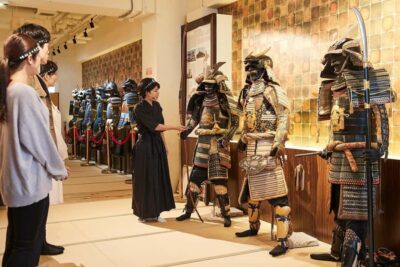
Samurai Ninja Museum Guided tour and Experience
Read our review →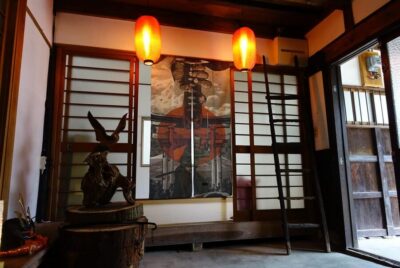
Kendo and Samurai Experience with Uniform and Gear
Read our review →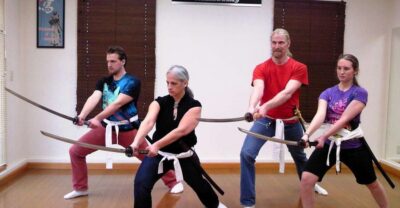
Samurai Sword Class by Experts in Traditional Arts
Read our review →
Skip the lines Basic Ticket at SAMURAI NINJA MUSEUM KYOTO
Read our review →
Samurai Sword & Archery Class from Samurai Descendant
Read our review →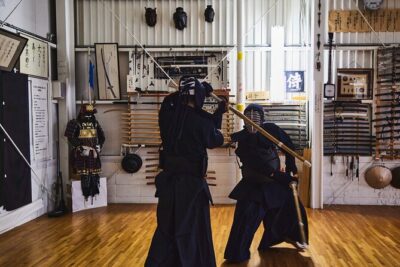
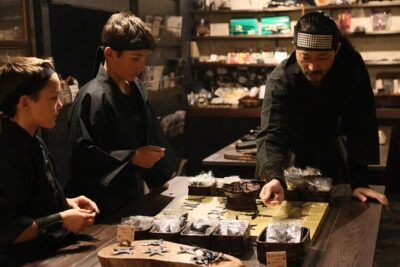
Ninja 1-hour Hands-on Lesson by Japanese master in Kyoto -Entry
Read our review →Browse the lists this tour appears in