
Reviewed · SAMURAI & NINJA EXPERIENCES
Samurai Ninja Museum Asakusa: Samurai Sword Lesson & Tour
Samurai Ninja Museum Asakusa is interesting because you do not just watch a demo. You put on real-looking gear, pick up a katana for a guided lesson, and then move through a museum built around samurai and ninja themes.
I love the hands-on sword training, and the fact that the class is paced for beginners. I also like the follow-up museum tour with English explanation and plenty of photo time in staged samurai backgrounds.
One possible drawback to plan for: with only 2 hours, you get enough practice for confidence, not enough reps to become a duelist.
Key points before you go
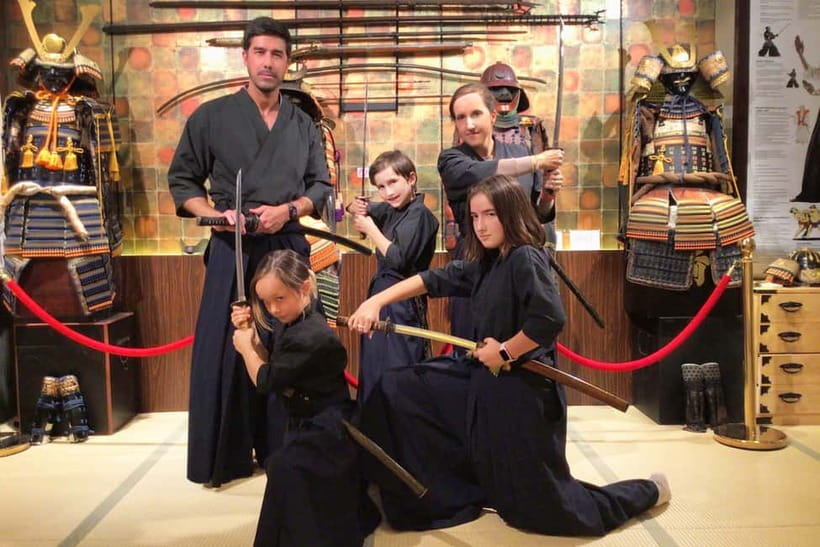
- You’re handling a katana, not just posing during the workshop
- Small group size (max 16) keeps the experience from feeling like a factory line
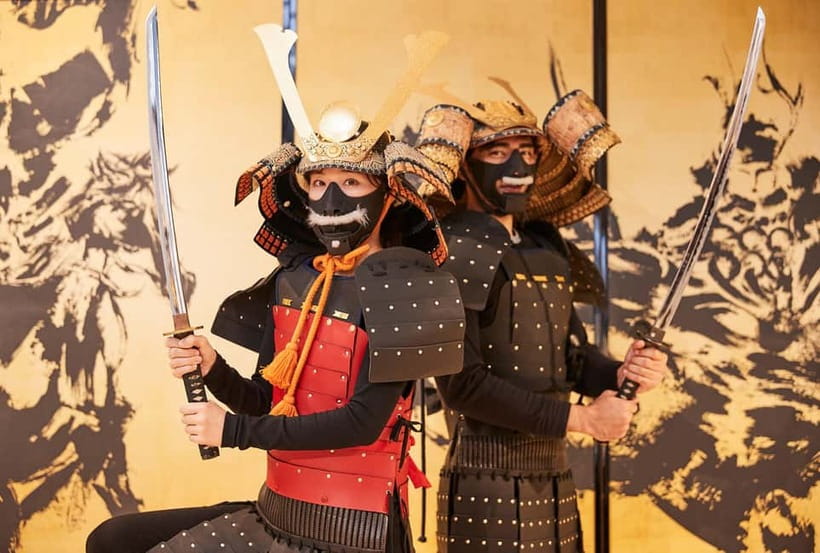
- Dress time includes hakama plus armor and a helmet, so you look the part fast
- You get both samurai and ninja content, including a shuriken-style weapons trial
- Photo stops are built in, with themed samurai backgrounds for quick, memorable shots
Samurai Ninja Museum Asakusa: what this 2-hour workshop is really like
This is a compact Tokyo experience in Asakusa that blends three things: costume-up role play, a guided katana lesson, and a short museum tour that explains how samurai and ninja culture developed. The price, $63 per person for 2 hours, covers more than just a talk. You are paying for instruction plus the gear and the fun add-ons, like themed photo opportunities and a ninja weapons trial.
The vibe is family-friendly, English-led, and structured. That structure matters because sword training needs clear pacing. It also means your brain does not get overwhelmed. You get a routine to follow, you practice it with supervision, then you move on.
Even if you are traveling solo, the small group setting helps. You are more likely to get corrections and encouragement, not just pass through the room.
More Museums in Tokyo
- Tokyo: teamLab Planets TOKYO Digital Art Museum Entry Ticket
★ 4.6 · 9,779 reviews - Tokyo: Samurai Ninja Museum Guided tour and Experience
★ 4.6 · 1,010 reviews - Ninja Experience (Family Friendly) at Samurai Ninja Museum TOKYO
★ 5.0 · 441 reviews
Suiting up in hakama and armor: your first steps as a warrior
The experience kicks off with dressing. You wear a hakama and get samurai gear like a helmet and armor. In practice, this is what turns the whole thing from a class into a role. You feel the weight, the fit, and the constraint of the outfit. That helps you take the lesson seriously, because you are physically in the setup.
There is also a safety mindset built into the way the session runs. Reviews mention that instructions stay family-friendly and supervised. That is why even kids can join in, as long as they meet the age rule for the samurai venue.
Important rule: children under 6 cannot enter the samurai venue. If you are traveling with younger kids, plan around that, or choose a different activity for them.
Katana basics with Sensei Ryo, Kenny, Koki, Kai, and more
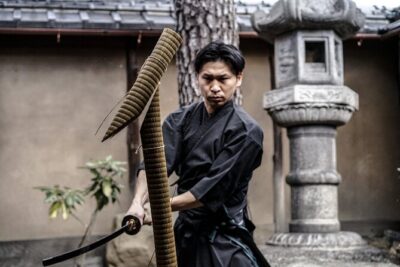
The main event is the samurai sword lesson, taught by an English-speaking instructor (many bookings highlight Sensei Ryo). Expect the fundamentals first: how to handle the blade safely, basic movement patterns, and a short routine you can actually perform by the end.
If you are a complete novice, you will likely appreciate the way the session is taught. Multiple reviews praise the teachers for patience with beginners and for making the basics feel approachable. Sensei Ryo is frequently mentioned as professional and polite, with the kind of calm teaching that helps you stop worrying and start moving.
You might see different instructors depending on the day and option booked. Reviews also call out teachers like Kenny and Koki for the sword component, and other trainers for the ninja side. The common theme is clear coaching and a mix of humor with respect.
What you should realistically expect from a beginner lesson
This is not a long-term dojo commitment. The goal is confidence and control, not mastery. You will learn enough to follow a choreography-like sequence, and then you get a chance to do it with the group.
A few reviews mention the class can feel short if you want deeper repetition. That makes sense. In 2 hours, the instruction has to stay compact.
More Samurai & Ninja Experiences in Tokyo
- Tokyo: Samurai Restaurant Show Ticket with 2 Drinks
★ 4.5 · 1,307 reviews - Tokyo: Samurai Sword & Archery Class from Samurai Descendant
★ 5.0 · 603 reviews - Best Samurai Experience in Tokyo
★ 5.0 · 458 reviews - Tokyo: Samurai Entertainment Night Show in Kanda Shrine
★ 4.6 · 417 reviews
The museum tour: samurai and ninja history with real storytelling
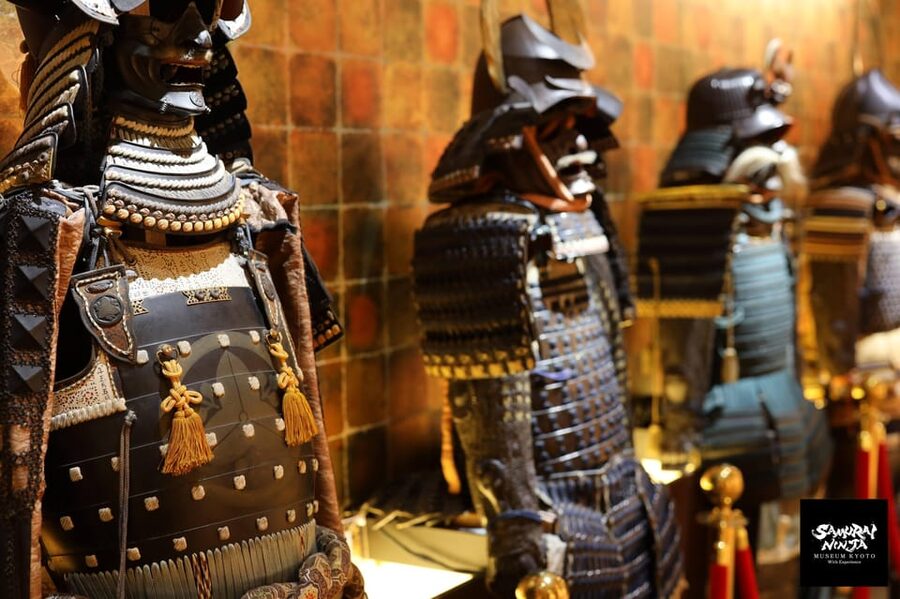
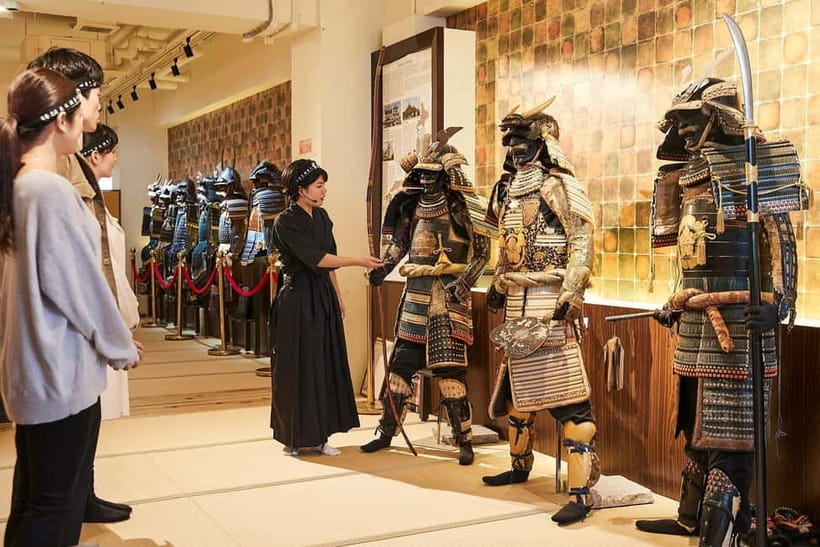
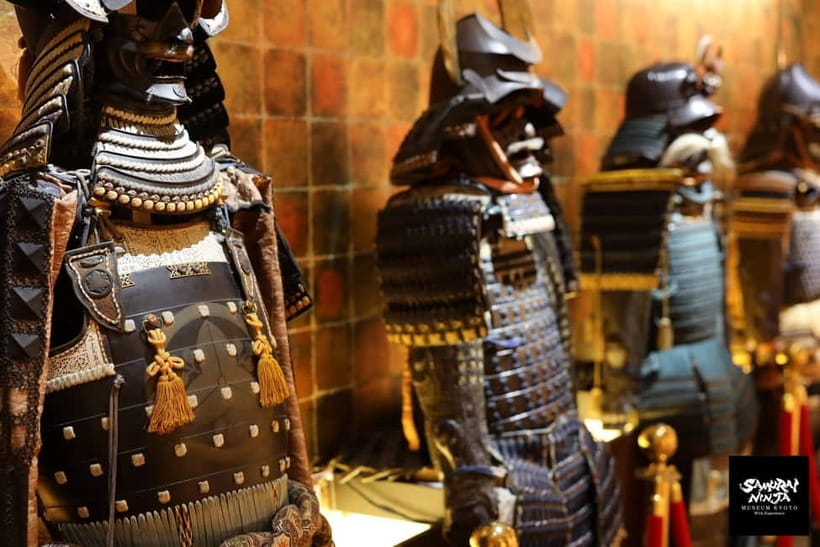
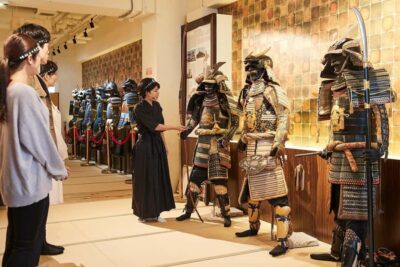
After the sword part, you head into the Samurai and Ninja Museum with an English guide. The museum tour is not a silent walk through glass cases. Guides are described as energetic, entertaining, and good at keeping kids engaged while still covering actual history.
You will hear the story of samurai development and how ninja themes connect to that broader Japanese warrior world. Reviews point out that the tour can feel more educational than expected, especially for families who thought they booked only the sword lesson.
Several guide names show up in reviews, which gives you a clue about what kind of teaching style to expect. Ren is mentioned as a standout guide, and Nao also appears as a guide connected to the ninja portion. Momo is another guide name that comes up with praise for making the experience fun for kids and teens.
What to watch for in the museum portion
A couple reviews note the museum space can feel small or the tour can feel rushed at times. If you are the type who wants to read every label slowly, you may want to treat this as an overview that gives you ideas to explore later on your own.
Still, for most people, the museum tour hits the sweet spot: context plus action, within a tight schedule.
Ninja weapons trial: shuriken practice that fits the family-friendly format
The workshop includes a ninja weapons trial. Reviews repeatedly mention trying shurikens (shuriken-style throwing) at a target. It is one of those activities that instantly feels game-like, but it still teaches basic focus and technique.
You can think of this as the perfect contrast to the katana lesson. The katana part is about posture and control in close range. The shuriken trial is about balance and timing from a distance.
Some of the excitement comes from friendly competition and guided attempts. One review specifically mentions it felt easy or difficult depending on the target. Another talks about throwing shurikens plenty of times, which is a big deal in a 2-hour tour where people want more than a single try.
Who will enjoy this most
If you have teenagers, this is often the section that makes the experience click. It gives them a challenge. If you have younger kids, it is still fun, but the overall experience stays supervised and paced.
Samurai-themed photo backgrounds: how to get memories you will actually keep
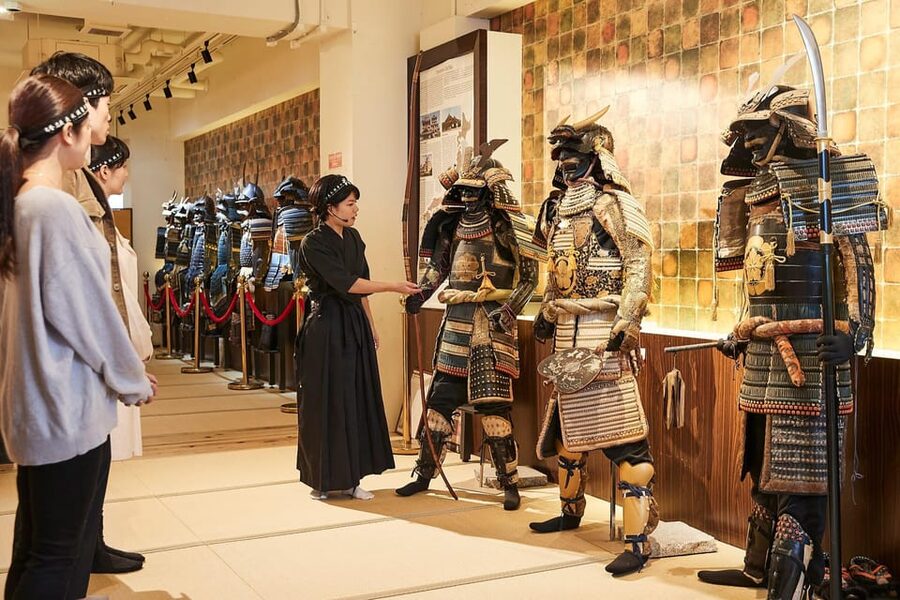
Photo time is not an afterthought here. The experience builds in themed photo opportunities in front of samurai backgrounds. You will change clothes and put on gear, so the photos are not just you in a costume for five seconds. They are part of the event flow.
A lot of people book this because they want the look, and the backgrounds help make the photos feel unique to this stop in Tokyo. Even reviews that praise the history side still keep calling out the photos as a standout memory.
Practical tip from how these sessions run: try to let the instructors guide the poses during the photo stops. You will get better results, and it keeps the group moving without awkward waiting.
Group size, timing, and how to choose the right day
This activity runs 2 hours and caps at 16 travelers. That cap matters because it affects how much time you get for dressing, instruction, museum time, and photos. In a small group, you are less likely to be standing around.
Timing is also the reason the lesson stays beginner-friendly. The pacing has to work for many ages. Reviews mention that teachers accommodate different levels, and a few notes mention that movement execution can be limited for small kids for safety reasons. So if you are traveling as a family, that flexibility is part of the deal.
The meeting point may vary depending on the option booked. That is normal for Tokyo tour operations. Just make sure you check your confirmation for the exact start location so you do not burn time trying to figure it out on the spot.
Who should book this Samurai Ninja Museum Asakusa sword and tour?
This tour is a strong fit if you want:
- Hands-on katana basics in a supervised setting
- A museum tour with English guidance
- Costumes plus photos that look great without needing special skills
- A family-friendly activity that mixes learning and play
It is also a good pick for first-timers in Tokyo who want something different from the standard walking tours. You do not need prior martial arts knowledge. You do need patience for a short schedule.
Who might be less happy
If you are looking for a serious, technique-heavy training session that runs long, this may feel too short. A few reviews mention the practice time is limited. If you want more dojo-style repetition, you might prefer a longer class elsewhere.
Also, keep the under-6 restriction in mind. The samurai venue has that rule, so families with very young children should confirm what option makes sense.
Value check: is $63 for 2 hours worth it?
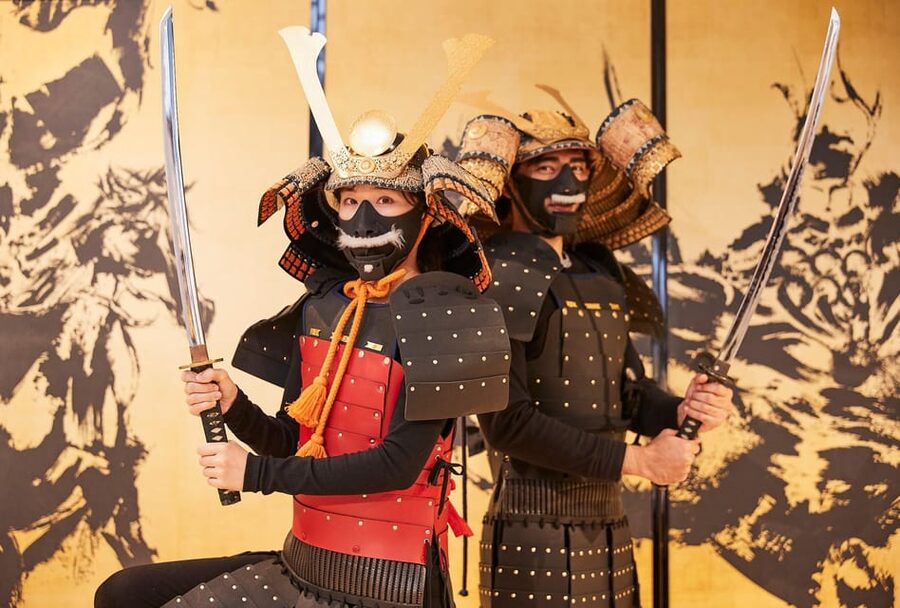
For $63, you are getting a bundled experience: samurai sword lesson, use of hakama, use of samurai helmet and armor, themed photo opportunities, the museum tour, and a ninja weapons trial. That combination is where the value comes from.
If you tried to recreate this on your own in Tokyo, you would likely spend similar money when you factor in a guided experience plus the cost of renting or accessing gear, plus paying for multiple separate activities. Here, it is all packaged into one smooth schedule.
Where the value lands best is when you care about both halves. If you only care about the sword lesson and nothing else, the museum and ninja trial might feel like extra. But most people end up liking the full package because the story context and the fun component reinforce each other.
Practical notes: English guide, wheelchair access, and group formats
The tour is led by a live English guide. That matters because sword instruction is easier when your teacher can correct you clearly and quickly.
It is also wheelchair accessible, and the experience offers private or small groups available. If you want quieter pacing or a more tailored experience, a smaller or private option could help.
For bookings, the experience has free cancellation up to 24 hours in advance for a full refund and also offers a reserve now and pay later style booking. That is useful if your Tokyo schedule is still in flux.
Should you book this tour, or skip it?
I would book it if you want a memorable Tokyo moment that is active, guided, and picture-worthy. It is especially worth it for families and first-timers who like the blend of costume, short training, and museum context. The repeated praise for instructors like Sensei Ryo, plus guides such as Ren and Nao, is a strong sign that you are in good hands.
I would hesitate if you are chasing deep sword mastery, or if you are very sensitive to sessions feeling short or slightly rushed in a compact museum. In that case, look for a longer training class and then add museum time on your own later.
If you fall into the middle, the one thing I would not overthink is the schedule. Two hours goes fast when you are dressing up, learning a routine, and trying shuriken at a target.
FAQ
How long is the Samurai Ninja Museum Asakusa Samurai Sword Lesson & Tour?
The experience is listed as 2 hours.
What is the price per person?
The price is $63 per person.
What is included in the tour?
It includes a samurai sword lesson, use of hakama, use of samurai helmet, use of samurai armor, themed photo opportunities, and a ninja weapons trial.
Is there an English-speaking guide?
Yes. The tour includes a live tour guide in English.
Can children participate?
Children under 6 cannot enter the samurai venue. Other ages are shown in the reviews as participating with the instructors.
What is the maximum group size?
The experience has a maximum of 16 travelers.
Where do we meet?
The meeting point may vary depending on the option booked.
Is the tour wheelchair accessible?
Yes, it is listed as wheelchair accessible.
Are there private or small group options?
Yes. Private or small groups are available.
What is the cancellation policy?
You can cancel up to 24 hours in advance for a full refund.
Latest write-ups near Tokyo
- Tokyo Customized Private Tour: See Top Attractions in 1 Day★ 4.8 · 67 reviews
- From Tokyo: Top 5 Scenic Spots of Mount Fuji Full-Day Tour★ 4.5 · 67 reviews
- Tokyo: Shinjuku Izakaya and Golden Gai Bar Hopping Tour (2h)★ 4.9 · 67 reviews
- Traditional Japanese Music ZAKURO SHOW in Tokyo★ 5.0 · 67 reviews
- Tsukiji: Unlimited Sake Tasting Experience★ 4.9 · 67 reviews
- Tokyo: Not a show- a professional sumo practice with experts★ 4.9 · 67 reviews
- Samurai Ninja Museum Asakusa: Kid-Friendly Ninja Training★ 4.7 · 67 reviews
- Private Harajuku Omotesando Architecture Walking Tour★ 5.0 · 67 reviews
Samurai & Ninja Experiences, compared.
Samurai Ninja Museum Guided tour and Experience
Read our review →
Kendo and Samurai Experience with Uniform and Gear
Read our review →
Samurai Sword Class by Experts in Traditional Arts
Read our review →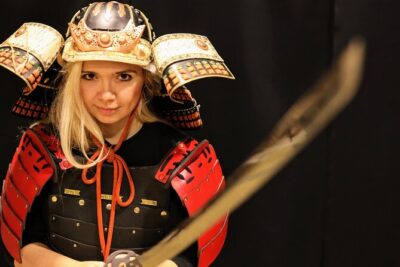
Skip the lines Basic Ticket at SAMURAI NINJA MUSEUM KYOTO
Read our review →
Samurai Sword & Archery Class from Samurai Descendant
Read our review →
Browse the lists this tour appears in