
Reviewed · GEISHA & GION TOURS
Kyoto: Gion Hidden Gems & Geisha Culture Tour
This tour is interesting because it turns Gion from a postcard into a sequence of streets, shrines, and quiet corners that make geisha culture feel real, not staged. I particularly like the Shirakawa riverside start and the way you get to 1,000-year-old shrine history without it turning into a lecture. The best guides, like Mai and Dan, also have a knack for explaining the culture in plain English.
One consideration: it is still a walking tour with several temple and shrine stops, so you need to be comfortable on your feet. The route also is not a fit for wheelchair users or people with mobility impairments, and the tour runs in rain.
Key things that make this Gion tour worth your time
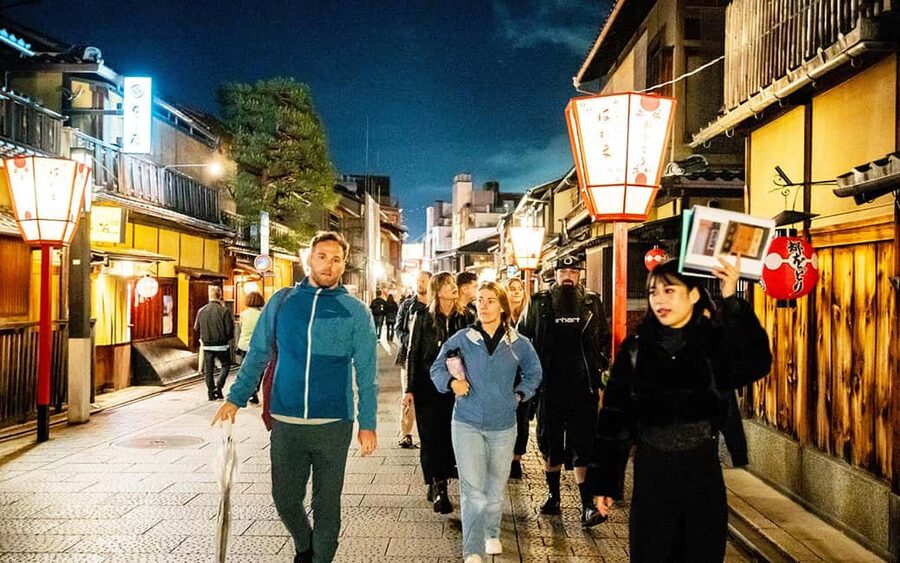
- A night-focused route that helps you see Gion with fewer crowds and more atmosphere
- Shirakawa Canal and traditional lanes where the scenery changes every few minutes
- Tatsumi-jinja Shrine, Yasaka Shrine, and Yasui Kompira-Gu Shrine as the cultural backbone of the walk
- Edo-period townhouses and old-street vibes that help you understand Kyoto’s layout
- Hanamikoji-dori at the end, where a geisha sighting is possible if you keep your eyes up
- English speaking local guides who answer questions and share practical local tips
Starting at Macdonald Shijo Ohashi: the easy meeting point
You meet at マクドナルド 四条大橋店 (Macdonald Shijo Ohashi store). Since the front can get busy, the guide will be standing on the side holding a sign that says Local Guide Stars. It is a simple meet-up, but show up a few minutes early so you are not sprinting through the crowd.
From there, the tour quickly gets you into the Gion rhythm. You are not spending your whole 2 hours in one big sightseeing loop. Instead, the guide uses the walk itself to teach you what to notice: where people flow, why certain streets feel quieter, and how the district’s layout supports the traditions you came for.
This also matters because Gion can feel confusing if you are just wandering. A guided route helps you avoid the common mistake of only seeing the busiest streets. You end up with a better sense of how the area works, which is the real gift of this kind of short walking tour.
More Geisha Experiences in Kyoto:
- Kyoto Geisha Walking Tour: Gion District & Hidden Gems
★ 4.7 · 3,273 reviews - Kyoto: Gion Magical Night Walking Tour with Geisha Trivia
★ 4.9 · 2,393 reviews - Kyoto: Gion Geisha District Walking Tour – Stories of Geisha
★ 4.7 · 2,187 reviews
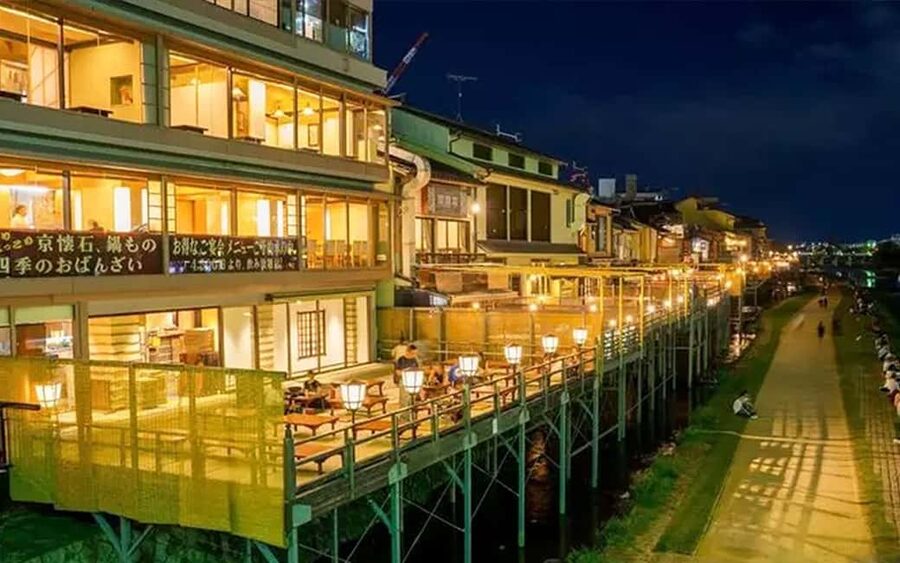
Shirakawa Canal: where willow trees and tea houses set the tone
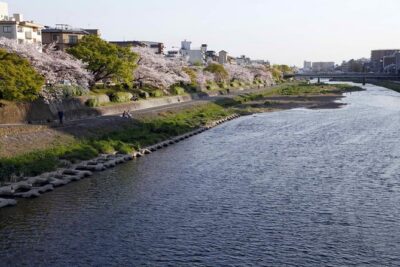
The experience kicks off along Shirakawa Canal, with photo stops and scenic views on the way. The setting is classic Kyoto, willow trees bending over stone-lined water, traditional tea house architecture nearby, and that calm, early evening feeling as the neighborhood wakes into its night life.
I like this start for one main reason: it slows you down. Instead of starting at the most famous gate or shrine entrance, you begin where Gion feels like a lived-in place. If you are traveling for the first time in Kyoto, this is also a fast way to train your eyes. You learn the difference between a street that is just pretty and a street that has cultural purpose.
Practical note: you will be walking on stone-paved paths and uneven pavement at times. Comfortable shoes are not optional. Also, bring water. Even in cooler months, two hours of stop-and-go walking can add up.
Tatsumi-jinja and Yasaka Shrine: the sacred stops that shape Gion
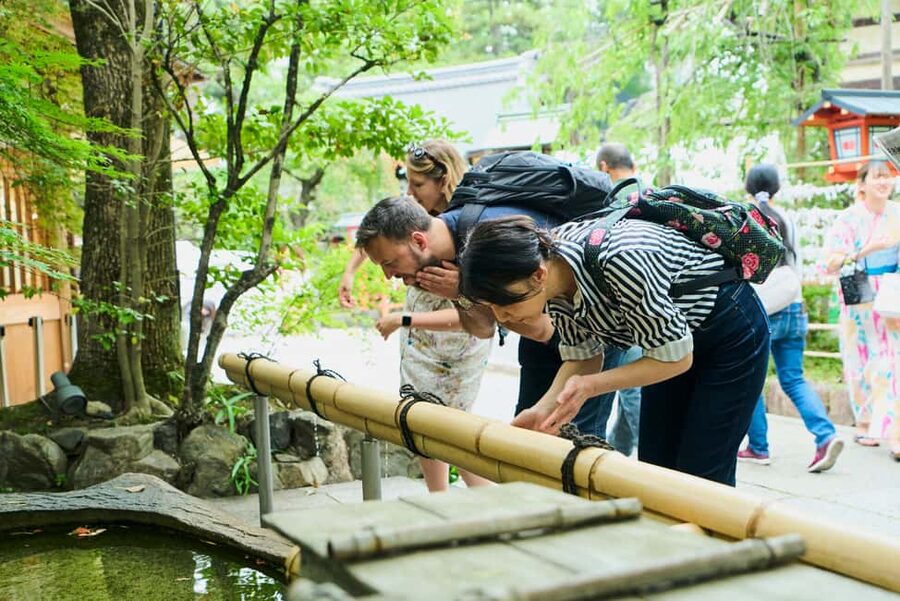
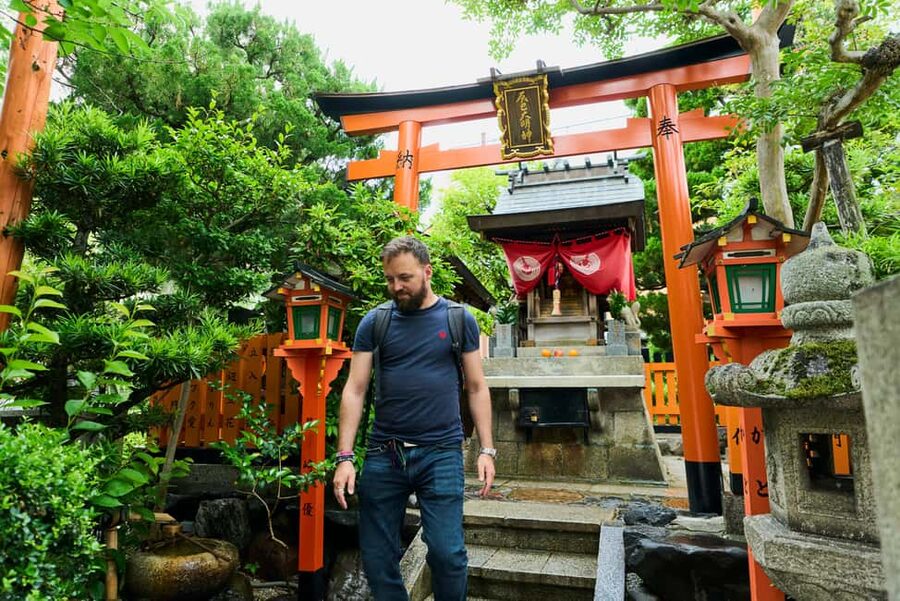
Next comes a shrine run that does more than check off famous names. Tatsumi-jinja Shrine is one of the highlights, with a photo stop and a guided visit. Then you continue to Yasaka Shrine, again with a guided visit and walking segments that keep you moving through the neighborhood’s layers.
Why these stops work: shrines in Kyoto are not just places to look at. They are meeting points for local life, belief, seasonal rhythms, and community history. A good guide makes that visible by pointing out what people do, how the buildings relate to the space, and what the shrine setting tells you about Kyoto itself.
One more reason I like this part of the tour: it gives context for the geisha district. When you understand the role of shrines and local tradition in Japanese neighborhoods, Hanamikoji-dori later feels less like a theme street. It feels like part of a bigger cultural system.
And yes, photography rules apply. Photography is allowed, but flash photography is not permitted inside temples. If you want crisp photos at night, use your phone’s regular mode and hold steady. No flash needed.
Ninenzaka and Hōkan-ji: old-street atmosphere with a short climb feel
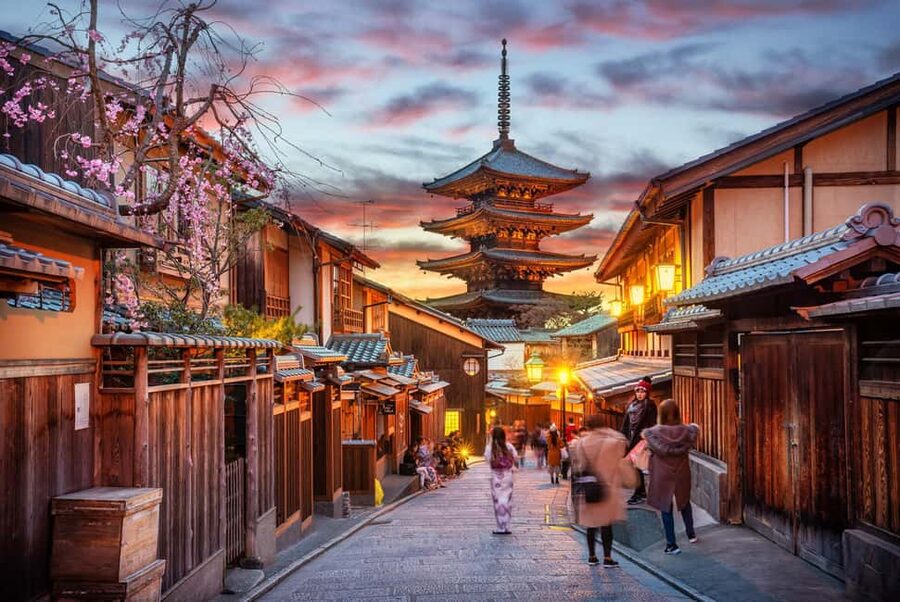
After the shrine circuit, you shift toward streets that show Kyoto’s older town structure. Ninenzaka comes next, followed by a stop connected with Hōkan-ji Temple.
Even without inventing details you have not been told, you can expect what these streets usually deliver in Kyoto: old stone lanes, traditional buildings, and a sense that you are walking through layers of the city’s past. The route is paced with short photo and guided segments, so you get time to look, not just move through.
If you are used to flat city streets, this part can be a small reality check. Ninenzaka is the kind of lane where the ground and the angles of the street add a little effort. Again, comfy shoes matter. You do not want shin splints to ruin your geisha hunting mood later.
Also, the tour is designed for a tight time window. You are moving efficiently. That is great when you want highlights, but it means you should be ready to keep your energy level up for the full walk.
A change of pace from Kyoto:
- PERFECT KYOTO 1-Day Bus Tour
★ 5.0 · 13,518 reviews - Kyoto: Fushimi Inari, Kinkakuji, Bamboo Grove 1 Day Bus Tour
★ 4.8 · 4,316 reviews - Kyoto: Tea Ceremony in a Traditional Tea House in Kiyomizu
★ 4.9 · 3,519 reviews - Kyoto: Tea Ceremony Ju-An at Jotokuji Temple
★ 4.9 · 3,207 reviews
Yasui Kompira-Gu and Hanamikoji-dori: the geisha district payoff

As you get closer to the end, the vibe shifts. You stop at Yasui Kompira-Gu Shrine, then you head to Hanamikoji-dori.
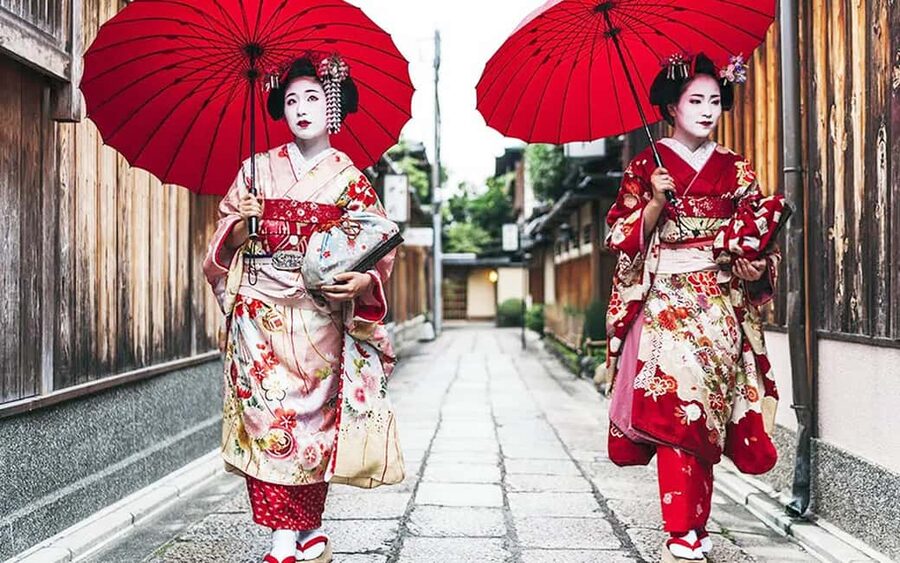
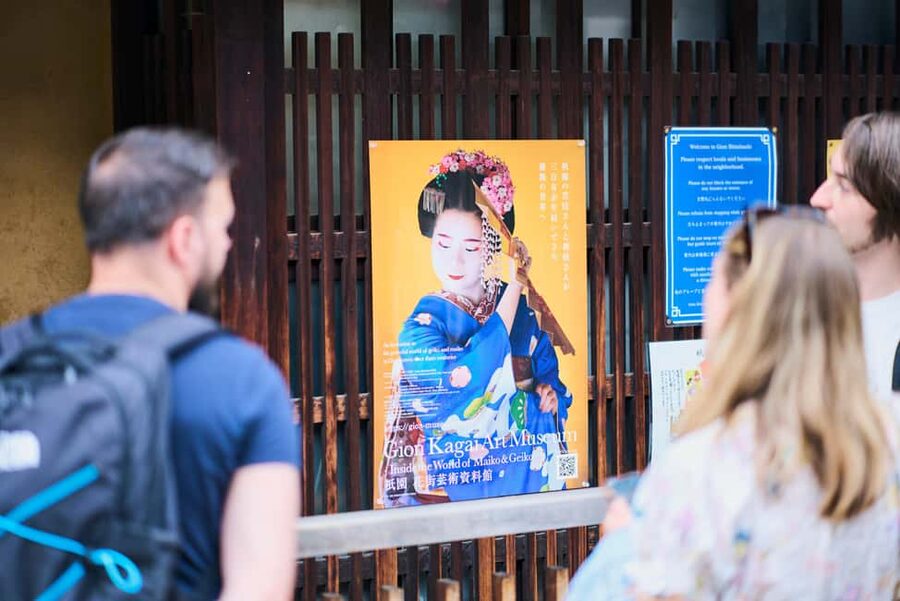
This is the geisha district heart of the experience, and it is where your chance to spot a geisha is most relevant. You finish at Hanamikoji Street, and the guide explains what makes geisha training so strict and structured, plus how graceful dance performance fits into the cultural work behind the scenes. You also get insight into the craftsmanship behind kimonos and hairstyles.
A key point here: your best shot at seeing a geisha is not aggressive staring. It is quiet awareness. Keep moving with the group, look for movement rather than posing people, and respect privacy. If someone passes and you catch a glimpse, it counts. This is about the cultural experience, not turning it into a photo contest.
How to maximize your odds of spotting a geisha (without being weird)
Let’s be honest, you came for a taste of the geisha world, and a sighting is part of the appeal. But you will improve your odds by using the guide’s route and your own behavior.
Here is what helps:
- Stay calm and observant at the end near Hanamikoji-dori rather than trying to dart around for the best angle
- Keep your flash off. Flash is not allowed inside temples, and using it aggressively anywhere is a good way to shut down good manners
- Let the guide lead your timing. The walk is planned so you arrive at places in a way that makes sense for the neighborhood’s flow
- If you see a geisha or maiko, give them space. A respectful pause is better than crowding the sidewalk
The tour also sets expectations around training and performance. That makes what you might see feel more meaningful. You are not just spotting a costume. You are seeing the result of a long, disciplined tradition.
Guide quality is the real differentiator in this 2-hour walk
For a short tour, the guide impact is huge. This one stands out because the English speaking local guide does more than read facts. You are walking, asking questions, and getting context at each stop.
The names in the guide feedback give you clues about what to look for. Guides like Wajid, Oliver, Ukyo, Uta, and Alex are repeatedly described as engaging, funny, and strong at historical context. Some guides even help you after the tour with restaurant recommendations, which is great if you do not want to guess what to eat in a neighborhood that has plenty of choices.
I also love the practical tone. A guide who waits for everyone to catch up, like Noa is described as doing, makes a huge difference on a tight schedule. You get the experience without sprinting to keep up.
Timing, weather, and what to pack for a smooth night
The duration is 2 hours, so the tour is not meant to be slow and dreamy. It is paced to hit multiple highlights without burning your evening.
Weather matters too. The tour takes place even in the rain. Bring an umbrella or a raincoat. Rain can actually improve the mood, but only if you are prepared.
What to bring:
- Comfortable shoes
- Sunscreen (yes, even in evenings, Kyoto sun can sneak up)
- Water, because you will be walking and stopping
Also remember the photography rule: flash photography is not permitted inside temples. If you want photos, plan for normal lighting and steadier shots.
Price and value: is $23 worth it?
At $23 per person for a 2-hour guided walk, the value comes from three things.
First, you are getting an English speaking local guide who connects what you see with why it matters. In places like Gion, the difference between casual wandering and a guided route is the difference between looking and understanding.
Second, the tour is dense. Within a couple hours you cover multiple shrines and old streets, plus the scenic start at Shirakawa Canal and the finish at Hanamikoji-dori. That is a lot of structure for a short time.
Third, you get a shot at the geisha culture side of Kyoto, including learning about training and performance, not just staring at the district. The cost is not just for walking. It is for the cultural translation that makes the whole thing click.
If you are visiting Kyoto for the first time and want a fast orientation to Gion’s layout and traditions, this is a smart use of time.
Who should book this tour, and who should skip it
This tour is a good fit if you:
- Want a short, guided introduction to Gion and geisha district culture
- Prefer walking with context rather than only taking photos
- Enjoy shrines and old Kyoto streets as part of the story, not just as scenery
- Like night experiences that feel calmer than peak daytime crowds
Skip it if you:
- Use a wheelchair or need mobility assistance. The route is not suitable for mobility impairments and wheelchair users
- Hate walking on stone paths and uneven pavement. Even with a good pace, it is still a walking tour
If you are traveling with kids, you might find the pacing works, since some guides have been described as doing well with younger travelers. Still, comfort with walking is key.
Should you book the Kyoto Gion Geisha Culture Tour?
I think you should book this tour if you want a guided night walk that connects the scenery to culture fast. The combo of Shirakawa Canal, multiple shrines like Tatsumi-jinja and Yasaka, and ending at Hanamikoji-dori is a strong flow for a 2-hour window.
Book it especially if geisha spotting is on your must-do list. Is it guaranteed? No. But the route and the timing are built to maximize your chance, and the cultural education makes even a brief glimpse feel rewarding.
FAQ
Where do I meet for the tour?
Meet at マクドナルド 四条大橋店 (Macdonald Shijo Ohashi store). The guide will be holding a sign that says Local Guide Stars on the side of the restaurant.
How long is the Kyoto Gion Hidden Gems and Geisha Culture Tour?
The tour lasts 2 hours.
Is the tour guided in English?
Yes, it is an English speaking live tour guide.
Can I take photos during the tour?
Photography is allowed, but flash photography is not permitted inside temples.
What should I bring, and does the tour run in bad weather?
Wear comfortable shoes and bring water and sunscreen. The tour runs even in the rain, so bring an umbrella or raincoat.
Is this tour suitable for wheelchair users or mobility impairments?
No. It is not suitable for people with mobility impairments or wheelchair users.
Latest write-ups near Kyoto
- Kyoto: Nishiki Market Tour with a Local Foodie & Tastings★ 4.5 · 67 reviews
- Kyoto Kimono Rental mimosa |Kimono/Yukata Rental Couple Plan★ 4.8 · 67 reviews
- Kyoto: Traditional Kimono Fabric Handicrafts Workshop★ 5.0 · 67 reviews
- Kyoto Tea Ceremony and Samurai Photo Session★ 5.0 · 70 reviews
- Kyoto: Replica food making experience★ 4.8 · 70 reviews
- Kyoto: Kinkakuji, Golden Pavilion Guided Tour★ 4.7 · 71 reviews
- Private departure transfer from Kyoto city to Kansai International airport★ 5.0 · 72 reviews
- Uji: Green Tea Tour with Byodoin and Koshoji Temple Visits★ 4.8 · 72 reviews
Geisha & Gion Tours, compared.
Kyoto Geisha Walking Tour: Gion District & Hidden Gems
Read our review →
Gion Magical Night Walking Tour with Geisha Trivia
Read our review →
Gion Geisha District Walking Tour – Stories of Geisha
Read our review →
Best of Kyoto: Gion, Geisha, Pagodas & Cobblestones
Read our review →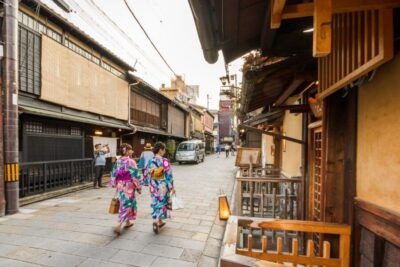
Kyoto Night Foodie Tour in Gion (9+ dishes + 6 Sake tastings)
Read our review →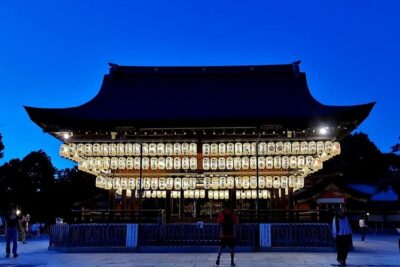
Kyoto Gion Geisha District Walking Tour – The Stories of Geisha
Read our review →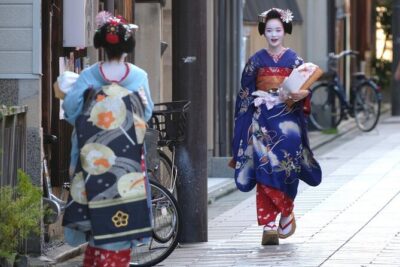
Kyoto Gion: 2-Hour Geisha Culture & History Walking Tour
Read our review →Browse the lists this tour appears in