
Reviewed · ZEN & MEDITATION
Kyoto: Zen Garden, Zen Mind (Private)
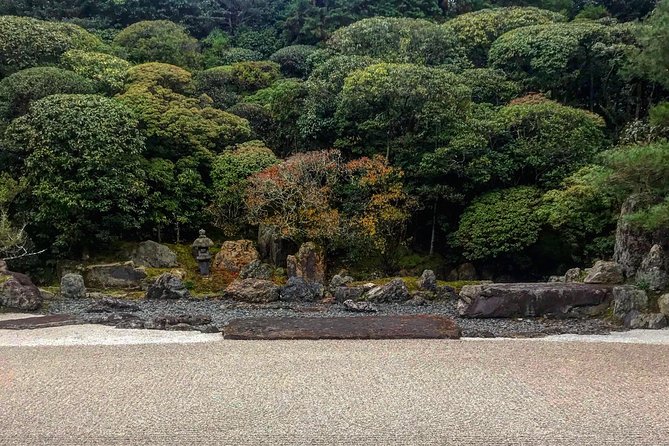
Kyoto’s Zen gardens can look pretty, but this private tour teaches you how they work, and why people take them seriously. I like the idea of having Andrew guide you with a designer’s eye, and I also love that you visit Nanzen-ji and its sub-temples on foot so you are not just checking boxes.
One thing to plan for: temple entrance fees are not included in the tour price, and the total listed for the three temple stops is ¥1,600 per person. If you budget that up front, the whole experience feels smoother.
Key things to know before you go
- Private group up to 4 means you can ask questions and move at a pace that fits your group.
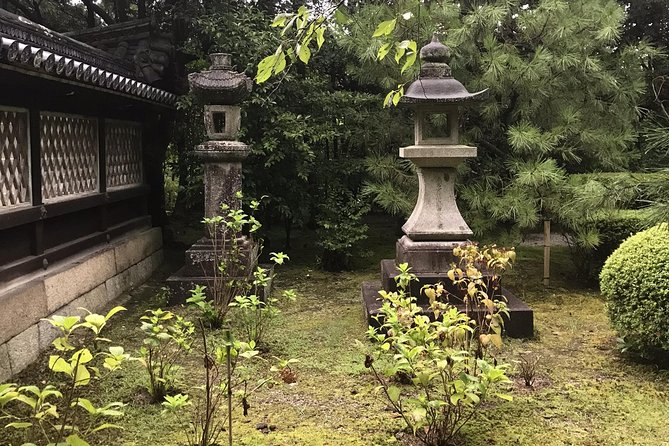
- Three Nanzen-ji garden stops in one walk: Konchi-in, Tenjuan Temple, and Nanzen-ji.
- Explained by a designer with a Master’s in landscape architecture and 15 years’ experience.
- Designed for walking areas cars and buses miss, so you get a more local feel.
- Mobile ticket helps you stay light and ready.
- Good weather matters, since this is a walking tour experience.
Why this Kyoto Zen garden tour feels different than a normal temple visit
Kyoto can be loud, even at holy places. It is full of visitors, cameras, and quick photo stops that do not leave much room for thought. This tour shifts the focus. You do not just look at gardens. You learn how they are built to guide the mind.
The big difference is the guide’s angle. You meet Andrew, a designer with a Master’s in landscape architecture and 15 years of experience. That matters because Zen garden design is not random beauty. It is structured choices: how lines guide your eyes, how rocks and sand create balance, how empty space plays a role, and how the scene is meant to support quiet thinking.
I also like the format. This is a private group tour, so you are not stuck listening through a crowd. If you want to slow down and stare at patterns for a minute, you can. If you want to ask a question about Buddhist ideas, you are not fighting for attention.
The itinerary is focused too. Instead of sprinting across Kyoto, you spend your time in the Nanzen-ji world, including two sub-temples. That gives you continuity. By the end, the gardens start to feel like part of one bigger lesson rather than separate sights.
More Zen & Meditation in Kyoto
- Kyoto Zen Meditation & Garden Tour at a Zen Temple with Lunch
★ 5.0 · 441 reviews - Kyoto: Zen Experience in a Hidden Temple
★ 5.0 · 437 reviews - Kyoto: Tea Ceremony Meditation – Make Matcha with Tea Master
★ 4.8 · 406 reviews
The route from Keage Station to Nanzen-ji, and why walking is the point
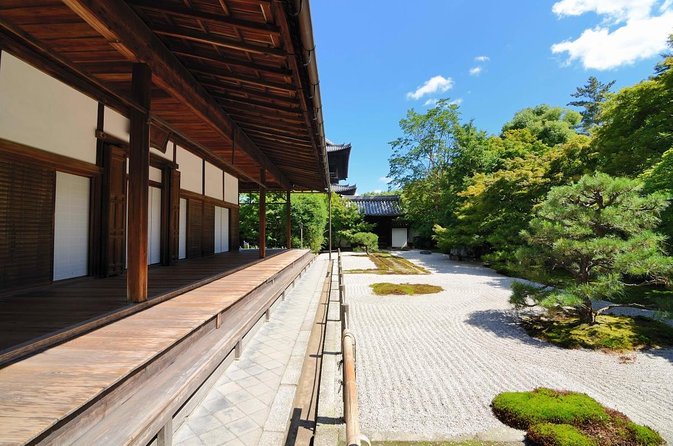
The meeting point is near Keage Station, at Higashikomonozacho in Kyoto’s Higashiyama Ward. You start there and end in front of Nanzen-ji, at Nanzenji Fukuchicho in Sakyo Ward.
That start-to-finish setup is practical for two reasons. First, it keeps the day simple. You are not juggling multiple transit changes just to reach a garden. Second, the tour is built around what you can reach on foot. The description is clear that walking lets you get to places cars and buses cannot.
In real life, that means you will spend time moving through older Kyoto lanes and temple-side approaches instead of only stepping off a bus, taking two pictures, and leaving. You may notice how the atmosphere changes as you get closer to the temple compound. Even when Kyoto is busy, the pace here feels more like a calm walk with stops rather than a guided march.
The duration is about 3 hours 30 minutes. That is long enough to learn without feeling like a full-day commitment. It is also short enough that you can pair it with a morning or afternoon plan elsewhere in Kyoto.
Konchi-in: the quieter start inside the Nanzen-ji network
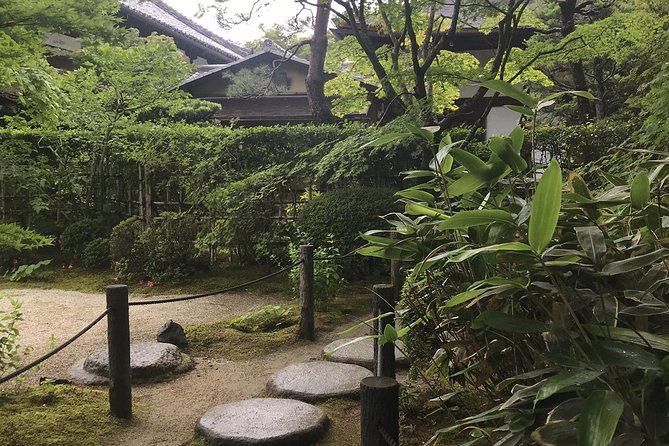
Stop one is Konchi-in, a sub-temple of Nanzen-ji. You get about one hour here, and the temple entrance component is listed as included for the stop.
Konchi-in matters because it sets the lens. When a tour jumps straight to the “most famous” temple, you often end up treating everything like a postcard. Starting with a sub-temple gives you room to understand the design ideas first, then see how those ideas scale up.
In this kind of garden lesson, the guide’s job is to help you read what you are seeing. Think about it like learning to read a map. At first, it looks like lines and shapes. After someone explains the logic, those same stones and gravel patterns turn into meaning.
From what Andrew shares, the focus is on how Zen garden design supports meditation and reflection. You are not just learning facts. You are learning how the space is supposed to affect you.
Potential consideration: since you are starting at a sub-temple, the visuals might feel more subtle than you expect if you imagine dramatic rock garden scenes only. That is not a flaw. It is part of the rhythm. If you go in ready to look slowly, Konchi-in usually lands well.
Tenjuan Temple: where rock garden thinking becomes practical
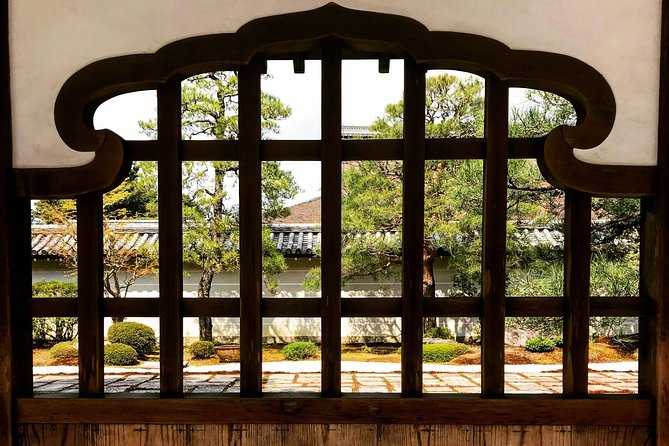
Stop two is Tenjuan Temple, another sub-temple of Nanzen-ji, also with about one hour.
Tenjuan is where you should start noticing patterns. Reviews highlight Andrew’s focus on rock garden principles and on how design ties to Buddhist and Shinto traditions. That is a useful combination in Kyoto. These belief systems show up side by side in everyday life and in temple culture.
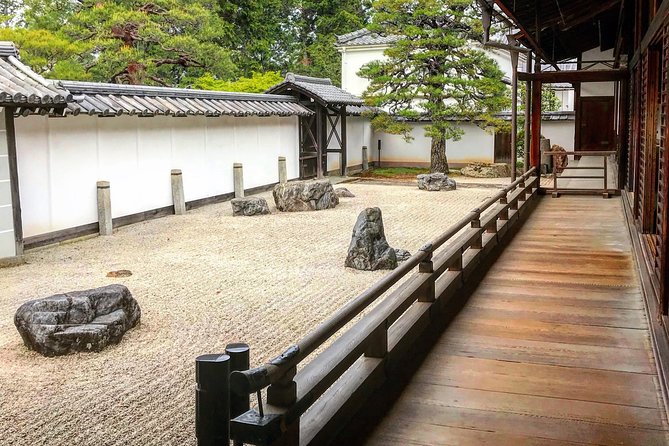
So what should you expect during this hour? You can expect explanation that connects design choices to ideas. You might be shown how specific arrangements help create a sense of order, how perspective affects what you see from different angles, and how the garden acts like a mental tool. Instead of treating the garden like a landscape painting, you start treating it like a way to slow the mind down.
One reason I think this stop is strong for value is simple: learning the same design language at multiple scales. You see one sub-temple first, then another, then the head temple. That repetition helps the concepts stick.
Small heads-up: this tour is described as a walking experience where some areas can be hard to reach any other way. That is usually a plus for authenticity, but it also means you should wear shoes you trust for uneven temple ground.
A change of pace from Kyoto:
- PERFECT KYOTO 1-Day Bus Tour
★ 5.0 · 13,518 reviews - Kyoto: Fushimi Inari, Kinkakuji, Bamboo Grove 1 Day Bus Tour
★ 4.8 · 4,316 reviews - Kyoto: Tea Ceremony in a Traditional Tea House in Kiyomizu
★ 4.9 · 3,519 reviews - Kyoto Geisha Walking Tour: Gion District & Hidden Gems
★ 4.7 · 3,273 reviews
Nanzen-ji itself: the head temple, where everything clicks

Stop three is Nanzen-ji itself, the head temple of the Nanzen-ji Zen Monastery, again with about one hour.
This is where you likely feel the payoff. After Konchi-in and Tenjuan, Nanzen-ji is not just another garden stop. You are seeing the “main lesson” with the context you earned earlier.
Andrew’s explanations are the kind that change how you look. Multiple people describe that he connects design to Zen philosophy, Japanese history, and everyday life in Kyoto. That combination is exactly what makes the tour more than a gardening lecture.
Here is what you can do to get the most out of the final hour. Pause often. Look at the space as a whole, then look again at specific elements. Ask yourself what your eyes want to land on first, and then ask why. The guide’s job is to offer you a framework, but your attention is the final ingredient.
If you are the kind of person who likes “why” questions more than “what is this” questions, you will probably enjoy Nanzen-ji on this route. People also mention that the experience can feel quieter and more peaceful than the most crowded sections of Kyoto. The focus on sub-temples often helps with that calm.
What you learn about Zen gardens, beyond the pretty picture
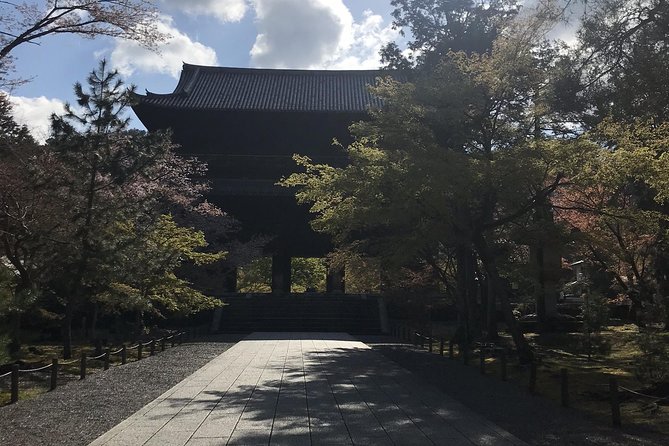
Zen gardens can feel mysterious until someone gives you a handle. The best part of this tour is that you are not left with vague impressions.
From the way Andrew is described, he ties the visual design to spiritual principles. That means you are not only learning design terminology. You are learning what those choices are meant to support. The tour also brings in basics about how Buddhism and Shinto traditions show up in Kyoto, which helps you understand what you are seeing even if you do not consider yourself religious.
You might also hear practical explanations about rock gardens. People mention that he has a strong grasp of how rock and gravel are constructed and what the design is trying to suggest. Even if you are not a gardening nerd, that kind of explanation changes the garden from decoration into communication.
One more thing I appreciate: the tour is framed for nature lovers and people interested in Japanese spirituality. That does not mean you need to be either. It means the tour handles both sides without pretending they are the same thing. You can enjoy the aesthetics and still get the cultural and spiritual meaning.
If you are curious about contemporary Kyoto too, this kind of guide often connects the past to today in a grounded way. In one comment, people highlight that Andrew is an expatriate who has spent close to a decade in Japan, so the context feels lived-in rather than purely textbook.
Price and value: $380 per group, plus the yen for temple entrances
The price is $380 per group, up to 4 people. On paper, that can sound steep until you compare how much time a private guide gives you and how focused the itinerary is.
You are getting about 3 hours 30 minutes of walking time and guided narration from a designer with 15 years of experience. It is not just “show up, see temple, move on.” The tour is built around explanation of design principles and the meaning behind Zen gardens.
Also, the tour uses a mobile ticket, which saves you hassle.
One clear budget item is the temple entrance fees. The tour listing states the entrance fee total for the three temples is ¥1,600 per person. The stop descriptions also say admission tickets are included at each stop, so it is worth double-checking how the entrance fee is handled at booking. Either way, having yen set aside is smart.
If you are traveling as a couple or a small family, the per-person cost can drop quickly because the group price stays the same up to four. If you are traveling solo, you might consider this only if you really want private attention and deep explanations rather than a cheaper group tour.
Finally, it is booked on average 53 days in advance. Kyoto has peak seasons, and Zen garden tours with a specialized guide can fill up. If you have fixed dates, booking earlier is the low-stress move.
Timing, what to bring, and how to make the most of the quiet
This tour is weather dependent because it is a walking experience. That is one reason to think about your plan in advance. If you are flexible, having a backup day for temples can save you stress.
What should you bring?
- Comfortable walking shoes for temple ground
- A light layer, since Kyoto weather can shift
- A small amount of cash for temple entrance fees, since ¥1,600 per person is listed
How should you behave to get the most? Slow down. This tour is not built for rapid eye movement. Sit or stand when asked, and let your gaze linger. If you like photography, take your pictures, then put the camera away for the explanation. The tour is about understanding, not just capturing.
Also, because this is private, you can usually guide the conversation. If you have specific questions about Buddhism, Shinto basics, or garden symbolism, asking them early can shape the rest of the tour.
If your group has different interests, this guide can tailor the tour. People describe Andrew as friendly and able to customize to what you care about, and in at least one case he stayed late to make sure needs were met. That flexibility is a real value-add for a private experience.
Should you book this Kyoto Zen Garden, Zen Mind private tour?
Book it if you want Kyoto to make sense in your head, not just look good on your phone. This tour is ideal when you care about garden design principles, Japanese spirituality, and how cultural ideas show up in everyday places.
You should also book it if you enjoy learning from someone who can explain the why behind the what. Andrew’s explanations are repeatedly described as thoughtful, and the focus on Zen philosophy and garden construction gives you something to carry home.
Skip or reconsider if you are mainly after a fast hit of famous landmarks with zero explanation time. The tour earns its value by slowing you down and teaching you how to look. If that sounds like work, you might prefer a lighter sightseeing plan.
If you are torn, here is my simple decision rule: if you want one Kyoto experience that feels like a guided understanding session, this is a strong choice. If you want only checklist sightseeing, pick a different option.
FAQ
How long is the Kyoto Zen Garden, Zen Mind private tour?
The tour is about 3 hours 30 minutes.
Is this tour private?
Yes. It is a private tour, and only your group participates. The group size is up to 4 people.
Where do I meet the guide and where does the tour end?
You start near Keage Sta. Higashikomonozacho, Higashiyama Ward, Kyoto. The tour ends in front of Nanzenji at Nanzenji Fukuchicho, Sakyo Ward, Kyoto.
What ticket do I receive, and do I need anything printed?
You get a mobile ticket.
Are entrance fees included for Konchi-in, Tenjuan Temple, and Nanzen-ji?
The stop details list admission tickets as included, but the tour info also lists temple entrance fees as not included, with a total of ¥1,600 per person for the three temple stops. Plan on having yen ready and confirm how entrance fees are handled when you book.
What happens if the weather is bad?
This experience requires good weather. If it is canceled due to poor weather, you will be offered a different date or a full refund.
Latest write-ups near Kyoto
- Kyoto Tea Ceremony and Samurai Photo Session★ 5.0 · 70 reviews
- Kyoto: Replica food making experience★ 4.8 · 70 reviews
- Kyoto: Kinkakuji, Golden Pavilion Guided Tour★ 4.7 · 71 reviews
- Private departure transfer from Kyoto city to Kansai International airport★ 5.0 · 72 reviews
- Uji: Green Tea Tour with Byodoin and Koshoji Temple Visits★ 4.8 · 72 reviews
- Kyoto: Geisha Dinner & Gion Cultural Walk★ 5.0 · 73 reviews
- Kyoto: Toei Kyoto Studio Park Admission Ticket★ 4.1 · 73 reviews
- Kimono and Yukata Experience in Kyoto★ 4.5 · 73 reviews
Zen & Meditation, compared.
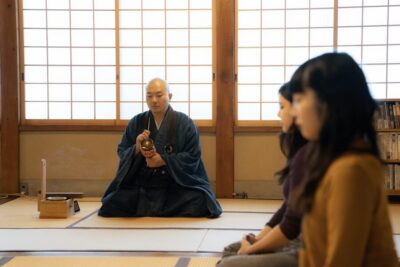
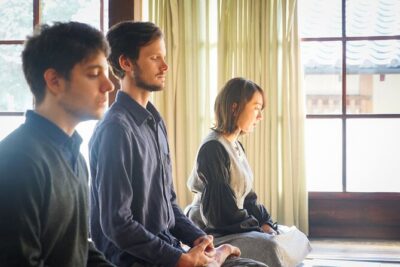
Kyoto Zen Meditation & Garden Tour at a Zen Temple with Lunch
Read our review →

Tea Ceremony Meditation – Make Matcha with Tea Master
Read our review →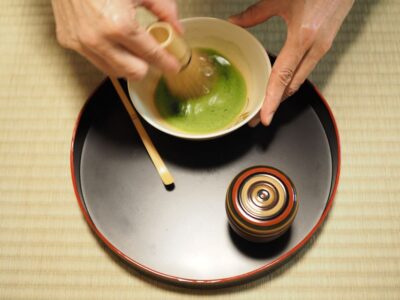
Tokyo Zen Meditation at Private Temple with Monk
Read our review →
4.5-Hour Kyoto Bike Tour with Lunch and UNESCO Zen Temples
Read our review →Browse the lists this tour appears in