
Reviewed · ZEN & MEDITATION
Learning Zen of Japanese Calligraphy in kimono near Osaka Castle
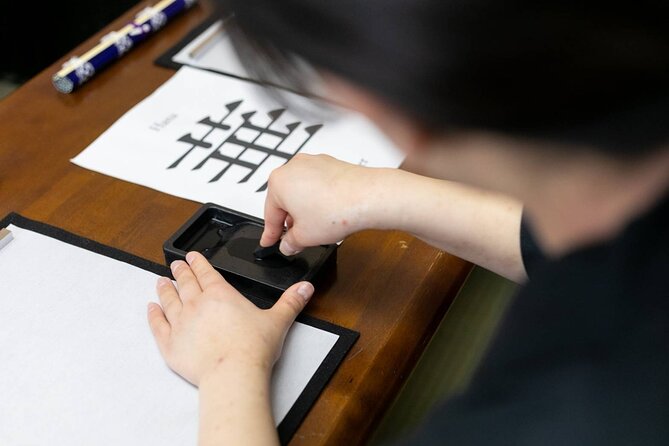
Learning Japanese calligraphy, or shodo, in a kimono near Osaka Castle is interesting because it turns a famous symbol system into something physical and slow, like learning the choreography of writing. You are not just watching calligraphy from a distance, you are making it with your own hands.
I like two things a lot. First, the class is a small-group format (up to 10 people) with patient help, so you can keep up even if you have never held a brush. Second, you leave with souvenirs beyond a single practice sheet, including digital photos sent to your email and your name translated into kanji.
One consideration: you will dress in traditional clothing and practice with care, so it may not be ideal if you have back problems or heart conditions. It is also not stroller accessible, and the workshop is about an hour, so you will need to stay focused the whole time.
Key takeaways before you go
- Kimono first, then brush: you change clothes before you write, so the experience starts with the look and feel.
- Choose your own kanji: you pick a character to challenge yourself, then learn the stroke order.
- Real technique, not just decoration: you practice key movements like tome, hane, and harai.
- A name-based surprise: your foreign name is written using the kanji choices from the class on a wooden tag.
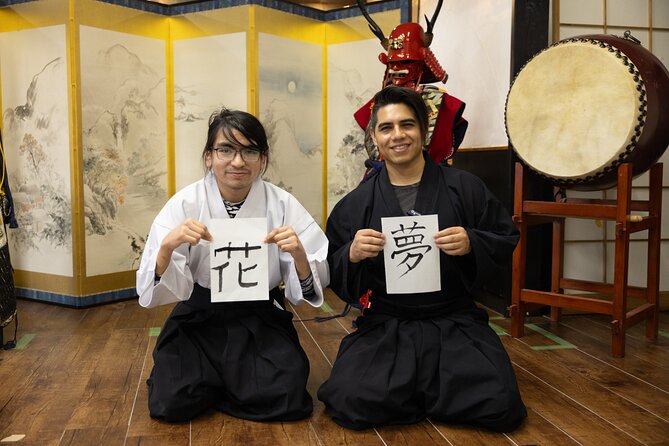
- Photos that arrive digitally: you pose with your kimono and work, and you get the images by email.
- Small group size: with a maximum of 10 people, you get hands-on support without feeling rushed.
Shodo in Osaka Castle Park, where the setting does half the work
This is the kind of cultural activity that makes Osaka Castle feel less like a photo stop and more like the start of a calmer day. After walking around the castle area, it is nice to switch gears to something that rewards attention, posture, and repetition.
The big win is that the class is not presented as a test. You start with basic brush handling and technique, then you build toward a final piece. The result is that even beginners feel productive in just about an hour, and kids can join too since the class is designed for all skill levels.
It also helps that the workshop is located near the Osaka Castle Park area, described as about a one-minute walk from Osaka Castle Park Station. That matters. If you are juggling train time and castle crowds, you do not want a long trek after you already did the walking.
More Calligraphy Classes in Osaka
- Osaka: Private Japanese Calligraphy Experience
★ 5.0 · 66 reviews - Calligraphy Workshop in Namba, Dotonbori
★ 5.0 · 57 reviews - Osaka: Private Tea Ceremony and Calligraphy Experience
★ 5.0 · 50 reviews
Before your brush moves: dressing in kimono and getting comfortable on tatami
Your first step is practical, you change into traditional Japanese clothing like a kimono (and sometimes hakama). The class moves in order, so you do not jump straight to writing. You get fitted first, then settle in.
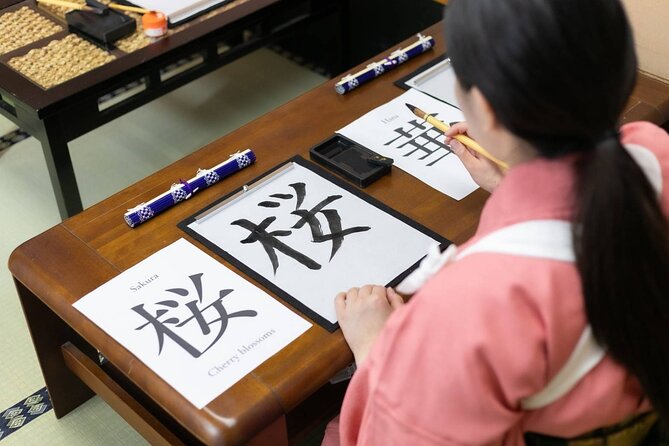
A common detail here is the seating setup. People describe being on tatami mats, which makes the atmosphere feel more formal and grounded. That also explains why the class feels different from a typical craft workshop. You are stepping into a specific way of being, not just putting on costumes.
Two tips I would follow if I were planning your day:
- Use the restroom before dressing. Traditional clothing can slow things down.
- Plan for touch time and waiting time during fitting. Kimono fitting can take a bit, and you will want to stay relaxed so you can enjoy the writing part.
Also, check the workshop rules on personal photos. Smartphone photography is allowed, but the guidance says no selfies and no photographing other guests, and you should avoid tripods or video recording that could disturb the class.
The mindset lesson: what shodo means when you are holding the brush
One of the more interesting parts is that you start with mindset and basics. You learn the difference between calligraphy as decorative writing overseas and Japanese shodo. That topic might sound abstract until you are actually practicing strokes, because the goal shifts.
Instead of copying a look, you learn to control the brush movement. You practice holding the brush properly and using the tools in the way shodo expects. That is where the Zen idea comes in, even if you do not expect a silent monastery vibe. The repetition turns into focus.
In plain terms, you are training three things at once:
- how the brush tip contacts the surface
- how much pressure you use
- how the stroke ends cleanly, not with a sloppy lift
If you like structured instructions, this part is for you. If you want only a quick creative activity, you might be surprised at how much time goes into technique. But that is also why the final piece usually looks surprisingly good for a beginner.
Choosing your kanji: make it personal, then learn it the correct way
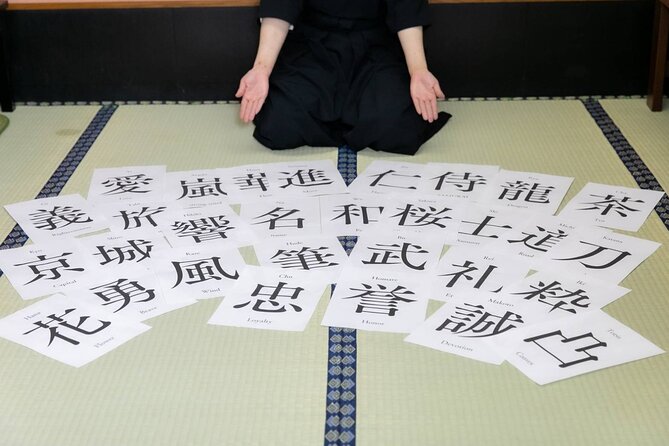
Here is a feature that makes this class feel less generic. You choose your own kanji to practice. You can select a character that feels meaningful to you or challenging in a fun way.
Then you learn stroke order for that character. Stroke order is one of those details that feels small until you try to write without it. With kanji, a character can look correct to the eye while still being wrong in how it is built. Learning stroke order means your final result is closer to what you would see in a traditional context.
You also get your name translated into kanji. The class includes a surprise: the teacher writes foreign names on wooden tags using the kanji characters the participants choose. That is a great souvenir because it is personal, and it is tied directly to what you practiced.
One more useful note: kanji are often described as difficult, and the class acknowledges that each character has different meanings and complexity. You are not just learning shapes, you are connecting characters to sense and structure.
More Castle Tours in Osaka
- Osaka Castle: Museum and Tower Entry Ticket
★ 4.5 · 2,380 reviews - Ultimate Osaka Walking Tour: Castle, Dotonbori & Hidden Gems
★ 5.0 · 862 reviews - Osaka Castle Walking Tour and Castle Tower Admission
★ 5.0 · 561 reviews - From Osaka: Himeji Castle, Arima Onsen & Mt. Rokko Day Tour
★ 4.6 · 339 reviews
The core strokes: tome, hane, and harai in real practice
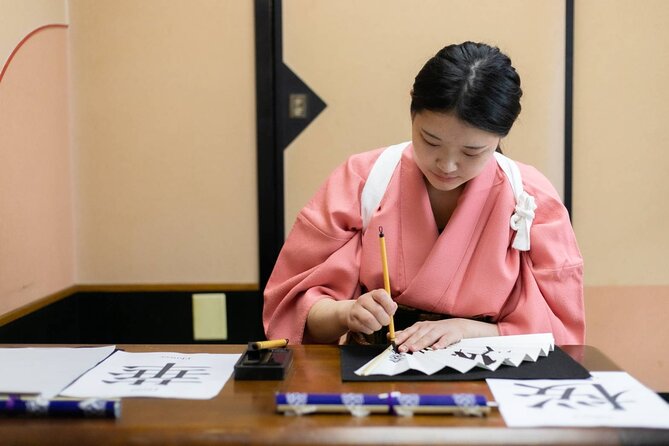
The heart of the technique lesson is learning fundamental brush movements. The class highlights three basic stroke concepts:
- tome
- hane
- harai
You do not just hear the names. You practice them, and your teacher watches and helps. Reviews repeatedly point out the patience of the instructors, especially for first-time calligraphers. That matters because brush technique is one of those skills you cannot fully teach yourself from a diagram.
If you want to know what you are doing, think of each term as a way of ending or sweeping a stroke:
- tome is about the stop, the controlled pause
- hane is about a flick or a change in direction with intention
- harai is about the sweep, the way a stroke trails off cleanly
When you later write your final piece, these concepts guide your hand. That is why your result usually looks more deliberate than a casual attempt.
Your final draft, then what you take home
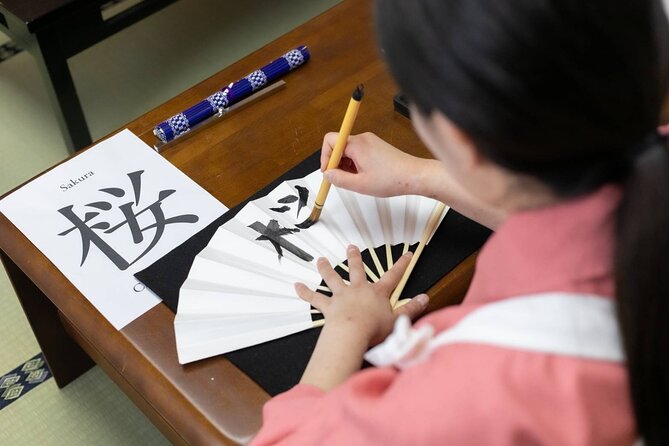
After you practice your chosen character and learn the basics, you write a final draft while keeping what you learned in mind. People describe receiving a final piece and also leaving with practice pieces in a bag.
Some classes like this set the output on items such as fans or scroll-style pieces, and you may see fans mentioned in the same context. The key idea for you is not the exact format, it is that you finish something you can keep, not just practice and wipe your hands.
You also get that wooden tag with your name, and it is directly connected to the kanji the class used for your name translation.
This is one of the most praised aspects for a reason. A lot of kimono activities stop at a photo. Here, the calligraphy is part of the memory, and you can keep it on your desk later without needing to remember how you posed for the shot.
Photo time: kimono portraits plus emailed digital photos
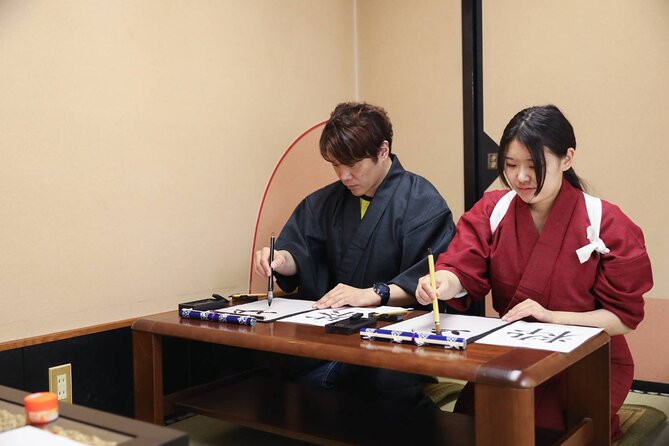
Photo shoots are built into the experience. The flow ends with capturing your kimono outfit and your artwork in photos.
Two photo-related perks stand out from the experience details and feedback:
- You get images sent to your designated email address, so you do not have to scramble for file transfers.
- The hosts take pictures for you during the session.
You should still respect the rules: no selfies, no photos of other guests, and avoid fixed tripods or recording videos. Smartphone personal photography is permitted when it does not interfere.
If you are a “take my own photos” person, I recommend you also let them photograph you once. Kimono fit looks best with guidance from someone who understands the best angles, and you will likely get better results from coordinated shots than from a rushed selfie.
Language support, and how the class stays friendly for beginners
The default language is English. The class also offers other languages by inquiry, including Italian, Spanish, French, Chinese, Thai, and Indonesian, but it notes limited staff availability, so you should request early.
There is also translator support described as English-Japanese or Chinese-Japanese, which is helpful if you want your questions answered without hand gestures.
One of the biggest reasons people enjoy this class is the tone. The experience is designed for all skill levels. That shows up in the way the teacher helps with holding the brush, stroke order, and technique. Beginners are not treated like they are behind.
For parents, it matters that kids can participate. The class does not require prior calligraphy knowledge, just the willingness to focus for an hour.
Price and value: what $43.59 buys you in Osaka
At $43.59 per person for about 1 hour, the value is strong because you get multiple components that usually cost extra elsewhere:
- a professional shodo lesson from introductory to more technical points
- traditional attire like kimono and possibly hakama
- your artwork as a take-home souvenir
- digital photo delivery by email
- your name translated into kanji and written on a wooden tag
Yes, transportation is not included, and you might want to add any optional add-ons. There is an optional hair accessory called wagami (collected hair plus kanzashi) listed at ¥3,300 per person.
But even with that option considered, the base experience is still good value if you want a “do, not just see” cultural activity. A one-hour class that ends with both a skill and tangible keepsakes is the sweet spot for shorter Osaka days.
Practical tips so the hour feels smooth
A few real-world considerations based on the experience details:
- Dress for comfort before you go in. Traditional clothing can feel warm, and the venue warns that sweating can happen while wearing hakama or armor and practicing swordsmanship in related activities. Even if calligraphy is your main focus, plan for heat.
- The location is near public transportation, but it is described as a small storefront. If you are using maps, allow a few extra minutes to spot it.
- You will sign a liability waiver before the experience. It is a normal step for activities with props and close handling.
- If you are late by more than 30 minutes, entry can be refused. That is a rule you should take seriously in Japan, especially for time-based sessions.
Also, this is not stroller accessible, and it is not recommended for people with back problems or heart conditions. If any of those apply, consider booking something with less physical setup.
Finally, service animals are allowed.
Who should book this shodo and kimono class
Book it if you want:
- an Osaka Castle area activity that is close and time-efficient
- hands-on Japanese culture that teaches you a real technique
- a beginner-friendly class that ends with a finished keepsake and photos
Skip it if:
- you need stroller access
- you have health concerns related to bending, sitting on tatami, or wearing structured clothing
- you only want sightseeing with minimal instruction time
This class is best for couples, solo travelers, and families with kids who are okay spending an hour focusing on one craft. If you like making something with your hands and then keeping it, you will likely feel happy leaving the studio.
Should you book this learning Zen of Japanese calligraphy?
I think this is a smart booking if you care about authentic process, not just a costume. The combination of kimono dressing, personalized kanji selection, core stroke practice with tome, hane, and harai, and the surprise wooden tag makes the experience feel complete.
If you only want photos and zero technique, you may find it takes itself more seriously than you expected. But if you are open to learning, even at beginner level, you will come away with a story you can actually show, plus a skill you can keep practicing later.
More Kimono Experiences in Osaka
- Osaka: Sumo Show & Experience w/ Optional Kimono & Hot Pot
★ 4.5 · 609 reviews - Osaka: Kimono or Yukata Rental &Photos Service Options
★ 4.9 · 25 reviews - Kimono Tea Ceremony at Kyoto Maikoya, NISHIKI
★ 5.0 · 911 reviews - Kyoto: Kimono Rental with Hairstyling and Accessories
★ 4.8 · 653 reviews
More Zen & Meditation in Osaka
- Tokyo: Zen Meditation at a Private Temple with a Monk
★ 5.0 · 510 reviews - Kyoto Zen Meditation & Garden Tour at a Zen Temple with Lunch
★ 5.0 · 441 reviews - Kyoto: Zen Experience in a Hidden Temple
★ 5.0 · 437 reviews - Kyoto: Tea Ceremony Meditation – Make Matcha with Tea Master
★ 4.8 · 406 reviews
Latest write-ups near Osaka
- PRIVATE 6hr, Food tour from Osaka Castle, Kuromon, Dotonbori.★ 5.0 · 68 reviews
- 90 min Shared Handmade Udon Experience★ 5.0 · 70 reviews
- Ramen and Gyoza Cooking Class in Osaka Dotonbori★ 5.0 · 73 reviews
- Osaka: Sushi Making in Spacious Studio (SAME-DAY OK!)★ 5.0 · 75 reviews
- Osaka E-Bike Tour With A Local Guide★ 4.7 · 75 reviews
- 1.5〜2 Hours Traditional Kintsugi Work Shop in Namba Osaka★ 5.0 · 75 reviews
- Retro Osaka Street Food Tour: Shinsekai★ 4.5 · 77 reviews
- Osaka: Osaka Castle Guided Tour with Local Guide★ 4.7 · 78 reviews
Zen & Meditation, compared.
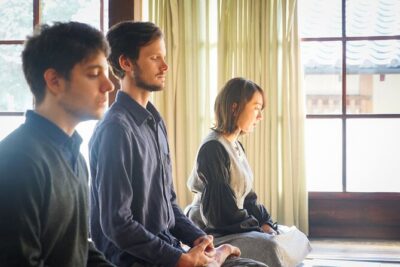
Kyoto Zen Meditation & Garden Tour at a Zen Temple with Lunch
Read our review →
Tea Ceremony Meditation – Make Matcha with Tea Master
Read our review →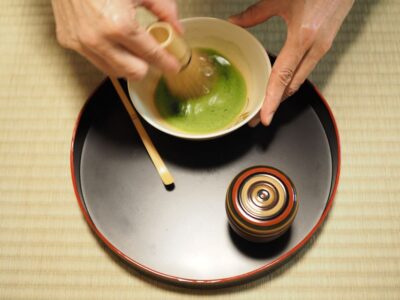
Tokyo Zen Meditation at Private Temple with Monk
Read our review →
Browse the lists this tour appears in