
Reviewed · SUSHI MAKING CLASSES
Osaka: Roll and Authentic Sushi Making Class in Dotonbori
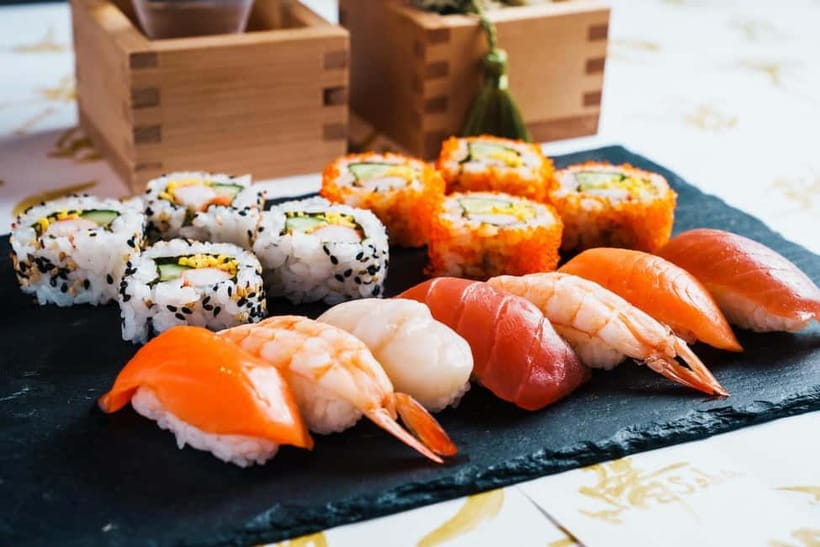
Osaka has no shortage of food experiences, but this sushi class in the Dotonbori and Shinsaibashi area stands out because you leave with two real techniques in your hands, roll sushi and authentic nigiri. The class also mixes in sushi history through an interactive, light quiz, so you are not just copying steps.
I especially like how English-speaking staff teach the details clearly, and how you get to make enough sushi to actually enjoy as a meal, not a few sad bites. Instructors such as Shoki and Hinata and Rika show up in multiple reviews as warm, energetic guides who keep things moving without losing the fun.
One consideration: because the class runs about 100 minutes, the final eating time can feel tight. A few people noted they wanted a bit more time to eat slowly, so plan to enjoy your sushi right as you are finishing the last pieces.
Key things I’d circle before booking
- Two sushi styles: you make roll sushi plus nigiri, then you eat what you make.
- History without the lecture: an interactive quiz keeps sushi origins and rules easy to remember.
- Small-group feel and clean setup: clear instructions, good organization, and a tidy workshop space show up repeatedly.
- English guidance you can rely on: staff members like Shoki, Yui, and Takara are named often for making the steps understandable.
- Dietary options exist: vegan, vegetarian, gluten-free, and halal are listed, with menu changes needing notice in advance.
- Timing can run fast: if you like lingering over food, you may want to mentally switch into eat-as-you-go mode.
Where This Osaka Sushi Class Fits in Your Day
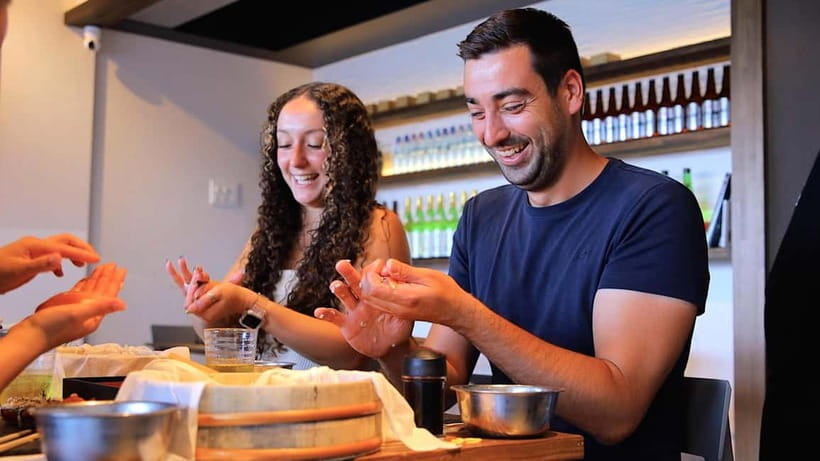
This is a practical class if you want something hands-on in central Osaka, without losing half your day to train transfers or complicated logistics. The meeting point is straightforward: the 3rd floor of the Galleria Acca Building, about a 5-minute walk from Shinsaibashi Station. That matters because Shinsaibashi is one of the easiest hubs to reach, and you can wrap up and keep exploring right after.
The workshop is in the Dotonbori and Shinsaibashi area. That location is a big part of the value. You are learning sushi techniques in the middle of the food street energy of Osaka, so the class feels connected to the city rather than like a detour to an outer neighborhood.
More Sushi Making Classes in Osaka
- Sushi Making Osaka Roll and Authentic Japanese Sushi Class
★ 5.0 · 1,220 reviews - Osaka Sushi Making Experience
★ 5.0 · 400 reviews - Osaka Sushi Making Class – Hands-On Nigiri & Rolls (Same-Day OK)
★ 5.0 · 352 reviews
Finding Galleria Acca Building Near Shinsaibashi
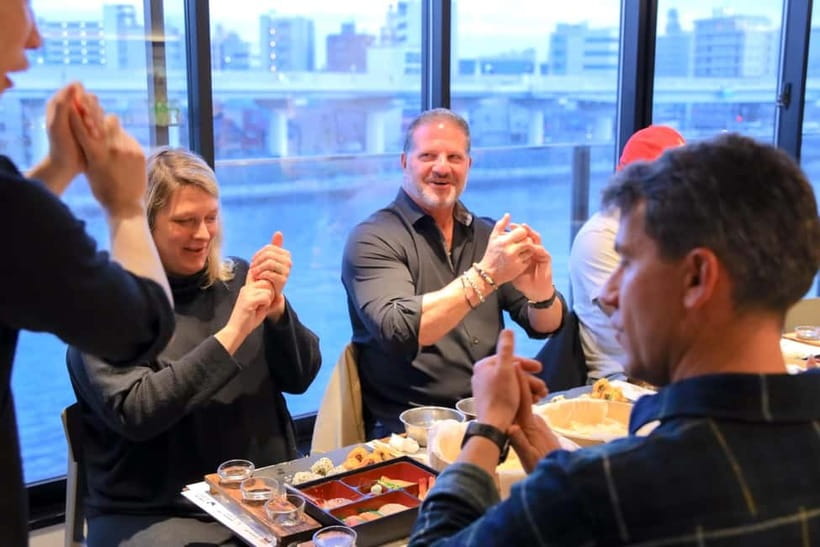
If you have ever shown up for something in a dense Japanese shopping area, you know how easy it is to get turned around. Here, I’d treat the meeting point like a checklist item.
- Meet on the 3rd floor, Galleria Acca Building.
- Plan for a short walk from Shinsaibashi Station (about 5 minutes).
One detail to keep in mind for mobility planning: the building reportedly has an elevator, but it may not reach the exact workshop floor. If you use a wheelchair or need step-free routing, I recommend you plan extra time and bring any questions up when you confirm your reservation, since the listing says wheelchair accessible but the elevator detail may affect the final approach.
The 100-Minute Flow, From Sushi History Quiz to Finished Plates
The most enjoyable classes have a clear rhythm. This one generally moves through three phases: prep and rules, hands-on making, then eating.
1) A sushi history quiz that is actually usable
Before anyone picks up rice or tools, you get context. The class uses an interactive, light quiz format to teach sushi history. Instead of memorizing dates, you learn the why behind the techniques and what makes different types of sushi distinct.
In reviews, instructors are credited for making this part fun, not stiff. Names like Shoki show up with praise for mixing history into the class in a way that sticks. For me, that is key because sushi is not just food. It is method, texture, temperature, and restraint.
A change of pace from Osaka:
- Osaka Go Karting Tour with Funny Costume
★ 5.0 · 2,658 reviews - Osaka Castle: Museum and Tower Entry Ticket
★ 4.5 · 2,380 reviews - Osaka: Shinsekai Food Tour with 13-15 Dishes at 5 Eateries
★ 4.8 · 2,204 reviews - Osaka Food Tour: 13 Dishes at 5 Local Eateries
★ 5.0 · 2,149 reviews
2) Learning roll sushi basics step by step
After the quiz, you move into the practical side. You will learn roll sushi using structured instruction, with demonstrations and then doing it yourself. The staff help you get the right pace, and multiple reviews mention that directions are easy to follow and the environment is clean.
You are not expected to be a kitchen pro. Reviews describe patient teaching, plus the guides encouraging you to get the technique right rather than rushing to finish.
3) Nigiri or authentic sushi style techniques
Then you make another type of sushi, commonly described as nigiri (often paired with maki or roll sushi). Reviews emphasize that you use two different techniques, and the workshop gives enough instruction that you can repeat the process at home later.
That second technique is the “aha” moment for many people. Rolls are forgiving because the shape is guided by the rolling process. Nigiri is more about how you handle rice and topping so the bite feels balanced.
4) Eat your sushi while the experience is still fresh
Once your plates are ready, you get to eat what you made. This is one of the best parts of cooking classes like this because the meal is not separate. It is the payoff and the proof.
The timing note matters here. A few people felt the class ends with the eating part a bit rushed. So if you are the slow-and-appreciative type, I’d come hungry and mentally commit to enjoying promptly once you start eating.
What You Make: Roll Sushi Plus Authentic Japanese Nigiri
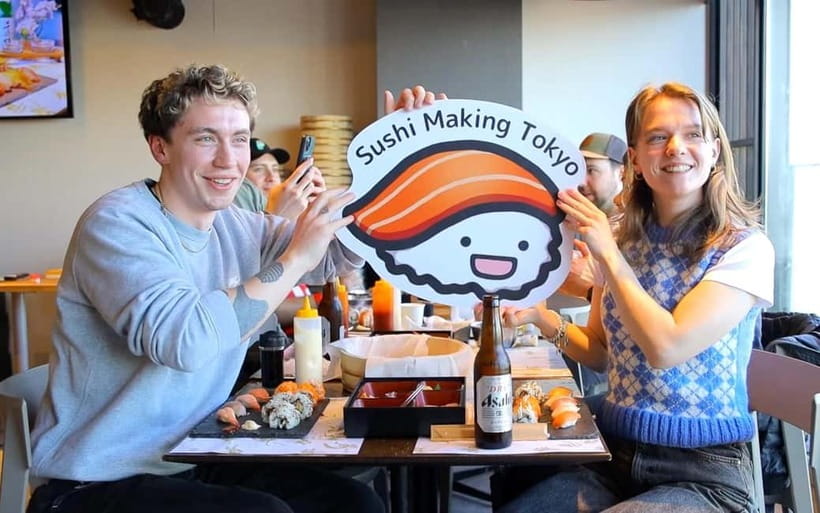
Let’s be clear about the skill you are buying. This class is not just a “watch and sample” experience. You actively create two sushi styles, which is a big deal for learning.
Roll sushi: structure, rice handling, and a clean roll
Roll sushi teaches you the basics of rice distribution and how to keep the filling controlled. Even if your first roll is not perfect, you quickly learn what works by comparing your hands-on result to the guidance you receive.
Multiple reviews highlight that the instructors are energetic and helpful, and that the process is easy to follow. That energy is not just for fun. It helps you stay calm while handling sticky rice and working through the steps.
Nigiri: texture, balance, and the feeling of done
Nigiri is where the class becomes memorable. You are learning a technique that depends on feel, not just steps. Reviews call out that instructors train you well, and some describe the staff as excellent sushi chefs.
If you leave with one thing, let it be this: you will understand how rice and topping need to work together. That means your sushi at home (if you try it later) will improve because you now have the mechanics in your head.
English-Speaking Instructors Who Turn a Class into a Story
Sushi classes can drift into “performing the steps.” This one tends to do the opposite. The instructors are described as welcoming, engaging, and playful, which helps first-timers feel comfortable quickly.
You will see repeated names in the feedback, including Hinata and Rika, Shoki, Yui, Yuvi, Takara, and Fuko. The common thread is that staff members do more than teach. They talk food, travel, and local recommendations, which turns the class into a mini conversation rather than a one-way lesson.
One small but noticeable sign of a strong guide is how they handle energy. Reviews mention laughter, playful teaching, and a chant-like vibe such as Hoi Hoi Hoi. That kind of atmosphere is not silly. It helps you focus on what your hands are doing.
Price and Value: Why $45 Can Actually Make Sense
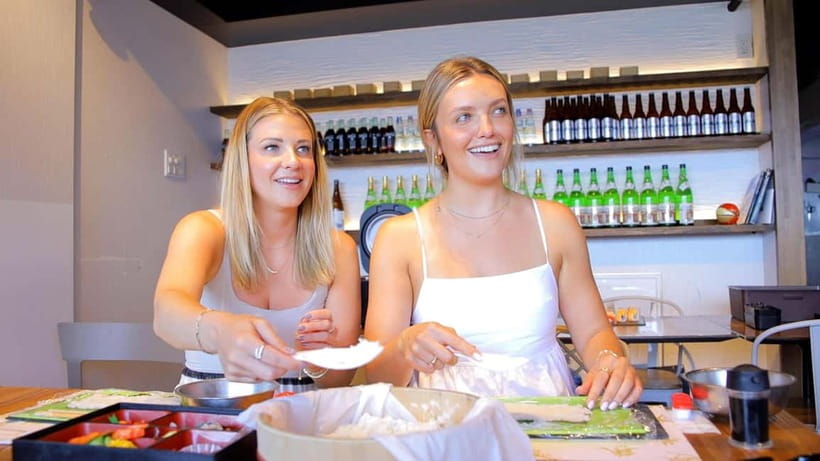
At $45 per person, you are paying for more than ingredients. You are paying for:
- An instructor who stays with you
- Ingredients included
- A meal you eat immediately
- Instruction in two sushi styles
In practice, this is good value because you are not paying for a long cooking course where most people stand around. The class is short enough to fit a busy Osaka itinerary, but long enough to make real sushi and eat it.
Also, the location matters. Meeting in Shinsaibashi and operating near Dotonbori reduces the cost and stress of transportation. Even if the price looks simple on paper, the “where” helps the overall value.
Dietary Options and Allergy Notes You Should Read Carefully
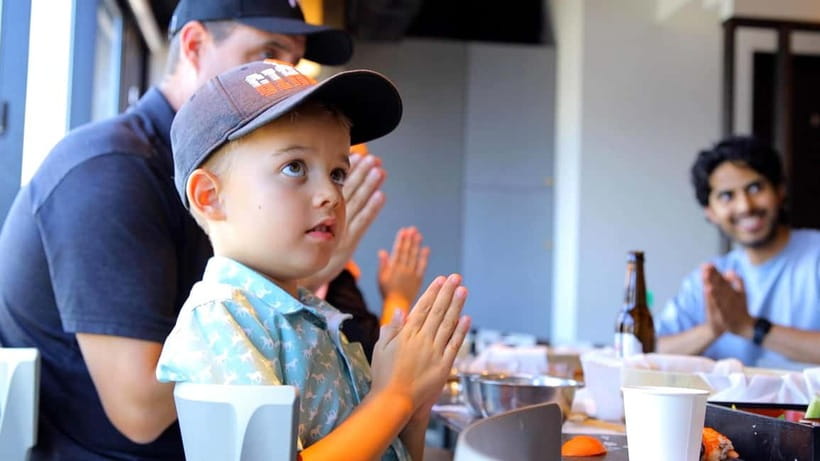
If you have dietary needs, this class is one of the more flexible options listed for Osaka sushi experiences.
What is explicitly available:
- Vegan
- Vegetarian
- Gluten-free
- Halal
There is also an allergy note stating ingredients are not used: meat, nuts, fruits, dairy.
Two important considerations:
- Menu changes require you to contact in advance, with a deadline listed as 3 days before.
- You cannot provide detailed ingredient specifications. The class states it does not accept ingredient specifications.
So here is the practical move. If you need vegan, gluten-free, or halal accommodations, reserve with the correct option and contact them early enough to make changes possible. If your allergy is complex, confirm before you go so you do not show up hoping for a specific ingredient swap that is not supported.
Clean Workshop, Clear Instructions, and a Small-Group Feel
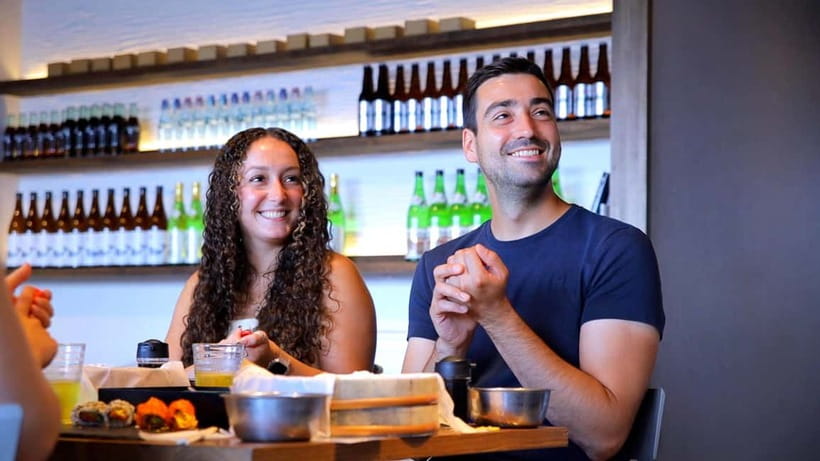
A lot of cooking classes claim to be easy. The difference is whether the teaching environment supports the claim.
Here, many reviews mention:
- a clean environment
- easy to follow instructions
- clear directions and demonstrations, sometimes with visual support
- the class feeling organized and not chaotic
Another recurring theme is that the group size feels intimate. Smaller groups usually mean more attention when your rice sticks or your roll starts to wobble.
One timing-related critique does show up. A few people felt a bit rushed finishing all pieces, and one person mentioned trays being collected in a way that felt early. I’d treat that as a heads up. If you are sensitive to pacing, tell yourself that your goal is learning the technique, and then eat while you have the plate in front of you.
Wheelchair Accessible, with a Real-World Detail
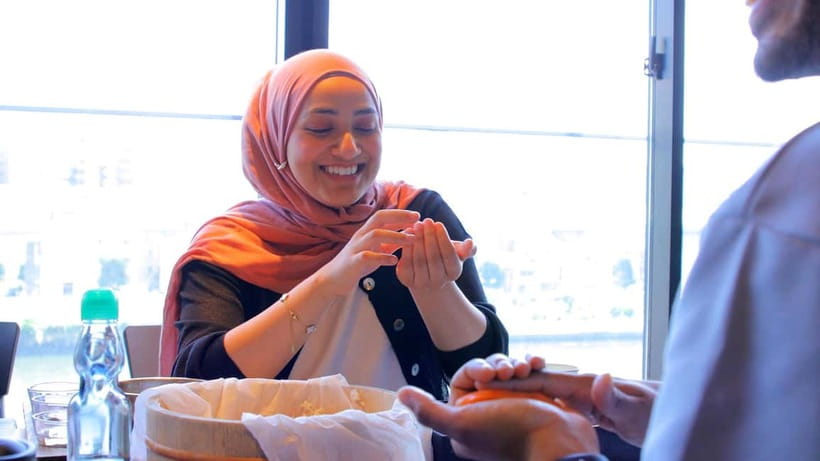
The activity is listed as wheelchair accessible. Still, one review mentioned that the building elevator does not take you all the way to the workshop floor.
So for accessibility planning, do not rely on the word “accessible” alone. Plan extra time to reach the workshop level, and consider asking the operator for step-free routing details.
Pair It With Dotonbori and Shinsaibashi Without Overplanning
This is central Osaka. After the class, you are well placed to do normal Osaka food tourism without stress. Dotonbori and Shinsaibashi are within the immediate area, so you can keep the day simple:
- eat your sushi
- then walk to the next bite or souvenir stop
If you schedule another meal right after, keep it light. Cooking classes end with a full stomach, and you do not want to spend your evening hunting for something you are too full to enjoy.
Who This Osaka Sushi Making Class Is Best For
This class works well if you:
- want a hands-on Osaka activity that doubles as a meal
- like learning small food skills you can repeat later
- enjoy meeting friendly English-speaking locals
- prefer short experiences that fit into a day plan
It is also a solid pick for couples and solo travelers. Reviews mention people joining last minute and still being able to fit it in, and the class format supports both small groups and individuals.
If you are an expert sushi maker looking for restaurant-level knife work or advanced sourcing, you might find it more beginner friendly than technical. But if your goal is to learn and enjoy, this hits the sweet spot.
Should You Book It?
Yes, if you want an Osaka experience that is practical, central, and actually ends with you eating your own sushi. The strongest reasons to book are the combination of two sushi techniques, an interactive sushi history quiz, and instruction from staff members who keep the energy up. At $45 with ingredients and an instructor included, it is a straightforward value.
Book with realistic expectations about timing. With a 100-minute format, the eating portion can feel fast at the end, especially if you like to linger.
If you fall into any category below, I’d still book, just plan smarter:
- You have dietary needs, but you can arrange changes at least 3 days ahead.
- You need accessibility support, but you confirm the final approach to the workshop floor.
FAQ
How long is the Osaka sushi making class?
The class runs for about 100 minutes.
Where is the meeting point?
You meet at the 3rd floor of the Galleria Acca Building, about a 5-minute walk from Shinsaibashi Station.
What language is the instructor?
The class is taught in English.
What sushi styles will I learn to make?
You will make roll sushi and authentic Japanese sushi, including nigiri.
What is included in the price?
The cooking class includes ingredients and the instructor.
Is hotel pickup or drop-off included?
No. Hotel pickup and drop-off are not included.
Are there dietary options like vegan or halal?
Yes. Vegan, vegetarian, gluten-free, and halal options are available. Menu changes need to be requested at least 3 days in advance, and the class notes it does not accept ingredient specifications.
Latest write-ups near Osaka
- 90 min Shared Handmade Udon Experience★ 5.0 · 70 reviews
- Ramen and Gyoza Cooking Class in Osaka Dotonbori★ 5.0 · 73 reviews
- Osaka: Sushi Making in Spacious Studio (SAME-DAY OK!)★ 5.0 · 75 reviews
- Osaka E-Bike Tour With A Local Guide★ 4.7 · 75 reviews
- 1.5〜2 Hours Traditional Kintsugi Work Shop in Namba Osaka★ 5.0 · 75 reviews
- Retro Osaka Street Food Tour: Shinsekai★ 4.5 · 77 reviews
- Osaka: Osaka Castle Guided Tour with Local Guide★ 4.7 · 78 reviews
- Osaka Okonomiyaki Cooking Experience!★ 5.0 · 79 reviews
Sushi Making Classes, compared.
Sushi Making Tokyo Roll and Authentic Japanese Sushi Class
Read our review →
Roll and Authentic Sushi Making Class in Asakusa
Read our review →
Make Sushi and Create Unforgettable Memories in Tokyo
Read our review →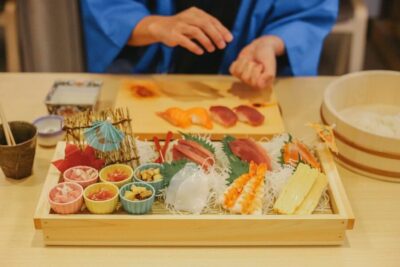
Sushi Making Class in a Happi Coat near a Famous Spot
Read our review →
Sushi Making Osaka Roll and Authentic Japanese Sushi Class
Read our review →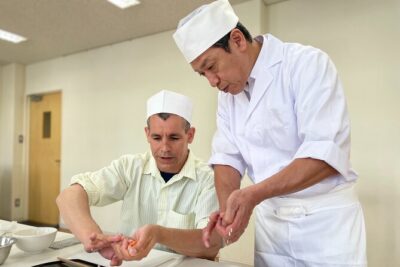
Tokyo Sushi Making Class in Tsukiji with Professional Chef
Read our review →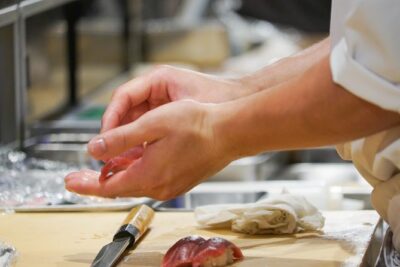
Tokyo Night Foodie Tour in Shinjuku – Seasonal Sushi, Wagyu Beef
Read our review →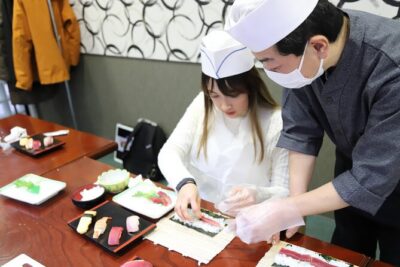
Tsukiji Fish Market Guided Tour and Sushi Making with Pro Chef
Read our review →Browse the lists this tour appears in