
Reviewed · SAMURAI & NINJA EXPERIENCES
SAMURAI EXPERIENCE in Tokyo(Harajuku)【SAMURAI’ve】
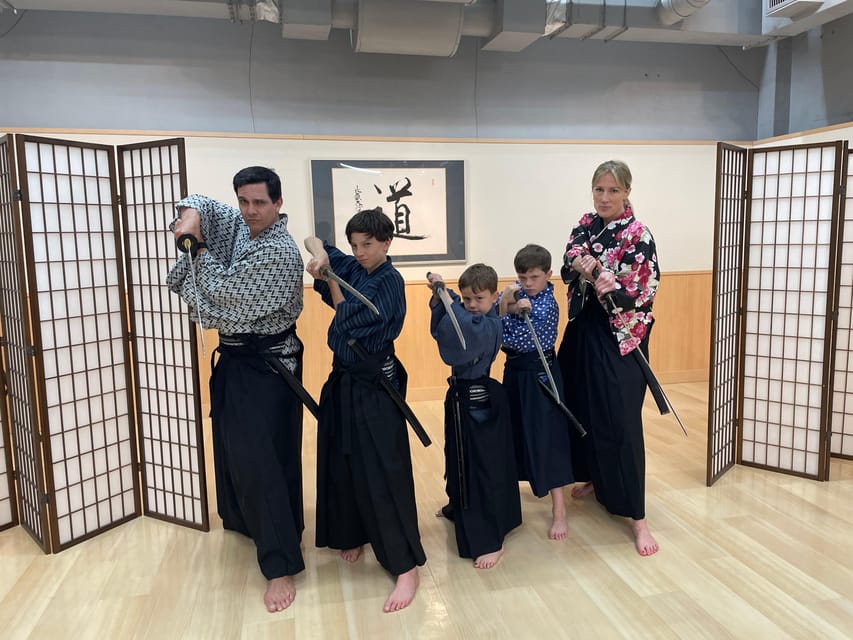
A one hour dojo workshop in Harajuku that makes samurai training feel hands-on and fun, not stuffy. I like the way you learn kitsuke kimono dressing step by step, and I also like the practical focus on Reigi sahou samurai behavior, not vague history. The one consideration is that the session is short, so if you want a long, deep sword program, this is more of a starter experience than a full curriculum.
The class runs as a small group (limited to 10), led by an instructor who works in English, Japanese, and Chinese. You get enough coaching to follow along, but it is still movement-based, so comfortable clothes matter and you should come ready to participate.
Key things I’d highlight before you book
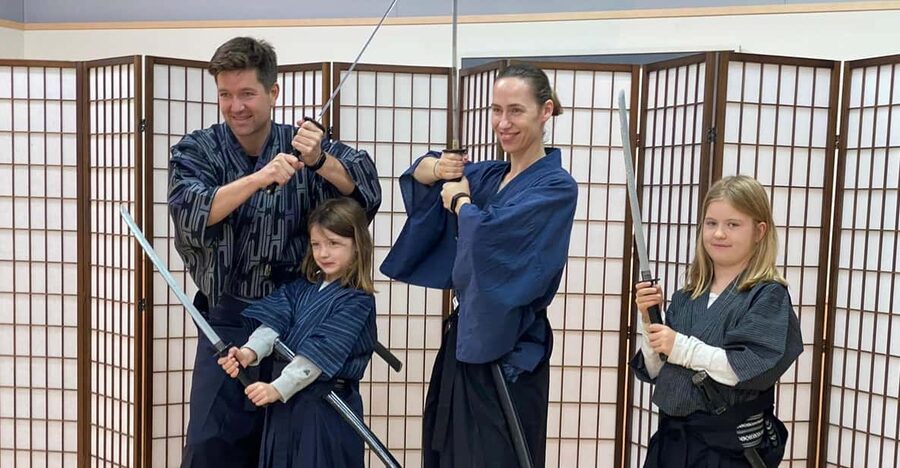
- Kitsuke kimono, hands-on: You actually put it on during the workshop, not just wear it for a photo.
- Reigi sahou etiquette: You learn manners and samurai-style conduct you can remember and share.
- Basic sword-fighting moves: You practice foundational moves with guidance in a controlled class format.
- Tachimawari drills: Stylized sword choreography used in sword-fighting scenes.
- Photos with your sword: You end the class holding a sword while dressed in kimono.
- Short and focused: At 1 hour, it’s efficient, but you only get a taste.
A Samurai Workshop in Harajuku: What You’ll Actually Do
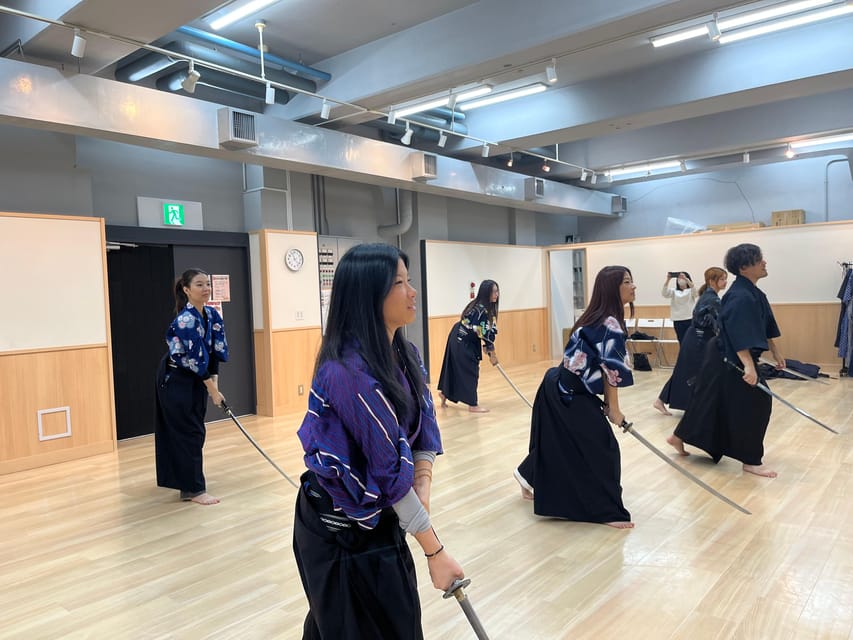
This is a Tokyo sword-fighting workshop with a strong “do it yourself” vibe. You are not sitting through a lecture. Instead, you rotate through three core parts: kimono dressing, samurai manners and movement practice, then a short sword choreography segment that looks like what you see in action scenes.
The best part for most people is the sequence. You start with presentation and behavior (how you act), you move into basic technique (how you move), then you try stylized choreography (how it looks on screen). That makes the experience feel complete, even though it lasts only one hour.
It also helps that the class is designed for beginners. The format is friendly and structured, which is exactly what you want when you have no sword background and you still want to walk away with something real to talk about back home.
More Samurai & Ninja Experiences in Tokyo
- Tokyo: Samurai Restaurant Show Ticket with 2 Drinks
★ 4.5 · 1,307 reviews - Tokyo: Samurai Ninja Museum Guided tour and Experience
★ 4.6 · 1,010 reviews - Tokyo: Samurai Sword & Archery Class from Samurai Descendant
★ 5.0 · 603 reviews
Finding the Dojo: The Red Door and Basement Floor
Your meeting point is easy to miss if you are rushing, so plan a little buffer time. You enter through the red door and head to the second floor basement. From Kitasandou Station, it’s about a 5-minute walk. From Harajyuku Station, it’s about an 8-minute walk.
Two practical tips for a smooth arrival:
- Wear shoes and clothing that let you move easily, since the session includes dressing and active practice.
- Treat the meet-up area like a “find the door, not a landmark.” Once you spot the red door, you will be able to follow the steps quickly.
Transportation is not included, so if you are coming from farther in Tokyo, give yourself extra time. A short walk is nice, but only if you are already oriented.
Kimono Time: Kitsuke Dressing That Feels Like Training
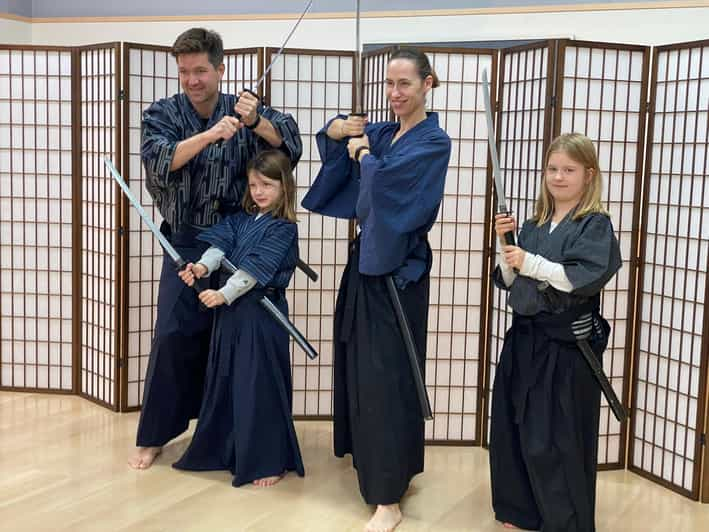
One of the most satisfying parts of this workshop is that kimono dressing is not an afterthought. You learn kitsuke dressing during the class, guided by the instructor.
Why this matters: in Japan, kimono is not just clothing. Fit, posture, and the way you handle your body change how the outfit sits and how you move. When the dressing is taught properly, you instantly look more correct in the final photos, and you also feel more confident when you start the movement portion.
Expect a step-by-step process that helps you get into the right look without guessing. You will likely spend part of the hour learning how to manage the basics of wearing kimono comfortably enough to participate.
If you get even a few minutes of practice before photos, you’ll understand why this is more fun than a quick costume moment.
Reigi Sahou: The Manners Lesson That Changes Your Posture
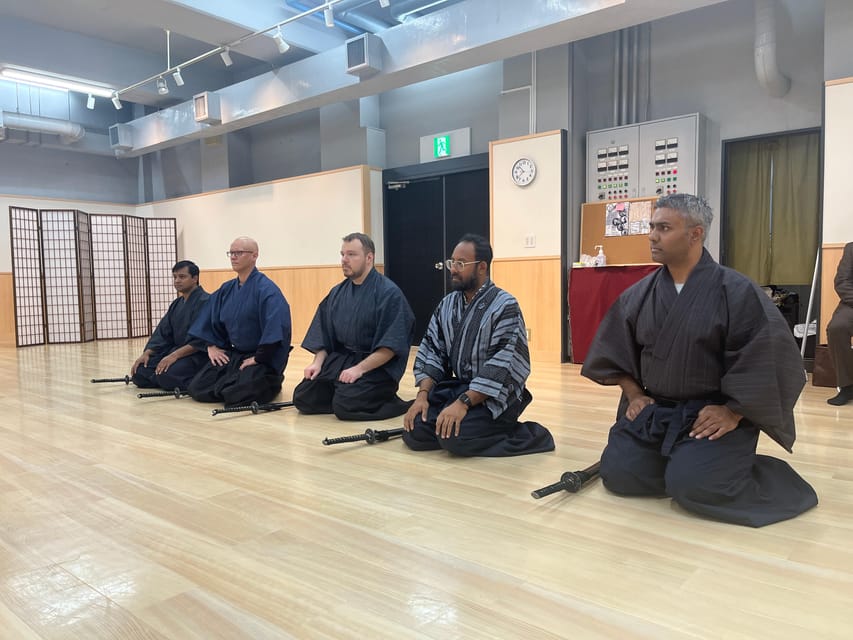
Reigi sahou is the samurai etiquette side of the experience, and it is one of the best uses of your limited time. Instead of random rules, you learn conduct that connects directly to how you hold yourself.
Think of it like stage presence with purpose. When you learn basic behavior and manners, you stop moving like a tourist with a sword prop and start moving like you belong in the moment.
In a class like this, those cues matter. Sword technique looks better when your posture, attention, and controlled movement are aligned. So the etiquette lesson is not just “cultural.” It is training for the body language part of samurai performance.
If you enjoy details, you’ll appreciate the way the instructor explains how to act like a true samurai. Even if you forget everything later, you usually remember one or two key behavior points, and they show in your photos.
A change of pace from Tokyo:
- Mt Fuji and Hakone 1-Day Bus Tour Return by Bullet Train
★ 5.0 · 26,383 reviews - 1-Day Tokyo Bus Tour
★ 5.0 · 14,250 reviews - Tokyo: TOKYO SKYTREE® Admission ticket
★ 4.5 · 11,192 reviews - Tokyo: teamLab Planets TOKYO Digital Art Museum Entry Ticket
★ 4.6 · 9,779 reviews
Basic Sword Moves: Learning Control, Not Just Flash
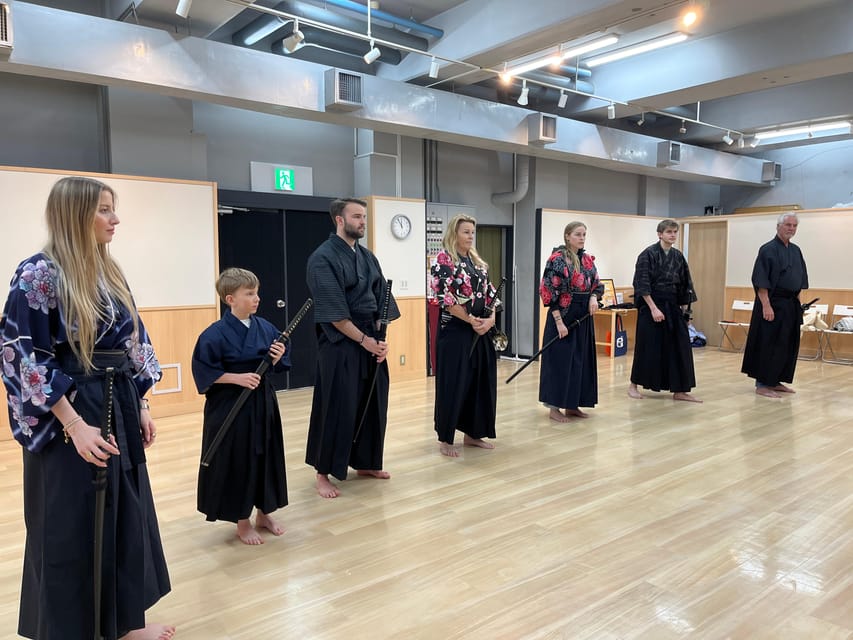
After kimono and etiquette, you move into samurai sword fighting experience focused on basic moves. The goal is not to turn you into a swordsman. The goal is to help you learn a few foundational motions you can actually execute with guidance.
This is where “qualified instructor” matters. The instructor is active in video and stage productions at the dojo in Tokyo, which suggests you are being taught for both correctness and performance. In practical terms, that usually means clearer explanations and movements broken down into steps you can follow.
You’ll practice enough to get the feel of:
- How to hold and position the sword safely and confidently
- How to move your body with the technique, not just your arms
- How to keep your motion controlled so you can repeat it without getting lost
One more practical note: because the class is only one hour, you should come with the mindset of learning a starter set of moves. The value is walking away with usable “I tried it and I can do it” technique, not becoming highly skilled.
Tachimawari: Stylized Sword Choreography You Can Recognize
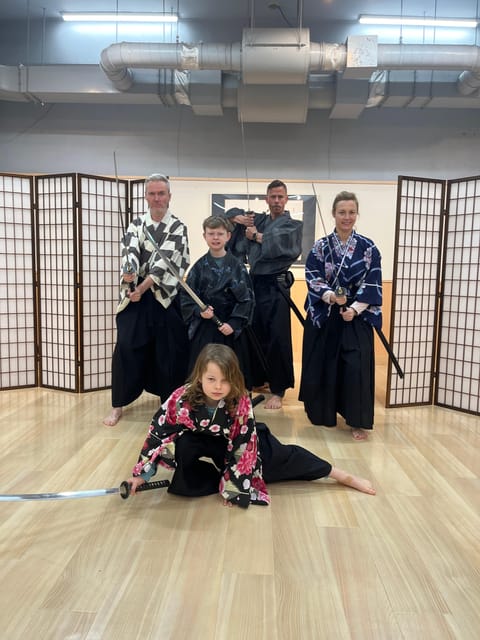
Then comes Tachimawari, the stylized movement sequence used in sword-fighting scenes. If you’ve watched action choreography in Japanese media, this is the part that will feel familiar.
Tachimawari usually has a specific rhythm. It is less about realistic sparring and more about controlled, readable movement that looks good and tells a story through technique. That makes it perfect for a one-hour workshop.
Why this part is worth your time:
- It turns your basic moves into something that looks like a performance
- It gives you a moment of progress, where you see how the technique connects
- It creates a group energy, because everyone is trying the same sequence
If you want a “wow” moment, this is it. Even beginners can often look surprisingly coordinated once they learn the pattern.
Photoshoot With Sword and Kimono: What You’ll Love the Most
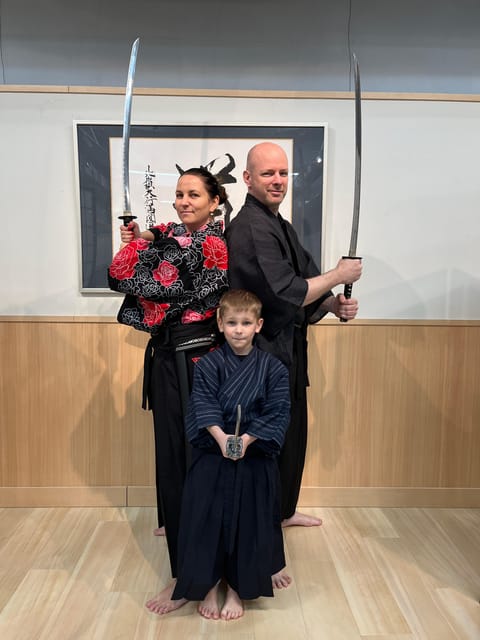
Every workshop ends with a photoshoot where you pose while wearing your kimono and holding your sword.
This is more than souvenir photos. You get to capture the combination that makes the experience feel complete: kimono dressing plus the samurai look plus the movement you practiced.
A few practical ways to make your photos better:
- Slow down during the posing. If you rush, kimono fit looks messier and posture looks less controlled.
- Keep your shoulders relaxed. Samurai style often looks strong, but it is not about tension.
- If you are nervous holding the sword, focus on following the instructor’s positioning rather than trying to be “cool.”
The payoff is simple: you leave with images you can actually show people and explain, not just clothing photos.
Price and Value: Is $70 Worth One Hour?
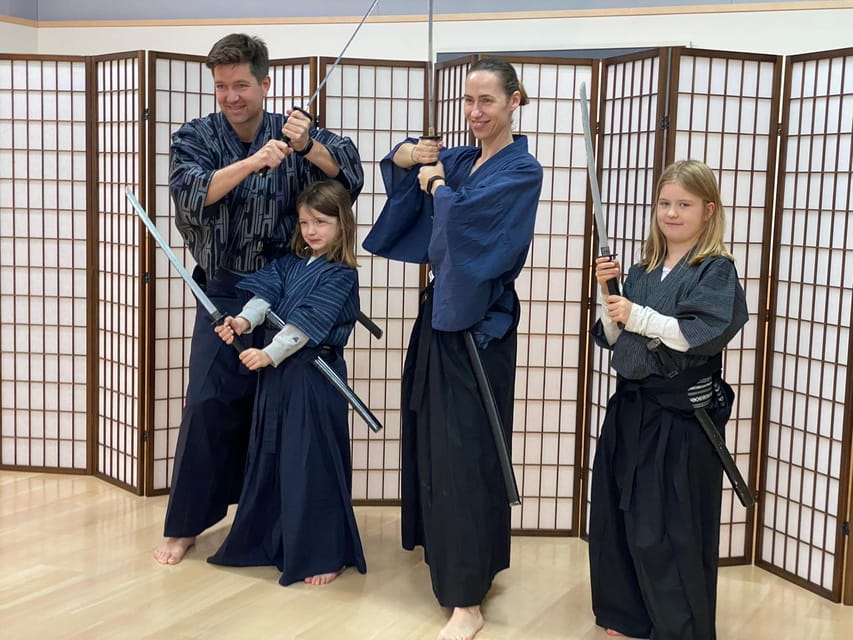
At $70 per person for a 1 hour experience, the value depends on what you want from the day.
Here’s the value math that makes sense:
- You get instructor coaching throughout the session.
- You get kimono provided to wear and guided kitsuke dressing.
- You get both etiquette (Reigi sahou) and movement practice (basic sword moves).
- You finish with a photoshoot, meaning the class is built to produce a tangible memory.
If you were to rent kimono on your own, pay for separate tutoring, and still try to structure a sword practice session, the costs and time add up quickly. This format bundles the teaching and the output, in one compact, scheduled block.
The short duration is the main trade-off. You’ll likely leave with starter skills and performance moments, not long-term technique. But for many first-timers, that is exactly the right size of commitment.
Who Should Book SAMURAI’ve in Harajuku, and Who Should Skip It
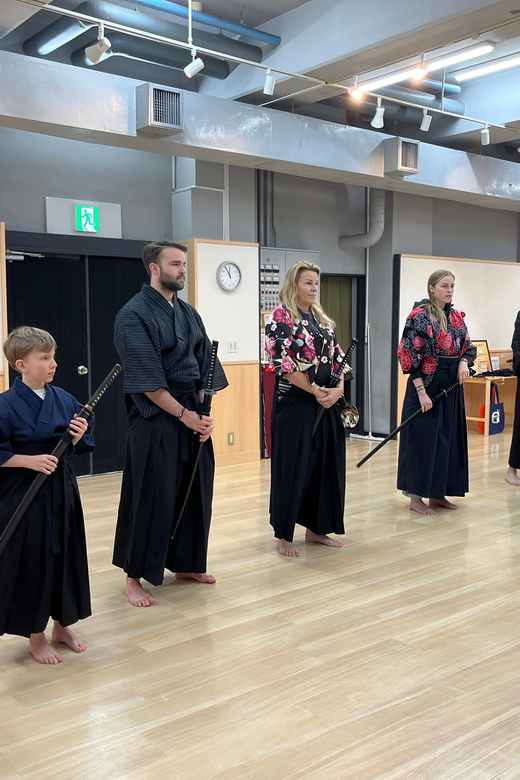
This is a good fit if you want:
- A fun, beginner-friendly activity in Tokyo that is clearly hands-on
- A cultural performance angle, with etiquette and posture included
- A small group experience with active coaching
- A souvenir that actually reflects what you learned
It is also a nice choice if you travel with kids, since the experience is described as enjoyable for families and includes an option for anyone regardless of age and gender as long as they have the samurai spirit.
You should skip it if:
- Your child is under 5 years old
- You use a wheelchair (not suitable per the activity info)
If you have a fear of participating in movement activities, you might still be okay, but come prepared. Comfortable clothing is specifically recommended, and you will be doing dressing and practice.
Quick Practical Tips Before You Go
- Bring comfortable clothes so you can move and sit during dressing.
- Plan to arrive a bit early so you can find the red door and get upstairs and down without stress.
- Don’t schedule a heavy meal right before. Food and drinks are not included, so decide ahead if you want a snack nearby after.
Also, since the instructor offers English, Japanese, and Chinese, it is helpful to check your comfort level with communication. If you want everything explained clearly, arriving on time helps you catch the opening instructions.
FAQ
What is the duration of the SAMURAI’ve experience?
The experience lasts 1 hour.
How much does it cost?
It costs $70 per person.
Where do I meet the instructor?
Enter through the red door and proceed to the second floor basement. It is about a 5-minute walk from Kitasandou Station and about an 8-minute walk from Harajyuku Station.
What languages are available?
The instructor supports English, Japanese, and Chinese.
Is the group large?
No. It is a small group limited to 10 participants.
What should I bring, and is food included?
Bring comfortable clothes. Food and drinks are not included.
Should You Book This Samurai Workshop?
If you want a one-hour Tokyo activity that gives you real takeaways, this is an easy yes. You get kimono dressing (kitsuke), samurai etiquette (Reigi sahou), basic sword moves, Tachimawari stylized practice, and photos that show what you did.
The only reason to hesitate is if you are expecting a long, advanced sword training program. This is a starter experience built for fun and confidence, not mastery. If that matches your goal, SAMURAI’ve in Harajuku is a strong value use of an hour in Tokyo.
More Anime & Pop Culture Tours in Tokyo
- Official Street Go-Kart Tour – Akihabara
★ 5.0 · 1,578 reviews - Tokyo Go Kart: Asakusa, Skytree, and Akihabara **IDP MUST**
★ 5.0 · 988 reviews - Tokyo Studio Ghibli Museum and Ghibli Film Appreciation Tour
★ 4.5 · 421 reviews - Akihabara Anime & Game Adventure Walking Tour (Group or Private)
★ 5.0 · 404 reviews
Latest write-ups near Tokyo
- Tokyo Nights: Shibuya Photo Adventure★ 5.0 · 20 reviews
- Wagyu & Sake 8 Course Tasting Dinner in Shinjuku★ 4.9 · 20 reviews
- Making Japanese desserts Nerikiri & drinking matcha in Tokyo★ 5.0 · 20 reviews
- Japanese Whisky Hunting《HIGH-QUALITY-ONLY》Rare Tasting Class★ 5.0 · 20 reviews
- Mt. Fuji 5th Station, Owakudani Ropeway, Pirate Ship plus Outlet shopping!★ 4.5 · 20 reviews
- Kintsugi Experience with Arita Ware in Tokyo (English Guide)★ 4.8 · 20 reviews
- This is Asakusa! A Tour Includes the All Must-Sees!★ 5.0 · 20 reviews
- Tokyo: Karate Experience with Former All-Japan Champion★ 5.0 · 20 reviews
Samurai & Ninja Experiences, compared.
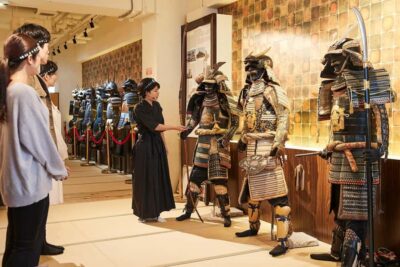
Samurai Ninja Museum Guided tour and Experience
Read our review →
Kendo and Samurai Experience with Uniform and Gear
Read our review →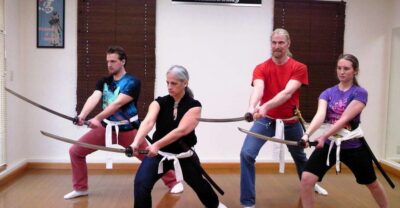
Samurai Sword Class by Experts in Traditional Arts
Read our review →
Skip the lines Basic Ticket at SAMURAI NINJA MUSEUM KYOTO
Read our review →
Samurai Sword & Archery Class from Samurai Descendant
Read our review →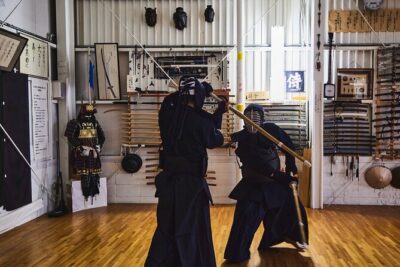
Browse the lists this tour appears in