
Reviewed · SAMURAI & NINJA EXPERIENCES
Experience Samurai and traditional Culture to the fullest
What makes this experience in Osaka interesting is how many classic arts you do in one sitting, not just watch. You learn kimono culture and then move into hands-on samurai moments, including a photo with Osaka Castle in the background while wearing armor.
I especially like two parts. First, the calligraphy teaching is practical, from how to hold the brush to stroke practice, then choosing a kanji and writing it carefully. Second, the sword trial is taught with a serious tone about responsibility, not just action for action’s sake.
One drawback to consider is logistics and pace. You’ll need to arrive 30 minutes early to change and get instructions, and it is a full 3-hour session with several active components.
Key moments that make this stand out near Osaka Castle
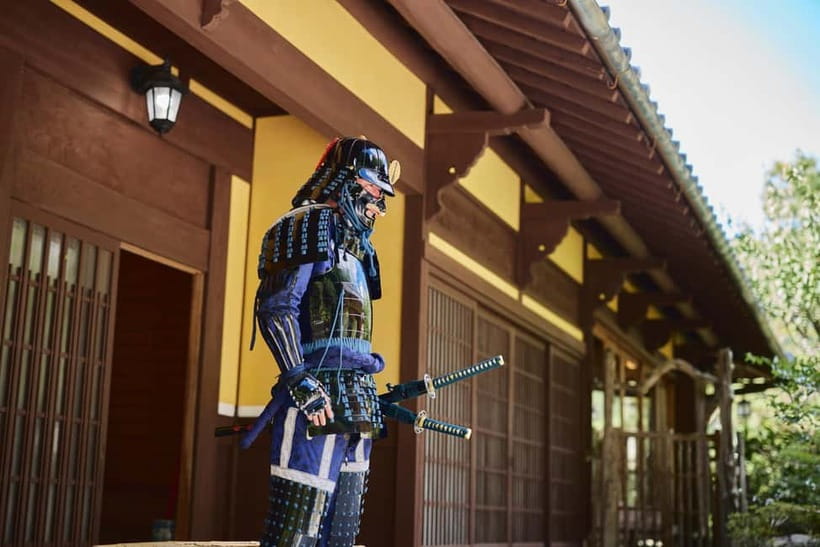
- Osaka Castle photo in armor: You get the dramatic background shot while dressed as a soldier.
- Brushwork you can actually repeat: You practice basic strokes like tome, hane, and harai before writing your own kanji.
- Tea ceremony etiquette with Bushido wording: You learn manners and hospitality as part of the flow, not as a separate lecture.
- Samurai sword trial cutting: You learn how to use a sword and try your hand at slashing with guidance.
- Samurai calligraphy focused on resignation: You write words tied to a final send-off theme, then connect technique to meaning.
- A photographer covering the key scenes: Photo data is sent to your email after the session.
Enter the Honor of the Samurai and get dressed for real training mode
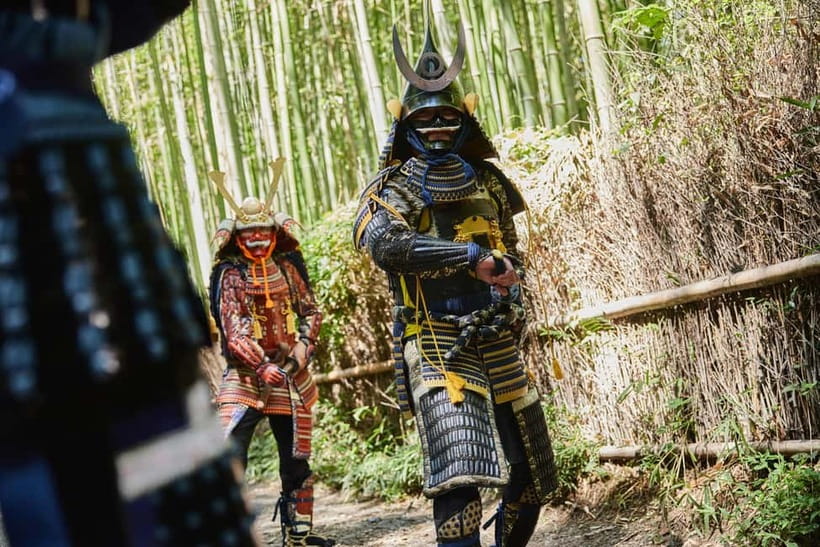
This is not a passive show. It starts the moment you arrive and get set up to participate. You meet at a shop with a wooden sign reading Honor of the Samurai, and you will see samurai-themed activity pamphlets right by the entrance. Indoors, you shift from tourist mode to participant mode fast, because you’ll be changing into traditional clothing.
What I like about this approach is that it keeps everything consistent. You’re in the right mindset for calligraphy, tea, and sword work because your body and clothing are already part of the routine. And since the tour is listed as a private group, the instructor can tailor pacing to your comfort level rather than rushing everyone through.
Also note this is described as wearing samurai armor indoors, so you’re not dealing with a full outdoor battle setup. You still get the costume drama, but the session stays manageable.
More Samurai & Ninja Experiences in Osaka
- Samurai Training Experience KENDO in Osaka
★ 5.0 · 515 reviews - OSAKA NIGHT FUSION Japanese Taiko Kabuki Samurai Dance Show
★ 4.8 · 155 reviews - Osaka: Samurai Training Experience KENDO in Osaka
★ 5.0 · 111 reviews
Your 3-hour flow, kimono first, then calligraphy, tea, sword, and armor
The schedule is built like a sequence of skills. You start with kimono and traditional basics, then move into arts that require control, and then you shift to samurai-themed physical practice.
Here’s what the full arc feels like, in order.
Step 1: Change into kimono, then set the tone with manners and gesture
Before you touch a brush or drink tea, you change into a kimono. That first step matters more than it seems. You immediately feel how posture and arm angles influence the way you move and hold yourself. The instruction frames this as part of courtesy, manners, beautiful gestures, and hospitality.
In practical terms, expect to be guided through dressing and basic movement. You might not become a kimono expert in three hours, but you should leave knowing what “right way to hold yourself” looks like when you’re not dressed in modern clothes.
Step 2: Calligraphy practice, brush grip and the stroke names you will remember
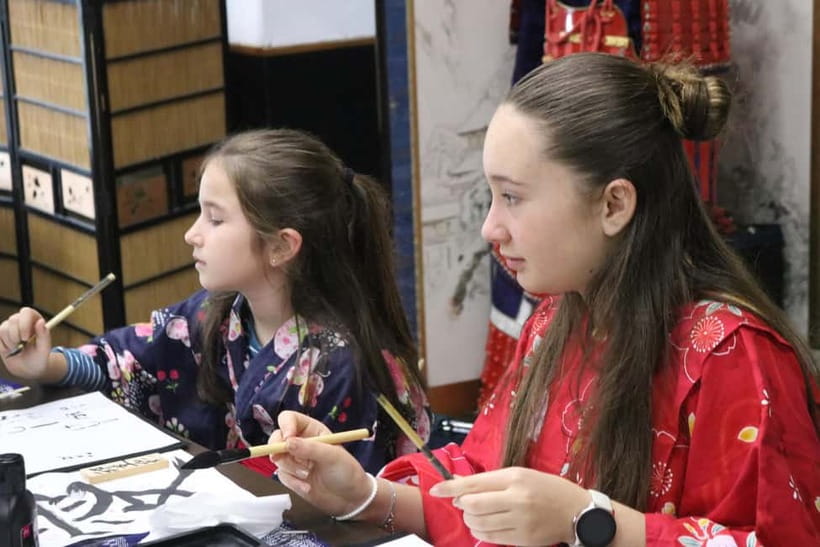
The calligraphy portion is where this experience becomes more than a costume. You learn how to prepare yourself for calligraphy, including how to hold a brush and use the tools correctly. Then you practice basic brush strokes with names you can carry home:
- tome
- hane
- harai
You’ll also choose a kanji character and follow stroke order. The instructor focuses on technique, so it’s not just copy and hope. If you care about doing it properly, you’ll likely appreciate the method.
One small tip for your own success: treat it like handwriting, not like drawing. Calligraphy is controlled, and your best results come from steady pressure and careful stroke order, not from moving faster.
A change of pace from Osaka:
- Osaka Go Karting Tour with Funny Costume
★ 5.0 · 2,658 reviews - Osaka Castle: Museum and Tower Entry Ticket
★ 4.5 · 2,380 reviews - Osaka: Shinsekai Food Tour with 13-15 Dishes at 5 Eateries
★ 4.8 · 2,204 reviews - Osaka Food Tour: 13 Dishes at 5 Local Eateries
★ 5.0 · 2,149 reviews
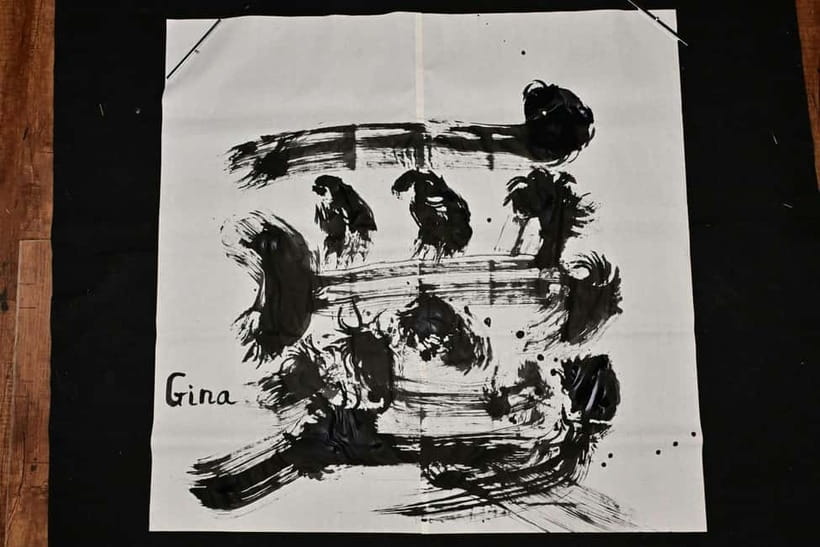
Step 3: Samurai calligraphy with a resignation theme, writing with meaning
Next comes a special calligraphy round called Samurai Calligraphy, described as writing words of resignation. The framing is literal: resignation as a farewell, tied to a person preparing to die.
You write the chosen kanji again, paying close attention to technique. This portion is shorter than the first calligraphy block, around 10 minutes, but it’s the most emotionally framed part of the writing practice.
Even if you don’t read Japanese, you can still follow along because the focus is on how to write. You should come away with one “finished” kanji and a better sense of why the brush work is considered serious training.
Step 4: Samurai tea ceremony, etiquette built into the tasting
Then you shift from ink to etiquette. A tea ceremony master prepares and serves powdered green tea to the guests. This is where you learn manners, beautiful gestures, and the spirit of hospitality, with an explicit connection to honor in Bushido terms.
For me, the useful value here is in learning a routine you can repeat. Tea ceremony in Japan can feel mysterious from the outside, but inside a guided session, it becomes something you can understand: how to handle the cup, how to move, and how to act during the serving.
Expect the instruction to be practical. You don’t just watch the motions, you follow them.
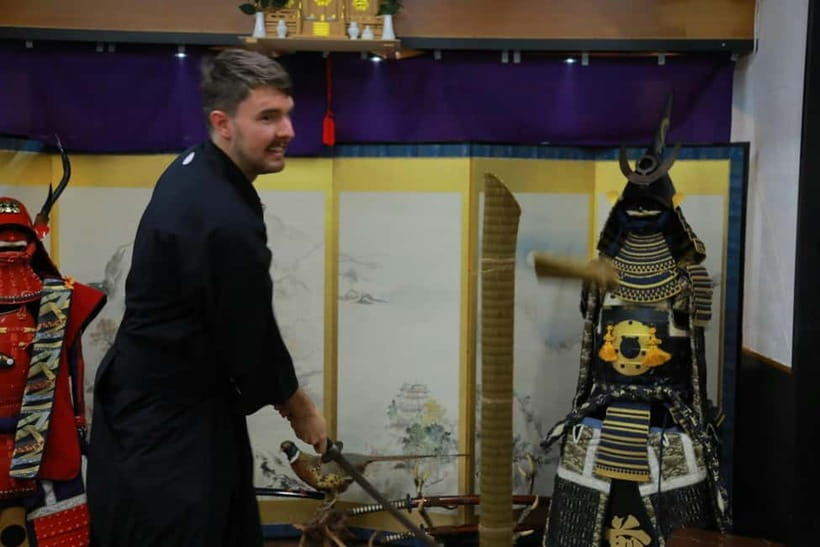
Step 5: Samurai sword trial cutting, learn control and responsibility
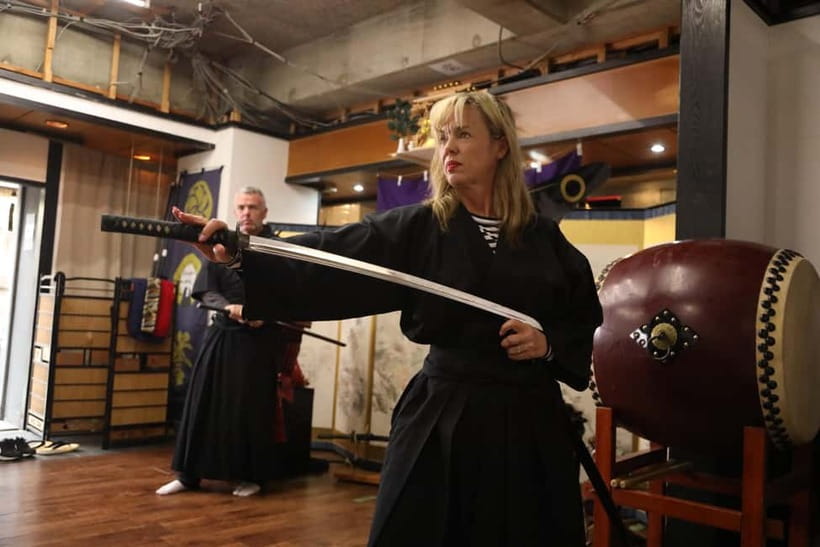
Now the pace changes again. You learn how to use a sword and become aware of your self-respect and responsibility when carrying a deadly weapon.
This part includes the equipment and the safety-minded framing. You’ll be allowed to wear a serious sword, then try your hand at sword cutting with a samurai sword. The description emphasizes that you get a real cutting practice moment and can test your technique.
A key point: this is not pitched as a video game. The tone is about discipline. So if you’re the type who likes instructions and wants to understand what you’re doing, you’ll probably enjoy this segment more than you expect.
Step 6: Armor in the Battle of Osaka, plus the Osaka Castle photo
The last part is the big visual payoff. You wear armor and participate in a battle scene. Then you get photographed on the grounds of Osaka Castle, pretending to be one of the best soldiers.
The scene is described as April 1615, with the Osaka Summer Battle underway, and you are on Toyotomi’s side. That’s the script for the photo moment.
Even if you’ve seen plenty of “costume photo” setups in Japan, this one is positioned as the final layer after you already learned tea etiquette, calligraphy technique, and sword handling. So the photo feels less random and more like a reward for the work you just did.
The sword and armor parts, what you should expect realistically
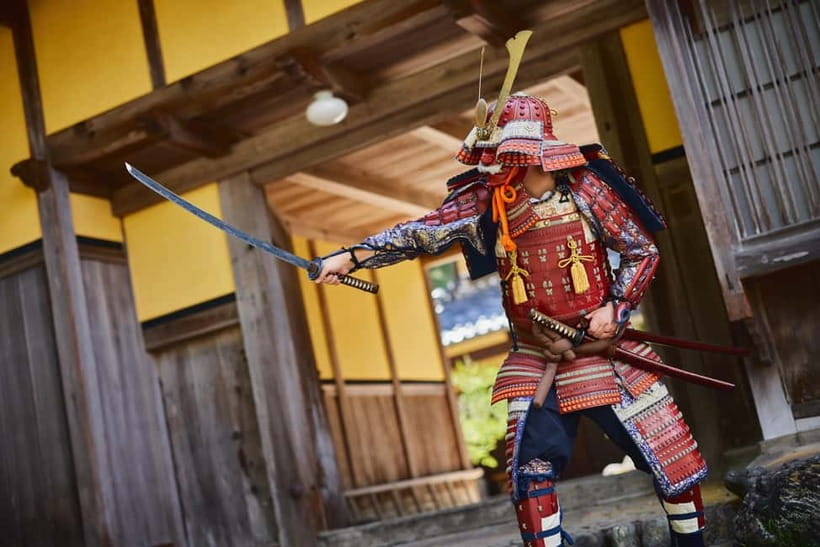
This is hands-on, but not in a chaotic way. The experience is structured, with instruction tied to technique and responsibility.
Sword trial cutting
You should expect:
- instruction on how to use the sword
- a chance to try cutting
- a big emphasis on self-respect and responsibility
You should not expect:
- deep fencing history lessons
- a long, advanced training course
For most people, the win is the first meaningful try, with guidance, in a controlled setting. If you’ve always wondered what sword work feels like beyond movies, this is the kind of short session that answers that question.
Armor and “battle” photo
You will wear armor indoors and then be photographed on the grounds of Osaka Castle. The photo setup is built around April 1615 storytelling. It’s dramatic on purpose.
The value for you is simple. You get a high-quality memory tied to Osaka Castle rather than a generic studio shot. And because it’s included with photo shooting and the data is sent to your email, you’re not left chasing your files later.
Price, $168 for 3 hours, and why it can feel fair
At $168 per person for a 3-hour private session, you’re paying for several things bundled together: multiple guided arts (kimono culture, calligraphy, tea), a guided sword trial cutting moment, and a full costume and photo segment, plus staff who speak English and additional languages when scheduled.
Here’s how I’d judge the value. You’re not paying just for the armor photo. The price also covers instructor time across skills that normally come as separate classes. And it includes the basics that often add cost on top of ticket prices, like tax and tips, and it includes the photo shooting with emailed delivery of your data.
If you’re the type who wants one high-output evening that covers multiple sides of Japanese culture, this can be a good deal. If you only care about one segment, you might feel like you’re paying for more than you need.
English and other languages, how to plan if you want Spanish, Italian, or more
The default interpreter language is English. Other languages are listed as options: Spanish, Italian, French, Chinese, Thai, and Indonesian.
If you need one of those other languages, plan ahead. The information states you should inquire about the staff member schedule before booking, because availability may be limited.
Practical advice: even if you don’t speak Japanese, English support helps a lot during calligraphy and sword instruction. Those segments depend on clear cues.
What to bring, what not to bring, and who should skip this
This is an active cultural experience, so pack smart.
Bring:
- a T-shirt
Not allowed:
- pets
- baby strollers
- alcohol and drugs
- baby carriages
Age notes:
- not suitable for children under 10
- not suitable for babies under 1
- not suitable for people over 95
If you fall outside those ranges, you can skip this one and look for a less physically demanding cultural activity around Osaka Castle.
Meeting time and the one logistics trick that saves your stress
You should arrive 30 minutes before your reserved experience time. That extra time is for instructions and changing clothes.
Also, transportation is not included. There is no pick up or drop off at the train station or hotel, and you’ll handle getting there on your own.
Here’s the one trick I recommend: give yourself buffer time to find the correct meeting landmark, the wooden sign that reads Honor of the Samurai. Arrive early enough that you are not rushed when you’re asked to change.
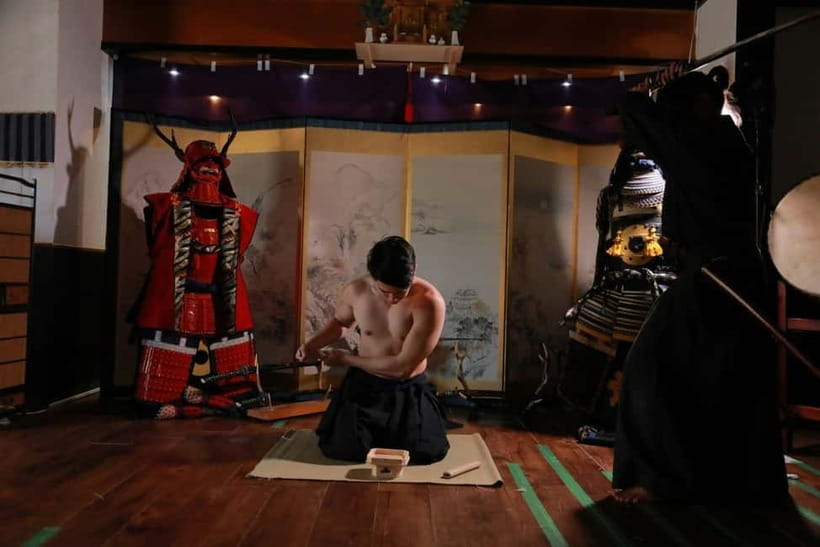
Optional seppuku-harakiri add-on, what to know before you say yes
There is an option described as Seppuku and harakiri, with a 30-minute time requirement. The description frames it around Bushido and a beautiful death in paradox terms.
It is not listed in the included activities. So if you see it offered for your specific booking, read the details carefully before you choose. If the theme feels too heavy, it’s totally reasonable to keep your focus on kimono, calligraphy, tea, sword trial cutting, and the armor photo instead.
Who this experience suits best, and who might want something else
This fits best if you want action plus culture in one compact session. You’ll likely enjoy it if you:
- like structured instruction you can follow step-by-step
- want a kimono and calligraphy experience you can actually participate in
- are curious about samurai sword basics without signing up for a long course
- want an Osaka Castle photo with actual context, not just a quick costume stop
You might want a different option if you:
- dislike hands-on activities
- only want one small part (like tea only or photos only)
- prefer a purely historical museum-style visit over practice and performance
Should you book this Samurai and traditional culture session?
Book it if you want the Osaka Castle area to feel personal. This is one of the few places near Osaka Castle where you can wear armor, practice calligraphy strokes, learn tea etiquette, and try sword cutting within a single 3-hour private session. The photo component also makes it an easy souvenir, since the files are sent to your email.
Skip it if you’re short on time and only want one thing, because the session is built as a full sequence. Also, if changing clothes and moving through structured activities feels stressful, you may prefer a slower paced cultural class.
If you decide to go, I’d plan for a calm morning or afternoon, show up 30 minutes early, and treat each segment like its own mini lesson. You’ll get the best result when you focus on technique, not speed.
FAQ
How long is the experience?
It runs for 3 hours, and you can check availability for starting times.
What is included in the $168 per person price?
Included items list samurai clothing, armor (indoors), an English-speaking staff member, certified professional instructor, practice calligraphy, samurai calligraphy, tea ceremony, samurai sword trial cutting, wearing armor, tax, tips, and photo shooting with data sent to a designated email address.
Is the tour private or group-based?
It is listed as a private group.
What language support is available?
English is the default interpreter language. Other languages listed include Spanish, Italian, French, Chinese, Thai, and Indonesian, but you should inquire about staff schedule for those languages.
Where do I meet the group?
The meeting point landmark is a wooden sign that reads Honor of the Samurai, near an activity pamphlet rack and samurai clothing hanging to dry.
Is transportation included from the train station or hotel?
No. Pick up and drop off at a train station or hotel is not included, and transportation is also not included. You’ll need to make your own way to the meeting point.
Latest write-ups near Osaka
- Osaka Private Tour with Government-Licensed Guide★ 4.8 · 20 reviews
- Guided Photography Tour in Osaka: Capturing Memories★ 4.5 · 20 reviews
- Osaka: Food Tour at Night with Tastings★ 4.9 · 20 reviews
- Kansai/KIX Airport to or from Osaka/Kyoto Private Transfer★ 5.0 · 20 reviews
- Osaka: City Highlights Bike Tour★ 4.7 · 20 reviews
- From Osaka/Kyoto: Amanohashidate Day Tour【Including tickets】★ 3.7 · 20 reviews
- Osaka Okonomiyaki Cooking Class “Learn here and make it at home”★ 5.0 · 20 reviews
- Volleyball in Osaka & Kyoto with Locals!★ 5.0 · 21 reviews
Samurai & Ninja Experiences, compared.
Samurai Ninja Museum Guided tour and Experience
Read our review →
Kendo and Samurai Experience with Uniform and Gear
Read our review →
Samurai Sword Class by Experts in Traditional Arts
Read our review →
Skip the lines Basic Ticket at SAMURAI NINJA MUSEUM KYOTO
Read our review →
Samurai Sword & Archery Class from Samurai Descendant
Read our review →
Browse the lists this tour appears in