
Reviewed · RAMEN EXPERIENCES
Professional Ramen & Gyoza with Ramen Chef in a restaurant!
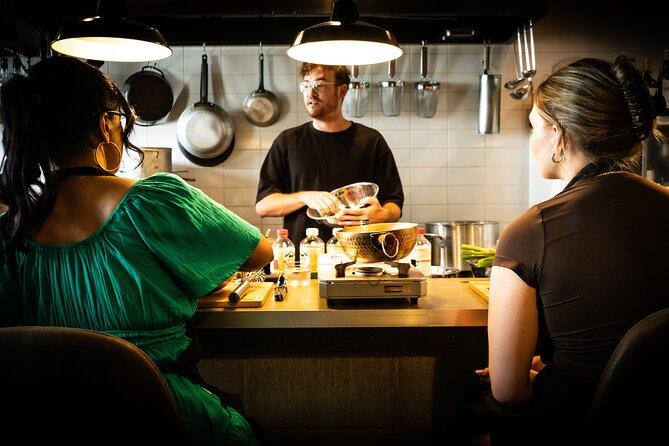
A hands-on ramen class in a real Tokyo restaurant kitchen is a fun change of pace. Instead of learning from a demo counter, you get your hands into the work, guided by a bilingual ramen team in an actual cooking space, with restaurant-grade equipment and a pro chef setup.
I especially like two parts. First, you get to learn ramen noodles from scratch, not just boil a packet and call it a day. Second, the gyoza portion is hands-on and interactive, so you leave with technique, not just a full stomach.
One consideration: this is not a sit-and-watch experience. You should be ready to work, move around a busy kitchen, and spend about four hours cooking, then eating, and the $159.18 price is on the higher side for a class.
Key things that make this ramen-and-gyoza class worth your time
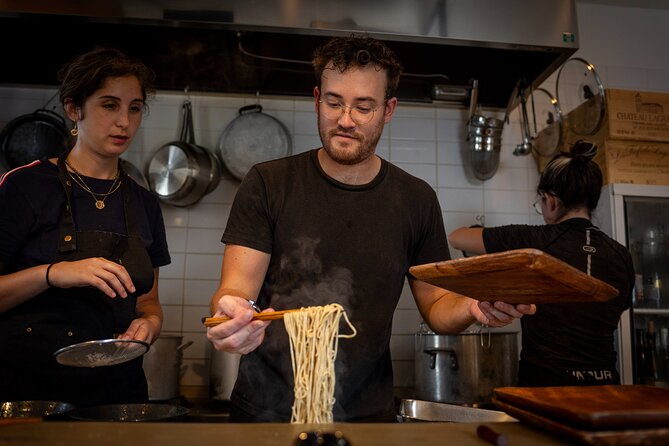
- Small group size (max 6) means you get more direct coaching as you go
- Made in a restaurant kitchen so you practice like you would on a real station, not a home setup
- Bilingual chefs (English and Japanese) help you understand both technique and context
- Two broth choices let you steer the flavor profile to your tastes
- You take home an e-book, so you can recreate the recipes later
Why this Tokyo ramen class feels more authentic than a casual cooking stop
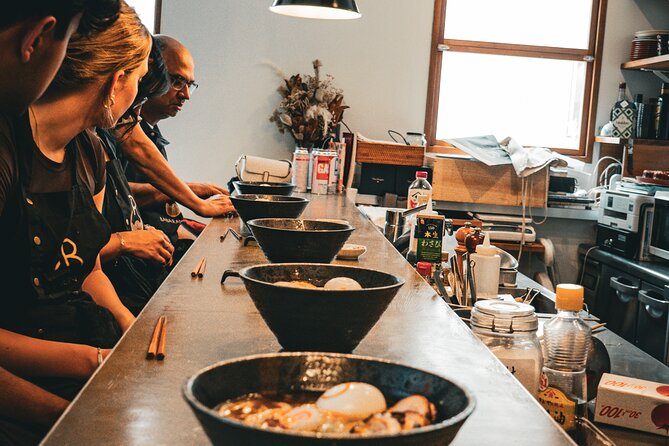
Tokyo is full of food experiences, but this one hits differently because it happens where the real work happens. You are in a restaurant-style kitchen, using professional-grade tools, and that matters. Home-kitchen classes can be cozy, but they often limit what you can learn about timing, texture, and workflow.
I like that the class is built around real outcomes, not vague cooking “vibes.” You’ll make ramen noodles from scratch and gyoza, then sit down and enjoy what you made. That loop is satisfying: learn a technique, practice it right away, and eat the result while everything is fresh.
The structure also helps with confidence. You get feedback while your dough is still dough, while your gyoza are still uncooked, and while your bowl is still being built. That’s the difference between a cooking class and a cooking demonstration.
More Dining Experiences in Tokyo
- Tokyo Bar Hopping Tour in Shinjuku (All-You-Can-Drink + Dinner)
★ 5.0 · 3,587 reviews - Tokyo: Sumo Show and Dining Experience
★ 4.8 · 2,742 reviews - Tokyo: Samurai Restaurant Show Ticket with 2 Drinks
★ 4.5 · 1,307 reviews
Where to meet at Baba Ramen Cooking Meguro (and what the location does for you)
You start at Baba Ramen Cooking Meguro, in Meguro City, Tokyo. The exact address is 3-chōme-7-32 Shimomeguro, Meguro City, Tokyo 153-0064. The class starts at 9:00 am, and the whole experience runs about four hours, ending back at the meeting point.
Why I care about the meeting point: Meguro is a practical neighborhood for visitors because it connects well to the rest of the city. The tour info also notes it is near public transportation, so you’re not stuck with a long transfer before or after your cooking time.
Plan to arrive a bit early. Kitchens are busy, and since you are going to be working with hot tools and active stations, you’ll feel better if you start relaxed rather than rushing in the last minute.
Small group of up to 6: the practical advantage for ramen technique
This is a maximum of 6 travelers class. In Tokyo, that group size is a big deal. When there are fewer people, it is easier for the chef team to notice what your hands are doing and correct it quickly.
You see this in the kinds of comments people make about the class. They highlight that instructors keep everyone involved and that the pace feels hands-on the entire time. That structure makes sense for a noodle class because noodle-making needs constant attention: dough hydration, rolling, thickness, and timing all affect the end result.
You’ll be supported by bilingual chefs, and in past groups you may run into instructors named Andrew, Eric, Jae, and Leo. Since English and Japanese are both supported, you can ask “why” questions, not just “what do I do next.” That helps you actually learn.
Inside the restaurant kitchen: what the morning looks like
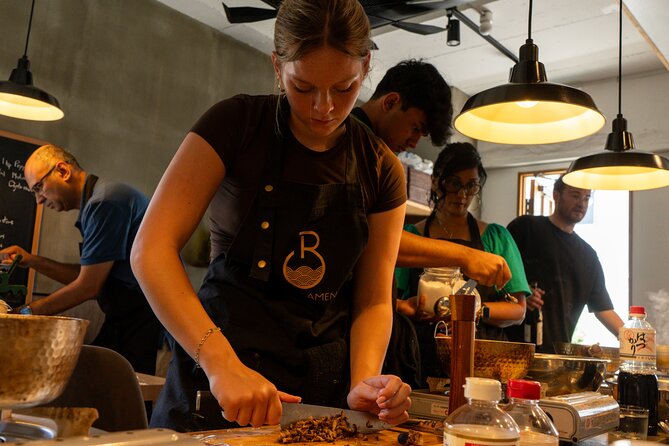
The class is structured as a full cooking session. Expect a sequence that moves from prep and hands-on dough work, to flavor building, to rolling and cooking gyoza, then finishing with a shared meal and learning moments.
A key detail is that you are using kitchen-grade equipment. Even if you cook at home sometimes, the tools and workflow in a restaurant kitchen are different. That’s where you pick up more than just recipes. You learn how stations are organized, how to work efficiently, and how to adjust when something takes longer than you expected.
Also, the experience is described as fun and professional, with a focus on technique and process. Several comments mention that you get cultural background and etiquette lessons too. That might sound “extra,” but it helps you understand why ramen is built the way it is, not just how to copy a bowl.
More Ramen Experiences in Tokyo
- Eat and Drink Like a Local: Tokyo Ueno Food Tour-Taverns&Ramen
★ 5.0 · 957 reviews - Ramen & Gyoza Cooking Class in Tokyo with Local Supermarket Visit
★ 5.0 · 823 reviews - Tokyo: Ramen Tasting Tour with 6 Mini Bowls of Ramen
★ 4.9 · 432 reviews - Tokyo: Easy Ramen Cooking Experience in Kabukicho, Shinjuku
★ 4.6 · 321 reviews
Making ramen noodles from scratch, with the real texture lessons
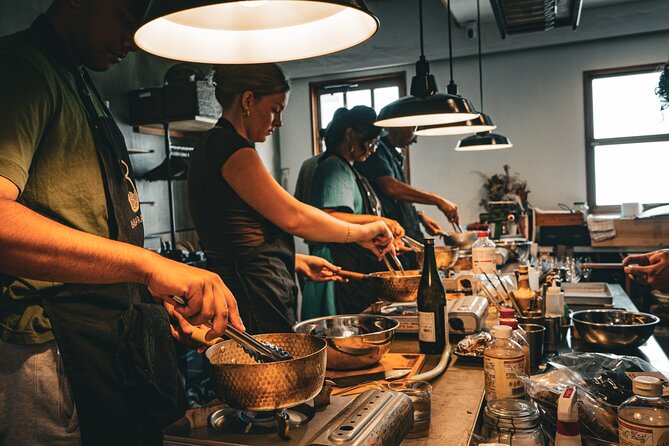
This class centers on ramen noodles made from scratch. You’ll work with dough and develop technique the way you would in a real kitchen workflow. The biggest value here is learning what makes ramen noodles feel like ramen noodles: elasticity, chew, and how the dough behaves after rest and handling.
You also learn from process. One of the recurring themes in feedback is that the class is highly interactive and that you work through multiple layers of ramen making, including steps that take time and effort. That lines up with what you should expect. Noodle-making has a “feels simple but isn’t” quality, because small changes change the outcome.
What to know before you go:
- Be ready to use your hands for real dough work.
- Wear comfortable clothing you don’t mind getting a little flour or sauce on.
- Expect the session to feel busy. You are not waiting around for someone else to finish.
Choosing between two broths: tailoring flavor, not just following a script
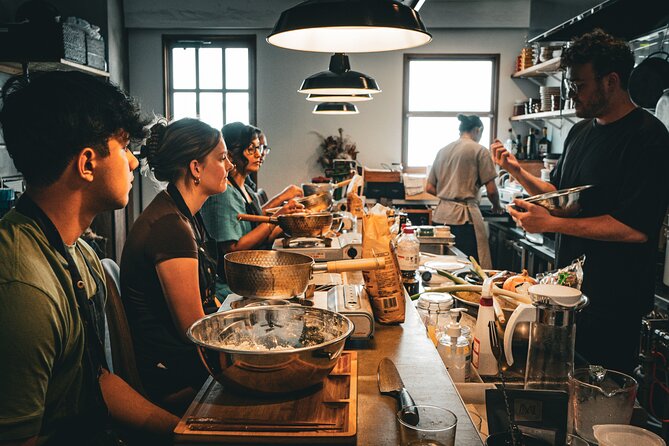
You get to choose from two broth options. That’s one of the smartest design choices for a class like this, because broth flavor is where personal preference matters most. You can pick a style that matches your taste, then you learn how the flavor is built.
One review included a specific technique topic that points to how they teach flavor bases. People mention learning about shoyu-tare at home afterward, which suggests you do more than mix a sauce at the end. You learn what the components do and how they relate to the final bowl.
About ingredients: ramen broth can involve different prep depending on the broth style. Since feedback mentions hands-on prep steps like breaking down bones for broth in at least one group experience, you might do ingredient prep as part of your chosen option.
If you have dietary needs, this is also where the class can work for you. The tour information states that vegetarian and vegan options are available with advance notice (subject to availability), plus gluten-free and pork-free options if you request them.
Gyoza time: rolling, filling, and cooking with confidence
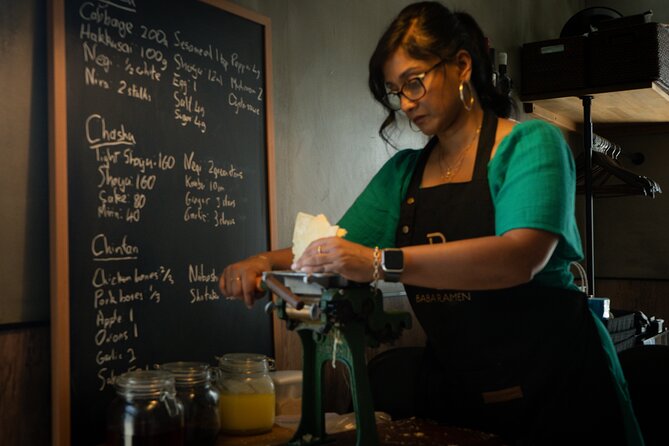
Gyoza is a perfect match for a hands-on class because the skill is physical and visible. You can see what you did wrong or right, and the chef team can correct it quickly.
You’ll roll and shape gyoza, then cook them as part of the meal. Feedback repeatedly emphasizes how interactive this portion is, and how everyone gets pulled into tasks rather than watching from the sidelines.
Why that matters: gyoza technique is about uniformity. If one dumpling is thicker, it cooks differently. If a fold is sloppy, it might leak. This class format helps you internalize the “why” behind the hand movements, so your next batch at home is better on the first try.
Also, cooking gyoza in a real kitchen teaches you timing and heat control. At home you might struggle with burner strength, pan size, or how fast water evaporates during the steaming phase. In the restaurant environment, you get guidance to match the pace you need.
Eating what you made: the ramen bowl plus the etiquette piece
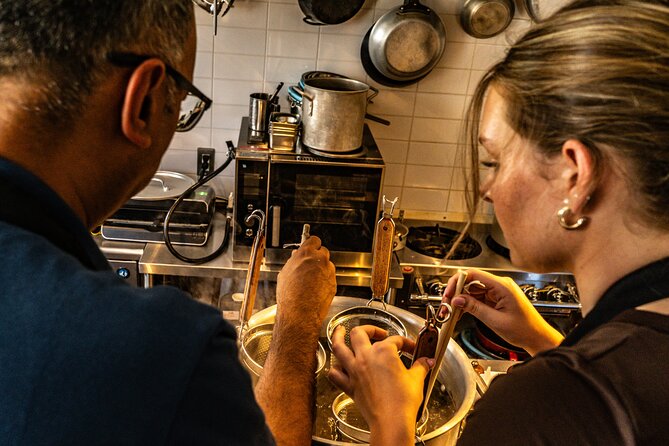
After the cooking work, you eat. And not in a vague way. You get to enjoy the ramen and gyoza you helped create, which is a huge part of the satisfaction.
You’ll also get lessons on ramen etiquette and background information about ramen and the steps of the process. That’s useful because it reframes ramen from just “food” to a cultural craft. Even if you don’t memorize the history, the practical lessons stick: how the bowl is assembled, how components relate, and what to pay attention to when you’re judging texture and flavor.
One more practical note: because you are cooking for most of the session, you’ll likely be hungry. That is not a complaint, it’s the point. You end up with a full meal as part of a cooking class experience, so you’re not paying and then going off to hunt food after.
The e-book you take home, and why it actually helps
You take home a cooking e-book so you can recreate the recipes at home. This is where the class becomes useful beyond your one morning in Tokyo.
I like that the e-book is included because ramen is one of those dishes people struggle to reproduce. The hardest part isn’t just the ingredient list, it’s timing and handling. When you already learned the workflow in a kitchen setting, the written steps make more sense.
If you are the type who likes to cook when you return home, this is a strong add-on. If you only want a vacation meal, you might not use the e-book much, but it is still a nice souvenir that keeps the experience alive.
Price and value: is $159.18 a fair deal for four hours in a Tokyo kitchen?
$159.18 per person is not bargain pricing. That’s true. But value is not only about cost, it’s about what you get.
Here’s what you are paying for:
- Hands-on noodle-making and gyoza work, not just watching
- Restaurant-grade equipment and a real cooking station setup
- Small group format (max 6), which supports more individual coaching
- Chef teaching in English and Japanese
- Included meal made from your work
- A take-home cooking e-book
Compared with classes where you pay for a short demo and limited hands-on time, this one aims to be full participation. Several comments highlight that you are included in almost every part of the process and that the kitchen helps you focus on technique and details.
The one reason it might not be worth it for you is if you want a relaxing food tasting, not a working session. If you prefer gentle strolls and eating your way around Tokyo, choose a tasting-style experience instead.
Who should book this ramen-and-gyoza class (and who might not)
This fits best if you:
- want to learn a skill you can practice later
- enjoy hands-on cooking, especially noodles
- like ramen enough to care about texture and broth choices
- travel with family or friends who can handle active cooking time (the group setup supports that kind of shared effort)
You might skip it if:
- you want a low-effort class
- you don’t like working around heat, dough, and active stations
- you only want quick photos and a light meal
Also, it is listed as accommodating for different diets, as long as you request it in advance. If you have gluten-free needs, vegetarian or vegan preferences, or need pork-free options, message your requirements early because availability is subject to what the kitchen can support.
FAQ
FAQ
How long is the ramen and gyoza class?
It runs for about 4 hours.
When does the class start, and where do I meet?
The start time is 9:00 am at Baba Ramen Cooking Meguro, 101 3-chōme-7-32 Shimomeguro, Meguro City, Tokyo.
What group size should I expect?
The experience has a maximum of 6 travelers.
Can the class accommodate dietary restrictions?
Yes. Vegetarian and vegan options are available with advance notice (subject to availability). Gluten-free and pork-free options are also available if you request them in advance (subject to availability).
Do I get to eat what I make?
Yes. The class includes enjoying the ramen and gyoza you prepare as part of the experience.
What if the weather is poor or I need to cancel?
You can cancel for a full refund if you cancel at least 24 hours in advance of the experience start time. The experience notes it requires good weather, and if it is canceled due to poor weather, you’ll be offered a different date or a full refund.
Should you book this Tokyo ramen and gyoza class?
If you want one Tokyo food memory that goes beyond eating, I’d book it. The key reasons are hands-on ramen noodle-making, gyoza you actually make, and the fact that it all happens in a real restaurant kitchen with small-group attention.
Book it if you enjoy learning a real technique and you’re fine with working for your lunch. Skip it if you want something more relaxed and light. If that description matches you, this is a strong use of time in Tokyo.
Latest write-ups near Tokyo
- Tokyo Customized Private Tour: See Top Attractions in 1 Day★ 4.8 · 67 reviews
- From Tokyo: Top 5 Scenic Spots of Mount Fuji Full-Day Tour★ 4.5 · 67 reviews
- Tokyo: Shinjuku Izakaya and Golden Gai Bar Hopping Tour (2h)★ 4.9 · 67 reviews
- Traditional Japanese Music ZAKURO SHOW in Tokyo★ 5.0 · 67 reviews
- Tsukiji: Unlimited Sake Tasting Experience★ 4.9 · 67 reviews
- Tokyo: Not a show- a professional sumo practice with experts★ 4.9 · 67 reviews
- Samurai Ninja Museum Asakusa: Kid-Friendly Ninja Training★ 4.7 · 67 reviews
- Private Harajuku Omotesando Architecture Walking Tour★ 5.0 · 67 reviews
Ramen Experiences, compared.

Ramen Cooking Class at Ramen Factory in Kyoto
Read our review →
Eat and Drink Like a Local: Tokyo Ueno Food Tour-Taverns&Ramen
Read our review →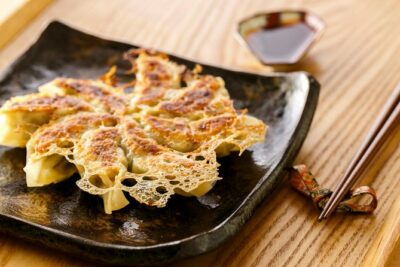
Ramen & Gyoza Cooking Class in Tokyo with Local Supermarket Visit
Read our review →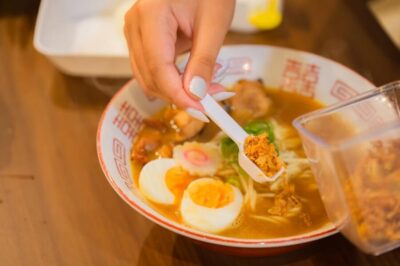
Ramen Cooking Class at a Ramen Factory with Souvenir
Read our review →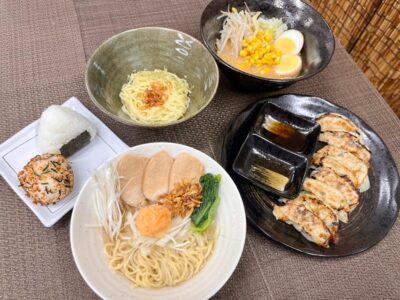
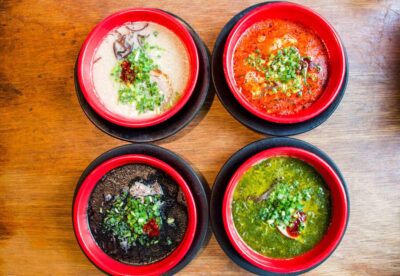

Five Must-See Highlights Walking Tour & Ramen Lunch
Read our review →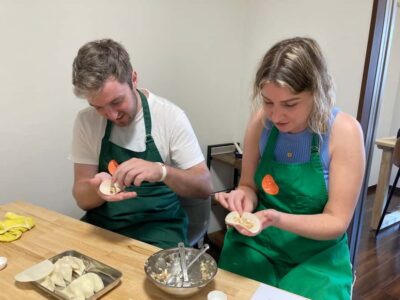
Browse the lists this tour appears in