
Reviewed · COOKING CLASSES
Well-balanced BENTO (lunch box) Cooking Class
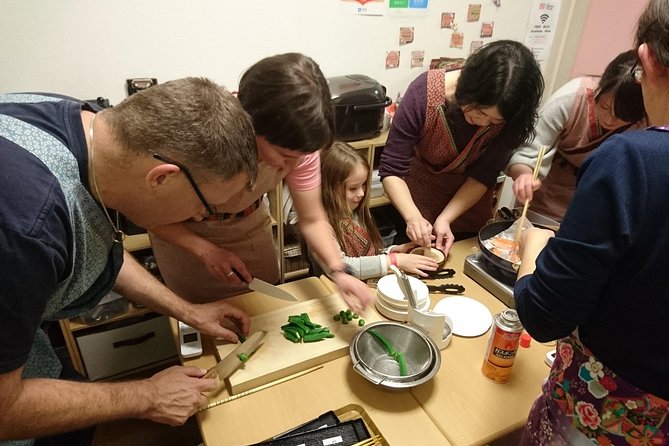
This is a hands-on Osaka cooking class that treats lunch like an art project, then rewards you by letting you eat your results right there. I like that the session starts with dashi from scratch and the instructor, Yumi, explains both the how and the why in a way that sticks. You then move on to classic home bento components, and at the end you get to assemble a lunchbox that looks genuinely Japanese.
Two things I especially liked: the way Fumi and Yumi keep the pace practical, and the emphasis on bento packing so your lunch isn’t just tasty, it’s neatly arranged. One possible drawback to consider is that the class runs about 2 hours 30 minutes, so there is not much time to slow down if you learn at a more relaxed speed.
Key highlights at a glance
- Dashi made first, so the rest of your dishes taste more “right” and less like random cooking
- Up to seven classic dishes built around wagyu beef, shrimp, salmon, egg, squash, mushroom, and green vegetables
- Triangular rice balls (onigiri) practiced with plastic molds, not just assembled
- Packing lessons for a clean, attractive bento layout with fresh vegetables
- Small group size, maximum 8 people, which helps you actually participate
- Complimentary miso soup to complement what you make
Sakura Cook Osaka: a small-group bento class where you actually cook
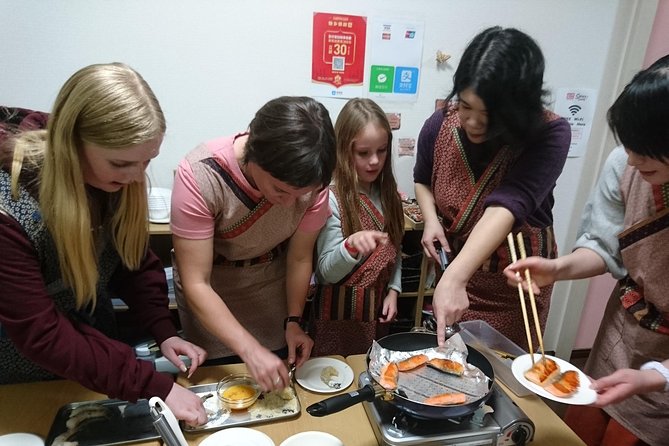
This experience takes place at Sakura Cook, in Osaka’s Kitahorie area, at Banix北堀江Japan (System Gallery). The meeting point is clearly stated, and it is near public transportation, which matters because you do not want to burn time hunting trains before you start chopping and stirring.
What makes this class feel good from the start is the small scale. The group is capped at 8 travelers, and that size keeps the instructor moving through each person’s questions. I also like that you receive a mobile ticket, which is one less thing to manage in a foreign city.
You will choose your favorite lunch box at the beginning, then put on an apron. That sounds simple, but it sets the tone. You are not just watching. You are building your own bento “package” from the ground up, and that makes the meal feel like yours, not a demo you pass through.
A quick reality check: it is not a tasting menu class. It is a working kitchen class where you’ll handle ingredients, follow techniques like frying and simmering, and still finish with a tidy lunchbox. If you want a super casual, slow walk-through of Japanese food culture, this might feel a bit structured. If you like doing, not just looking, you’ll have a great time.
From dashi to dinner-level technique: what you cook in the kitchen
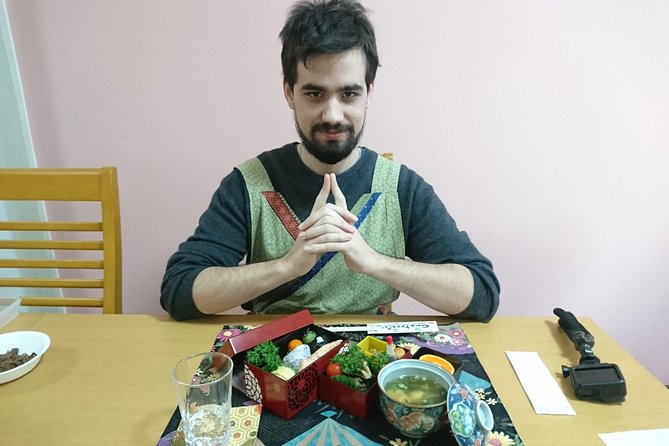
The cooking starts with making Japanese broth called dashi. This is a huge part of why the class is worth your time. Dashi is the backbone of a lot of Japanese flavors, so learning it early gives you a taste of how Japanese home cooking builds depth without needing complicated steps.
The instructor also focuses on the process behind dashi, and that detail tends to stick. In particular, I like that the teaching is not just, add this, stir that. You get the logic of why dashi matters, which makes it easier to recreate later at home.
From there, you make up to seven dishes that are common in Japanese households. The class uses ingredients like wagyu beef, shrimp, salmon, egg, squash, mushroom, and green vegetables. You’ll work with a mix of techniques, including:
- frying
- grilling
- simmering
- marinating
That blend is practical. At home, you might only cook one style well. Here you get reps across several methods, and you also learn how each dish behaves when it cools down, which matters for bento since your lunch is often not eaten immediately after cooking.
More Cooking Classes in Osaka
- Osaka: Ramen and Gyoza Cooking Class in Dotonbori
★ 5.0 · 378 reviews - Osaka Cooking Class: Okonomiyaki &Japanese cuisines experience
★ 5.0 · 261 reviews - Ramen and Gyoza Cooking Class in Osaka
★ 5.0 · 202 reviews
What this means for your food results
Bento is basically a balancing act. Your food has to taste good together, not just as separate items. By cooking the dishes in a planned sequence, you learn how Japanese meals aim for harmony: savory meets gentle, rich meets light, and you still get that clean finish from dashi-based flavors.
If you worry that one person will get stuck doing all the work, you can relax. The class is set up for participation, and instructors keep things moving so you are not left out of key steps.
Onigiri practice with molds: making triangular rice balls the easy way
After you’ve built the dishes, you shift into triangular rice balls, often called onigiri. The class has a specific approach: you practice shaping the triangles using plastic molds, then you complete two rice balls yourself.
This is one of those details that makes the class feel smarter than it sounds. Shaping onigiri can be fiddly if you try to freehand it, especially if your hands are too wet or your rice is too hot. The molds help you learn the form without wasting the whole session fighting the geometry.
Once you’ve done the practicing, you will pack the rice balls along with your other items. That matters, because triangular shapes are not just decorative. They are easy to stack, easy to grab, and they fit the bento mindset: portable, neat, and satisfying without being messy.
The real takeaway for home
If you want to bring something back that goes beyond a one-time lunch, this is it. You leave knowing that onigiri can be made consistently with simple tools and technique. Even if you do not own the exact molds, you’ll understand how to aim for a tight triangle and keep the rice together.
More Lunch Experiences in Osaka
- Osaka: Five Must-See Highlights Walking Tour & Ramen Lunch
★ 4.7 · 411 reviews - Osaka/Kyoto: Amanohashidate & Miyama Tour with Boat & Lunch
★ 4.6 · 207 reviews - Walking Tour of Osaka’s 5 Must-See Sights, with Ramen for Lunch
★ 5.0 · 158 reviews - 5-Hour Osaka Highlights Bike Tour with Lunch
★ 4.8 · 146 reviews
Learning the bento layout: how to pack it so it looks like a Japanese home lunch
This is where the class earns its name. Before you eat, you spend time packing. You are guided to create an appealing arrangement inside your chosen bento box, and you’ll include fresh vegetables as part of the balance.
The packing part is not filler. It trains your eye. Bento is built for portions that work together in one box, with colors and textures that look intentional. When your instructor advises on an attractive pack way, you are basically learning a layout system, not just how to place food randomly.
I like that you do not need to be artistic. The class teaches you a method. Once you see the logic, you can repeat it.
A practical tip for getting great results
If you care about presentation, focus on spacing. Leave little gaps where you can so items do not slump. Also think about how your lunch will be opened. If your bento box opens in a way that tips food, pack your heavier items closer to stable zones.
And yes, you will probably feel a little proud when you close the lid. Then you’ll eat it, because the best part of bento is the combination of flavors, not keeping it as a decoration.
Eat what you made: miso soup, chopsticks, and the satisfaction factor
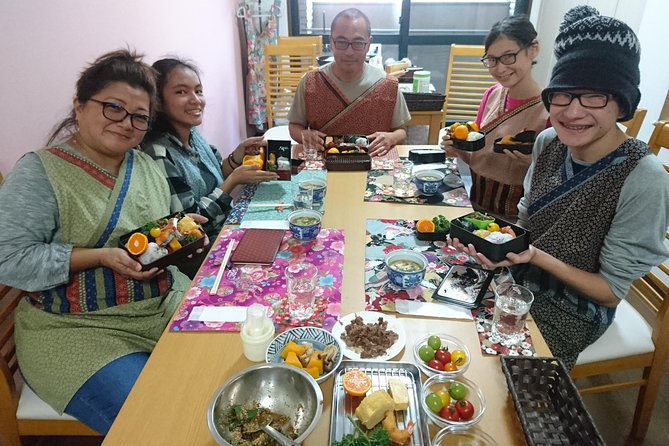
At the end, you place your dishes into the final set for the meal, grab chopsticks, and eat. There is a simple moment that often feels meaningful: you say Itadakimasu and start your lunch.
You also get complimentary miso soup served alongside what you cooked. I appreciate this because it rounds out the meal. Your bento has multiple salty and savory elements, and miso brings that comforting, lightly salted warmth that keeps the whole lunch from feeling heavy.
The learning does not stop at cooking. When you eat, you can finally judge the balance. This is where the value of learning dashi first becomes obvious. Flavors land better when the base is right, and the bento pieces work together instead of competing.
Price and value: is $92.24 worth it?
The price is $92.24 per person, and the average booking window is about 53 days in advance. That tells me two things. First, the class is popular enough that people plan ahead. Second, you should not treat it as a last-minute “maybe.”
Now, value. You are paying for more than ingredients. You get:
- a structured cooking workflow for dashi and up to seven dishes
- hands-on technique time across frying, grilling, simmering, and marinating
- rice shaping help through onigiri molds
- instruction on bento packing and neat presentation
- a sit-down meal using what you made, plus miso soup
- a small group environment that supports participation
If you’ve tried Japanese cooking classes before, the best ones teach transferable technique. This one does that. Dashi is a skill. Bento layout is a skill. Onigiri form is a skill. Even if you never make every dish again, you take home repeatable building blocks.
Could it feel pricey if you only want a casual meal? Sure. But if you want a hands-on experience that ends with a balanced lunch and real competence, it can be a strong use of your time.
Who this bento class is best for (and who should be cautious)
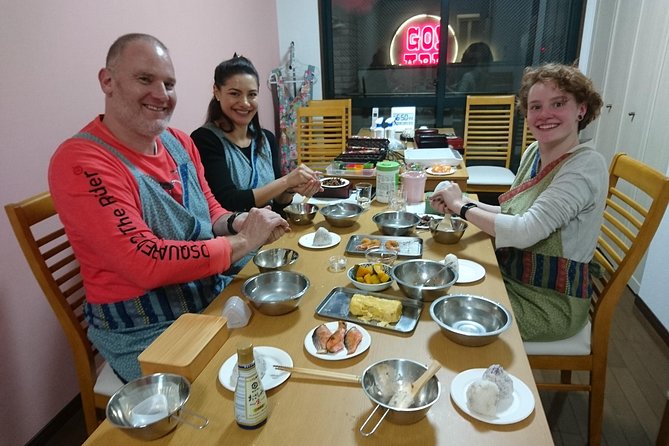
This class is a great fit if you:
- want a practical Japanese food experience you can copy later
- enjoy cooking and like structured guidance
- want a smaller group class that does not feel crowded
- travel with kids who can handle guided cooking steps (the class is described as doable for a 12-year-old)
It may be less ideal if you:
- need long, unhurried time for each step. The pace is efficient.
- have dietary needs that require major substitutions. You can and should advise dietary requirements at booking, but the class info does not spell out specific menus for every diet.
Also consider language expectations. English is described as warm and to the point, and the teaching style sounds very supportive. Still, if you want a totally translation-heavy experience, you might find any small cooking-class setting to be more “learn by doing” than “lecture with perfect wording.”
Simple planning tips before you go
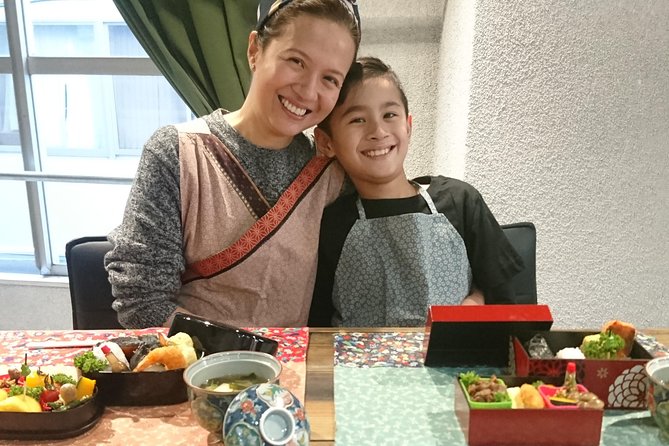
A few details will help your experience run smoothly.
Bring normal cooking comfort. You’ll be in an apron, but you’ll still move, stand, and handle hot items during cooking steps. Wear shoes you can stand in.
Decide on your bento box preference early. The class starts with choosing your lunch box, so if you have a favorite style, pick it fast.
If you care about meal goals, think about timing. This is a 2 hours 30 minutes experience, and you’ll finish with lunch. Plan your day so you are not trying to squeeze this between frantic train rides and dinner commitments.
Should you book the Well-Balanced Bento Cooking Class in Osaka?
I think you should book it if you want a food experience that ends in something real, not just a photo. The combo of dashi from scratch, cooking multiple classic dishes, and then finishing with a taught bento packing process makes this feel like a complete Japanese lunch skill lesson.
Skip it only if you are not excited by hands-on cooking, or if you need very specific dietary customization that you cannot outline ahead of time. Otherwise, this is the kind of activity that leaves you with both a great meal and a practical takeaway for home cooking.
FAQ
How long is the well-balanced bento cooking class in Osaka?
The class lasts about 2 hours 30 minutes.
What will I cook and make during the class?
You will make dashi first, then up to seven classic Japanese dishes. You will also prepare triangular rice balls and learn how to pack your bento box lunch, including adding fresh vegetables.
Is there a limit on group size?
Yes. The experience has a maximum of 8 travelers, which helps keep the class hands-on.
Are dietary requirements accommodated?
You should advise any specific dietary requirements at the time of booking. The class info does not list specific diets, so it is best to share your needs early.
Where does the class start, and is there a mobile ticket?
The meeting point is Banix北堀江Japan, 550-0014 Osaka, Nishi Ward, Kitahorie, 3-chōme62 システマギャラリー. You will receive a mobile ticket, and the location is near public transportation.
What is the cancellation policy?
You can cancel for a full refund up to 24 hours before the experience starts. If you cancel less than 24 hours in advance, the amount paid will not be refunded.
Latest write-ups near Osaka
- Osaka Private Tour with Government-Licensed Guide★ 4.8 · 20 reviews
- Guided Photography Tour in Osaka: Capturing Memories★ 4.5 · 20 reviews
- Osaka: Food Tour at Night with Tastings★ 4.9 · 20 reviews
- Kansai/KIX Airport to or from Osaka/Kyoto Private Transfer★ 5.0 · 20 reviews
- Osaka: City Highlights Bike Tour★ 4.7 · 20 reviews
- From Osaka/Kyoto: Amanohashidate Day Tour【Including tickets】★ 3.7 · 20 reviews
- Osaka Okonomiyaki Cooking Class “Learn here and make it at home”★ 5.0 · 20 reviews
- Volleyball in Osaka & Kyoto with Locals!★ 5.0 · 21 reviews
Cooking Classes, compared.
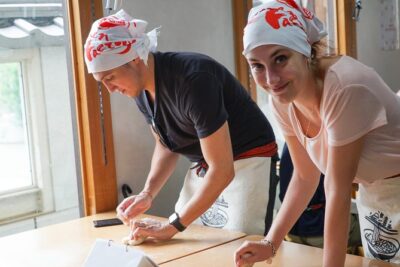
Ramen Cooking Class at Ramen Factory in Kyoto
Read our review →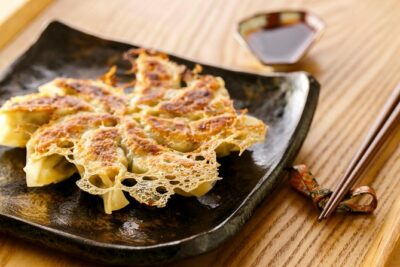
Ramen & Gyoza Cooking Class in Tokyo with Local Supermarket Visit
Read our review →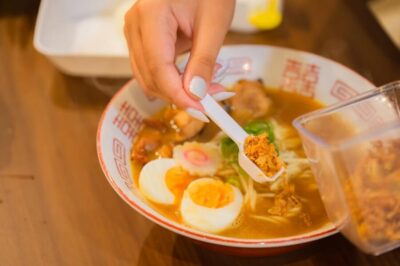
Ramen Cooking Class at a Ramen Factory with Souvenir
Read our review →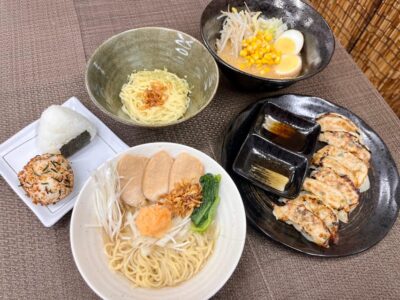
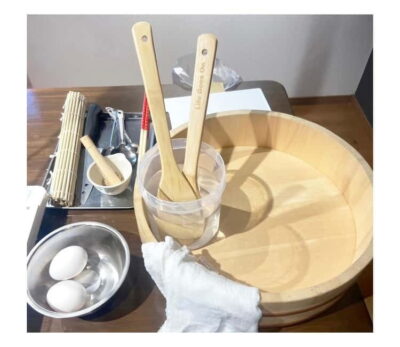
Japanese Washoku Bento Small Group Cooking Class
Read our review →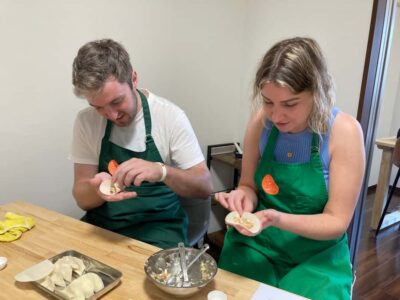

Easy Ramen Cooking Experience in Kabukicho, Shinjuku
Read our review →
Ramen and Sushi Cooking Class with Sake Pairing Set in Tokyo
Read our review →Browse the lists this tour appears in