
Reviewed · SAMURAI & NINJA EXPERIENCES
Tokyo Samurai Experience
Tokyo’s samurai angle is a fun one, because it is not just a show. You get a real walk through old-school neighborhoods tied to samurai life, then you put on a kimono and learn combat-style basics under professional instruction. It’s a 4-hour sampler of Japan that most visitors skip.
I especially like the mix of culture + activity. You start with Kagurazaka street time and temple-and-shrine scenery, then shift into the practical, physical samurai portion (including kimono rental). The second thing I like is the food setup: you get a traditional Japanese lunch with a vegetarian option, plus one traditional sweet or food item to choose.
The only real drawback to consider is dietary limits. Vegetarian is covered, but vegan and gluten-free options are not listed, so if you eat that way you’ll want to plan carefully.
Key highlights worth getting excited about
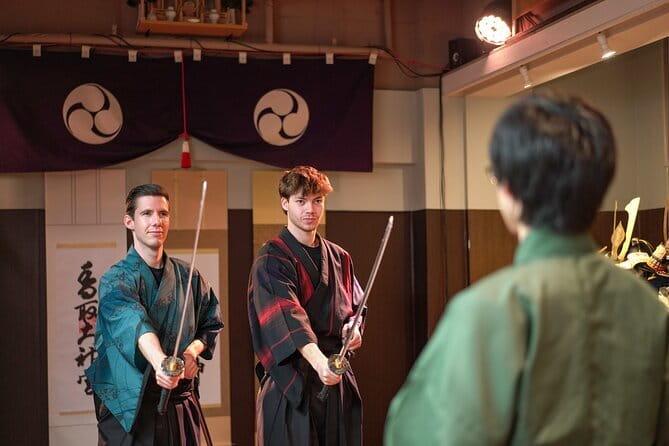
- Small group (max 7) keeps it personal during the samurai instruction
- Kimono rental included so you actually look the part for the training
- Hands-on samurai basics for 1 hour led by professional instructors
- Kagurazaka walking time through streets tied to samurai-era life
- Lunch with vegetarian option plus a choice of one traditional sweet or food
Tokyo Samurai Experience: what you’re really signing up for
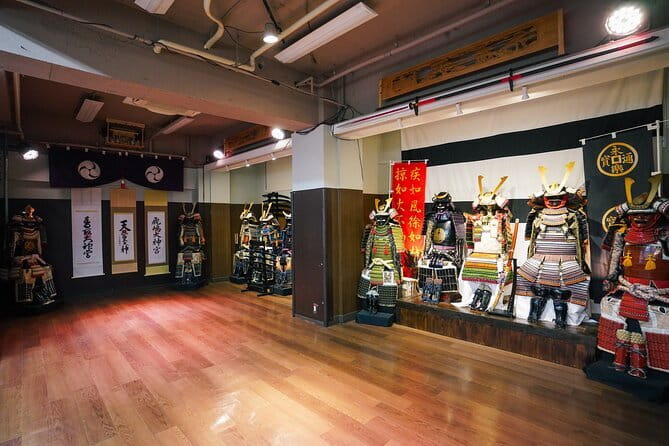
This 4-hour Tokyo experience is built like a neat sandwich: a short neighborhood introduction, a hands-on samurai segment, and a traditional meal in between. If you like your sightseeing to have a clear “do this, then do that” rhythm, this format makes it easy. You are not spending hours searching for the next stop, because the plan is set and the tour runs in a tight loop back to where you started.
The heart of it is the samurai theater training portion at Samurai Theater Tokyo, where you learn the basics of samurai fighting and movements. You also get a kimono rental, which matters more than it sounds. In a city full of people snapping photos, dressing the part changes the experience. It makes you slow down, pay attention, and follow directions without treating it like a quick costume moment.
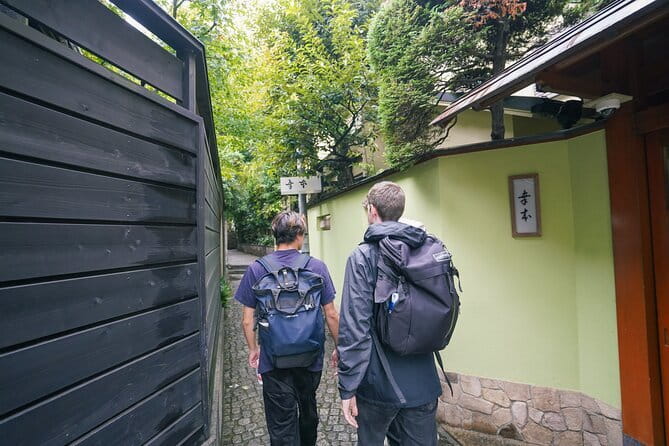
And the Kagurazaka pieces are not filler. Kagurazaka is one of those districts where the streets feel like they have memories. Your guide takes you through historic areas where samurai once lived, so you get more than scenery. You get context for why the neighborhood feels the way it does, and you walk long enough to actually notice details.
Finally, there is a food component that is genuinely useful, not just token snacking. You get a traditional Japanese lunch in a cozy wooden restaurant that is described as hidden and tucked away in the heart of Kagurazaka. You also get one traditional food or sweet to choose during the tour. That makes the meal feel like part of the experience, not something you have to squeeze in on your own.
More Samurai & Ninja Experiences in Tokyo
- Tokyo: Samurai Restaurant Show Ticket with 2 Drinks
★ 4.5 · 1,307 reviews - Tokyo: Samurai Ninja Museum Guided tour and Experience
★ 4.6 · 1,010 reviews - Tokyo: Samurai Sword & Archery Class from Samurai Descendant
★ 5.0 · 603 reviews
Meeting point and pacing around Iidabashi
You start at Aoyama Flower Market, in front of the West Exit of JR Iidabashi Station. The exact guidance is clear: you should see it on your right after you exit the JR Iidabashi Station West Exit. The stop is inside the station area, so weather and getting lost are less of a worry.
Timing-wise, you can think of the tour as four phases:
- a brief flower market introduction (about 10 minutes),
- short Kagurazaka street exploration (about 20 minutes),
- a full 1-hour samurai instruction session with kimono rental,
- a longer lunch block (about 1 hour 40 minutes),
- and then another walk segment in Kagurazaka (about 20 minutes).
This pacing is practical. You get movement before the training, then you get a substantial lunch after, and then you end with a final stroll while the neighborhood is still fresh in your mind.
A quick note on group size: the tour caps at 7 travelers. That helps a lot during the samurai portion because an instructor can correct form and spacing. It also makes the walking parts feel like a real guided experience instead of a crowded herd.
Stop 1: Aoyama Flower Market near Iidabashi
The first stop is Aoyama Flower Market, right by JR Iidabashi Station. It’s only around 10 minutes, but it sets the tone: Tokyo is not only neon and skyscrapers. This is an “everyday Tokyo” moment, where flowers signal care, seasonality, and local routine.
Because it is close to transit, it is a smart way to get started. You will likely arrive already warm, already oriented, and then you get a quick cultural beat before the walking begins. Also, admission here is free, so there’s no mental math about whether you’re paying to see something.
The drawback? With only 10 minutes, you should treat it as a warm-up, not a full stop. If you are hoping for a shopping experience or a deep look at how the market works, this will not be that. It is meant to start the day smoothly.
Stop 2: Kagurazaka streets, temples, and samurai-era context
Next comes Kagurazaka, where you discover the historic samurai streets. The tour start point is Iida Station, and then you explore the Kagurazaka district with your guide. You will wander past historic temples and shrines while learning about how samurai-era life shaped the area.
This part runs about 20 minutes, and it is intentionally short. The goal is to get you grounded in place before the training. You do not just see Kagurazaka, you learn what to notice: the layout, the atmosphere, and why the streets feel different from Tokyo’s more modern grids.
Admission is listed as free here, so you’re paying for guidance and context, not entry fees.
One practical consideration: because this is a walking segment, wear shoes you’re comfortable moving in. Tokyo streets can be smooth, but you still want stable footing for later in the tour, especially right before the hands-on training.
A change of pace from Tokyo:
- Mt Fuji and Hakone 1-Day Bus Tour Return by Bullet Train
★ 5.0 · 26,383 reviews - 1-Day Tokyo Bus Tour
★ 5.0 · 14,250 reviews - Tokyo: TOKYO SKYTREE® Admission ticket
★ 4.5 · 11,192 reviews - Tokyo: teamLab Planets TOKYO Digital Art Museum Entry Ticket
★ 4.6 · 9,779 reviews
Stop 3: Samurai Theater Tokyo, kimono rental, and 1 hour of technique
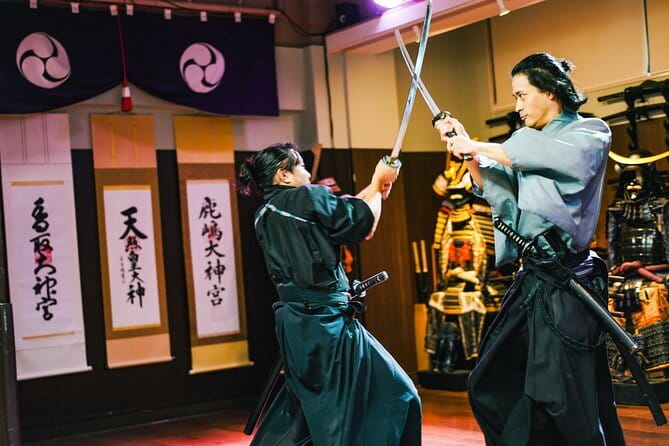
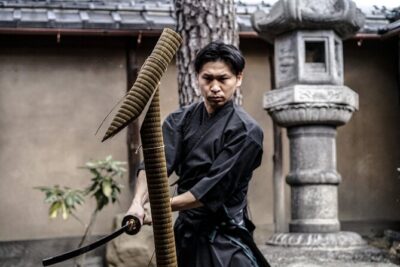
This is the main event. Samurai Theater Tokyo is where you get the samurai experience and kimono rental. The plan is built around learning the basics of samurai fighting and movements with professional instructors, and it lasts about 1 hour.
In plain terms, you can expect a hands-on lesson, not a passive performance. The goal is for you to understand posture, movement, and foundational fighting drills. You also get dressed in a kimono, and once you are in that outfit you’ll be more ready to follow directions and try things your own way.
From the strong feedback on the experience, this is the moment people remember most: dressing up, learning how to use a katana, and then performing. That performance element matters because it turns the training into a “now I can do something” payoff, instead of ending right when you’re just getting started.
The big value here is direct instruction. In a city like Tokyo, you can watch samurai culture from a distance. Here, you participate. That alone is why this tour tends to score well.
A consideration: the training is active. You don’t need to be an athlete, but you should expect you will move, stand, and practice for real. If you have mobility limitations, you’ll want to check your comfort level before booking.
Stop 4: The hidden Kagurazaka lunch, vegetarian-friendly with limits

After training, the tour slows down into food. Lunch is about 1 hour 40 minutes in a cozy, wooden restaurant in the heart of Kagurazaka. The setup is traditional Japanese dining, and vegetarian options are available.
You also get one traditional food or sweet that you can choose during the tour. That is a nice touch because it makes lunch feel like a guided tasting moment, not just a set meal you have to accept.
Here’s the important dietary detail: vegetarian options are available, but vegan and gluten-free options are not available. If you eat vegan or you need gluten-free for medical reasons, this tour may not be a good fit unless you can confirm what the kitchen can do on the day with the provider. Based on the stated options, don’t assume replacements are available.
What I like about the lunch timing is that it comes after the samurai session. You’re not trying to eat while you’re still full of adrenaline from the training. You eat, recover, and then you walk again with a calmer pace.
Stop 5: One more Kagurazaka walk to make it stick
The final stop is another Kagurazaka walk, about 20 minutes. By now, you have the samurai lesson under your belt and the kimono experience fresh in your head. So the neighborhood walk lands differently. You tend to notice more, and the guide’s storytelling has an extra layer because you just learned how samurai movement and discipline works.
This is where you get more time in the historic district, with another pass through areas where samurai once lived. You’ll also continue learning about philosophy connected to the culture, based on what the tour description signals.
Admission is free for this segment too, so once again you are paying for interpretation, pacing, and getting you to the right places at the right time.
Practical tip: if you’re taking photos, this is the second-best moment to capture Kagurazaka atmospheres. The first big photo moment is usually tied to the kimono and training. The walk gives you a more natural background for shots without feeling like a staged photo stop.
Price and value: is $166.04 worth it?

At $166.04 per person, this is not a budget stroll. But it is also not priced like a private experience. The value comes from what’s bundled:
- 1 hour of samurai instruction with kimono rental
- Traditional Japanese lunch with a vegetarian option
- One traditional food or sweet included
- A certified MagicalTrip guide
- Small group size (max 7)
In Tokyo, kimono rentals alone can be pricey, and samurai experiences that include hands-on training tend to add up fast. Here, you are combining the practical training, the cultural walk, and a full meal in one session. You also get guided storytelling, which is what turns a neighborhood into something you understand.
Time matters too. It’s about 4 hours. That means it fits nicely on a day when you want something memorable without losing half your daylight to commuting between separate bookings.
One more value angle: this is often booked around 62 days in advance on average. That usually means you should plan ahead if you want a convenient time slot.
If your travel style is “I want one ticket that delivers multiple hits,” this price can make sense.
Who this suits best, and who should think twice
This tour is a great fit if you want:
- a hands-on cultural activity, not just museum time,
- a guided neighborhood walk through Kagurazaka,
- a samurai experience that includes dressing up in a kimono,
- and a structured meal with a vegetarian option.
It also works well for people who feel nervous about booking “experience tours” on their own. A small group and a certified guide reduce the guesswork.
Who should think twice:
- Anyone who needs vegan or gluten-free meals, since those options are not available as listed.
- People with mobility concerns who might find active training or moving around in kimono difficult.
- Travelers who dislike dressing up, or who only want photos and prefer fully passive entertainment.
If you’re between those groups, I’d still say it’s worth asking questions before you book, especially if your diet is outside vegetarian.
Handy tips before you go
You’ll get the most out of the tour if you plan for comfort and follow the guide’s lead.
- Wear shoes you can walk and stand in comfortably.
- If you pick up the kimono rental experience, consider how you’ll feel moving in layers and follow instructor directions carefully.
- Bring an open mind. This is not just “samurai facts,” it’s how the culture feels through movement, food, and street context.
- If you eat vegetarian, make sure you are clear about your vegetarian preference at booking, since lunch accommodations are limited to vegetarian per the provided info.
Also, the experience notes you can leave the guidebook at home. That’s not just marketing. With a real guide leading the day, you get the story in your ears while you’re walking and training, which is more useful than reading about it later.
Booking verdict: should you book Tokyo Samurai Experience?
If you want a Tokyo day that mixes Kagurazaka culture with a real, instructor-led samurai training session and you eat vegetarian, I’d book it. It’s small group, it includes kimono rental and a substantial lunch, and the experience has a strong satisfaction record with a 5-star rating and a 100% recommendation rate.
Skip it or reconsider if you need vegan or gluten-free options, or if active training is a deal-breaker for you. In those cases, the kimono and neighborhood walk may still sound fun, but the meal limits can become the deciding factor.
If you book, do it with a little lead time, since it is commonly reserved about two months out. Then show up ready to move, eat well, and let Kagurazaka feel like more than just a name on a map.
FAQ
How long is the Tokyo Samurai Experience?
It runs for about 4 hours.
What is included in the samurai experience?
You get Samurai Experience & Kimono Rental, including 1 hour of samurai experience with kimono rental.
Is lunch included, and is it vegetarian-friendly?
Yes. Traditional Japanese lunch is included, and vegetarian options are available. Vegan and gluten-free options are not available.
What else is included besides lunch?
You also get one traditional food or sweet that you can choose during the tour.
Where do I meet the tour?
The meeting point is at Aoyama Flower Market, in front of the West Exit of JR Iidabashi Station. You should see it on your right right after you exit.
Where does the tour end?
The activity ends back at the meeting point.
Is this tour a large group?
No. The maximum group size is 7 travelers.
Do I need a ticket for the flower market and Kagurazaka stops?
Those stops list free admission, and the tour uses a mobile ticket.
What is the cancellation policy?
Free cancellation is available if you cancel up to 24 hours in advance for a full refund.
Latest write-ups near Tokyo
- Tokyo Nights: Shibuya Photo Adventure★ 5.0 · 20 reviews
- Wagyu & Sake 8 Course Tasting Dinner in Shinjuku★ 4.9 · 20 reviews
- Making Japanese desserts Nerikiri & drinking matcha in Tokyo★ 5.0 · 20 reviews
- Japanese Whisky Hunting《HIGH-QUALITY-ONLY》Rare Tasting Class★ 5.0 · 20 reviews
- Mt. Fuji 5th Station, Owakudani Ropeway, Pirate Ship plus Outlet shopping!★ 4.5 · 20 reviews
- Kintsugi Experience with Arita Ware in Tokyo (English Guide)★ 4.8 · 20 reviews
- This is Asakusa! A Tour Includes the All Must-Sees!★ 5.0 · 20 reviews
- Tokyo: Karate Experience with Former All-Japan Champion★ 5.0 · 20 reviews
Samurai & Ninja Experiences, compared.

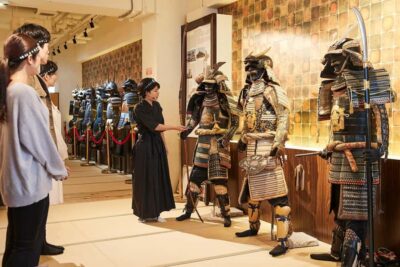
Samurai Ninja Museum Guided tour and Experience
Read our review →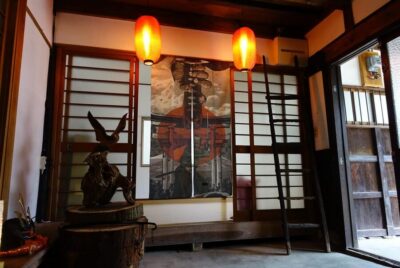
Kendo and Samurai Experience with Uniform and Gear
Read our review →
Samurai Sword Class by Experts in Traditional Arts
Read our review →
Skip the lines Basic Ticket at SAMURAI NINJA MUSEUM KYOTO
Read our review →
Samurai Sword & Archery Class from Samurai Descendant
Read our review →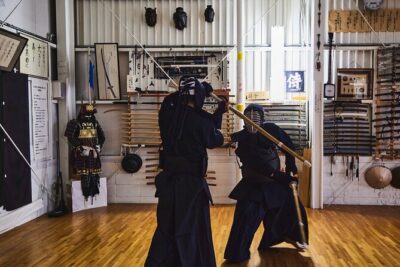
Browse the lists this tour appears in