
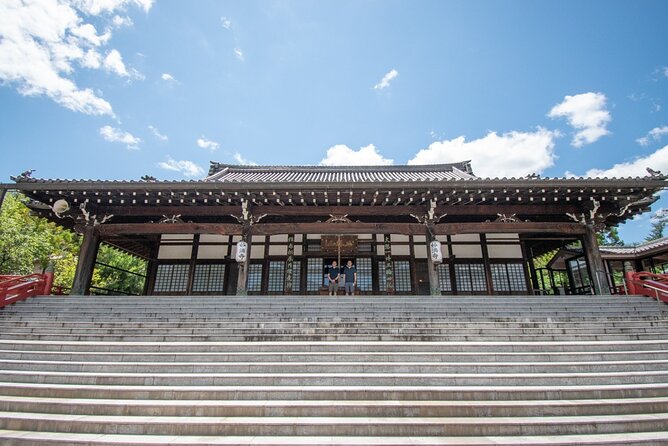
Reviewed · HISTORICAL TOURS
Private car tour Let’s uncover secrets of majestic Kyoto history
This Kyoto private car tour is interesting because it trades the usual fixed-day bus route for a calm, flexible one. You start with hotel pickup and end back at your hotel, all in an air-conditioned vehicle.
I like two things most. First, the small group size (up to 10) keeps conversations natural and questions easy. Second, one stop adds a fun twist with a temple name kept back until you’re on-site, so the day feels more like a guided discovery than a checklist.
One thing to consider before you book: the itinerary lists many stops as free entry, yet the tour also notes a ¥3,000 admission fee per person not included. I’d confirm what that charge covers for your exact dates, so there are no surprises on the day.
Key highlights that make this Kyoto day work
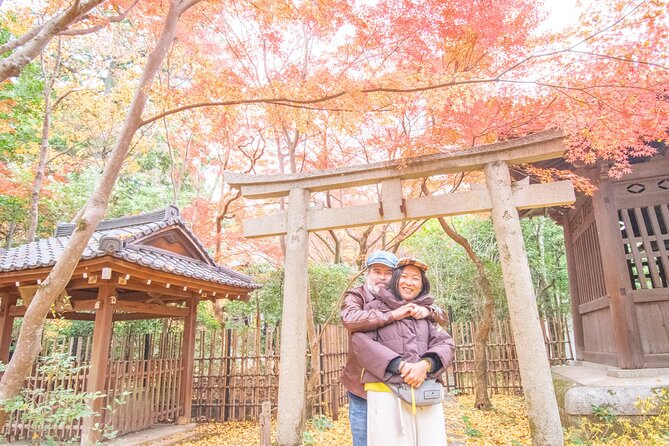
- Private, up to 10 people, so you can adjust pacing without splitting up or losing the guide
- Takashi as your guide, with strong English and a focus on history tied to real places
- A secret-name temple stop where the reveal happens in person
- Fushimi Inari-taisha on the “gate mountain” route, plus bamboo trails and quieter temple time later
- Dessert timing near Monkey Park Iwatayama, including Kyoto-style sweets like miso mochi and yuzu shaved ice
- Hotel pickup and drop-off, plus gas and parking in the included price
Why this private van style feels better in Kyoto
Kyoto is not short on sights. The real challenge is time. Temple lines, bus crowds, and long walks between far-apart neighborhoods can turn a good plan into a stressful day.
This tour handles that with a simple idea: you move by car with a driver, and you stay with the same small group. The vehicle is air-conditioned, which matters more than it sounds when Kyoto turns hot and humid. Even if you love walking, having the car as your “reset button” helps you stay fresh for the quieter parts of the day.
The other big win is the hotel pickup and drop-off. You skip the morning hunt for train transfers and the end-of-day scramble to get back. Your day has a beginning and an ending that feel normal, not like an endurance event.
Also, the tour is designed for a group of your choosing, with a maximum of 10 people. That size is small enough for flexibility, but large enough that families and mixed ages can still travel together comfortably.
More Historical Tours in Kyoto
- Kyoto Gion: 2-Hour Geisha Culture & History Walking Tour
★ 5.0 · 1,186 reviews - Kyoto Gion Historical Walking Tour
★ 5.0 · 188 reviews - Historical Kyoto E-Bike Tour
★ 5.0 · 181 reviews
Takashi, the guide, and how the day stays flexible
A private tour lives or dies on the guide. Here, your guide is Takashi, and multiple comments emphasize that he’s friendly, communicative in English, and willing to tailor the day to what the group wants.
In practice, this kind of guide-led flexibility looks like:
- Adjusting the route so you spend more time where you care most
- Shifting pacing so temple viewing does not feel rushed
- Making time for food breaks, including local lunch and dessert stops
There’s also an extra layer of fun built into the flow. One temple stop is described as a “secret temple” where the name is only disclosed on the tour. Even if you’ve researched Kyoto ahead of time, that reveal can make the day feel more playful and less scripted.
One more small point that matters: this is a private car format, so you are not waiting on a huge herd. Your guide can manage your timing around crowd patterns rather than getting stuck with the slowest group in the tour.
The big-picture route: from Fushimi Inari to Kibune Shrine
The day starts at Fushimi Inari-taisha, then moves through a sequence of temples and gardens that shift from iconic to quieter and more local-feeling. After the early highlight of the thousands of torii gates, you head toward temple grounds where the atmosphere tends to slow down.
The itinerary includes:
- A temple-garden stop known for moss (and a “secret name” feel)
- A famous rock garden with carefully organized stones
- A historic site linked to the Hatashi community
- Kinkakuji, the Golden Pavilion area tied to Ashikaga leadership
- Otagi Nenbutsu-ji, a creative, art-related temple setting
- Monkey Park Iwatayama, with a dessert break nearby
- Kibune Shrine, with a koi pond and neighborhood-scale charm
This flow makes sense because Kyoto crowds often spike at the most famous points. You do Fushimi Inari first, then you spend the middle and later hours where you can breathe a little more.
Stop 1: Fushimi Inari-taisha, the gate mountain you can walk through
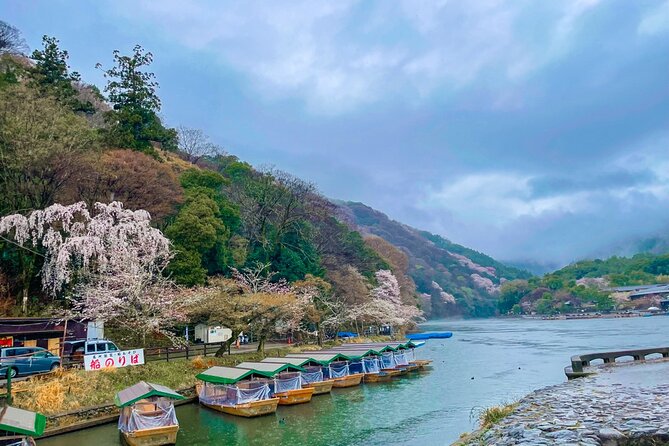
Time: about 2 hours
What you’ll see: thousands of torii gates stretching across a mountain area, with a long trail that includes bamboo and quiet wildlife sounds.
Fushimi Inari is famous for a reason, but the tour focus here is on the experience of walking through the grounds rather than just snapping the main view from the busiest spots. The shrine premises include not just buildings and paths but a large mountain area where you can feel the scale of it.
Practical tip: wear shoes you trust on uneven stone and plan on a steady walking pace. You can go fast, but you will miss atmosphere. If you like photos, this is where you’ll want to slow down for the changing tunnel effect as the gates recede into the distance.
One note to keep expectations realistic: this stop is likely to be the busiest area of the day. The upside is that later temple stops tend to feel calmer by comparison.
A change of pace from Kyoto:
- PERFECT KYOTO 1-Day Bus Tour
★ 5.0 · 13,518 reviews - Kyoto: Fushimi Inari, Kinkakuji, Bamboo Grove 1 Day Bus Tour
★ 4.8 · 4,316 reviews - Kyoto: Tea Ceremony in a Traditional Tea House in Kiyomizu
★ 4.9 · 3,519 reviews - Kyoto Geisha Walking Tour: Gion District & Hidden Gems
★ 4.7 · 3,273 reviews
Stop 2: Kennin-ji and the moss-garden reveal
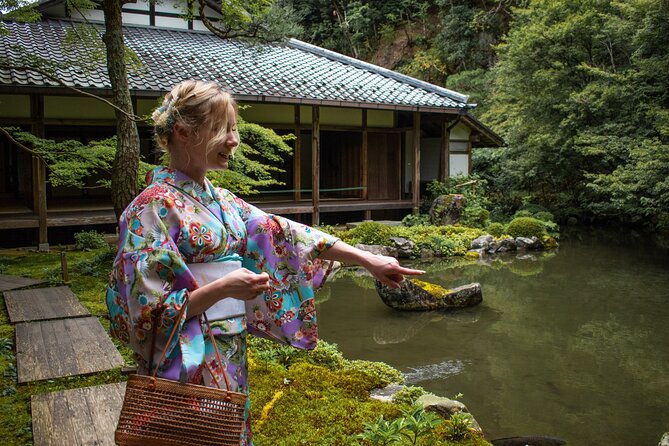
Time: about 1 hour
What you’ll see: a moss garden that’s described as extraordinarily gorgeous, and a stop where the temple name is revealed only during the tour.
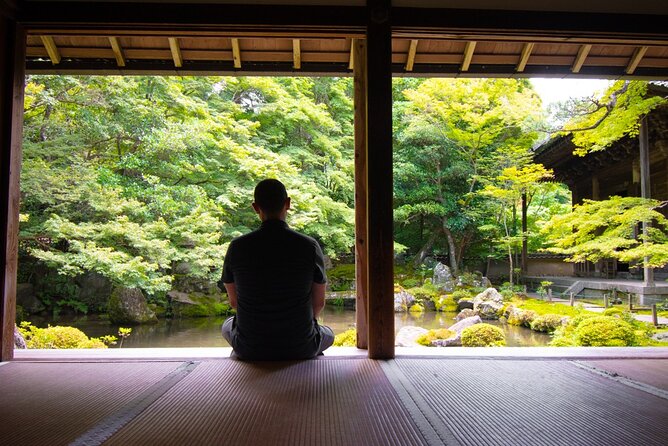
Kennin-ji is known for garden beauty, and the standout here is the texture and color of moss. Moss gardens can look like “pretty green,” but up close they create a sense of aged stillness, especially when you can sit and watch the light shift.
The “secret name” approach is clever. It turns research into a moment. Instead of chasing a checklist item, you’re simply on your way to a place your guide expects you to appreciate.
If you’re sensitive to crowd noise, this is a good moment to take it slower. Spend time at the garden views rather than rushing to the next photo angle.
Stop 3: Ryoan-ji, the rock garden and the story behind the stones
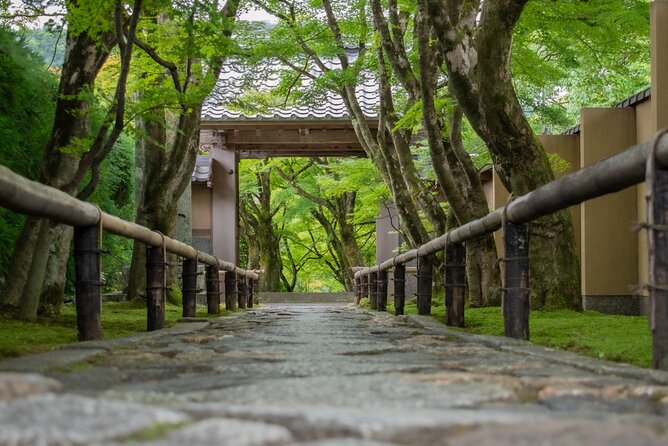
Time: about 1 hour
What you’ll see: organized rock arrangements, described as millions of tiny rocks laid out to form a large garden.
Ryoan-ji is one of those places where the wow factor comes from careful restraint. A rock garden is not visually complicated, but it demands attention. Your guide helps connect what you see to Buddhist context, including references to the historical development of Buddhism in Japan and its divisions.
What I like about stopping here on a private route is that you can control your viewing tempo. You don’t have to stand behind someone who treats the garden like a drive-by photo stop.
Practical tip: bring patience. A rock garden rewards quiet focus more than big energy.
Stop 4: Adashino Nembetsu-ji, history that feels oddly personal
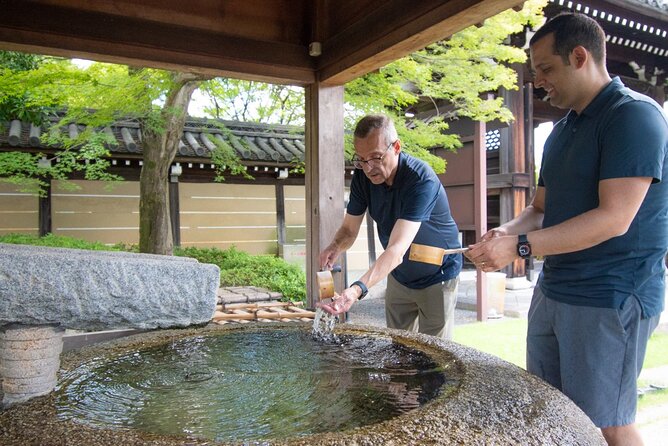
Time: about 30 minutes
What you’ll see: a temple with roots described as connected to the Hatashi community, described as Korean-rooted in the 5th to 6th century, and a story of survival after a burn in the 8th century.
This is the kind of stop that turns Kyoto from postcard-land into lived history. The tour framing connects the site to people and eras, not just architecture.
Even with only about half an hour, the value comes from context. Without that, you might pass through thinking it’s another temple. With context, you understand why the site’s endurance matters.
The drawback here is time. If you love history and could spend an hour or more reading everything, you might want to ask your guide to slow down or expand on the story during your visit.
Stop 5: Kinkakuji (Golden Pavilion), Ashikaga power made visible
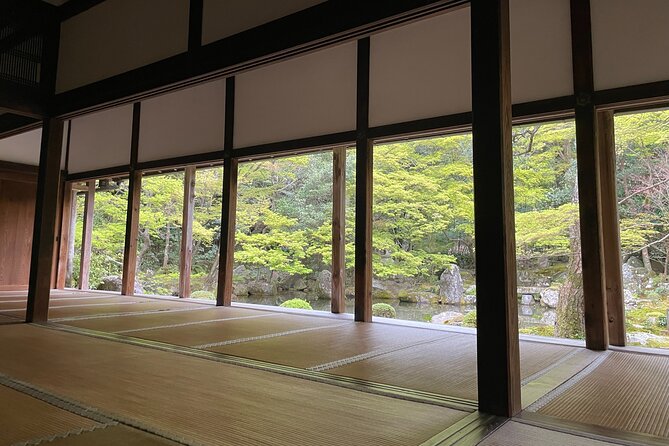
Time: about 1 hour
What you’ll see: the Golden Pavilion area, described as a villa of Shogun Yoshimitsu Ashikaga (1358 to 1408) that later became a temple, known for upper floors covered with gold leaf.
Kinkakuji gives you the “Kyoto icon” payoff. But the tour doesn’t just point at gold. It ties the pavilion to Ashikaga leadership and the change of use after Yoshimitsu’s era.
That matters because you see it as a product of politics and patronage, not just a pretty building. The reflective gold leaf and the surrounding setting create a strong visual impact, especially when you get a clean angle without being boxed in by crowds.
If you’re someone who wants the main sights, this is the stop that will satisfy that itch. If you’re someone who hates crowds, it may be the one place you’ll want to accept the busy feeling and then move on quickly.
Stop 6: Otagi Nenbutsu-ji, art, tea, and calligraphy vibes
Time: about 30 minutes
What you’ll see: a temple tied to an art master, with connections to arts like tea ceremony and calligraphy, plus a garden setting with many small details.
Otagi Nenbutsu-ji is the kind of stop that feels intimate, in the best way. It’s not about one monumental view. It’s about walking through a space where art shows up in the garden atmosphere.
The tour explanation points you toward the art and ceremony angle, which helps you notice the “small stuff” instead of treating the visit like another photo stop.
This is also a nice mid-to-late day placement. After earlier heavy highlights like Fushimi Inari and Kinkakuji, Otagi gives you a calmer, slower type of satisfaction.
Stop 7: Monkey Park Iwatayama and Kyoto sweets on the way
Time: about 30 minutes
What you’ll get: a stop around the Monkey Park Iwatayama area plus time at a local dessert shop.
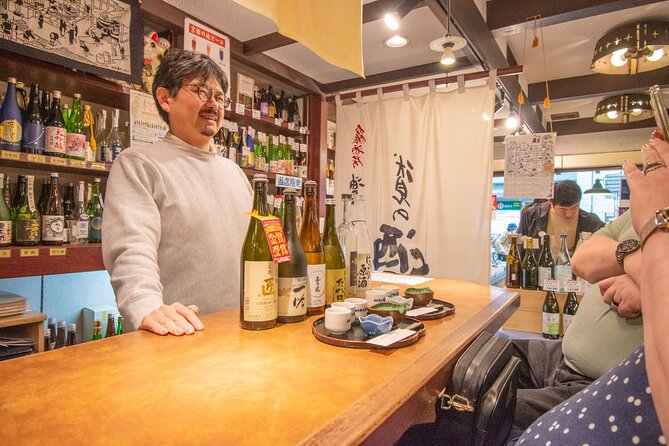
This part of the day is built for one thing: taste the Kyoto flavor that doesn’t always make it into big-bus schedules. At the dessert stop, you can try Kyoto-styled sweets such as mochifu, shaved ice flavored with yuzu or match, and other unique textures.
Mochifu is especially fun because it takes normal mochi in a different direction, with variations in texture that make you actually pay attention while eating.
If it’s hot, shaved ice helps you cool down without feeling like you need a full sit-down meal. If it’s rainy or overcast, sweets can feel like a perfect little pause while you keep moving.
One practical point: if you want to keep the day smooth, decide what you’ll order before you sit down. Dessert lines and menu choices can eat time, and your tour pacing is built around multiple stops.
Stop 8: Kibune Shrine, a neighborhood-scale shrine with a koi pond
Time: about 30 minutes
What you’ll see: Kibune Shrine described as tied to the Hatashi noble family and beloved by surrounding neighborhoods, with a koi fish pond where you can feed the fish.
Kibune Shrine is a good closing act because it feels local. You’re not just visiting a world-famous name. You’re stepping into a shrine that supports everyday community life.
Feeding the koi is a small moment, but it’s exactly the kind of thing that makes Kyoto feel human. It’s also a good contrast after temple-to-temple walking. You get movement, interaction, and a little pause.
If you like photos, this is the stop where you’ll likely get images that feel less like a tourist snapshot and more like a lived moment.
Lunch and dessert strategy, what’s included and what you should ask for
The tour includes tips of local good restaurants for lunch and dessert shops, but it does not automatically include a set lunch menu. The material also says lunch can be added during the tour if it fits the timing and your request.
That approach can be great. It lets you match lunch style to your group:
- If you want something light, ask for a quick local spot
- If you want a sit-down meal, ask your guide to find something that won’t destroy your schedule
- If your group has dietary needs, raise it early so the guide can plan around it
In practice, the guide is set up for food planning. The stops already include dessert time, and the tour is designed to give you those little Kyoto eating moments rather than just rushing from shrine to shrine.
Price and logistics: what you’re paying for, and what to double-check
The price listed is $108.58 per person for a private car tour lasting about 7 hours. For a private car day in Kyoto, that price makes sense when you consider what’s included and what you avoid.
What you avoid:
- Multiple train transfers
- Time lost to finding meeting points
- The squeeze of big group schedules
What you get included:
- Hotel pickup and drop-off
- An air-conditioned vehicle
- Gas and parking fees up to 3,000 yen per day
- A private, flexible route for your group
- Recommendations for local lunch and dessert stops
What is not included:
- An admission fee of ¥3,000 per person
- Lunch, unless arranged during the tour
Here’s the key issue: many stops are described as free entry with admission tickets, yet there’s also a separate admission fee noted as not included. That conflict is worth clarifying before you go. Ask your operator what the ¥3,000 covers on your specific date.
If you do that one bit of homework, the price feels fair. If you don’t, you risk a small budgeting surprise.
What to wear and how to pace yourself
This tour includes multiple temple and shrine grounds plus some walking paths. Plan for:
- Comfortable shoes for stone steps and uneven ground
- Weather readiness, because Kyoto changes fast
- A pace that matches your group, especially if you have seniors or people who tire quickly
The air-conditioned car helps a lot. You get physical breaks between stops, so you can keep energy up without constantly stopping for transport.
If you’re sensitive to crowds, the day’s design is helpful. Expect Fushimi Inari to be the busiest stop, then lean into the calmer temple and garden time after.
Who should book this Kyoto history private car tour
Book it if you:
- Want a private day with a flexible schedule for your group up to 10
- Care about Kyoto beyond the most famous photo stops
- Appreciate history that connects to places, not just facts on paper
- Prefer an air-conditioned car and hotel pickup instead of navigating public transit all day
- Like gardens, small details, and calmer moments as the day continues
Consider something else if you:
- Only want one or two iconic sights and don’t care about the rest
- Hate uncertainty around admissions and prefer fixed-price ticket bundles
- Plan to maximize nonstop stops and never slow down for views
Should you book this tour?
If your goal is a Kyoto day that feels personal, paced, and easier than doing everything on your own, I’d book it. The private vehicle and hotel pickup are the real value, and the stop choices lean toward atmosphere rather than crowd wrestling.
Just do two practical things before you go: confirm what the ¥3,000 admission fee covers, and tell Takashi what kind of day you want, including food preferences and how slow or fast your group likes to move.
If you want your Kyoto to feel quieter, smarter, and more local, this is a strong pick.
FAQ
How long is the Kyoto private car tour?
The tour duration is listed as approximately 7 hours.
How many people are in a group?
It’s a private tour for your group, with a maximum group size of up to 10 people.
Is hotel pickup and drop-off included?
Yes. Hotel pickup and drop-off are included.
Is the vehicle air-conditioned?
Yes. The tour includes an air-conditioned vehicle.
Is lunch included in the price?
Lunch is not included. The tour notes that lunch may be possible during the tour if you request it and timing allows, often stopping at guide-recommended local restaurants or dessert shops.
Can I cancel for free?
Yes. You can cancel up to 24 hours in advance for a full refund. If you cancel less than 24 hours before the start time, the amount paid is not refunded.
Are admissions included?
No. The tour states an admission fee of ¥3,000 per person is not included. The stops are also listed with free admission tickets in the itinerary, so it’s smart to confirm what the ¥3,000 covers for your specific dates.
Latest write-ups near Kyoto
- Kyoto Private Tour Full Day with Local Guide&Nara Option(PerGroup★ 5.0 · 20 reviews
- Sacred Pathways: Discover the Philosopher’s Path of Kyoto★ 4.9 · 20 reviews
- Hammer Pattering Experience of Ring★ 5.0 · 20 reviews
- Kyoto UNESCO World Heritage Site Private Tour with a Premium Van★ 5.0 · 20 reviews
- KYOTO: Private Tea Ceremony in Hidden Townhouse (Kid-Friendly)★ 5.0 · 20 reviews
- Sushi or Traditional Japanese Cuisine in a Kyoto Home with Emika★ 5.0 · 20 reviews
- The Kyoto VIP Experience!★ 5.0 · 20 reviews
- Kyoto Customized Private Tour: See Top Attractions in 1 Day★ 4.7 · 20 reviews
Historical Tours, compared.
World Heritage Shirakawa-go and Experience Tours from Kanazawa
Read our review →
Imperial Palace and Shogun Historical Walking Tour
Read our review →
World Heritage Kyoto & Nara Uji Authentic Matcha Experience
Read our review →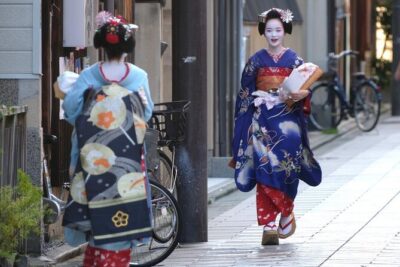
Kyoto Gion: 2-Hour Geisha Culture & History Walking Tour
Read our review →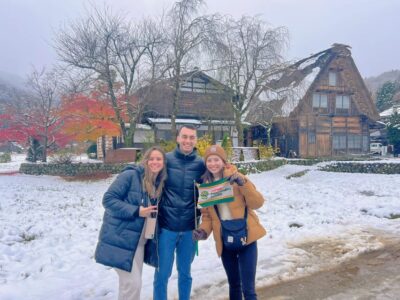
World Heritage Shirakawa-go Morning Guided Tour
Read our review →
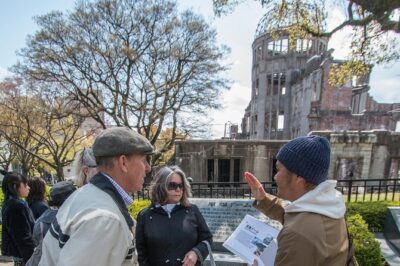
Hiroshima Peace (Heiwa) Walking Tour at World Heritage Sites
Read our review →
Yanaka Walking Tour: Historic and Traditional District of Tokyo
Read our review →Browse the lists this tour appears in