Reviewed · MARKET TOURS
Kyoto Nishiki Market Food and Culture Walking Tour
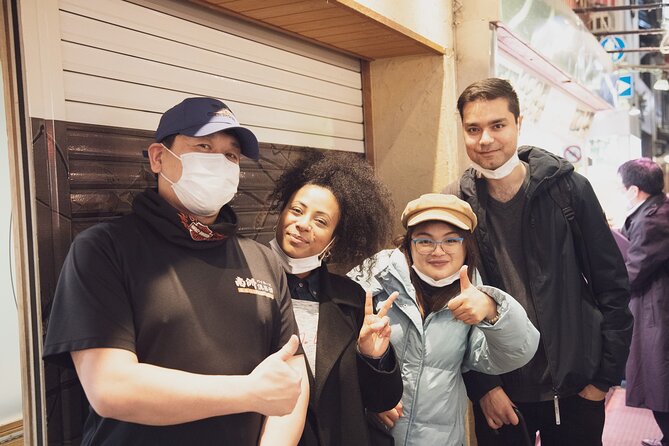
Kyoto’s Nishiki Market is one of the city’s most interesting places to eat, shop, and learn, and this walking tour keeps you from wasting time guessing what to try. I like that you get food samples enough to replace a meal, and I love the small-group pace, max 6 people, so your guide can actually talk with you at each stop. The one real drawback to plan around is dietary limits, this tour can’t accommodate vegetarian, halal, kosher, gluten-free, or allergy-related requests.
This is also more than a snack run. You connect the market to everyday Japanese life with a quick Shinto stop at Nishiki Tenmangu and several short walks through nearby shopping streets and a Buddhist temple. In the best versions, guides such as Miku, Toshi, and Chizuko focus on meaning, not just food, and you’ll use a mobile ticket for smoother check-in in a crowded area.
Key points
- 400-year-old Nishiki Market, about 130 shops packed into a narrow five-block stretch
- Small group, max 6 people, so you get real attention and time to ask questions
- Food samples that can fill you up, designed to work like a meal replacement
- Culture stops beyond the market, including Nishiki Tenmangu and neighborhood shopping arcades
- Rain or shine, so you can plan even when Kyoto weather throws a curveball
Getting Your Bearings Fast at Nishiki Market
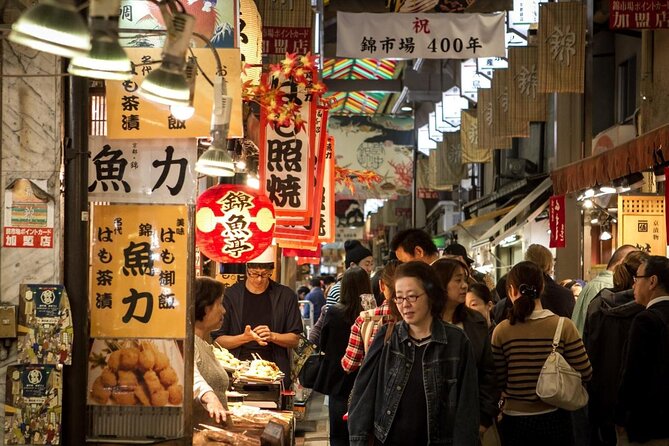
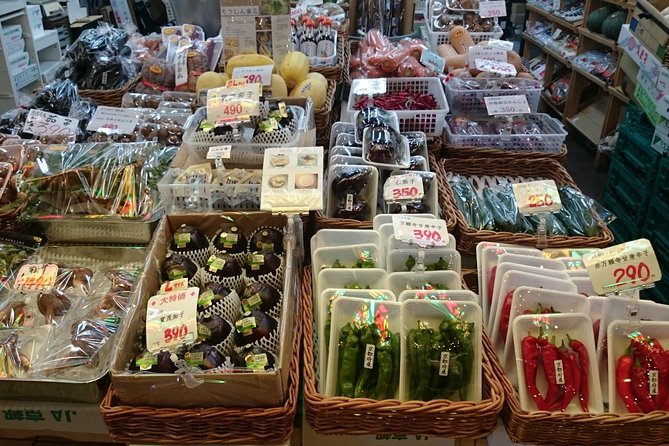
Nishiki Market is famous because it’s practical. It’s a short walk, but it holds a lot of Kyoto food culture in one place, from seafood counters to snack stands and small specialty shops. If you’ve never done a market like this before, the biggest challenge is decision overload, there are too many choices and the good ones can look similar from a distance.
That’s where a guided walk pays off. You’re not just wandering, you’re getting a sense of what each area is known for and how local vendors expect you to sample and shop. With a small group, you are less likely to get separated or stuck staring at a menu with no idea what something is.
More Food & Drink in Kyoto
- Kyoto Night Foodie Tour in Gion (9+ dishes + 6 Sake tastings)
★ 5.0 · 1,762 reviews - 3-Hour Kyoto Insider Sake Brewery Tour with Tastings & Pairings
★ 5.0 · 917 reviews - Arashiyama Bamboo, Temple, Monkeys, or Secret Sake Brewery
★ 4.8 · 886 reviews
Nishiki Market Shopping District: the “Kyoto’s Kitchen” Portion
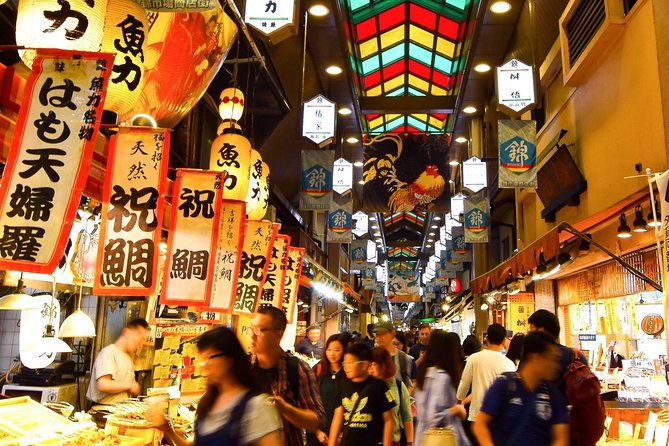
This is the heart of the experience, about 1 hour 40 minutes in Nishiki Market’s shopping district. The market dates back around 400 years, and it’s built on a narrow street with roughly 130 shops along a five-block stretch. That layout matters, because it creates that tight, sensory feel Kyoto markets do best, tight aisles, quick conversations, and constant food smells.
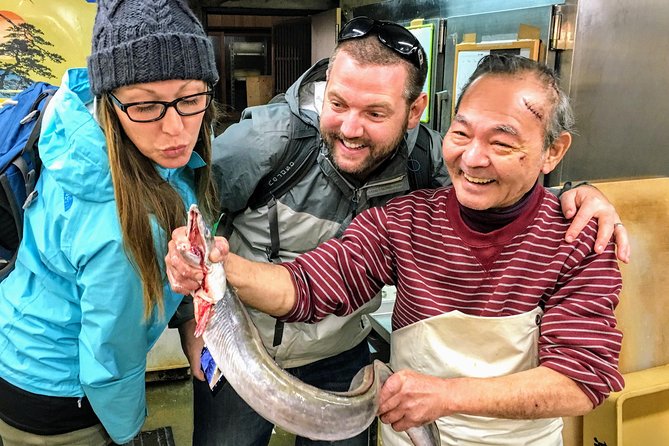
What I like most about doing Nishiki with a guide is the time advantage. You avoid the dead ends where you’ll browse for 20 minutes and still leave hungry, or where you’ll buy something random and later learn it wasn’t the local version you should have tried. You also get a sense of the “what” and the “why,” which helps when you want to repeat the experience later on your own.
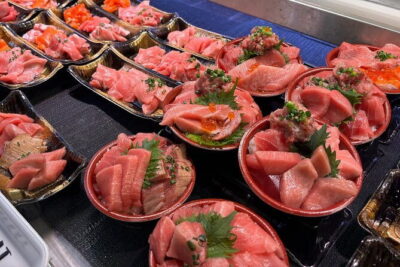
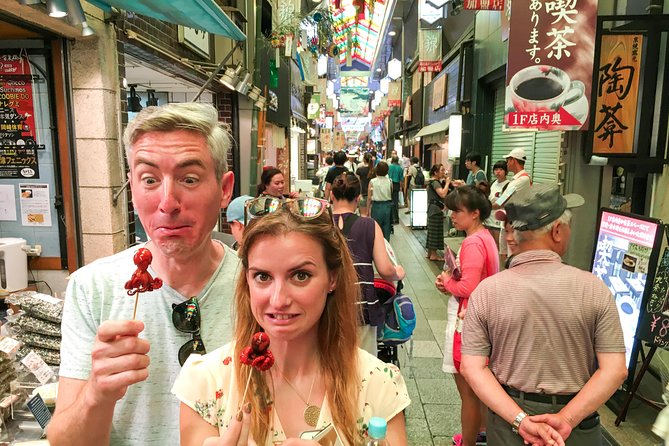
In terms of what you’ll likely eat, the tastings tend to cover a spread of Kyoto favorites and market snacks. Expect Japanese items such as yuba, soy doughnuts, omelette-style snacks, pickled sides, gyoza, honey yuzu lemonade, and other small bites. You may also see things like wheat-starch based sweets or local fish and meat specialties, depending on what’s available.
Practical heads-up: Nishiki Market can be crowded, sometimes very crowded. If you’re coming with a stroller, let the operator know in advance, because the passageways can get tight when foot traffic spikes.
Nishiki Tenmangu Shrine Stop: Shinto Basics Without Being Too Academic
After the market, you switch gears for a quick Shinto moment at Nishiki Tenmangu, about 15 minutes. This stop is short, but it’s designed to give you context for what you’re seeing around Kyoto all the time. You’ll learn what you often notice at a shrine and the basics of how people pray at a Japanese Shinto shrine.
This is a nice counterbalance to market eating. Food is sensory and immediate, while shrines slow you down just enough to notice how people structure daily life around respect and ritual. You won’t leave with a theology textbook, but you will have a clearer sense of what the shapes, actions, and basic etiquette are meant to communicate.
Shinkyogoku Shopping District: Pedestrian Kyoto at Street-Level
Next comes the Shinkyogoku shopping district, about 20 minutes. This is a pedestrian-only arcade street, which means you get a more comfortable walk without fighting traffic. It also gives you that Kyoto blend of old and new, where traditional street life sits next to modern retail.
This stop works well for two reasons. First, it adds momentum after the more intense market stretch, you keep moving while still getting cultural texture. Second, it helps you understand that Kyoto’s food culture doesn’t stop at the market stalls, it spills into the daily shopping streets where people grab snacks and ingredients.
More Market Tours in Kyoto
- Nishiki Market Brunch Walking Tour (7 Tastings + Brunch)
★ 5.0 · 1,355 reviews - Kimono Tea Ceremony at Kyoto Maikoya, NISHIKI
★ 5.0 · 911 reviews - Kyoto: Nishiki Market Tea Ceremony with Koto Performance
★ 4.8 · 294 reviews - Kyoto: Nishiki Market Brunch Walking Tour-7 Tastings+Brunch
★ 4.8 · 197 reviews
Takoyakushido Eifukuji Temple: a Small Pause That Feels Very Local
You’ll also stop at Takoyakushido Eifukuji Temple, about 10 minutes. It’s described as a small Buddhist temple tucked right at the corner of the shopping street, and that detail is the point. Kyoto is full of temples, but they often show up like everyday neighbors, not grand set pieces.
This quick pause helps you breathe between food and shopping. It also makes the walking feel less like a checklist and more like moving through a real neighborhood.
Teramachi-dori Street: From Long-Running Shops to What’s New
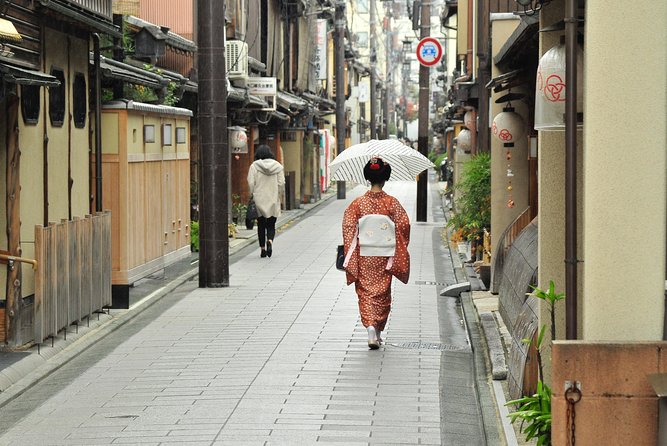
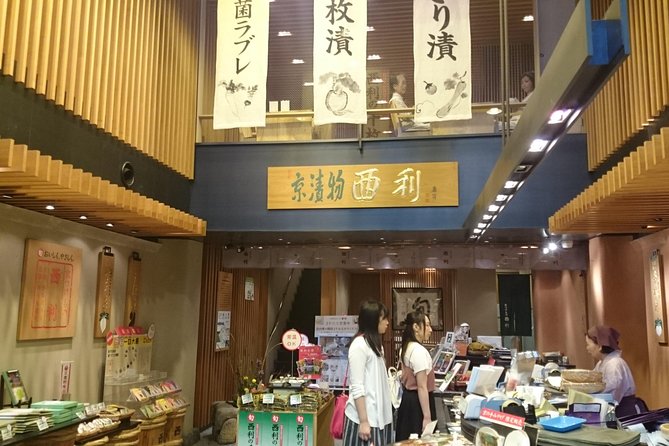
The last walk segment is Teramachi-dori Street, about 15 minutes. This shopping street is where you can feel everyday Kyoto shopping habits, with long-established stores alongside newer brands. Even if you don’t buy anything, it’s useful for spotting the kinds of goods locals actually carry home.
This part is also a good time to convert what you tasted into souvenir logic. If you learned how certain Kyoto seasonings or snacks are used, you can scan shelves with better instincts instead of impulse buying. And because you’ve been walking with a guide, you’re less likely to feel overwhelmed by the choices.
What You Actually Eat, and Why the Pace Matters
The tour is about 3 hours total, and the big promise is that you’ll get enough food samples to fill you up in place of a meal. That’s a helpful design choice. A lot of food tours either give too little to justify the price, or they overload you so you spend the last hour wishing you’d paced better.
Here, the structure tends to balance walking with tasting stops. People also mention that it’s not a marathon where you feel rushed. One helpful note from how the tour plays in real life is that the rhythm can work even if you have back problems, because the pace includes breaks and sitting moments.
That said, you should go in with clear expectations about “sample size.” Some market-focused tours feel like you’re doing ten different tastings back-to-back, while others keep the number of formal samples lower and spend more time moving and learning. If you’re the type who counts bites and wants a constant stream of food, you might want to temper expectations and treat this as a guided, cultural walking meal, not a full tasting festival.
Also remember: the tour does not accommodate dietary restrictions, including vegetarian, halal, kosher, gluten-free, or allergy-related needs. If you have severe restrictions, it may not be possible to arrange food, so plan to eat separately if your needs are complex.
Price and Value: Is $80.92 a Smart Deal?
At $80.92 per person for around 3 hours, the value comes down to what you get beyond the food. You’re paying for:
- A guide who points you to the right stalls and shops
- A route that adds culture stops, like Nishiki Tenmangu and a Buddhist temple
- Multiple neighborhood sections, not just Nishiki Market in isolation
- Food samples designed to work like a meal
If you’re visiting Kyoto for the first time, that mix can be worth it. Nishiki Market alone is great, but the guide helps you avoid wasting time, especially in a crowded place where it’s easy to feel lost. And because the group is capped at 6, the experience tends to be more conversational than a large-bus tour.
On the other hand, if you already know the market well and you mostly want to snack at a self-directed pace, you could spend less by exploring on your own. The tour is best when you want structure, context, and a guided path through food and culture without spending hours deciding what to try.
Small-Group Energy and Guides Who Change the Mood
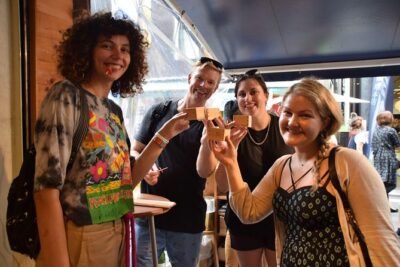
This tour caps at a maximum of 6 people, and that limit matters more than you’d think. In tight streets and busy stalls, the group size determines whether you can hear your guide, whether you feel comfortable asking questions, and whether everyone gets enough time at the tasting counter.
The experience also depends on guide style. Some guides, like Miku, are described as kind and enthusiastic, while others, like Toshi and Chizuko, connect food choices to cultural and historical meaning. You might also meet guides such as Keiko, Takuma, Naoko, Annie, Eric, Atsu, Saeko, Nagi, Taisei, Yasuko, and Yoko, each bringing their own way of making the walk feel personal.
If you care about language and practical tips, pay attention during explanations. One example from how the walk lands is that a good guide will help you understand what you’re tasting and how to describe it when you want to shop later.
Practical Tips Before You Go
A few small things will make your 3 hours smoother.
First, come hungry. The whole idea is that the samples can replace a meal, so don’t show up after a big late lunch. Second, dress for walking. The market and shopping arcades involve steady foot traffic, and Kyoto streets can feel warmer than you expect when crowds gather.
Third, plan around timing. The tour runs rain or shine, so bring a light rain layer if showers are possible. Finally, for anyone interested in drinks, the legal drinking age in Japan is 20, and drinking is handled under local law.
Should You Book This Nishiki Market Food and Culture Walk?
I’d book it if you want a structured way to experience Nishiki Market plus nearby Kyoto neighborhood culture in one tight half-day. It’s especially appealing if you like learning while you eat, and if you want a small-group setup so you’re not stuck in a mass of people trying to see the same stall.
I would skip or reconsider if dietary restrictions are a deal-breaker for you, because the tour cannot accommodate many common dietary needs, including allergies. Also skip it if you expect a nonstop stream of tastings with very little walking and very little culture. This is a food-and-culture walk, not a pure bite-counting contest.
If you’re flexible, hungry, and ready to walk, this tour is a smart way to understand Kyoto’s food scene without having to plan every stop yourself.
FAQ
How long is the Kyoto Nishiki Market Food and Culture Walking Tour?
The tour lasts about 3 hours.
How many people are in a group?
The tour has a maximum of 6 travelers.
Is admission to the market and stops included?
The stop descriptions list admission tickets as free, and the tour includes the guided experience and food samples.
Can the tour accommodate dietary restrictions or allergies?
No. The tour is unfortunately unable to accommodate dietary restrictions, including vegetarian, halal, kosher, gluten-free, or allergy-related requests. For severe dietary restrictions, it may not be possible to arrange food.
Does the tour run in the rain?
Yes, the tour takes place rain or shine.
Is hotel pickup or drop-off included?
No. Hotel pickup and drop-off, transportation to and from attractions, and other personal expenses are not included.
What is the legal drinking age in Japan?
The legal drinking age in Japan is 20.
More Walking Tours in Kyoto
- Kyoto Geisha Walking Tour: Gion District & Hidden Gems
★ 4.7 · 3,273 reviews - Kyoto: Gion Magical Night Walking Tour with Geisha Trivia
★ 4.9 · 2,393 reviews - Kyoto: Gion Geisha District Walking Tour – Stories of Geisha
★ 4.7 · 2,187 reviews - Night Walk in Gion: Kyoto’s Geisha District
★ 4.5 · 2,003 reviews
More Shopping Tours in Kyoto
- Kyoto: Local Food Tasting Tour at the Nishiki Market
★ 4.7 · 135 reviews - Kyoto: Nishiki Market and Depachika Food Tour with a Local
★ 4.7 · 76 reviews - Kyoto: Nishiki Market Tour with a Local Foodie & Tastings
★ 4.5 · 67 reviews - Golden Pavilion, Nijo Castle, & Nishiki Market Half day tour
★ 5.0 · 29 reviews
Latest write-ups near Kyoto
- Kyoto: Nishiki Market Tour with a Local Foodie & Tastings★ 4.5 · 67 reviews
- Kyoto Kimono Rental mimosa |Kimono/Yukata Rental Couple Plan★ 4.8 · 67 reviews
- Kyoto: Traditional Kimono Fabric Handicrafts Workshop★ 5.0 · 67 reviews
- Kyoto Tea Ceremony and Samurai Photo Session★ 5.0 · 70 reviews
- Kyoto: Replica food making experience★ 4.8 · 70 reviews
- Kyoto: Kinkakuji, Golden Pavilion Guided Tour★ 4.7 · 71 reviews
- Private departure transfer from Kyoto city to Kansai International airport★ 5.0 · 72 reviews
- Uji: Green Tea Tour with Byodoin and Koshoji Temple Visits★ 4.8 · 72 reviews
Market Tours, compared.
Tokyo Tsukiji Fish Market Food and Culture Walking Tour
Read our review →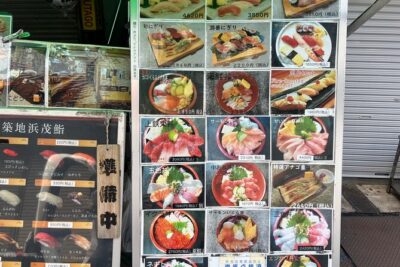
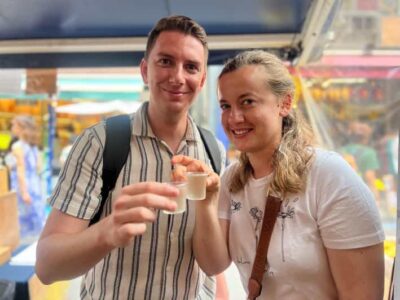
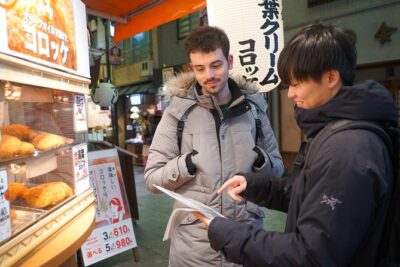
Nishiki Market Brunch Walking Tour (7 Tastings + Brunch)
Read our review →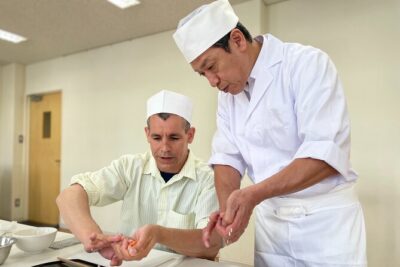
Tokyo Sushi Making Class in Tsukiji with Professional Chef
Read our review →
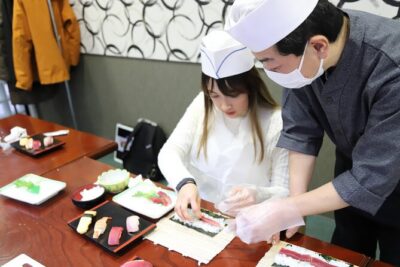
Tsukiji Fish Market Guided Tour and Sushi Making with Pro Chef
Read our review →