
Reviewed · GEISHA & GION TOURS
Dance and Game with Maiko
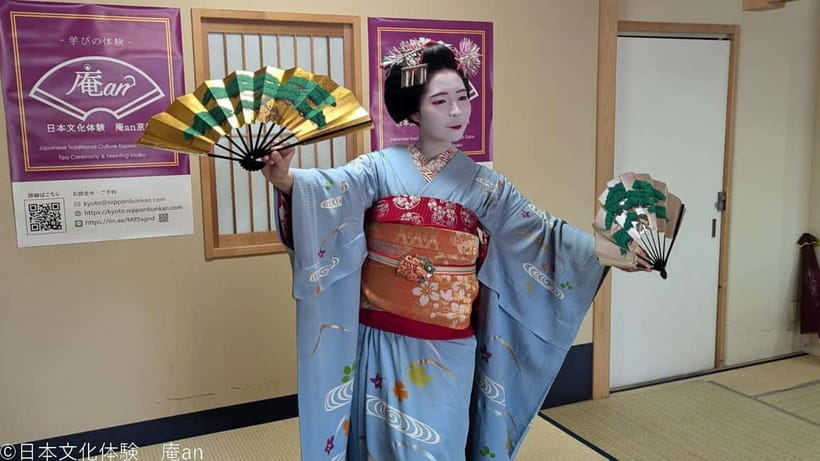
Watching a Maiko work through dance and music is one of those Kyoto moments that feels like you stepped into a page from a seasonal calendar. This short session is interesting because it is tightly paced and you get right up close, including two Maiko dances and photo time beside a Maiko.
I especially like how you get both performance and participation, not just sitting quietly in the back. You also receive a Senjafuda lucky charm, and the room-friendly game adds a real sense of shared fun. One drawback to consider is that the experience can run closer to 30 minutes than the full 45, depending on how the program flows that day.
Key Points You’ll Care About
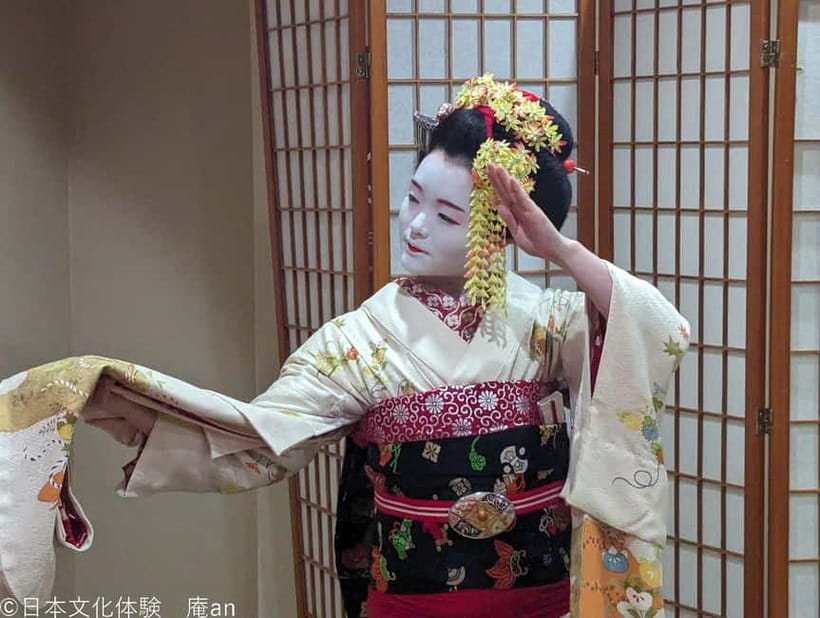
- Two dances in a short window, so you still fit it into a crowded Kyoto schedule
- Close-up photos beside the Maiko, not distant sightseeing photos
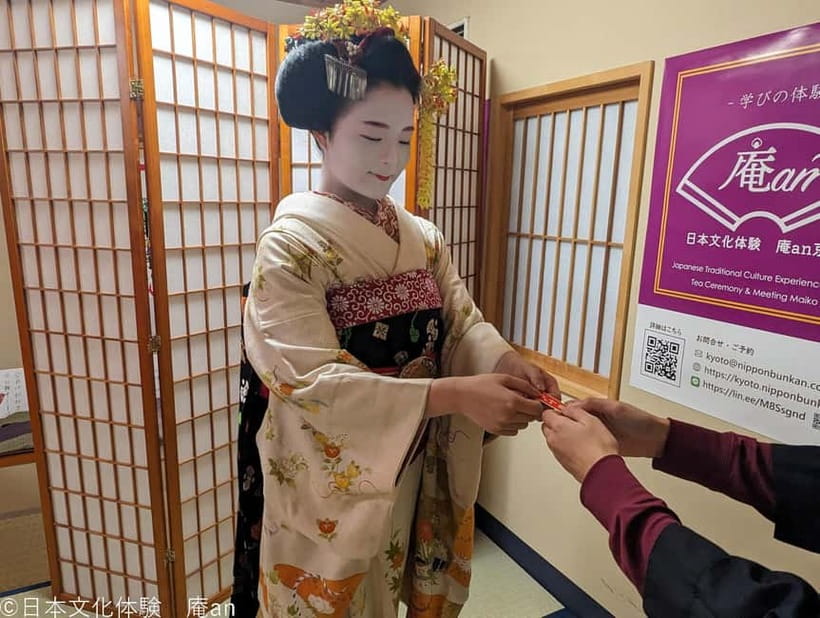
- A lucky Senjafuda charm to take home, tied to the performance moment
- A traditional game with Maiko, with audience clapping and chances to join in
- Geiko may appear instead of Maiko, depending on the situation
- It is held in a building near Gojo Station, with stairs and no elevator
Kyoto’s Maiko Dance and Game, Explained Like a Friend
If you are in Kyoto and you want the Maiko experience without clearing your whole day, this is built for you. It is short, structured, and very focused on what matters: grace on stage, a playful traditional game, and that close-up photo moment most people can only imagine.
The price is $28 per person for a reason. You are not paying for an all-day cultural event. You are paying for guided access to a live performance with a Maiko, plus a keepsake. For travelers trying to balance value with authenticity, this kind of tight format can be a smart trade.
Also, the setting is not an ochaya (the traditional tea-house style venue you might picture). It is in a regular building, with a relaxed atmosphere and friendly staff. That is actually a good thing if you worry about formal rules or feeling overdressed. Just know it is not the classic wooden-house scene.
More Geisha Experiences in Kyoto:
- Kyoto Geisha Walking Tour: Gion District & Hidden Gems
★ 4.7 · 3,273 reviews - Kyoto: Gion Magical Night Walking Tour with Geisha Trivia
★ 4.9 · 2,393 reviews - Kyoto: Gion Geisha District Walking Tour – Stories of Geisha
★ 4.7 · 2,187 reviews
Your 45-Minute Program, Step by Step (and What Each Part Feels Like)
This experience is designed to move quickly, with clear moments that feel distinct. Expect about 30 to 45 minutes total, then a little extra time before you head out.
0 minutes to about 30 minutes: Dance performances and the traditional game
The program starts with Maiko dancing. These performances are meant to show stories through movement and music, often linked to seasons, love, and everyday life. Even if you cannot follow every detail, your job is simple: watch the hands, the pauses, and the way the music shapes the motion. That is where the meaning sits.
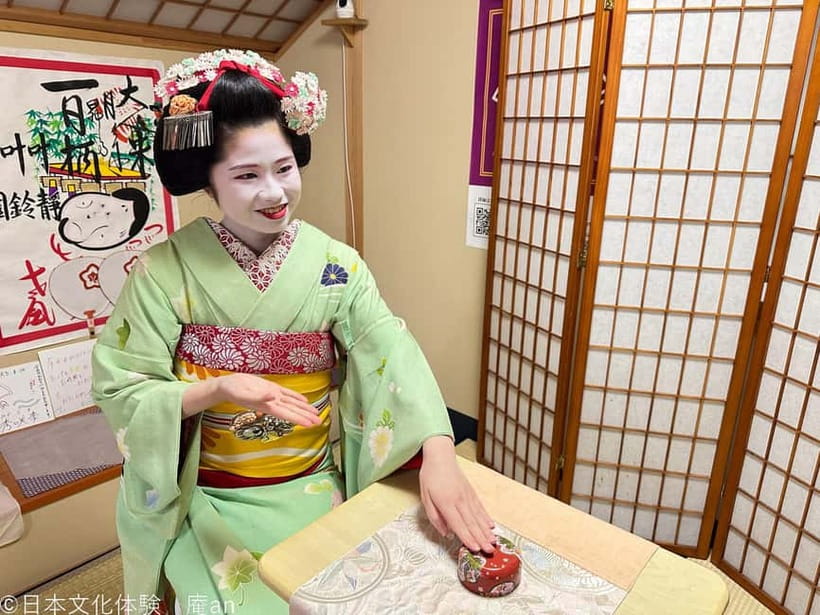
Then comes the game. It is described as a traditional game played between the Maiko and guests. In practice, that means you should be ready to clap along and enjoy the energy of a shared activity. Depending on the group, volunteers from the audience may be invited to play with the Maiko.
One thing I like about this format is the social switch. You go from watching artistry to joining in emotionally. It turns the moment from a quiet performance into something warmer and more human.
Around 30 minutes: Photo time beside the Maiko, then the Senjafuda charm
After the game, the program shifts into the commemorative part. You will have a chance to take a photo right beside the Maiko. The goal is that you do not just get a picture from afar, you get that close perspective that feels like a memory you can actually hold.
Right after the photo, the Maiko gives you a lucky charm called a Senjafuda. This is the souvenir that matters most here. It is tied to the performance moment rather than being a random trinket.
A change of pace from Kyoto:
- PERFECT KYOTO 1-Day Bus Tour
★ 5.0 · 13,518 reviews - Kyoto: Fushimi Inari, Kinkakuji, Bamboo Grove 1 Day Bus Tour
★ 4.8 · 4,316 reviews - Kyoto: Tea Ceremony in a Traditional Tea House in Kiyomizu
★ 4.9 · 3,519 reviews - Kyoto: Tea Ceremony Ju-An at Jotokuji Temple
★ 4.9 · 3,207 reviews
Up to about 45 minutes: Short chatting time, then you leave
There is usually a chatting time after the charm moment, before the Maiko leaves the room and you depart. If you have questions, this is the part where you can ask in plain, simple English or ask for help with translation. The instructor is Japanese, and English translation is provided as much as possible, if you request it.
What to Watch During the Maiko Dances (So You Get More Than Pretty Movement)
Two Maiko dance performances are included. That is a big deal for a short program. In many Kyoto experiences, you get a quick taste, then you are gone. Here, you get enough time for contrast.
Here is how I would watch, so you do not miss the details that make Maiko dancing feel different from stage dance you may have seen elsewhere:
- Start with posture and hands. The slower gestures often carry the emotion.
- Notice the rhythm breaks. Pauses are part of the choreography, not empty space.
- Watch how the Maiko treats space. Movement stays controlled and deliberate, not rushed.
- Look for the story feel. The dances are meant to portray themes like seasons, love stories, and everyday life. Even without subtitles, you can usually sense the mood shift.
You will likely feel the room settle during the dances. That quiet focus is part of the value. It gives you a real look at grace and precision without the pressure of trying to interpret everything in the moment.
The Game With Maiko: Fun, Yes. Also, Plan for Shyness
The traditional game is one of the most praised parts of the experience. It has a simple, exciting feel, and it encourages clapping and good energy in the room.
The big practical consideration is participation. Volunteers from the audience may be invited to play. That is the point, because it turns the program from passive viewing into shared experience.
If you are traveling with kids, this matters even more. Some children may not want to participate if they feel shy or embarrassed. I would treat the game as optional in spirit, but do be ready for encouragement. It is still worth going if you want your kids to enjoy the vibe, even if they mostly watch and clap.
If you are nervous about being put on the spot, you can mentally prepare by deciding what you are comfortable doing. If you choose to participate, you will likely get more fun out of it. If you choose to watch, you can still enjoy the showy back and forth energy.
Photos Right Beside a Maiko, Plus the Senjafuda Charm
This is the moment people remember most clearly. Not the idea of meeting a Maiko, but standing close enough to make the image feel personal.
You get a commemorative photo beside the Maiko. That close placement is exactly why this experience is worth seeking out in a city full of cultural sights. It is hard to fake proximity. You either get it or you do not.
Then you receive the Senjafuda lucky charm. This is not just an extra item. It gives you a tangible link to the moment you just experienced. Lucky charms are common in Japan, but here the charm is presented as part of the program itself, which makes it feel more meaningful.
If you like souvenirs that are tied to an actual scene, this is a strong match.
Venue Reality Check Near Gojo Station (Stairs, No Ochaya Setting, Easy Walk)
Location matters because it affects stress level. This activity is one minute walk from Exit 1 of Subway Karasuma Line Gojo Station. The store entrance faces Gojo-dori, so you are not hunting through side streets forever.
Now for the practical “know before you go” part. There is no elevator in the building. You will need to take stairs to reach the venue. If you have mobility challenges or you are traveling with heavy bags, plan for that. Also, in general, delays are not something they can accommodate, so arriving on time is your best strategy.
Another reality check: this is not held in an ochaya or traditional Japanese house. It is a building. That said, people are often surprised by how comfortable it feels. The atmosphere is relaxed, and staff are friendly, so you do not need special preparation or special clothing rituals.
Maiko or Geiko, What That Means for Your Expectations
The program is called Dance and Game with Maiko, but there is an important flexibility note. Depending on the situation, they may invite a Geiko instead of a Maiko.
That means your experience may shift slightly. The charm and the structure should still be in place, and you still get the dance, the game, and the close-up photo opportunity. But if you are specifically traveling for the word Maiko, understand that you might meet a Geiko on the day.
I like knowing this upfront because it lets you mentally stay open. You still get the performance tradition, just with a different role level in the entertainment world.
Price and Value at $28: When This Is a Great Fit
At $28 per person for roughly 30 to 45 minutes, the value depends on what you want from your Kyoto day.
You get:
- Two Maiko dance performances
- A traditional game
- Close-up photos beside the Maiko
- A Senjafuda lucky charm
- Basic explanation support, with English translation provided as much as possible
What you do not get:
- A tea ceremony. If you want tea, you would need a separate program option focused on tea ceremony with Maiko.
So who should book? This fits best if you:
- Want a short Kyoto activity that feels special and not like a museum stop
- Want the close-up photo moment and a real souvenir linked to the show
- Like performances where you can clap, react, and have some light participation
Who might consider another option? If you want:
- A long, deeply structured cultural session
- A classic ochaya setting
- A low-interaction experience with no audience involvement
Practical Tips to Get the Best Experience
I would do these things to make the most of the short time window:
- Arrive a few minutes early at Gojo Station Exit 1 and use the main street entrance facing Gojo-dori
- Bring a charged camera or phone since the photo moment happens right after the game
- Keep expectations realistic about the time. It is designed to be short, and it can land closer to 30 minutes on some days
- Be ready to participate in the game if volunteers are invited, but choose comfort level over performance pressure
- Ask for English help early if you want translation support during your questions
Should You Book Dance and Game With Maiko?
I think you should book if you want a quick Kyoto experience with real artistry, not just a photo stop. Two dances plus the game plus a Senjafuda charm is a lot packed into a short visit, and the close-up photo is the kind of memory you do not get from most sightseeing lines.
Skip it or consider alternatives if stairs would be a problem for you, if you strongly dislike audience participation, or if you were expecting a classic ochaya tea-house atmosphere. Also, if your ideal plan requires a tea ceremony, pick the tea-focused Maiko program instead.
If your schedule is packed and you still want to see a Maiko in action, this one is easy to say yes to.
FAQ
How long is Dance and Game with Maiko?
The program runs about 45 minutes, and check availability for starting times. The flow can be shorter depending on how the session goes.
Where is the meeting point?
It is a one-minute walk from Exit 1 of the Subway Karasuma Line Gojo Station. The store entrance faces Gojo-dori.
What is included in the $28 price?
You get the Maiko (or sometimes Geiko) dance performances, a traditional game with the Maiko, the chance to take a photo beside the Maiko, and the Senjafuda lucky charm.
Do I get a tea ceremony with this experience?
No. A tea ceremony is not included. If you want tea, there are separate programs for tea ceremony with Maiko.
Will I be able to take photos?
Yes. You will have a chance to take a commemorative photo right beside the Maiko.
What is the Senjafuda?
The Maiko presents you with a lucky charm called Senjafuda as part of the experience.
Is there elevator access?
No. There is no elevator in the building, so you will need to use stairs to reach the venue.
Is English provided during the session?
English translation will be provided as much as possible. If you would like English translation, you should contact them.
What about kids and children under 2 years old?
Children under 2 years old are free of charge if they sit on their parents’ laps. If a seat or meal is required, the same fee as one person will apply.
What happens if the experience is canceled?
If the experience is canceled, you will not be able to enter. The provided info also notes that travel expenses to the venue are not compensated in the event of cancellation.
Latest write-ups near Kyoto
- Kyoto Private Tour Full Day with Local Guide&Nara Option(PerGroup★ 5.0 · 20 reviews
- Sacred Pathways: Discover the Philosopher’s Path of Kyoto★ 4.9 · 20 reviews
- Hammer Pattering Experience of Ring★ 5.0 · 20 reviews
- Kyoto UNESCO World Heritage Site Private Tour with a Premium Van★ 5.0 · 20 reviews
- KYOTO: Private Tea Ceremony in Hidden Townhouse (Kid-Friendly)★ 5.0 · 20 reviews
- Sushi or Traditional Japanese Cuisine in a Kyoto Home with Emika★ 5.0 · 20 reviews
- Kyoto Customized Private Tour: See Top Attractions in 1 Day★ 4.7 · 20 reviews
- The Kyoto VIP Experience!★ 5.0 · 20 reviews
Geisha & Gion Tours, compared.
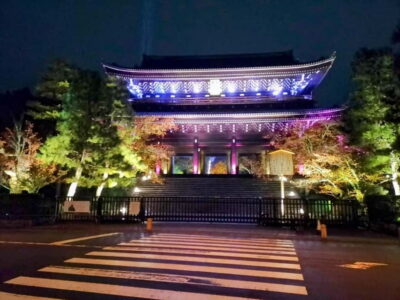
Kyoto Geisha Walking Tour: Gion District & Hidden Gems
Read our review →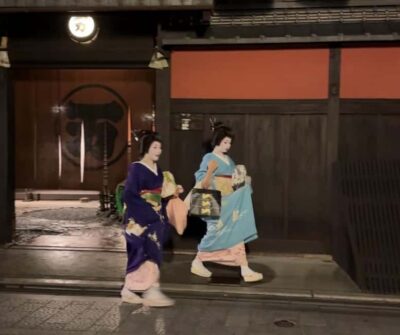
Gion Magical Night Walking Tour with Geisha Trivia
Read our review →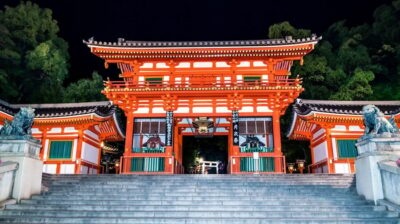
Gion Geisha District Walking Tour – Stories of Geisha
Read our review →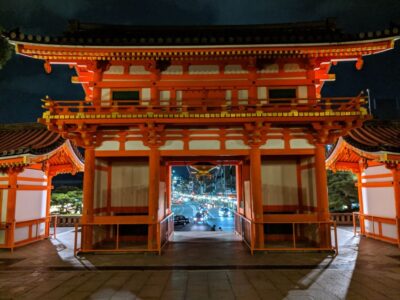
Best of Kyoto: Gion, Geisha, Pagodas & Cobblestones
Read our review →

Kyoto Night Foodie Tour in Gion (9+ dishes + 6 Sake tastings)
Read our review →
Kyoto Gion Geisha District Walking Tour – The Stories of Geisha
Read our review →
Kyoto Gion: 2-Hour Geisha Culture & History Walking Tour
Read our review →Browse the lists this tour appears in