

Reviewed · FUSHIMI INARI TOURS
Gion and Fushimi Inari Shrine Kyoto Highlights with Government-Licensed Guide
This is interesting because it stitches together Kyoto’s most famous sights in one smooth walking evening, without you having to guess your way through crowded alleys and temple stairs. You get Fushimi Inari’s torii paths, then pivot into Gion and the nearby atmosphere that makes Kyoto feel like Kyoto.
I like that you see Gion and the canal area as more than postcard scenery, with a guide who explains how the geisha world has evolved. I also like the small-group pace, it stays manageable for a long walk while your guide keeps you pointed toward the right lanes and landmarks.
One possible drawback: this is a true walking tour. If you have knee issues, or you hate standing in lines once you hit temple areas, you might find the 6-hour mark a stretch.
Key things to notice on this Gion and Fushimi evening walk
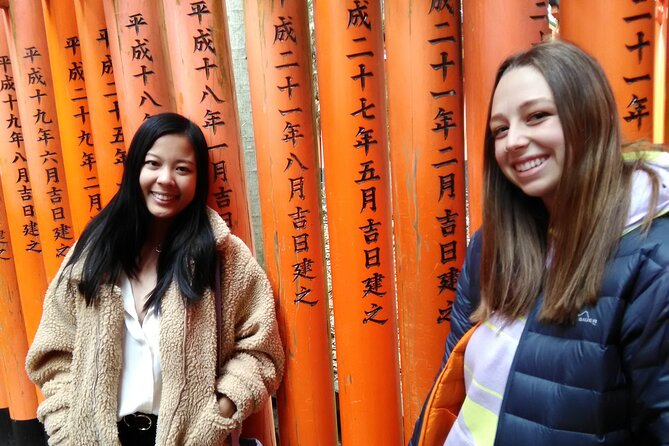
- Licensed English guide who helps you understand what you’re looking at, not just where to go
- Small group (max 10), so it’s easier to hear answers and follow without losing the thread
- Fushimi Inari first, so you tackle the famous torii trails with less stress at the start
- Gion plus Shirakawa Canal area, with context on geiko and maiko culture, including how they differ
- Two temple add-ons (Kiyomizu-dera and Kennin-ji) with admission not included for you to plan around
The value of combining Fushimi Inari with Gion in one 6-hour loop
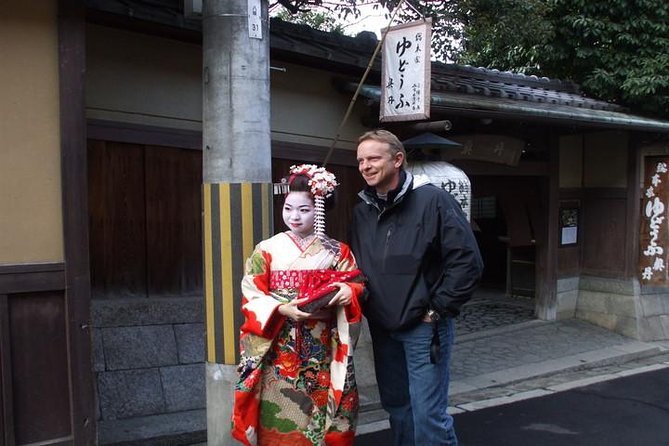
The smart part here is the mix. You start at Fushimi Inari Taisha, then you shift into Gion and its quieter neighbor areas, where narrow streets and foot-only lanes are exactly where a guide shines. Kyoto’s layout rewards walking, and this tour is built around that reality.
Also, you are not doing this as a solo scavenger hunt. The route is structured so you don’t spend your evening repeatedly checking maps, backtracking, or accidentally wandering into the wrong street where “one more turn” can become a 20-minute detour. If you want a guided evening that keeps you moving but still feels like Kyoto, this format makes sense.
Finally, you should think of the time as a trade. You get a lot of stops in about 6 hours, but the value depends on your comfort with walking and standing. If you’re the type who hates rushing, plan to slow down slightly at each stop so the tour does not feel like a checklist.
More Temple & Shrine Tours in Kyoto
- Kyoto: Fushimi Inari, Kinkakuji, Bamboo Grove 1 Day Bus Tour
★ 4.8 · 4,316 reviews - Kyoto: Tea Ceremony Ju-An at Jotokuji Temple
★ 4.9 · 3,207 reviews - Osaka/Kyoto:Kinkakuji,Arashiyama,FushimiInariShrine,NaraPark
★ 4.1 · 1,596 reviews
Meeting at Tatsumi-jinja, then letting the streets do the work
You meet at Tatsumi-jinja Shrine (Tatsumi Dai-myojin) in the Higashiyama area. The important practical detail is that the tour’s start and finish are handled on foot, and the walk ends back at the same meeting point.
This setup matters because it keeps things simple in a place where train stations and bus stops can feel far once you add walking between neighborhoods. Since the area is near public transportation, you can arrive on transit and then shift into walking mode without extra transfers.
Group size is capped at 10 travelers, which I consider a big deal in Kyoto. Small groups are easier to manage on narrow lanes, and it makes it more realistic to ask questions without shouting. In the reviews, people highlighted that the group size made the tour easy to follow and easy to hear, which tracks with how this kind of walking route usually works.
Your plan should include:
- Comfortable shoes (Kyoto does not do soft sidewalks)
- Water and something light to snack on if you need it
- A camera ready for alley views and canal moments, because you’ll be stopping for photos
Stop 1: Fushimi Inari Taisha torii trails without the guesswork
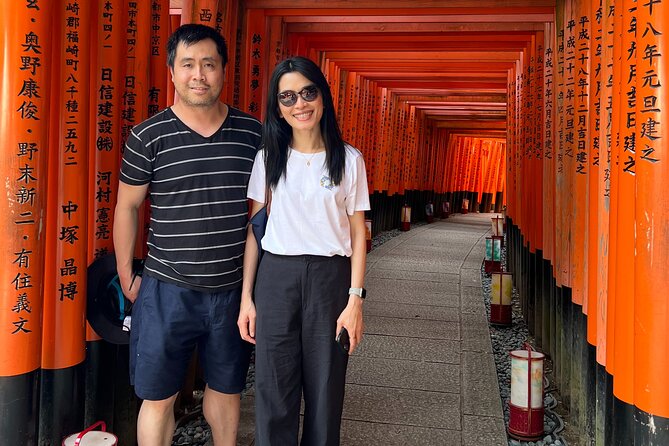
You start with Fushimi Inari Taisha, the Shinto shrine famous for its thousands of vermilion torii gates. There’s a reason this is one of Kyoto’s most photographed places: once you step into the torii lanes, you feel like you’ve entered a whole world of trails instead of a single viewpoint.
You get about 1 hour here, and the admission ticket for this stop is free. That’s useful. It means your first major attraction does not add a cost you might forget to factor into your budget.
What I like about tackling Inari at the beginning is psychological. The longer the day goes, the less energy you have for walking deeper into trails. If you start early in your route flow, you can enjoy the experience at a comfortable speed instead of rushing because your next stop is waiting.
One consideration: torii trails can be tiring if you keep going upward toward the higher paths. With a guide, you can decide how far to go based on your comfort level, rather than feeling like you must “do it all” to make the ticket worth it.
Gion and Shirakawa Canal: the part where the guide changes everything
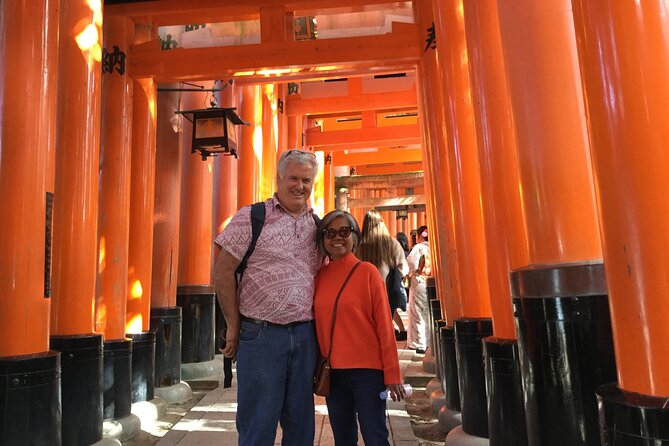
Next comes the heart of the evening: Gion. This is Kyoto’s best-known geisha district, centered around Shijo Avenue between Yasaka Shrine and the Kamo River. The area is full of shops and restaurants, including ochaya, traditional teahouses, and the streets can feel confusing if you’re trying to navigate on your own.
You’ll also spend time in the Shirakawa area, alongside the canal lined with willow trees. This canal corridor is parallel to Shijo Avenue and is exactly the kind of place where cars do not control the experience. You walk, you pause, and you notice details you would otherwise miss, like the way buildings face the water and the way lanes funnel you toward the best angles.
The standout lesson here is geisha culture context. In one review, the guide was specifically credited for explaining the difference between maiko and geiko and for sharing history in a way that made the district feel real. Even if you think you already know a bit from movies and books, a local explanation helps you connect names, roles, and rituals to what you’re seeing on the street.
A nice practical perk: in the same spirit, the tour is set up so you can spot people in the district unexpectedly. You might catch a moment with a maiko or geiko, but even if you do not, you still come away understanding what those figures represent and where the traditions show up in everyday street life.
More Fushimi Inari visits:
- Fushimi Inari Hidden Hiking Tour (Private Option Available)
★ 5.0 · 1,750 reviews - Kyoto/Osaka: Nara, Fushimi Inari Taisha, Arashiyama Bus Tour
★ 4.7 · 1,275 reviews - Osaka/Kyoto: Arashiyama, Nara & Fushimi Inari Shrine w/Lunch
★ 4.4 · 754 reviews - Kyoto: Nijo Castle, Kiyomizu & Fushimi Inari Guided Tour
★ 4.7 · 700 reviews
Pontocho and Miyagawacho atmosphere: why the timing feels right
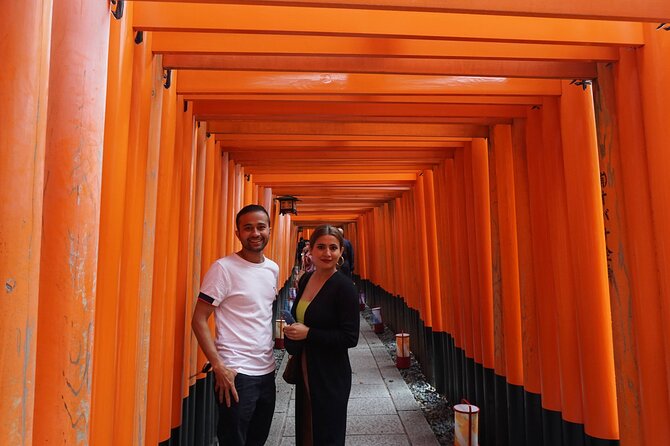
The tour is built around seeing multiple classic Kyoto neighborhood beats in one evening, including Pontocho and Miyagawacho. You’re not just passing through the big name streets. You are being routed through the kind of side lanes that connect these areas, the ones that usually stay out of your way unless you’re actively looking for them.
Why this matters: Kyoto’s famous sights are often separated by small stretches of streets that can feel forgettable if you’re tired. A guided route turns those stretches into context. Your guide can point out what changes street to street, like the shift from shopfronts to temple approaches, or the change from wider lanes to narrow alleyways that cars simply cannot use.
If you like street-level travel, this part is where the tour earns its keep. You see the texture of Kyoto, not just the headline attractions.
Stop 2: Yasaka Shrine in the middle of the Gion story
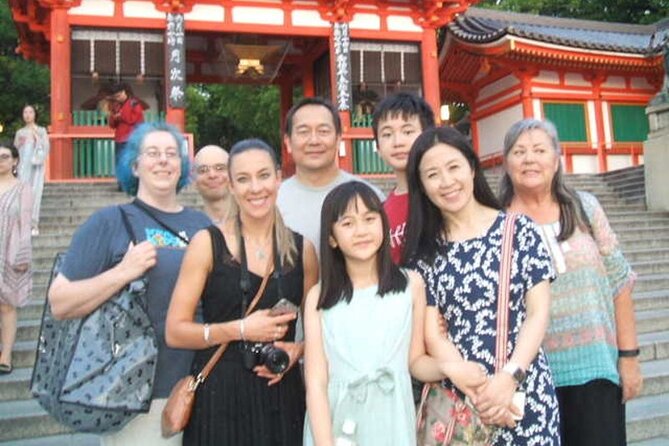
You also stop at Yasaka Shrine (Yasaka Jinja), sometimes called Gion Shrine. This is one of Kyoto’s most famous shrines, and it’s positioned between Gion and Higashiyama. The tour includes only about 10 minutes here, with free admission.
Short visits can sound rushed, but they work well as a pacing tool. Yasaka Shrine gives you a spiritual anchor during an evening that otherwise focuses on district streets and teahouses. You get a clear sense that Gion is not only entertainment and fashion. It sits inside a broader cultural landscape with long-standing religious roots.
If you’re someone who likes taking in details slowly, use your 10 minutes to notice the shrine approach and the way people flow around it. Then move on. Trying to do everything at every stop will steal time from the parts you actually came for.
Stop 3: Tatsumi Daimyojin Shrine, a quick look with local flavor

You have another brief shrine stop: Tatsumi Daimyojin Shrine near Shira-kawa. This one is also free, and it’s about 10 minutes.
Even short shrine stops can be worth it on a guided walk because a good guide gives you context fast. You’re not just looking at torii and stone. You’re learning how these places connect to the district around them, and how local stories are woven into the neighborhood’s identity.
This is the kind of stop I appreciate on evenings when I’m walking a lot. It gives you a mental reset without hijacking your schedule.
Kiyomizu-dera in one hour: what to expect, what to plan for
You spend 1 hour at Kiyomizu-dera Temple. Admission for this stop is not included, so you’ll want to budget for the on-site ticket when you arrive.
Kiyomizu-dera is a major name in Kyoto, with a founding date of over 1250 years ago. The temple is set halfway up Mt. Otowa on the Higashiyama mountain range. Even if you’ve visited other temple complexes, Kiyomizu-dera tends to feel dramatic because of its position and views.
Here’s what I’d plan for realistically:
- You’ll spend time moving through crowd areas
- You’ll likely do some stairs or sloped walking
- The one-hour window means you should pick what you want to prioritize
If you’re the type who needs to photograph every angle, you might feel squeezed. If you’re more selective, you’ll get a satisfying taste without racing.
Kennin-ji: the calmer counterpoint near Hanamikoji and Shijo
Your final major stop is Kennin-ji Temple. Admission is also not included for this stop. The grounds are expansive enough to feel relaxing compared to the busiest street edges, and the tour includes a short time window on the order of about an hour overall at this portion of the day.
Kennin-ji is close to Hanamikoji and Shijo streets. That proximity means you get a nice contrast: you can step out of the temple grounds and feel the energy of Gion again, but you also get breathing room inside.
One detail worth knowing is the presence of karesansui, which are the dry rock-and-sand style gardens. The tour setup is quick enough that you’re not stuck in a long formal visit, but it gives you a chance to see the garden elements and understand why this temple is so loved by people who care about Japanese garden design.
Walking logistics and photo stops: how to make the most of the pace
This is a walking tour, and that affects everything. You’re choosing it because you want to explore places that cars cannot access, especially in the older street patterns of Gion and the canal zones.
The upside is freedom. You can stop for a photo without needing an elevator ride or a taxi detour. You can also take in little street scenes, like the way pedestrians move around shrine entrances or how the canal area frames certain views.
The downside is that timing becomes physical. With a 6-hour duration and multiple stops, your energy is a real factor. If you know you tire out quickly, plan your hydration early and take a short break whenever your guide pauses.
One outlier from a less positive experience I saw involved a group who felt the start ran late and that the guide suggested a coffee stop, and they felt the group expectations did not match. I can’t confirm anything beyond that, but it is a good reminder: read what you booked, show up on time at the meeting point, and if your guide offers a detour, ask directly if it fits the tour route before you commit. Kyoto streets are worth exploring, but your time is worth protecting too.
Price and value: is $154.37 a smart deal for what you get?
The price is $154.37 per person for about 6 hours. That is not cheap, but you’re paying for a licensed local guide, a route plan, and the kind of navigation help that is hard to replicate with a phone map when streets are complex.
What you’re getting for the money:
- A licensed local English-speaking guide
- A small group experience (max 10)
- Mobile ticket convenience
- Admission is included only for sights listed as free, while some major temples require separate tickets
What you may still pay extra for:
- Kiyomizu-dera and Kennin-ji admission are not included
To me, the value comes down to one question: do you want an evening where someone else handles the navigation and interpretation? If yes, the guide cost is justified because Gion in particular is easy to get wrong. If you’re already comfortable on your own and you enjoy planning every turn, you can do it independently. But if you want your time to feel efficient and informed, this price is in the zone of what guided Kyoto evenings often cost.
Also consider booking timing. This tour is commonly reserved about 89 days in advance, so if you’re traveling in peak weeks, plan earlier rather than hoping for luck.
Who should book this Gion and Fushimi Inari guide walk?
This tour is best for you if:
- You want one evening that covers multiple Kyoto highlights without stress
- You care about understanding the geisha district context, including maiko vs geiko
- You prefer walking routes through streets cars cannot reach
- You like a small group that stays easy to follow
You might skip it if:
- You need minimal walking, because the tour is designed around a long on-foot route
- You are expecting a long, ticketed museum-style visit at temples, because the time at each stop is limited
It can also work well for people who travel with service animals, since service animals are allowed.
Should you book this tour or plan it on your own?
Book it if you want the practical benefits of a guide in Gion, plus a structured way to include Fushimi Inari, then round out your evening with Kiyomizu-dera and Kennin-ji. I like that the free admission stops help you start strong financially, and that the guide aims to explain what you’re seeing rather than just marching you from A to B.
Consider planning it yourself if you hate guided group pacing, or if your priority is spending most of your time inside one site rather than sampling several. Kyoto can be done solo, but Gion’s layout makes guided help feel like money well spent.
FAQ
How long is the tour?
The tour is about 6 hours.
What is included in the $154.37 price?
You get a licensed local English-speaking guide, the mobile ticket, and guide support while visiting the sights listed in the itinerary. Some admissions are included only where they are marked as free.
Are temple admissions included?
Admission is free for Fushimi Inari Taisha, Yasaka Shrine, and Tatsumi Daimyojin Shrine. Admission for Kiyomizu-dera Temple and Kennin-ji Temple is not included.
What is the group size?
The tour has a maximum of 10 travelers.
Where does the tour start and end?
The tour starts at Tatsumi-jinja Shrine (Tatsumi Dai-myojin) in Kyoto and ends back at the same meeting point.
Can I cancel for a full refund?
Yes. You can cancel up to 24 hours in advance for a full refund.
More Geisha Experiences in Kyoto
- Kyoto Geisha Walking Tour: Gion District & Hidden Gems
★ 4.7 · 3,273 reviews - Kyoto: Gion Magical Night Walking Tour with Geisha Trivia
★ 4.9 · 2,393 reviews - Kyoto: Gion Geisha District Walking Tour – Stories of Geisha
★ 4.7 · 2,187 reviews - Best of Kyoto: Gion, Geisha, Pagodas & Cobblestones
★ 4.9 · 2,058 reviews
Latest write-ups near Kyoto
- Kyoto Private Tour Full Day with Local Guide&Nara Option(PerGroup★ 5.0 · 20 reviews
- Sacred Pathways: Discover the Philosopher’s Path of Kyoto★ 4.9 · 20 reviews
- Kyoto UNESCO World Heritage Site Private Tour with a Premium Van★ 5.0 · 20 reviews
- Hammer Pattering Experience of Ring★ 5.0 · 20 reviews
- KYOTO: Private Tea Ceremony in Hidden Townhouse (Kid-Friendly)★ 5.0 · 20 reviews
- Sushi or Traditional Japanese Cuisine in a Kyoto Home with Emika★ 5.0 · 20 reviews
- The Kyoto VIP Experience!★ 5.0 · 20 reviews
- Kyoto Customized Private Tour: See Top Attractions in 1 Day★ 4.7 · 20 reviews
Fushimi Inari Tours, compared.
Fushimi Inari, Kinkakuji, Bamboo Grove 1 Day Bus Tour
Read our review →Fushimi Inari Hidden Hiking Tour (Private Option Available)
Read our review →
Kyoto/Osaka: Nara, Fushimi Inari Taisha, Arashiyama Bus Tour
Read our review →
Osaka/Kyoto: Arashiyama, Nara & Fushimi Inari Shrine w/Lunch
Read our review →
Nijo Castle, Kiyomizu & Fushimi Inari Guided Tour
Read our review →
Nijo, Kinkaku-ji, Arashiyama, Kiyomizu & Fushimi Inari
Read our review →
Sagano Romantic Train & Arashiyama, Kiyomizudera, Fushimi Inari Taisha Day Tour
Read our review →Browse the lists this tour appears in