
Reviewed · HISTORICAL TOURS
Hiroshima: History and Hidden Gems Tour
Hiroshima can feel heavy on the first step, and that is exactly why this walk works so well. You get a clear route through Peace Memorial Park and the museum context, then you move into the city’s rebuilt landmarks and quieter garden spaces like Shukukeien.
I especially like that the tour is designed to keep the flow connected, so you understand what you are seeing instead of bouncing between unrelated stops. I also like the way the guide sequences the day to reduce waiting and point out details you’d probably miss on your own. The main drawback is simple: it is still a walking tour, so wear comfortable shoes and expect the day to run a bit past 3 hours if you stop for photos, rain slows things down, or you ask lots of questions.
Key highlights to look for
- A sequence that reduces queue time, including skip-the-line access and smart timing at major sights
- Context-first start at the Peace Memorial Museum, before the outdoor memorials
- Memorial details beyond the big names, like the Children’s Peace Monument and the Korean Atomic Bomb Victims Cenotaph
- City history variety in one route, from the Atomic Bomb Dome area to Hiroshima Castle and Shukukeien Garden
- A guide who adapts on the spot, including rain planning and flexible pacing
Where this Hiroshima walk makes the most sense
Hiroshima is not a city you fully understand from a quick photo route. This tour helps you “read” the city in order, from the museum’s framing to the memorials that sit in public space, then onward to the castle and garden that show what survived and what rebuilt.
What I think works best is that it is not just about landmarks. Your guide ties together why each place exists where it does, and how Hiroshima’s memory lives alongside everyday streets. That turns a list of sights into something you can actually make sense of, even if you only have a half day.
More Historical Tours in Hiroshima:
- Hiroshima Historical Walking Tour – Why A-Bomb was Dropped
★ 4.8 · 893 reviews - Hiroshima Peace (Heiwa) Walking Tour at World Heritage Sites
★ 5.0 · 872 reviews - Miyajima Half-day Trip Historical Walking Tour
★ 5.0 · 284 reviews
Starting at the Peace Memorial Museum, then walking with purpose
You begin at the Hiroshima Peace Memorial Museum. That matters because it sets the tone and gives you the background you need before you step into the memorial park. The tour includes time to visit and take photos, but the key point is that you are not left to figure out the story alone.
From there, you move into Peace Memorial Park, where the atmosphere changes fast. In these outdoor spaces, it is easy to focus on one famous name and miss the overall message. A good guide helps you notice the layout, the symbolism, and the way the memorials connect. This is also where you’ll hear context about the atomic bomb and the impact on people, which shapes everything you see next.
Tip: bring a hat and sunscreen. Even when the subject matter is solemn, you still want to stay comfortable so you can focus.
Peace Memorial Park and the national memorials: what to watch for
Once you are in the park, you’ll visit several major memorial components, including the Hiroshima National Peace Memorial, the Children’s Peace Monument, and the Atomic Bomb Memorial Burial Mound. These are the kinds of sites where you may feel tempted to just look and move on, but slowing down is part of the experience.
Here’s what I recommend you do mentally: treat each stop as a different “type” of message.
- Some points are about public remembrance.
- Some are about victims as individuals and families.
- Some are about the world-level idea of peace.
Your guide’s job here is to connect the dots without turning the visit into a lecture marathon. Several people mention how patiently the guide explains and how he adjusts his pace when it is raining or when someone needs a moment. That matters because memorial spaces can be emotionally intense, and you do not want to feel rushed.
Along the way, you’ll also get safety briefings and a sense of the best way to walk between sites. That is not glamorous, but it keeps the day smooth.
Aioi Bridge and the memorial route that leads to the Dome
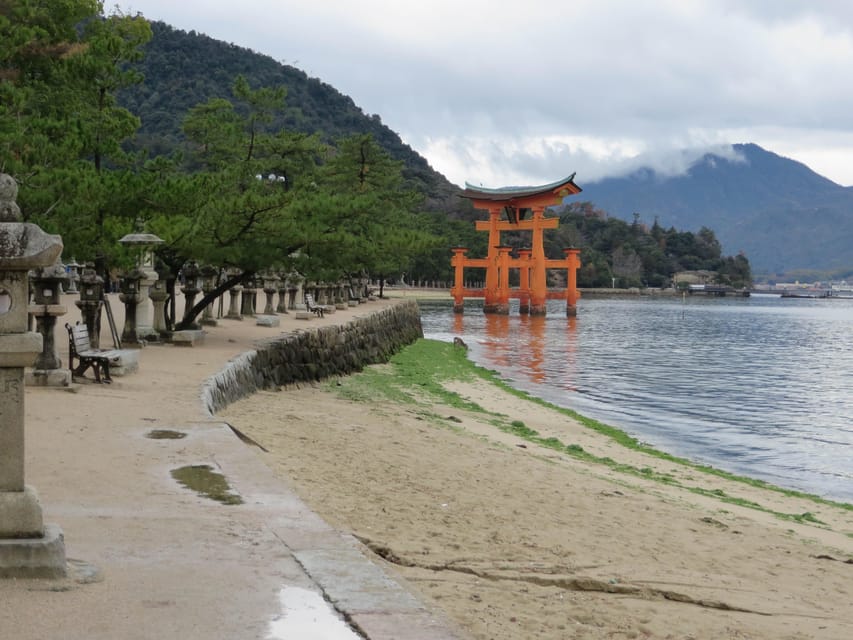
After the memorial components, the route continues toward Aioi Bridge, then onward through additional memorial stops, including the Korean Atomic Bomb Victims Cenotaph. The order is meaningful, because the bridge area and the cenotaph add different angles to the same tragedy.
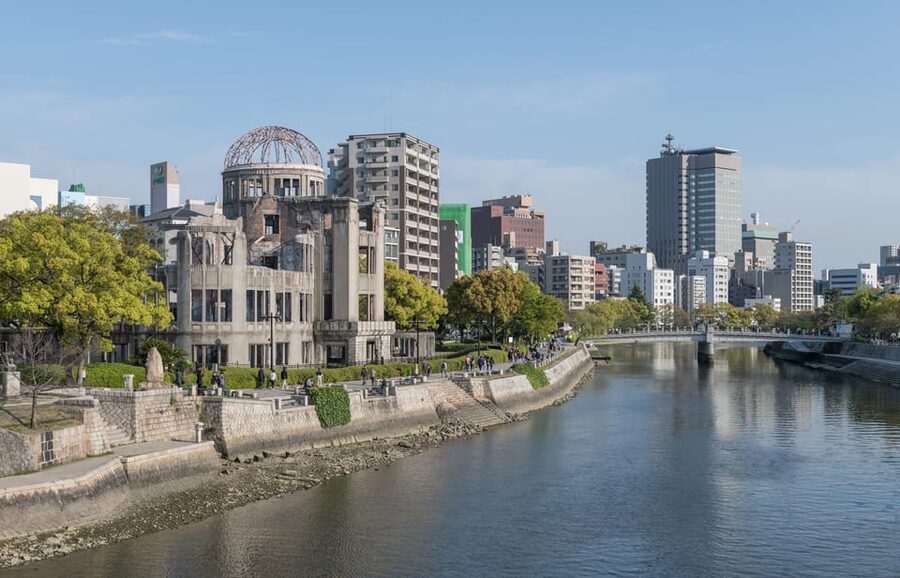
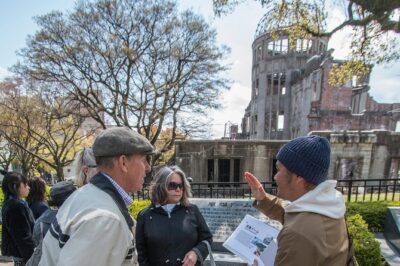
This part of the walk helps you understand something important: Hiroshima’s memory is not locked inside museum walls. It shows up in the city’s geometry, bridges, and cross-streets. When you reach the Atomic Bomb Dome, it lands harder because you already have context from the museum and the park.
What you’ll like about this stage is the sequencing. Instead of jumping straight to the Dome, you build a foundation. And because the guide keeps the day moving, you can spend real time looking at the Dome area rather than getting stuck in queues.
A change of pace from Hiroshima:
- Peaceful Hiroshima & Miyajima UNESCO 1 Day Bus Tour
★ 5.0 · 5,309 reviews - Hiroshima: Hiroshima and Miyajima UNESCO Sites 1-Day Tour
★ 4.9 · 2,330 reviews - Hiroshima / Miyajima Full-day Private Tour with Government Licensed Guide
★ 5.0 · 1,298 reviews - Hiroshima in a Nutshell: Morning Bike Adventure
★ 5.0 · 524 reviews
Hiroshima Castle, inside the building, without the line pressure
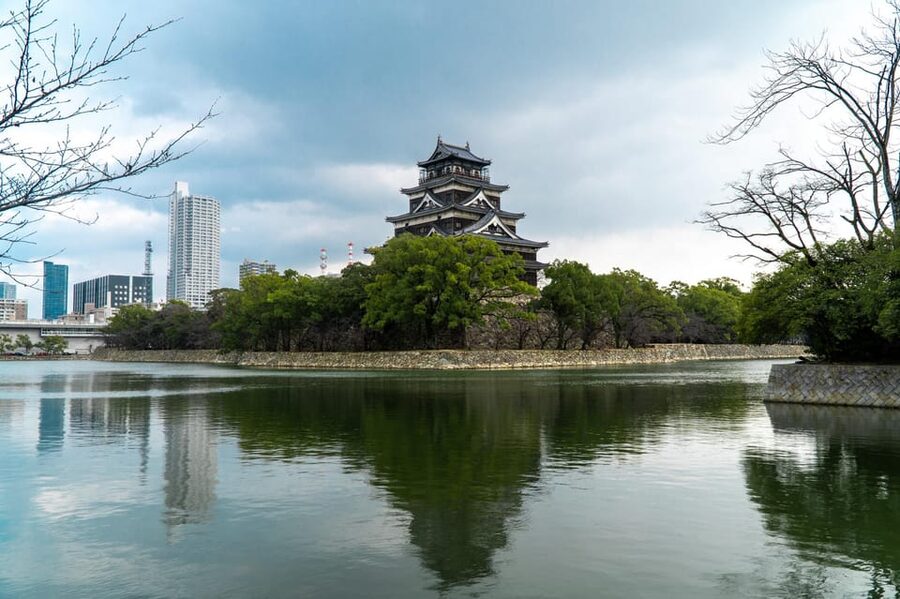
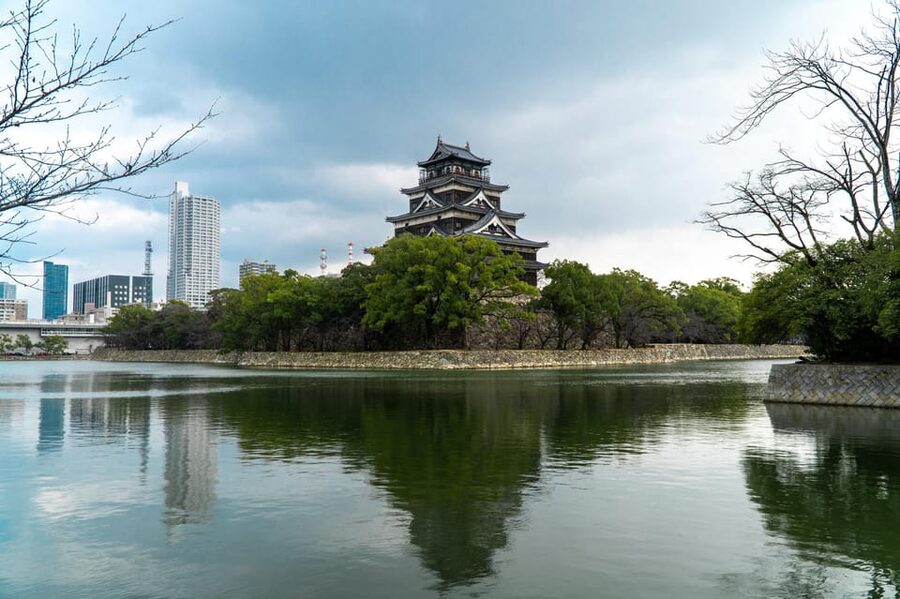
Next, you head to Hiroshima Castle, one of the city’s most well-known historical landmarks. The tour suggests going inside the castle rather than waiting in line. That is a practical recommendation, because castle exteriors are great, but the inside experience helps you connect architecture to Hiroshima’s story.
I like that this is not treated as a separate “tourist detour.” It works as a contrast to the memorial sections. You are moving from remembrance and devastation to history, rebuilding, and the kind of cultural identity that shows up in architecture and design.
If you are the type who likes facts, you’ll probably appreciate how your guide explains the castle in a way that ties back to what you learned earlier in the day. And because this portion is part of a guided route, you are not left searching for what to notice.
Shukukeien Garden: the 16th-century slow moment
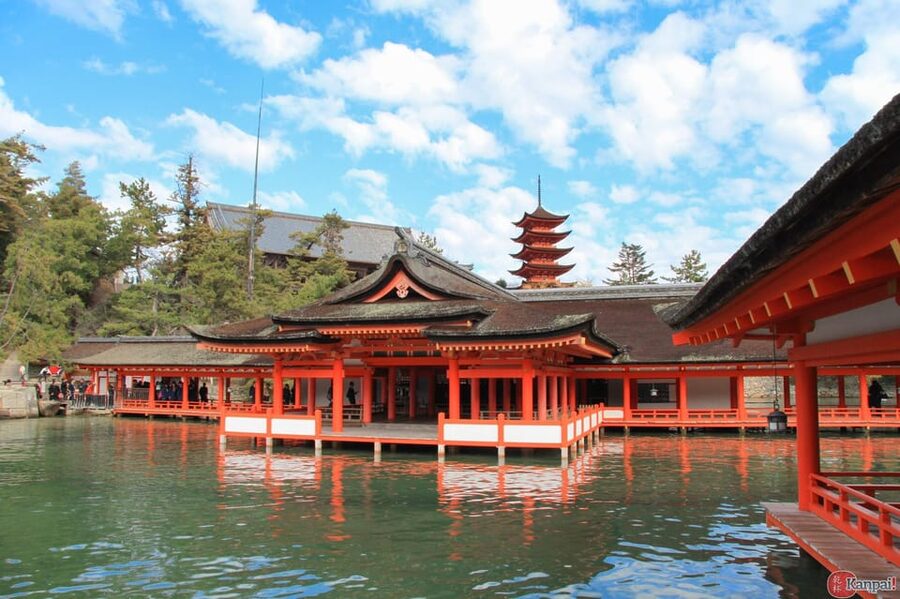
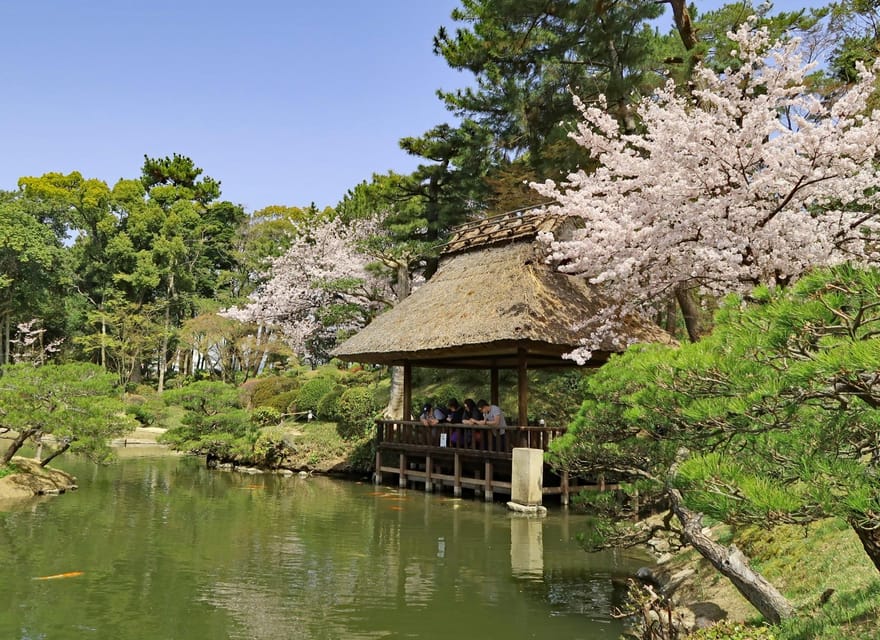
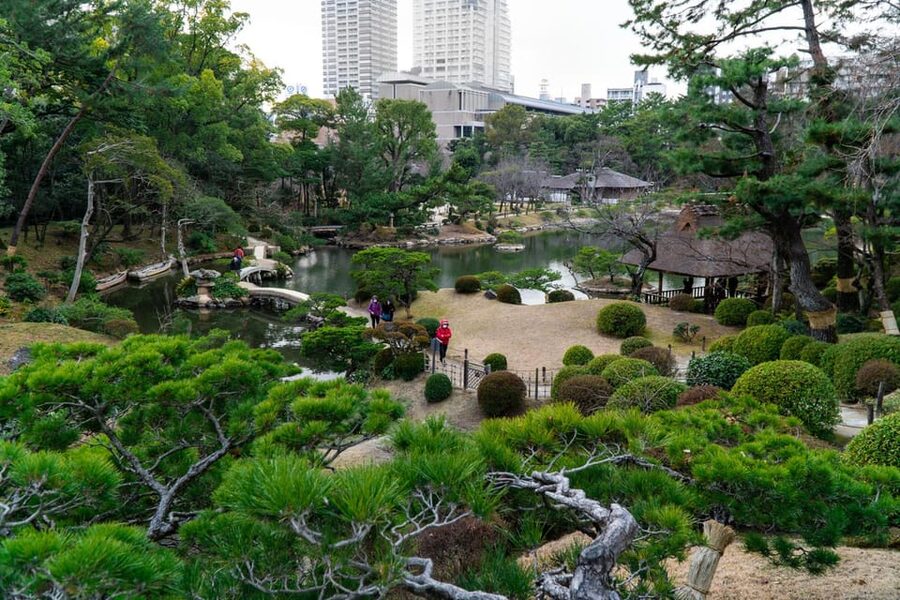
The day finishes with Shukukeien Garden. This is described as the oldest garden dating back to the 16th century, and it feels like a real reset after the emotional memorials and the bright open spaces around the Dome.
In Shukukeien, your guide points out the garden’s striking architecture and explains history alongside what you can see today. Gardens can turn into “nice to look at” experiences if nobody provides context, but with a guide you start noticing details you would otherwise skip.
This stop also gives you something practical: a place to slow down. Even on a walking tour, you need a pause so you can absorb everything you saw that morning and early afternoon.
Photo tip: go a little slow at the viewpoints. If you rush, you tend to frame only what is obvious and miss the garden’s structure.
The Awais factor: why the guide changes everything
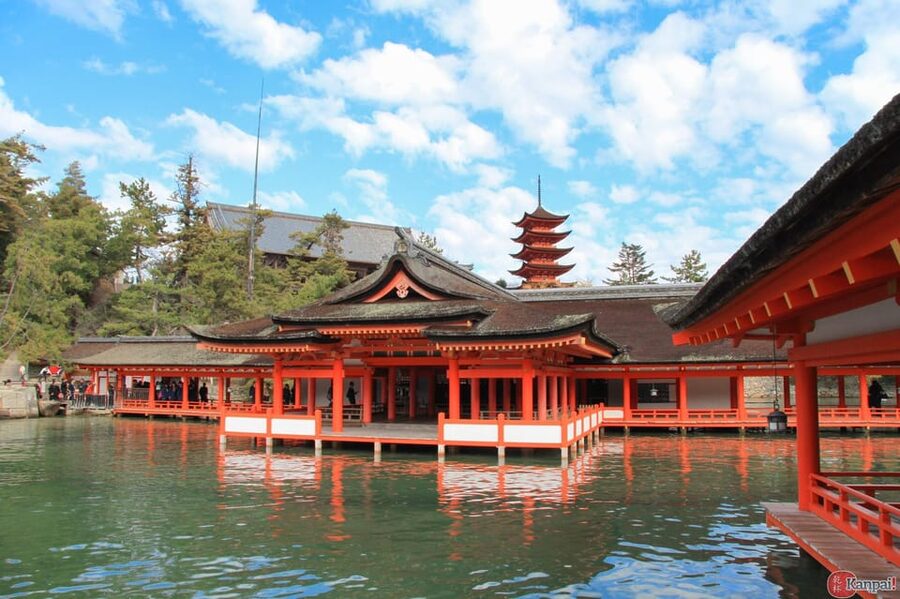
The standout element here is the guide, Awais. People repeatedly praise his English, his patience, and his ability to explain difficult subjects in a compassionate, non-biased way. That is not just a nice-to-have. Hiroshima history is emotional and complex, and you want someone who can handle questions without getting defensive or glossing over details.
A few specifics that show up in real-world experience from past groups:
- He is described as highly knowledgeable, including for people with academic backgrounds.
- He is flexible with timing, including shortening the museum time if you need to.
- He manages rain well, including sheltering people and even offering an umbrella when the weather turns.
- He answers questions and adjusts the tour based on what you want to focus on.
One of the best parts of a good guide is the “in-between” value. Several people mention that after the tour, he shares helpful recommendations around Hiroshima. That turns your half day into a smoother full-day plan.
If you want a tour that feels more like a guided conversation than a script, this is the kind of guide that delivers.
Pacing, rain, and how walking fits into 3 hours
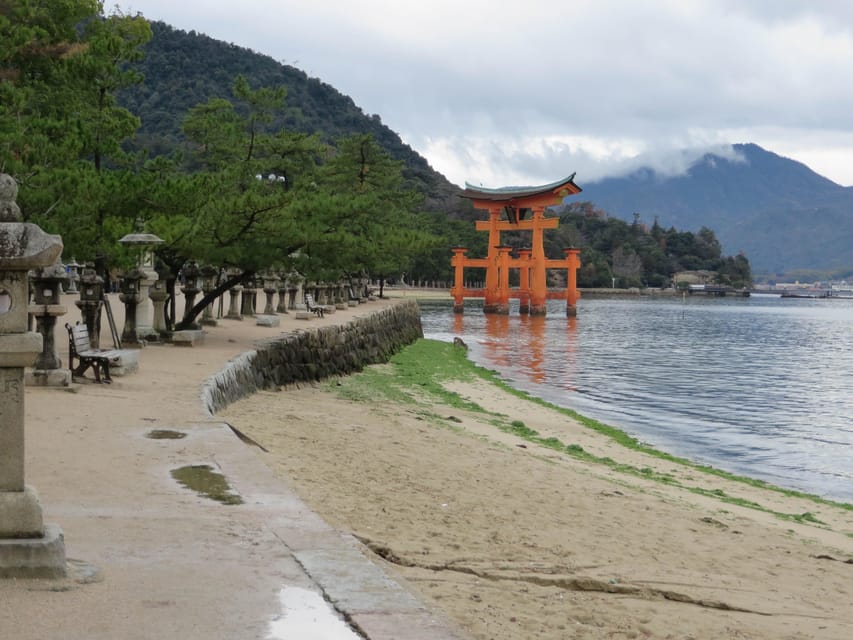
This is scheduled as a 3-hour tour, but it is realistic to expect it may run a bit long depending on your pace and the conditions. People mention that the tour can take longer when planning the rest of the day, or when rain and photos are involved. The good news is that the guide adapts instead of forcing a rigid checklist.
Also, it is a walking tour across multiple areas of Hiroshima. That’s why comfortable shoes matter. If you have a fragile ankle or you tire easily, you can still make it work, but go in expecting walking time between stops.
On one occasion, a group shared that a taxi option was offered if they did not want to walk the whole route. That tells me the guide is thinking about your comfort, not just the itinerary.
Price and value for a short guided route
At $57 per person for a 3-hour guided walking tour, the value comes down to what is included and what you avoid.
- You get an English-speaking guide, which is the real cost driver.
- You get skip-the-line help at key points, so you spend time seeing rather than waiting.
- You cover multiple major stops in one connected route, including the museum area, memorial components, and then Hiroshima Castle and Shukukeien Garden.
In practice, a short guided route is worth it in Hiroshima because many visitors want context at the memorial sites. If you try to cobble this together on your own, you end up doing research on the fly while trying to keep your footing and your emotions steady. With a guide, the story is organized for you.
If your goal is efficiency plus meaning, this price feels fair.
Who this tour is best for
This tour is ideal if you want:
- A guided understanding of Hiroshima’s memorial spaces, not just photos
- A route that connects the museum, Peace Memorial Park, and the Dome area in a logical order
- A mix of serious history plus lighter cultural stops like the castle and Shukukeien Garden
- A guide who stays patient and flexible, especially in rain
It may feel a bit intense if you prefer purely recreational sightseeing with minimal emotional content. But if you want the “why” behind Hiroshima’s most important places, you’ll likely appreciate the structure.
Should you book this Hiroshima history and garden tour?
Yes, if you want a short, well-led route that respects the seriousness of the memorial sites while still giving you major Hiroshima landmarks afterward. The combination of museum context, memorial sequencing, and then a castle and 16th-century garden gives you a balanced half day.
I’d especially book it if:
- You care about understanding what you’re seeing, not just checking boxes
- You want an English guide who can handle questions thoughtfully
- You are trying to use limited time wisely in Hiroshima
If you prefer self-guided pacing with no emotional framing, then you might prefer to go at your own speed. But for most people with a limited schedule, this is a strong way to get oriented fast and see the key places in a connected order.
FAQ
How long is the tour?
The tour lasts 3 hours.
Where does the tour start?
The tour begins at the Hiroshima Peace Memorial Museum. If you want, you can choose a meeting point instead of starting exactly at the museum.
Is there an English-speaking guide?
Yes. The tour includes a live English-speaking guide.
Can I skip ticket lines?
Yes. The tour includes skip-the-ticket-line help.
What are the main stops on the route?
You’ll visit the Hiroshima Peace Memorial Museum and Peace Memorial Park area, then see sites such as the Hiroshima National Peace Memorial, Children’s Peace Monument, Atomic Bomb Memorial Burial Mound, Aioi Bridge, Korean Atomic Bomb Victims Cenotaph, and the Atomic Bomb Dome. The tour also includes Hiroshima Castle and Shukukeien Garden.
Is the tour wheelchair accessible?
Yes, it is wheelchair accessible.
What should I bring?
Bring comfortable shoes, a hat, sunscreen, and weather-appropriate clothing.
What is the price per person?
The price is $57 per person.
Can I cancel for a full refund?
Yes. You can cancel up to 24 hours in advance for a full refund.
Latest write-ups near Hiroshima
- An Amazing set of Cultural experience: Kimono, Tea Ceremony and Calligraphy★ 5.0 · 69 reviews
- Hiroshima: Private Walking Tour with a Local★ 4.6 · 70 reviews
- Hiroshima: Miyajima Island Half-Day Tour with Guide★ 4.9 · 71 reviews
- Kimono and Tea Ceremony in Miyajima★ 5.0 · 73 reviews
- Hiroshima and Miyajima Private Guided Tour★ 4.5 · 75 reviews
- HIROSHIMA ORIZURU TOWER Admission Ticket★ 4.6 · 75 reviews
- Hiroshima & Miyajima: UNESCO A-Bomb Dome & Itsukushima★ 5.0 · 76 reviews
- Hiroshima to Miyajima: Private Custom Tour with Ferry Ride★ 4.9 · 77 reviews
Historical Tours, compared.
World Heritage Shirakawa-go and Experience Tours from Kanazawa
Read our review →
Imperial Palace and Shogun Historical Walking Tour
Read our review →
World Heritage Kyoto & Nara Uji Authentic Matcha Experience
Read our review →
Kyoto Gion: 2-Hour Geisha Culture & History Walking Tour
Read our review →
World Heritage Shirakawa-go Morning Guided Tour
Read our review →
Hiroshima Peace (Heiwa) Walking Tour at World Heritage Sites
Read our review →
Shinjuku Historical Walking Tour & Secret Backstreets
Read our review →Browse the lists this tour appears in