
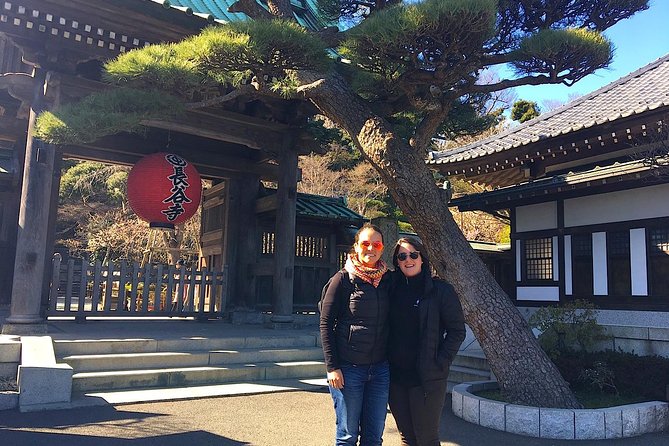
Reviewed · TEMPLE & SHRINE TOURS
Kamakura Private Tour: Temples, Nature, and the Great Buddha
Kamakura is an easy day trip from Tokyo, but it can feel like a whole different world once you trade train stations for temple paths and forested slopes. This private tour stands out because it blends Kamakura’s spiritual stops with real hiking time, guided in a human way, like the experience people often describe with guides such as Yu or Teiko.
I love that entrance fees for Jochiji, Hasedera, and Kotoku-in (Great Buddha) are included, so you can focus on walking and listening instead of stopping to calculate tickets. I also love the pacing of the route, temple first, then mountain trail links, then back out toward coastal views at Hasedera and Yuigahama Beach.
One consideration: you walk at least 5 km, including a mountain pass, so you want solid shoes and a realistic plan for uphill stretches. If the weather turns hot, humid, or rainy, you may need extra breaks and the guide may adjust how much walking you do.
Key things that make this Kamakura private tour worth your time
- Guide-led, private pacing that helps you understand what you’re seeing at each shrine and temple
- Entrance fees included for Jochiji, Hasedera, and Kotoku-in, which cuts friction on the day
- Mountain pass hiking time plus connecting trails, not just a straight list of highlights
- A mix of Shinto and Buddhist sites, including Zeniarai Benten Ugafuku Shrine and Sasuke Inari Shrine
- Ocean views finish, with Hasedera and Yuigahama Beach, not just stone statues and shopping streets
- Easy station handoff at the end near Hase Station, with the guide usually helping you get sorted on trains
How the tour flows, from Kita-Kamakura Station to Hase Station
This is built as a walking route that starts at Kita-Kamakura Station and finishes at Hase Station. That is a good thing. You’re not doubling back to the same starting point, and the end near Hase Station keeps you close to onward plans once the half-day is done.
The timing is about 5 hours (approx.), with visits and walking spread across the main spiritual sights plus trail sections. It’s private, so you won’t be stuck behind someone moving too fast or too slow. Many groups come away talking about how the guide shaped the day, for example slowing down for families or older visitors, or shifting transport methods if weather got rough.
A big practical note: no hotel pickup or drop-off is included. If you want pickup, it’s listed as an extra cost (8,000 yen per person). Otherwise, plan to meet the guide at Kita-Kamakura Station. The tour is near public transportation, which matters because Kamakura is best navigated by rail and short local rides.
More Temple & Shrine Tours in Kamakura:
- Tokyo: Kamakura & Enoshima Day Trip including Temple Tickets
★ 4.5 · 1,375 reviews - Kyoto: Fushimi Inari, Kinkakuji, Bamboo Grove 1 Day Bus Tour
★ 4.8 · 4,316 reviews - Kyoto: Tea Ceremony Ju-An at Jotokuji Temple
★ 4.9 · 3,207 reviews
Value check: what you pay for, and what it actually buys you
At $98.44 per person, this is not a budget stroll. But you are paying for three things that add real value.
First, you get an English speaking guide for the full walking window. That matters here because Kamakura’s temples and shrines are not just pretty buildings. The experience is about context, like why Jochiji was built, what the sites mean in Shinto and Buddhism, and how the Great Buddha fits into the area’s story.
Second, major entrance fees are included: Jochiji, Kotoku-in, and Hasedera. Those tickets are part of the itinerary, so you avoid the awkward moment of asking, How much is it, and where do I buy it.
Third, the route is structured to include both famous stops and connecting paths. In other words, you’re not paying for a guide to point at the same postcard spots everyone hits. The trail links and the smaller shrines (like Zeniarai Benten Ugafuku Shrine and Sasuke Inari Shrine) are where a guide’s local insight can turn a walk into a real day.
The one cost you should plan for is food and drink. Those are not included. Many guides can help with lunch suggestions during the day, but you should expect to cover your own meal unless your specific guide arrangement happens to match what you need.
What you’ll see at each stop, and why it matters
Stop 1: Jochiji Temple, Zen calm under the trees
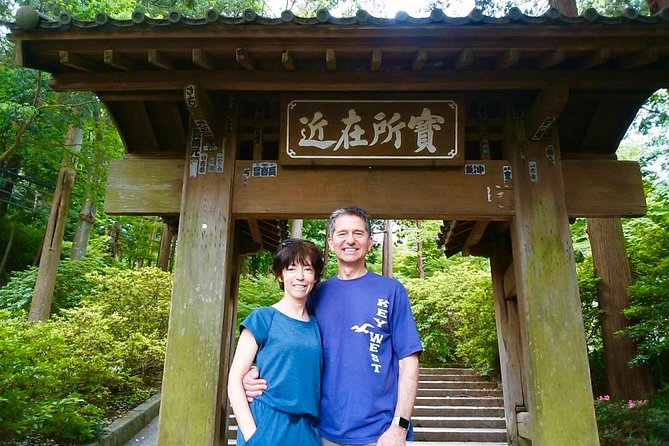
You start at Jochiji Temple, a Zen site in a forested area. The setting is part of the point: you arrive already thinking about nature and spirituality at the same time, not later after you get tired of walking.
Jochiji was built in 1281 by Hojo Tokoyori, connected to the Kamakura Shogunate, in memory of his son. That detail is the kind of thing a guide can connect to what you see on site. Even if you’re not a temple-history person, it helps you feel less like you’re just passing through.
Consideration: this part is quiet and serene, but it’s also an early stop, so if you want coffee first, you may want to grab it before meeting at Kita-Kamakura.
A change of pace from Kamakura:
- From Tokyo: Kamakura & Enoshima 1-Day Bus Tour
★ 4.5 · 189 reviews - Kamakura Historical Walking Tour with the Great Buddha
★ 5.0 · 129 reviews - Kamakura Walking Tour – The City of Shogun
★ 5.0 · 100 reviews - Kamakura 4hr Private Trip with Government-Licensed Guide
★ 5.0 · 58 reviews
Stop 2: Kamakura hiking trails, walking between the famous dots
After Jochiji, you move into Kamakura’s hiking trails around the pass. This is where the tour stops feeling like sightseeing and starts feeling like being in the area.
The listed stop time is about 40 minutes, and you’ll be moving through nature rather than straight city sidewalks. It’s a good portion of the tour for photos too, especially when the light breaks through trees.
Why it’s valuable: Kamakura’s temple sites are scattered. Trails connect them in a way that shows you how people historically traveled between sacred places without treating everything like a theme park.
Stop 3: Zeniarai Benten Ugafuku Shrine, the torii framed mystery
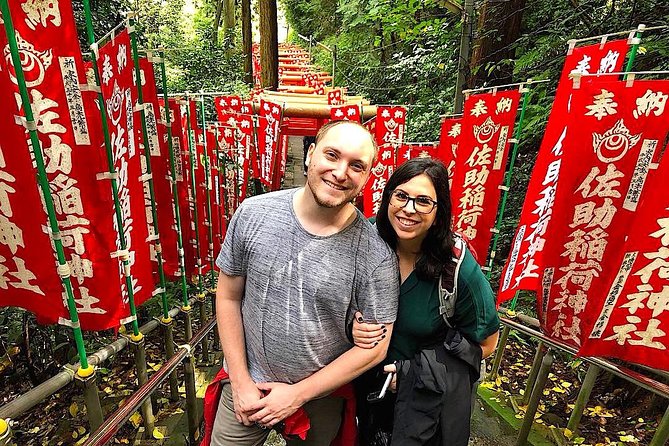
Next comes Zeniarai Benten Ugafuku Shrine. The route here includes a walk along what’s described as the Daibutsu Hiking Course through the mountains until you reach a hillside spot framed by a torii gate.
You go through that hole, and that’s where the shrine’s “mysterious” element comes in. It’s one of those Kamakura moments where the scenery and the religious symbolism blend into something you can’t fully appreciate from a quick photo.
Tip for comfort: this is one of those sections where footing matters. If it’s wet, go slow. Slips are not a dramatic story, but they can wreck a day.
Stop 4: Sasuke Inari Shrine, fox legend and battle lore
Then you shift to Sasuke Inari Shrine. The legend connects Inari, a white fox, with Minamoto Yoritomo. The story is basically that Inari advised Yoritomo in a dream about how to win a battle.
Even if you don’t know the history going in, a guide can make the connection between the legend and what you notice at the shrine. It’s also a nice contrast to the bigger temple structures, because shrines can feel more human-scaled and story-driven.
Stop 5: Kotoku-in, the Great Buddha of Kamakura
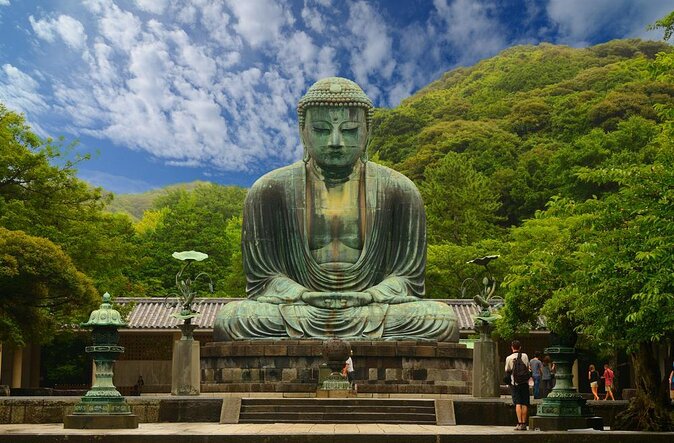
Now the main headline: Kotoku-in and the Great Buddha.
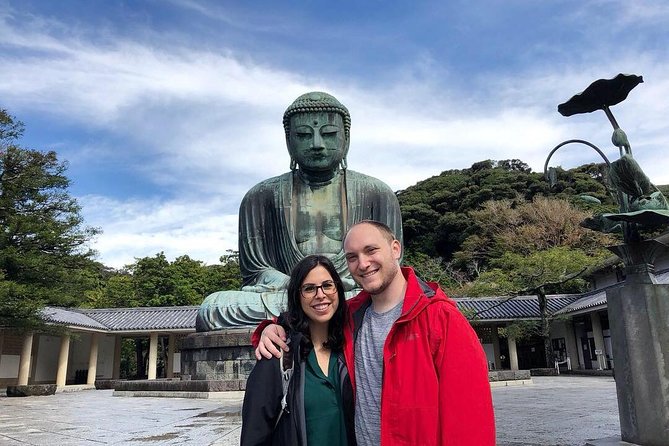
The Buddha is listed as 13.35 m tall and about 121 tonnes, with the bronze statue dating as it appears today to 1252. In plain terms, this is one of Japan’s major “big Buddha” experiences, and the tour includes time to appreciate it properly.
You get an included entrance fee here, which is convenient. The stop time is around 20 minutes, so this is not a long “museum style” visit, but it gives you enough time to look, take in details from different angles, and get the historical context without rushing.
Drawback to watch for: if the day is very crowded, 20 minutes can feel short. The private format helps, though, since your guide can guide you to a good viewing rhythm.
Stop 6: Hasedera Temple, views over the ocean plus temple gardens
Then you climb into Hasedera Temple, located about halfway up Mount Kamakura. The defining feature is the views south over the ocean, including Yuigahama Beach.
Hasedera’s garden and temple layout give you a “slow down” moment in the middle of the day’s movement. The stop time is about 30 minutes, which is a good amount for appreciating both the scenery and what the guide points out.
If you’re visiting in June and July, the listing notes you can see ground hydrangeas. If you’re there outside that season, don’t worry. Even without hydrangeas, the temple setting and viewpoint are the draw.
Stop 7: Yuigahama Beach, a south-facing finish with time to reset
Finally, you reach Yuigahama Beach. The beach faces south, which means you’re looking toward the ocean for the sun from this point. The listed time is about 15 minutes, and that’s not long, but it’s a helpful breather after temple steps and mountain trail walking.
During summer there can be an open air market called Umi-no-ie, but don’t plan your whole trip around it unless you’re traveling in that season.
What walking feels like, and how to prepare
This is a moderate fitness tour, but it is still real hiking. You’ll walk at least 5 km, and you should expect uphill sections because the route includes a mountain pass.
Wear shoes that are easy to walk in. That’s not marketing fluff. Reviews and the itinerary both point toward the fact that you’re moving on paths and slopes, not just flat sidewalks.
Heat and rain are the two biggest day-shapers:
- On hot, humid days, expect to take more breaks.
- On rainy days, guides often adapt the plan. Some days may include more train or bus movement to keep you safe and comfortable.
If you have a knee issue or you’re traveling with kids, this tour can still work, but only if your group is ready for adjustments. One of the reasons people love these tours is that the guide tends to manage pace and route choices, sometimes even using extra help like taxis when needed.
The guide factor: why the same route can feel totally different
The route itself is impressive on paper. What lifts it is the guide.
You’ll see repeated praise for guides like Yu, Teiko, Yumi, Noriko, Famiko, Takami, Yoko, and Naho. The common thread in those good days is clear, conversational explanations: why Jochiji was built, what legends connect to Inari, what makes the Great Buddha date important, and how Shinto and Buddhism shape everyday temple etiquette.
Guides also help you move through the day with less stress. Some reviews mention extra care, like making sure the group gets back to the right train, and even lending umbrellas or adjusting walking time for people with mobility needs. That’s the difference between doing Kamakura as a checklist and doing it as a story you can follow.
Timing and logistics on the ground

Because you end at Hase Station, your plan for the rest of the day is easy. You can head back toward Tokyo or continue exploring nearby areas without having to retrace your steps to the exact starting point.
Also note the tour includes photos of tour participants. That’s small, but it’s one more thing handled for you, and it matters when you don’t want to keep trading your phone with strangers.
For transport during the tour, it’s mostly walking. But guides can use public transit if weather forces changes, and you may also pay small amounts for transit depending on what’s open and how the day is adjusted.
Who this tour is best for
This tour fits best if you want:
- More than the single highlight photo of the Great Buddha
- A mix of temples, shrines, and trail time
- Explanations that make the sites make sense
- A day trip structure that doesn’t require you to research every turn
It may be less ideal if:
- You want a totally flat walk with minimal stairs
- You’re traveling with someone who cannot handle uphill passes
- You’d rather spend time at fewer stops, slower and longer at each place
That said, the private format can be a safety net. If you communicate your limits up front, guides can often adjust the pace, and some days may include route changes to reduce strain.
Should you book this Kamakura Private Tour?
Book it if you want a half-day that feels like Kamakura itself, not just a crowded “greatest hits” circuit. The combination of included temple access, mountain trail segments, and a guide who can connect legends to what you see makes the price feel reasonable for a guided private experience.
Skip it or choose a different style if you hate uphill walking, you expect mostly indoor or flat stops, or you’re hoping for a food-focused experience. Also consider the season. Summer heat and rainy days can change how the route feels, and this tour is weather dependent.
If you’re the kind of traveler who likes to walk a little, look a lot, and understand what you’re looking at, this is a strong way to spend your time in Kamakura.
FAQ
How long is the Kamakura private tour?
It runs for about 5 hours (approx.).
Where does the tour start and end?
The tour starts at Kita-Kamakura Station and ends at Hase Station.
What entrance fees are included?
Entrance fees are included for Jochiji Temple, Kotoku-in (Great Buddha of Kamakura), and Hasedera Temple.
How much walking should I expect?
You will walk at least 5 km, including a mountain pass, so you should wear comfortable walking shoes.
Is hotel pickup included?
No. Hotel pickup and drop-off are available for an extra fee of 8,000 yen per person.
Is food included in the price?
Food and drink are not included.
What fitness level do I need?
The tour is for travelers with a moderate fitness level, since it includes uphill walking and a mountain pass.
What happens if the weather is bad?
The experience requires good weather. If it is canceled due to poor weather, you’ll be offered a different date or a full refund.
Latest write-ups near Kamakura
- Kamakura Walking Tour – The City of Shogun★ 5.0 · 100 reviews
- Kamakura Historical Walking Tour with the Great Buddha★ 5.0 · 129 reviews
- From Tokyo: Kamakura & Enoshima 1-Day Bus Tour★ 4.5 · 189 reviews
- Your Own HANKO Name Seal Activity in Kamakura.★ 5.0 · 24 reviews
- Kamakura 4hr Private Trip with Government-Licensed Guide★ 5.0 · 58 reviews
- When Emperors Reigned and Shoguns Ruled★ 5.0 · 43 reviews
- Tokyo: Kamakura & Enoshima Day Trip including Temple Tickets★ 4.5 · 1,375 reviews
- Buddha, Bamboo & Zen – Bespoke Kamakura Private Walking Tours★ 5.0 · 25 reviews
Temple & Shrine Tours, compared.
Fushimi Inari, Kinkakuji, Bamboo Grove 1 Day Bus Tour
Read our review →
Meiji Shrine, Asakusa, Skytree Bus Tour and Cruise
Read our review →
Osaka/Kyoto:Kinkakuji,Arashiyama,FushimiInariShrine,NaraPark
Read our review →
Asakusa Walking Tour with Sensoji Temple Visit
Read our review →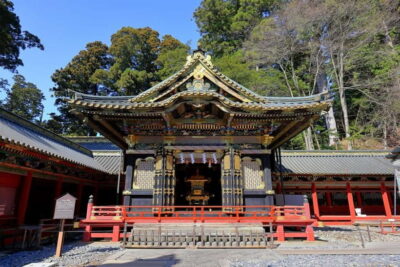
Nikko: Kegon Falls, Lake Chuzenji & Toshogu Temple
Read our review →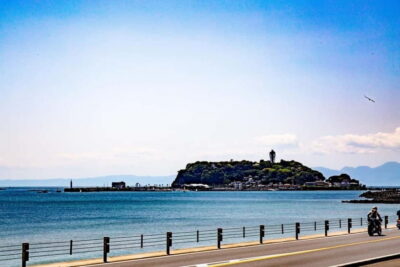
Kamakura & Enoshima Day Trip including Temple Tickets
Read our review →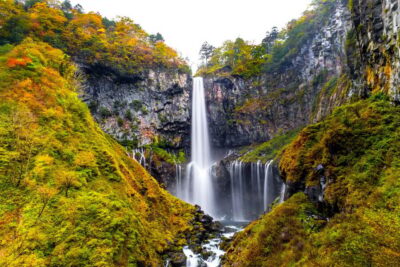
Nikko Toshogu Shrine and Kegon Waterfall Tour
Read our review →Browse the lists this tour appears in