
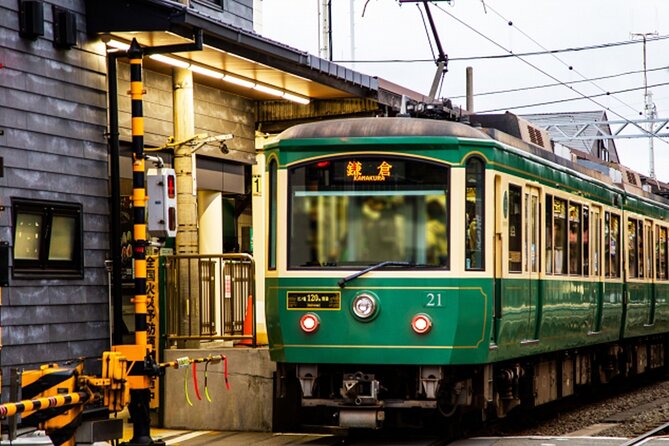
Reviewed · CITY TOURS
Kamakura Walking Tour – The City of Shogun
Kamakura is the kind of place where history feels physical, you walk through Shinto shrine energy, then switch gears to big Buddha reverence, all inside one compact day. What I like most is the small-group pace (max 10 people) and the clear way the guides connect each stop to the bigger story of Kamakura as a center tied to shogun-era power. The one drawback to plan for: part of the fun is walking, and you will need to budget extra for admission and transit (1,200 yen total is listed as not included).
I also love that this tour ends near Hase Station, so you can keep going after the temples without backtracking to where you started. And from what I’ve seen in the guide write-ups, the tour includes practical side benefits like photo/viewing tips and ideas for what to do in the afternoon. If your schedule is ultra-tight or you get easily tired on stairs and slopes, consider building in some rest time before or after.
Key Highlights You’ll Actually Care About
- 10-person max means you get real attention, not a herd shuffle.
- One-way route starts at Kamakura City Tourist Information Center and ends at Hase Station.
- Three headline stops in about 3.5 hours: Tsurugaoka Hachimangu, Kotoku-in Great Buddha, and Hasedera.
- Admission costs are separate, with a listed total of 1,200 yen for transport and entries.
- Food and local stops show up as part of the experience, even while you focus on major sights.
- Guides like Miyu, Midori, and Maki are repeatedly praised for clear explanations and good pacing.
A 10-Person Max Walking Tour That Keeps the Day Manageable
This is a small-group walking tour with a cap of 10 people, which matters more than you’d think. In Kamakura, crowds can spike, and one big benefit of a tighter group is that you can move as a group without feeling like you’re stuck waiting for someone who’s lost the path. The full tour time is about 3 hours 30 minutes, so it works well as a morning anchor.
I like that the schedule is compact but not rushed on paper. You get dedicated time at each major stop, plus a middle stretch for Komachi Street, where the vibe shifts from sacred to everyday. That rhythm is part of why Kamakura feels livable instead of just checklist tourism.
More Walking Tours in Kamakura:
- Kamakura Historical Walking Tour with the Great Buddha
★ 5.0 · 129 reviews - Buddha, Bamboo & Zen – Bespoke Kamakura Private Walking Tours
★ 5.0 · 25 reviews - Kyoto Geisha Walking Tour: Gion District & Hidden Gems
★ 4.7 · 3,273 reviews
Start at Komachi, Finish at Hase Station (So Your Afternoon Can Be Yours)
Logistics can make or break a half-day plan, and this route is set up with that in mind. You meet at the Kamakura City Tourist Information Center at 1-chōme-1-1 Komachi, and you finish at Hase Station, 2 Chome-14 Hase. Ending at a station is a big deal because it makes the rest of your day simpler, whether you head to the coast or return toward Tokyo.
The tour also uses a mobile ticket, which cuts down on fiddling with paper. And since the end point is a station area, it’s easier to “save” time for whatever you want next, instead of trying to reverse-engineer your route.
Tsurugaoka Hachimangu Shrine: The Shinto Heart of Shogun-Era Kamakura
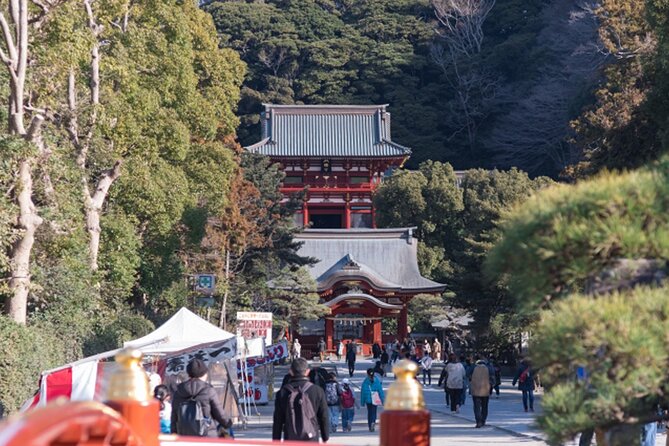
Your day opens at Tsurugaoka Hachimangu Shrine, and it’s a smart start. This isn’t some random pretty shrine stop, it’s one of Kamakura’s most significant sites, founded in the 12th century by Minamoto no Yoritomo. The shrine is dedicated to Hachiman, the Shinto god strongly tied to protection and martial success.
You’ll spend about 30 minutes here, and the guide’s job is to help you see what you might otherwise miss. When you understand who Hachiman is to Japanese belief and how the Minamoto clan fit into the political picture, the rituals and layout feel purposeful rather than decorative. I find that this context also makes the later Buddhist stops easier to read, because you start noticing how the culture treats spirituality and history as part of daily order.
Practical note: you’ll want to arrive ready for walking and standing. Even though the time block is only 30 minutes, shrine grounds can involve moving through spaces that take a bit of time to absorb.
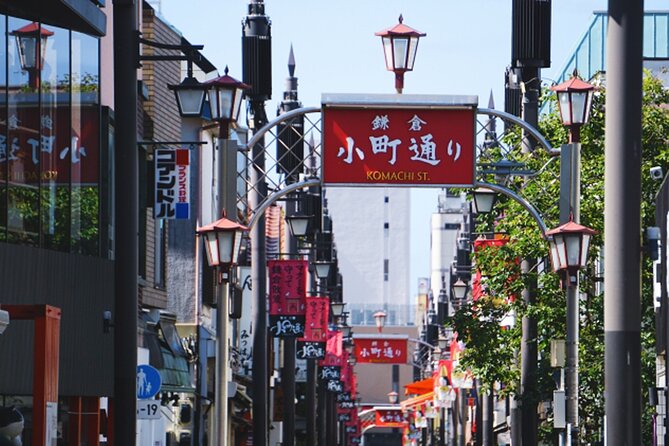
Komachi Street: A 20-Minute Reset Into Kamakura Street Life
After the shrine, you get a 20-minute break on Komachi Street. This is the pedestrian hub right in the center of Kamakura, named after the poet Ono no Komachi, so even the street name carries meaning. The pace here is different: less ceremonial, more social.
I like Komachi Street as a mid-tour palate cleanser. It gives you a chance to reset before moving on to the bigger, heavier spiritual sights. And it’s often where you can grab something small, whether it’s a snack or something sweet, without losing the structure of the day.
Because this stop is only 20 minutes, don’t plan on shopping for long. Think of it as time to soak up the atmosphere, use the restroom if you need it, and maybe pick up a quick bite that keeps your energy up.
Other Kamakura plans readers weigh up
- Tokyo: Private City Highlights Tour with Local Guide
★ 4.8 · 1,433 reviews - Tokyo: Asakusa, Skytree & Akhihabara Go-Kart City Experience
★ 4.7 · 761 reviews - Hiroshima City 4hr Private Walking Tour with Licensed Guide
★ 5.0 · 437 reviews - Tokyo: 3-Hour Bike or E-Bike City Highlights Tour
★ 4.8 · 435 reviews
Kotoku-in Great Buddha: Seeing the Daibutsu Without Getting Lost in the Crowds
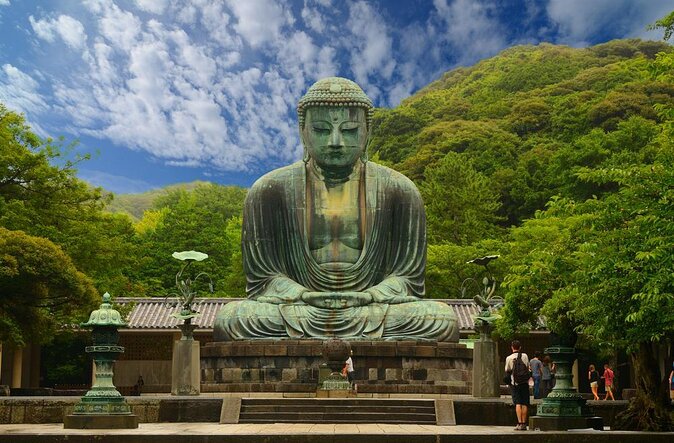
Next is Kotoku-in and the famous Kamakura Great Buddha, also called the Kamakura Daibutsu. This stop is about 30 minutes, and it’s one of the visual anchors of Kamakura. The statue is an enormous bronze Buddha, roughly 13.35 meters (about 44 feet) tall.
What I appreciate here is the way a guide can change your experience from photos to understanding. With the Great Buddha, people often focus on scale, which is valid, but what makes it land is the meaning and setting around the statue. You’ll also have a clearer idea of what to notice when you’re standing where tourists tend to stop. The goal is to help you see it in a way that feels complete, not like you just walked past a landmark.
Admission for this stop is not included in the base price. The tour lists transportation and admission as a total extra 1,200 yen, so factor that in for Kotoku-in and the next temple.
If you’re visiting at a busy time, patience helps. This is a must-see for a reason, and it can get crowded around the statue. Use the guide’s timing and photo spot suggestions to avoid wasting energy.
Hasedera Temple: Gardens, Quiet Views, and Kannon in Wood
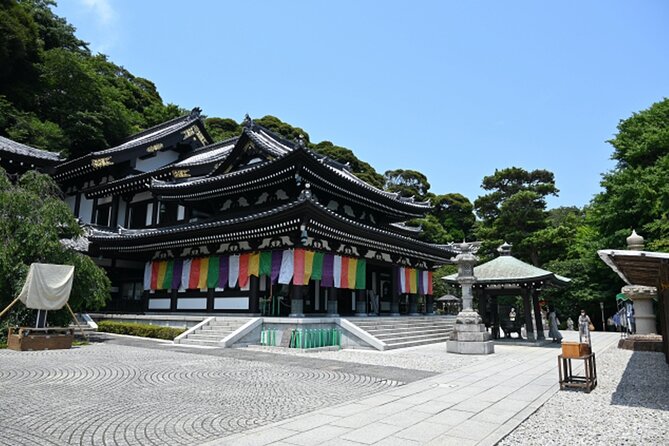
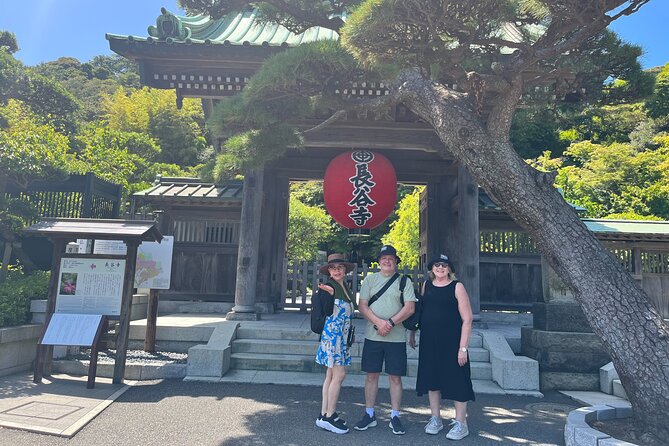
Your final major stop is Hasedera Temple, also known as Hase Kannon Temple. Expect about 40 minutes here, and plan for a calmer feel compared to earlier stops. Hasedera is known for a serene atmosphere, beautiful gardens, and a towering wooden statue of Kannon.
This is where Kamakura slows down. Tsurugaoka Hachimangu sets the cultural and spiritual frame, the Great Buddha provides the iconic moment, and Hasedera gives you breathing room with the feel of a place made for reflection. Even if you’re not into temples in a deep way, I think Hasedera is the kind of stop that makes people go quiet, partly because of the gardens and partly because the setting invites it.
Admission for Hasedera is also not included in the base cost. Like Kotoku-in, it falls under the listed extra 1,200 yen for transport and entries.
Practical comfort tip: give yourself a little extra energy for this final stop. Even within a 40-minute block, it can involve uneven ground and steps.
Food Time, Photo Spots, and How Guides Help You Stretch the Day
The tour experience includes time to savor local cuisine, though the exact dishes aren’t spelled out in the details I have. What you can expect is less about a formal meal and more about the chance to sample something local and keep moving without losing momentum. Guides also tend to point out where to pause for snack breaks, which matters when you’re trying to keep a comfortable pace.
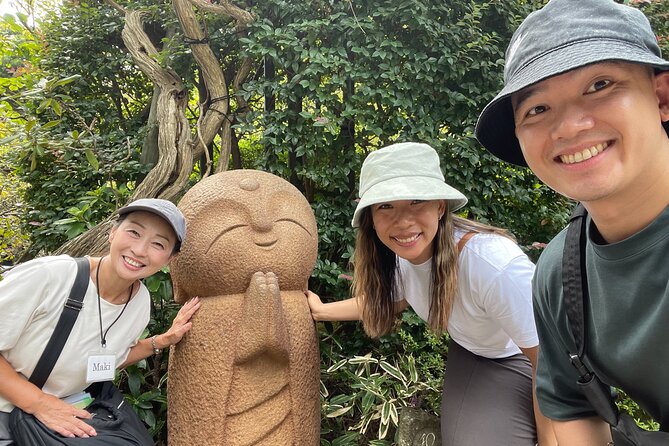
One of the most praised parts of the guides is how they add value beyond the headline sights. Guides like Miyu, Midori, and Maki are repeatedly noted for clear, easy-to-follow explanations about both Shinto shrines and Buddhist temples. They also tend to share ideas for what to do afterward, which is helpful because the tour ends in Hase Station, so the day doesn’t automatically end when you leave the group.
If you like photos, you’re in luck. People highlighted the guide pointing out great viewing spots to photograph the city. In Kamakura, where sightlines matter, that kind of tip saves you from wandering around in circles at the exact moment when the light looks good.
Price and Value: $35 Plus About 1,200 Yen Extra
At $35.00 per person, the base cost is relatively straightforward: the included item is the tour guide fee. What you’ll add is listed as transportation and admission fees totaling 1,200 yen.
Is it worth it? For me, the value comes from three things working together:
- You’re getting a guided context session while you’re inside some of the most important sites in Kamakura.
- Small-group size means you’re not just following a line, you can ask questions and keep the experience flowing.
- The route covers major highlights in about 3.5 hours, which is a practical use of limited time.
If you planned to do this on your own, you could absolutely see these places independently. The question is whether you want the extra effort of figuring out what each site means and where to pause. This tour pays for that clarity, and the route makes the morning feel structured.
One thing to keep in mind: because admission and transit are extra, you’ll want cash or a card ready for the 1,200 yen total so you’re not scrambling mid-walk.
What You’ll Get Most From It (And Who Might Skip It)
This tour is a strong fit if you:
- want an efficient way to hit major Kamakura sights without planning every step
- enjoy explanations that connect Shinto and Buddhism to daily meaning
- like a group pace that is active but still relaxed
It’s also a solid choice for families. One of the standout comments I saw pointed out that kids enjoyed the entire flow, which suggests the guide pacing works for mixed ages.
You might choose something different if you:
- prefer to linger for long periods at one site rather than moving on on a schedule
- want total independence with no guide context
- are extremely sensitive to walking time, since the day includes multiple stops and general movement between them
Should You Book This Kamakura Walking Tour?
If you want your Kamakura day to feel coherent, this is a good bet. The route makes sense, it ends at Hase Station for easy continuation, and the guides are repeatedly praised for making Shinto and Buddhist details clear without turning the day into a lecture. Add the 10-person max, and you get the comfort of personal attention with the ease of a set plan.
I’d book it if your goal is to see the big names, learn what they mean, and still have energy for the afternoon. Skip it only if you’re planning to spend most of your time on a single site or if you already know Kamakura deeply and want to design every step yourself.
FAQ
How long is the Kamakura Walking Tour?
The tour lasts about 3 hours 30 minutes.
What is included in the $35 price, and what extra costs are expected?
The $35 price includes the tour guide fee. Transportation and admission fees are not included, with a listed total of 1,200 yen.
Where does the tour start and where does it end?
The tour starts at Kamakura City Tourist Information Center, 1-chōme-1-1 Komachi, Kamakura, Kanagawa, and ends at Hase Station, 2 Chome-14 Hase, Kamakura.
Is there a mobile ticket?
Yes, this experience uses a mobile ticket.
How many people are in the group?
The tour has a maximum of 10 people.
Is free cancellation available, and what happens if weather is poor?
Free cancellation is available. You can cancel up to 24 hours in advance for a full refund. The tour requires good weather, and if it is canceled due to poor weather, you will be offered a different date or a full refund.
Latest write-ups near Kamakura
- Kamakura Private Tour: Temples, Nature, and the Great Buddha★ 5.0 · 121 reviews
- Kamakura Historical Walking Tour with the Great Buddha★ 5.0 · 129 reviews
- From Tokyo: Kamakura & Enoshima 1-Day Bus Tour★ 4.5 · 189 reviews
- Your Own HANKO Name Seal Activity in Kamakura.★ 5.0 · 24 reviews
- Kamakura 4hr Private Trip with Government-Licensed Guide★ 5.0 · 58 reviews
- When Emperors Reigned and Shoguns Ruled★ 5.0 · 43 reviews
- Tokyo: Kamakura & Enoshima Day Trip including Temple Tickets★ 4.5 · 1,375 reviews
- Buddha, Bamboo & Zen – Bespoke Kamakura Private Walking Tours★ 5.0 · 25 reviews
City Tours, compared.
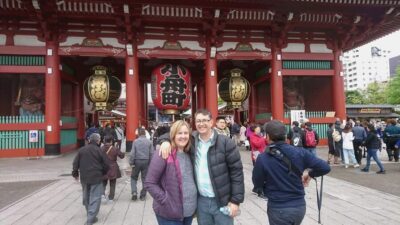
Private City Highlights Tour with Local Guide
Read our review →
Asakusa, Skytree & Akhihabara Go-Kart City Experience
Read our review →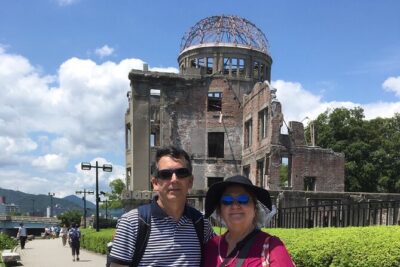
Hiroshima City 4hr Private Walking Tour with Licensed Guide
Read our review →
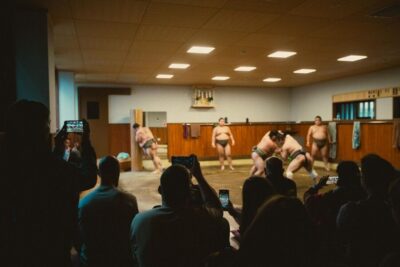

Private Haneda Airport (HND) to Central Tokyo City Transfer
Read our review →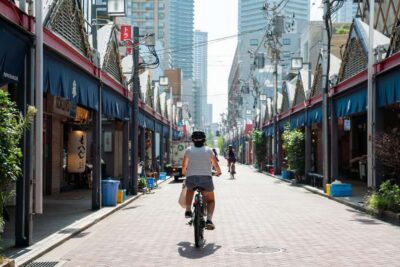
3-hour Guided E-Bike Tour of the City’s Hidden Gems
Read our review →
Shibuya City: Daikoku PA GT-R R35, R34, R33 or R32 Tour
Read our review →Browse the lists this tour appears in