
Reviewed · KINTSUGI WORKSHOPS
Kintsugi Experience: Art of Golden Joinery in Tokyo
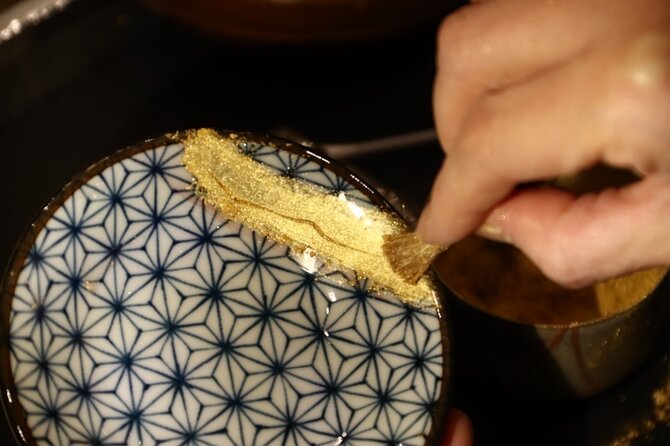
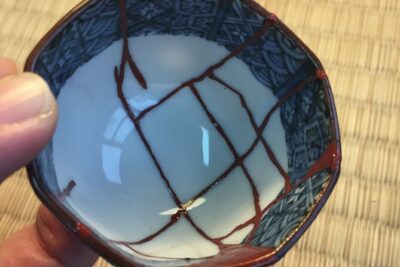
Kintsugi is fascinating because it turns damage into design, literally drawing bright gold lines where a break once was. In this Tokyo workshop, you get the why behind the Japanese art of repair, not just a craft demo. You’ll work with gold-mixed lacquer on a real ceramic plate, then take your repaired piece home.
I also like that it is built for normal people, not just art students. You’ll be guided step by step, and the studio keeps the class small, capped at 10 people, so you actually get help when you need it. One thing to consider: the workshop does not allow personal items, so you cannot bring your own broken mug or dish and repair that instead.
Key things I’d bet you’ll enjoy
- Gold lacquer technique on a provided ceramic plate, so you start with the right materials
- A small capped group (no more than 10), which makes the instruction feel personal
- You wear samue, a traditional work garment, which makes the workshop feel like a real atelier visit
- Philosophy talk built into the lesson, including the idea that repair is part of an object’s history
- A take-home souvenir that’s actually handmade by you, not a passive demo keepsake
Kintsugi in Minami-Aoyama, a workshop that feels like a small atelier

If you like cultural crafts that are hands-on, this is one of those Tokyo activities that makes the city feel less like sightseeing and more like everyday life. You go to a studio in the Minami-Aoyama area, in the orbit of Omotesando, and spend about an hour learning Kintsugi the practical way: you follow instructions, you handle the materials, and you finish with something you can keep.
The Kintsugi idea is simple but not childish. Japanese repair culture treats breakage as part of an object’s story, not a reason to hide it. Instead of disguising damage, you highlight it with gold-toned lacquer so the repair becomes part of the look. In the class, that philosophy is explained alongside the technique, so you leave with a better sense of what you just made and why it matters.
More Kintsugi Workshops in Tokyo
- Authentic Pure Gold Kintsugi Workshop with Master Taku in Tokyo
★ 5.0 · 217 reviews - Kintsugi Workshop Class in Shibuya, Tokyo with mon cadeau
★ 5.0 · 74 reviews - Tokyo: Kintsugi Workshop to Learn the Art of Golden Joinery
★ 4.8 · 27 reviews
What happens during your 1-hour lesson, samue included
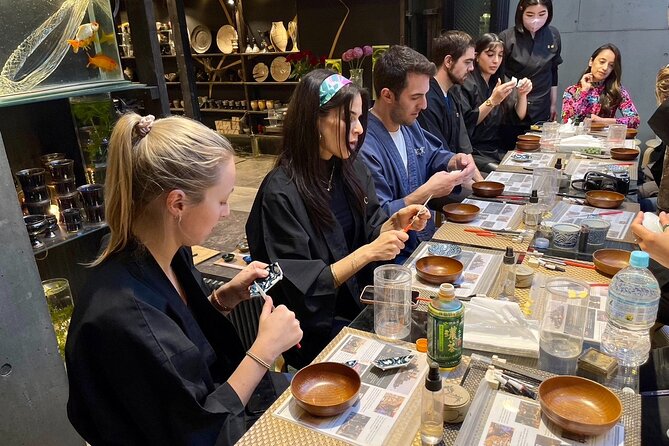
The lesson is about one hour, and it runs in a small group of no more than 10 guests. You meet your teacher and group, then you don a samue, the traditional garment used by craft workers. That small detail does more than look fun in photos. It helps set the tone that you are doing a craft, not just watching one.
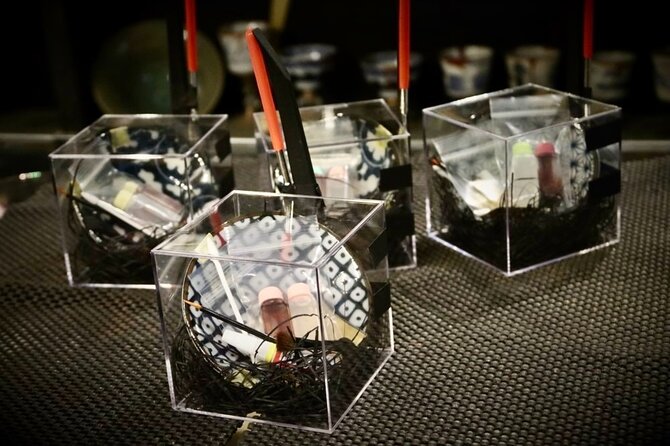
You also work with what the studio provides. You will use a ceramic plate supplied by the studio, and you take that plate home after the repair. Personal items are not allowed, so plan to treat this as a create-a-souvenir class rather than a bring-your-own-restoration service.
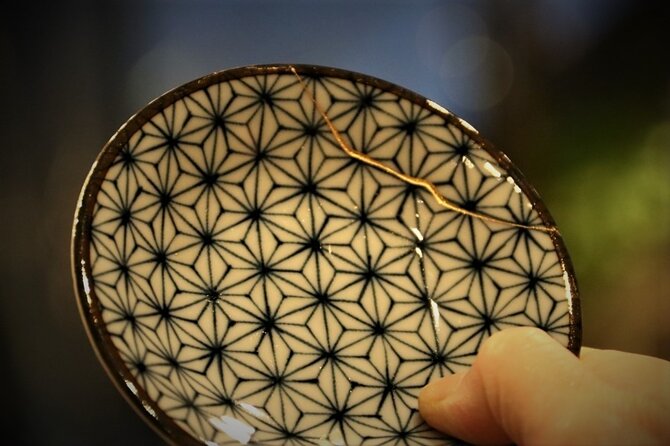
During the hour, your instructor guides you through the technique of Kintsugi, including repairing the provided plate using lacquer mixed with gold. The workshop is designed to be accessible for beginners, and you will not need artistic talent or special tools. The studio provides the equipment and handles the materials side, so you can focus on the steps you are doing in the moment.
One more practical note: there is an age restriction. Under 6 years old cannot enter the atelier for safety reasons, so this is better as an adult or older-kid activity.
The philosophy of golden repair, and why it changes how you see stuff
Kintsugi is famous for its gold seams, but the gold is only the visual part. The philosophy is the real hook. The class explains the belief that breakage and repair are part of an object’s history, not something to erase. That mindset is tied to Japanese aesthetics often linked with wabi-sabi, the idea that imperfection and aging can be beautiful.
What that means for you on a personal trip level: you come away thinking differently about everyday objects. A repaired piece becomes a memory you can hold, one with meaning rather than just decoration. You also get an easy story to tell when people ask where you got it. It is not a generic souvenir from a rack. It is a repaired item made through a cultural practice.
I also like that the lesson does not treat philosophy as a lecture. It is blended into the craft. You learn the concept, then you immediately apply it to the plate in your hands. That makes it stick.
Omotesando and Minami-Aoyama logistics, how to get there without stress
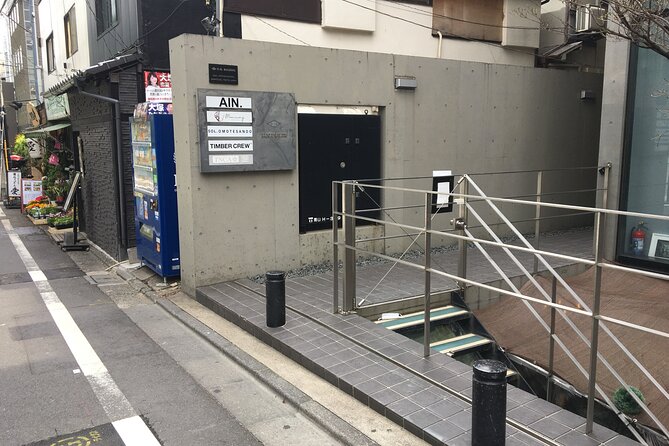
The workshop happens in Tokyo’s Minami-Aoyama neighborhood, with the start area associated with Omotesando. The meeting point is the TNCA Minami-Aoyama Studio, address listed as 3-chōme-8-2 Minamiaoyama, Minato City, Tokyo 107-0062.
This is not a big bus-friendly, street-corner spectacle. It is a studio. So give yourself a little buffer for finding the exact entrance. The quickest plan is to use public transit, and the area is convenient if you are already moving around Omotesando.
A few no-drama tips that make the workshop go smoother:
- Arrive with enough time to settle in and get into your samue
- Use the exact studio address when navigating, not just the neighborhood name
- Expect a small setting, so don’t plan to rush right at the start time
The activity ends back at the meeting point, so you can roll directly into lunch or a stroll afterward.
A change of pace from Tokyo:
- Mt Fuji and Hakone 1-Day Bus Tour Return by Bullet Train
★ 5.0 · 26,383 reviews - 1-Day Tokyo Bus Tour
★ 5.0 · 14,250 reviews - Tokyo: TOKYO SKYTREE® Admission ticket
★ 4.5 · 11,192 reviews - Tokyo: teamLab Planets TOKYO Digital Art Museum Entry Ticket
★ 4.6 · 9,779 reviews
Price and value at about $59.69 for a gold-mended souvenir
The price is $59.69 per person. For Tokyo, that might feel low or fair depending on what you compare it to. Here is the value angle that matters: the lesson fee includes the main thing most craft classes charge you extra for, the materials and the chance to take something home.
What’s included:
- The lesson fee
- A plate you use for the lesson and then take home
- All necessary equipment
- All taxes, fees, and handling charges
What’s not included:
- Food and drinks
- Hotel pickup and drop-off
For me, the most important part is that you are not paying for the experience alone. You are leaving with a repaired piece made during the class. That means the hour feels like it has a clear output, not just an education ticket.
Also, the class cap matters. With small groups, instruction is more likely to be practical and hands-on rather than crowded. That is part of why this style of workshop tends to feel worth it.
Group size matters, and how capped classes help your results
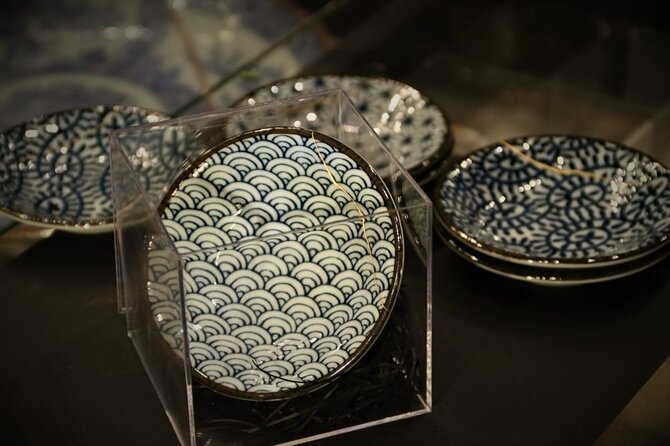
This workshop is designed around a capped group size. You are in a group of no more than 10 guests, and the overall activity has a maximum size of 20 travelers. In plain terms, that is how you get the personal attention people talk about.
From the way the lesson is described, you should expect a patient, guided experience. The instructor reviews the philosophy and the technique, then helps you as you work on your own plate. Even if you are not an artist, the structure is meant to keep you on track.
If you are traveling with a friend or family member, this is also easier to enjoy than some crafts where you get stuck watching for long stretches. You are busy, you are learning, and you are actively making something.
Who should book this Kintsugi experience, and who might not
This class is a great fit if:
- You want a creative Tokyo activity that produces a take-home souvenir
- You care about craft culture, not only photo ops
- You like hands-on lessons, and you prefer guided steps over free-form art
- You want a mindful hour that slows you down
It is not a great fit if:
- You were hoping to bring your own broken ceramic item to repair, because personal items are not allowed
- You have very young kids, because under 6 cannot enter the atelier
- You want a long workshop. This is about one hour, so it is a taste, not a full mastery course
Language-wise, the experience is set up for non-Japanese speakers to participate. English support is mentioned as strong, and the instruction is described as clear, organized, and easy to follow.
Meeting Master Taku, if you book the 11:00am class
One of the more tempting details is that there is a chance to meet Master Taku in the 11:00am class. That does not mean every session guarantees him in the room, but if you can match your schedule, it is worth aiming for that time slot.
Even when Master Taku is not present, the workshop is still guided by a knowledgeable instructor and staff who keep things organized. The key for you is to pick a time you can arrive on schedule, because this type of atelier session moves at a careful pace.
Taking your repaired plate home, with travel in mind
A Kintsugi souvenir is only a souvenir if it survives your trip. The class focuses on you taking the repaired plate home, and support is mentioned around packaging and travel readiness. In other words, you should expect the studio to think about how you get your item from the atelier back into your day, bag, or suitcase.
Still, use common sense:
- Plan to carry the plate rather than letting it get smashed by bulky items on top
- Bring it home sooner than later if you have a tight itinerary
Because the workshop is about an hour, you do not have to build a whole day around it. That flexibility makes it easier to fit into most Tokyo trips.
Should you book this Kintsugi workshop?
Yes, you should book it if you want a memorable Tokyo craft lesson with a real outcome. The combination of hands-on gold lacquer repair, the small-group format, and the take-home plate makes it a strong value for an hour of your time. It is also a rare activity where the cultural philosophy matters because you experience it directly, not just hear about it.
Skip it if your priority is repairing your own personal broken item, because personal items are not allowed, or if you need a very kid-friendly environment for younger children, because under 6 cannot enter the atelier.
If you like thoughtful souvenirs, crafts that teach a mindset, and a short, well-run experience with real instruction, this one is an easy yes.
Latest write-ups near Tokyo
- Harajuku Private Tour: Kawaii Fashion & Animal Cafe Included★ 5.0 · 69 reviews
- Mt Fuji Customizable Private Tour English Speaking Driver Pick-up★ 5.0 · 69 reviews
- Tokyo Night Cooking Class: 5 Home-Cooked Japanese Dishes★ 5.0 · 70 reviews
- Tokyo: Sumida Aquarium Entry Ticket★ 4.6 · 70 reviews
- Private Customizable Walking Tour of Tokyo★ 5.0 · 70 reviews
- Official Japan Go-Kart Through Tokyo Bay / Ginza (IDP Required)★ 4.5 · 71 reviews
- Wagyu Beef and Sake Pairing Foodie Tour in Tokyo★ 5.0 · 71 reviews
- Experience Big soba knife Soba Making Class in Tokyo Kappabashi★ 5.0 · 71 reviews
Kintsugi Workshops, compared.

Authentic Pure Gold Kintsugi Workshop with Master Taku in Tokyo
Read our review →
1.5〜2 Hours Traditional Kintsugi Work Shop in Namba Osaka
Read our review →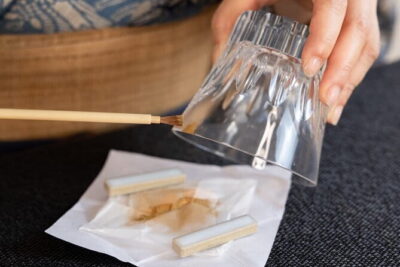
Kintsugi Workshop Class in Shibuya, Tokyo with mon cadeau
Read our review →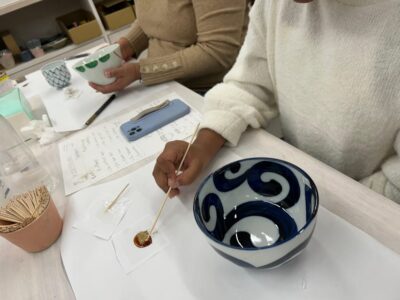
Kintsugi Workshop to Learn the Art of Golden Joinery
Read our review →Browse the lists this tour appears in