
Reviewed · KINTSUGI WORKSHOPS
Tokyo: Discover the Art of Kintsugi in Ginza
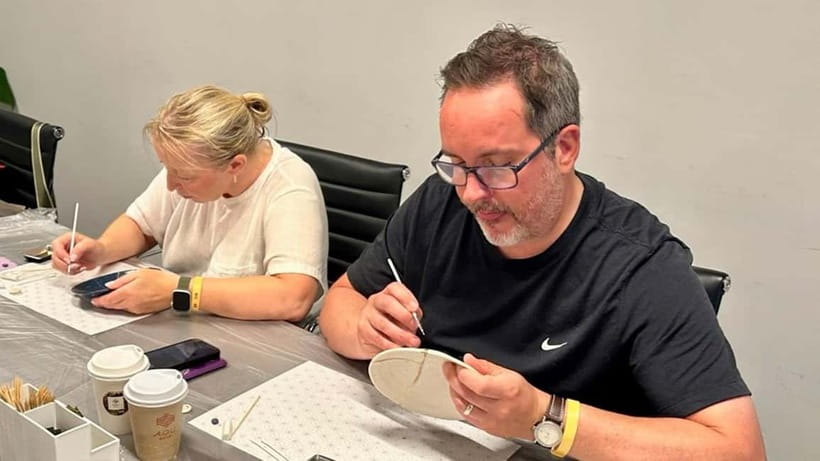
Tokyo has a way of keeping you on the move, so I like this slower, hands-on twist in Ginza. You learn Kintsugi, Japan’s idea of turning breakage into character, right in a cozy private room near Ginza Station. My favorite part is that you work in a small group and leave with a finished ceramic you made yourself.
One thing to consider: this is not the traditional month-long Kintsugi method with natural materials. The workshop uses synthetic lacquer and metallic powder so you can complete and take home your piece in 90 minutes, which is great for a day trip, but it changes the process and finish compared with the long form.
Key things to know before you go
- Ginza Station close by: meeting at Cafe AOU Ginza forest, ground level of the Daiwa Ginza Building.
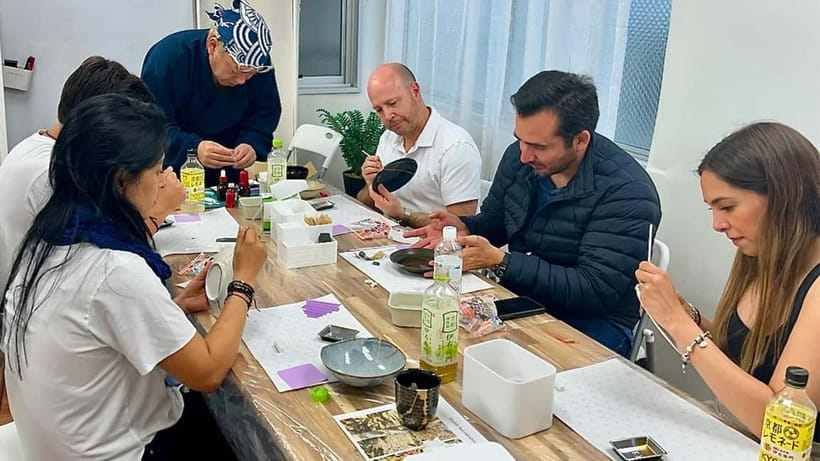
- Small group size: limited to 8 participants, so you get real time with your instructor.
- Made for same-day souvenirs: you take home the restored ceramic after the 90-minute session.
- Quick Kintsugi method: synthetic lacquer and metallic powder, not the natural month-long approach.
- All tools provided: you get a ceramic piece to repair and everything you need to create your design.
- Care matters: the finished item is for decorative use, not microwaving.
Kintsugi Basics: Turning Breaks Into Design in Tokyo
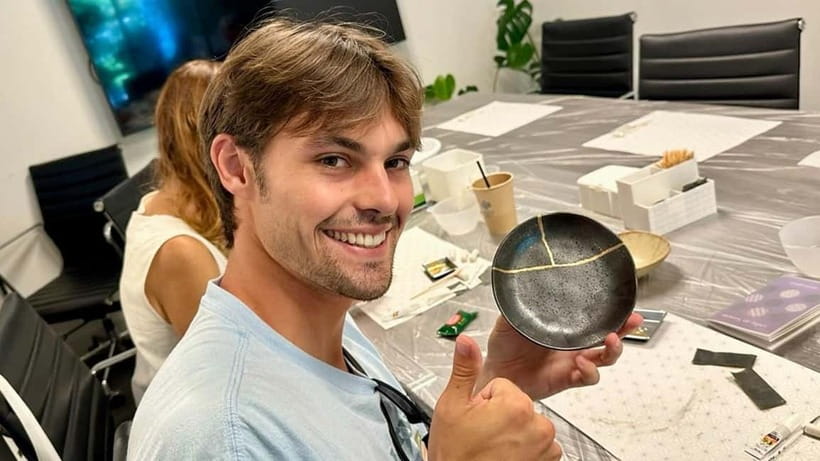
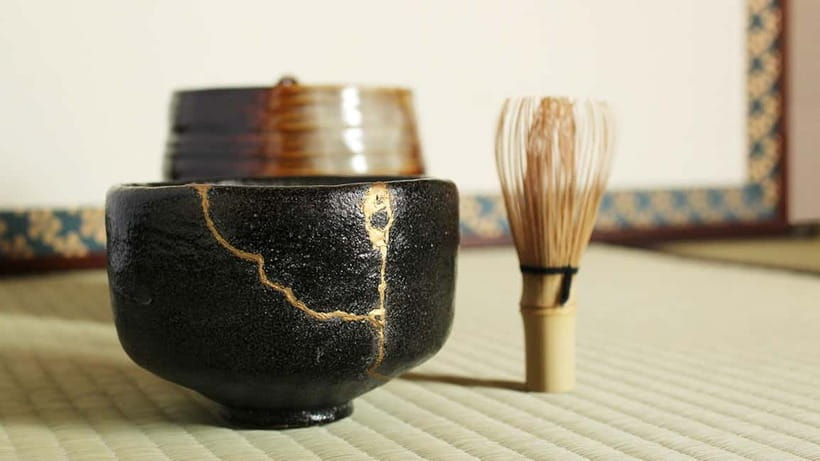
Kintsugi is the art of repairing broken ceramics in a way that keeps the repair visible instead of hiding it. The idea is simple, and kind of emotional: the crack becomes part of the story of the object, not something to erase. In a city like Tokyo, where everything is so precise, there is something calming about making flaws look intentional.
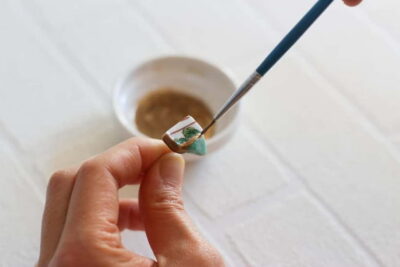
In this workshop, you are not just painting or gluing. You are following a step-by-step process that teaches how lacquer and metallic accents are used to bring those cracks back to life. You finish with a one-of-a-kind piece because your repair lines and choices become part of the final look.
The philosophy is the real takeaway, even after you leave. You get a tangible reminder of the mindset: breakage can become art, and mending can be creative rather than stressful. It is a nice change from shopping for objects that all start to look the same after a few hours.
More Kintsugi Workshops in Tokyo
- Kintsugi Experience: Art of Golden Joinery in Tokyo
★ 5.0 · 467 reviews - Authentic Pure Gold Kintsugi Workshop with Master Taku in Tokyo
★ 5.0 · 217 reviews - Kintsugi Workshop Class in Shibuya, Tokyo with mon cadeau
★ 5.0 · 74 reviews
Where the Workshop Really Happens: Cafe AOU Ginza forest
This class is easy to reach, which matters because Ginza is busy and you do not want to waste your time hunting for a side door. You meet at Cafe AOU Ginza forest on the ground level of the Daiwa Ginza Building, near Ginza Station. The location is about a three-minute walk away, so you can fit this into a tight Tokyo schedule.
Inside, the workshop is held in a private room. Some classes begin with a welcome drink, and the soft drink included with your ticket keeps things simple if you are not in a coffee mood. Either way, you are not stuck in a loud public space, which makes it easier to focus on the hands-on part.
One practical note: the venue may change depending on availability and number of reservations. If that happens, you get an email one day before with updated location details. This is one of those small details that saves you stress on the day of your class.
Your 90-Minute Plan: Hands-On Kintsugi Step by Step
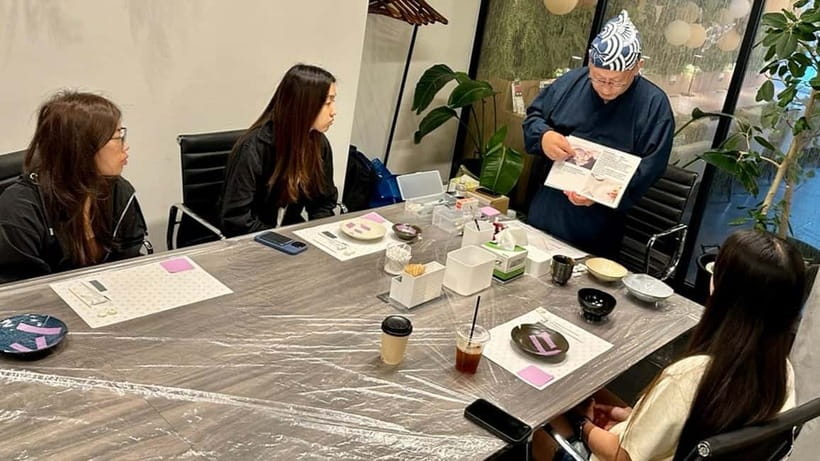
The workshop is 90 minutes, and that time pressure is part of the value. You are not waiting around for days of curing or doing homework after the class. Instead, your instructor guides you through the repair process so you can complete your piece during your session and take it home afterward.
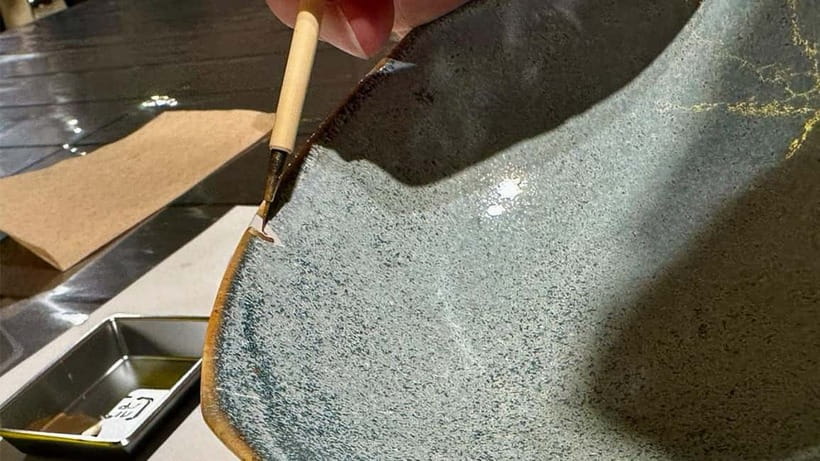
You start with your own ceramic to restore. All necessary tools and materials are provided, which is a big deal because it removes the usual “I need to find supplies” headache. You work in a small group, so the instructor can check your progress and help if anything goes sideways.
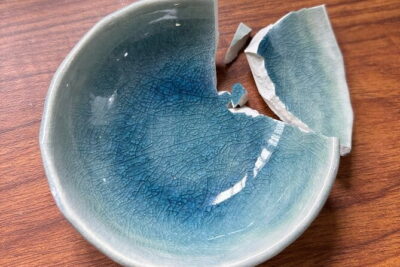
Depending on the session, you might get choices like different colored cracked plates. In one example, the class offered cracked plate options, and the instructor helped participants make decisions during the process. If you care about the final look, pay attention when your instructor explains the options, because that moment helps shape the result.
The end goal is a clean-looking repair that matches the spirit of Kintsugi, with visible lines that look intentional. And when you are done, you are not leaving empty-handed. Your repaired ceramic becomes a takeaway souvenir, and the class also packs your piece carefully so it survives the trip home.
The Materials Twist: Synthetic Lacquer and Metallic Powder
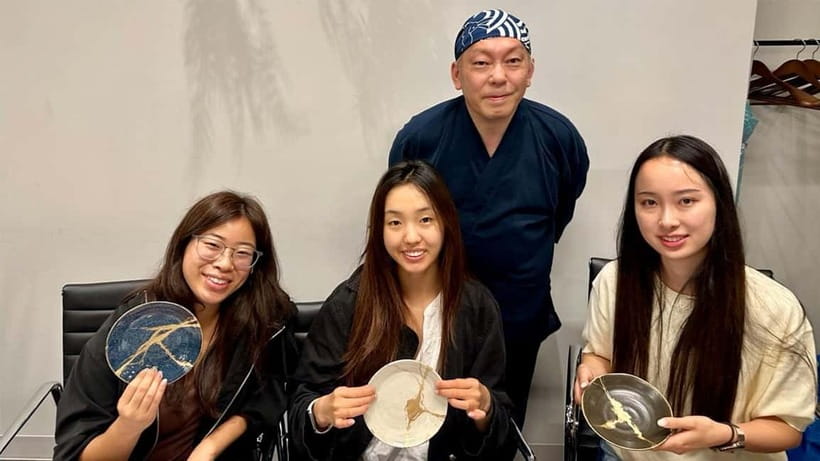
Traditional Kintsugi can take about a month, mainly because natural materials and drying time are part of the craft. This workshop uses a faster method: synthetic lacquer instead of natural lacquer, and metallic powder as a stand-in for gold.
That might sound like a shortcut, but it is actually a smart trade for the traveler. You get the look and the concept, plus the hands-on learning, in a format that fits real itineraries. You also get to practice the key idea of working with breaks as a design feature, not something to hide.
The metallic look comes from the materials used, not from waiting weeks. So, if you are chasing the exact long-form traditional process, you will want the month-long version elsewhere. But if your goal is to learn the art, create a meaningful repaired piece, and go sightseeing afterward, the quick method is exactly what you want.
It also explains why the workshop can promise take-home completion within 90 minutes. You are paying for instruction and guided craft time, not for the calendar marathon.
A change of pace from Tokyo:
- Mt Fuji and Hakone 1-Day Bus Tour Return by Bullet Train
★ 5.0 · 26,383 reviews - 1-Day Tokyo Bus Tour
★ 5.0 · 14,250 reviews - Tokyo: TOKYO SKYTREE® Admission ticket
★ 4.5 · 11,192 reviews - Tokyo: teamLab Planets TOKYO Digital Art Museum Entry Ticket
★ 4.6 · 9,779 reviews
Take-Home Care: Packaging, Decoration Only, No Microwaves
One of the nicest parts here is what happens at the end. Your repaired ceramic is packaged so you can carry it home safely, including protection for the repair areas. In previous sessions, participants were surprised by how thoughtfully the pieces were packed for luggage travel. That is not a small detail in Tokyo, because ceramic souvenirs are the type of thing that can get damaged fast if packing is sloppy.
Once you have it at home, follow the care guidance from the workshop: it is recommended for decorative use only. The repaired item is not microwave-safe, and the note specifically warns about risk of ignition. So even if it looks like it could handle heat, treat it like art, not like a daily kitchen tool.
Practical tip: when you set it on a shelf, pick a spot where you can enjoy the repair lines. The whole point of Kintsugi is that the cracks become part of the visual story. If you hide it, you lose half the joy.
Also, because each piece is repaired by hand, your result will be unique. That is not a risk, it is the product. You are buying craftsmanship plus personality, not perfect manufacturing.
Who This Fits Best in Tokyo (And Who Should Skip It)
This workshop is a good match if you want a creative activity that feels culturally rooted and still fits a short stay. It is especially nice for people who like crafts, design, or reflective experiences, but it is also a fun break if you are tired of eating in line and shopping your way through the city.
It is for adults and older kids. The class is not suitable for children under 10. One example showed kids aged 10 and 14 enjoying the session, which makes sense given the recommended minimum age.
It is also not suitable for:
- People with mobility impairments
- People with a cold
- Babies under 1 year
- Hearing-impaired people
If any of those apply to you, it is worth choosing a different type of activity that matches your needs better.
If you are traveling solo, the small group size still makes it work because the instructor can give guidance in English or Japanese. If you are traveling as a couple, it also makes sense because you can both create something you actually want to keep.
Price and Value: Is $75 for 90 Minutes Reasonable?
At $75 per person for 90 minutes, the price is not “cheap,” but it is also not out of line for a guided craft workshop in central Tokyo. Here is why it feels fair:
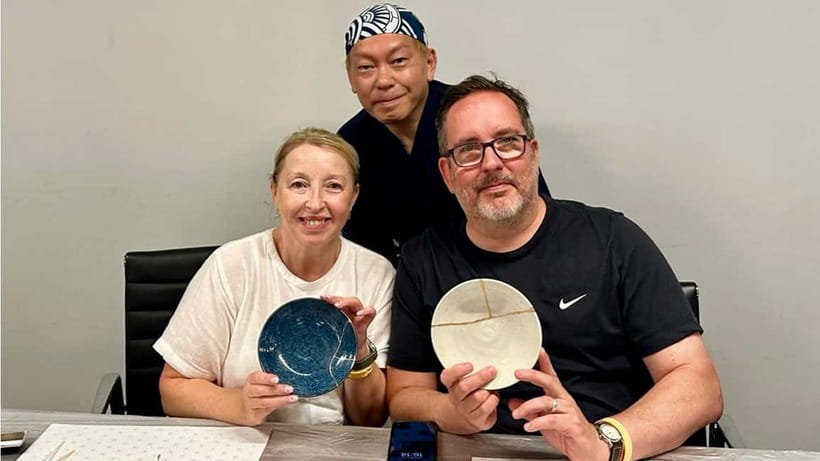
You are paying for instructor time plus materials plus a take-home ceramic. The class provides the ceramic to restore and all tools and supplies, so you do not spend extra money after you arrive. You also get a complimentary soft drink, which is small but helpful.
The other value piece is size. With a group limited to 8, you are more likely to get real attention than you would in a bigger class where you mostly watch. And because you leave with your repaired piece the same day, you do not have to plan around shipping or waiting.
So the real question is not just cost. It is whether you want an experience that produces an object you can use as a souvenir, rather than another photo stop. If you do, this is strong value.
Final Call: Should You Book the Ginza Kintsugi Workshop?
I would book this if you want a hands-on Tokyo experience that connects you to a real Japanese aesthetic idea, and you want something you can hold in your hands at the end. The location near Ginza Station is a major advantage, and the small group size makes it feel personal rather than assembly-line.
Skip it if you need a traditional month-long method with natural materials, or if you have needs that match the listed unsuitability categories. Also, if you want a functional everyday dish for heating food, this is not the right souvenir since the piece is not microwave-safe and is meant for decoration.
If your goal is to come home with a one-of-a-kind story in ceramic form, this workshop is a smart way to spend a focused 90 minutes in Tokyo.
FAQ
How long is the Kintsugi workshop?
It lasts 90 minutes.
Where do I meet for the workshop in Ginza?
Meet at Cafe AOU Ginza forest, located on the ground level of the Daiwa Ginza Building.
Will the instructor speak English?
Yes. Instruction is offered in English and Japanese.
What is included in the price?
The workshop includes 90 minutes of Kintsugi instruction, all necessary tools and materials, a ceramic piece to restore, expert guidance, and a complimentary soft drink.
Do I get to take my repaired ceramic home?
Yes. Participants take home their repaired ceramic piece.
Is this the traditional Kintsugi process that takes about a month?
No. Traditional Kintsugi takes about a month, but this workshop uses synthetic lacquer and metallic powder to let you complete your piece within 90 minutes.
Is the finished ceramic microwave-safe?
No. The repaired item is not microwave-safe due to the risk of ignition, and it is recommended for decorative use only.
How many people are in the group?
The group is small, limited to 8 participants.
Is the workshop suitable for young children or mobility needs?
No. It is not suitable for children under 10 and it is also not suitable for people with mobility impairments.
Latest write-ups near Tokyo
- Tokyo Nights: Shibuya Photo Adventure★ 5.0 · 20 reviews
- Wagyu & Sake 8 Course Tasting Dinner in Shinjuku★ 4.9 · 20 reviews
- Making Japanese desserts Nerikiri & drinking matcha in Tokyo★ 5.0 · 20 reviews
- Japanese Whisky Hunting《HIGH-QUALITY-ONLY》Rare Tasting Class★ 5.0 · 20 reviews
- Mt. Fuji 5th Station, Owakudani Ropeway, Pirate Ship plus Outlet shopping!★ 4.5 · 20 reviews
- Kintsugi Experience with Arita Ware in Tokyo (English Guide)★ 4.8 · 20 reviews
- This is Asakusa! A Tour Includes the All Must-Sees!★ 5.0 · 20 reviews
- Ebisu Local Food Tour: Shibuya’s Most Popular Neighborhood★ 5.0 · 20 reviews
Kintsugi Workshops, compared.
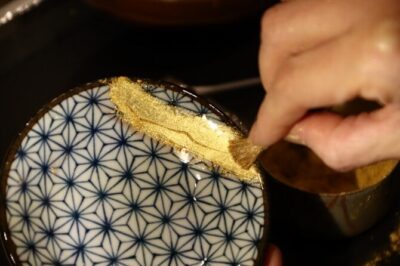
Kintsugi Experience: Art of Golden Joinery in Tokyo
Read our review →
Authentic Pure Gold Kintsugi Workshop with Master Taku in Tokyo
Read our review →
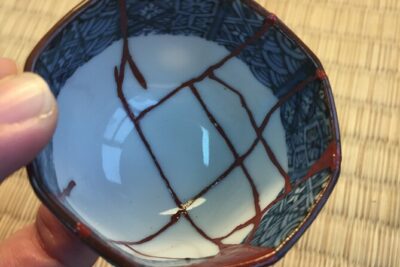
1.5〜2 Hours Traditional Kintsugi Work Shop in Namba Osaka
Read our review →
Kintsugi Workshop Class in Shibuya, Tokyo with mon cadeau
Read our review →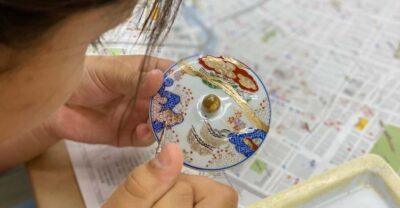
Kintsugi Experience in Naha, Okinawa – Art from Broken Pieces!
Read our review →Browse the lists this tour appears in