
Reviewed · KNIFE MAKING EXPERIENCES
Knife Making Experience in Samurai Sword Town
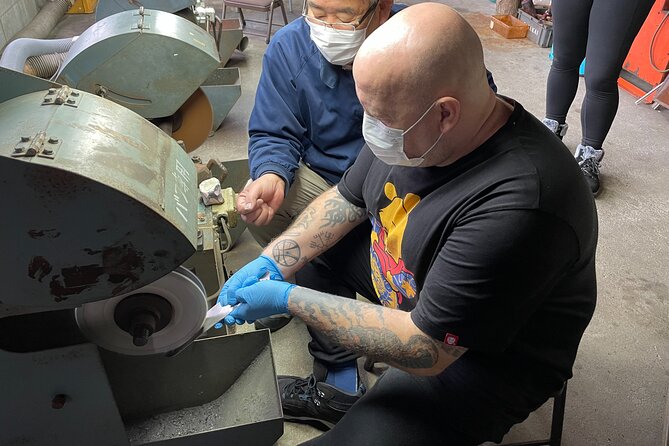
A hands-on Damascus kitchen knife day in Seki, Gifu is interesting because you are not just watching craft, you are building one piece by piece. I really like the small-group attention and the fact you do polishing, sharpening, engraving, and assembly yourself. The one downside to plan for is that it is a hands-on work session for most of the 5 hours, so it is not a lazy sightseeing loop.
The instructors include Sumio, Yoshi, and Hiro, and they keep the steps clear, with plenty of patience and good humor. You also get a real-world sharpness test on fresh vegetables, plus a mini knife souvenir, a signed completion certificate, and a Japanese lunch. If you are sensitive to the idea of getting up close to tools, dust, or fine workshop mess, think it through first.
Seki is a great setting for this because it is tied to sword making and cutlery traditions, going back to the 13th century and continuing into modern knife production. If you want a day trip that connects samurai stories to the tools that matter, this is a strong choice.
Key things I found most appealing
- Hands-on Damascus work, including sharpening, polishing, engraving, and assembly
- A sharpness test on fresh vegetables, so you can feel the result right away
- Private group format, meaning instructors can stay focused on your questions
- Guides by name, often led by Sumio, Yoshi, and Hiro, with clear, friendly instruction
- Museum stops that connect craft to context, including a sword history museum
- Take-home extras: a limited mini knife souvenir and a signed certificate
The Damascus knife you actually make, and why it feels worth your time
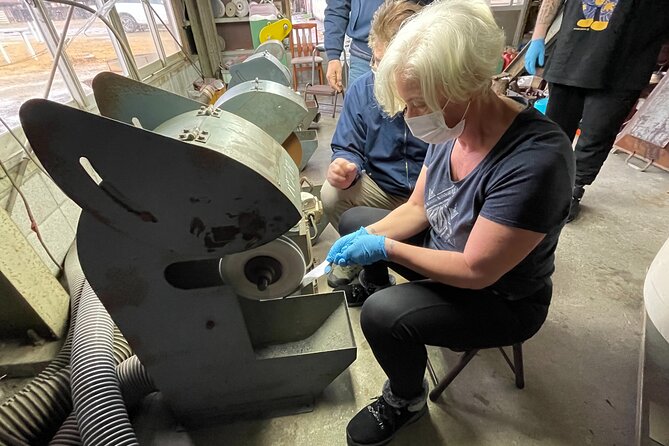
This is one of those experiences where the main event is not the photos, it is the skill. You start with the goal of creating a professional-style Damascus kitchen knife, guided by a master bladesmith with over 50 years of experience. That matters, because the difference between a souvenir knife and a knife you respect is usually in the finishing.
You will work through the stages that turn a rough idea into something usable. That includes polishing and sharpening, then adding your own engraving details, and finishing with assembly so you can leave with a complete kitchen blade. The process is practical, not just ceremonial, which is why it sticks in your memory.
What I like most is the sharpness check at the end. Instead of hearing a claim about quality, you test the edge on fresh vegetables. That is a smart way to translate what you learned into something you can understand fast, even if you are not a knife person.
More Samurai & Ninja Experiences in Takayama
- Ninja Experience in Takayama – Basic Course
★ 5.0 · 62 reviews - Ninja Experience in Takayama – Basic Course
★ 4.6 · 59 reviews - Gifu Samurai Sword Town;Japanese Damascus Knife Making Experience
★ 5.0 · 27 reviews
The 5-hour flow, from museum viewing to hands-on making
The pace is set up like this: you get a couple of culture stops first, then you get most of your workshop time at the start of the making process, and you finish with the sharpness test. The whole thing runs around 5 hours, and it ends back at the meeting point.
The meeting point is Sekitomioka Station (Hidase), Seki, Gifu 501-3911, Japan, with a start time of 10:30 am. Pickup is offered, which is helpful if you want to avoid the small-station puzzle, especially on a day trip. The experience is also described as near public transportation, so you should be able to get there even without pickup.
Timing matters here. You are going to concentrate for long stretches, so I recommend planning a low-key evening afterward. Also, if you are coming in from Kyoto, you can do this as a day trip, since Seki is roughly 1.5 to 2 hours by train from Kyoto.
Knife Museum in Seki City: rare blades, then your first workshop steps
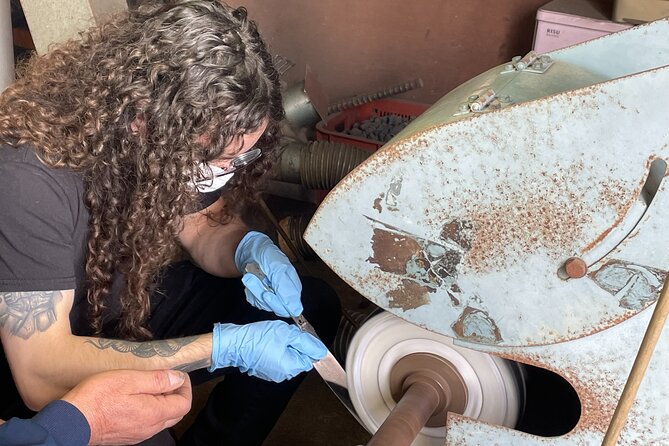
Your first stop is the Knife Museum in Seki City. This is where you settle into the theme and get visual context before you start working. You can see several types of rare and unique knives from around the world, which gives you a sense of how wide the knife world can be.
More important than the display cases is the way the museum ties to what you will do next. You get experience making your own knife with craftsmen guidance, so the museum visit does not feel like a random add-on. It helps you understand what style, shape, and finishing choices mean in the real world.
This stop runs about 2 hours, and admission is included. In practice, plan to use this time to ask questions early, because once you get into the workshop mood, you may not want to keep switching gears.
A small caution: museums can be a bit more slow and hands-off than the main workshop. If you are coming specifically for the making part, you will still find this useful, but it will feel like pre-game.
Seki Swordsmith Museum: samurai sword context that makes the craft click
Next you head to the Seki Swordsmith Museum. This is where you get the deeper sword and samurai story behind the craft traditions of the area. Seki City developed as a sword-making center as early as the 13th century, and the museum framework helps connect that legacy to what you are building in your hands.
This is a 1-hour stop with admission included. For me, the value here is not only the history facts, it is the mindset. Japanese swords were built for function, discipline, and precision, and that mindset carries over into knife craftsmanship.
If you are a samurai fan, you will enjoy how the museum puts swords into a wider cultural picture. If you are mainly there for the knife, you will still benefit, because understanding the purpose behind precision finishing helps you appreciate what you are learning when you polish and sharpen.
More Knife Making in Takayama:
- Authentic knife making experience at a blacksmith in Kyoto
★ 4.8 · 350 reviews - Tokyo: Knife Making Workshop (Sharpening, Engraving)
★ 4.9 · 153 reviews - Kyoto: Beginner Knife Sharpening & Handle Fitting Workshop
★ 4.9 · 141 reviews - Experience Big soba knife Soba Making Class in Tokyo Kappabashi
★ 5.0 · 71 reviews
Gifu Cutlery Hall: quick production context in half an hour
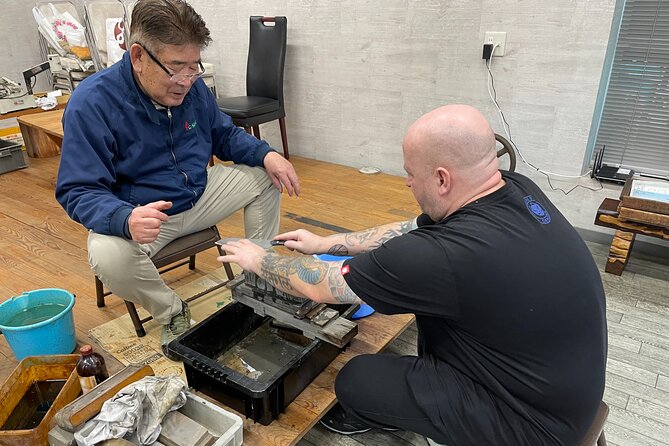
Then you swing by Gifu Cutlery Hall, where you learn about Seki’s modern cutlery role. The area is one of the three cutlery-producing regions in the world, and it has the highest cutlery production volume in Japan. Even though your main activity is knife-making, this stop is useful because it explains why Seki keeps producing high-quality tools.
This part is only 30 minutes and admission is free. That short runtime is a plus if you do not want museum fatigue. It also prevents the day from feeling like one long indoor story after another.
One consideration: since the workshop is the core experience, the cutlery hall stop is more about context than hands-on learning. If you want more instruction, your main time in the workshop is where you should focus.
Seki Zenko-ji Temple: a calm pause with a couple of signature sights
To balance the steel-focused theme, the tour includes Seki Zenko-ji Temple, about 1.5 hours with admission free. The foundation dates back to the mid-18th century, and the stop includes notable features like the Great Bell and a tour of the Kaidan.
This is a nice change of pace after the museums and workshop prep. It also gives you a chance to slow down, stretch, and reset your head before you head back.
If you love quiet temple atmosphere and short, meaningful cultural stops, you will likely enjoy this. If you only want hands-on craft time, you might view it as downtime, but it does help keep the day feeling like more than a single activity.
Your instructors: Sumio, Yoshi, and Hiro, and the teaching style that matters
One of the most praised parts of this experience is the instruction quality. I like learning environments where the guide can explain the why, not just the how. Here, instructors such as Sumio, Yoshi, and Hiro have a reputation for being passionate and tuned into the step-by-step process.
You are also in a private group format, meaning you are not fighting for attention. That is a big deal in a craft like knife finishing, where small details matter. With a smaller group, you get better chances to correct mistakes early, and you spend less time waiting while someone else’s knife takes focus.
The teaching style also seems to blend clarity with personality. People have highlighted the sense of humor and the way instruction stays understandable, even when the steps are technical. In other words, you do not need to be a machinist to follow along.
What you do with the knife: polishing, sharpening, engraving, assembly, then testing
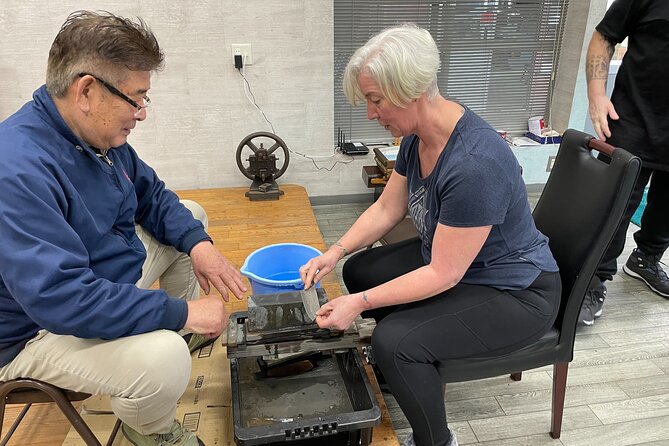
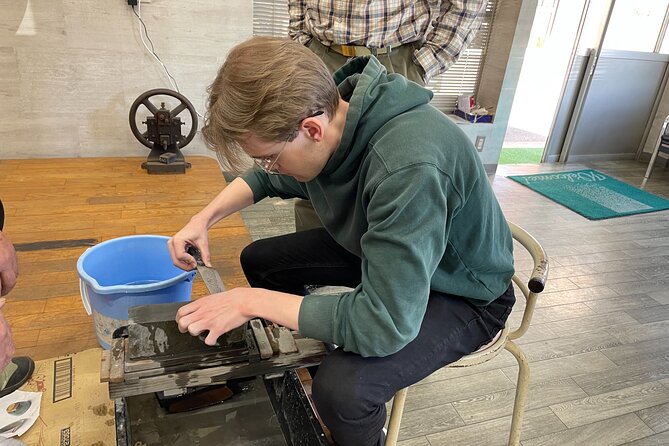
This is where the experience earns its value. You work through the hands-on stages, including polishing, sharpening, engraving, and assembly. That combination is important, because it covers the core craft steps that turn metal into a tool.
Engraving is especially memorable in these kinds of classes. Even if your engraving is simple, the act of marking your own blade creates a personal connection that feels different from buying a finished item. It is also the part you can show off immediately, since it is visible.
After finishing, you test sharpness on fresh vegetables. That part helps you understand your result beyond appearance. If the edge cuts cleanly, you know the finishing choices you made and the guidance you received landed in the right place.
The take-home package: mini knife souvenir and a signed certificate
You do not leave empty-handed. In addition to taking your finished blade, you receive a handcrafted mini knife souvenir. It is listed as a limited-time or limited-availability bonus, so if it is important to you, do not assume it is guaranteed in the same way the main items are.
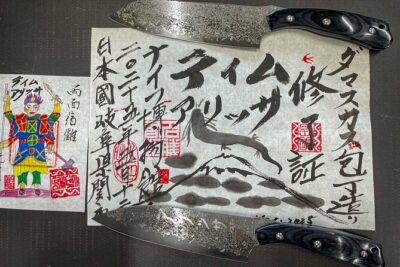
You also get a signed certificate of completion. I like certificates when they match what you actually did, and in this case it is tied to your knife-making effort. It becomes a simple record you can keep, and it also makes a great gift for someone back home who would never buy a workshop class on their own.
The day also includes a Japanese lunch. Food breaks up the focus nicely, and it keeps the experience from feeling like you are working through your entire body clock without a reset.
Price and value: is $316.27 a lot for this?
At $316.27 per person, this is not a cheap activity. But the price starts to make sense when you look at what is included and what you take home.
You get guided instruction from a master bladesmith with decades of experience. You also get all the meaningful making steps, not just a short demo. On top of that, you take home a professional-style Damascus kitchen knife you helped finish, plus you get the mini souvenir, signed certificate, and Japanese lunch.
There is also museum value built in, with admission included for the Knife Museum and the Swordsmith Museum, and free entries at Cutlery Hall and Zenko-ji. The combination of culture stops plus a real workshop, in a private format, is the part that makes the cost feel more reasonable.
If you love hands-on crafts and want a take-home item you actually use, you will probably feel good about the price. If you are only casually curious about knives and mainly want photos, you may find this better if paired with other low-cost sightseeing instead of treated as a must-do.
Who this tour fits best
This tour is a great match if you want a day that combines real skill-building with samurai and knife culture context. You do not need to be an expert, but you should be ready to work at close range with your hands and pay attention.
It also fits well for:
- People planning a day trip from Kyoto who want more than one museum visit
- Knife lovers and kitchen tool nerds who appreciate finishing work
- Gift buyers who want a meaningful, personal take-home item
- Anyone who likes small-group attention and clear step-by-step coaching
If you dislike long concentrated sessions or prefer purely scenic walking tours, you might feel constrained by the workshop focus and the hands-on rhythm.
Practical tips to get the most out of your knife-making day
First, wear comfortable clothes you can move in. Even with care, polishing and sharpening-style work can mean you end up with a little grime or smell on your hands.
Second, bring a mindset of learning. A knife-making day is not about doing everything perfectly. It is about following the steps, asking questions, and trusting the guide to correct you before a problem grows.
Third, take the sharpness test seriously. That final moment is your payoff. If you do not know what to look for, ask the instructor what a good cut should feel like on vegetables, so you get the most from the test.
Finally, if you care about the mini knife souvenir, keep in mind it is described as limited availability. That means you should not plan your gift hopes on it, but you can definitely hope.
Should you book this Damascus knife experience in Seki?
If you want an authentic craft day that gives you a real take-home blade, I think this is a strong yes. The standout reasons are the hands-on polishing, sharpening, engraving, and assembly, plus the sharpness test on fresh vegetables. Add the small private group attention and the named instructors like Sumio, Yoshi, and Hiro, and it becomes a class where you feel seen.
I would hold off only if you are looking for a mostly sightseeing day or you really dislike workshop-style work. In that case, you might prefer a lighter temple and museum day with less tool time.
Otherwise, this is one of the better ways to connect Seki’s sword town identity with an outcome you can use at home, not just admire behind glass.
FAQ
How long is the knife making experience?
It runs for about 5 hours.
What is the price per person?
The price is $316.27 per person.
Where does the tour start, and is pickup available?
The meeting point is Sekitomioka Station in Hidase, Seki, Gifu 501-3911, Japan. Pickup is offered.
What does the experience include besides making the knife?
You get a personalized Damascus knife-making experience with hands-on polishing, sharpening, engraving, and assembly. You also test sharpness on fresh vegetables, enjoy Japanese lunch, and receive a handcrafted mini knife souvenir (limited availability) and a signed certificate.
Is this a private tour?
Yes. It is a private tour/activity, and only your group participates.
Can I cancel for a full refund?
Yes. You can cancel for a full refund if you cancel at least 24 hours before the experience’s start time. Free cancellation is available up to 24 hours in advance.
Latest write-ups near Takayama
- From Takayama: Alpine Splendor – Shinhotaka Ropeway and Kamikochi★ 5.0 · 91 reviews
- Takayama: Onigiri and miso soup making at a buddhist temple★ 4.9 · 93 reviews
- Private-group Morning Cycling Tour in Hida-Furukawa★ 5.0 · 105 reviews
- Private Afternoon Cycling Tour in Hida-Furukawa★ 5.0 · 109 reviews
- From Takayama: Guided Day Trip to Takayama and Shirakawa-go★ 4.9 · 113 reviews
- Departing from Takayama [Regular sightseeing bus] World Heritage Sites Shirakawago and Gokayama Ainokura★ 4.5 · 137 reviews
- Takayama Half-Day Private Tour with Government Licensed Guide★ 5.0 · 69 reviews
- 1-Day Takayama Tour: Explore Scenic Takayama and Shirakawago★ 5.0 · 113 reviews
Knife Making Experiences, compared.
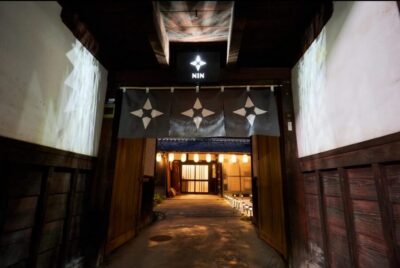
Authentic knife making experience at a blacksmith in Kyoto
Read our review →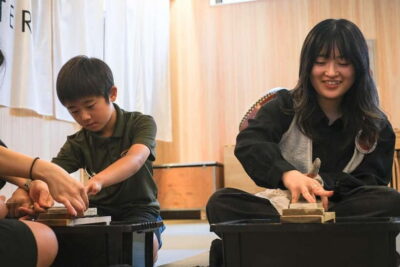
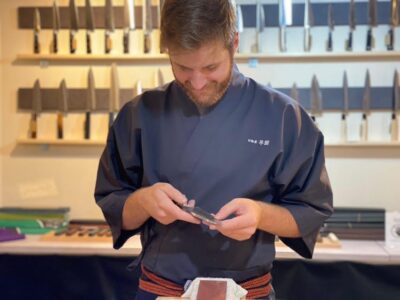
Beginner Knife Sharpening & Handle Fitting Workshop
Read our review →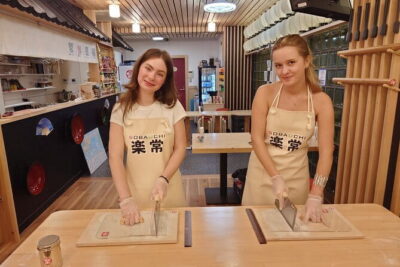
Experience Big soba knife Soba Making Class in Tokyo Kappabashi
Read our review →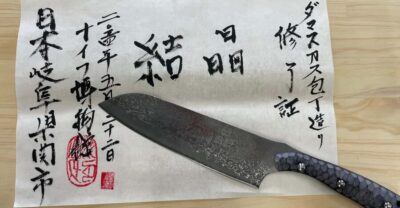
Seki: Samurai Knife Making Experience at the Knife Museum
Read our review →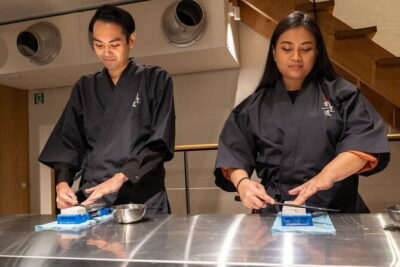
Gifu Samurai Sword Town;Japanese Damascus Knife Making Experience
Read our review →Browse the lists this tour appears in