
Reviewed · KNIFE MAKING EXPERIENCES
Authentic knife making experience at a blacksmith in Kyoto
This is the kind of Kyoto experience most people only see from the outside: you actually forge a Japanese kitchen knife in a real working studio. I love the way instructor Mao keeps the session clear and hands-on, with tool guidance and safety built into every step, so it feels like craft, not a demo.
I also love that you take home a usable 13 to 15 cm knife in an included box and bag, so the result is practical, giftable, and tied to your own work. One drawback to consider is that this is physically demanding metalwork with hot tools and furnace heat, so you will want good stamina and to follow safety instructions closely.
Key highlights to know before you go
- A rare blacksmithing experience in Japan: you do real forging, not just decorative arts
- Hands-on guidance from Mao and the smith team: hammering technique, safety, and fixes if needed
- A full workflow in 3 hours: heat, hammer, refine, sharpen, and polish
- Photos and videos are welcome: you can capture the milestones as you work
- You leave with a knife you can use: finished blade, plus a box and bag
Forging a Japanese Knife in Kyoto, Not Just Watching
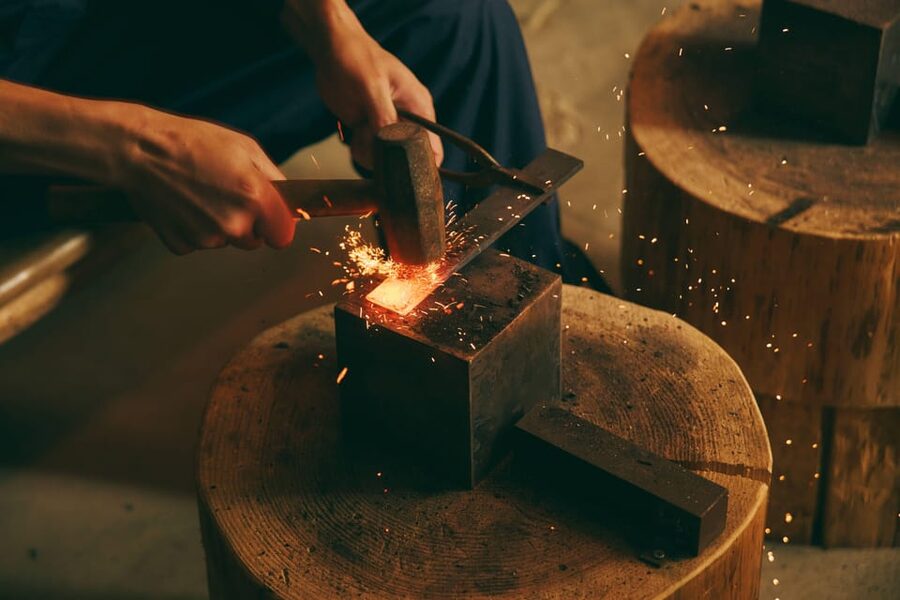
This Kyoto knife making experience is interesting because it hits the sweet spot between culture and doing. You will wear traditional blacksmith attire, learn the tools, work with red-hot steel, and then finish with sharpening and polishing. It is a craft you do not bump into on a normal Kyoto day.
What I like most is that the session is structured like actual metalwork. You start with safety and tool handling, then move into heating and forging, then you cool and refine before the sharpening step brings the blade to life. That order matters because each part teaches you what the next part depends on.
The second thing I like is the payoff. You are not leaving with a souvenir you have to explain. You take home a real knife in the 13 to 15 cm range, fully handmade, which makes it a strong gift choice or a keeper for everyday cooking.
More Knife Making in Kyoto:
- Kyoto: Beginner Knife Sharpening & Handle Fitting Workshop
★ 4.9 · 141 reviews - Authentic Knife Making Experience at a Blacksmith in Kyoto
★ 5.0 · 53 reviews - Tokyo: Knife Making Workshop (Sharpening, Engraving)
★ 4.9 · 153 reviews
Studio NIN Locations in Sakyo Ward, and How to Find Them Fast
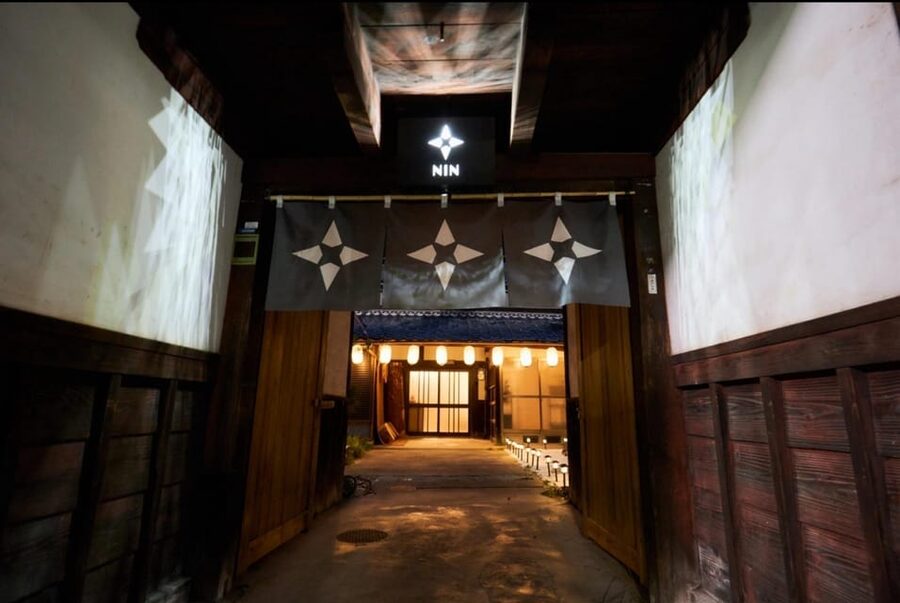
The studio operates out of two locations in Sakyo Ward, Kyoto: Studio NIN Yase or Studio NIN Kendo. Your staff will message you before your visit to confirm which studio you should attend.
Your meeting point is Studio Shinobi YASE, located at 168-1 Yase no secho, Sakyo Ward, Kyoto City. It is a one-minute walk from the Yase-Hieizan Exit of the Eizan Electric Railway. If you can, come by train, because the station access is part of why this workshop is easy to fit into a day.
A practical note: because there are two studios, it can help to double-check you are going to the right one when you arrive. If you are mapping from your hotel, give yourself a little buffer so you are not stressed at the last minute.
The 3 Hour Flow, From Traditional Attire to a Finished Blade
The session is designed as a clear, time-ordered workshop that moves from beginner steps to a complete knife you can take home.
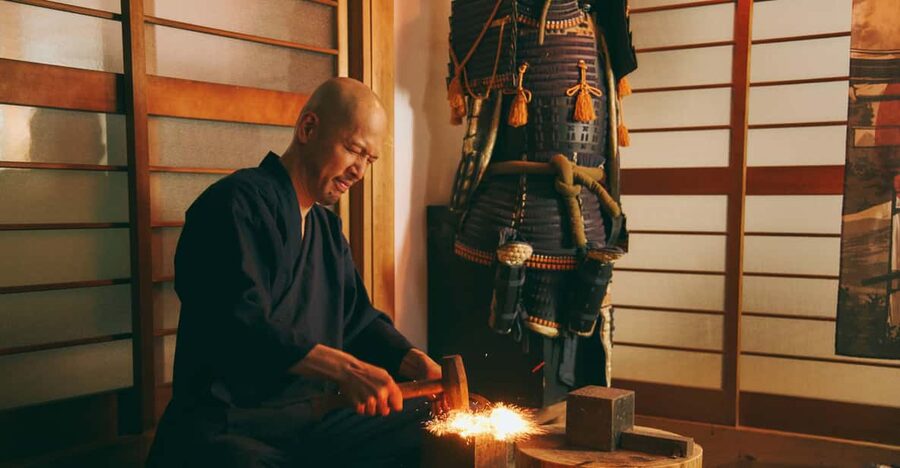
First, you check in at the studio and meet the instructor team. Mao is the knife professional leading the process, with over 10 years of experience. You then change into the blacksmith uniform worn by Japanese smiths. This sounds like a small detail, but it actually helps set the rhythm. You go from tourist mode to working mode fast.
Next comes tools and safety. You learn how to handle key equipment like hammers, tongs, and grinders, and you get clear instructions so you can participate safely during the moments that involve danger.
After that, you follow the forging process: understanding what traditional techniques are doing at each stage, then heating the steel until it glows red-hot. The highlight is the forging step where Mao guides you while you strike the glowing steel repeatedly. You work on angle and rhythm, which is the real skill beginners can feel right away.
Then you cool and refine the metal, do sharpening under guidance using stones and grinders, and finish with polishing. Photos and videos are welcome throughout, so you can document the transformation from steel to a finished blade.
Heat, Hammering, and Safety, What You Actually Need to Do
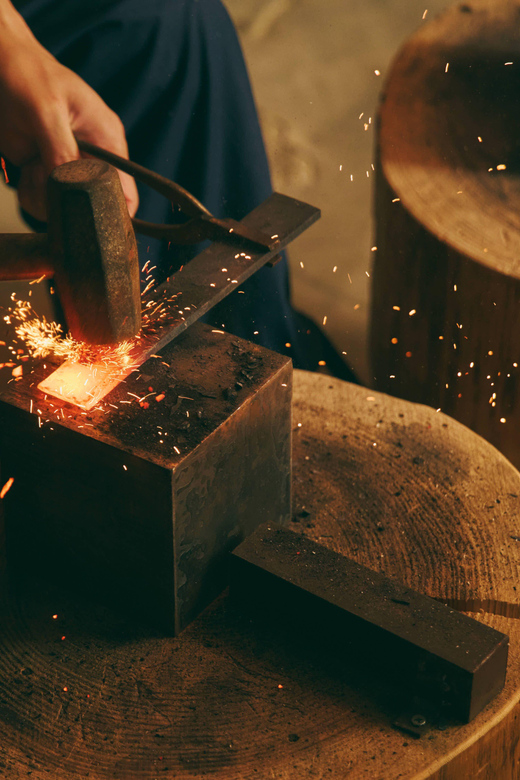
This is not a museum-style craft. You will be striking hot steel, and the physical part is real. In the classroom, instructors also help by adjusting and guiding as needed, so you can still end up with something you are proud of.
During forging, you hammer the glowing steel while staying safe. Mao teaches the correct hammering angle and precision, and the team is there to correct your technique. One review notes that the metalwork involves heat in the 800 to 900 °C range, so it is smart to treat safety instructions like the main lesson, not paperwork.
The workshop also includes cooling and inspection steps. After heating and forging, the metal is cooled and checked for shape. You then refine rough edges and prepare the blade for sharpening. That matters because sharpening will only work well if the earlier shaping is reasonably true.
If you have limited experience with hands-on work, you will still be able to participate. Beginners get instruction for both forging technique and sharpening using stones and grinders. Expect the work to be tiring, then satisfying once the edge starts coming together.
A change of pace from Kyoto:
- PERFECT KYOTO 1-Day Bus Tour
★ 5.0 · 13,518 reviews - Kyoto: Fushimi Inari, Kinkakuji, Bamboo Grove 1 Day Bus Tour
★ 4.8 · 4,316 reviews - Kyoto: Tea Ceremony in a Traditional Tea House in Kiyomizu
★ 4.9 · 3,519 reviews - Kyoto Geisha Walking Tour: Gion District & Hidden Gems
★ 4.7 · 3,273 reviews
Sharpening, Polishing, and the Knife Finish That Makes It Special
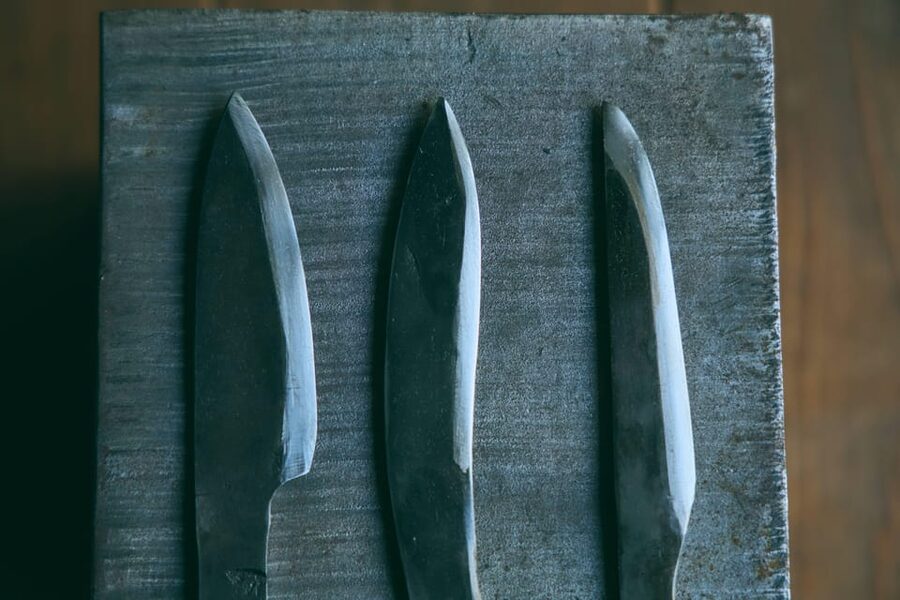
Once the blade shape is set, the workshop shifts from forging to edge-making. Sharpening is taught with support, using sharpening stones and grinders. This is the stage where your knife stops looking like a piece of metal and starts looking like a tool.
Then comes polishing and final finish. The end result is about 13 to 15 cm long and fully handmade. You will polish the blade to an elegant look, and you can take it home ready to use as a practical kitchen knife.
One extra detail you may notice from the smithing style is that some finishes are intentionally rustic. A review mentions a Kurouchi finish, which is a rawly forged look tied to the aesthetic and also helps with anti-rust. So if you are thinking silver and shiny, remember the charm is often the handmade patina.
Also, the workshop provides a box and bag. That is small, but it changes the experience. Your finished knife feels complete, not like a craft project that still needs wrapping.
What You Take Home, Plus the Little Extras That Matter
You can take home a practical knife you made during the session. It is designed to be useful for everyday cooking or a gift that carries real meaning because you made it yourself.
Included items help you show up prepared. The cost includes costume, towel, water, tools, materials, a box, and a bag. That means you do not need to track down your own supplies or worry about transport for a fragile item.
What to bring is simple: socks. That is it for personal items, according to the provided info. Alcohol and drugs are not allowed during the workshop.
There is also a note about knife size and time. Larger knives require over 5 hours and cost more than $400, while this workshop uses a refined 2.5-hour format. So if you want the full experience but also want to stay within the standard session timing, the standard workshop is the right fit.
Finally, the session is small group friendly. Smaller groups generally mean more attention while you hammer, sharpen, and polish.
Price and Value at $154, Who This Workshop Suits Best
At $154 per person for about 3 hours, this is a hands-on craft experience that ends with something tangible and practical. The value is not just the knife. It is the full process teaching: safety, tool handling, forging technique, sharpening, and finishing, all led by instructors like Mao and supported by the smith team.
This is a good match if you:
- want a Kyoto activity that produces a take-home object you will actually use
- like active learning, not passive sightseeing
- enjoy crafts with real physical work and clear instruction
- want a memorable gift you can explain in plain terms
You might want to skip or reconsider if:
- you struggle with physical tasks, because hammering and heat exposure are demanding
- you are very sensitive to risk areas, even though safety guidance is provided
- you are bringing young kids, because children under 15 must be accompanied by a guardian, and people over 95 are not suitable
One more reason it feels worth it: the location is convenient for a day trip. It is close to the station, and the studio is walkable from the train exit.
Should you book this knife making workshop in Kyoto?
Yes, if you want an authentic, rare Kyoto craft where you leave with a usable Japanese kitchen knife. The workshop is led by a seasoned professional like Mao, runs in a focused 3-hour window, and includes everything from attire to materials, plus the box and bag.
If you are still on the fence, use this quick filter:
- If you can handle hands-on work and you like making things with your hands, you will likely feel this was one of your best Kyoto moments.
- If you mainly want light, low-effort experiences, this one will feel like work, because it is.
FAQ
How long is the knife making experience?
The workshop is listed as 3 hours.
What should I bring?
Bring socks.
What is included in the price?
Included are the costume, towel, water, tools, materials, box, and bag.
Do they teach in English?
Yes. The instructor team can work in English and Japanese.
Is this okay for children?
Children under 15 must be accompanied by a guardian.
Where is the meeting point?
Meet at Studio Shinobi YASE (168-1 Yase no secho, Sakyo Ward, Kyoto City). It is a one-minute walk from the Yase-Hieizan Exit of the Eizan Electric Railway.
Latest write-ups near Kyoto
- Kyoto Tea Ceremony and Samurai Photo Session★ 5.0 · 70 reviews
- Kyoto: Replica food making experience★ 4.8 · 70 reviews
- Kyoto: Kinkakuji, Golden Pavilion Guided Tour★ 4.7 · 71 reviews
- Private departure transfer from Kyoto city to Kansai International airport★ 5.0 · 72 reviews
- Uji: Green Tea Tour with Byodoin and Koshoji Temple Visits★ 4.8 · 72 reviews
- Kyoto: Geisha Dinner & Gion Cultural Walk★ 5.0 · 73 reviews
- Kimono and Yukata Experience in Kyoto★ 4.5 · 73 reviews
- Kyoto: Toei Kyoto Studio Park Admission Ticket★ 4.1 · 73 reviews
Knife Making Experiences, compared.
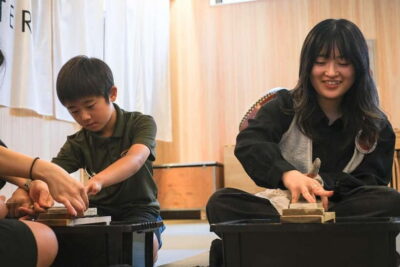
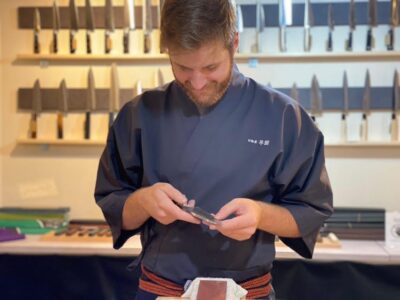
Beginner Knife Sharpening & Handle Fitting Workshop
Read our review →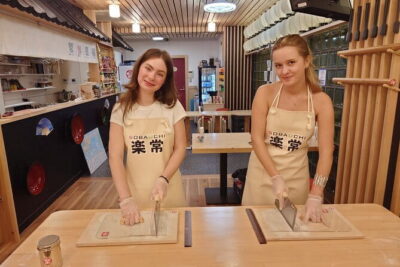
Experience Big soba knife Soba Making Class in Tokyo Kappabashi
Read our review →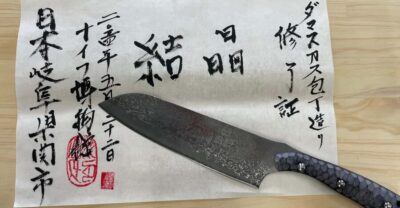
Seki: Samurai Knife Making Experience at the Knife Museum
Read our review →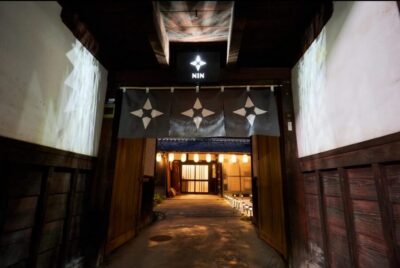
Authentic Knife Making Experience at a Blacksmith in Kyoto
Read our review →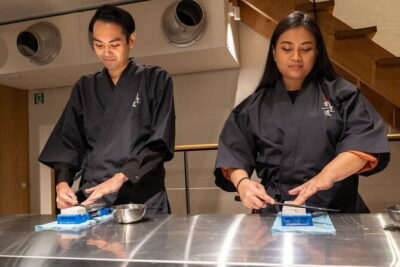
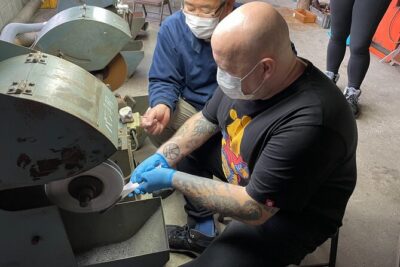
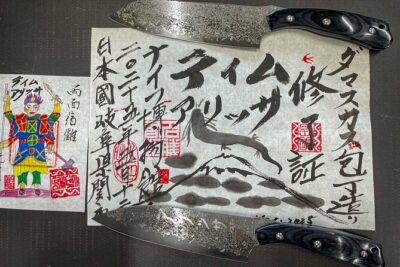
Gifu Samurai Sword Town;Japanese Damascus Knife Making Experience
Read our review →Browse the lists this tour appears in