Reviewed · GUIDED
Kyoto 6hr Private Tour with Government-Licensed Guide
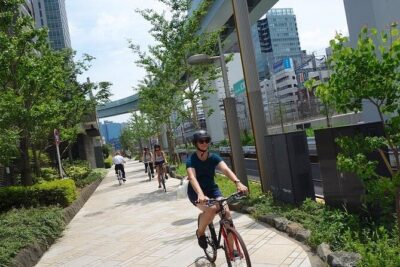
Kyoto has a way of making first-time visitors feel lost fast. What I like about this private format is that you get a government-licensed guide who keeps the day moving, while still giving you room to ask questions. Two things I really love are the chance to travel by public transportation with local know-how, and the flexibility to pick 3 to 4 sites that fit your interests instead of rushing through everything.
One drawback to consider: it’s a walking tour, so if you hate stairs, long lines, or uneven temple paths, you’ll want to plan for breaks. Also, some major sights have entry fees that are not included, so you should budget a bit for tickets once you lock in your choices.
I also like how the guides work with your group’s flow. I’ve heard stories of guides molding the schedule around the day’s conditions, including smooth pre-trip planning that can happen via WhatsApp, and guides like Yuji and Joy (Etsuko) are mentioned for being both friendly and adaptable. If you want a “Kyoto orientation” day that makes your next two days easier on your own, this is built for that.
Key things that make this tour work so well
- Government-licensed, English-speaking local guidance for real context, not just names and dates
- Customizable 3 to 4 stops from a big menu, so your time stays meaningful
- Transit and navigation help, so you spend less time figuring out routes and more time looking at what matters
- Walking-first pacing with breaks you can request, not a sit-and-stare museum day
- Local food and route suggestions, which is often where a guide pays for themselves
- Pro-level communication that can help you align on expectations before you meet
Government-licensed guidance and public transit, the Kyoto shortcut you feel
Kyoto looks simple on a map, then you show up and realize it is not. Distances take longer than you expect, transit stations do not line up neatly with temple entrances, and popular areas like Gion can be hard to navigate when crowds swell.
That’s where a licensed guide plus public transportation becomes more than a nice perk. The guide doesn’t just point. They help you move like someone who actually lives there: choosing the best direction to reduce backtracking, timing your approach to avoid the worst bottlenecks, and explaining what you’re seeing while you walk so the day feels like a connected story.
And because it’s private, you are not trapped in a group pace. One guest mentioned a guide who adjusted timing to the flow of the day. Another highlighted how the guide made their family feel comfortable with the subway and train system. That kind of reassurance matters in Kyoto, because transit is part of the experience, and having someone explain it beats guessing.
Also on the shortlist for Kyoto:
- PERFECT KYOTO 1-Day Bus Tour
★ 5.0 · 13,518 reviews - Kyoto: Fushimi Inari, Kinkakuji, Bamboo Grove 1 Day Bus Tour
★ 4.8 · 4,316 reviews - Kyoto: Tea Ceremony in a Traditional Tea House in Kiyomizu
★ 4.9 · 3,519 reviews
How to choose 3 to 4 sights in 6 hours without turning it into a sprint
The big promise here is “top Kyoto in a day,” but the smarter way to think about it is: pick a theme and let the guide build the route around that theme.
Here are three solid ways to choose, based on the sights offered:
- Classic Kyoto basics: Fushimi Inari, Kiyomizu-dera, plus either Higashiyama or Gion and Pontocho
- Temples and Zen contrasts: one “must-see” garden temple, one rock or pond Zen moment, plus a golden pavilion or a grand temple complex
- West Kyoto scenery and calm: Arashiyama bamboo and gardens, then a quieter hillside temple area nearby
Also, pay attention to entry fees. Some stops are listed as free, and others are explicitly not included. So even if two sights are close together, the cost and time for lines at ticket gates can differ.
Finally, build in a buffer for transitions. You can’t compress Kyoto to the minute without feeling rushed, and 6 hours disappears fast once you include transit, restrooms, and getting from a street view to the entrance.
Fushimi Inari, Kiyomizu-dera, Gion and Nishiki: the first-timer route that feels like Kyoto
If you’re visiting Kyoto for the first time and you want the city’s “wow” factor early, this is your best backbone route.
Fushimi Inari-taisha: torii gates as a living map
Fushimi Inari is famous for the vermillion-red torii gates that form tunnels as you climb. What your guide adds is meaning. You get more than the photo spots. You understand why the shrine looks like a path of offerings and how the layout connects to Kyoto’s broader traditions. If you like symbolism and visual storytelling, this stop hits.
Tip: start early if your schedule allows, even with a guide. The stair sections and changing crowds can affect how long you comfortably spend wandering.
A change of pace from Kyoto:
- Kyoto Geisha Walking Tour: Gion District & Hidden Gems
★ 4.7 · 3,273 reviews - Kyoto: Tea Ceremony Ju-An at Jotokuji Temple
★ 4.9 · 3,207 reviews - Kyoto: Gion Magical Night Walking Tour with Geisha Trivia
★ 4.9 · 2,393 reviews - Kyoto: 45-Minute Tea Ceremony Lesson Experience
★ 4.3 · 2,378 reviews
Kiyomizu-dera: temple views that sell the geography
Kiyomizu-dera is one of Kyoto’s most popular temples, and the grounds are often where the city’s elevation starts to make sense. Your guide’s job is to help you experience it in a focused way, including where to stand for the best views and what to notice as you move through the complex.
Even if you do not go in deep on every sub-hall, the overall feeling is worth it. Kyoto from the slopes can look unreal, especially when light changes across the rooftops.
Gion: narrow lanes, geisha district atmosphere, and less guessing
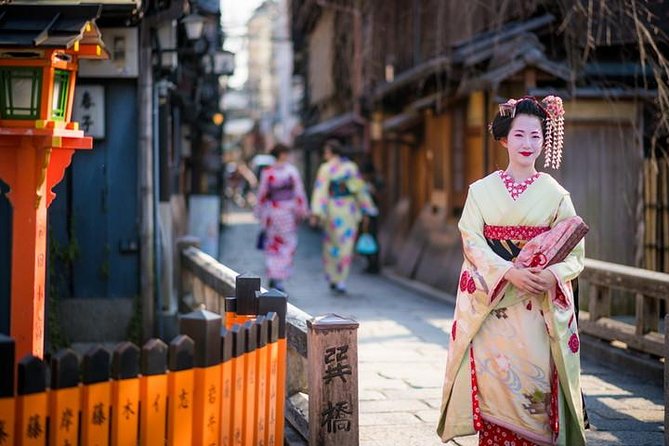
Gion is the kind of place where first-timers can feel like they’re walking in circles, because the lanes twist and look similar. A guide prevents that. You get a calmer route through the streets without losing time. You also get context for the neighborhood’s role in Kyoto culture, which makes your stroll feel intentional.
Nishiki Market: Kyoto’s kitchen in five blocks
Nishiki Market, often called Kyoto’s kitchen, is a narrow strip with lots of small shops and food stops. This is where you turn sightseeing into real tasting. A guide can point you toward what to try and when to step aside so you are not stuck behind a slow-moving crowd.
A good strategy: treat Nishiki as a short tasting stop, not an hour-long shopping mission. If you want souvenirs too, ask your guide to leave you a realistic amount of time at the end.
Pontocho and Higashiyama: atmospheric streets you’ll remember later
Pontocho is a dining alley one block west of the Kamogawa River, and it’s famous for its mood. Higashiyama is the preserved historic district where old Kyoto feels close to the ground. With guidance, you’ll walk these areas with purpose, instead of just chasing pretty streets.
This pair works well as your “story closing act” after temples and shrines, because the city starts to feel more like daily life and less like landmarks.
Castles, imperial spaces, and Zen temples: a different side of Kyoto
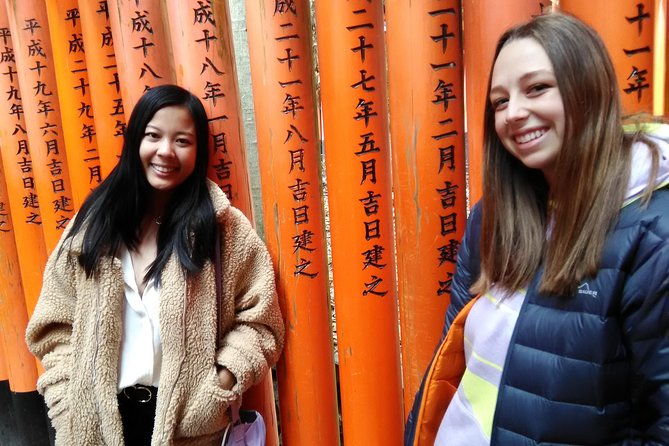
Kyoto is not only shrines and walking lanes. It’s also power, design, and spiritual landscapes. If you like contrast, choose one from each category.
Nijo Castle: shogun-era power in a walkable package
Nijo Castle is one of the easiest ways to understand Japan’s shogun period in a day. You’ll see the style created to demonstrate status, and your guide can explain what you’re looking at in plain terms. This is a good pick if your group wants a “history made visible” stop that does not require you to read for hours.
Kyoto Imperial Palace: when capital life matters
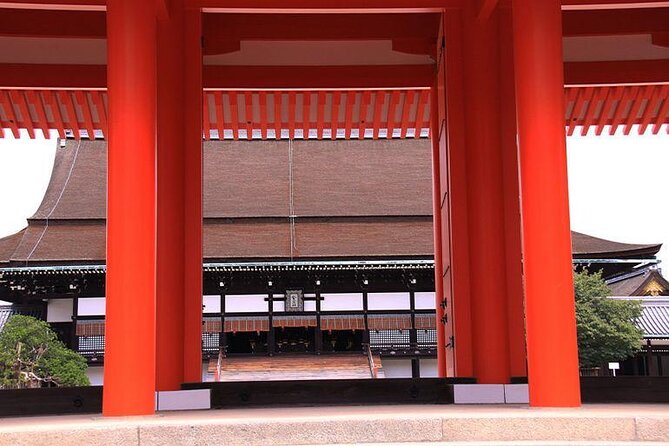
The Kyoto Imperial Palace was the residence of the Imperial Family until 1868, when the emperor and capital moved to Tokyo. That date is the anchor. You see a setting shaped by past political life, and your guide helps connect it to why Kyoto mattered so long.
If you want a calm, reflective break in the middle of the day, this can do it well.
Zen classics: Ginkakuji, Nanzenji, Kinkakuji, Ryoanji
Zen temples in Kyoto are not all the same. That’s the point. If your guide builds a route around them, you get a real sense of variation:
- Ginkakuji: the Silver Pavilion and the quiet atmosphere of a Zen retirement villa
- Nanzenji: large Zen grounds at the base of Higashiyama, great for spaciousness
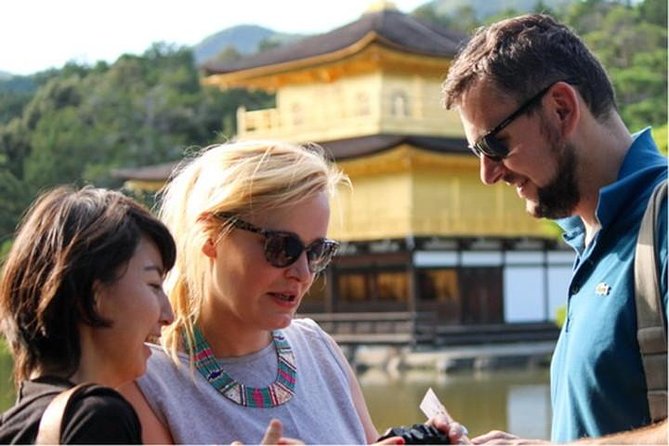
- Kinkakuji: the Golden Pavilion with gold-leaf covered upper floors
- Ryoanji: famous for its rock garden, where interpretation becomes part of the experience
If you’re the kind of person who likes noticing patterns, these stops reward attention. Your guide helps you look at what you might otherwise miss, like layout cues and how gardens guide your line of sight.
Sanjusangendo: 1001 statues, a lesson in scale
Sanjusangendo is known for 1001 statues of Kannon, the goddess of mercy. It’s a “how can this be real” stop because the scale is hard to process without being shown what to focus on. A guide makes the experience feel less like standing there and more like understanding why the building is built this way.
Toji: big temple energy near the city’s pulse
Toji, founded after the capital moved to Kyoto, is another strong “big place, easy to orient to” option. If you’re doing a route that starts in the south or east and ends toward the center, Toji can be a perfect anchor.
Kennin-ji and Eikando: calm gardens close to city streets
Kennin-ji is close to the bustle near Hanamikoji and Shijo streets, but the temple grounds are pleasant to walk. Eikando is also famous for autumn illumination, but even outside peak color it’s typically a thoughtful stop if you want something slower.
Byodoin in Uji: a Phoenix Hall detour that can be worth it
Byodoin Temple is known for the Phoenix Hall, which is a National Treasure and UNESCO World Heritage Site. It’s in Uji city, so it takes extra travel time. If your group wants one “major site” beyond core Kyoto streets, Byodoin can be a great choice, as long as you’re ready for that time tradeoff.
Arashiyama, the bamboo walk, and the north mountain temples for space and scenery
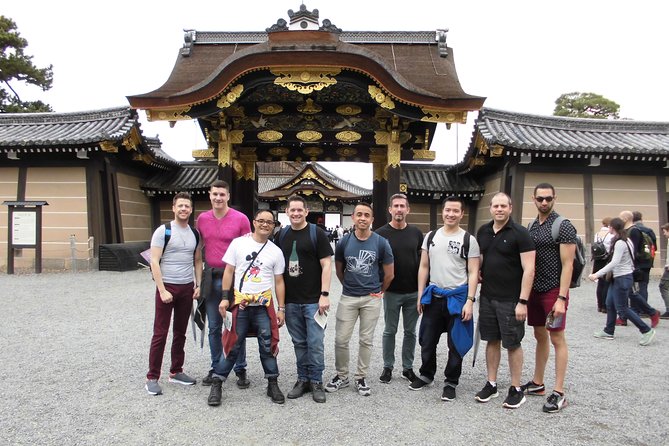
If your main goal is to see Kyoto’s nature side, don’t start by trying to cover too many “hard stops.” Pick one major scenic area, then add one or two quieter temple options.
Arashiyama: Togetsukyo Bridge and bamboo groves
Arashiyama is the big west Kyoto draw. The Togetsukyo Bridge is its iconic landmark, and it has a long history. Walking nearby with a guide helps because you’re not just walking for the photo. You learn how the area became a destination and what makes the setting special.
Then come the bamboo groves. The paths through the bamboo are excellent for a slow walk, and with the right timing (light breeze, softer crowds), it’s one of Kyoto’s most calming experiences.
Tenryu-ji: Zen importance in a scenic package
Tenryu-ji is a key Zen temple in Arashiyama and is registered as a World Heritage Site. If you like gardens and temple design, you’ll usually find this is a “yes, I get why people talk about this” stop.
Okochi Sanso and hillside temples: when you want fewer crowds
Okochi Sanso Garden is a former villa set behind the bamboo. It often feels like a different world once you step in, because you’re away from the main flow. The hillside temple options like Jojakkoji, Nisonin, and Gio-ji are similar in spirit: quieter atmosphere and moss, maple, and small architectural details that reward slow wandering.
If you do these, your guide’s pacing matters. These places are better experienced one turn at a time, not as a checklist.
Adashino Nenbutsuji and Otagi Nenbutsuji: stone statues with a heavy quiet
Adashino Nenbutsuji is tied to the placement of stone statues for souls, and Otagi Nenbutsuji is known for its 1200 stone statues of rakan, each with different facial features. These stops can feel emotionally different from the bamboo and bridge scenery, so I like pairing them with a gentler schedule day where you can let the mood land.
Kibune and Kurama: forested north valley air
Kibune and Kurama are in northern mountains and developed around shrines. They’re perfect if your group wants a break from the denser central areas. Kurama also has temple and hot spring associations, and it’s often less “tour bus energy” than downtown.
Timing, lunch, and why pace is everything with a 6-hour private day
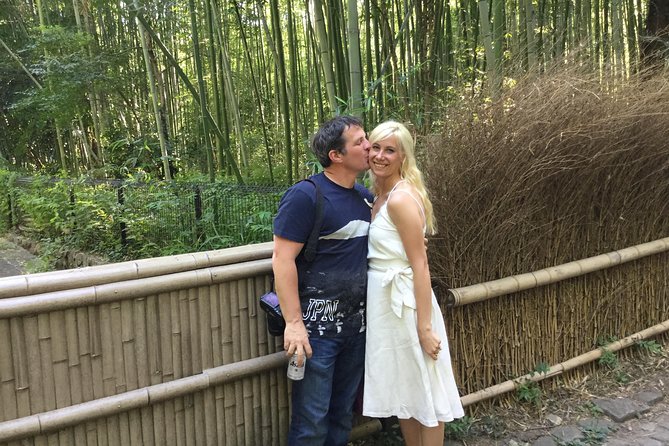
This is a walking tour, and that changes how you plan your day.
Here’s the practical truth: if you start with three “musts” and skip lunch planning, your energy will tank by mid-afternoon. One unhappy experience I saw described a day that ran without enough time for lunch and left the group frustrated. That’s a red flag, not about the concept, but about how you set expectations.
So do this:
- Tell your guide up front what “must have” means for you, including whether lunch matters and what your ideal lunch style is
- Ask for a realistic sequence, not a perfect one
- If you have dietary limits, say so early, because your guide can steer you toward easier options
Also, remember that restroom breaks are part of the plan, especially when temples and shrines have their own walking routes. You’ll enjoy the day more if you don’t treat these as emergencies.
Price and value: what $155.86 buys in Kyoto
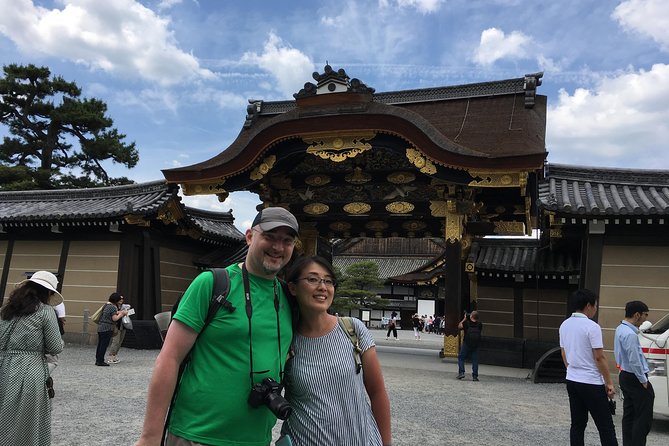
At $155.86 per person for about 6 hours, you’re paying for four things:
- a private, licensed guide
- guided English interpretation
- smart route navigation using public transit
- flexibility to choose 3 to 4 stops that match your interests
In Kyoto, the “hidden cost” is time. Without guidance, you spend it figuring out routes, reorienting, and standing in the wrong line at the wrong entrance. Paying for a guide is essentially buying back that time and turning it into better moments, plus less stress.
It can also be a good deal for families or small groups where you want one adult to handle navigation while everyone else focuses on enjoying the sights. And the high satisfaction rate, about 98% recommended and an average rating around 4.9, lines up with what you would hope for from this style of tour: the guide experience is the product.
That said, value depends on your choices. If you pick four far-apart spots and want long stays at each, you might feel the time squeeze. Choose a route that flows.
What to pack and how to prepare for a pick-up and walk-based day
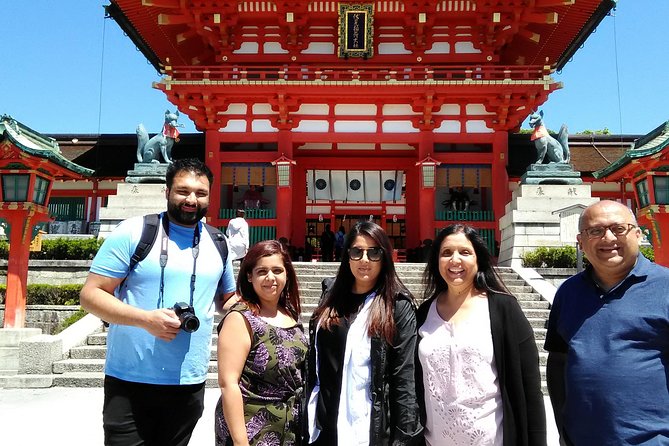
Since pick up and drop off are on foot, treat the meet-up like a starting point, not a hotel-to-hotel service. Wear shoes you can walk in for several hours, because you will. Bring water, and if you travel in rainy season, have a compact umbrella or rain layer.
Also:
- Expect some paid admissions depending on your site selection
- If your group uses transit a lot, having a way to pay for tickets or top-ups makes everything smoother
- Plan for weather. Kyoto’s hills and stairs feel different in rain or wind
If you want the day to run smoothly, message your guide ahead of time with your priorities, like “we care most about temples” or “we want the classic torii and then gardens.” Guides like Kazuo Sumi have been noted for pre-communicating and aligning on an itinerary, which can make the meeting feel calm instead of chaotic.
Should you book this Kyoto 6-hour private tour?
Book it if you are:
- visiting Kyoto for the first time and want a day that gives you bearings fast
- the kind of traveler who likes asking questions and connecting sights to culture
- traveling with family members who would benefit from transit help and route planning
- short on time, but still want more than one postcard stop
Skip it or rethink your plan if:
- you want a car-based tour with minimal walking
- your group gets cranky with stairs and temple paths
- you want long free time at every stop, because 6 hours moves
My take: this is a strong “get it right on day one” option. The guide matters a lot, and the private format is what turns a list of famous places into a coherent Kyoto day.
FAQ
How long is the Kyoto private tour?
The tour is about 6 hours.
Is this tour a private experience?
Yes. It is a private tour/activity, and only your group participates.
What is included in the price?
It includes a licensed local English-speaking guide, a customizable tour of 3 to 4 sites from the available options, and meeting the guide on foot within a designated area.
Are entrance fees included for temples and attractions?
Not always. Some listed stops show admission ticket free, while others indicate admission tickets are not included.
Is lunch included?
No. Lunch is not included.
Do I get picked up by vehicle?
No. Pick up and drop off are on foot, and a private vehicle is not included.
Can I cancel for a full refund?
You can cancel up to 24 hours in advance for a full refund. Cancel less than 24 hours before the experience start time, and you will not be refunded.
Is this tour mostly walking?
Yes. It is described as a walking tour and it is near public transportation, with travel handled through local transit between stops.
Latest write-ups near Kyoto
- Kyoto: Nishiki Market Tour with a Local Foodie & Tastings★ 4.5 · 67 reviews
- Kyoto Kimono Rental mimosa |Kimono/Yukata Rental Couple Plan★ 4.8 · 67 reviews
- Kyoto: Traditional Kimono Fabric Handicrafts Workshop★ 5.0 · 67 reviews
- Kyoto Tea Ceremony and Samurai Photo Session★ 5.0 · 70 reviews
- Kyoto: Replica food making experience★ 4.8 · 70 reviews
- Kyoto: Kinkakuji, Golden Pavilion Guided Tour★ 4.7 · 71 reviews
- Private departure transfer from Kyoto city to Kansai International airport★ 5.0 · 72 reviews
- Uji: Green Tea Tour with Byodoin and Koshoji Temple Visits★ 4.8 · 72 reviews
Guided, compared.
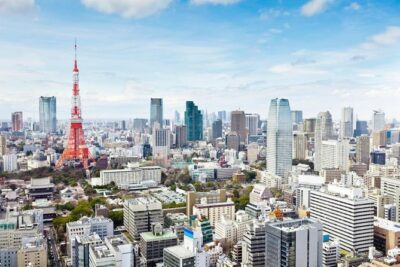
Tokyo 6hr Private Tour with Government-Licensed Guide
Read our review →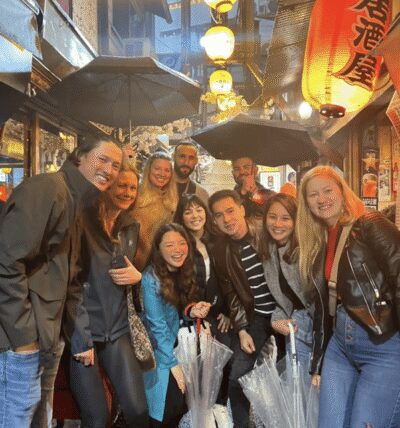
Shinjuku Local Bar and Izakaya Guided Walking Tour
Read our review →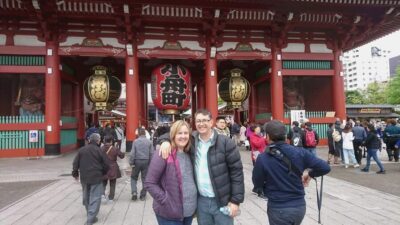
Private City Highlights Tour with Local Guide
Read our review →
Kyoto Early Morning Tour with English-Speaking Guide
Read our review →
Tokyo 4hr Private Tour with Government-Licensed Guide
Read our review →
Hiroshima / Miyajima Full-day Private Tour with Government Licensed Guide
Read our review →