
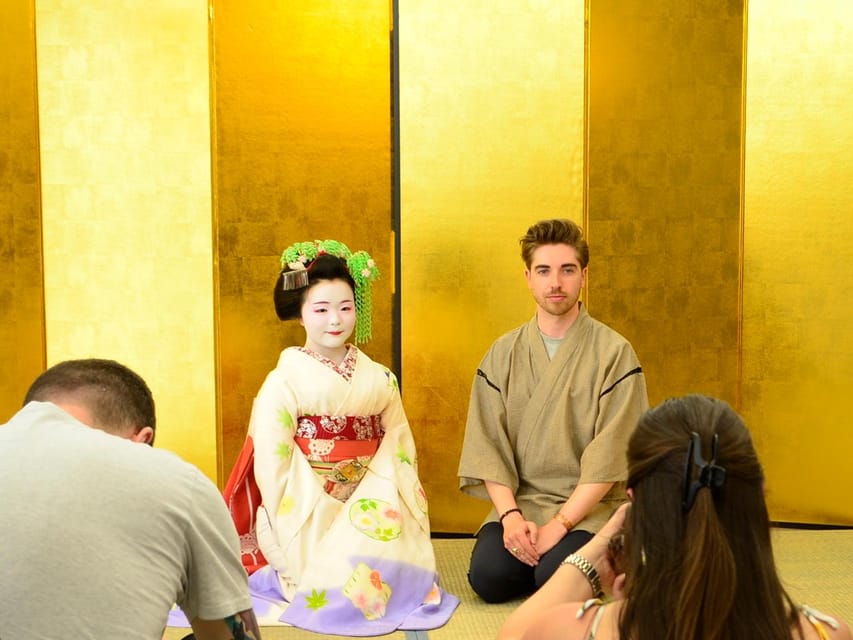
Reviewed · GEISHA & GION TOURS
Kyoto: Meet-and-Greet, Maiko Show and Experience
This experience is interesting because it gives you a respectful, close-up look at a Kyoto maiko without needing luck in the streets. It is also practical: you get a guided introduction, then you can ask questions face-to-face.
I love two things most. First, the view of the traditional dances is genuinely close, not staged at arm’s length. Second, the English-speaking staff keep the conversation going with a real Q&A, so you leave with more than just photos.
The main drawback to consider is the pacing. The total dance time is brief, and in a shared room with other visitors, things like venue atmosphere or noise level can vary.
Key things you will remember
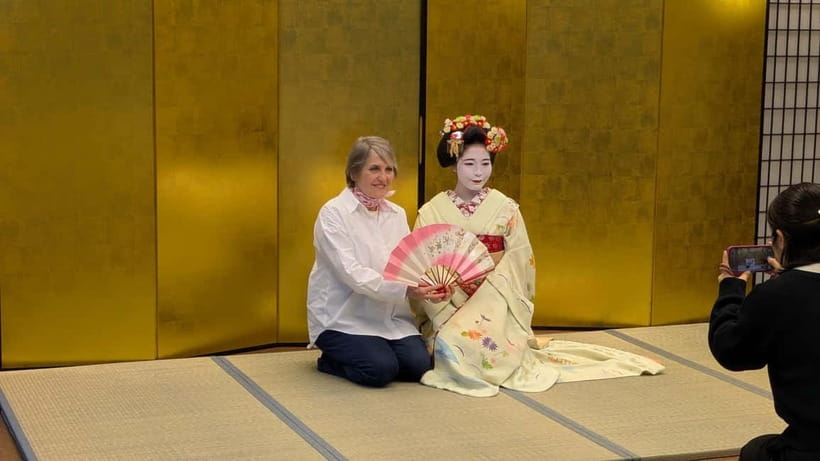
- Up-close maiko performance with a clear view of gestures and costume details
- English Q&A time that turns a show into a conversation
- Your own-camera photo session, included and scheduled after the dancing
- 30-person capacity for a small-group feel, not a massive crowd
- Kyoto Handicraft Center browsing right after, plus a small gift
- Free seating so you can arrive and pick a spot without stress
Finding the Kyoto Handicraft Center and the Meet Maiko sign
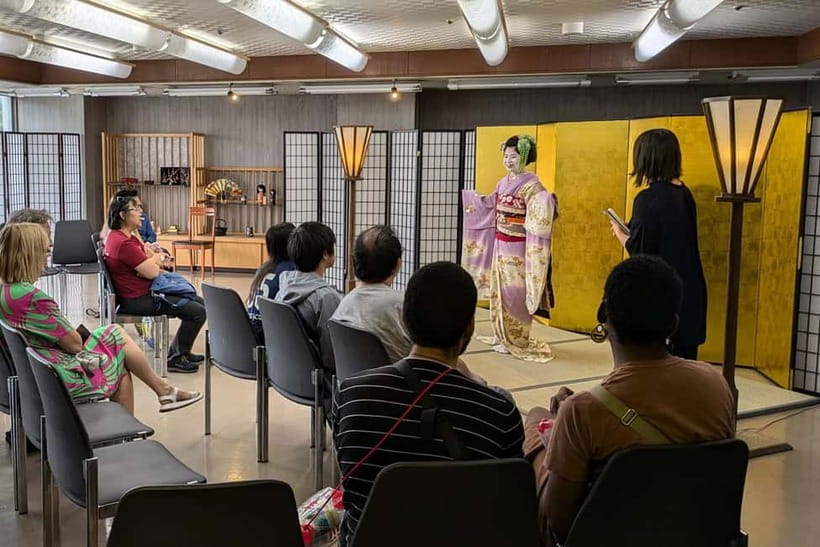
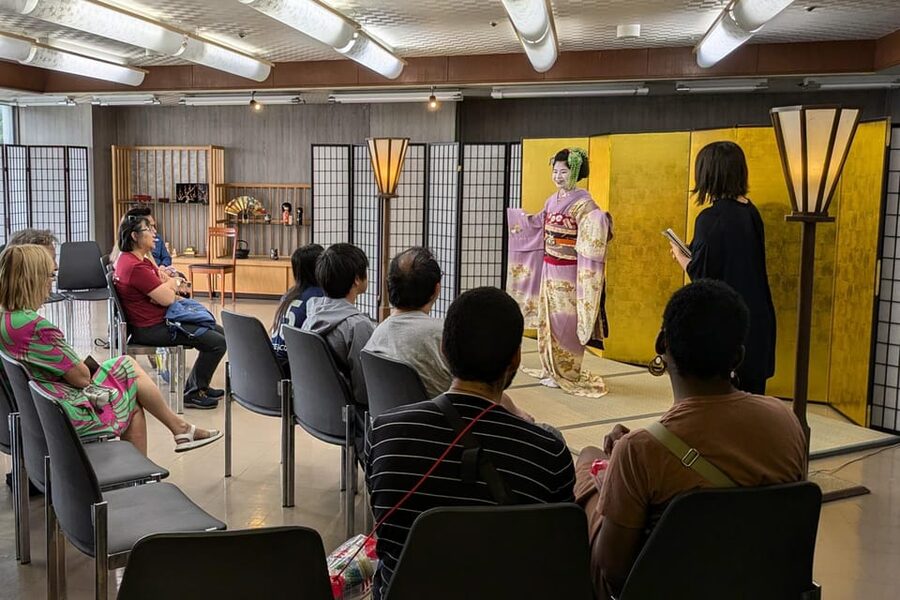
This show is held at the Kyoto Handicraft Center, West Building. Your job is simple: go inside, take the elevator from the first floor up to the second floor, then look for the big MEET MAIKO welcome sign.
Arrive early. The reception opens 30 minutes before the show time, and you are advised to get there at least 10 minutes before it starts. In practice, that extra time matters because it helps you settle in, find your seat, and avoid the last-minute scramble that can throw off your photo session.
A few more logistics points that affect your comfort:
- It is not private, and you join a group (capacity is 30).
- Seats are free seats, and everyone can be seated.
- If you are late, you can still enter during the event.
- Photography is allowed during the event, and the photo moment at the end is included.
If you are pairing this with other Kyoto plans, keep in mind that taxis can be tough in peak season and city buses can get crowded, so plan extra buffer time.
More Geisha Experiences in Kyoto:
- Kyoto Geisha Walking Tour: Gion District & Hidden Gems
★ 4.7 · 3,273 reviews - Kyoto: Gion Magical Night Walking Tour with Geisha Trivia
★ 4.9 · 2,393 reviews - Kyoto: Gion Geisha District Walking Tour – Stories of Geisha
★ 4.7 · 2,187 reviews
The 45-minute flow: introduction, two dances, Q&A, and your photo
Think of this as a tightly run cultural “meet and learn,” not a long formal performance. The total duration is 45 minutes, and it is structured so you get several different ways to connect.
Here is the rhythm you can expect:
- Welcome and introduction: staff introduce the maiko, invite her to the stage, and give background in English.
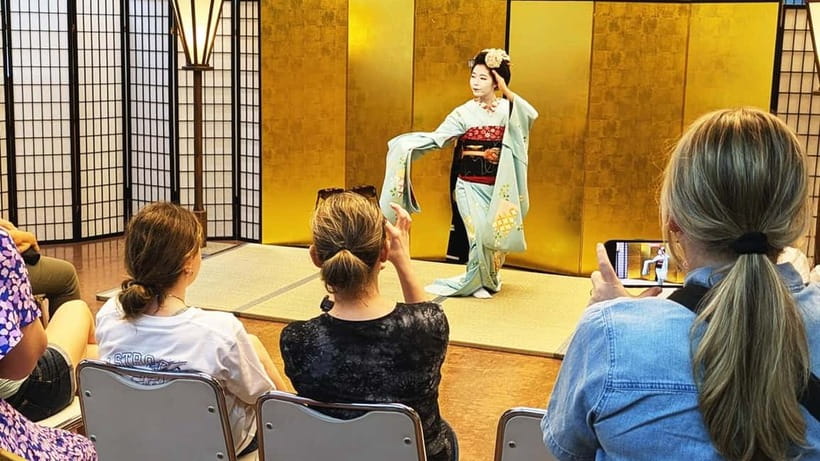
- Two traditional dance performances: the dancing totals about 8 to 10 minutes. It is short, but the choreography and costume work are easy to watch up close.
- Attire explanation and context: the English-speaking staff explain her clothing, and what you should notice in the overall look.
- Question and Answer time: this is where the experience becomes more personal. You can ask questions, and the host helps translate and keep things smooth.
- Commemorative photo session: 10 to 15 minutes are dedicated to taking photos with the maiko, using your own camera or smartphone.
- Small gift and shopping opportunity: when you leave, you receive a small gift, and you can shop at the Kyoto Handicraft Center right after.
In other words, the experience is not only visual. It is designed so you understand what you are seeing and then get to ask the questions you actually care about.
What makes the Q&A time so valuable
The Q&A is not an add-on. It is the part that turns maiko culture from something abstract into something human. When the host moderates in clear English, questions land better, and you tend to come away with a more accurate sense of training, etiquette, and daily life expectations.
Also, the Q&A helps correct common first-timer assumptions. One session noted a focus on what becoming a geiko involves and how the training supports performance arts like dance, music, and the tea ceremony.
Maiko 101, explained in a way you can actually use
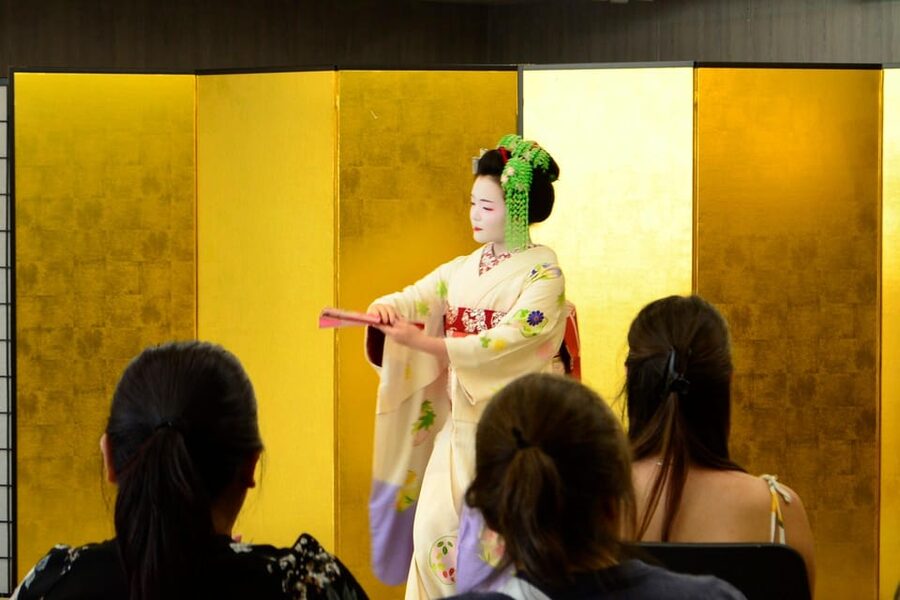
A big reason this show works is that the background is delivered plainly, with attention to what you will see on stage. If you are new to the term, here is the core idea you will hear:
A maiko is a young apprentice geisha, and in Kyoto she is part of a tradition tied to geiko training. She wears intricate kimono, and her look includes carefully styled hair with distinctive hairpieces, plus makeup with the trademark white base and contrasting red and black accents.
In the training, maiko learn more than performance. They work hard on dance and music, and also on tea ceremony skills. Just as important, they master social etiquette, conversation, and hospitality. That is what you see reflected in the way she carries herself during the performance and the way she answers questions during the Q&A.
A change of pace from Kyoto:
- PERFECT KYOTO 1-Day Bus Tour
★ 5.0 · 13,518 reviews - Kyoto: Fushimi Inari, Kinkakuji, Bamboo Grove 1 Day Bus Tour
★ 4.8 · 4,316 reviews - Kyoto: Tea Ceremony in a Traditional Tea House in Kiyomizu
★ 4.9 · 3,519 reviews - Kyoto: Tea Ceremony Ju-An at Jotokuji Temple
★ 4.9 · 3,207 reviews
What to look for during the dancing
Because you are close, you can watch details many visitors miss at a distance:
- The timing of arm and hand movements (they are often more precise than they look)
- How posture supports the flow of the dance
- Costume presentation, especially how the kimono and hair elements frame movement
Several people described the experience as “up close and personal,” and that makes sense here. Two short dances can still feel complete when you are watching the fine gestures clearly.
Age can be part of the emotional impact
One participant noted that the maiko in their session was only 18 years old. That detail can land hard, not as gossip, but as a reminder that this is a real training path and a real person doing careful work.
If you are a little sensitive to that, it may actually be a good thing. The tone of this experience is respectful, and it helps you appreciate the craft without turning it into a spectacle.
Costume and conversation: what you get from the English-speaking staff
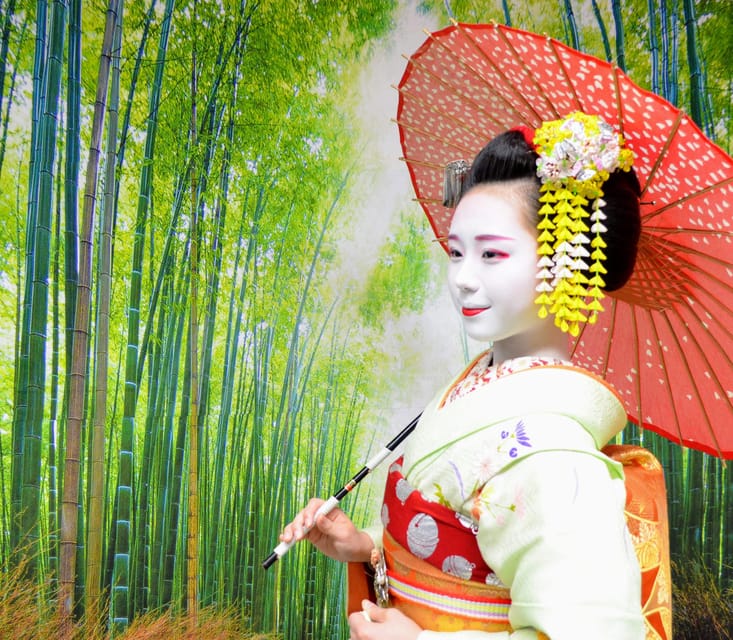
The hosts are not just translating words. They are interpreting what the dance and attire mean, and they guide you on what to notice so you can watch with better eyes.
The show typically includes:
- A brief introduction to what a maiko is and how the training works
- An explanation of her attire and the significance of her overall look
- A moderated Q&A so questions feel organized and understandable
In some sessions, an interpreter named Mina stood out for doing excellent work translating and keeping things clear. Another maiko mentioned by name in a session is Kanoshizu-san. These are not guaranteed identities day to day, but they point to the same pattern: the communication matters, and it is treated as part of the quality.
How to ask better questions
Since the Q&A is part of the value, think in advance about what you want to understand. Good questions tend to be specific, like:
- What aspect of training feels hardest
- How practice changes the way she performs
- What etiquette lessons were most important at the beginning
You will get more out of the discussion if you treat it like learning from a mentor, not interviewing a character.
The photo session with your own phone or camera
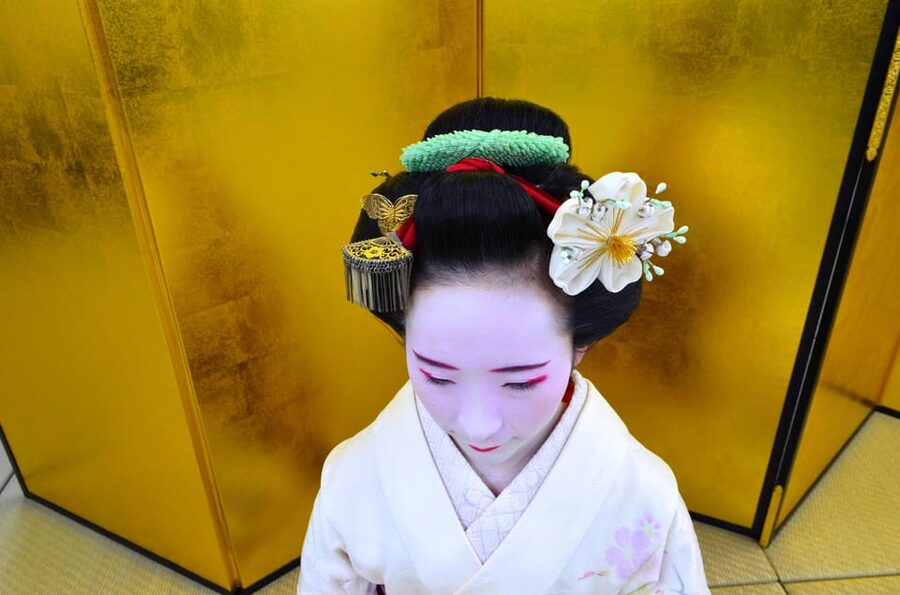
This is one of the most practical parts of the whole activity. You get 10 to 15 minutes for a commemorative photo session, and you use your own camera or smartphone.
Photography is allowed during the event, but this scheduled photo time is where your photos will likely come out best because the setup is organized for it.
A few tips that help you get better results without slowing everything down:
- Charge your phone fully beforehand, and clean your camera lens.
- Keep your hands steady and avoid rushing to flip between apps.
- If you want multiple shots, set your phone to take rapid photos in one go, then pick the best.
Because the event is shared, be mindful of spacing. You want to take your shots efficiently so others can do the same.
The venue experience at Kyoto Handicraft Center, plus shopping right after
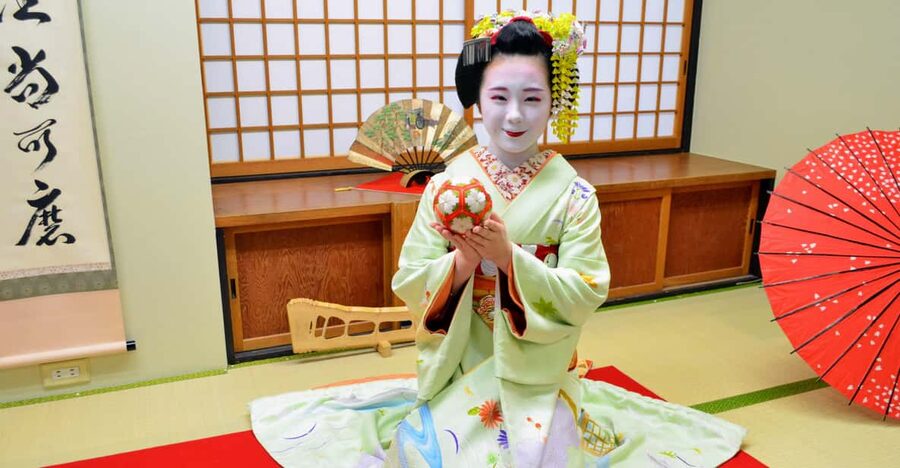
The performance space is inside the Kyoto Handicraft Center, West Building, and the building itself is part of the experience. People liked that they could browse before and after, which makes the whole thing feel less like a “grab-and-go ticket.”
One person mentioned regretting not shopping more after the show, and another highlighted that there are display pieces described as not-for-sale museum-level items visible in cabinets. You can also expect lots of small souvenirs and higher-quality Japanese goods, since the venue is built around crafts and shopping.
This matters because it gives your cultural visit a practical follow-through. Instead of leaving Kyoto with only a photo, you can bring something physical, something you actually chose.
A note on atmosphere
Not everyone loved the room itself. One participant felt the venue could be more atmospheric and described it as a bit corporate or sterile. That kind of detail matters most if you strongly prefer old-world Kyoto vibes over a modern indoor setting.
Still, that is a venue mood issue, not a quality issue. The performance and interaction are the main point.
Price and value: is $44 for 45 minutes worth it
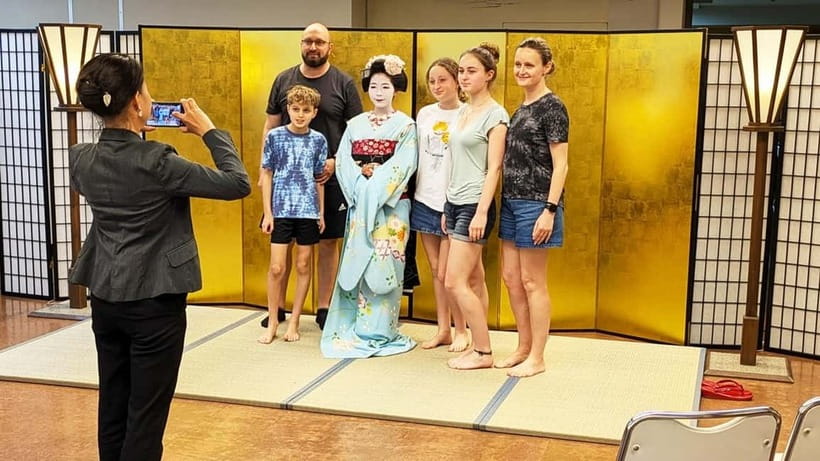
At $44 per person for 45 minutes, the math is simple: it is not a long show, and the dance portion is about 8 to 10 minutes.
So the real value is what comes with it:
- English-speaking staff who explain what you are watching
- The structured Q&A, which turns it into learning time
- A photo session included, using your own camera
- A small souvenir gift at the end
- The chance to shop immediately in the same building
If you only wanted to see dance, you might feel it is short. But if you want a human, educational encounter that gives context, the pricing starts to make sense.
Also, this is a safer way to engage with Kyoto’s geisha world than trying to chase sightings in the streets. You are not interrupting anyone’s night, and you are guided through a respectful format.
Possible downsides before you book
No experience is perfect, and this one has a few real-world considerations.
The show can feel rushed because of the schedule
A couple people mentioned feeling a bit rushed, especially around Q&A and transitions. With a tight 45-minute structure, there is limited wiggle room. Plan to enjoy the pacing rather than expect a long hang-out session.
The venue and group mix can affect your comfort
One participant complained about the venue feeling sterile. Another issue that showed up in feedback was noise from children, including a moment where it became uncomfortable for the room.
This is a shared event, capacity is 30, and you should assume there may be families and mixed age groups. If you are sensitive to sound, consider choosing a time that fits your tolerance for that.
Two dances instead of a full-length performance
Some people wished the dance segment was longer. If you are coming mainly for choreography time, your expectations should match the format: you are getting a focused taste plus conversation, not a long recital.
Who should book this maiko meet-and-greet in Kyoto
This is a great fit if:
- You are a first-time visitor who wants context as much as spectacle
- You want a close-up look with a short, well-managed schedule
- You like interactive experiences and will enjoy asking questions
- You enjoy shopping for Japanese crafts and want it tied to the visit
- You want an event that is wheelchair accessible
It is not ideal if:
- You only want long dance time and are less interested in explanation and Q&A
- You strongly dislike shared-room situations where other people might have kids along
- You expect a street-level, candlelit Kyoto atmosphere rather than a structured indoor setting
Should you book the Kyoto Meet-and-Greet with a Maiko?
Book it if you want a respectful, structured way to meet a maiko and understand what you are seeing. The best part is not just that you watch dances, it is that you get staff-led English context plus a real question and answer moment, capped with an included photo using your own camera.
Skip it if you want a longer performance-only experience or if you are very noise sensitive in group settings. In that case, look for something with more stage time and fewer mixed-audience variables.
For most people, especially first-timers, this one is a strong use of time in Kyoto because it compresses learning, viewing, and interaction into a simple 45-minute stop at the Kyoto Handicraft Center.
Latest write-ups near Kyoto
- Kyoto: Nishiki Market Tour with a Local Foodie & Tastings★ 4.5 · 67 reviews
- Kyoto Kimono Rental mimosa |Kimono/Yukata Rental Couple Plan★ 4.8 · 67 reviews
- Kyoto: Traditional Kimono Fabric Handicrafts Workshop★ 5.0 · 67 reviews
- Kyoto Tea Ceremony and Samurai Photo Session★ 5.0 · 70 reviews
- Kyoto: Replica food making experience★ 4.8 · 70 reviews
- Kyoto: Kinkakuji, Golden Pavilion Guided Tour★ 4.7 · 71 reviews
- Private departure transfer from Kyoto city to Kansai International airport★ 5.0 · 72 reviews
- Uji: Green Tea Tour with Byodoin and Koshoji Temple Visits★ 4.8 · 72 reviews
Geisha & Gion Tours, compared.
Kyoto Geisha Walking Tour: Gion District & Hidden Gems
Read our review →
Gion Magical Night Walking Tour with Geisha Trivia
Read our review →
Gion Geisha District Walking Tour – Stories of Geisha
Read our review →
Best of Kyoto: Gion, Geisha, Pagodas & Cobblestones
Read our review →

Kyoto Night Foodie Tour in Gion (9+ dishes + 6 Sake tastings)
Read our review →
Kyoto Gion Geisha District Walking Tour – The Stories of Geisha
Read our review →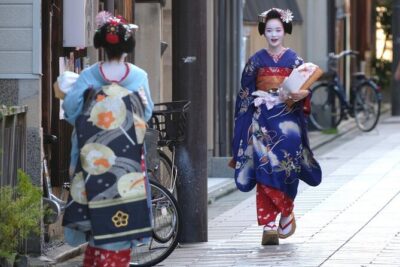
Kyoto Gion: 2-Hour Geisha Culture & History Walking Tour
Read our review →Browse the lists this tour appears in