
Reviewed · 3-HOUR EXPERIENCES
Kyoto: Private Flexible 3 hours tour with a local guide
Kyoto can feel like a choose-your-own-adventure book, and this private tour is built for exactly that. You control the route, and you get a guide’s stories so the sights make sense, fast. I also like that you do not have to share the tour with strangers, and you get help finding your way. One possible drawback to consider: with a walking, shrine-and-temple day, you will want a realistic pace and comfy shoes, because Kyoto crowds and mountain steps are part of the experience.
The tour is designed for flexibility in the real world. You pick one to three locations, and the guide handles navigation so you are not bouncing between stops with your phone and a low-battery sigh. The included support can go beyond guiding too, like help booking a taxi or buying a SIM card.
If you want a highlights route but not a rigid checklist, this is a strong option. Just know the time window is about 2 to 3 hours, so you will be selecting the Kyoto you want most, not seeing everything in one go.
Key things I’d plan around before you go
- Private party only means your schedule and pace stay yours
- Choose 1 to 3 stops from top neighborhoods like Fushimi Inari and Gion
- Guide navigation helps you not get lost and saves time in Kyoto
- Street-level cultural context is a big part of the value
- Kiyomizu-dera admission is not included, so budget for that separately
- Heat management can matter, and some guides come prepared with cooling items
Private Kyoto, flexible stops, and zero awkward group math
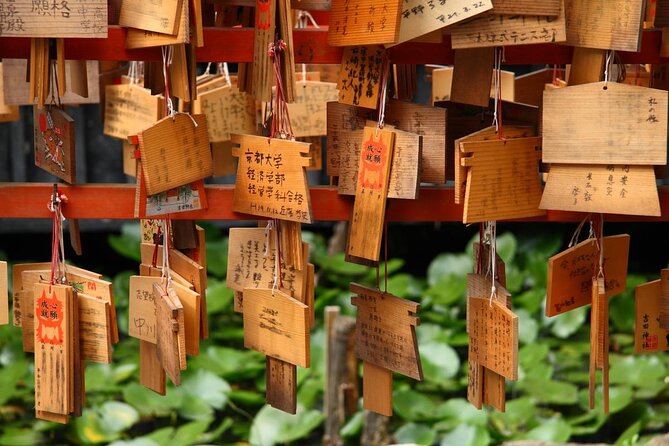
This tour works when you do not want a one-size-fits-all itinerary. Instead of marching with a crowd, you and your group get a local guide and a route that you can adjust. I like that this is not positioned as a rigid script, because Kyoto’s best moments are often small and unexpected: a calmer side street, a perfect photo angle, a short explanation that makes a shrine detail click.
Your “private party” setup also changes the vibe. You can ask questions, slow down for walking breaks, and decide on the fly whether you want more time at a viewpoint or less time where lines feel heavy. The guide can also keep you moving efficiently, which matters in Kyoto where distances between areas can trick your sense of time.
The main consideration is that private does not automatically mean low effort. You are still walking, and Fushimi Inari involves mountain steps. If you or someone in your group has mobility limits, you will want to factor that in while choosing your stops.
Also on the shortlist for Kyoto:
- PERFECT KYOTO 1-Day Bus Tour
★ 5.0 · 13,518 reviews - Kyoto: Fushimi Inari, Kinkakuji, Bamboo Grove 1 Day Bus Tour
★ 4.8 · 4,316 reviews - Kyoto: Tea Ceremony in a Traditional Tea House in Kiyomizu
★ 4.9 · 3,519 reviews
Choosing your 1 to 3 Kyoto locations without regret
One of the best parts of this experience is how clearly it frames the decision: pick one to three locations. In practice, that is exactly what keeps a short visit from feeling chaotic. You can build a route around your interests rather than letting a preset agenda drive you.
A few smart combinations to think about:
- Shrine first, then streets: Fushimi Inari followed by Gion is a classic contrast, mountain gates to old-town lanes.
- View and old streets: Kiyomizu-dera plus Gion gives you both a big skyline moment and a neighborhood stroll.
- Big hits in a tight window: Fushimi Inari plus Kiyomizu-dera can work if you are comfortable with walking and timing.
The tour window is roughly 2 to 3 hours, and the plan is structured around about one hour at each chosen stop. That time split is useful. It keeps you from spending 90 minutes staring at the same gate and missing the rest of the city’s mood.
Also, admission details matter. Fushimi Inari and Gion are listed as free, while Kiyomizu-dera’s admission is not included. So you may want to mentally budget for that if you choose the temple.
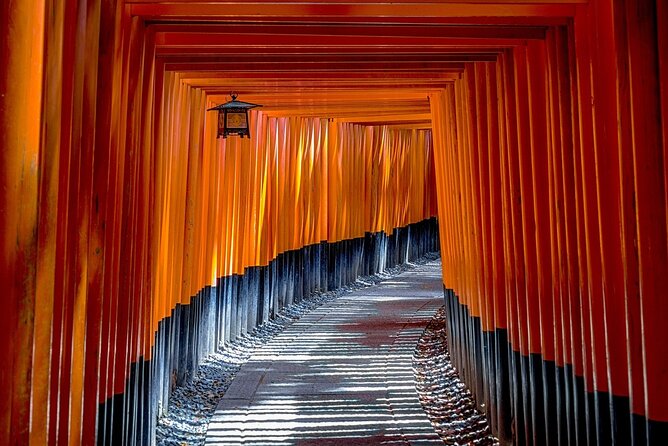
Stop 1: Fushimi Inari-taisha Shrine, red gates and real mountain steps
Fushimi Inari is one of Kyoto’s most iconic experiences for a reason. You climb into a shrine complex on a mountain path, passing thousands of red torii gates. This is not a flat stroll. It is a hike up with plenty of steps, and the reward is the winding gate tunnel effect that makes it feel like you are walking through a landmark in a movie.
You are allocated about an hour here. That is enough time to enjoy the main gate corridors, take photos, and still have energy left for the rest of the tour. If you have the energy for it, you can go further up. If you are pacing yourself, you can also keep it to a comfortable height and still get the full emotional payoff of the place.
Practical notes that will help:
- Wear shoes you trust on stone and uneven paths.
- Bring water if you are going in warm weather.
- Plan for crowds, especially around popular angles where people stop to photograph.
A small detail you should know: Fushimi Inari is listed with free admission. That makes it easier to keep your day budget-friendly, especially if you are pairing it with a paid temple like Kiyomizu-dera.
Stop 2: Kiyomizu-dera, the viewpoint factor and what you pay
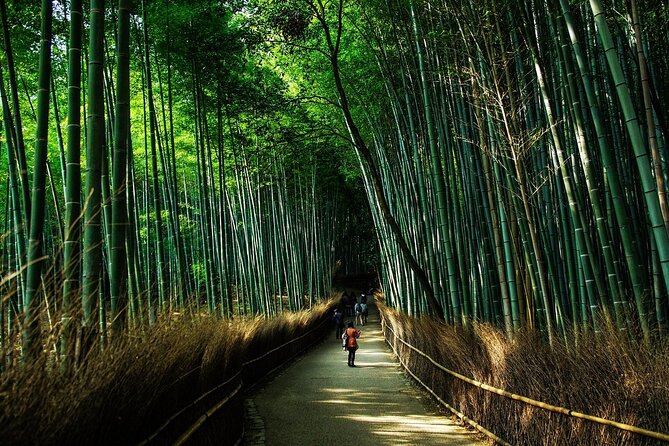
Kiyomizu-dera is a must-stop for a reason that is hard to fake: the temple area is built around big structures and a viewpoint that connects you to Kyoto’s layout. In a short tour, it is a great choice because it gives you that skyline feeling quickly, without needing a full day of temple hopping.
You get about an hour here, which usually means a mix of admiring the main hall and walking the surrounding area before and after. That surrounding time matters. The temple grounds and the walkways let you soak in atmosphere without feeling like you are rushing through.
Two budget points to keep in mind:
- Kiyomizu-dera admission is not included, so expect an extra cost on the day.
- Food and beverages are also not included, so if you arrive hungry, you will have to decide where and when to grab something.
For pacing, this stop can be more comfortable than Fushimi Inari because you are not dealing with the same sustained uphill climb. Still, you are moving through temple areas, so comfortable walking shoes remain a must.
A change of pace from Kyoto:
- Kyoto Geisha Walking Tour: Gion District & Hidden Gems
★ 4.7 · 3,273 reviews - Kyoto: Tea Ceremony Ju-An at Jotokuji Temple
★ 4.9 · 3,207 reviews - Kyoto: Gion Magical Night Walking Tour with Geisha Trivia
★ 4.9 · 2,393 reviews - Kyoto: 45-Minute Tea Ceremony Lesson Experience
★ 4.3 · 2,378 reviews
Stop 3: Gion, old streets, traditional buildings, and photo-friendly wandering
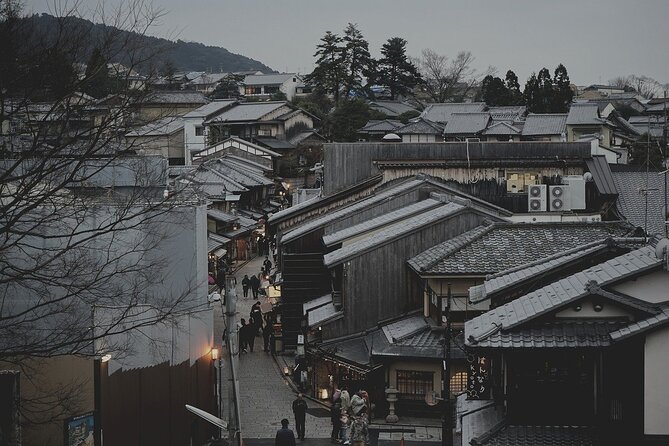
Gion is the Kyoto neighborhood many people imagine. It is one of the oldest districts, and the vibe is all about atmosphere: traditional buildings, quiet lanes, and plenty of photo opportunities along the way.
The tour allots about an hour, which is perfect for a stroll. You can look at shopfronts, take pictures, and just slow your pace enough to feel like you are moving through an older Kyoto. This stop is also a good choice if your group includes people who enjoy browsing more than climbing.
Gion is listed with free admission, which helps you keep the day’s costs clearer. The most useful approach here is to treat it like a neighborhood walk rather than a checklist. Let the guide point out what is worth noticing, and then spend your own time at the spots that catch your eye.
Why the guide is more than translation and directions
If you have ever done a DIY day in Kyoto, you know how quickly things can become a scramble. This tour’s biggest value is the guide role: navigation help plus culture context.
From real experiences shared by people who did this tour, guides like Nanako, Teppei, Steven, and Toshiki have been praised for warmth, flexibility, and making the day feel personal. I like that these notes describe a guide who adapts to you, not one who simply recites facts while you wait in line.
A few types of guide value that show up again and again:
- Storytelling that explains what you are looking at, not just where to stand
- Custom routes based on your interests, so the day feels like your Kyoto
- Assistance with practical things like photos and translation
- Help managing logistics so you can keep moving without stress
There is also a useful real-world angle from the hot-weather stories. One guide, Kyoichi (Mark), reportedly brought cooling wipes when Kyoto hit 98 degrees with a heat index around 103. That is not a guarantee, but it tells you the best guides think about comfort, not just sightseeing.
Price of $131.38 per person: when it feels like a deal
At $131.38 per person for about 2 to 3 hours, this is not the cheapest way to see Kyoto. But private, guided time in prime areas is never “cheap.” The question is whether you get enough value for your priorities.
Here is what you do get in exchange:
- A local tour guide included
- Customization of your route (one to three locations)
- No group sharing, so the experience stays focused on your party
- Help with travel support, such as booking a taxi or buying a SIM card
- Pickup is offered, which can reduce friction if you are juggling transit and luggage
You do not get a private car or driver, and transportation fees and food are not included. So the true cost depends on your own plan for getting around during the tour.
My rule of thumb: this is a good value if you want a curated highlights route but still want control. It is especially worth it if you dislike the stress of coordinating buses or trains on your own, or if your group includes kids or adults who need a pace that is not designed for strangers.
If you are a confident public-transit user and you already know exactly where you want to go, you might question the cost. But if you want a calmer day with guidance, this pricing starts to feel fair.
Getting around in Kyoto without losing half your day
Kyoto is easy to fall into a time trap. The good news: this tour is near public transportation, and the guide handles navigation. That means you can spend your limited hours actually sightseeing rather than plotting routes.
Pickup is offered, but you should still plan around transit connections because the tour does not include a private car or driver. Transportation fees are also not included, so factor in any train or bus costs you incur during the tour.
One more practical detail: the tour is designed for walking. The meeting is in Kyoto, Japan, and the ticket redemption point is also listed as Kyoto, Japan. That usually means the focus is on you meeting locally rather than remote pickup drama.
If your group includes kids or if anyone needs frequent stops, you should pick fewer locations and lean into the guided pace. The experiences you shared also mention guides adjusting walks and train rides to make things workable for children, which is a big deal if you do not want to turn sightseeing into a constant negotiation.
Timing, heat, and comfort tips that actually matter
Because Fushimi Inari involves climbing, and Kyoto streets can get hot, comfort planning is not optional. You do not need to overthink it, but a few simple moves will save you from a less-fun day.
- Choose your order carefully. In many cases, starting with the more active stop can make pacing easier.
- Use the full hour wisely. If you rush Fushimi Inari, you will feel it later when you want to enjoy Gion.
- Bring water, and if it is hot, treat heat as a real factor. The cooling-wipes story is the kind of small preparation that changes the mood.
If you are booking for a day with high temperatures, pick your stops with the weather in mind. Fewer stops is often better than “doing everything” when you only have 2 to 3 hours.
A quick note on the one serious risk
This is mostly a well-liked experience with a 4.8 rating and strong recommendations. Still, the one low rating included a specific kind of problem: on that day, the guide missed trains multiple times and the experience felt less like a real tour and more like aimless walking.
You cannot eliminate every risk in a human-powered tour, but you can reduce the chance of a bad day:
- Confirm where you meet and what time you need to be where.
- Tell your guide your preferred pace and your time limits clearly.
- Keep buffers if you have a separate plan right after the tour.
That last point matters in Kyoto, where getting stuck in transit timing can quickly eat your schedule.
Should you book this private Kyoto tour?
Book it if you want a short, focused Kyoto experience where you can pick what matters to you. It is a strong fit for couples, small families, and anyone who wants a guide to handle navigation and explain what you are seeing. The guide adaptation and personal pacing are the main reasons this tour earns high marks.
Skip it or rethink if you are trying to cram too much into too little time, or if your group will not be comfortable with walking and stairs. Since Kiyomizu-dera admission is not included and transportation and food are on you, you should also be comfortable with those extra costs.
If you want to experience Kyoto like a local friend is walking beside you, picking your stops and telling you what to notice, this is the kind of tour that makes that happen without the stress.
Latest write-ups near Kyoto
- Kyoto: Nishiki Market Tour with a Local Foodie & Tastings★ 4.5 · 67 reviews
- Kyoto Kimono Rental mimosa |Kimono/Yukata Rental Couple Plan★ 4.8 · 67 reviews
- Kyoto: Traditional Kimono Fabric Handicrafts Workshop★ 5.0 · 67 reviews
- Kyoto Tea Ceremony and Samurai Photo Session★ 5.0 · 70 reviews
- Kyoto: Replica food making experience★ 4.8 · 70 reviews
- Kyoto: Kinkakuji, Golden Pavilion Guided Tour★ 4.7 · 71 reviews
- Private departure transfer from Kyoto city to Kansai International airport★ 5.0 · 72 reviews
- Uji: Green Tea Tour with Byodoin and Koshoji Temple Visits★ 4.8 · 72 reviews
3-Hour Experiences, compared.

3-Hour Kyoto Insider Sake Brewery Tour with Tastings & Pairings
Read our review →

3h Tokyo E-Bike Tour: Hidden Gems, and Local Life with guide
Read our review →
3-hour Guided E-Bike Tour of the City’s Hidden Gems
Read our review →
3-Hour Bike/E-Bike Tour of the City’s Highlights
Read our review →
3-Hour Tokyo Pub Crawl Nightlife Welcome Guided Tour in Shibuya
Read our review →Browse the lists this tour appears in