
Reviewed · SAMURAI & NINJA EXPERIENCES
Kyoto Sword Experience – includes Museum Ticket/Ninja Experience
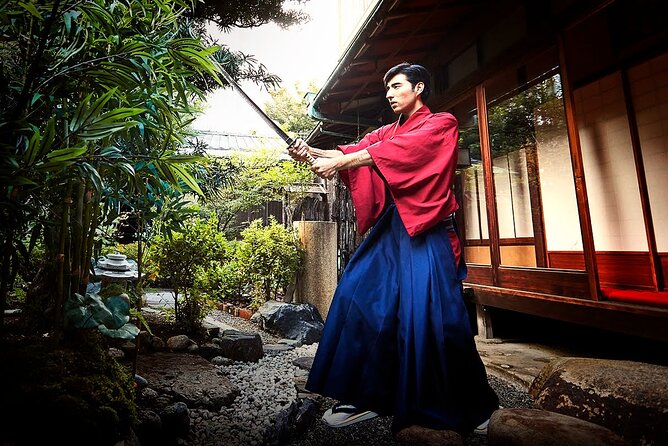
Kyoto Sword Experience is interesting because you get a full on-the-ground try at samurai style, but in a safe, legal setup. You dress in traditional haksama and follow instructor-led iaido basics, then you pair it with a museum visit and even a chance to throw ninja stars.
I especially like two parts: the hands-on sword instruction with guides such as Riku, and the way the museum tour is led by people like Ken and Nobu, who keep the story moving while you look at real artifacts. One consideration is that the flow can feel a bit split across rooms, stairs, and timing shifts, especially during busy seasons.
If you like clear structure, show up on time and accept that this is a group activity with a set session rhythm, not a quiet private lesson. Also note the dojo rules: kids under 7 can’t enter the samurai dojo venue.
Quick Hits You Should Know Before You Go
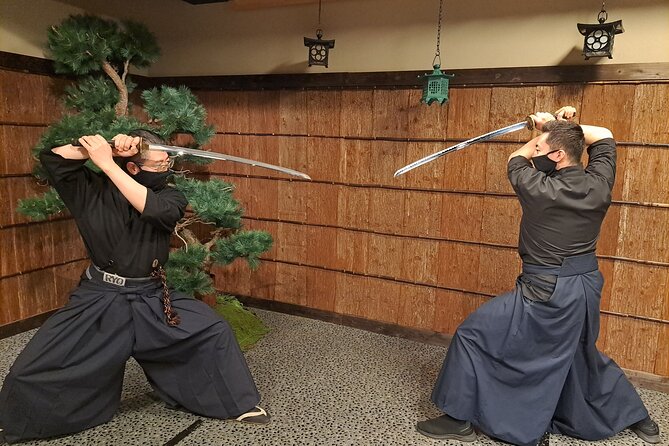
- Safe setup with a blunt replica sword (no sharp blade)
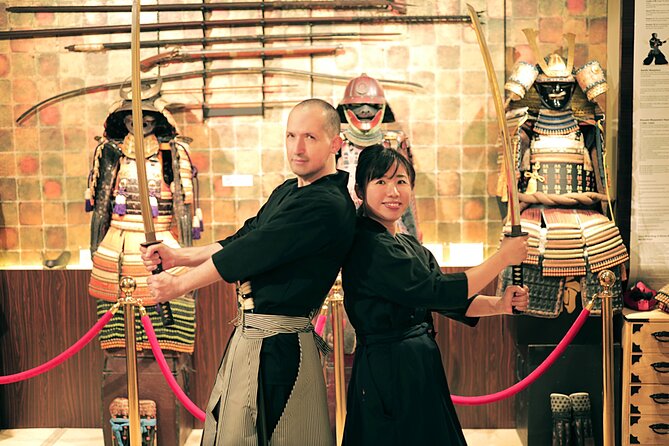
- Hakama dressing plus a photo moment in samurai armor
- Iaido basics taught in a guided, step-by-step way
- Tatami mat cutting using a controlled, training-focused setup
- Free Samurai and Ninja Museum ticket with a history tour
- Ninja star throwing plus time for photos, often upstairs or in an annex
Where Samurai Sword Training Meets the Samurai and Ninja Museum in Kyoto
This experience is set up for the moment you walk in and think, okay, this is what it would feel like to train. The dojo atmosphere matters. You are not just watching a video or holding a souvenir prop. You’re getting dressed, guided through basic sword form, then given a chance at the classic training moment.
It also helps that the experience is tied to the Samurai and Ninja Museum at the same meeting point area. That means you can connect the skills you just practiced with what you’re seeing afterward. If you’re the type who likes context, you will appreciate that the museum visit is not a random add-on.
The big theme here is control. Japan has specific rules about using real swords, so this activity is built around a blunt replica experience. One review also flagged that some photos may show different cutting visuals than what happens now, so it’s smart to come with the understanding that the current focus is safety and compliance.
More Museums in Kyoto
- Kyoto: Tea Museum Tickets and Matcha Grinding Experience
★ 4.9 · 739 reviews - Skip the lines Basic Ticket at SAMURAI NINJA MUSEUM KYOTO
★ 4.5 · 632 reviews - Kyoto : Geiko Maiko Dance of Kyoto & Visits of Gion Museum
★ 4.6 · 415 reviews
Meeting Point and How the Session Usually Unfolds
You meet at SAMURAI NINJA MUSEUM Kyoto, 109 Horinouechō, Nakagyo Ward, Kyoto 604-8117. The site is near public transportation, and you’ll use a mobile ticket.
From there, the experience tends to move in a few clear phases:
1) suit up in samurai-style clothing
2) learn and practice iaido basics with a replica sword
3) do a controlled cutting moment on a set target
4) move into the museum for the included guided history tour
5) head to ninja star throwing and photo time in gear
One review mentioned the experience felt slightly disjointed because parts happen in different buildings and there are stairs. Another review confirmed ninja star throwing is part of the description, but in one case it didn’t happen. The safe bet is to treat ninja star time as something you should watch for during your specific session start time.
Timing-wise, the official duration is about 2 hours. In one provider response, the standard session breakdown was described as longer than a shorter advertising window, including dressing, training, a slicing segment, the history tour, ninja star throwing, and picture time.
Getting Into Hakama: The Costume Part That Actually Helps
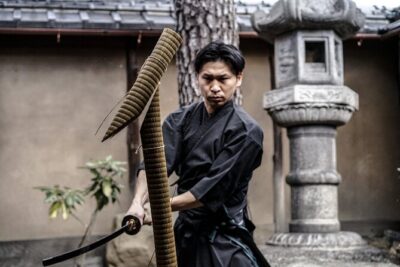
The start is dressing like a samurai. You put on traditional samurai hakama, then you’re guided into posture and readiness for instruction. This isn’t just for photos. Getting into the clothing cues your body, so the stances and movements make more sense when the instructor starts talking form.
A lot of people genuinely enjoy this step because it changes the whole mood. You’re not awkwardly waiting in street clothes. You’re already in training mode.
Practical tip: wear something you can move in and quickly change around. Even if the hakama feels manageable, you’ll be suiting up, learning stance basics, and then back in normal clothes for the museum and photos.
Iaido Techniques With a Blunt Replica Sword: What You Learn
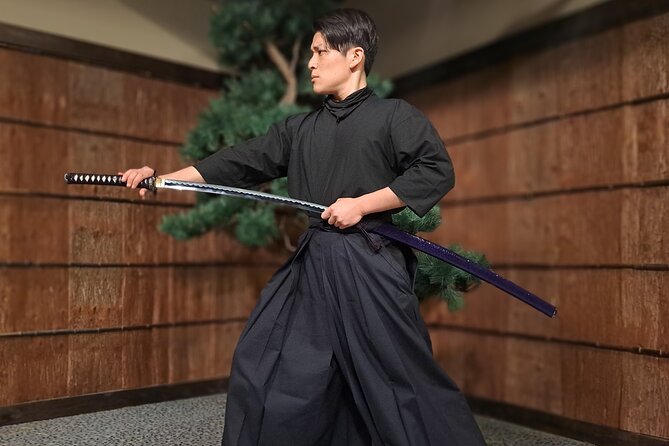
The instruction focuses on basic iaido techniques. That means you’re building precision and discipline more than doing cinematic sword choreography. In the reviews, the classes are praised for being interactive and for teaching basic sword stance clearly, not just letting people take turns holding a prop.
You’ll also hear instructor names tied to great sessions. People highlighted Riku for a training feel that made them feel like they went through real instruction. Others praised Ken for explaining samurai history and Nobu for keeping the group engaged during the museum tour.
The key benefit for you is confidence. Most visitors come in expecting to be “bad at swords.” This format gives you a guided path, so even if your form isn’t perfect, you understand what you’re supposed to be doing.
More Samurai & Ninja Experiences in Kyoto
- Kyoto Samurai Experience
★ 5.0 · 1,294 reviews - Kyoto: Kendo and Samurai Experience with Uniform and Gear
★ 4.9 · 815 reviews - Kyoto: Samurai Sword Class by Experts in Traditional Arts
★ 4.9 · 657 reviews - Ninja 1-hour Hands-on Lesson by Japanese master in Kyoto -Entry
★ 5.0 · 489 reviews
The Cutting Moment: Tatami Mat Practice and the Safety Reality
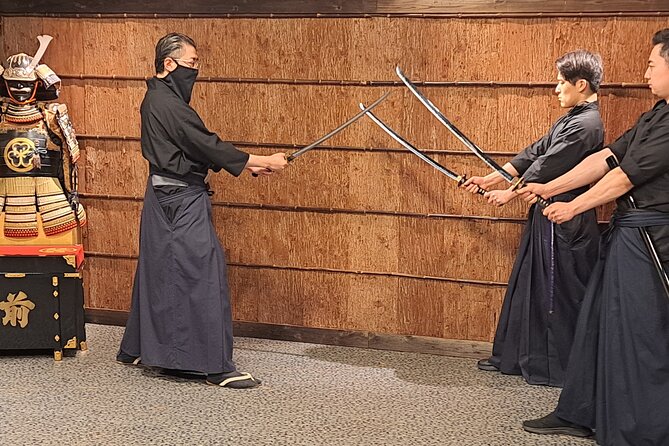
The “wow” part is the cutting segment, where you test your stance and control against a set target. Reviews mention cutting tatami mats, and that is also consistent with a training-focused environment.
Important update: the activity states that it does not involve using a real sword or sharp blade. It uses a blunt, safe replica that complies with Japanese law.
At the same time, your expectations might get mixed by photos online or older descriptions. One review specifically noted that real katana handling or bamboo test mat cutting is no longer happening and that the current format differs from what certain images suggest. Another review talked about holding a real sword, which suggests there may have been changes over time, or different setups across sessions.
So here’s the smart way to think about it:
- You are going to get a real training moment.
- It should be safe, legal, and controlled.
- If the goal for you is authentic weapon handling, confirm the current safety rules and replica setup when you book.
Samurai and Ninja Museum Ticket: What the Included Tour Adds
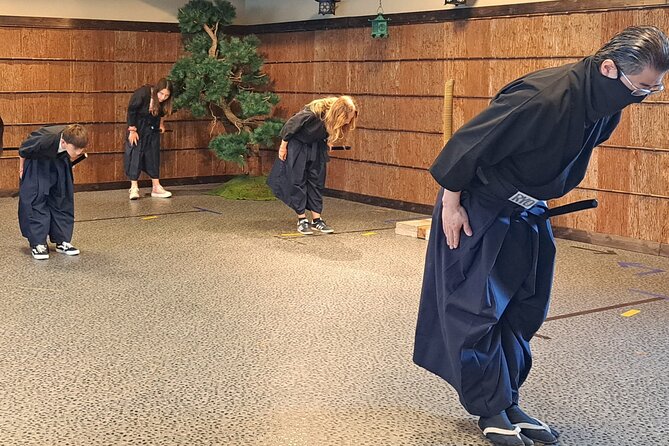
One of the strongest value points is that your ticket to the Samurai and Ninja Museum is included, and you get a guided history tour. This isn’t just wandering rooms with a brochure.
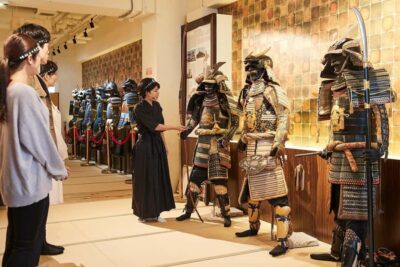
The reviews put a spotlight on the museum guides, especially Ken and Nobu. The praise isn’t only about knowing facts. It’s about making the history readable and connected to what you just did in the dojo. That matters, because samurai and ninja culture can become a blur if you only learn it as trivia.
If you enjoy museums that have a clear narrative and some hands-on context, you’ll likely like how the training part connects to the artifact viewing afterward. It also helps that the museum visit includes photo moments and equipment context, so it’s not purely educational, it’s also visual.
Ninja Star Throwing and Photos: The Part That Can Feel Like a Production
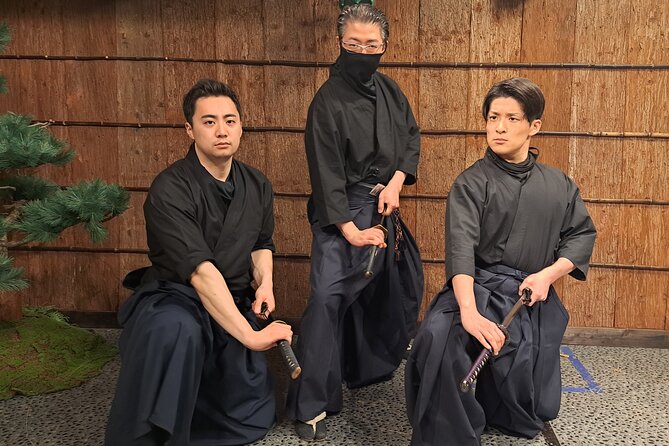
After the museum phase, you get ninja star throwing and picture time in samurai gear. Reviews describe fun photo opportunities, and people mention being able to throw ninja stars and take images in costumes and armor.
One review said the flow felt like moving through multiple areas, including stairs up to the ninja star segment. Another noted that the experience can feel hectic during busy times, with people lining up for costumes and photos.
That doesn’t mean it’s bad. It means you should plan to move at a steady pace. If you want breathing space and slow looking, consider booking a less busy start time (the experience lists multiple daily start times).
Also, the limited time matters: many people get just one main go at the training moments. If you’re hoping for a long, repeated practice session, you might feel squeezed.
Price and Value: Is $83.91 Worth It?
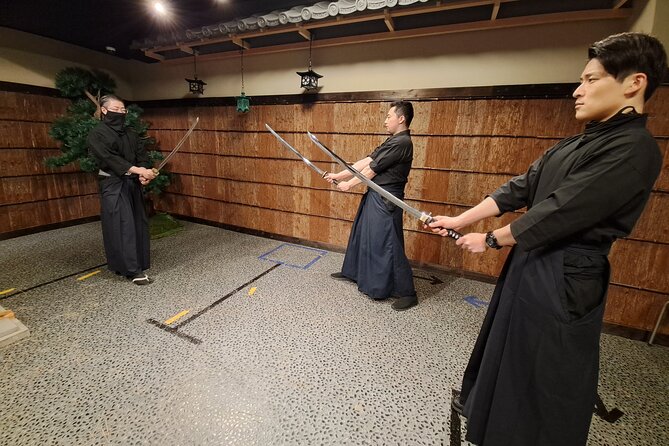
At $83.91 per person, this isn’t a cheap “hold a sword for five minutes” stop. So you should judge it on what’s bundled:
- instructor-led basic iaido practice
- a controlled cutting segment on a training target
- dressing in hakam a with costume and photo opportunities
- included museum ticket
- a guided museum history tour
- a chance to throw ninja stars
That bundle is the value. You’re paying for a complete package that would cost more if you booked the museum separately and tried to find a dojo session on top.
But there is a fairness issue to consider based on the reviews. During peak crowds, the session can become more “assembly line” feeling, with more waiting or less personalized pacing. One review complained about mismatched expectations around the number of participants, and others talked about sessions feeling rushed. There was also mention of an IT problem that led to larger groups at a certain time.
What this means for you: if your #1 priority is maximum instruction time and minimal waiting, pick a time slot that’s less likely to be crowded. If your priority is the whole samurai day package, it’s easier to call the value a win.
Group Size, Start Times, and the Reality of Shared Instruction
The activity states a maximum of 22 travelers. At the same time, some additional info mentions smaller numbers, and later operational notes mention keeping group sizes small and averaging single digits in typical sessions.
Real talk: group-size promises can be strained during peak seasons. Multiple reviews point to issues during busy periods, and one provider response said an IT scheduling error created larger groups and conflicts. They also said they addressed the problem and refunded people who were unhappy.
So for planning:
- Treat this as a group activity with limited turn time.
- Expect you will have your moment, then you’ll rotate.
- If you care most about one-on-one instruction, this may not be the best fit.
Who Should Book This Samurai Sword Experience
This works best for you if:
- you want a hands-on samurai-style experience, not just museum time
- you’re excited about the costume and photo angle (but also want instruction)
- you like learning history with a guide rather than reading alone
- your group includes people who enjoy interactive activities
It may disappoint you if:
- you expect a long, slow practice session with repeated cutting attempts
- you are extremely sensitive to waiting in lines during peak tourist days
- you want guaranteed ninja star time and lots of extra time for photos, rather than a set session rhythm
Family planning note: children under 7 can’t enter the samurai dojo venue. That doesn’t mean a family-friendly day can’t work, but it does mean you need to plan where younger kids can wait outside the dojo area.
Tips to Get the Most From Your 2 Hours
A few practical things that improve the experience right away:
- Arrive early enough to get through the dressing portion without being rushed. One review described sessions starting with people being moved quickly, and you don’t want that.
- Watch the schedule flow and ask if there’s a missing segment if you feel something hasn’t started yet. Since parts happen in different rooms or buildings, it’s easy to miss a step.
- Take your photos during the guided photo window, not while the instructor is working with the group. You’ll get a better result and keep the pace moving.
- If you’re booking around late January through mid-February 2026, note that there’s an elevator out of service period from January 24, 2026 to February 19, 2026. One review mentioned stairs during the ninja star segment, so elevator unavailability could matter for some people.
Should You Book Kyoto Sword Experience – Museum Ticket and Ninja Star Throwing?
I’d book it if your goal is a complete Kyoto activity that blends dojo training, museum context, and a couple of memorable takeaways you can actually do. At $83.91, the included museum tour and the full costume plus ninja star experience are the main reasons it earns value.
Skip it or choose a different option if you’re chasing lots of repeated sword practice, a quiet small-group training vibe, or an experience that is guaranteed to run exactly the same pace every day regardless of crowd levels.
If you want my simplest advice: book, show up ready to move, and treat it like a fun, structured training session tied to a museum visit. That’s where it shines.
FAQ
How long is the Kyoto Sword Experience?
It’s listed as about 2 hours.
Where do I meet for this experience?
You meet at SAMURAI NINJA MUSEUM Kyoto, 109 Horinouechō, Nakagyo Ward, Kyoto 604-8117, Japan.
Do you use a real sword or sharp blade?
No. The experience states it uses a blunt, safe replica sword and does not involve a real sharp blade, in line with Japanese law.
What is included with the experience?
It includes samurai hakama dressing, iaido technique training with a replica sword, a safe sword-fight style segment, a museum ticket and history tour at the Samurai and Ninja Museum, and a chance to throw a ninja star, plus picture opportunities.
Is the Samurai and Ninja Museum ticket included?
Yes. The experience includes a free museum ticket and a guided history tour.
Are children allowed to participate?
Children under 7 are not allowed to enter the samurai dojo venue. Children must be accompanied by an adult.
How many people are in a session?
The activity notes a maximum of 22 travelers, and some provided info also references small session sizes. Group sizes can vary by session timing and conditions.
What should I know about elevators at the venue?
There’s an elevator out-of-service period listed for January 24, 2026 to February 19, 2026.
Latest write-ups near Kyoto
- Kyoto: Nishiki Market Tour with a Local Foodie & Tastings★ 4.5 · 67 reviews
- Kyoto Kimono Rental mimosa |Kimono/Yukata Rental Couple Plan★ 4.8 · 67 reviews
- Kyoto: Traditional Kimono Fabric Handicrafts Workshop★ 5.0 · 67 reviews
- Kyoto Tea Ceremony and Samurai Photo Session★ 5.0 · 70 reviews
- Kyoto: Replica food making experience★ 4.8 · 70 reviews
- Kyoto: Kinkakuji, Golden Pavilion Guided Tour★ 4.7 · 71 reviews
- Private departure transfer from Kyoto city to Kansai International airport★ 5.0 · 72 reviews
- Uji: Green Tea Tour with Byodoin and Koshoji Temple Visits★ 4.8 · 72 reviews
Samurai & Ninja Experiences, compared.

Samurai Ninja Museum Guided tour and Experience
Read our review →
Kendo and Samurai Experience with Uniform and Gear
Read our review →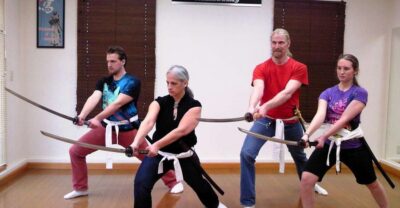
Samurai Sword Class by Experts in Traditional Arts
Read our review →
Skip the lines Basic Ticket at SAMURAI NINJA MUSEUM KYOTO
Read our review →
Samurai Sword & Archery Class from Samurai Descendant
Read our review →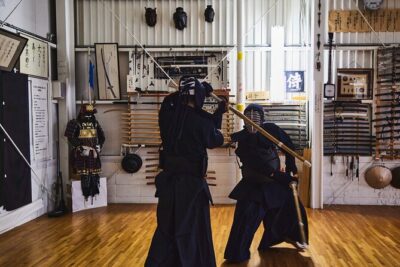
Browse the lists this tour appears in