
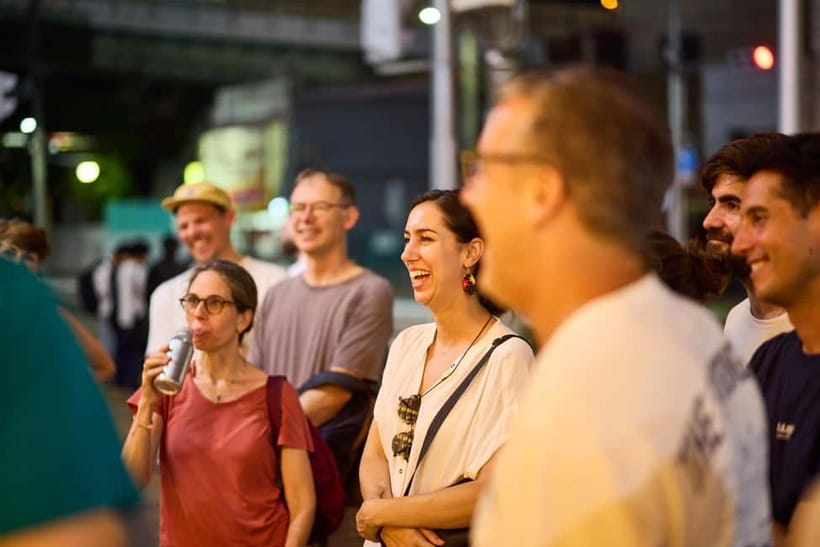
Reviewed · WALKING TOURS
Osaka: Dark Side of Osaka Night Walking Tour
Osaka at night has a second face, and this tour points you straight at the darker, more private side of daily urban life. You’ll walk through Shinsekai and end near Tsutenkaku, with the story of the red-light district folded into what you’re seeing on the ground.
I love how the tour ties themes together, like the early 1900s plan for Shinsekai, with Western-inspired design ideas, and what the area is like now. I also love the human touch from guides such as Jay, Rico, and Matt, who keep the explanations clear and respectful, even when the topics get sensitive.
The main drawback is that some scenes and stories are confronting, and this is not an event for everyone’s comfort level. It is not suitable for children under 18, and if you have a thin skin about adult themes, go in with eyes open.
Key things to know before you go
- Shinsekai’s Western-influenced design started in 1912, with Paris-style inspiration in the south and New York’s Coney Island vibe in the north
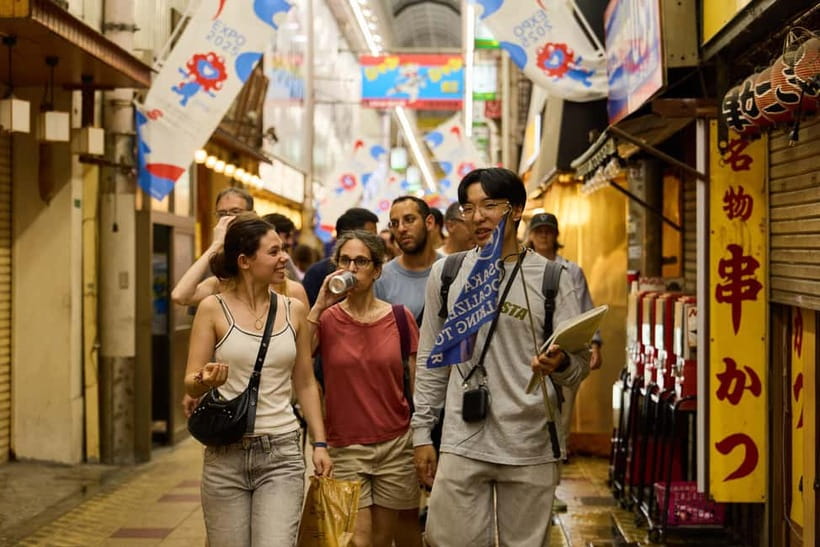
- Jyanjyan Yokocho is a narrow retro alley by Tsutenkaku, known for old-school eats, bars, and shops
- Tobita Shinchi is Osaka’s best-known and largest red-light district, with a long tradition and strict boundaries
- Nishinari shows the shift from working-class labor roots to a more mixed, budget-traveler and explorer scene
- English-speaking guides often add personal anecdotes and make time for questions
- You’re walking the whole time, so comfortable shoes matter
Osaka’s night side: why this tour is different
If you only stick to bright, scenic Osaka, you miss how cities actually work after dark. This tour is designed for people who want context, not shock value. You’ll be walking the streets where history, entertainment, and social rules overlap, then hearing why those places developed the way they did.
What makes it work is that it’s not just name-dropping districts. You start with Shinsekai, the “New World” neighborhood created as a modern entertainment zone, then you move through Nishinari, where the atmosphere feels more raw and lived-in. The last stretch lands in Tobita Shinchi, where the setting is tightly regulated and tradition still shapes behavior.
The best part is the tone. Guides aim for clear explanations, with diplomacy on sensitive topics. That matters, because you’ll understand what you’re seeing without feeling like you’re being pushed into anything.
More Evening Experiences in Osaka
- Osaka Bar Hopping Night Walking Tour in Namba (3 bars, 6 tastes)
★ 5.0 · 958 reviews - Osaka After Dark: Small-Group Night Food Tour (Max 6)
★ 4.5 · 245 reviews - OSAKA NIGHT FUSION Japanese Taiko Kabuki Samurai Dance Show
★ 4.8 · 155 reviews
Meeting at MEGA Don Quijote Shinsekai, and how to start without stress
Your meetup spot is easy to find if you use the big landmark: Under the Giant Penguin of MEGA Don Quijote Shinsekai. The guide is holding a sign for GetYourGuide, so look for that at street level.
I like starting here because it anchors you in the Shinsekai identity immediately. Don Quijote is part of the area’s modern retail pulse, while Shinsekai’s early 1900s entertainment plan is what gives the neighborhood its odd, nostalgic flavor. In practical terms, meeting at a bright, obvious spot makes it simpler to gather on time, especially at night.
From there, you’re on foot for about two hours, with several short guided segments. This is a walking tour format, so you’ll want to dress for movement, not just for photos. Comfortable walking shoes are non-negotiable, because you’ll cover enough ground that sore feet can ruin the last third near Tsutenkaku.
Shinsekai: New World, the 1912 plan, and why Paris and Coney Island mattered
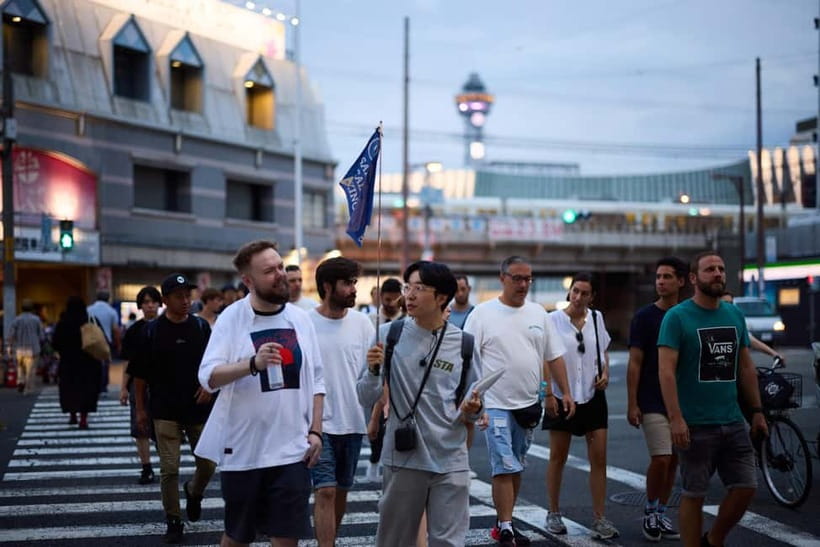
Shinsekai means New World, and the neighborhood was built with that kind of ambition. The original idea dates back to 1912, when it was designed as a modern entertainment district with Western-inspired models. The southern half took cues from Paris, while the northern half leaned toward New York’s Coney Island.
That historical detail matters because it explains Shinsekai’s look and mood. Even though the original glamour faded, the area keeps a quirky identity. You’ll see how old attractions and the city’s everyday rhythm share the same sidewalks. It’s part nostalgia, part survival, and part local routine.
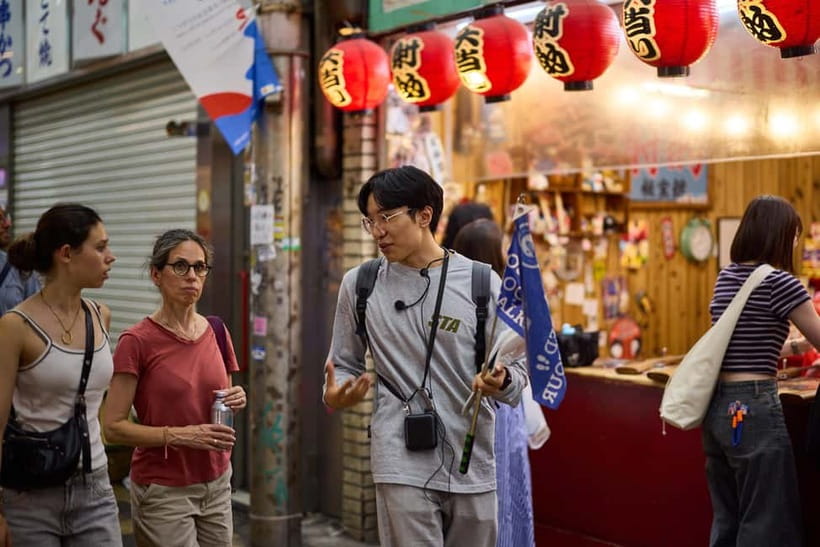
Expect the guide to connect the dots between past and present. In good tours, the stories come fast and practical, like why signage or small street details exist. One example from guides’ style is pointing out symbols you’d otherwise ignore, like a tori marked on a wall that signals where people should not go. Little street clues like that are how you learn faster than any guidebook.
Nishinari after dark: from day-labor roots to a changing street scene
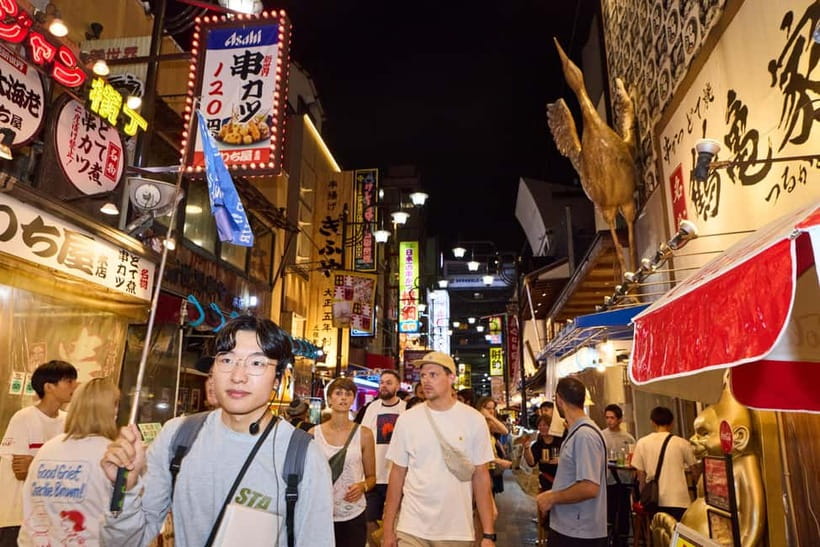
Next you head into Nishinari, in southern Osaka, a district with a long working-class footprint. Historically, it was known as a hub for day laborers and the working community. Over time, the area has shifted, and today it draws people who like gritty, honest urban atmosphere.
I like this stop because it changes the tone from pure entertainment nostalgia to everyday realism. The streets feel less like a themed park, and more like a place where life keeps happening, rain or shine. The guide’s job here is important. With sensitive topics, you want context that respects the people who live there, not just stereotypes.
At this stage, the tour is often where you ask questions. A strong guide will explain how Osaka differs from what you might expect from a famous city brand. You’ll also get tips about how to read behavior and boundaries in these neighborhoods, especially when the next stop moves into adult-oriented territory.
More Walking Tours in Osaka
- Osaka: Hotspots & Hidden Gems Walking Tour Private or Group
★ 4.9 · 1,300 reviews - Osaka Local Foodie Walking Tour in Dotonbori and Shinsekai
★ 5.0 · 985 reviews - Osaka: Deep Backstreets Walking Tour with Dinner Option
★ 4.9 · 902 reviews - Ultimate Osaka Walking Tour: Castle, Dotonbori & Hidden Gems
★ 5.0 · 862 reviews
Jyanjyan Yokocho by Tsutenkaku: retro alley energy in tight spaces
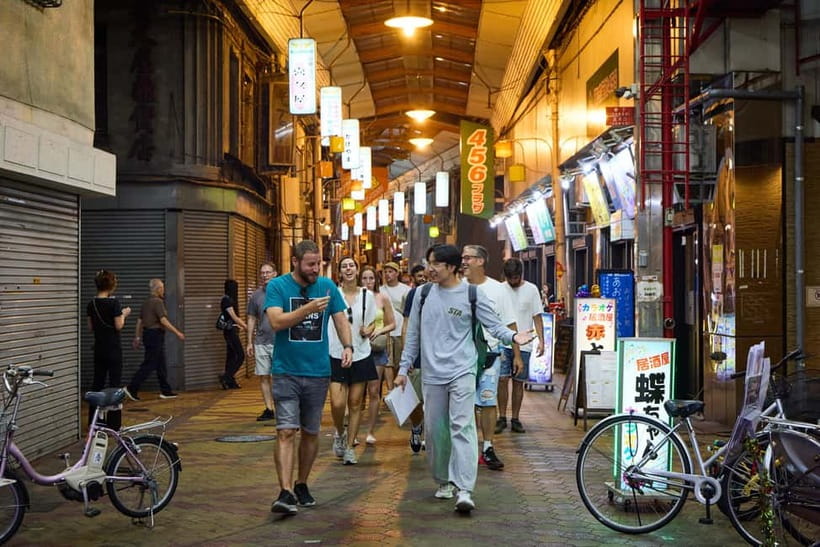
Jyanjyan Yokocho is a narrow shopping and dining street right in the Shinsekai orbit, near Tsutenkaku Tower. This alley is known for a mid-20th century feel, with old-school eateries, bars, and small shops pressed into a compact space.
This stop is practical for two reasons. First, it gives you a break from walking wide streets, and you can slow down to watch without getting left behind. Second, it shows a different kind of Osaka charm, the kind that feels informal and local rather than polished.
I’d treat it like a street museum where the exhibits are food smells, neon signs, and the way people line up or pause at doorways. You’ll likely hear why these alleys are more than entertainment: they reflect community patterns, business longevity, and the way Osaka residents socialize.
If you’re hoping to snack, remember that the tour does not include food. You can use this moment to decide whether you want a drink or a bite on your own after hearing what the guide suggests.
Tobita Shinchi: the largest red-light district and how the tour keeps it respectful
Tobita Shinchi is Osaka’s most famous and largest red-light district, and it comes with a history that stretches back over a century. You’ll notice it’s not just a general nightlife zone. It’s a place with strong boundaries and a tradition of discretion.
This stop is where the tour earns its name, because it’s the clearest look at the shadow-side of Japanese urban society. But the goal is understanding, not gawking. Guides tend to handle these topics diplomatically, so you can process what you’re seeing without being overwhelmed.
Practical advice matters here. Don’t expect the experience to be casual entertainment. You should keep your volume low, follow the guide’s pace, and be aware that adult-oriented neighborhoods are still part of real city life. Also, the tour is not for children under 18, which is a clue about tone and content.
If you like your travel stories straight and grounded, this is the part you’ll remember. It forces you to notice how a city organizes behavior after dark, and how rules and traditions shape what visitors see.
The pace and what a 2-hour Osaka night walk feels like
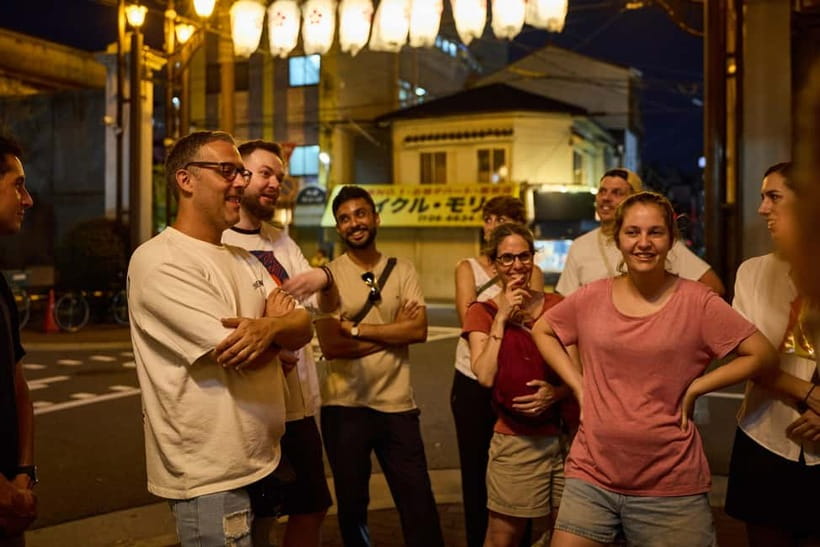
This is a two-hour walking tour, broken into multiple guided segments. You’ll start in Shinsekai, then spend time in areas like Nishinari before shifting toward Jyanjyan Yokocho and Tobita Shinchi, finishing at Tsutenkaku.
That timing structure usually works well because it prevents the tour from feeling like one long lecture. Instead, you get short explanations paired directly with what’s around you. When you’re on foot, context sticks faster. You’re not just hearing about districts, you’re learning how they look and how people move through them.
Pace can vary by guide, but there’s a common theme in how guides communicate: answers and extra details. Some guides speak quickly, so if your English is not strong, it’s smart to prepare to listen actively. The upside is that they make space for questions, so you can slow things down mentally even if the guide doesn’t.
Weather is another factor. Rain happens, and guides can adapt, but you’ll still be walking. Bring layers and be ready for cool or wet conditions so you stay comfortable through the final stretch.
Price, value, and what’s included in your $25
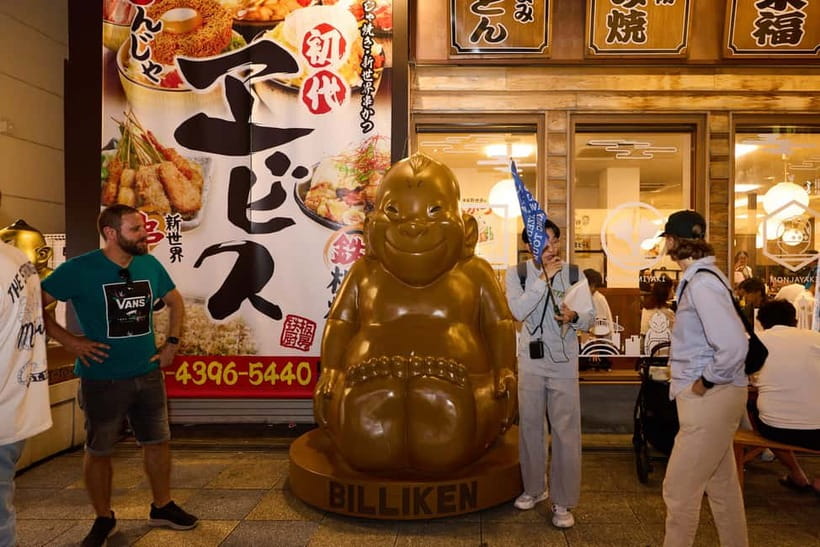
At $25 per person for a two-hour, live English guided walk, the value is all about what you’re buying. You’re not paying for a show or for a meal. You’re paying for interpretation, safety in navigating nightlife streets, and the ability to ask questions about sensitive social history.
What you get:
- A live tour guide
- A walking route focused on Shinsekai, Nishinari, and the red-light district area
- Local context tied to the places you pass
What you do not get:
- Food or drinks
- Hotel pickup or drop-off
For me, the price makes sense if you want meaning and you like asking questions. If your plan is mostly to take photos and move fast, this might feel like more cost than you need. But if you want to understand why Osaka’s “dark side” exists and how it fits into the city’s identity, the guide time is the main asset.
Who should book this Osaka night tour, and who should skip it

This tour is a good fit if you:
- Want a more honest view of Osaka than the typical sightseeing route
- Like street-level history and social context
- Are comfortable in adult-oriented areas with clear boundaries
- Enjoy conversational Q and A with an English guide
It’s a poor fit if you:
- Need wheelchair access. This tour is not suitable for wheelchair users
- Are traveling with kids. It’s not suitable for children under 18
- Have a low tolerance for confronting stories or adult themes
One more tip: bring a respectful mindset. These neighborhoods involve real people living real lives, even when the signage and street energy are meant for adult entertainment. If you treat the tour like a place of learning rather than a spectacle, you’ll get more out of it.
Should you book the Osaka Dark Side night walking tour?
I’d book it if you want Osaka to feel real, not sanitized. The combination of Shinsekai’s Western-inspired origin story, Nishinari’s working-class roots, and the controlled environment of Tobita Shinchi gives you a fuller picture of how cities handle entertainment, work, and social rules after dark.
The decision comes down to your comfort level. If adult topics and discreet nightlife spaces make you uneasy, you might hate this tour. If you can handle sensitive history with a respectful attitude, you’ll likely feel like the two hours flew by, because the guide keeps the explanations focused and the route keeps moving.
Go in with comfortable shoes, a willingness to listen, and the expectation that this is about understanding people and place, not about partying.
FAQ
How long is the Osaka Dark Side of Osaka night walking tour?
The tour runs for about 2 hours.
How much does the tour cost?
It costs $25 per person.
Where do I meet the guide?
Meet at Under the Giant Penguin of MEGA Don Quijote Shinsekai. The guide will be holding a sign for GetYourGuide.
What language is the tour offered in?
The live tour guide speaks English.
What is included, and is food part of the price?
You get a live guided walking tour and exploration of the key districts. Food and drinks are not included.
Are smoking or alcoholic drinks allowed?
Smoking is not allowed, and the rules mention no alcoholic drinks in the vehicle.
Is this tour wheelchair accessible?
No, it is not suitable for wheelchair users.
Is it okay to bring children?
No, it is not suitable for children under 18.
Is free cancellation available?
Yes. You can cancel up to 24 hours in advance for a full refund.
Latest write-ups near Osaka
- PRIVATE 6hr, Food tour from Osaka Castle, Kuromon, Dotonbori.★ 5.0 · 68 reviews
- 90 min Shared Handmade Udon Experience★ 5.0 · 70 reviews
- Ramen and Gyoza Cooking Class in Osaka Dotonbori★ 5.0 · 73 reviews
- Osaka: Sushi Making in Spacious Studio (SAME-DAY OK!)★ 5.0 · 75 reviews
- Osaka E-Bike Tour With A Local Guide★ 4.7 · 75 reviews
- 1.5〜2 Hours Traditional Kintsugi Work Shop in Namba Osaka★ 5.0 · 75 reviews
- Retro Osaka Street Food Tour: Shinsekai★ 4.5 · 77 reviews
- Osaka: Osaka Castle Guided Tour with Local Guide★ 4.7 · 78 reviews
Walking Tours, compared.
Kyoto Geisha Walking Tour: Gion District & Hidden Gems
Read our review →
Tokyo Tsukiji Fish Market Food and Culture Walking Tour
Read our review →
Gion Magical Night Walking Tour with Geisha Trivia
Read our review →
Imperial Palace and Shogun Historical Walking Tour
Read our review →
Gion Geisha District Walking Tour – Stories of Geisha
Read our review →
Shinjuku Local Bar and Izakaya Guided Walking Tour
Read our review →
Browse the lists this tour appears in