
Reviewed · WALKING TOURS
Osaka Food Adventure Tour: Walking with a Local Guide
This Osaka food adventure is interesting because it pairs real local neighborhoods with a guided walking route that helps you eat your way through the city without turning into a snack-hunting tourist. I especially like the small group size (max 8), which makes it easier to ask questions, try what you’ll actually enjoy, and keep the pace comfortable.
What I like even more is the focus on how to move and what to eat. I love that you get public transportation help while sampling 6-10 local dishes, usually at lunch or dinner time when you’re most ready for all the tasting. The included drink choice is also a nice little reset between stops.
One consideration: the meals can include meat, seafood, wheat, and dairy, so you’ll want to plan ahead if you have allergies or dietary restrictions. If you need swaps, contact the provider before you go.
Key things I’d plan around
- Max group size of 8 keeps the experience flexible and easier to personalize
- 6-10 local dishes plus a drink means you can eat a real meal, not just a few bites
- Public transportation coaching helps you connect Osaka neighborhoods with less stress
- Shinsekai to Dotonbori route mixes iconic sights with side streets for food
- Food choices can vary by availability and preferences, so come ready to be flexible
Why this Osaka food walk makes smart sense for your first night
Osaka can feel like it runs on two things: walking and eating. This tour fits that rhythm without asking you to guess where to go or what to order. You follow your guide through a tight loop of classic districts and food stops, with the added benefit of learning how to use local transit while you’re at it.
I also like the way the tour is built for appetite. You’re tasting at a meal window, either lunch or dinner-time, so you’re not wandering around half-fed. The promise is at least six dishes, and in practice you’ll likely get closer to the higher end of the range, depending on what’s available that day.
And the tour stays practical. It’s only about 3 hours, it’s walking, but not a full marathon, and your guide keeps you moving between places that actually make sense to eat at. At the end, you land by the famous Dotonbori area, so you’re not stuck.
More Food & Drink in Osaka
- Osaka: Shinsekai Food Tour with 13-15 Dishes at 5 Eateries
★ 4.8 · 2,204 reviews - Osaka Food Tour: 13 Dishes at 5 Local Eateries
★ 5.0 · 2,149 reviews - Hungry Osaka Street Food Tour:15 Tastings & 3 Drinks with a Local
★ 5.0 · 1,727 reviews
Price and what you’re really buying for $79.28
At $79.28 per person for about 3 hours, you might wonder if this is “just food.” Here’s the better way to think about the value: you’re paying for (1) multiple tastings, (2) a guide to handle ordering and pacing, and (3) help navigating Osaka so you’re not spending your energy figuring out logistics.
The included portion matters. You get 6-10 local foods and one drink choice (alcoholic or non-alcoholic). That’s not the same as paying for one sit-down meal, because you’re getting variety. You also get a structured route, which helps in Osaka because food choices can be overwhelming when everything looks good.
There’s also a less visible value: time. A guide can move you past the usual dead ends and toward places that locals actually line up for or pop into after work. And because the group is capped at 8, you’re not just herded around.
The group size sweet spot, and why it helps you eat better
A maximum of 8 travelers changes the feel fast. In a larger group, you tend to swallow and move on. With a small group, the guide can slow down where it matters, check what you like, and steer you toward foods you’ll understand and enjoy.
I like that the tour is explicitly structured around food preferences and availability. Your tasting selection may change day to day, but the goal is always the same: put you in front of several local items, including places like department-store food basements and narrow alleys that most people walk right past.
If you hate being rushed, this is a good sign. Short stops add up, but the walking is kept reasonable, and you’ll usually be close enough to each other that you’re not burning time on long transfers.
Getting to Ebisucho and finishing at the Glico Sign
Your start point is Ebisucho Station (with the address listed as 5 Chome-13 Nipponbashi, Naniwa Ward, Osaka, 556-0005). You’re meeting near the station area close to Shinsekai, and you can look for the easiest exit to follow the route.
Your finish is at the Glico Sign in Dotonbori, at the bridge in front of the sign. This is a smart ending. You finish at a place that’s easy to orient from, and you’re already where people go for post-tour wandering and food if you still have room.
Tip: wear comfortable shoes. The tour is only about 3 hours, but you’ll still want foot support, especially if you’re traveling in warmer or rainy weather.
More Walking Tours in Osaka
- Osaka: Hotspots & Hidden Gems Walking Tour Private or Group
★ 4.9 · 1,300 reviews - Osaka Local Foodie Walking Tour in Dotonbori and Shinsekai
★ 5.0 · 985 reviews - Osaka Bar Hopping Night Walking Tour in Namba (3 bars, 6 tastes)
★ 5.0 · 958 reviews - Osaka: Deep Backstreets Walking Tour with Dinner Option
★ 4.9 · 902 reviews
Stop 1: Tsutenkaku, a 1912 icon with city-view payoffs
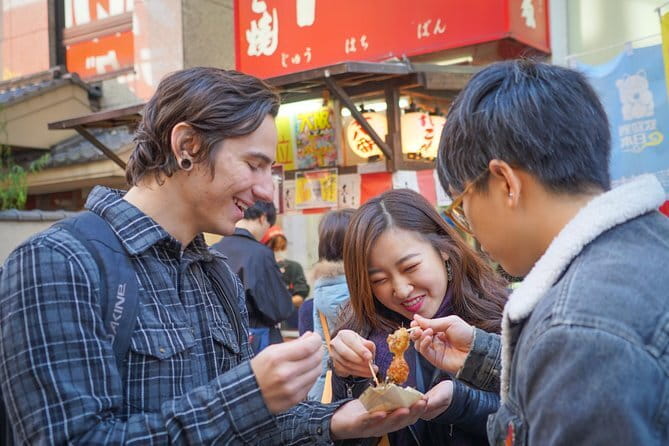
You start with Tsutenkaku Tower, an Osaka landmark that first appeared in the early 1900s and was later reconstructed. Even if you don’t care much about towers, it works as a useful warm-up: it’s a clear reference point that helps you understand where you are before you get swept into the food streets.
This portion runs about 30 minutes, and the tower admission is not included. That means you can decide on the spot whether you want the view or you’d rather use that time for more eating and street-level soaking-in.
What’s good here is the setup. Once you’ve got the landmark in your mind, the rest of the route becomes easier to follow. It also sets the tone, because Tsutenkaku sits right in the Shinsekai orbit, where retro neon energy meets older local eating habits.
Stop 2: Shinsekai for kushikatsu and the old-school neon mood
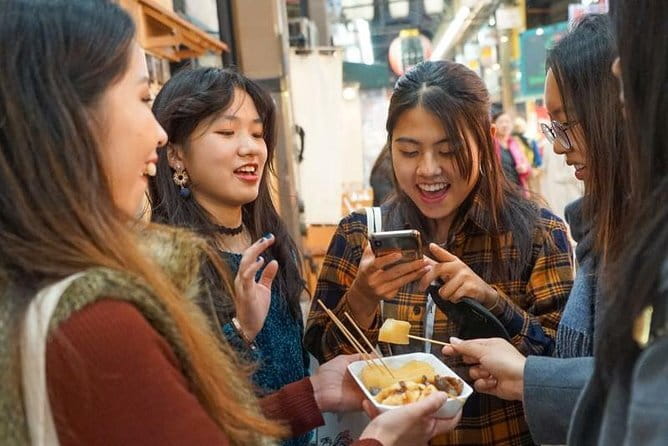
Next comes Shinsekai, which is famous for its retro vibe and the dense concentration of casual eateries. This is where the tour really leans into classic Osaka food culture.
You’ll spend about 1 hour 30 minutes here, with Shinsekai tied to the included tasting stops. This is also where you’re likely to run into kushikatsu, deep-fried skewers that are a major Osaka comfort food. It’s the kind of dish you often hear about, but it’s much easier to enjoy when someone shows you what to order and how to pace the bites.
This is one of the most praised parts of the experience in the overall tour feedback, and I agree with the logic. Shinsekai isn’t just a photo spot. It’s where the food feels lived-in. You’ll be moving through lanes and storefronts that make sense together, so your tasting choices feel cohesive, not random.
Stop 3: Takashimaya depachika, where basements become dinner
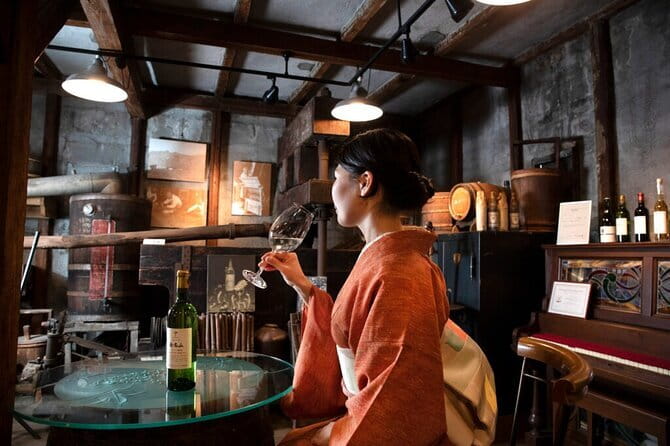
Then you hit Takashimaya Osaka Store and its depachika food basement. If you’ve never experienced a Japanese department-store food hall, this is the real cheat code. Depachika spaces often collect high-quality items that are easier to sample than trying to chase individual shops on your own.
This stop is about 15 minutes, and admission isn’t included. But that’s not a negative here. It usually means you’re there to eat and move, not to spend time paying for something separate. You can think of it as a tasting shortcut through multiple flavors in one controlled location.
The tour’s food examples include croquettes from a historic butcher shop, and that fits the depachika vibe perfectly. Expect more refined bites alongside the heavier street-food style foods you’ll get later.
Stop 4: Hozenji Yokocho, a narrow alley that feels like a time warp
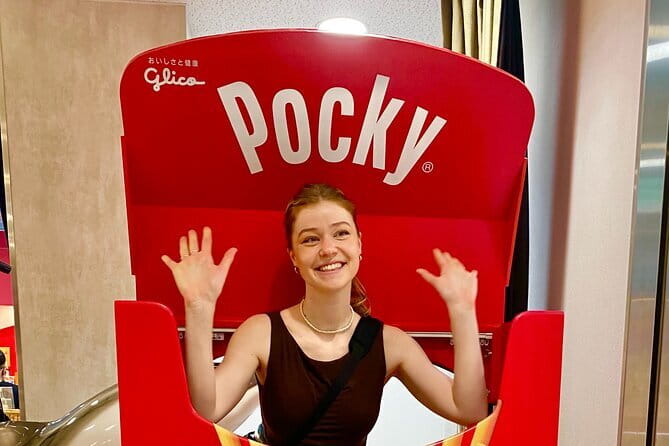
After the department-store basement stop, you walk to Hozenji Yokocho, a narrow alley near Hozenji Temple. It’s the kind of place where you slow down without being told to. The alley layout naturally limits your speed, and the result is a more atmospheric food moment.
This segment is about 10 minutes, and it’s listed with admission included for that stop. Even without overthinking it, it’s a smart change of pace. You go from neon and dense streets to something more focused and old-style in feel.
What I like about this stop in particular is variety. It breaks up the heavier, fried foods you might get earlier. It also gives you a visual reset before you head into the brighter Dotonbori lights.
Stop 5: Dotonbori, street energy with a final flavor push
Finally, you end around the Dotonbori District, the canal area known for neon lights and big food energy. Your time here is about 30 minutes, and it includes tasting-related stops.
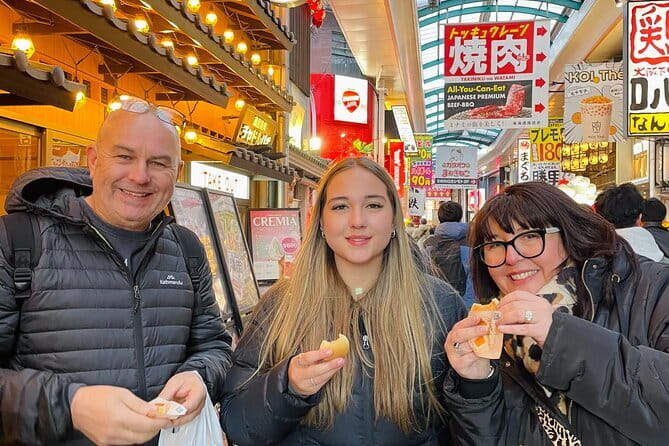
This is the home base for Osaka street food culture. You might see or taste takoyaki, Osaka’s famous octopus balls, and the tour notes an example of takoyaki from Osaka’s oldest takoyaki shop. Even if your exact item selection changes, it’s the kind of dish that makes Dotonbori feel like Dotonbori.
This final stretch also matters for pacing. You’re near the end of the tour, so the guide can keep the tastings aligned to what’s next: finish with comfort, finish with something you’ll remember, and then walk away with a stronger sense of where everything is.
How the guide actually helps you, beyond just pointing at menus
The best food tours don’t just feed you. They remove friction. That’s what this one aims to do with two big support systems: ordering help and transit guidance.
Your guide teaches you how to use public transportation in Osaka, and you get a walking route that keeps transfers short and logical. There’s also a listed transit cost you might pay: a subway fee from the Shinsekai area to Namba (¥190 per person) is listed as not included. So don’t assume you’ll pay zero extra, but do assume the guide will make the movement part simple.
On top of that, the tour is designed for food variety. Your included drink choice means you get a pause between stops, not just a string of bites. And the guide can help with ordering and choosing, which is a big deal when menus are only in Japanese.
Drinks, timing, and how to eat like you mean it
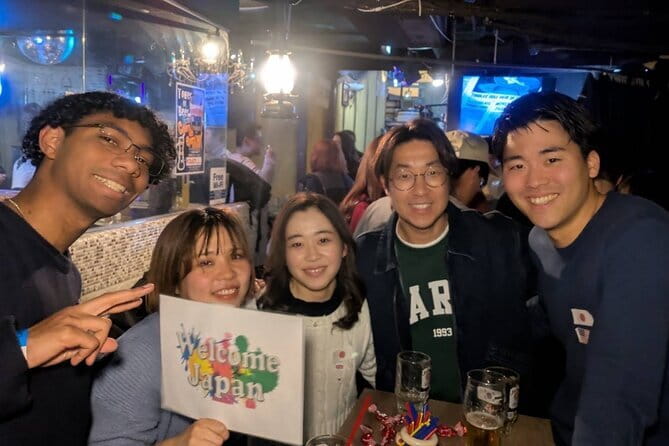
This tour includes one drink choice, either alcoholic or non-alcoholic. That’s a small detail that changes how the whole meal feels. Between tastings, you get a reset that can keep flavors from blending into one long blur.
Also, because the tour is offered at lunch or dinner time, you don’t have to force yourself to eat early. I’d treat this like your main planned meal. If you snack too hard before the start, you’ll feel stuffed before the best variety hits.
If you want to get the most out of it, arrive hungry but not starving. That’s the sweet spot where you can taste multiple textures, from fried skewers to softer buns, without losing interest.
Food you can expect, and what to do about allergies
The tour’s example foods include:
- Kushikatsu (deep-fried skewers) from the Shinsekai area
- Takoyaki (octopus balls) from an older, notable takoyaki shop
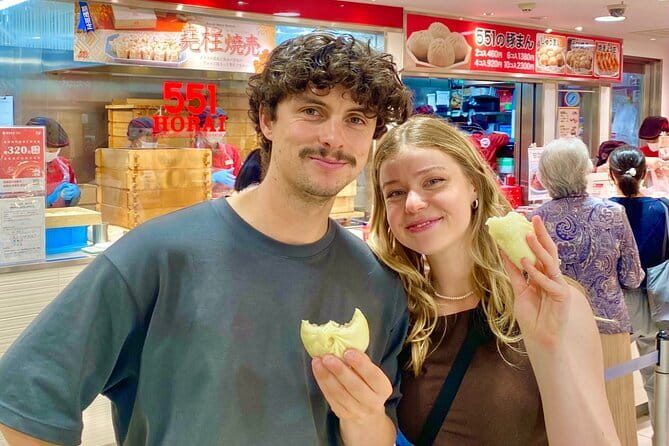
- Butaman (steamed meat buns) loved locally
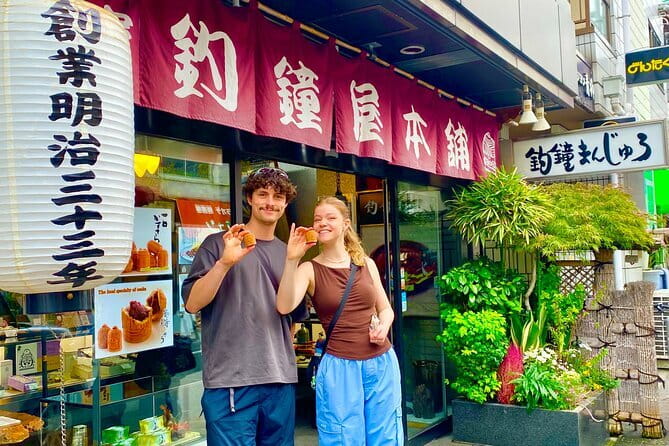
- Wagashi (Japanese sweets) from a 200-year-old wagashi store
- Croquettes from a historic butcher shop
Important detail: the selection can vary by preferences and day-to-day shop availability. That’s normal for walking food tours, and it’s also why the guide’s role matters, because your meal is shaped in real time.
If you have allergies or avoid certain ingredients, the tour provider specifically warns that meals may include meat, seafood, wheat, and dairy. The most practical move is contacting the provider ahead of time. Don’t rely on guessing in the moment if something is sensitive for you.
Is it mostly walking, and how hard is it?
You should plan for a moderate physical fitness level. The stops are spread across a few key areas, and the time blocks suggest a steady walk with short breaks. Reviews also point to the fact that the venues are close enough to each other that it doesn’t turn into nonstop hiking.
Still, Osaka walking adds up fast, especially in busy districts. Bring shoes that don’t punish your feet, and keep water in mind even though snacks beyond the included foods aren’t part of the deal.
What makes the experience feel special in real life
The standout praise in this tour comes from a few repeat themes that make a difference once you’re actually on the street.
First: the guides’ personality. People mention humor, clear English, and a guide who feels like a real host instead of a script reader. If you like chatting about food, you’ll likely enjoy how the route is explained and how questions fit naturally into the tastings.
Second: off-the-main-street choices. This tour is designed to skip tourist-trap style eating. You still see iconic Osaka areas like Tsutenkaku and Dotonbori, but the route is built to get you into the lanes and food spots that locals use more often.
Third: personalization. The tour is set up to consider what you like or don’t like. That’s a huge quality boost when you’re tasting multiple items, because you don’t want a forced menu that ignores your food preferences.
If you value variety and want a guide to handle decisions for you, this is one of the better-value formats for Osaka.
Who should book this Osaka Food Adventure Tour
This tour fits best if you:
- Want multiple tastings in a single 3-hour block
- Are visiting Osaka and want a guided path through Shinsekai and Dotonbori
- Like learning how to use public transportation instead of only relying on taxis
- Prefer a small group experience, not a huge line of people following a flag
It’s also a good fit for first-time visitors who don’t want to overspend time trying to decode menus or figure out where to go next.
If you’re a solo eater who hates planning, you’ll still likely enjoy the social side, because the group is capped at 8 and the pacing is built for conversation and questions.
Should you book it
I think this is a strong choice if you want an easy way to taste a wide range of Osaka foods and understand the city layout at the same time. The value is backed by the included format: 6-10 dishes, one drink, a small group, and guide support for both food and transit.
Also, this is rated 4.9 out of 5 with 119 reviews, and 98% recommend it, which usually signals consistent guide quality and a route that delivers on the promises.
Book it if you’re excited to eat and you’re okay with the fact that selections can vary. Skip it if you have complicated dietary needs and haven’t confirmed accommodations in advance, because the tour explicitly notes common ingredients like wheat and dairy may be involved.
If you want Osaka to feel doable, fun, and delicious without extra guesswork, this food walk with Cooking Sun is an excellent move.
FAQ
How many dishes do I try on this Osaka food tour?
You’ll try 6-10 local foods as part of the tour.
How long is the tour?
The tour lasts about 3 hours.
Is a drink included?
Yes. Your package includes one drink choice, either alcoholic or non-alcoholic.
How big is the group?
The tour has a maximum of 8 travelers.
Where do I meet the guide and where does the tour end?
You start at Ebisucho Station near 5 Chome-13 Nipponbashi, Naniwa Ward, Osaka. The tour ends at the Glico Sign in Dotonbori, at the bridge in front of the sign.
Are admission tickets included for all stops?
Not all admissions are included. For example, Tsutenkaku Tower admission is listed as not included. Other stops have different included or not included admissions as listed.
What extra costs might I pay during the tour?
A subway fee from Shinsekai to Namba (¥190 per person) is listed as not included.
What if I have food allergies or dietary restrictions?
Meals may include meat, seafood, wheat, and dairy. If you have restrictions, contact the tour provider in advance to discuss options.
What if the weather is bad?
The experience requires good weather. If it’s canceled due to poor weather, you’ll be offered a different date or a full refund.
Can I cancel and get a full refund?
Yes. You can cancel for a full refund if you cancel at least 24 hours before the experience start time.
Latest write-ups near Osaka
- PRIVATE 6hr, Food tour from Osaka Castle, Kuromon, Dotonbori.★ 5.0 · 68 reviews
- 90 min Shared Handmade Udon Experience★ 5.0 · 70 reviews
- Ramen and Gyoza Cooking Class in Osaka Dotonbori★ 5.0 · 73 reviews
- Osaka: Sushi Making in Spacious Studio (SAME-DAY OK!)★ 5.0 · 75 reviews
- Osaka E-Bike Tour With A Local Guide★ 4.7 · 75 reviews
- 1.5〜2 Hours Traditional Kintsugi Work Shop in Namba Osaka★ 5.0 · 75 reviews
- Retro Osaka Street Food Tour: Shinsekai★ 4.5 · 77 reviews
- Osaka: Osaka Castle Guided Tour with Local Guide★ 4.7 · 78 reviews
Walking Tours, compared.
Kyoto Geisha Walking Tour: Gion District & Hidden Gems
Read our review →
Tokyo Tsukiji Fish Market Food and Culture Walking Tour
Read our review →
Gion Magical Night Walking Tour with Geisha Trivia
Read our review →
Imperial Palace and Shogun Historical Walking Tour
Read our review →
Gion Geisha District Walking Tour – Stories of Geisha
Read our review →
Shinjuku Local Bar and Izakaya Guided Walking Tour
Read our review →
Browse the lists this tour appears in