
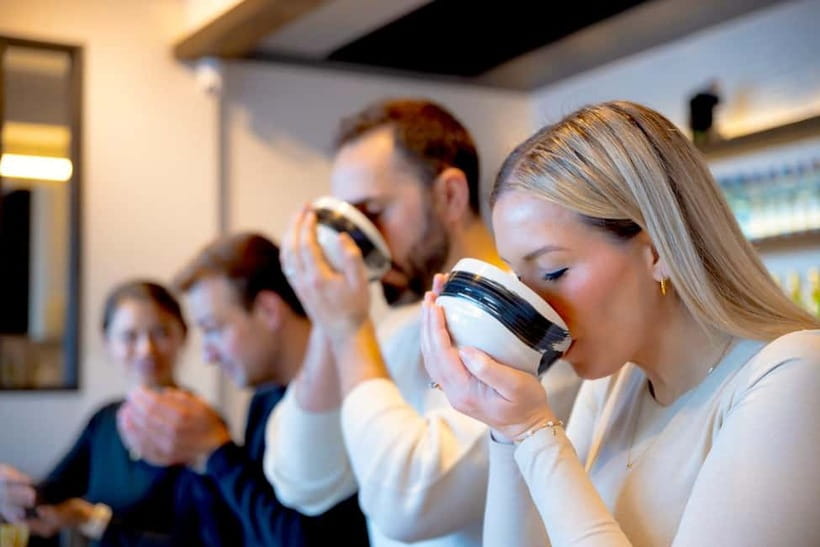
Reviewed · TEA CEREMONIES
Osaka: Matcha Making Experience with Japanese Sweets
A matcha-making class in central Osaka is interesting because it turns an everyday drink into a hands-on mini experience with context. You make your own matcha with traditional tools, then sit down to taste it alongside Japanese sweets, all in a small group near Dotonbori and Shinsaibashi.
What I like most is how the session stays friendly and interactive. The history part is taught through a light quiz, and instructors like Serin Sensei, Reika Sensei, Fujiko, and Yui keep the pace lively while giving clear English explanations.
One thing to keep in mind: it is only 1 hour, and there is no hotel pickup. You will meet at the 3rd floor of the Galleria Acca Building, so be ready to locate the place yourself if you are coming from elsewhere in Osaka.
Key highlights worth planning for
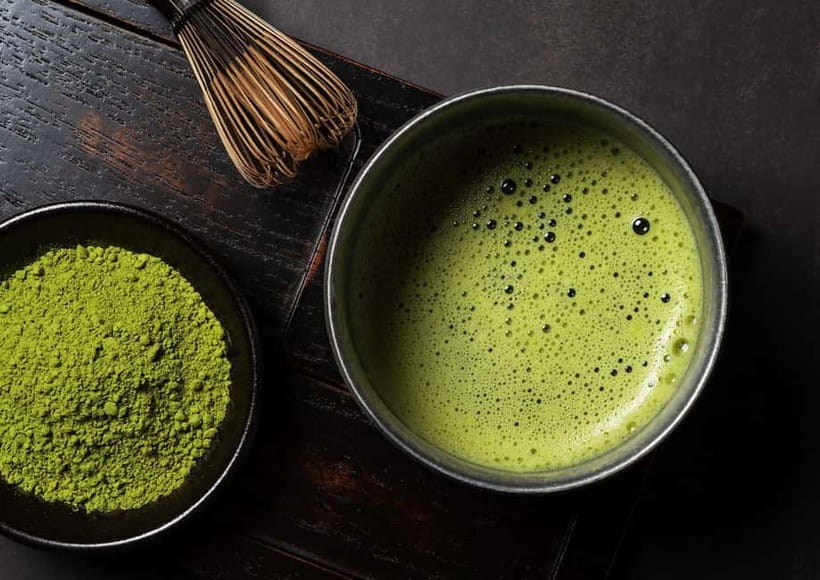
- Interactive matcha history quiz that makes the background easy to remember
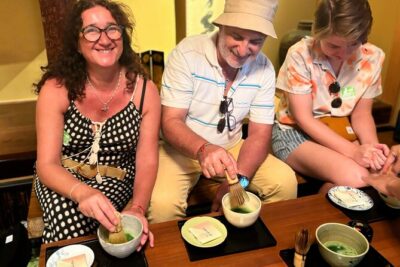
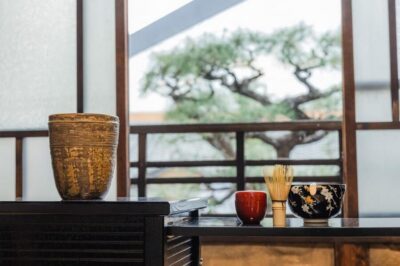
- Hands-on whisking using traditional tools under instructor guidance
- Eat Japanese sweets right after tasting your matcha, not just watch it happen
- Small group size (max 6) for more time with the English-speaking staff
- Central Osaka location with easy access from Shinsaibashi Station (about a 5-minute walk)
- Optional chawan bowl shopping if you want to take something practical home (some participants mentioned buying one)
Matcha making in central Osaka, close to Shinsaibashi
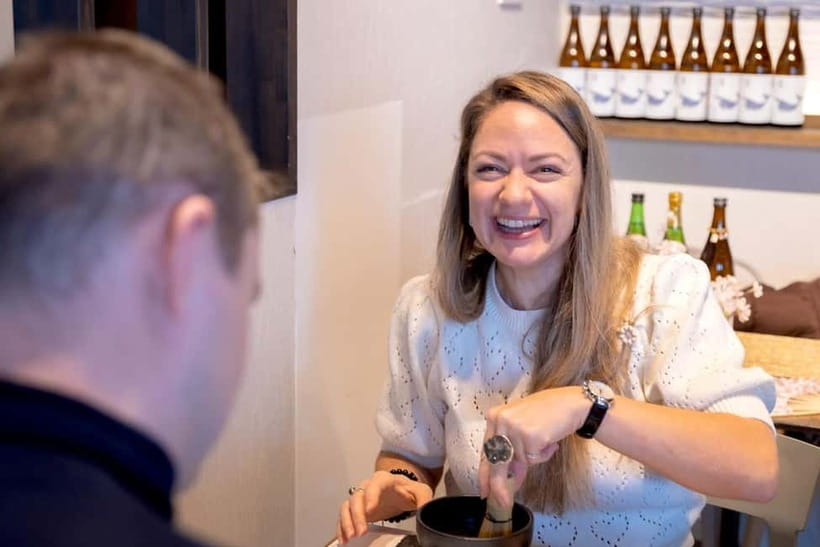
This class is set up for people who want something more personal than a food walk, but not so formal that it feels intimidating. You go to a calm setting in the middle of Osaka, and for an hour you focus on matcha, tools, and taste. That “sit down and do it” rhythm is exactly why this works well for first-timers.
The location also matters. Being near Shinsaibashi means you can slot this in without losing an entire half day to transport. After the class, you are already in the zone where you can snack and wander. I like experiences like this where the start point is practical, and the payoff is immediate: you make the drink, you taste the drink, you eat something that pairs with it.
More Tea Ceremonies in Osaka
- Osaka: Tea Ceremony Experience
★ 4.9 · 1,426 reviews - Tea Ceremony Experience in Osaka Doutonbori
★ 5.0 · 754 reviews - Matcha Making Class in Osaka with Authentic Japanese Sweets Set
★ 5.0 · 509 reviews
What you do in the 1-hour class (and why it feels efficient)
You are in for about one hour total, so the structure is tight. The best part is that you do not just get a lecture. You get a quick framework, then you act on it.
1) Welcome and matcha history, taught through a quiz
The session begins with an easygoing introduction to matcha. Instead of long, lecture-style explanations, you learn through an interactive quiz. That keeps the facts from turning into noise, especially if your Japanese is limited. A few names came up in reviews, including Serin Sensei and Reika Sensei, and people consistently called out how engaging and fun the instructors made it.
What this means for you: you will leave with more than “matcha is green tea powder.” You will understand where it fits in Japanese tea culture and why the drink is treated with care.
A quick caution: because the time is short, the quiz is meant to cover highlights, not every detail. If you want a deep academic history course, this might feel like it moves fast. For most visitors, that speed is actually the charm.
2) Whisking your own matcha with traditional tools
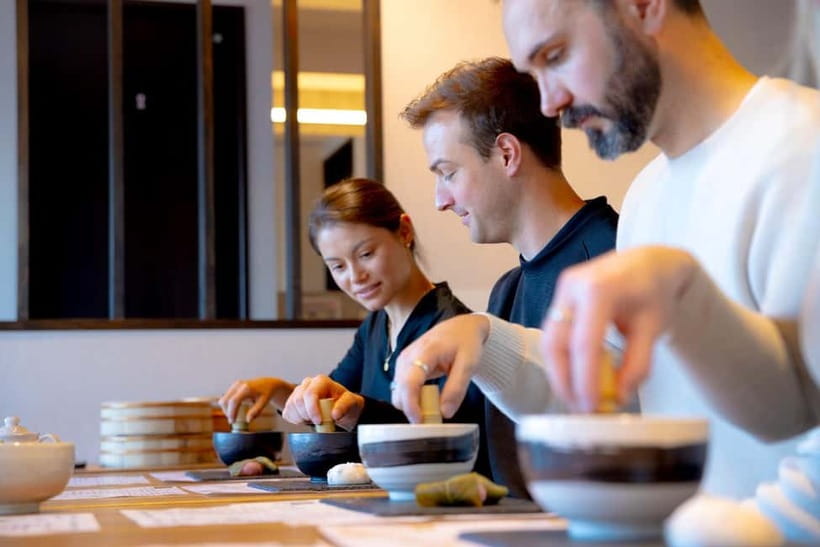
Next comes the hands-on part. You whisk your matcha using tools associated with traditional preparation, guided step by step by the instructor. Reviews mention instructors teaching the process in a way that helps you get a smoother texture, and people appreciated patience during the first attempts.
One practical bonus that came through clearly: the setup is designed so you do not have to kneel on the floor. A participant specifically noted that the table is made so you can stay comfortable while still keeping a traditional feel. That matters more than you might expect, because matcha whisking takes a steady hand and a stable posture.
A change of pace from Osaka:
- Osaka Go Karting Tour with Funny Costume
★ 5.0 · 2,658 reviews - Osaka Castle: Museum and Tower Entry Ticket
★ 4.5 · 2,380 reviews - Osaka: Shinsekai Food Tour with 13-15 Dishes at 5 Eateries
★ 4.8 · 2,204 reviews - Osaka Food Tour: 13 Dishes at 5 Local Eateries
★ 5.0 · 2,149 reviews
3) Taste your matcha, then eat Japanese sweets
Then you sit down to drink your matcha and eat Japanese sweets provided with the class. The pairing is part of what makes the experience feel complete. Several reviews said the sweets were delicious and complemented the tea, and that the second half is a proper tasting moment rather than a quick afterthought.
What this means for you: you get a real sense of balance. Matcha can feel earthy and intense at first. The sweetness and texture of the sweets help you learn how the drink actually behaves on the palate.
Some people also said they could have sat a bit longer with the tea, which is a valid consideration for slow sippers. But given the 1-hour format, it is still a solid payoff.
English-speaking instructors, with personalities you can feel
A class lives or dies on the instructor. Here, the English support is a big deal, because it turns the experience from “watch and hope” into “ask and understand.”
A lot of instructors were mentioned in reviews, including:
- Fujiko, described as funny and great with English
- Takara, praised for being patient and calm
- Shota and Matty, noted for clear teaching and making it natural
- Marti and Harita, mentioned for friendliness and helpful tips
- Yui, highlighted for interactive explanations and question answering
Why this matters for your trip: even if you already like matcha, you will likely have questions about technique, foam texture, and taste differences. A good instructor makes those questions feel normal, not awkward.
Also, several reviews said the vibe is calm, away from street crowds. You get a break from Osaka’s energy without going far.
Price and value: what $22 covers in a small group
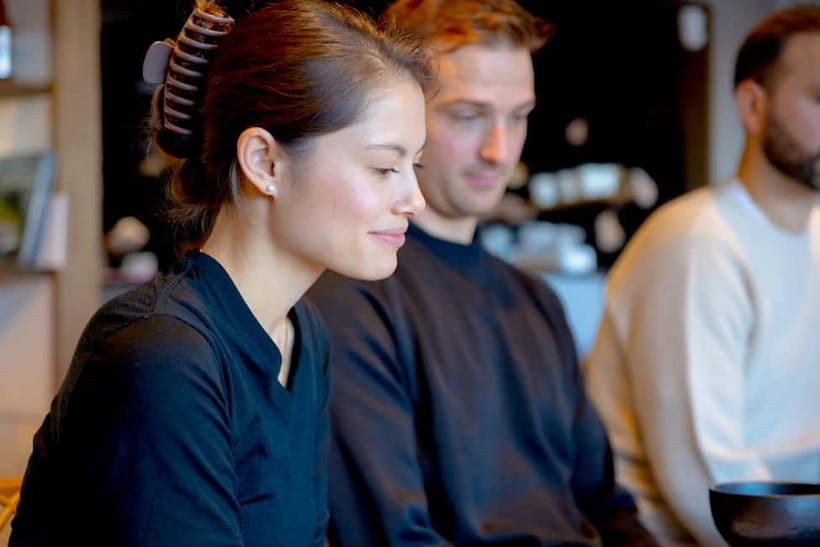
The price is listed at $22 per person for a 1-hour experience. It includes the cooking class itself, ingredients, and the instructor. Hotel pickup and drop-off are not included.
Here is how I think about value in a case like this:
- You are not just tasting. You are making matcha yourself.
- You are getting guidance on technique, not only a demonstration.
- You get tea plus Japanese sweets as part of the sitting/tasting time.
- The group is small, capped at 6 participants, which usually means more attention from the instructor.
If you compare that to DIY matcha experiences, the main cost you would face on your own is buying tools, ingredients, and then figuring out technique by trial and error. This class compresses that learning into one hour with an English guide.
One practical note: if you are hoping to buy a chawan bowl, some participants mentioned purchasing one, but buying anything is not stated as included. If you see a bowl you love, treat it as an optional souvenir.
Where to meet, and how to avoid wasting time
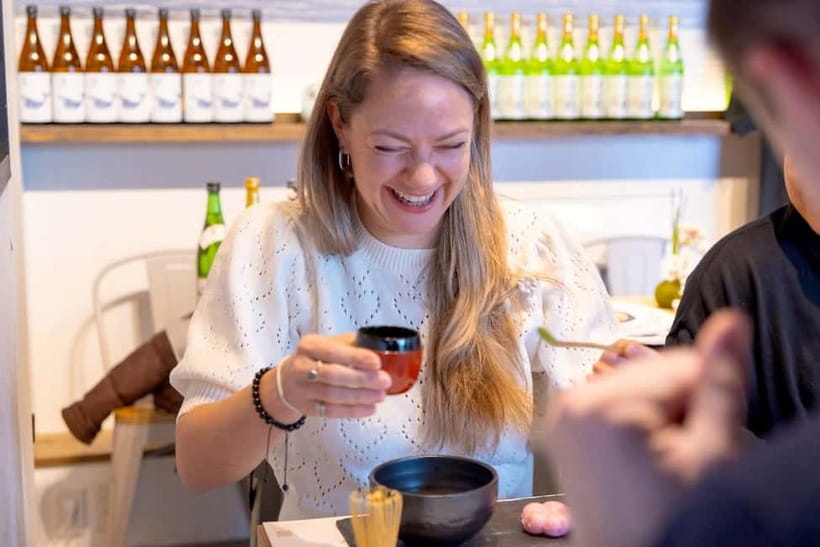
You meet at:
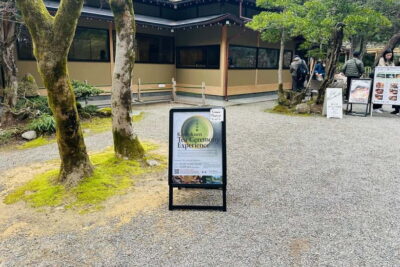
- 3rd floor, Galleria Acca Building
- About a 5-minute walk from Shinsaibashi Station
- Coordinates: 34.6723159, 135.5024459
Because there is no hotel pickup, your arrival timing matters. I suggest building in a few extra minutes. Reviews specifically mention the location can be a bit tricky, with instructions like go up the stairs, and that it is easy once you find the building.
Tip: plug the coordinates into your map app so you are not hunting by street name. Osaka is easy to explore, but indoors meeting points can be like that, quick to find once you know where to look.
Who this experience suits best
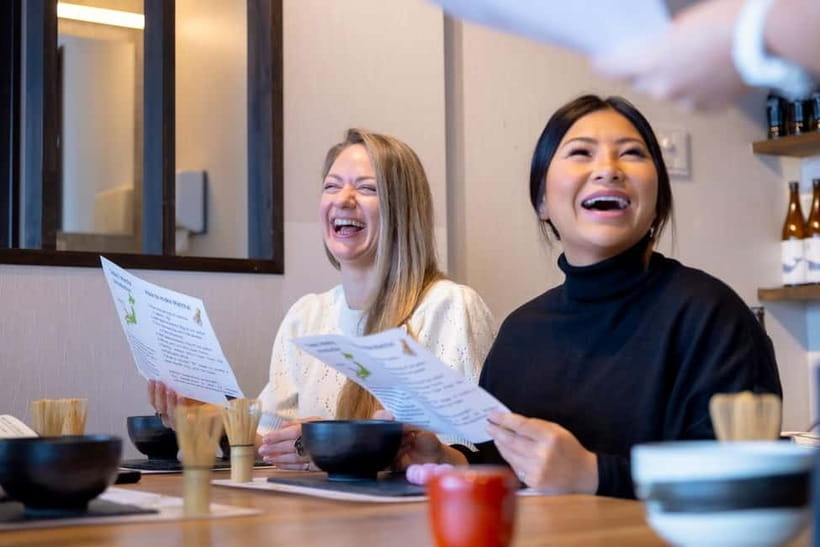
This is a great fit if you:
- Want a short activity that still feels cultural and hands-on
- Are comfortable trying matcha for the first time, or want to improve your technique
- Like small group settings where you can ask questions in English
- Are already planning to spend time around Dotonbori and Shinsaibashi and want a focused break
It also works for families. One review mentioned a parent bringing a 9-month baby. That said, policies can vary day to day, so if you are traveling with a child, it is smart to check directly what the space and seating setup allow for on your specific date.
What to bring, and how to get the most out of it
Based on how the class is described, you do not need special equipment from your side. You are provided ingredients, and you follow the instructor’s steps.
Still, you can maximize the experience by doing two simple things:
- Come hungry enough for sweets, but not so full that you cannot taste the matcha properly.
- Be ready to ask questions about whisking and tasting, even if your English comfort level is basic. The staff are there to guide you.
If you are a matcha lover, you will enjoy the technique focus. If you are new to matcha, the quiz-based history and the tasting with sweets helps you avoid feeling lost.
Practical timing: pair it with Osaka food without stress
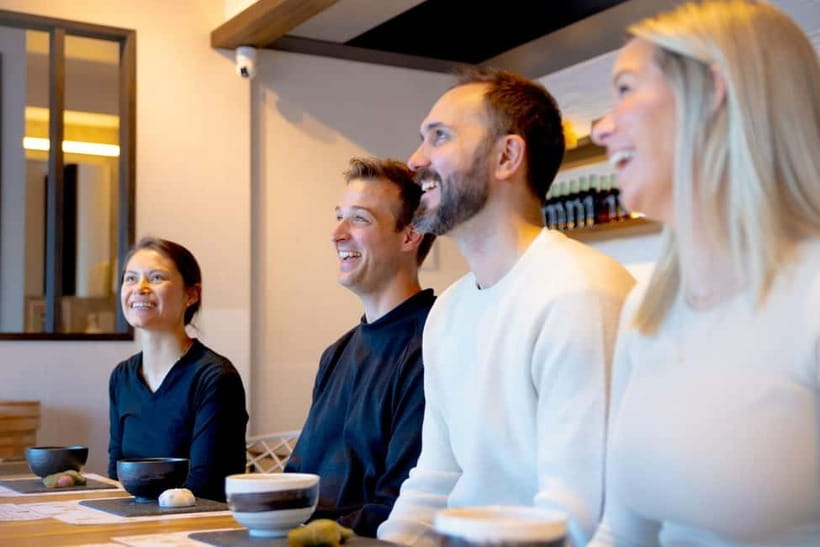
Because it lasts one hour and starts at checkable times, you can attach it to your day like a chapter, not a detour. I like booking this earlier in the day if your goal is to explore Dotonbori and Shinsaibashi afterward with a calmer head.
You also get a useful effect that is not just cultural. After tasting and learning, matcha becomes something you can recognize in shops. You start noticing the differences in how matcha is served and what “good matcha” tastes like when it is prepared properly.
Should you book Osaka Matcha Making?
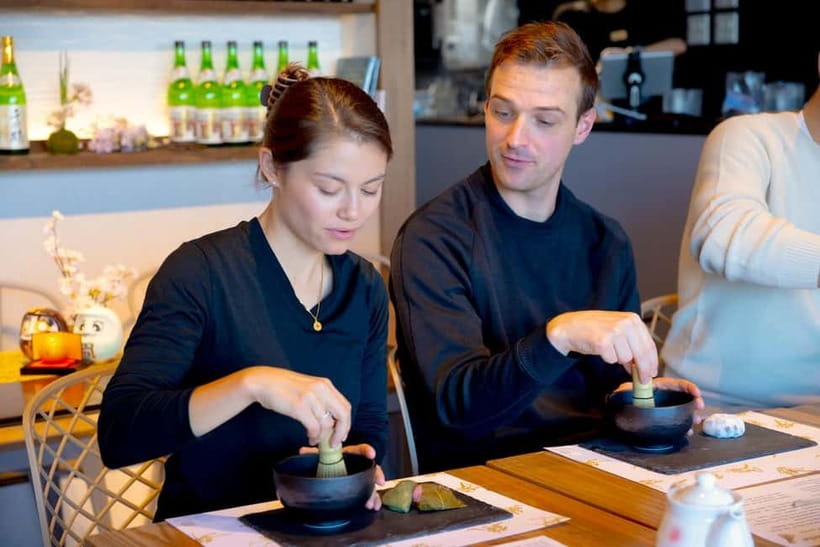
Book it if you want a high-quality, small group, English-friendly matcha class that actually gets you to whisk and taste, not just watch. At $22 with ingredients and an instructor included, it is a strong deal for a structured one-hour activity in central Osaka. The biggest selling points are the interactive quiz, the hands-on whisking, and the fact that you sit down to drink and eat sweets right after.
Skip it or consider something else if you are looking for a longer tea ceremony style experience, or if you really need hotel pickup and drop-off. Also, if you dislike indoor meeting points, you might want to double-check the 3rd-floor location before you go.
If you are spending time around Shinsaibashi anyway, this is the kind of class that makes your Osaka trip feel more specific, not just louder.
Latest write-ups near Osaka
- PRIVATE 6hr, Food tour from Osaka Castle, Kuromon, Dotonbori.★ 5.0 · 68 reviews
- 90 min Shared Handmade Udon Experience★ 5.0 · 70 reviews
- Ramen and Gyoza Cooking Class in Osaka Dotonbori★ 5.0 · 73 reviews
- Osaka: Sushi Making in Spacious Studio (SAME-DAY OK!)★ 5.0 · 75 reviews
- Osaka E-Bike Tour With A Local Guide★ 4.7 · 75 reviews
- 1.5〜2 Hours Traditional Kintsugi Work Shop in Namba Osaka★ 5.0 · 75 reviews
- Retro Osaka Street Food Tour: Shinsekai★ 4.5 · 77 reviews
- Osaka: Osaka Castle Guided Tour with Local Guide★ 4.7 · 78 reviews
Tea Ceremonies, compared.
Tea Ceremony in a Traditional Tea House in Kiyomizu
Read our review →
World Heritage Kyoto & Nara Uji Authentic Matcha Experience
Read our review →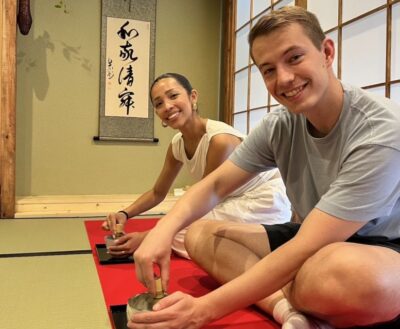
Browse the lists this tour appears in