
Reviewed · SAMURAI & NINJA EXPERIENCES
Samurai Armor & Sword experience with phot near Osaka Castle
If you want something more real than a museum display, this is one of the better ways to do it near Osaka Castle. You get to put on samurai armor and learn the “why” behind sword culture, not just pose for pictures. I especially like the hands-on pacing, from bowing rules in the dojo to practicing sword gestures, and then moving into real cutting. One thing to consider: you need to arrive early to change, and it is not a sit-down show, so it is better suited to people comfortable with light physical activity.
Two more reasons I think this is worth your time. First, the training has a structure tied to Bushidō manners, including how samurai carried their swords and how the session starts and ends. Second, the experience ends with both armor try-on and a photo moment, so you leave with memories that feel earned. The downside to plan around is that your booking can sometimes get disrupted if schedules tighten, so keep an eye on your confirmation messages.
Samurai Honor: the appeal of being a samurai by Osaka Castle
This Samurai Armor & Sword experience takes place at Bushi no Homare (Samurai Honor), in Osaka, close enough to pair easily with a visit to Osaka Castle. The pitch is simple: you change into samurai clothing, learn sword etiquette, practice basic iai movements, and then try cutting with a real samurai sword. You will also get time in armor and a commemorative photo.
You are paying for access to training that most visitors never get. Samurai armor and swords are usually seen behind glass, or framed as performance only. Here, you get instruction and physical feedback, plus an English-speaking staff to keep everything clear.
It runs about 90 minutes and it is a private group format. That matters because you can ask questions, and the instructor can correct your form without rushing you.
Key things to know before you go
- You start in costume: dogi and hakama, then you move through a dojo-style session with bowing rituals.
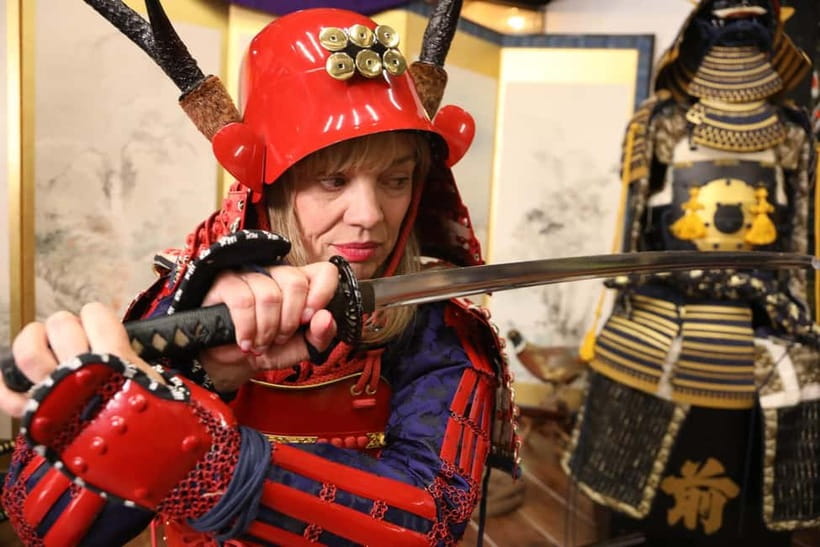
- You practice iai steps: including Battou (draw to cut), Chiburui (symbolic blood removal), and Nottou (return to sheath).
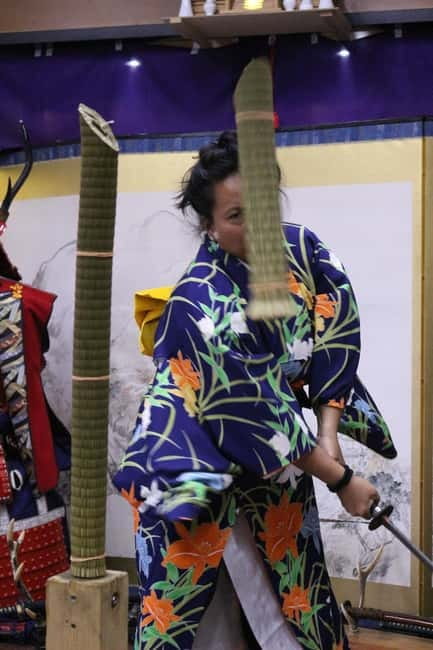
- You try cutting with a real samurai sword as the peak hands-on moment.
- Sword manners are part of the training: how samurai carried and handled swords in daily life.
- Armor try-on and photo are built in, so you finish with a clear souvenir.
- Bring a T-shirt and plan to arrive 30 minutes early for changing and instruction.
More Castle Tours in Osaka
- Osaka Castle: Museum and Tower Entry Ticket
★ 4.5 · 2,380 reviews - Ultimate Osaka Walking Tour: Castle, Dotonbori & Hidden Gems
★ 5.0 · 862 reviews - Osaka Castle Walking Tour and Castle Tower Admission
★ 5.0 · 561 reviews
Finding Samurai Honor, and meeting at the right landmark
The venue is listed as Excellence Takayama 1F, 2-3-19 Shiginonishi, Joto-ku, Osaka-shi, Osaka 536-0014. The meeting point is easy once you know the cue: look for the wooden sign that reads Honor of the Samurai.
The landmark is described as a rack in front of the store with pamphlets for the Samurai Honor activity. There may also be kimonos and hakama hanging up in the area, which helps you spot the right spot fast.
One practical heads-up: the address shown on Apple Maps may be incorrect. Use the Google Maps listing for accurate directions.
Timing matters here because you need time to change. You are asked to arrive 30 minutes before your reserved start time for instructions and getting into your costume.
Wearing samurai clothing before you touch a sword
Your session begins with preparation, and this is not just for show. You change into samurai clothing, specifically a dogi and hakama, and then you move into the role of a samurai.
That matters because the training is about more than sword mechanics. The instructor is teaching manners and responsibility, too. When you are dressed for it, you tend to take the movements seriously, and you listen better.
If you want to feel comfortable, keep your outfit choice simple. You only need to bring a T-shirt, and then the staff handles the rest.
The bow, the shrine, and dojo rules that set the tone
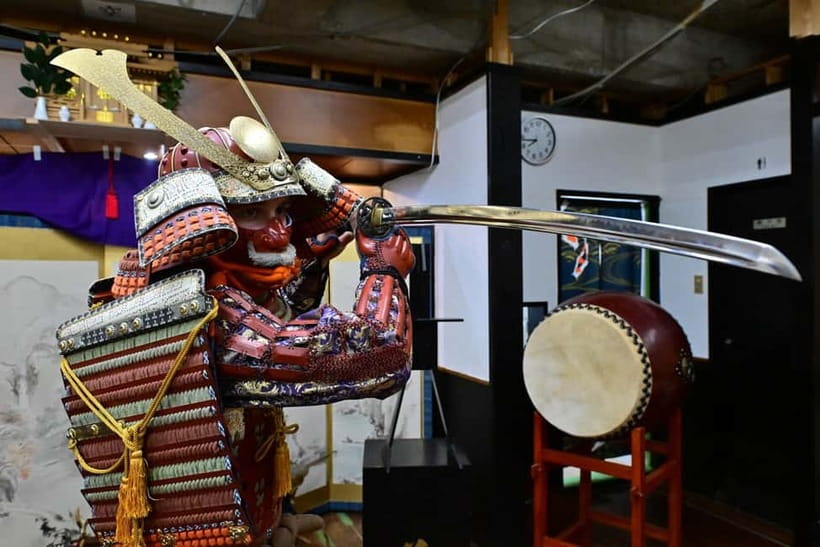
After changing, you begin with a bow. The dojo setup includes a shrine enshrined there, and training begins and ends with bowing before that shrine.
This is one of those details that sounds ceremonial, until you realize it shapes your attention. You are learning sword techniques that require focus and discipline, so the routine helps you stay present instead of rushing through steps like a class you can half-watch.
The session’s structure also makes it easier for first-timers. You are not dropped into complicated moves right away. You are guided through a progression.
More Samurai & Ninja Experiences in Osaka
- Samurai Training Experience KENDO in Osaka
★ 5.0 · 515 reviews - OSAKA NIGHT FUSION Japanese Taiko Kabuki Samurai Dance Show
★ 4.8 · 155 reviews - Osaka: Samurai Training Experience KENDO in Osaka
★ 5.0 · 111 reviews - Honor – Experience Samurai & traditional Culture to the fullest
★ 5.0 · 32 reviews
Samurai sword manners: responsibility before technique
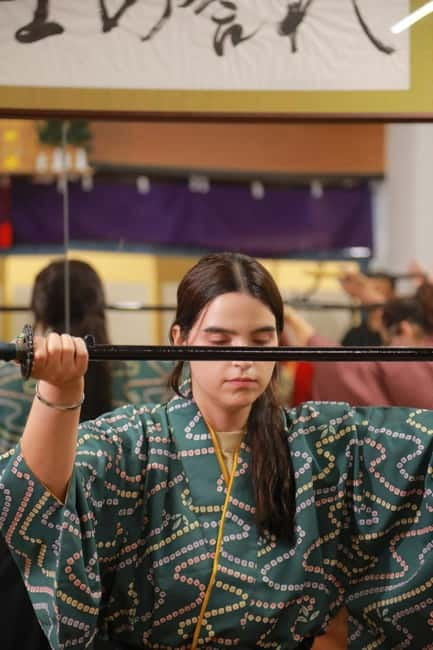
A big part of what you learn is the cultural side of the sword. The experience explains how samurai were taught early, first with wooden swords, and how they were allowed to wear a serious sword at age 15. The key idea is not bravery for its own sake. It is self-respect and responsibility when carrying a deadly weapon in public.
You also learn about the relationship between samurai and their swords in daily life. Even in peaceful times, the sword was kept close for protection. The description includes the idea that swords were not simply stored away, even during family meals or sleeping.
That might sound intense, but it helps explain the discipline behind the physical practice later. When a sword is treated as always ready, the way you wear it and handle it becomes part of the code, not random habit.
How samurai walked with the sword belt, and why it matters
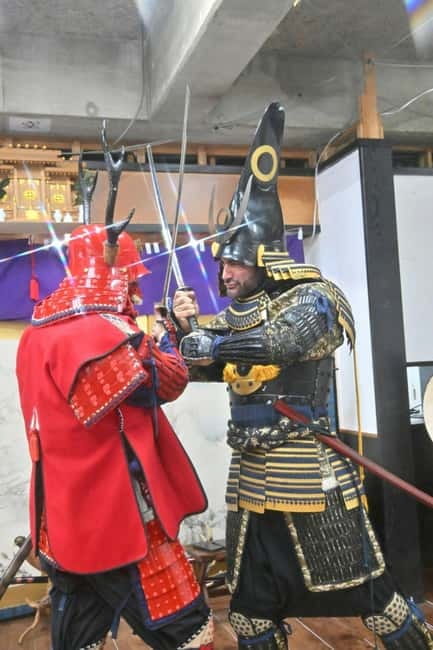
Next comes a practical movement lesson: walking with a sword belt and practicing the gestures of walking. You learn how the sword is inserted into the waist belt with the blade side facing up.
Then you practice how to move while protecting the sheath and readiness. The experience notes that samurai walked on the left side of the road so the sheaths did not come into contact with each other. It also ties this to Bushidō, including keeping the koiguchi cut ready to draw at any time.
If you are wondering why this is included, here is the value. It connects technique to real life movement. You are not just learning how to swing a sword, you are learning how to carry and control one safely and deliberately.
Iai basics: from stance to draw, cut, symbolic blood removal, and sheath

Then you shift into iai practice using an iai practice sword. The sequence is clear and step-based, which helps if you do not know Japanese martial terms.
You practice swinging from a stance, then you cover these key actions:
- Battou: pulling the sword out of the scabbard to cut
- Chiburui: the symbolic process of removing blood from the blade after a cut
- Nottou: returning the sword to its sheath after the blood removal action
You also get guidance on swinging with proper intent. When swinging correctly, you may hear a hi-nari sound from the sword.
That tiny detail can be a big deal for your learning. It is basically feedback you can feel, like hearing your body click into the right mechanics. It also reminds you that the sword has weight and momentum, so arm strength is not the only factor.
Learning kata and stances directly from the instructor
After the basics, the training moves into more direct technique practice. You get instruction on basic kata and stances, plus sword swings.
The experience emphasizes how to swing down by using the sword’s weight instead of forcing the move with only your arms. That is an important teaching point for most first-time students. If you only rely on arms, your form gets tense fast, and the cut becomes messy.
This is also where the instructor’s role matters. The staff are English and Japanese, and you have a certified professional instructor. For you, that means you can correct form and timing rather than just copying a motion.
The moment of real cutting with a samurai sword
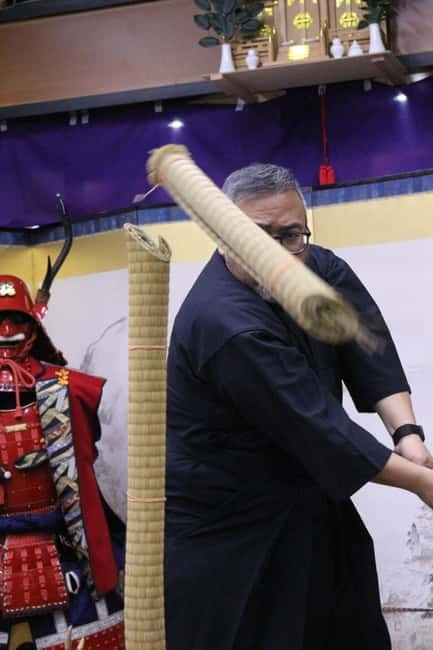
The peak experience is when you try your hand at sword cutting with a real Samurai Sword while wearing Bushidō mindset. This is presented as the highlight and the “world’s best cutting performance” part of the experience.
Even if you have seen sword performances before, there is a difference when you do it yourself under guidance. The instructor helps you time the draw, position your stance, and manage your swing so you get results without turning it into a wild swing.
You should mentally prepare for a controlled, high-focus moment. This is not a casual demo where you can chat while someone else performs. The value is in trying, failing a bit, and adjusting based on instruction.
Samurai armor try-on, helmet, and the look that changes your posture
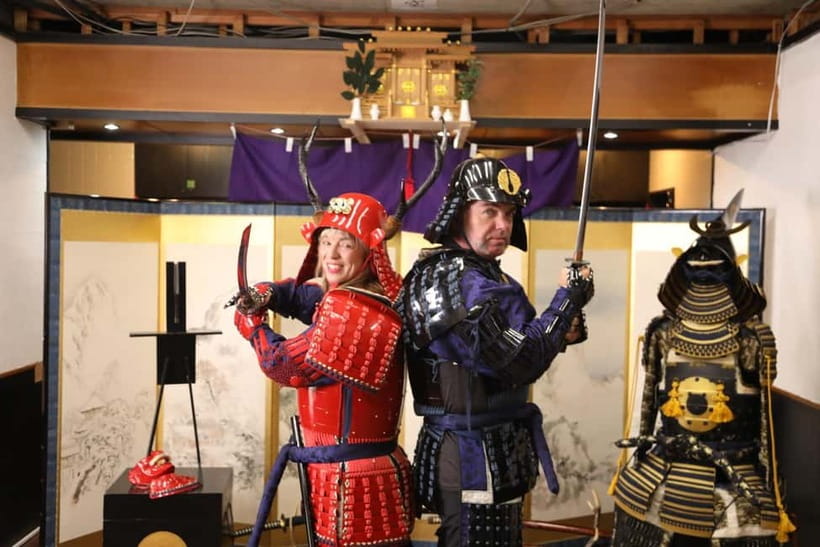
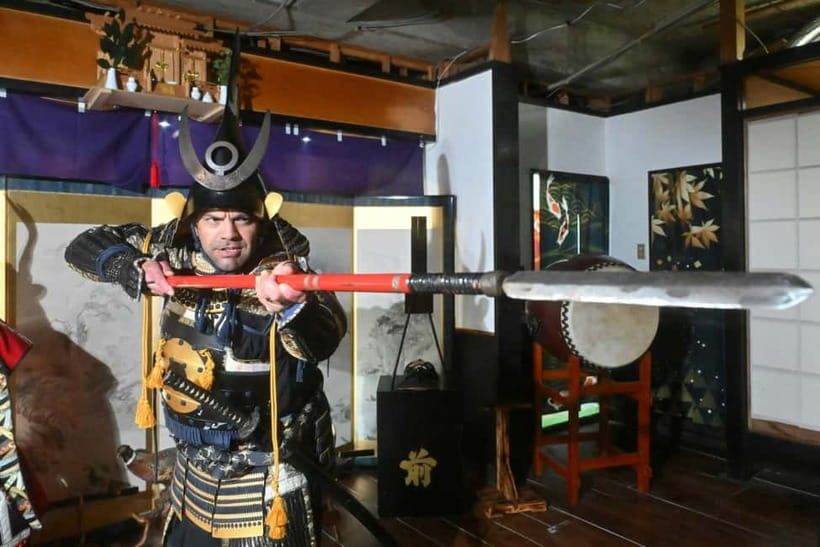
After technique practice, you move into the armor phase. You try on Samurai Armor and helmet, and it is described as armor being worn indoors.
Wearing armor does something subtle. It changes your posture and your sense of balance. Even if it is not full battlefield gear, it makes your body feel “different,” which can help you understand why samurai carried themselves with a formal bearing.
There is also a dignity angle. The explanation includes how armor and swords were drawn before going to war, as a way to show and inspire dignity and beauty. You experience that feeling more than you think you will.
Photographing your armor, and getting the digital files later
A photo is taken with the armor to commemorate the Samurai experience. The experience includes photo shooting, and then you receive the photo data by email at a designated address.
This is practical. You do not need to worry about taking perfect shots while also trying to learn movements. You can focus on doing the lesson right, and the staff handle the commemoration.
Price, what you really get for $106, and how to judge value
At $106 per person for about 90 minutes, you are not buying a shopping-ticket style attraction. You are paying for an instructor-guided, safety-conscious training session plus the included clothing, armor wear indoors, and a photo.
What makes it feel like value is the mix:
- You get a full sequence from costume to dojo etiquette to iai fundamentals.
- You practice with structured action names and step logic.
- You get at least one high-stakes highlight activity, the real sword cutting.
- You leave with armor photos, delivered to your email.
Also, tips and tax are included. That matters in Japan when you want to avoid doing mental math at the counter.
If you are comparing to other activities around Osaka Castle, think about time-on-task. This experience uses most of your 90 minutes doing. That is why it can feel worth it even for first-timers.
Who this is best for, and who should skip it
This experience is aimed at adults and kids old enough to follow instructions confidently. It is not suitable for children under 10, people with altitude sickness, and people over 80. It is also not suitable for babies under 1 year.
It also helps if you are comfortable standing and doing light physical movement. You are practicing stance work, draws, and returning the sword to the sheath as part of iai basics.
You might especially enjoy it if you:
- want a hands-on cultural activity near Osaka Castle
- like martial arts, even casually
- want photos that feel connected to real instruction
- prefer an English-speaking staff presence
One realistic caution: schedules can shift if demand spikes
This is the only part I would treat as a small risk. In one documented case, an overbooking caused the experience to be cancelled with short notice, and then the schedule was adjusted later. It does not mean it will happen to you, but it is a reason to keep your travel plans flexible and turn on notifications for updates.
If you are pairing it with a tight itinerary around Osaka Castle, consider giving yourself some breathing room the day of the activity.
Should you book Samurai Armor & Sword at Samurai Honor?
If you want an authentic-feeling experience that goes beyond watching, I would book it. The session is built around real training steps, including iai actions, and it ends with armor and photos, so it feels complete. The private-group style also helps first-timers feel safer and more supported.
I would hesitate only if you cannot handle early arrival for changing, or if your mobility or stamina is limited. And if your schedule is ultra-tight with no flexibility, you should build in a buffer because schedule changes can happen.
If you are already planning to visit Osaka Castle, this is a strong add-on that gives you a “being there” feeling, not just another stop.
FAQ
Where is the meeting point for Samurai Honor?
You meet at a wooden sign that reads Honor of the Samurai. It is described as a rack with Samurai Honor activity pamphlets in front of the store, and there may be kimonos and hakama hanging as a helpful landmark.
How long is the experience?
The duration is 90 minutes.
What language support is available?
The instructor and staff are available in English and Japanese. If you need another language, you must inquire about the staff schedule before reserving, and it may not be available due to limited availability.
What do I need to bring?
You only need to bring a T-shirt.
What is included in the price?
Included are the samurai clothing, armor wear indoors, English speaking staff, a certified professional instructor, tax, tips, and photo shooting with the photo data sent to a designated email address.
Will I actually use a sword for cutting?
Yes. The experience includes trying sword cutting with a real Samurai Sword, after you practice iai basics first.
Do they provide pick up or drop off?
No. Pick up and drop off at a train station or hotel is not included. Transportation is also not included.
Latest write-ups near Osaka
- PRIVATE 6hr, Food tour from Osaka Castle, Kuromon, Dotonbori.★ 5.0 · 68 reviews
- 90 min Shared Handmade Udon Experience★ 5.0 · 70 reviews
- Ramen and Gyoza Cooking Class in Osaka Dotonbori★ 5.0 · 73 reviews
- Osaka: Sushi Making in Spacious Studio (SAME-DAY OK!)★ 5.0 · 75 reviews
- Osaka E-Bike Tour With A Local Guide★ 4.7 · 75 reviews
- 1.5〜2 Hours Traditional Kintsugi Work Shop in Namba Osaka★ 5.0 · 75 reviews
- Retro Osaka Street Food Tour: Shinsekai★ 4.5 · 77 reviews
- Osaka: Osaka Castle Guided Tour with Local Guide★ 4.7 · 78 reviews
Samurai & Ninja Experiences, compared.

Samurai Ninja Museum Guided tour and Experience
Read our review →
Kendo and Samurai Experience with Uniform and Gear
Read our review →
Samurai Sword Class by Experts in Traditional Arts
Read our review →
Skip the lines Basic Ticket at SAMURAI NINJA MUSEUM KYOTO
Read our review →
Samurai Sword & Archery Class from Samurai Descendant
Read our review →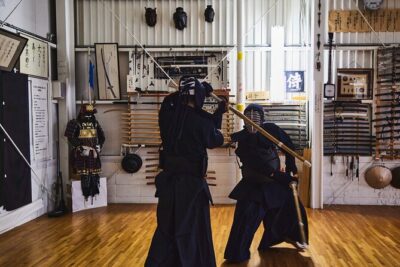
Browse the lists this tour appears in