
Reviewed · SAMURAI & NINJA EXPERIENCES
Samurai Experience Mugai Ryu Iaido in Tokyo
Mugai-ryū iaido in Tokyo is interesting because you get hands-on sword practice in about an hour, with training designed to keep things safe. I love the small-group feel, because you can actually get feedback while you learn. I also love that the session mixes do-it-yourself basics with a live kata viewing at the end.
One possible consideration: there is no hotel pickup, so you’ll want to plan your own way to the meeting point in Kuramae.
Key Things That Make This Experience Worth Your Time
- Master Takeda Hougyoku leads the instruction, tied to the Mugairyu style and the Hougyoku-kai organization
- Maximum 8 people means more time for corrections and less standing around
- Mock katanas only, so you can learn safer handling without real blades
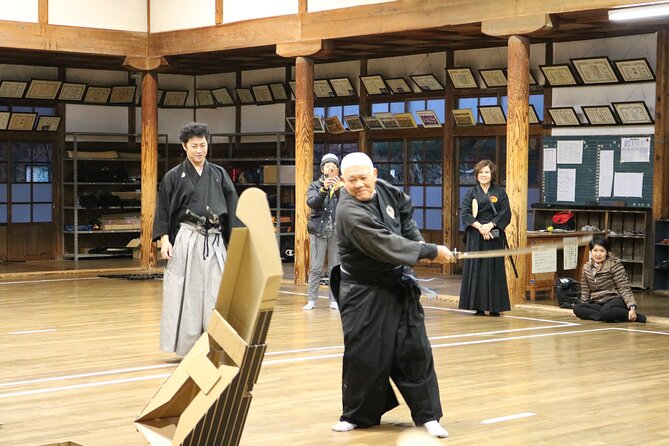
- You practice tameshigiri, described as cutting practice using the sword
- Rental hakama and Japanese sword rental are included, so you do not have to bring gear
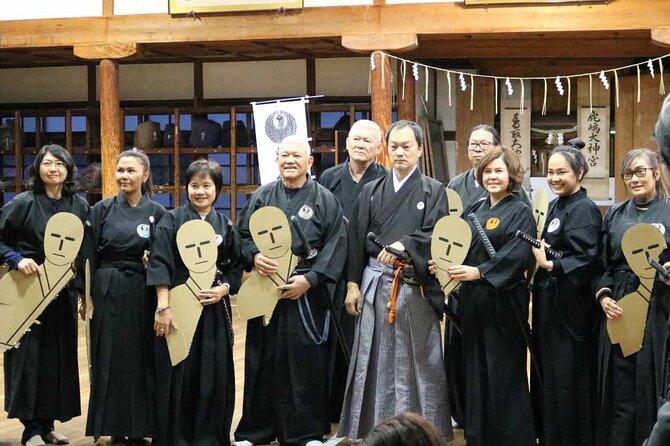
- Photo opportunities are built into the flow, including during the lesson and kata viewing
Mugai-ryu Iaido in One Hour, What You Actually Do
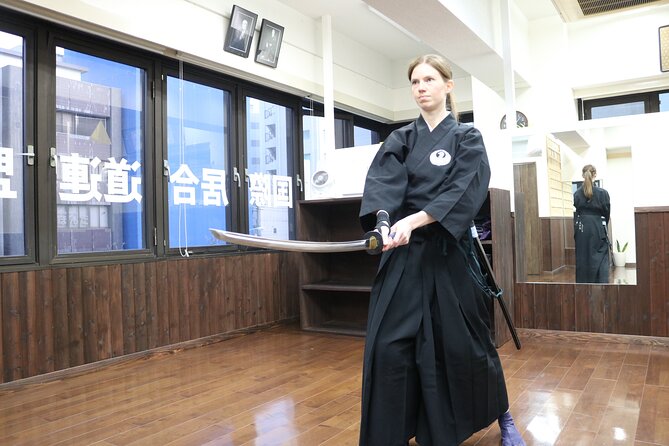
This is not a show where you sit and clap. In 60 minutes, you go from regular clothes to sword-handling basics, then you try cutting practice called tameshigiri. After that, you watch a demonstration of Mugai-ryu iaido kata, which are predetermined patterns of attack.
The pacing is tight, but that can be a good thing if your Tokyo schedule is packed. You get the “try it” part, plus the “see it performed” part, without turning this into a full day event.
And the focus is practical. The style taught here is described as practical martial art, with a real emphasis on how to draw, hold, and sheath safely and correctly. You will also spend time learning the overall flow so your body and brain know what to do next.
More Samurai & Ninja Experiences in Tokyo
- Tokyo: Samurai Restaurant Show Ticket with 2 Drinks
★ 4.5 · 1,307 reviews - Tokyo: Samurai Ninja Museum Guided tour and Experience
★ 4.6 · 1,010 reviews - Tokyo: Samurai Sword & Archery Class from Samurai Descendant
★ 5.0 · 603 reviews
Getting To Kuramae And Why The Small Group Matters
You meet at 4-chōme-20-10 Kuramae, Taito City, Tokyo 111-0051, and the session ends back at the same meeting point. There is no pickup or drop-off, so the easiest way to enjoy this is to anchor it in your day like an appointment you can reach by public transit.
This tour keeps group size capped at 8 travelers, which is a huge deal for a hands-on class. When there are fewer people, the instructor can correct your posture and sword handling without rushing through everyone.
Also, the lesson is led by a very specific master: Master Takeda Hougyoku, identified as head of the International Iaido Organization Hougyoku-kai. In a small group, you get more chances to benefit from that direct attention.
Changing Into Hakama And Getting Your Sword Rental
One of the most enjoyable parts is the transition. Your session starts with changing clothes, and you’ll rent a hakama (the samurai-style clothing) for the lesson. You also get Japanese sword rental, so you are not hunting down gear the night before.
That matters more than it sounds. When you show up without the right clothing and equipment, the class starts with delays, awkward setup, and you miss the first chunk of instruction. Here, the basics are handled for you, so you can focus on learning.
The hakama rental also adds to the feel. You are not just watching martial arts, you are dressing for it. Even if you are not trying to become a sword master by lunch time, it helps you understand what you are being asked to do.
Safety Rules: Mock Katanas And Careful Handling
If you are worried about safety, this is the section to feel good about. The training uses mock katanas (imitation swords), not real blades. That keeps the experience squarely in the “learn the forms” category.
You’ll also get an overview specifically covering safe handling: how to handle the sword, how to draw and sheath, and how to hold it. The lesson is clearly structured so you learn the sequence in a controlled way before you do anything physical beyond basic practice.
One more reassurance: the instruction includes English-speaking support. You are not left guessing what your instructor wants. That communication layer helps you avoid the most common beginner problem, which is doing the right motion for the wrong reason.
A change of pace from Tokyo:
- Mt Fuji and Hakone 1-Day Bus Tour Return by Bullet Train
★ 5.0 · 26,383 reviews - 1-Day Tokyo Bus Tour
★ 5.0 · 14,250 reviews - Tokyo: TOKYO SKYTREE® Admission ticket
★ 4.5 · 11,192 reviews - Tokyo: teamLab Planets TOKYO Digital Art Museum Entry Ticket
★ 4.6 · 9,779 reviews
The Lesson Flow: From What Iaido Is To Basic Patterns
Before you move, you’ll get an explanation of what Iaido is, delivered by Master Takeda and the instructor. Then you’ll get a clear roadmap for the session, so you know what comes next and how safe handling works at each step.
The main learning beats are:
- You learn the flow of the experience, including how to draw and sheath safely and how to hold the sword.
- You cover basic patterns as part of the practice portion.
- You then shift into hands-on tameshigiri cutting practice.
I like this structure for beginners. It starts with context, then it moves into actions you can repeat. You are not just handed a sword and told to figure it out. You learn the logic, then you apply it.
There is also a clear moment at the end where you watch the art performed. You do not just leave with muscle memory. You get the visual model of iaido kata performed by the master.
Tameshigiri: The Cutting Practice Part
“Tameshigiri” is described plainly as cutting practice, meaning you practice using the sword to cut something. That is the point many people remember after a class like this, because it is more than choreography.
In a short 60-minute lesson, tameshigiri is the hands-on highlight. It turns the learning from theory into a specific skill you can feel in your arms and timing. Even if you are not doing it perfectly, you get real feedback in the moment from the instructor.
One thing I would keep in mind: because the session uses mock swords, the safety emphasis stays high, but the practice still requires focus. Your job is to follow the step-by-step guidance for safe handling and execute with care.
If your goal is to get a memorable Tokyo cultural activity that is not just a photo stop, the cutting practice gives you that. It is active, it is structured, and it is taught with supervision.
Seeing Mugai-ryu Kata Live With Master Takeda Hougyoku
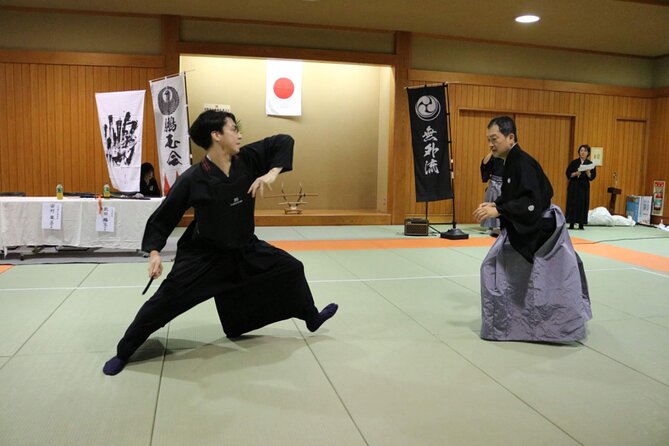
After the hands-on practice, you will have a chance to see real Iaido kata before your eyes. This is where the lesson becomes more than a workout.
Mugai-ryu iaido is known to be a practical martial art, and the kata are predetermined attack patterns. That means you are watching deliberate sequences, not improvised movements. For me, watching kata is the moment that helps the beginner brain connect what you did in practice with what the art looks like in full form.
Master Takeda Hougyoku is presented with major credentials in the description. He is called the head of Hougyoku-kai and identified as the heir of ancient scrolls of the Mugairyu masters. You’re also told he carries on the spirit of the Mugairyu style with a 340-year connection. Even if you do not use all those details in your own head, it signals that you are not learning from someone winging it.
In a small group, live kata viewing also lands better. With fewer people, the viewing is less chaotic, and you can see the instructor’s focus and rhythm more clearly.
Photo Opportunities Without Turning It Into a Photo Shoot
The session notes plenty of opportunities to take photos. That is a big plus in Tokyo, where so many experiences are either strict no-photo or awkward photo-only standing.
The key is to treat photos as a bonus, not the main event. You will likely want a few photos during the instruction and once you get into the samurai clothing look with hakama. Then give yourself space to watch the kata cleanly at the end.
If you plan your photos well, you’ll leave with both types of memories: the practical ones where you participated, and the visual ones where you saw the kata performed.
Price And Value For $151.92 In Tokyo
At $151.92 per person, this is not a budget activity. But it can still be good value depending on what you want from Tokyo.
Here’s what you do get that supports the price:
- A full 60-minute guided lesson
- Rental hakama included
- Japanese sword rental included
- English-speaking instruction
- Mock katanas used for safety
- A live demonstration of real Iaido kata
The “value math” changes if you’re the type who normally pays for separate experiences like classes plus equipment plus guided translation. This bundles those basics in one appointment.
Also, the group size max of 8 is part of the value. If you’ve paid for activities where you spend most of the hour waiting your turn, you’ll appreciate this format.
Who Should Book This Samurai Experience, And Who Might Skip It
This works best for you if:
- You want a Tokyo cultural activity with real hands-on training
- You like small-group classes with feedback
- You are curious about Iaido and specifically Mugai-ryu
- You want a memorable activity that is not only sightseeing
It might be less of a fit if you hate doing any physical practice at all, because the session includes sword handling and tameshigiri cutting practice. Even though you use mock katanas, the core experience is still active and structured.
If you are a frequent Tokyo visitor, you’ll probably appreciate that this is not another generic museum loop. If you are a first-time Tokyo visitor, it can be a strong way to experience martial culture in a guided, understandable format.
A Practical Tip List So You Get The Most From Your Hour
Plan to arrive ready to change clothes. The session begins with that, and it sets the tone for the whole class. Also, since it starts at Kuramae and returns there, build your day around being on time.
Because this is near public transportation and you have a mobile ticket, you can keep the logistics simple. Still, give yourself extra minutes so you do not sprint the final stretch right before your lesson.
Finally, come with the right mindset: you are learning. The goal is safe handling and clear fundamentals, not becoming a sword prodigy in 60 minutes. If you focus on doing what the instructor shows, you’ll get the best result.
Should You Book This Samurai Experience Mugai Ryu Iaido?
Yes, you should book it if you want a compact, high-attention martial arts experience with real instruction, not a passive demo. The combination of rental hakama, mock-sword safety, hands-on tameshigiri, and live kata viewing makes it a strong use of time in Tokyo.
Book it especially if you value small groups and direct teaching from Master Takeda Hougyoku. The price is serious, but the class is structured and includes the key equipment and coaching basics.
If you dislike travel to a specific meeting point, you might feel the “no pickup” piece. If that is your only concern, you can still make it work easily with public transit. When you do that, this becomes one of those Tokyo experiences you actually remember for the way your hands learned something new.
FAQ
How long is the Samurai Experience Mugai Ryu Iaido lesson?
The lesson is about 1 hour.
How many people are in the group?
The experience has a maximum of 8 people.
What is included in the price?
It includes rental hakama, an English-speaking instructor, and Japanese sword rental.
Are real katanas used?
No. The experience uses mock katanas for safety.
What will I do during the lesson?
You will change clothes, learn what Iaido is, go over safe sword handling and the flow of the experience, practice basic patterns, try tameshigiri, and watch a demonstration of Iaido kata.
Where do I meet, and where does it end?
You meet at 4-chōme-20-10 Kuramae, Taito City, Tokyo 111-0051, and the activity ends back at the same meeting point.
What is the cancellation policy?
You can cancel for a full refund up to 24 hours before the experience starts.
Latest write-ups near Tokyo
- Tokyo Nights: Shibuya Photo Adventure★ 5.0 · 20 reviews
- Wagyu & Sake 8 Course Tasting Dinner in Shinjuku★ 4.9 · 20 reviews
- Making Japanese desserts Nerikiri & drinking matcha in Tokyo★ 5.0 · 20 reviews
- Mt. Fuji 5th Station, Owakudani Ropeway, Pirate Ship plus Outlet shopping!★ 4.5 · 20 reviews
- Japanese Whisky Hunting《HIGH-QUALITY-ONLY》Rare Tasting Class★ 5.0 · 20 reviews
- Kintsugi Experience with Arita Ware in Tokyo (English Guide)★ 4.8 · 20 reviews
- This is Asakusa! A Tour Includes the All Must-Sees!★ 5.0 · 20 reviews
- Tokyo: Karate Experience with Former All-Japan Champion★ 5.0 · 20 reviews
Samurai & Ninja Experiences, compared.
Samurai Ninja Museum Guided tour and Experience
Read our review →
Kendo and Samurai Experience with Uniform and Gear
Read our review →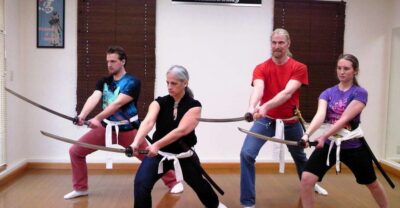
Samurai Sword Class by Experts in Traditional Arts
Read our review →
Skip the lines Basic Ticket at SAMURAI NINJA MUSEUM KYOTO
Read our review →
Samurai Sword & Archery Class from Samurai Descendant
Read our review →
Browse the lists this tour appears in