
Reviewed · WAGYU & KOBE BEEF EXPERIENCES
Small-Group Wagyu Beef and 7 Japanese Dishes Tokyo Cooking Class
This Tokyo cooking class is interesting because you do the whole rhythm of a Japanese meal, start to finish. Dashi comes first, then you build a multi-course lunch with Wagyu beef, and you actually sit down to eat what you made.
I especially like the small group setup, capped at eight people, so you are not stuck watching. I also love the teaching style, with friendly English-speaking instructors such as Aya and Hidemi guiding you step by step and giving real feedback as you chop, mix, and cook.
One possible drawback: the building can be tricky to locate if you are arriving on foot. In a residential area, you may need to rely on Google Maps closely, and a taxi can make it painless.
Key Things I’d Lock In Before You Book
- Dashi first, every time, so you learn the flavor base behind lots of Japanese dishes
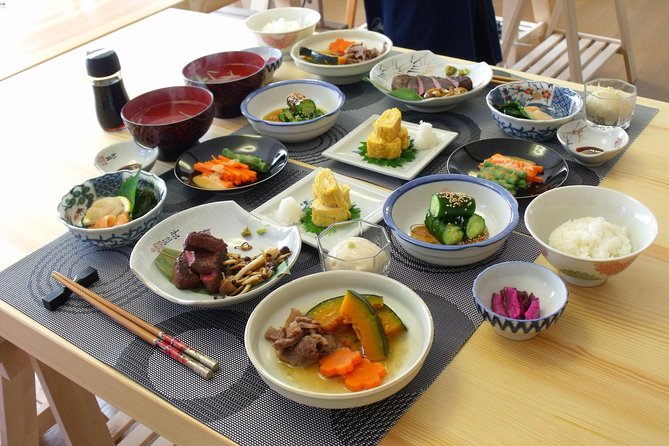
- Up to eight dishes in about three hours, including a tender Wagyu beef main
- Small group of max eight, meaning you stay hands-on and ask questions freely
- English instructions with local instructors who share tips and recipe stories
- Recipes included, so you can cook similar dishes at home later
First Steps at Cooking Sun Tokyo (Shinjuku): What the Morning Feels Like
The class meets at Cooking Sun Tokyo in Shinanomachi, Shinjuku City, Tokyo. Start time is 9:30 am, and you finish back at the same meeting point. Since there is no hotel pickup, plan to get yourself there using public transportation.
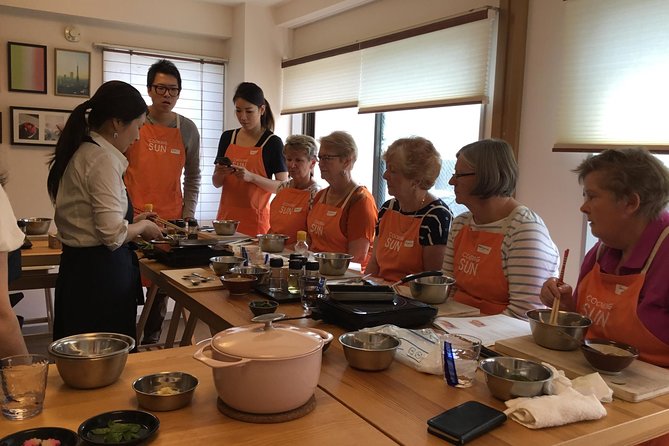
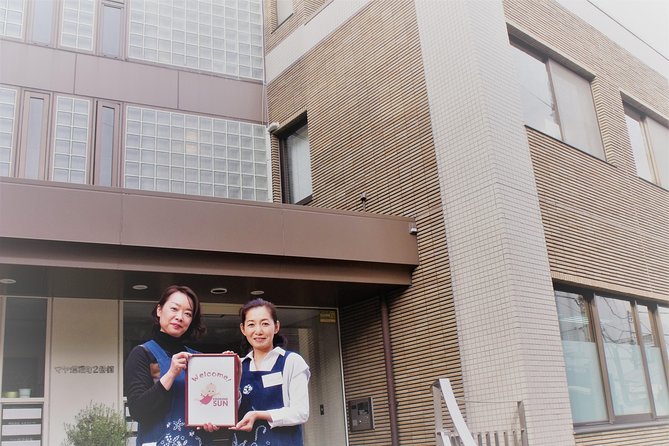
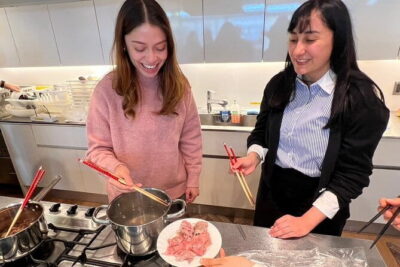
The vibe is homey, not stiff. You walk in, get an apron and a towel, and you get to work. And because the group is small, the instructors can actually correct your technique while you are doing it, not after.
More Cooking Classes in Tokyo
- Ramen & Gyoza Cooking Class in Tokyo with Local Supermarket Visit
★ 5.0 · 823 reviews - Tokyo: Easy Ramen Cooking Experience in Kabukicho, Shinjuku
★ 4.6 · 321 reviews - Ramen and Sushi Cooking Class with Sake Pairing Set in Tokyo
★ 5.0 · 291 reviews
Finding the Place in Shinjuku: A Quick Practical Guide
If you have ever tried to find a small studio in a quieter neighborhood, you already know the feeling. Several people note the building can be hard to pinpoint, so I suggest this: zoom in on your map, follow the street layout carefully, and give yourself a little buffer time.
If walking stresses you out, using a taxi to arrive near Cooking Sun Tokyo can save time and energy. Once you are in the right area, it is generally calm and easy to navigate.
Dashi-Making: The One Skill You’ll Keep Using After Tokyo
Japanese cooking often starts with dashi, a simple stock that brings instant depth. In this class, you begin by making dashi as the foundation step, and the instructor explains why it matters and how Japanese seasonings work together.
What I love here is how practical the lesson becomes. You do not just learn theory. You make the stock, then you use it again and again during the meal, so the flavor shows up in a way you can taste and remember.
One key takeaway is that dashi is not only for soup. It becomes a bridge ingredient across multiple dishes, which makes home cooking feel less like guessing.
The Core Build: Seven Dishes, One Full-Course Lunch Style
You will cook a multi-course lunch in a kaiseki ryouri style. That means you go through multiple components, from appetizers and sides to a main and then the final course. The class is described as preparing up to eight different dishes, and in the typical flow you make seven dishes in the main part of the session.
Expect a mix of tasks, like careful cutting, blanching or cooking vegetables, mixing dressings, and cooking elements right there in the studio. Even if you are not confident in the kitchen, the pacing is designed so you can follow along.
There is also a good balance of explanation and doing. The instructors keep lectures short and tied to what is happening at your station. They often share the story behind ingredients, and sometimes they pass along the kind of small technique that saves you time later.
More Wagyu & Kobe Beef in Tokyo
- Tokyo Night Foodie Tour in Shinjuku – Seasonal Sushi, Wagyu Beef
★ 5.0 · 1,161 reviews - Tokyo: Wagyu and 7 Japanese Dishes Cooking Class
★ 4.9 · 273 reviews - Wagyu & Sake Pairing in Shinjuku – Steak, Shabu-Shabu & More
★ 5.0 · 112 reviews - Tokyo Wagyu & Sake Pairing Tasting Experience with Local Flavors
★ 5.0 · 108 reviews
Wagyu Beef at the Center: How This Class Makes Sukiyaki Make Sense
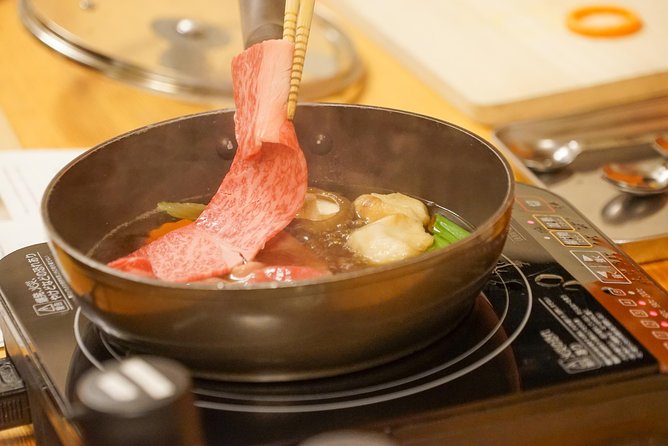
The star of the lunch is Wagyu beef, and you cook a beautiful main dish using classic Japanese methods. Reviews specifically call out sukiyaki with Wagyu beef as a standout, and that matches the class focus on a tender, well-seasoned result.
What you are learning goes beyond taste. You are learning how Japanese cooking handles texture, temperature, and seasoning balance. When you cook sukiyaki style dishes, you see how the sauce and ingredients work as a system, not just a jar of flavor.
Since Wagyu is the headline ingredient, I recommend paying extra attention to the timing and heat control. You will not get the same result if the pan is too hot or too cool, and the instructor will likely guide you on what to look for.
What You’ll Actually Do During the Cooking (Not Just Stand There)
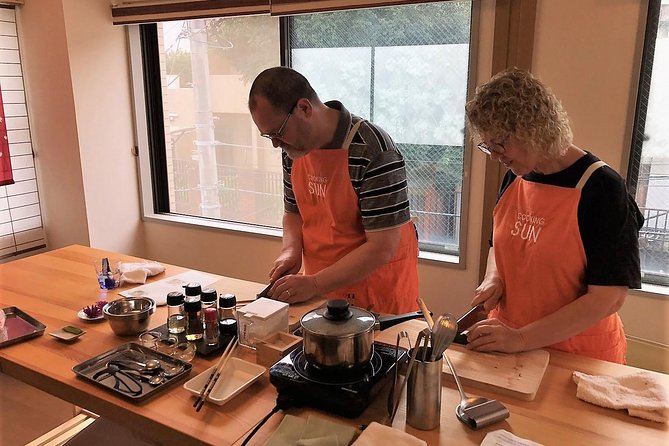
This is a truly hands-on class. Because the group is capped at eight, the studio setup supports everyone cooking rather than waiting around.
You will likely spend time chopping and mixing dressings and combining ingredients for different dishes. At the same time, there are cooking steps where the instructor or staff may have prepped certain components ahead of time, so you focus on your station and technique.
A useful detail to know: while most of the work is active, some items can be partly prepared in advance. That does not make it less “real.” It simply keeps the class on schedule so you can still cook and taste a full kaiseki-style lunch within about three hours.
Techniques, Presentation, and Ingredient Lessons That Travel Home Well
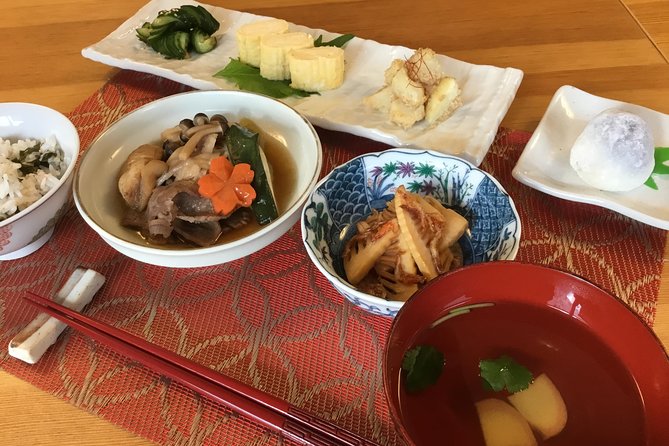
Japanese cooking is not only about flavor, it is also about how things look and how each component fits on the plate. In this class, you practice more than one style of cutting and you learn why certain ingredients pair well with specific seasonings.
The instructors also explain staples you’ll use later, including what seasonings are doing in each dish. This is where the class earns its value for me. You walk out with context, not just recipes.
And because you have recipes included, you can recreate the structure at home. I find that the recipes are most helpful when you remember what you were watching for during cooking, like how the sauce should coat or how the stock changes other flavors.
Lunch Time: Itadakimasu, Sake, and Green Tea Included
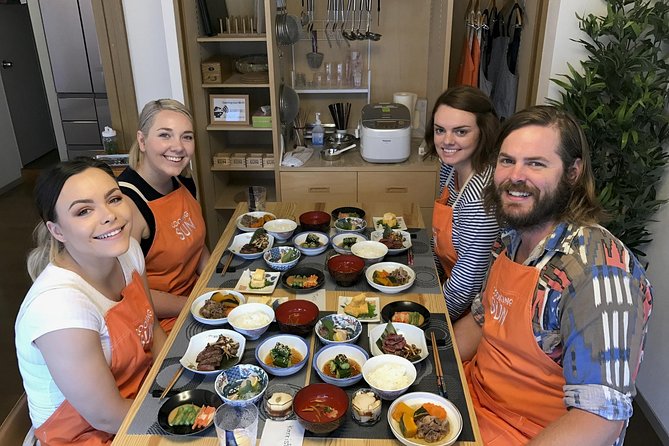
After cooking, the whole group sits down for the meal. You start with the Japanese phrase Itadakimasu, and then you eat what you made as a multi-course lunch.
Sake and green tea are served to accompany the meal. You can treat this as part culinary lesson, part Tokyo experience. It also gives you a chance to compare flavors right away, since you made the components yourself.
One small social plus: in a class this size, you end up chatting during breaks and while you plate. It can feel like a fun shared project rather than a formal workshop.
Vegetarian Option: How to Plan If You Don’t Eat Meat
If you want a vegetarian version, the class offers one. You need to advise at booking that you require vegetarian options. Since Wagyu is a core ingredient in the standard menu, vegetarian participants should expect a modified menu that replaces meat components while still keeping the Japanese cooking methods and multi-course structure.
This is worth doing because you still learn the same “why” behind dashi and the seasonings. Even if the ingredients change, the technique patterns can carry over.
Allergies and Dietary Notes: Ask Early
The class encourages you to advise dietary requirements at booking. Based on real experiences from participants, the instructors do try to be accommodating, so it is smart to flag anything important in advance rather than assuming it can be handled last-minute.
If you have multiple restrictions, be clear and detailed when you book. The more specific you are about what you cannot eat, the easier it is for the instructor to adjust safely.
Price and Value: Is $72.96 Fair for What You Get?
At $72.96 per person, this is priced for real food and real instruction, not a quick demo. You are paying for several things at once: the ingredient load, your apron and towel, the recipes, the English-speaking local instructor time, and the fact that you cook a full multi-course lunch instead of one dish.
Also, the class is only about three hours, which matters in Tokyo where time is money. You get a concentrated experience that is practical enough to use later. For me, the best value is the combination of technique instruction plus eating what you make immediately.
If you like hands-on cooking and want a souvenir that is edible and repeatable, the price makes sense.
Who This Cooking Class Suits Best
This is a great fit if you:
- want a Tokyo activity that is more than sightseeing, focused on cooking technique and ingredients
- enjoy Japanese food and want to understand why dishes taste the way they do
- cook at home sometimes, even if you are not confident with Japanese staples yet
- want a small-group experience with close instructor feedback
It is also a solid choice for couples or small friend groups because you still get personal attention, not “mass class” energy.
If you only want to watch and take photos, this probably feels too hands-on. But if you want to roll up your sleeves, it is exactly the right type of activity.
Should You Book This Tokyo Wagyu Cooking Class?
I’d book it if you want a structured, practical introduction to Japanese home cooking through a kaiseki-style meal. The big reasons are the dashi foundation, the chance to cook Wagyu in a multi-course lunch format, and the fact that you leave with recipes you can actually use.
I would hesitate only if you are very stressed about finding the exact studio building, or if you dislike chopping, mixing, and cooking as part of the experience. Otherwise, this is one of those Tokyo classes where you do a lot, learn a lot, and eat something genuinely satisfying at the end.
If you go, do yourself a favor and plan to arrive a little early. Once you are inside, the morning moves fast in the best possible way.
FAQ
How long is the Small-Group Wagyu Beef and 7 Japanese Dishes Tokyo Cooking Class?
The class lasts about 3 hours.
How many people are in the group?
The group is limited to a maximum of 8 people.
Where does the class meet?
The meeting point is Cooking Sun Tokyo, 18-39 Shinanomachi, Shinjuku City, Tokyo 160-0016, Japan.
What time does the class start?
The start time is 9:30 am.
What is included in the price?
It includes a local cooking instructor, recipes, ingredients, and apron and towel rental.
Is hotel pickup or drop-off included?
No, hotel pickup and drop-off are not included.
Is the class available in English?
Yes, instructions are in English.
Is there a vegetarian option?
Yes, a vegetarian option is available. You should advise at the time of booking if you need it.
Is sake and green tea included with the meal?
Yes, the meal is accompanied by sake and green tea.
What is the cancellation policy?
Free cancellation is available up to 24 hours in advance for a full refund.
Latest write-ups near Tokyo
- Tokyo Customized Private Tour: See Top Attractions in 1 Day★ 4.8 · 67 reviews
- From Tokyo: Top 5 Scenic Spots of Mount Fuji Full-Day Tour★ 4.5 · 67 reviews
- Tokyo: Shinjuku Izakaya and Golden Gai Bar Hopping Tour (2h)★ 4.9 · 67 reviews
- Traditional Japanese Music ZAKURO SHOW in Tokyo★ 5.0 · 67 reviews
- Tsukiji: Unlimited Sake Tasting Experience★ 4.9 · 67 reviews
- Samurai Ninja Museum Asakusa: Kid-Friendly Ninja Training★ 4.7 · 67 reviews
- Tokyo: Not a show- a professional sumo practice with experts★ 4.9 · 67 reviews
- Private Harajuku Omotesando Architecture Walking Tour★ 5.0 · 67 reviews
Wagyu & Kobe Beef Experiences, compared.
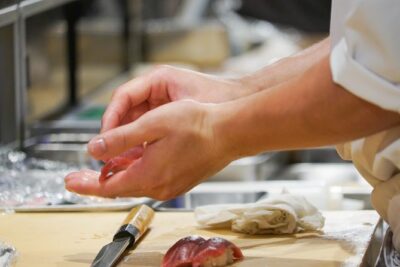
Tokyo Night Foodie Tour in Shinjuku – Seasonal Sushi, Wagyu Beef
Read our review →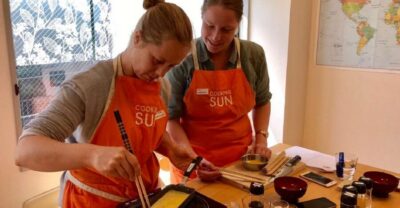
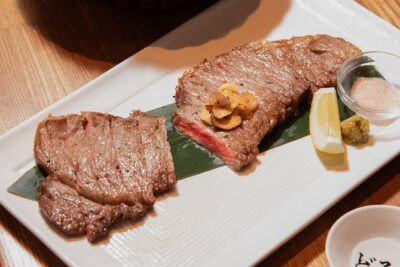
Wagyu & Sake Pairing in Shinjuku – Steak, Shabu-Shabu & More
Read our review →
Tokyo Wagyu & Sake Pairing Tasting Experience with Local Flavors
Read our review →
Kyoto Food Tour of 10 Tastings with Wagyu, Mochi & More Surprises
Read our review →
Wagyu Beef and Sake Pairing Foodie Tour in Tokyo
Read our review →
Browse the lists this tour appears in