
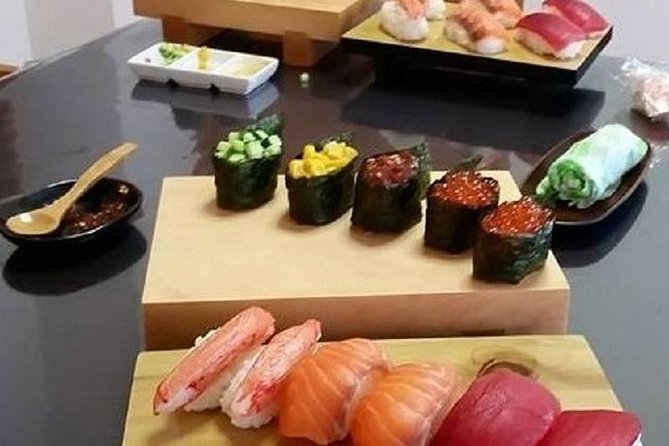
Reviewed · SUSHI MAKING CLASSES
Sushi and Japnese foods cooking class in Osaka
What makes this Osaka sushi experience interesting is the mix of skill practice and real home-meal comfort, led by Yayo, a licensed chef who teaches in a small studio setting. I love the hands-on rolling instruction and the fact that the food is built from fresh, carefully prepared ingredients, not just plated for you. I also like the tight group size, which keeps the lesson patient and personal, even when you mess up a few rolls. One consideration: the class is focused and can feel more basic than a high-end, advanced sushi course, so if you’re chasing super-special styles, you may want to check what version of sushi you’ll be rolling.
Meet at Noda Station, then you’ll head to Yayo’s home kitchen for about 2 hours 30 minutes of cooking, eating, and tasting. You can upgrade for a sake (and sometimes beer) tasting, and dessert is included at the end. It’s a great pick if you want a relaxed, authentic Osaka evening that still teaches technique you can repeat at home.
Key Highlights I’d Plan Around
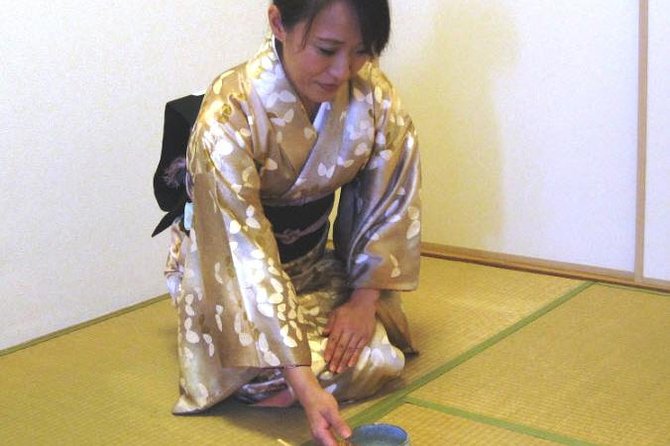
- Licensed chef instruction in English, with patient, detail-minded coaching from Yayo
- Small group format, typically capped at a few people, so you actually get hands-on time
- You make dinner, including sushi plus miso soup, and a Japanese omelet
- Optional sake and beer tasting, including an either six-sake option or a mix with beer
- Taiyaki dessert after you eat what you cooked
Entering Yayo’s Osaka Kitchen: Why This Feels More Like Dinner Than a Class
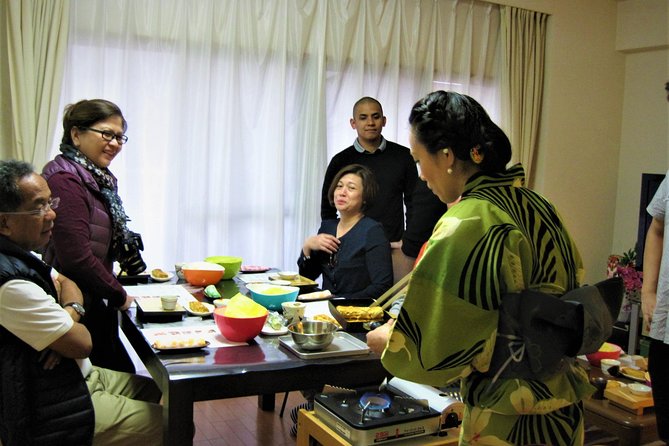
This isn’t the kind of cooking class where you hover and watch while someone else does the work. The whole point here is that you learn by doing, from sushi rice prep to rolling with nori, and then you eat your own creations in the same home setting. That structure matters, because sushi is all about small steps done the right way, not magic.
Yayo’s approach shows up in the vibe people describe: welcoming, warm, and genuinely interested in whether you’re getting it. You’ll also hear plenty of practical explanations, including why certain techniques are used. And yes, there’s often a dog companion named Akane, which sounds odd until you realize it makes the home setting feel even more normal, like you were invited over.
The group limit keeps this from turning into a production line. If there’s only your small party, the experience can feel extra personal. If you want a social, lively crowd with lots of strangers talking over each other, you might find it calmer than you expect, but that calm is part of the value.
More Cooking Classes in Osaka
- Osaka: Ramen and Gyoza Cooking Class in Dotonbori
★ 5.0 · 378 reviews - Osaka Cooking Class: Okonomiyaki &Japanese cuisines experience
★ 5.0 · 261 reviews - Ramen and Gyoza Cooking Class in Osaka
★ 5.0 · 202 reviews
The 2.5-Hour Flow: What Happens From Noda Station to Dessert
Your evening starts outside Noda Station in central Osaka. You’ll meet the instructor, then walk to a nearby home for the cooking lesson. The schedule is kept tight on purpose, because sushi is timing-sensitive, especially rice cooling and rolling.
Once you arrive, the lesson starts with sushi rice prep and rolling technique. You follow along while Yayo demonstrates, then you get your turn to roll with support as you go. Expect a few tries, because the first roll often looks rough even if you’re doing it correctly.
After rolling, you sit down to eat. Dinner includes sushi rolls plus miso soup, a Japanese omelet, and additional Japanese snacks. After the meal, you’ll get taiyaki for dessert, then return to the meeting point.
Key detail: the class is small enough that they do not allow walk-ins who did not book. That means you should plan to arrive on time. The rules say the contract becomes invalid if you’re more than about 10 minutes late, so build in a transit buffer.
What You Learn in This Osaka Sushi-Making Class (and What You Don’t)
You’ll learn the core sushi-making building blocks. That means sushi rice preparation, how to handle ingredients, and the rolling method using dried seaweed sheets called nori. You also learn how to place fillings inside the roll, including thin-sliced fish described as sashimi.
In practice, this matters because most home sushi fails for predictable reasons. Rice that’s too hot or too cool is hard to spread and hard to shape. Overfilling makes rolling messy. Under-seasoning makes everything taste flat. This class targets those steps directly, so by the time you eat, you understand why your roll did or didn’t hold together.
What you likely will not get is an advanced, menu-heavy sushi deep dive. Reviews and the structure point to basic, foundational rolling and classic Japanese comfort foods served as part of the meal. If you’re hoping to become a master of dozens of different advanced sushi styles in one evening, you might feel slightly limited. But if your goal is to leave with technique you can repeat, this is exactly the right format.
Sushi Rice and Nori Rolling: The Technique That Makes Your Rolls Hold
This class is built around the most important sushi skills: rice handling and rolling consistency. You’ll watch Yayo demonstrate sushi rice prep first, then you practice your own rice spreading and rolling. The rolling moment is where confidence comes from, because once you feel the right pressure and spacing, the whole process gets easier.
A useful part is ingredient choice. You’re not stuck with a single boring filling. You select ingredients offered by the chef, so you can tailor your roll to what you actually like eating. That helps you learn, because you’re paying attention to balance, not just copying a single exact roll over and over.
You’ll also be working with nori in the way most people only learn after failing at home. Nori can be fussy. It tears if you handle it too roughly, and it can get soggy if you go too slow. By practicing in the lesson, you’ll learn the rhythm.
One more practical benefit: you’ll see how thin-sliced fish like sashimi fits into rolling. That’s helpful because at home, people worry about texture and breakage. Here, you get coached on how to place it cleanly.
More Sushi Making Classes in Osaka
- Sushi Making Osaka Roll and Authentic Japanese Sushi Class
★ 5.0 · 1,220 reviews - Osaka Sushi Making Experience
★ 5.0 · 400 reviews - Osaka Sushi Making Class – Hands-On Nigiri & Rolls (Same-Day OK)
★ 5.0 · 352 reviews - Osaka: Roll and Authentic Sushi Making Class in Dotonbori
★ 4.9 · 239 reviews
Dinner You Actually Made: Miso Soup, Japanese Omelet, and Snacks
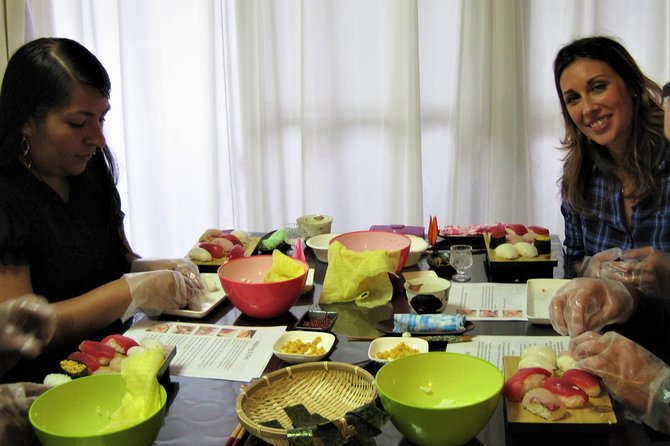
After the hands-on rolling, you sit down and eat what you made. Dinner includes miso soup, a Japanese omelet, and a selection of Japanese snacks. That pairing is smart because it keeps the meal balanced and teaches you how sushi sits inside a typical Japanese dinner flow.
The miso soup part is more than a side dish. It’s warm, savory comfort that makes the meal feel complete, and it also gives you a contrast to the cooler rice-and-fish flavors. The Japanese omelet adds sweetness and soft texture, which helps you notice how flavors shift when you combine things on a plate, not just in a roll.
Many people highlight that the food quality feels excellent. One of the big reasons is that the ingredients are described as homemade by family and sourced fresh from the fish market that morning. Even if you don’t obsess over sourcing details, this is one of those “you can taste the difference” factors.
You should still keep expectations realistic. This is a dinner experience plus a lesson. It’s not a full multi-course omakase. But it’s still a complete, satisfying meal built around what you learned to cook.
Optional Sake and Beer Upgrade: A Worthy Companion to Your Sushi
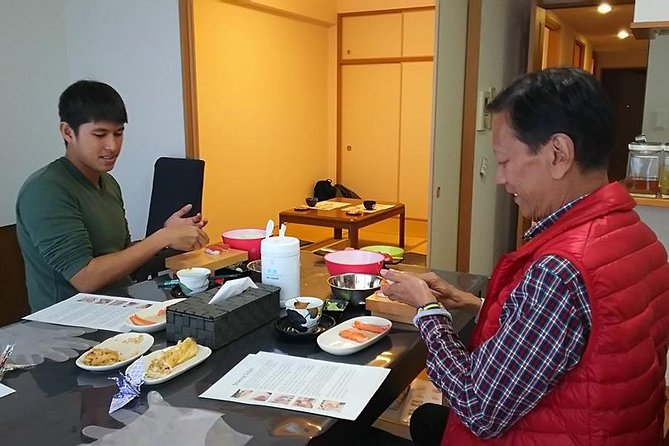
If you choose the upgrade, you’ll get a local sake tasting to go with your meal. The tasting includes either six sakes or four sakes plus one bottle of beer. That structure gives you variety without turning the night into a long drinking session.
Sake can be confusing if you’ve only had a sip or two in restaurants. Here, the tasting format helps you connect flavor differences to the food on your plate. Even if you’re not a big drinker, this upgrade can be a fun cultural add-on because it frames what you’re eating in a Japanese context.
Just note what’s included: the base experience includes dinner, and the sake cups are included only if you select the option. So you’ll want to decide based on your plans for the rest of the night. Since you’ll be finishing back near the start point, it’s still a good evening option, but you should consider your comfort level with alcohol.
Taiyaki Dessert: The Sweet Finish That Makes the Evening Feel Complete
Dessert is taiyaki, the fish-shaped Japanese pastry filled with sweet filling. It lands at the end after you’ve had your meal, so it feels like a reward instead of an early sugar distraction.
Taiyaki is also a nice cultural bridge. Sushi is the headline, but having dessert that’s more casual and street-food adjacent keeps the whole experience feeling grounded in everyday Japan, not just restaurant formality.
In a class setting, that matters. You remember technique, but you also remember the last bite. Taiyaki helps this evening stick.
Price and Value: Is $165 for Osaka Sushi-Making Reasonable
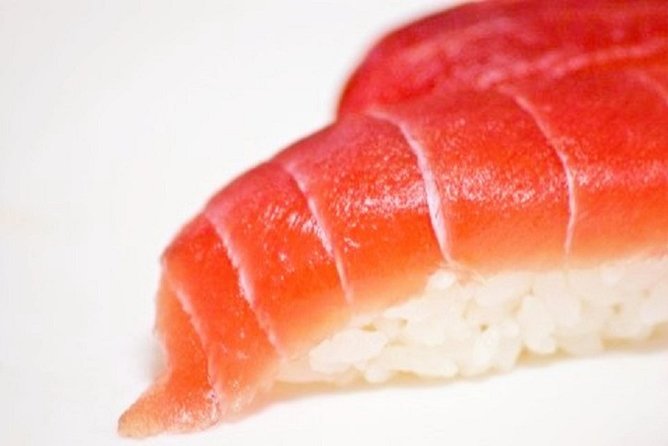
At about $165.13 per person for a roughly 2.5-hour evening, this pricing lands in the “you’re paying for the experience” category. You’re not buying a cheap snack. You’re buying a small-group, home-kitchen lesson plus a full dinner and dessert.
Here’s why I think it can be good value. First, you get licensed chef instruction in English. Second, you eat what you make, including miso soup and Japanese omelet, not just a few bites of sushi. Third, the group size is tight, so your time with the instructor is higher than larger classes where you might feel rushed.
If you add the sake tasting upgrade, the value story changes again in a good way. You get structured local tasting with sushi, which is hard to replicate on your own unless you already know exactly where to go and what to order.
Could it be expensive? Sure, if you’re mainly looking for a casual meal and you don’t care about learning technique. But if you want a repeatable skill plus dinner, the price starts looking fair.
Who Should Book This Osaka Class, and Who Might Skip It
This is a great fit if you’re:
- A sushi lover who wants to understand rolling basics and rice handling
- Someone who prefers small-group learning over big group tours
- Interested in Japanese cooking as a cultural evening, not just a food stop
- Planning a trip itinerary where one special evening really matters
It might be less ideal if you:
- Want advanced sushi training for highly specific styles
- Expect a major sightseeing component inside the same activity
- Want a large social crowd vibe
The fact that some classes can feel private if your group is small is a plus. But even when it’s not private, the structure is still built around giving you turns at the rolling station.
Practical Tips So Your Rolls and Night Go Smoothly
Plan for transit time before you show up at Noda Station. The timing rules are strict enough that you should treat this like a reservation, not a casual drop-in.
Wear comfortable clothes. You’ll be doing hands-on rolling, and the kitchen setup is small. If you’re sensitive to odors or strong kitchen smells, give yourself a moment to reset when you arrive.
Go in hungry. You’ll make sushi, then you’ll eat sushi plus miso soup, Japanese omelet, snacks, and then taiyaki. If you’ve already had a huge late lunch, you might feel overfull at the end.
If you drink, consider your energy for the rest of the evening before you pick the sake upgrade. It’s optional, and it’s structured, but it still adds another layer to the night.
Finally, ask questions while you’re rolling. This is the moment when the instructor can adjust your technique fast, and the best learning happens when you’re actively trying.
Should You Book This Osaka Sushi-Making Class With Yayo?
I’d book it if you want an Osaka evening that’s both useful and fun. The strongest reasons are hands-on sushi rolling instruction from Yayo, a licensed chef teaching in English, plus a real dinner you eat right after cooking. The small group format is the other big win, because it keeps attention on you and makes it easier to get your rolls to improve.
If you’re picky about sushi styles and want advanced variations, you might want to compare with other classes before committing. But for most people, this hits the sweet spot: classic technique, good food, and a homey experience that feels like you were invited in.
FAQ
What is the duration of the sushi-making class in Osaka?
The class runs about 2 hours 30 minutes.
How much does the Osaka sushi-making experience cost?
The price is $165.13 per person.
Where do I meet for the class?
You meet outside Noda Station, Osaka at 1 Chome-1 Ohiraki, Fukushima Ward, Osaka, 553-0007, Japan.
Is dinner included?
Yes. Dinner is included and includes sushi, miso soup, and a Japanese omelet, plus Japanese snacks. Taiyaki is served for dessert.
Is the instructor English-speaking?
Yes. The class includes an English-speaking cooking instructor, and Yayo is described as a licensed chef.
Is sake included?
Sake tasting is an optional upgrade. If selected, it includes two local sake cups tasting.
What does the sake tasting upgrade include?
The tasting includes either six sakes, or four sakes plus one bottle of beer.
Is hotel pickup included?
No. Hotel pickup and drop-off are not included.
What is the policy if the weather is bad?
The experience requires good weather. If it’s canceled due to poor weather, you’ll be offered a different date or a full refund.
Latest write-ups near Osaka
- Osaka Private Tour with Government-Licensed Guide★ 4.8 · 20 reviews
- Guided Photography Tour in Osaka: Capturing Memories★ 4.5 · 20 reviews
- Osaka: Food Tour at Night with Tastings★ 4.9 · 20 reviews
- Kansai/KIX Airport to or from Osaka/Kyoto Private Transfer★ 5.0 · 20 reviews
- Osaka: City Highlights Bike Tour★ 4.7 · 20 reviews
- From Osaka/Kyoto: Amanohashidate Day Tour【Including tickets】★ 3.7 · 20 reviews
- Osaka Okonomiyaki Cooking Class “Learn here and make it at home”★ 5.0 · 20 reviews
- Volleyball in Osaka & Kyoto with Locals!★ 5.0 · 21 reviews
Sushi Making Classes, compared.
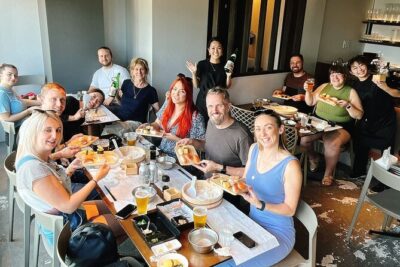
Sushi Making Tokyo Roll and Authentic Japanese Sushi Class
Read our review →
Roll and Authentic Sushi Making Class in Asakusa
Read our review →
Make Sushi and Create Unforgettable Memories in Tokyo
Read our review →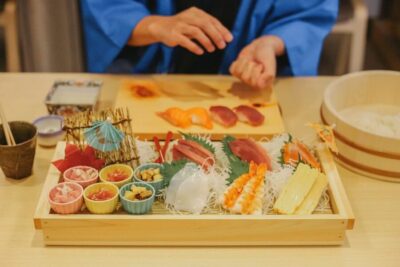
Sushi Making Class in a Happi Coat near a Famous Spot
Read our review →
Sushi Making Osaka Roll and Authentic Japanese Sushi Class
Read our review →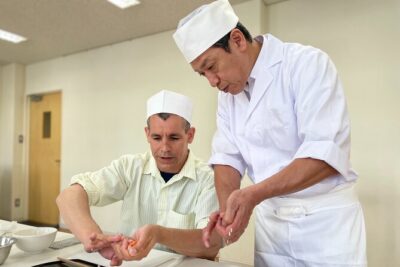
Tokyo Sushi Making Class in Tsukiji with Professional Chef
Read our review →
Tokyo Night Foodie Tour in Shinjuku – Seasonal Sushi, Wagyu Beef
Read our review →
Tsukiji Fish Market Guided Tour and Sushi Making with Pro Chef
Read our review →Browse the lists this tour appears in