Reviewed · GUIDED
Tokyo: 60min Panoramic Open Top Bus Tour with Audio Guide
Tokyo can feel huge, and this 60-minute open-top bus tour is a fast way to get your bearings without hunting for viewpoints. You sit up high for uninterrupted panoramas as the bus rolls past major sights, with GPS-based audio built for people moving through the city.
I especially like two things: the GPS automated guidance in 8 languages, and the way the route strings together Tokyo Tower, the Rainbow Bridge area, and central shopping streets in a single loop. One drawback to consider is that it is not a hop-on, hop-off tour, so you will not have time to wander each stop or grab snacks along the route.
Key things to know
- Tokyo Tower from fresh angles as the bus changes perspective on the approach to the bay area
- GPS guidance in 8 languages helps you follow along even if you do not read Japanese
- Nonstop sightseeing loop from Tokyo Station, not a hop-off format
- Open-top views with a real weather caveat, the roof may close in rain
- No eating onboard, but small bottled drinks are allowed
A 1-Hour Panoramic Loop From Tokyo Station
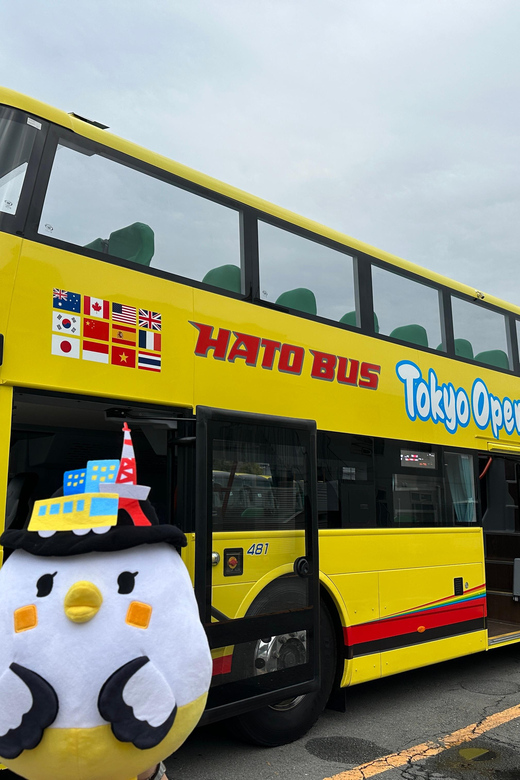
This tour is built for short attention spans and first-time focus. In just one hour, you get a sweeping look at Tokyo’s main “this is Tokyo” landmarks, without the stress of navigating trains or chasing bus stops.
It runs from the Hato Bus Tokyo Office near JR Tokyo Station, so it is easy to plug into a day that already starts around Marunouchi. You also get both a Japanese-speaking live guide and a GPS-based audio system, which is great if you want the narration to line up with what you are actually seeing out the window.
The biggest practical point is that it is not hop-on hop-off. That matters because you get the smooth, uninterrupted flow of an actual drive-by tour, not waiting around for everyone to return to the curb.
Also on the shortlist for Tokyo:
- Mt Fuji and Hakone 1-Day Bus Tour Return by Bullet Train
★ 5.0 · 26,383 reviews - 1-Day Tokyo Bus Tour
★ 5.0 · 14,250 reviews - Tokyo: TOKYO SKYTREE® Admission ticket
★ 4.5 · 11,192 reviews
Getting Set Up for GPS Audio, Phone, and Earphones
The tour uses a GPS-based automated guidance system with audio available in eight languages. English and other major languages are included (Chinese, Korean, Spanish, French, Thai, Indonesian, and Vietnamese), plus you have a Japanese-speaking guide on board.
Here’s the key “bring this yourself” item: you should plan to use a smartphone that can be used in Japan and bring your own earphones. The information also notes that GPS devices and earphones will not be provided for rental, so come prepared or be ready to listen without the audio side working as intended.
One more detail worth knowing: the audio system is provided free of charge, but there are no refunds for technical issues or problems related to malfunctioning earphones. That is not meant to be scary, it just means you want your setup to work before you board.
Comfort, Views, and the Real Meaning of Open-Top
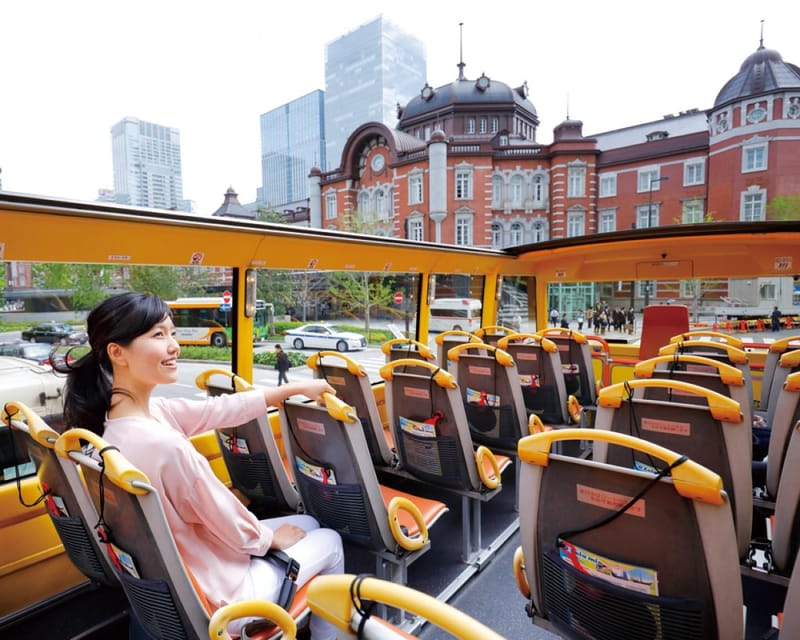
You ride a double-decker open-top bus, which is exactly what it sounds like: you are higher up and you see farther than you would from a normal city bus. The “open-top” part is what makes Tokyo Tower feel closer, and it also helps for wide skyline views around the bay.
At the same time, Tokyo weather can change fast. The roof may close if it rains, and the tour may be canceled in bad weather or heavy rain. If your day hinges on clear skies, this is the one variable you cannot control.
Comfort is also the reason this tour gets strong marks. Even without step-by-step stop time, you stay seated and the bus does the work for you. That is ideal if you want a relaxed overview before you decide what to explore later.
The Route at a Glance: From Hibiya to Ginza
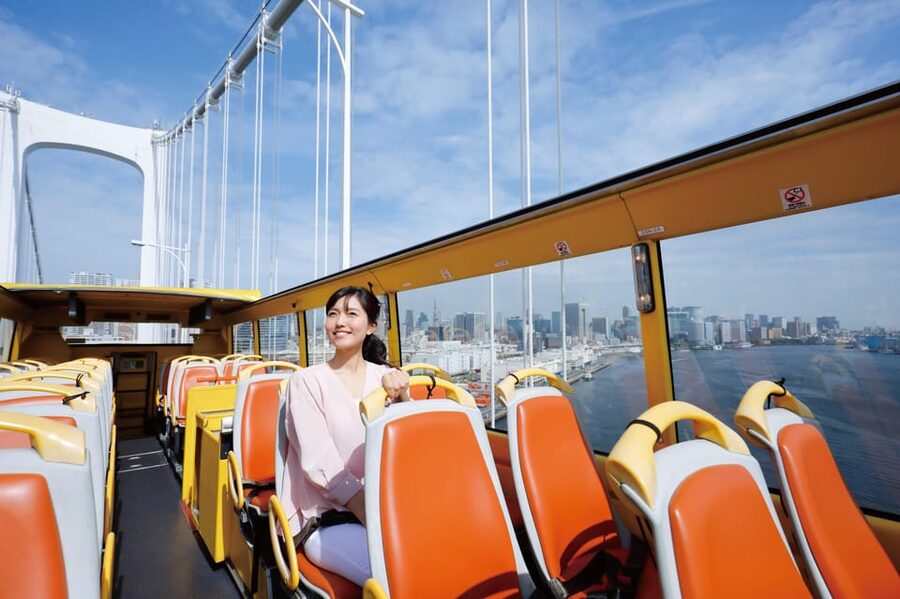
The loop starts and ends at the Hato Bus Tokyo Office at Tokyo Station. From there, you pass by a sequence of neighborhoods and landmark areas that cover Tokyo Tower, the bay-side views, and central shopping streets.
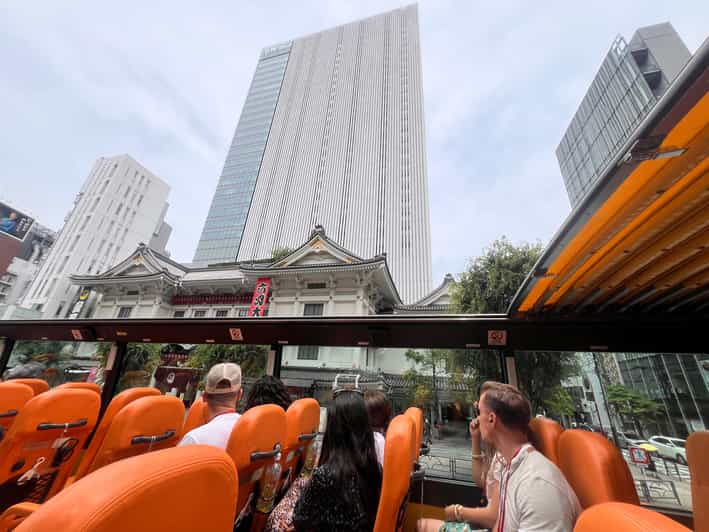
You will pass Hibiya Park, the National Diet Building, Toranomon, Tokyo Tower, Rainbow Bridge, Odaiba, Toyosu, Tsukiji Outer Market, Kabuki-za, and Ginza. As you move through this list, the scenery shifts from government and office zones to waterfront landmarks and then into classic downtown streets.
Because you are staying on the bus for the full loop, you get a steady visual “story.” It goes from Tokyo’s political center to skyline icons to the bay’s bridges and architecture, then back to the classic storefront and theater area of Ginza and Kabuki-za.
A change of pace from Tokyo:
- Tokyo: teamLab Planets TOKYO Digital Art Museum Entry Ticket
★ 4.6 · 9,779 reviews - Mt Fuji & Hakone Cruise, Drum Show Bullet Train 1 Day from Tokyo
★ 4.0 · 7,413 reviews - Tokyo: Sumo Show Experience with Chicken Hot Pot and a Photo
★ 4.8 · 6,678 reviews - Tokyo: Shinjuku Food Tour (13 Dishes at 4 Local Eateries)
★ 5.0 · 6,603 reviews
Stop-by-Stop: What You’ll See From the Bus
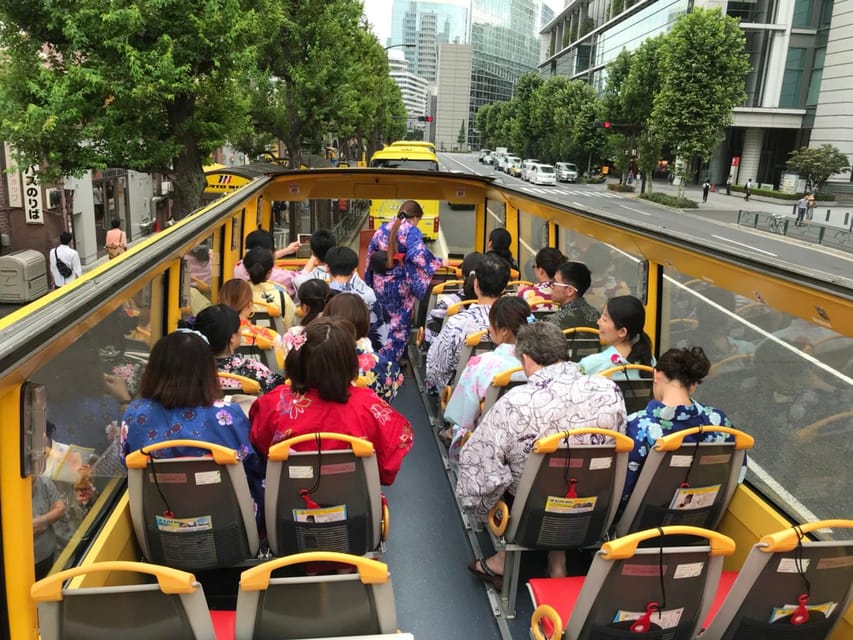
Below is how each part of the route tends to land for your eyes and your photos, plus one practical catch for each.
Hato Bus Office to Hibiya Park
You start near Tokyo Station, which keeps things simple before the sightseeing begins. Passing Hibiya Park gives you a first look at a greener breathing space close to the center of Tokyo.
The catch: you are still moving, so this is more about orientation than lingering. If you want “sit and people-watch” time, you will need to plan that separately later in your day.
National Diet Building and Toranomon
As you pass the National Diet Building, you get a sense of the city’s government core. The surroundings feel formal and structured, a contrast to the later street scenes.
Next comes Toranomon, which is known as an office-heavy area. From the bus, this section helps you understand Tokyo’s vertical city rhythm, with modern towers framing the background.
Catch: these are drive-by segments. You can enjoy the views, but do not expect a walkable detour.
Tokyo Tower: Where the Sightseeing Pays Off
The highlight for many people is Tokyo Tower, and not just because it is iconic. From an open-top double-decker bus, you see it in context, sometimes from an angle that feels different than a front-on photo.
It is also a great “first Tokyo icon” moment. If you are short on time, Tokyo Tower is one of the easiest ways to anchor your trip in a single view.
Catch: if your phone battery is low, charge before you board. You will want it for navigation later, and you will likely take a lot of pictures here.
Rainbow Bridge to Odaiba: The Bay Gets the Spotlight
Then the route reaches Rainbow Bridge and the Tokyo Bay area, followed by Odaiba. This is where Tokyo shifts gears from buildings to bridges and waterlines, and the open-top setup helps you feel the sea breeze.
Odaiba is one of those areas where the skyline can look very different depending on where you are standing. From the bus, you get sweeping angles that help you see how the bay connects to the city.
Catch: the waterfront can feel windy. If you tend to get cold easily, keep a light layer handy.
Toyosu: A Modern Lens
Passing Toyosu adds a more modern Tokyo feel to the mix. It is useful if you want more than the usual “old and historic” or “classic landmarks” view.
Catch: it is still a pass-by moment, so treat it as scenery, not a planned stop for exploring.
Tsukiji Outer Market and Kabuki-za
Next, you pass Tsukiji Outer Market and Kabuki-za. These are locations that many people associate with food streets and theater culture, so even a drive-by can help you understand what part of Tokyo you are in.
This is also where the tour’s rule about food becomes important. Eating is not allowed on the bus, and drinks must be bottled plastic. That means the tour is better as a sightseeing drive, not a way to snack your way through the day.
Catch: if Tsukiji Outer Market is on your must-do list, you will want to come back on your own time.
Ginza: Classic Streets in One Pass
Finally, you pass Ginza, Tokyo’s famous shopping district. From a bus window, you get a good sense of scale and street energy in a single continuous segment.
It is a strong closer because Ginza is a natural place to decide where you want to walk next. After the bus ride, you will have a clearer mental map of what you passed and what you might want to revisit.
Catch: Ginza is best experienced on foot. Use this as your preview, then plan your actual stroll for later.
Price and Value: Is $14 for a 1-Hour Panorama a Good Deal?

At $14 per person for a 1-hour ride, the value comes from time saved. Tokyo is expensive, and you usually pay for convenience. This tour’s convenience is simple: you get a pre-selected route that covers major landmarks in a single loop starting at Tokyo Station.
You are also not paying only for the bus. You get audio guidance plus a Japanese-speaking guide, and the GPS system supports eight languages. That reduces the mental work of figuring out what you are seeing at street level.
The not-so-great part for value is also obvious: it is one hour and you cannot hop off. If you want to spend time at Tsukiji or linger near Kabuki-za, this will not replace a walking plan. Think of it as the fastest “big picture” layer for your trip.
Who Should Book This Bus Tour, and Who Might Not Love It
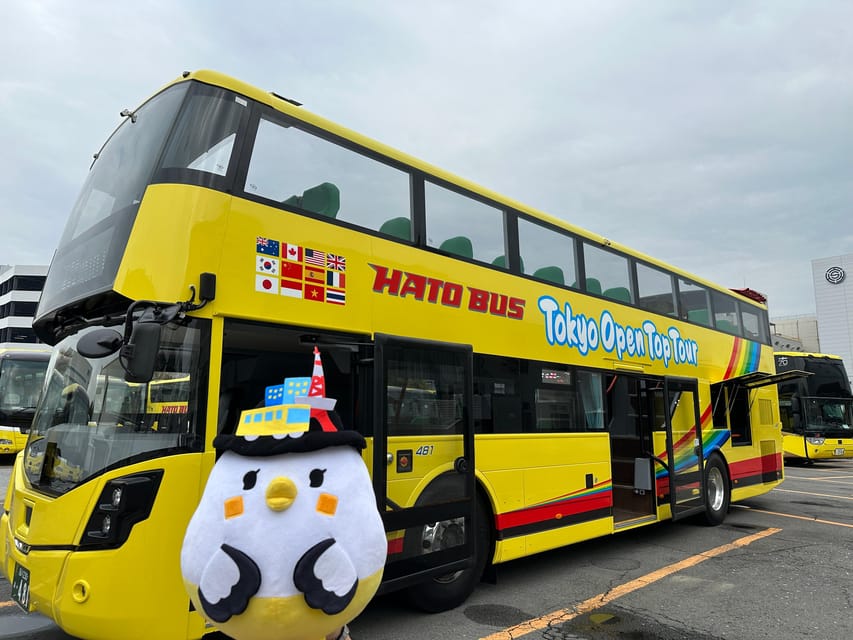
This tour fits best if you want:
- a short, low-effort first overview of central Tokyo
- big photo moments, especially Tokyo Tower and the Rainbow Bridge/Odaiba bay area
- an easy way to follow along with GPS audio in your language
You might skip it if:
- you need a tour with time to stop and explore each landmark on foot
- you are traveling on a day where rain is likely, since the roof may close and heavy rain can lead to cancellation
It is also a decent pick for families with younger kids because children under 6 without a seat can join for free, with one child per adult. That said, the no-eating rule and open-top setup rules still apply.
Weather, Rules, and Simple On-Board Tips

This is a common-sense tour, but a few rules affect your comfort.
You cannot eat on the bus. Drinks in plastic bottles are permitted, which is handy for staying hydrated if you get stuck in a warm day. If you arrive with snacks, plan to save them for after the tour.
If rain shows up, expect the roof may be closed. That reduces the sense of open-air viewing, but it keeps the bus ride functioning. If the weather turns truly heavy, the tour may cancel, so it is smart to have a Plan B for your day.
Bring a smartphone and your own earphones so the GPS-based system and audio guidance work the way you expect. Small problem prevention matters here, because the information notes there is no refund for technical issues or earphone malfunctions.
Should You Book This Tokyo Open-Top Bus Tour?

Book it if you want an efficient, scenic introduction to Tokyo without complicated planning. The route is a smart mix: Tokyo Station area start, quick passes by major government and skyline zones, a real flagship moment at Tokyo Tower, then the bay and bridges with Rainbow Bridge and Odaiba, and finally downtown feel with Tsukiji Outer Market, Kabuki-za, and Ginza.
Skip it if you want hands-on time at specific sights. This tour is about seeing from above and moving through the city, not about getting out and spending an hour at any one place.
My call: if this is your first Tokyo visit or you just need a quick landmark sweep between longer activities, this is a solid $14 value. One hour is enough to map the city in your head, and it sets you up to explore the rest the right way on your own time.
FAQ
Where does the tour start and end
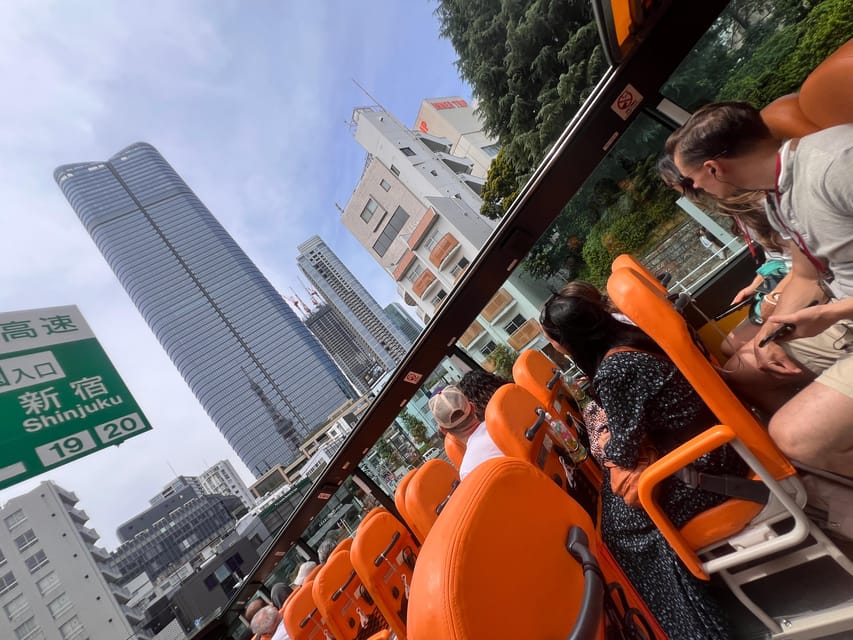
It starts and ends at the Hato Bus Tokyo Office near JR Tokyo Station, specifically by the Marunouchi South Exit. The stop is described as being yellow.
How long is the Tokyo open-top bus tour
The tour duration is 1 hour.
Is this a hop-on hop-off bus
No. It is not a hop-on hop-off service, so you stay on for the full drive.
What do I need to use the audio and GPS guidance
You should bring a smartphone that can be used in Japan and your own earphones. GPS devices and earphones are not provided for rental.
What languages are available for the audio guide
GPS automated guidance is available in eight languages: English, Chinese, Korean, Spanish, French, Thai, Indonesian, and Vietnamese. A Japanese-speaking live guide is also on board.
Can I eat or drink on the bus
Eating is not allowed on the bus. Drinks in plastic bottles are permitted.
What happens if it rains
In rain, the bus roof may be closed. The tour may also be canceled due to bad weather or heavy rain.
Latest write-ups near Tokyo
- Tokyo Nights: Shibuya Photo Adventure★ 5.0 · 20 reviews
- Wagyu & Sake 8 Course Tasting Dinner in Shinjuku★ 4.9 · 20 reviews
- Making Japanese desserts Nerikiri & drinking matcha in Tokyo★ 5.0 · 20 reviews
- Japanese Whisky Hunting《HIGH-QUALITY-ONLY》Rare Tasting Class★ 5.0 · 20 reviews
- Mt. Fuji 5th Station, Owakudani Ropeway, Pirate Ship plus Outlet shopping!★ 4.5 · 20 reviews
- Kintsugi Experience with Arita Ware in Tokyo (English Guide)★ 4.8 · 20 reviews
- This is Asakusa! A Tour Includes the All Must-Sees!★ 5.0 · 20 reviews
- Tokyo: Karate Experience with Former All-Japan Champion★ 5.0 · 20 reviews
Guided, compared.
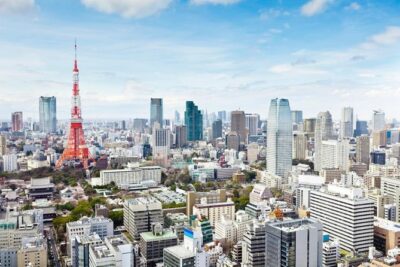
Tokyo 6hr Private Tour with Government-Licensed Guide
Read our review →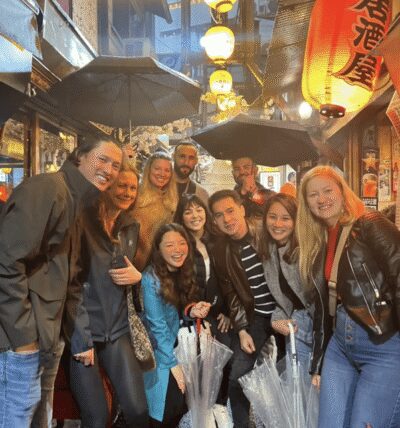
Shinjuku Local Bar and Izakaya Guided Walking Tour
Read our review →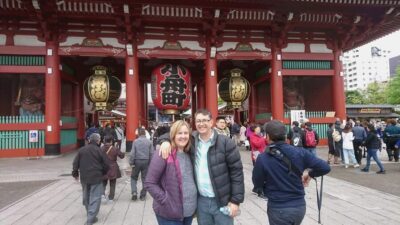
Private City Highlights Tour with Local Guide
Read our review →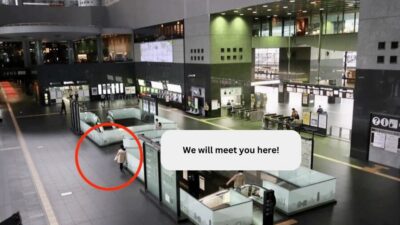
Kyoto Early Morning Tour with English-Speaking Guide
Read our review →
Tokyo 4hr Private Tour with Government-Licensed Guide
Read our review →
Kyoto 6hr Private Tour with Government-Licensed Guide
Read our review →